Importance of Object Detection in Autonomous Vehicles and ADAS
Object detection plays a critical role in autonomous vehicles and is essential to overall intelligence. In this blog, let us explore the importance of object detection algorithms in autonomous vehicles with the technical and neural network aspects.
 Navin Baskar·26 Apr 2023·3 min read
Importance of Object Detection in Autonomous Vehicles and ADAS
Object detection plays a critical role in autonomous vehicles and is essential to overall intelligence. In this blog, let us explore the importance of object detection algorithms in autonomous vehicles with the technical and neural network aspects.
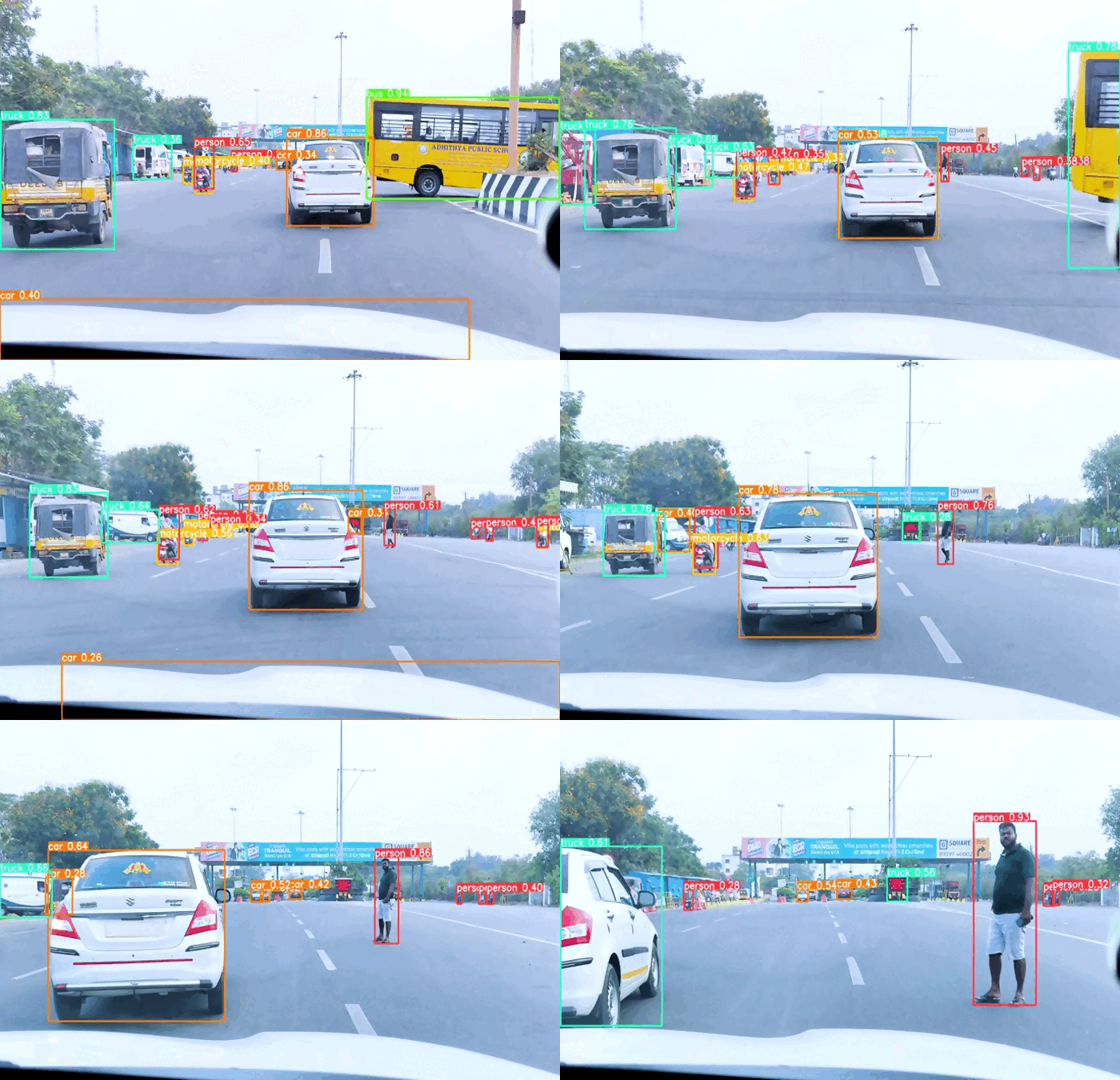
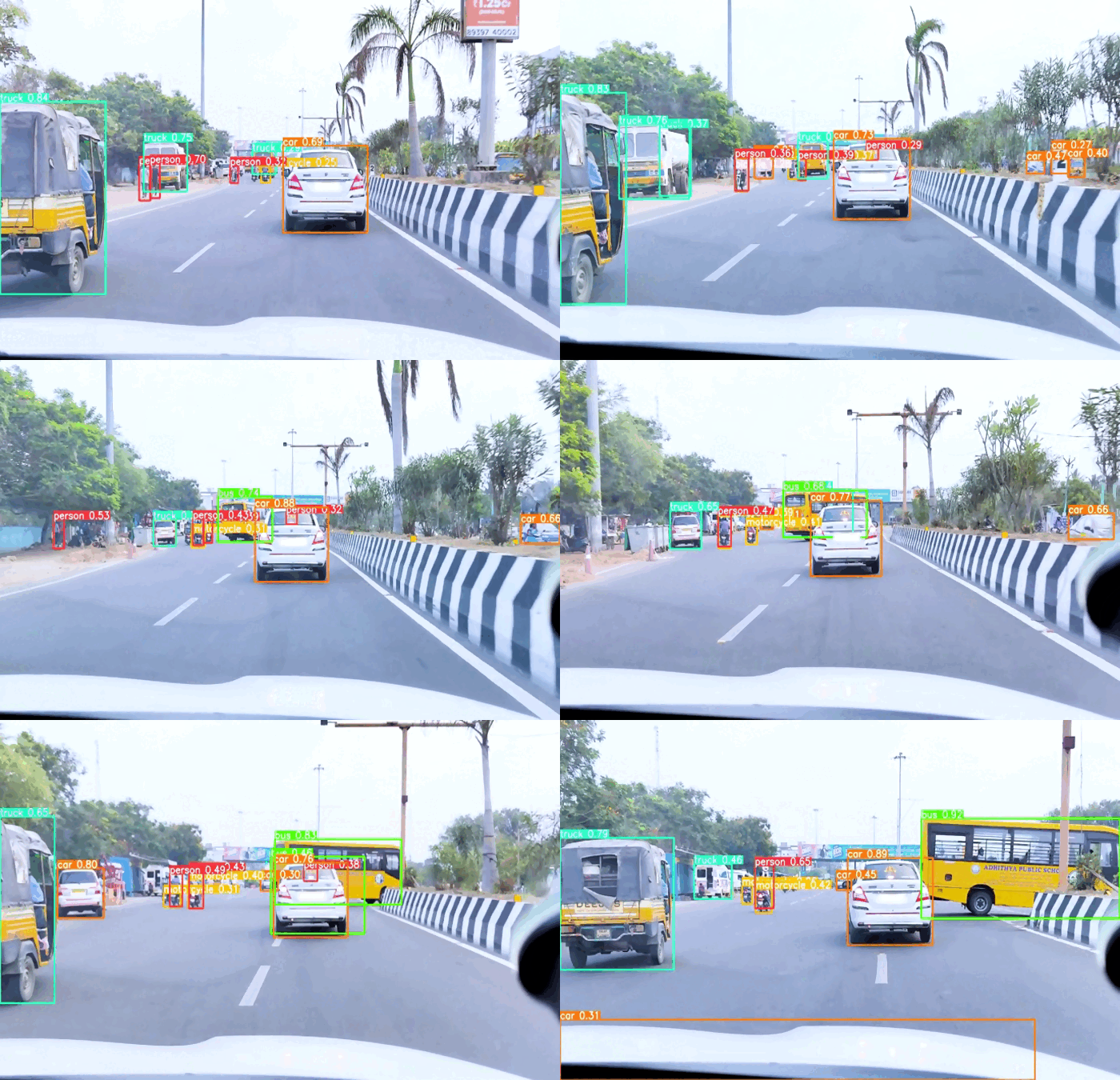
Autonomous vehicles rely on computer vision object detection algorithms to recognize, identify and classify objects near the camera. These objects can include other vehicles, pedestrians, road signs, and traffic signals. The detection process has been the foundation for many of the decision-making engineering applications that use computer vision.
One of the primary reasons object detection is so important in autonomous vehicles is safety. Autonomous vehicles need to be able to identify and react to potential environmental hazards to keep their passengers and other road users safe. Let's say a pedestrian steps out into the road, and if the pedestrian is too close to the vehicle, then a critical decision has to be taken by the object detection algorithm.
The object detection algorithm can control autonomous vehicles' navigation and planning aspects. By precisely identifying and classifying objects in their environment, autonomous vehicles can make more informed decisions about navigating through their surroundings. Based on the surrounding obstacles, it either changes the lane or takes a different route.
Technical Aspects of Autonomous Vehicles
Autonomous vehicles rely on various sensors to detect objects in their environment, including cameras, LiDAR, radar, and ultrasonic sensors. These sensors work together to create a 360-degree view of the vehicle's surroundings, which is then processed by the object detection software. To enable vehicles to detect the object in the vicinity, engineers must pay attention to selecting the embedded controllers and sensors.
Another important technical aspect of object detection in autonomous vehicles is the algorithm used to detect objects. A variety of algorithms can be used for object detection, including deep learning algorithms like convolutional neural networks (CNNs) and recurrent neural networks (RNNs). These algorithms are trained on large datasets of labelled images to learn how to identify, recognize, detect, and classify objects in different environments.
Neural Network in Object Detection
Neural networks play the most important role in autonomous vehicles' object detection compatibilities and detection confidence scores. Neural networks are an object detection machine learning algorithms inspired by the human brain for recognizing patterns in visual and audio data. These networks are composed of interconnected nodes that work together to process and analyze data.
In autonomous vehicles, neural networks analyze the data collected by the vehicle's sensors and identify objects in the environment. Feature extraction identifies key features in the sensor data that are relevant to detect the object's presence in the given environment. Features like edges, corners, and texture patterns are a few observed changes that can be extracted by a camera while performing visual frame interpretation.
Classification is the final step in the object detection process, where the trained algorithm compares the features of the region of interest using the neural network’s classifier and segregates the output into various recognizable classes, like cars, pedestrians, and road signs.
Object detection can enable the vehicle to identify and classify objects accurately, essential for safe navigation and critical decision-making.
To learn more about the ADAS and vision detection technologies responsible for automotive intelligence, consider enrolling in Skill-Lync’s autonomous vehicle course. Talk to our experts to get a free demo.