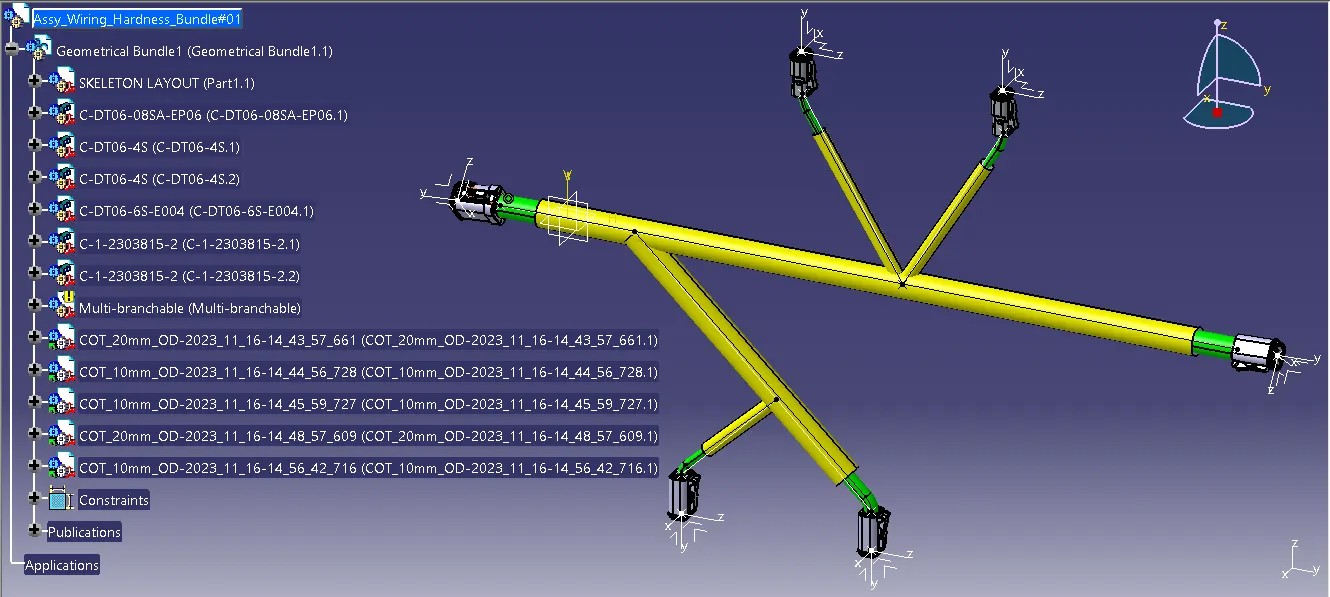
Wiring harness design in CATIA V5 - 3D modeling Week 4 Challenge
A wiring harness is the combination of electrical and mechanical CAD to connect all the electrical parts in the automotive at the optimum level.
1) Electrical Distribution System: It runs from the front end to the rear end of the vehicle. It involves physical and logical architecture schematic development, power distribution, wiring harness design, and wiring harness component design of the given electrical system. It ensures the physical location of all electrical components placed in the vehicle. It provides the logical connectivity between electrical components. It has an electrical controller unit for different sections like Airbag ECU, ABS ECU, and Engine (ECU).
2) E&E Architecture: It is the high-level logical connectivity diagram. It represents all the systems, sub-systems and logical connections between them. It shows the Control Area Network (CAN) between different electronic components.
3) Logical schematics: Detailed design of E&E architecture. It shows the logical connectivity between different components and controls of a given system and subsystem. It does not define any other parameter except electrical connectivity.
4) Electrical schematics: Detailed design of logical schematics, pin-to-pin connectivity, properties, fusing distribution, grounding distribution, interconnects, wire properties (wire gauge, colour, type), circuit properties (circuit number, connector designation number, control device number), specification of components, results of the electrical core design of the system and primary input for harness design.
5) Wiring harness topology: Strategy to split the harness between different pieces to achieve the best manufacturability, serviceability and cost-effective design.
6) Wiring harness packaging: Fixing/mounting strategy of wiring harness routing to ensure the safety, reliability and durability of wiring harness by applying a set of design rules and industry best practices.
7) Wiring harness routing: It provides the desired path of the wiring harness into a given vehicle environment by applying design rules and industry best practices.
Clips
Clips are ideal for retaining/holding pipes, cables, cable harnesses, hoses etc. Clips act as form-fitting adjustable bands for ease of assembly & installation. The band ends of the clips are reinforced to prevent any tearing or loosening due to high mechanical loads. ‘P’ clips are fitted with EPDM liners which help achieve a tighter grip on the cable/conduit & also act as dampeners for sound & vibration.
Backshells
A back shell is a mechanical device threaded into the rear of an electrical connector and is designed to provide screening, sealing, and reparability. Engineered to help resist corrosion and fit a wide range of circular connectors, back shell components help protect connections from mechanical wear, environmental conditions, and electromagnetic interference (EMI). These are available with and without screen termination, providing long-term, high-performance in sealed and unsealed electronics systems.
Corrugated tubes
Corrugated tubes made from flame-retardant material these tubes will protect cables from impact and abrasion. They are highly flexible and have a high fatigue life, making them ideal for any installation. Depending on the intended use, corrugated tubing is manufactured in different diameters and from different materials. Even though these are usually rigid materials, convoluted plastic tubing becomes flexible and bendable due to its corrugated manufacturing method.
Aim:
1) To Route the following harness layout in the Electrical workbench.
2) Add protective covering on all branches connected to DT06-2S & DT06-4S connectors.
Given:
CAD data of the following Connectors:
DT06-4S
DT06-6S
DT06-2S
DT06-08SA
Steps
- Download connector 3D data from te.com
- Converting the Mechanical part into the Electrical part
- Arranging the Connectors by following the Layout
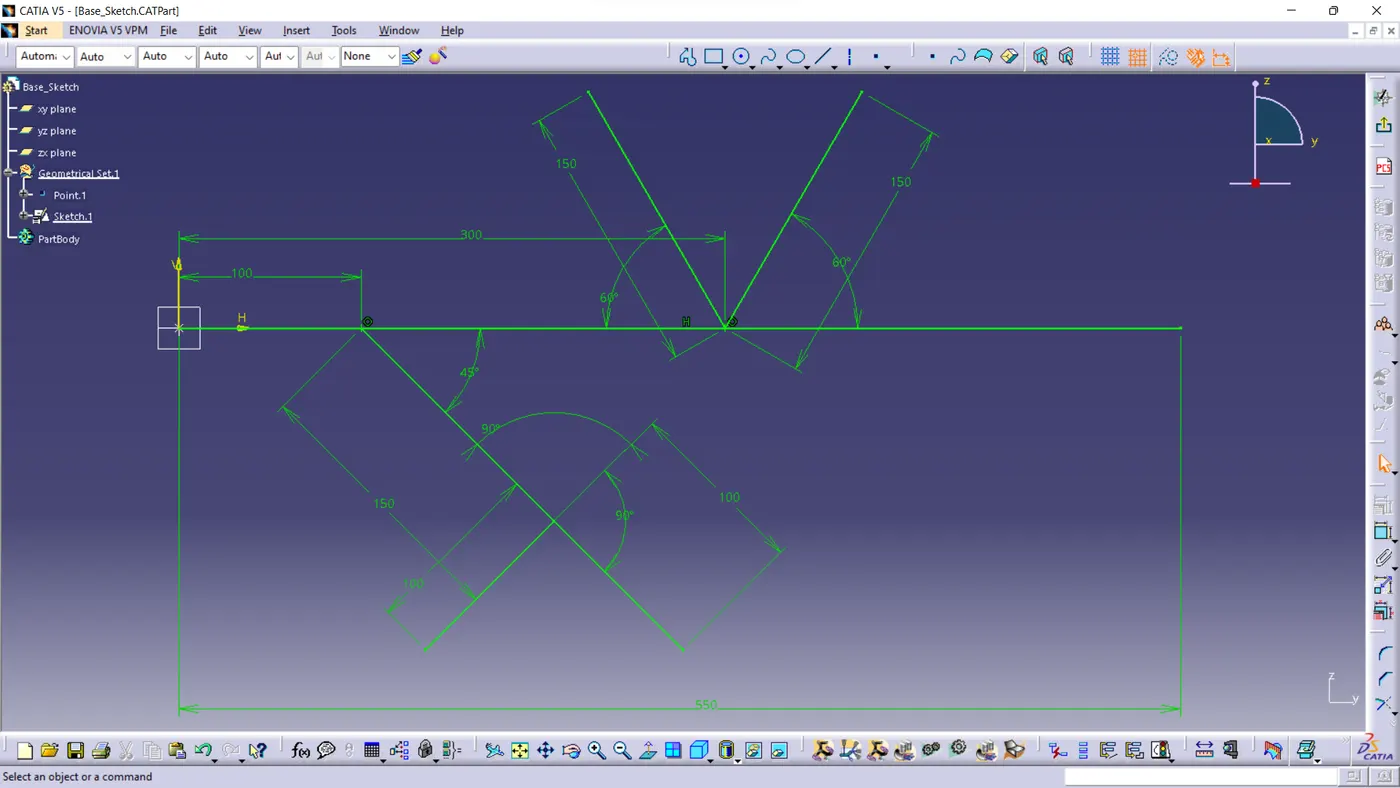
sketch the template
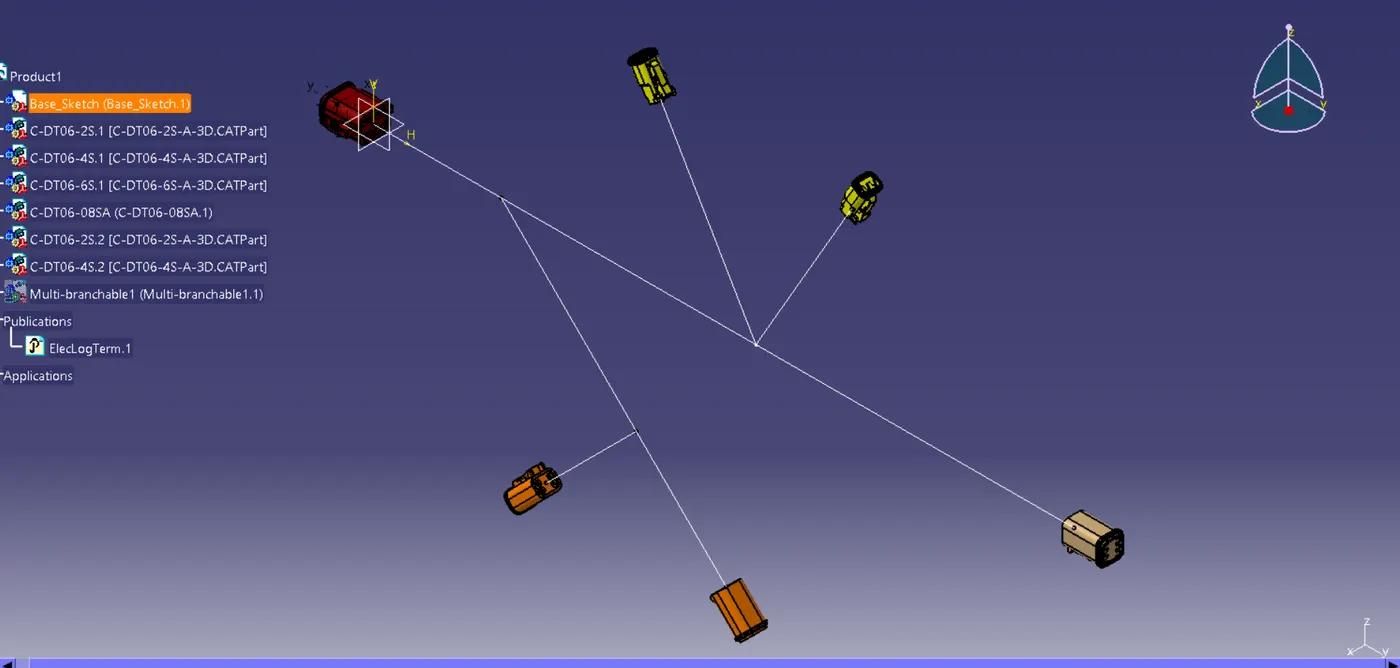
Position the connectors in the requested location
- Creating Multi-Branching to the connectors
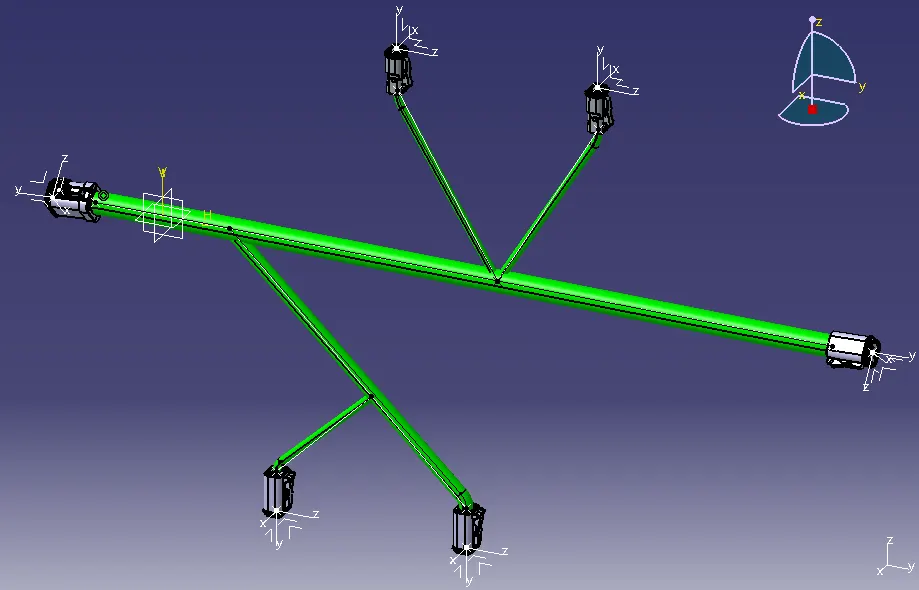
Wiring Route for all connectors
- Creating a protective covering