WIDE OPEN THROTTLE CONDITION (WOT)
Wide Open Throttle Condition(WOT) Condition:
OBJECTIVE:
- To find the ratio of hill-climbing power required by a fully loaded tata ultra truck to the half-loaded one.
- To calculate the minimum length of the flyover considering the minimum height at the summit should be 5.5meters.
- To prepare a new drive cycle using the excel file for the model and also include a hill-climbing angle to it.
- To model the WOT(wide open throttle) response of GM EV1car and compare it with the official figures of the performance of a rear vehicle.
- To show variation in acceleration time with a 5% change in vehicle parameters.
SOLUTION:
1)The ratio of hill-climbing power required by a fully loaded tata ultra truck to the half-loaded one.
FULLY LOADED TRUCK:
The Gross Vehicle Weight of the TATA T.10 ULTRA truck is :
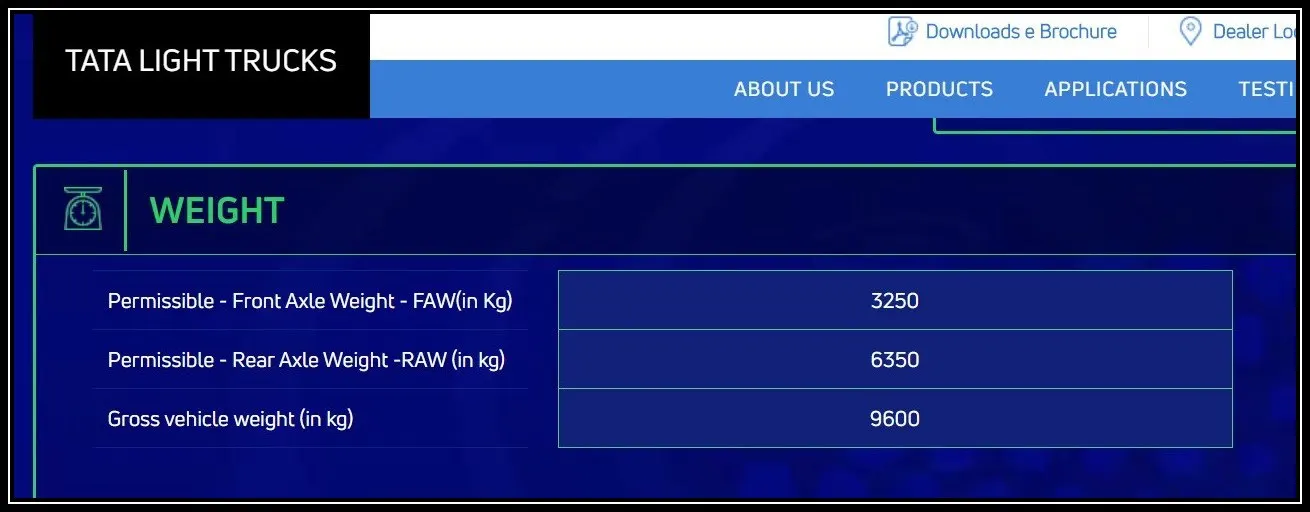
Kerb weight=3250Kg;
Payload weight=6350Kg;
Gross Vehicle Weight=Kerb Weight+ Payload Weight
=3250+6350
Gross Vehicle Weight=9600Kg.
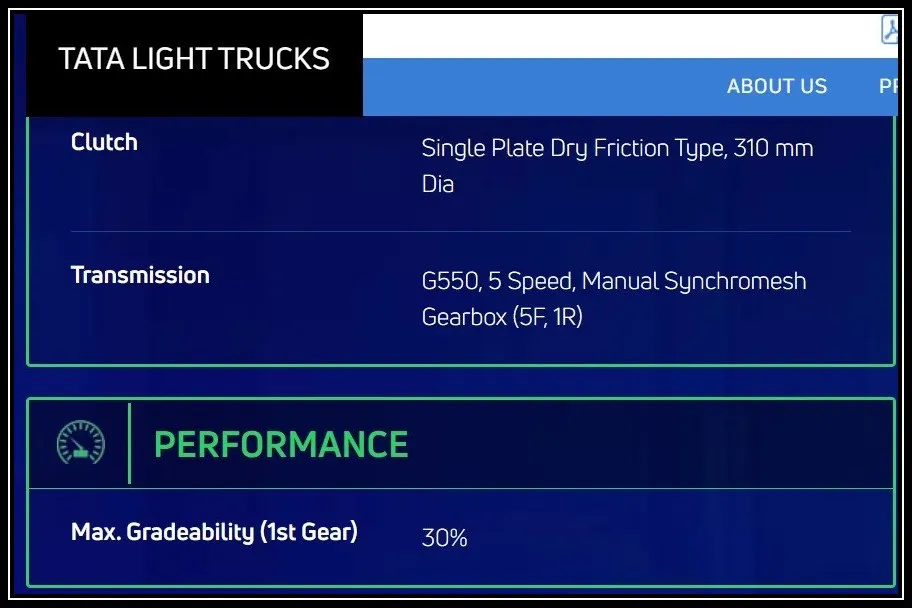
Gradeability=30%=16.7degree=0.29radian
Speed=30Kmph=8.33m/s.
Hill Climbing Force is given by,
Fhc=mgsin`theta`
=9600*9.8*sin(0.29)
Fhc=476.18N.
Hill climbing power can be calculated using the below formula:
P=Fhc*v
P=476.18*8.33
P=3.97KW.
Half-Loaded Truck:
since the truck is half-loaded the payload must be reduced to half.
Payload=6350/2
Payload=3175Kg.
kerbWeight=3250Kg.
Gross Vehicle Weight=3175+3250
=6425Kg.
Gradeability=30%=16.7degree=0.29radian
Speed=30Kmph=8.33m/s.
Hill Climbing Force is given by,
Fhc=mgsin`theta`
=6425*9.8*sin(0.29)
Fhc=318.69N.
Hill climbing power can be calculated using the below formula:
P=Fhc*v
P=318.69*8.33
P=2.65KW.
Ratio=power at full load/power at half load
=3.97/2.65
Ratio=1.5
2)To calculate the minimum length of the flyover considering the minimum height at the summit should be 5.5meters.
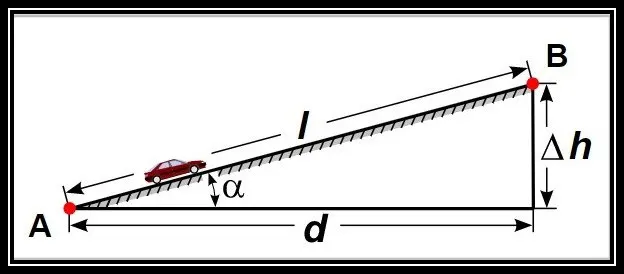
Rise or Height=5.5.meters
Assume,
Gradeability=25%=14.03degree.
The minimum length of the flyover is:
sin`theta`=Rise/length
Sin(14.03)=5.5/length
Lenght=22.68metre.
Therefore, the minimum length of the flyover is 22.68m.
3)To prepare a new drive cycle using the excel file for the model and also include a hill-climbing angle to it.
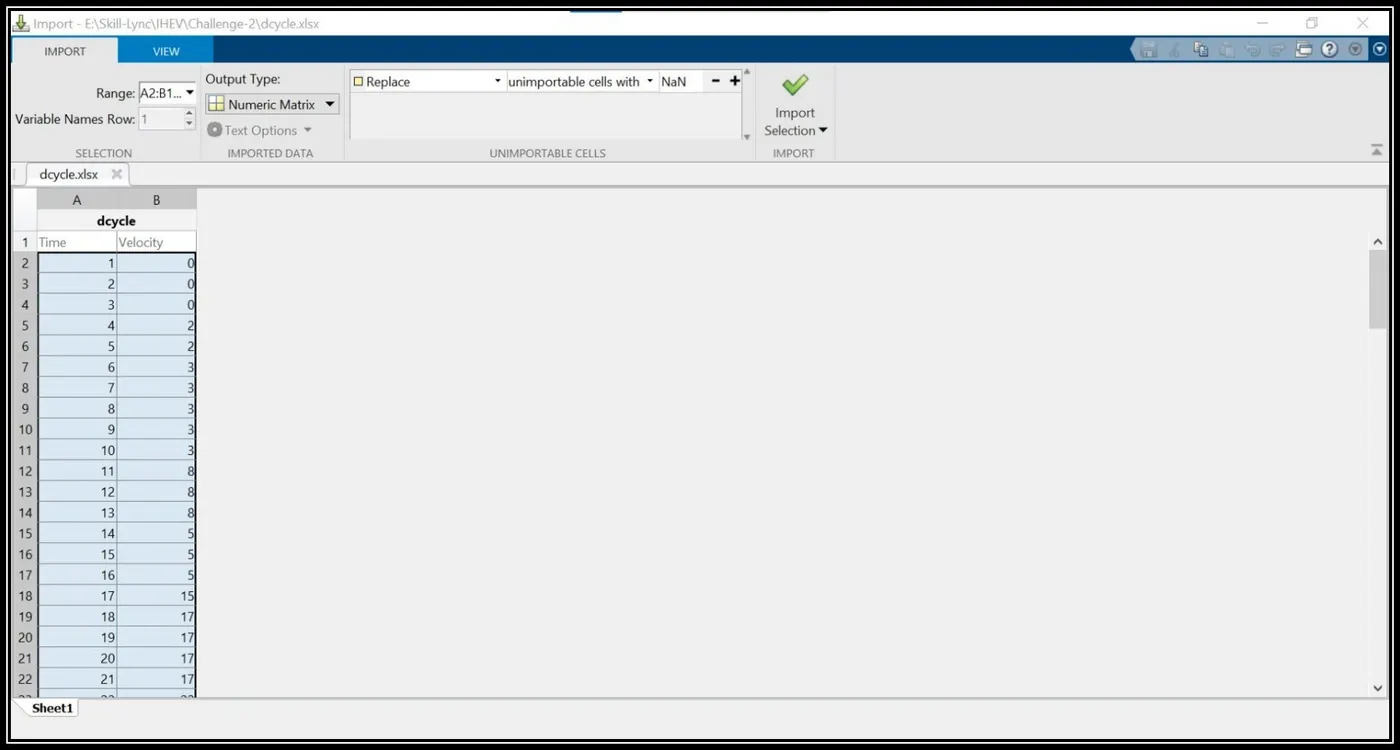
Excel file created with time and velocity values:
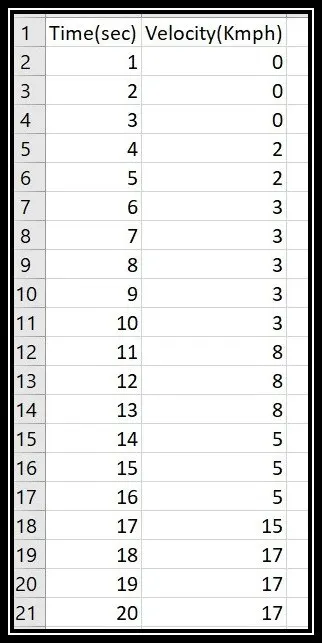
- Like this, the time and velocity values are created around 120 values for the drive cycle.
https://skill-lync.com/knowledgebase/how-to-open-driver-glider-model-in-simulink
- With the help of the above article, the driver glider model is opened in Simulink and the drive cycle file which we created in excel is imported into it.
- After importing the file you can see the values that will be updated in the workspace window.
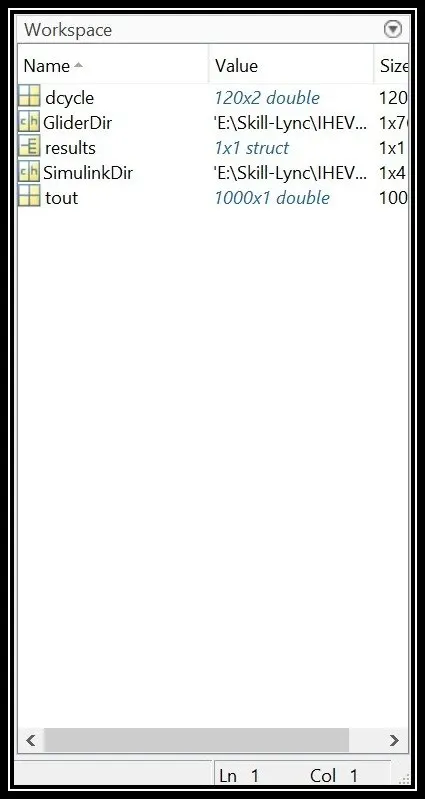
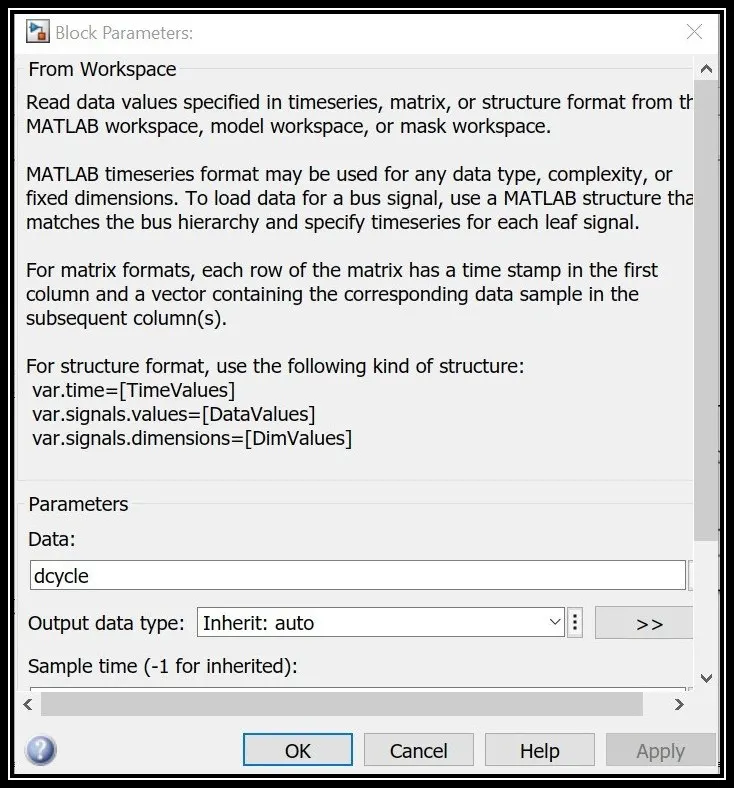
- In the input block, enter the excel file name that is updated in the workspace window and select apply and click the ok button.
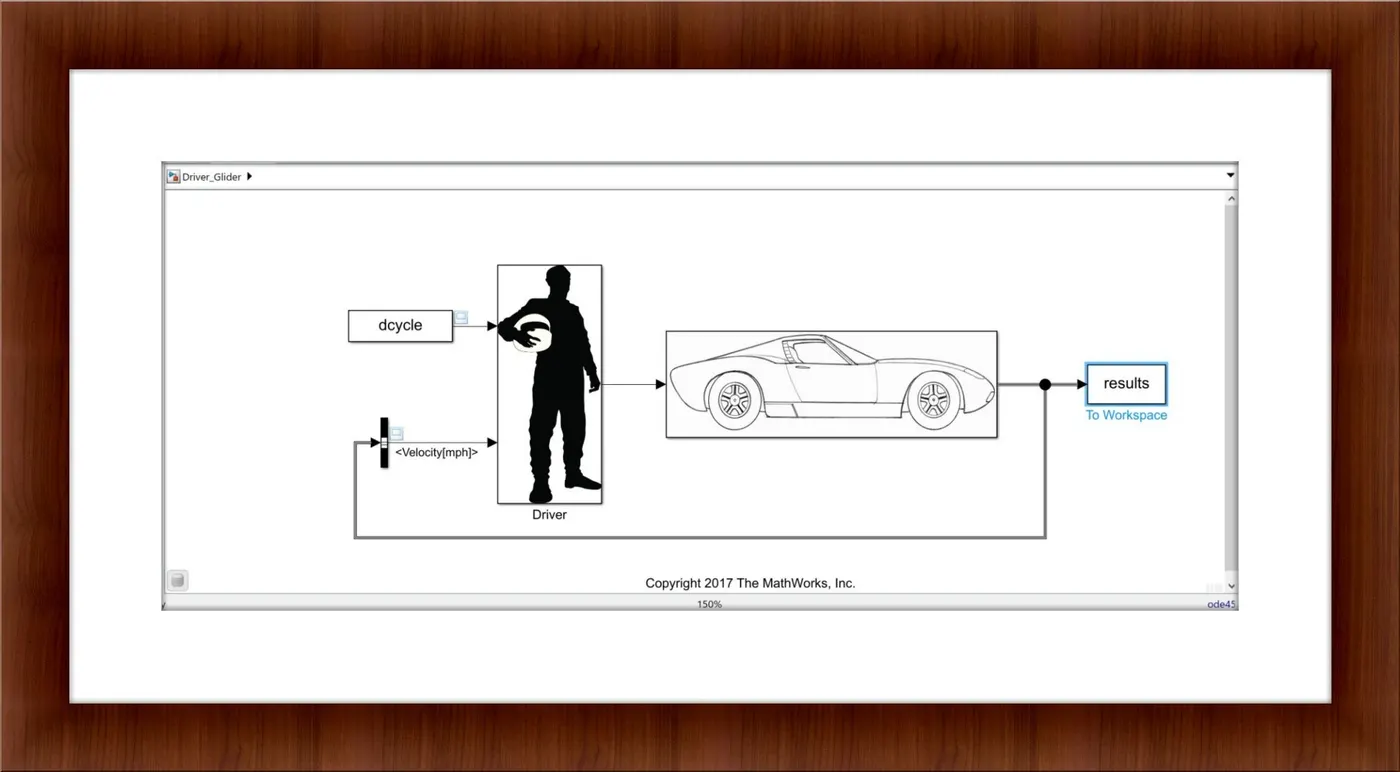
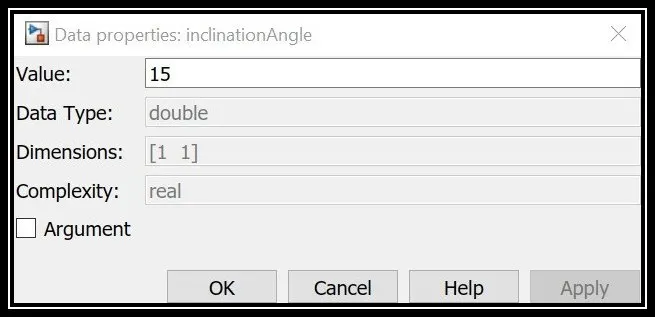
- Then, in order to update the hill-climbing angle select the glider block and in that select the Grade force c block and in that click on the open button and in that enter the inclination angle value and then select apply and click on the ok button.
- Then change the run-time value in the run tab to 120 sec as the input values are given only for 120 seconds.
- Then run the simulation and view the results.
RESULTS:
The graph is plotted for "Time vs Velocity" and it is viewed with the help of the scope block.
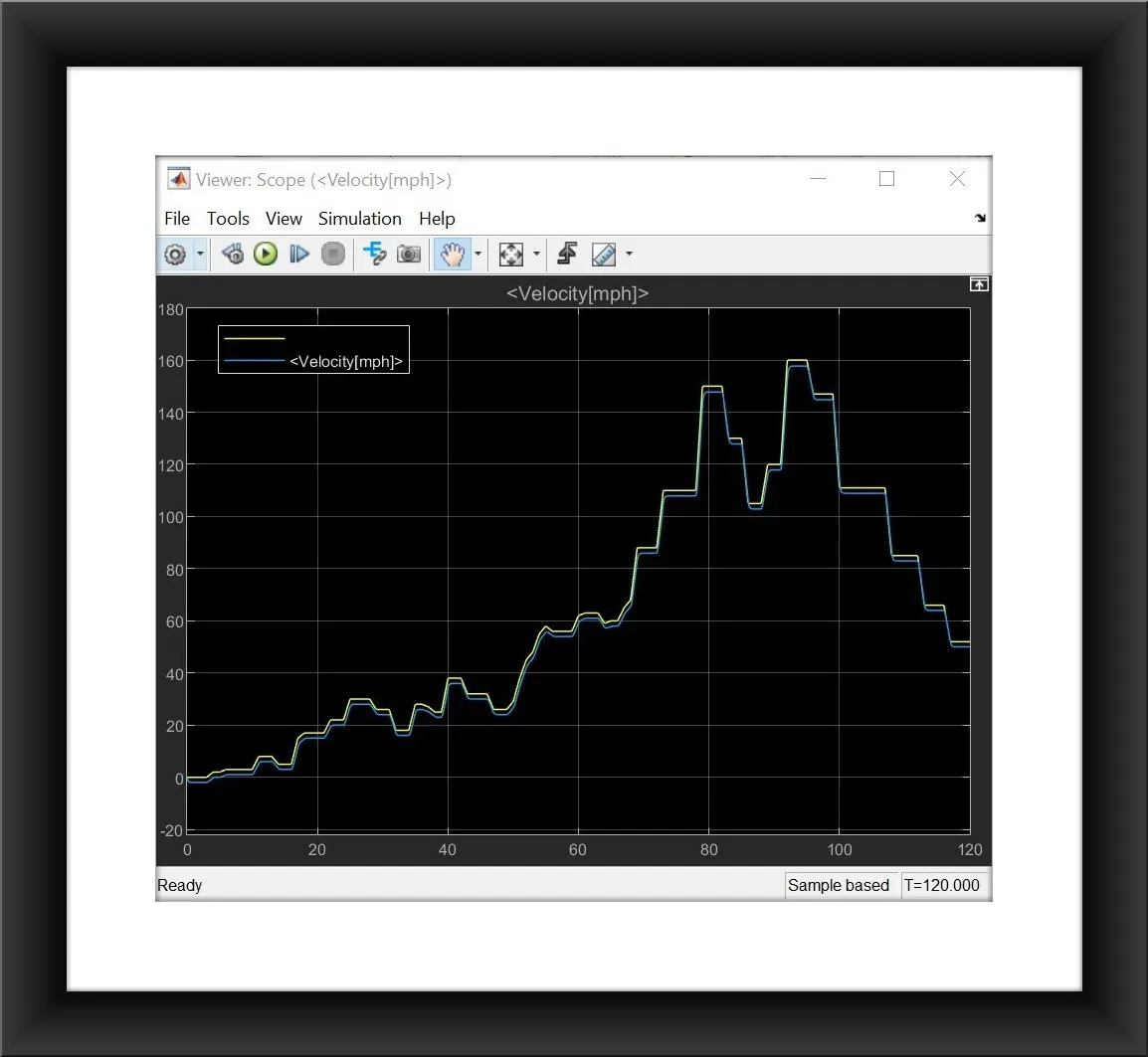
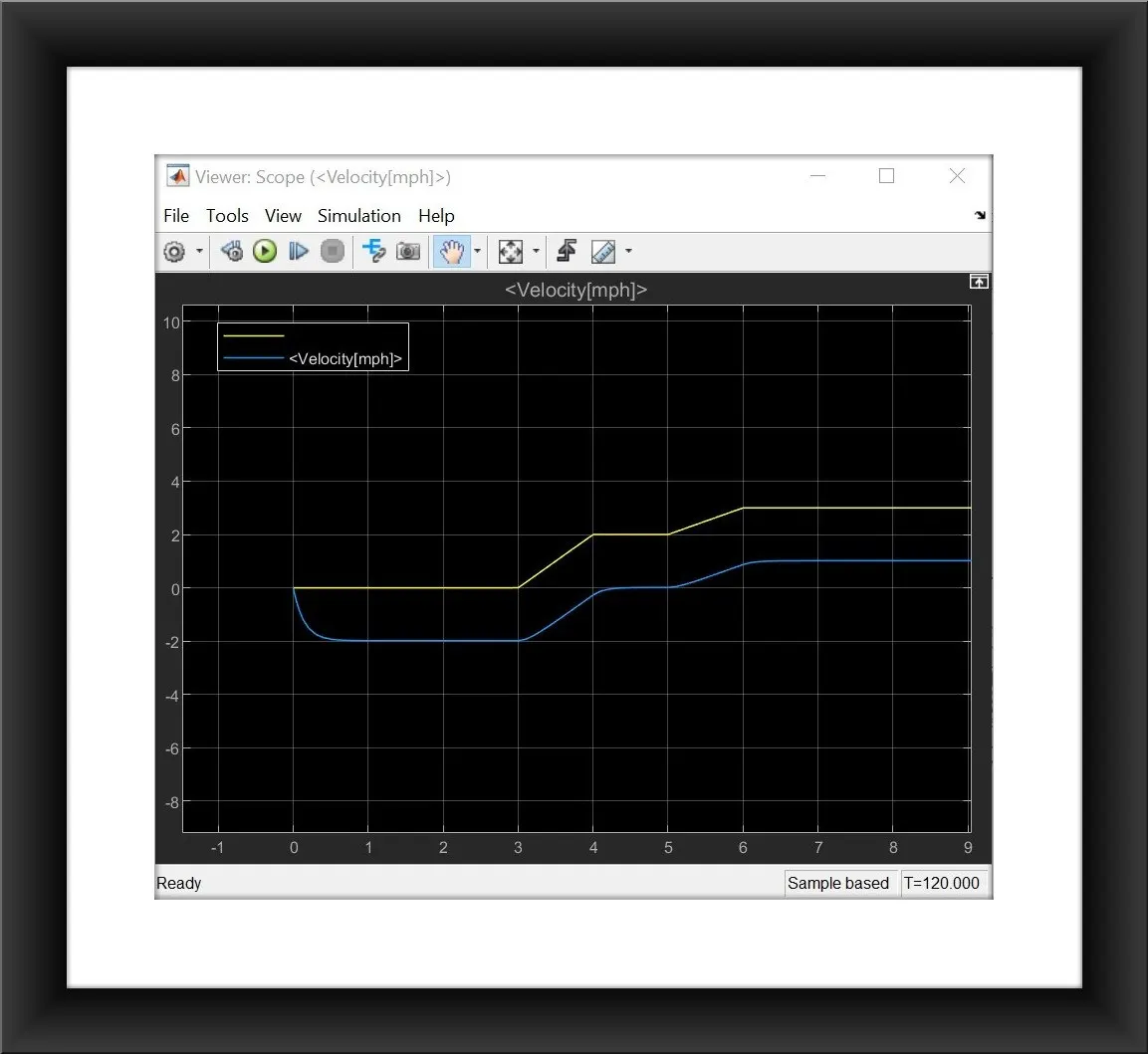
- From the graph, it is observed that as the inclination angle is given, the initial velocity is decreased due to the increase in the resisting force of the vehicle.
4)To model the WOT(wide open throttle) response of GM EV1car and compare it with the official figures of the performance of a rear vehicle.
Wide Open Throttle(WOT):
Wide Open throttle refers to internal combustion engine's maximum intake of air and fuel that occurs when the throttle plates inside the carburetor or the throttle body are wide open ,providing the least resistance to the incoming air.In the case of an automobile,WOT is when the accelerator is depressed fully,sometimes referred to as flooring it.
In case of a diesel engine,which doesnot have a throttle valve,WOT is the point at which the maximum amount of fuel is being injected relative to the amount of air pumped by the engine,generally inorder to bring the fuel air mixture upto the stoichiometric point.If any more wer to be injected black smoke will result.
https://skill-lync.com/knowledgebase/how-to-model-gm-ev1-car-for-wide-open-throttle-calculation
The inputs are taken from the above article.
Matlab Program:
clear all
close all
clc

t=linspace(0,20,201);
vel=zeros(1,200);
d=zeros(1,200);
dt=0.1;

for n=1:200
    if vel(n)<19.8
        vel(n+1)=vel(n)+dt.*(3.11-(0.000137*(vel(n)^2)));

    elseif vel(n)<33.33,vel(n)>19.8
        vel(n+1)=vel(n)+dt.*((62.1/vel(n))-0.046-(0.000137*(vel(n)^2)));


    else vel(n)>33.33

            vel(n+1)=vel(n);

    end

    d(n+1)=d(n)+0.1*vel(n);
end

velo=vel.*3.6;

plot(t,velo,'color','r')
grid on
xlabel('Time(seconds)')
ylabel('velocity(Kph)')
StepWise Explanation:
- Clear all,clc and close all erases the workspace window,command window and closes all plots which are in open.Using the Linspace command the time array is generated for 0-20 seconds with an increment of 0.1 second.
- Then,the velocity array and the distance array are generated.
- Then dt is assigned and based on this only the velocity keeps changing.
- Then for loop is assigned and using if condition torque equation is entered for below critical speed and using else if condition the torque equation for above critical speed is entered and using else condition if the velocity goes beyond 120Kmph(33.33m/s) the constant velocity is maintained for the remaining time in order to obtain a flat curve.
- Then,the obtained velocity is multiplied with 3.6 inorder to convert m/s into Kmph.
- Then,plot is created for "Time vs Velocity" and x label and y labels are assigned.
RESULT:
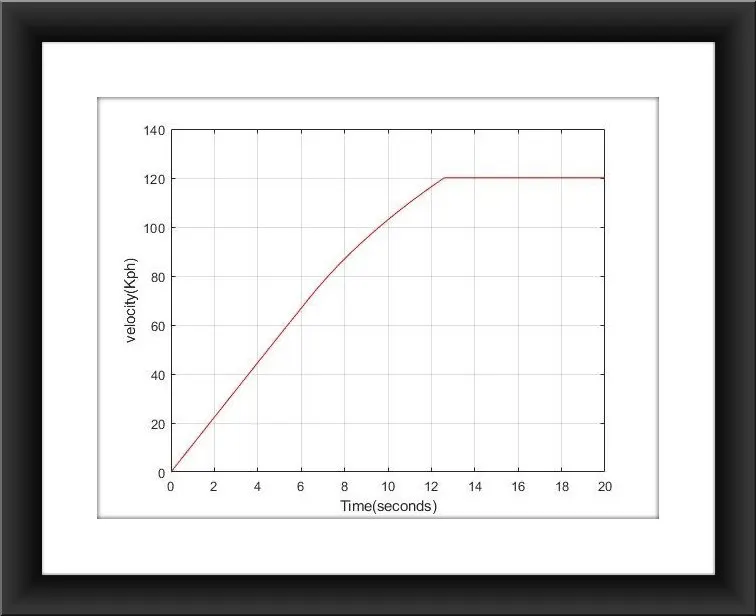
- The constant speed is attained almost in 12.6 seconds.
5)To show variation in acceleration time with a 5% change in vehicle parameters.
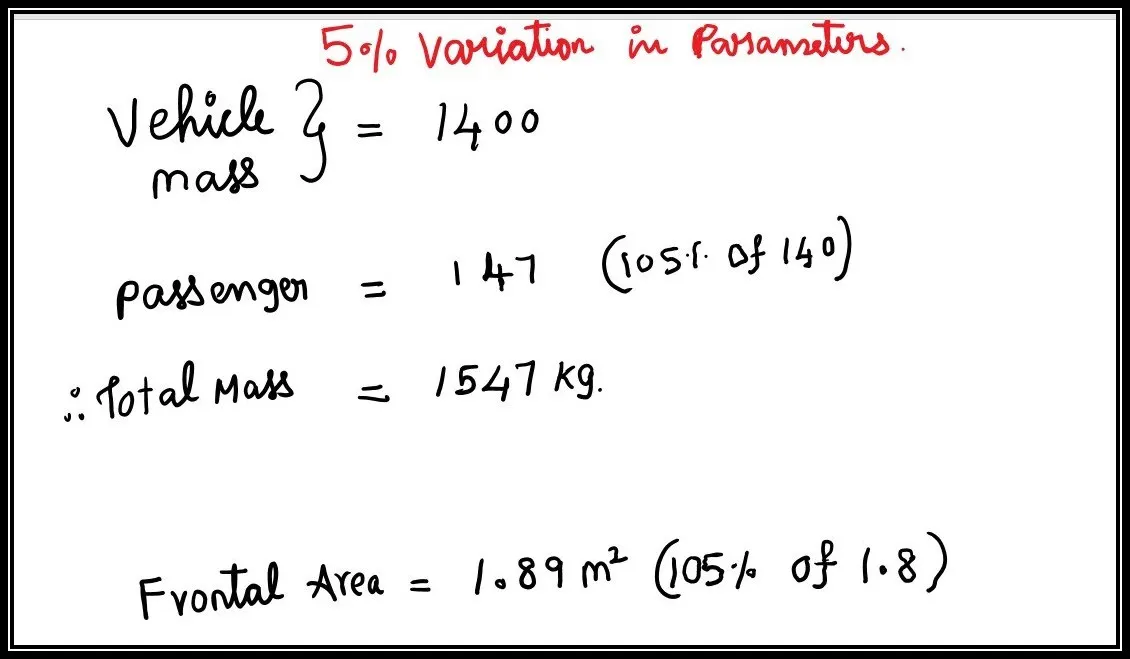
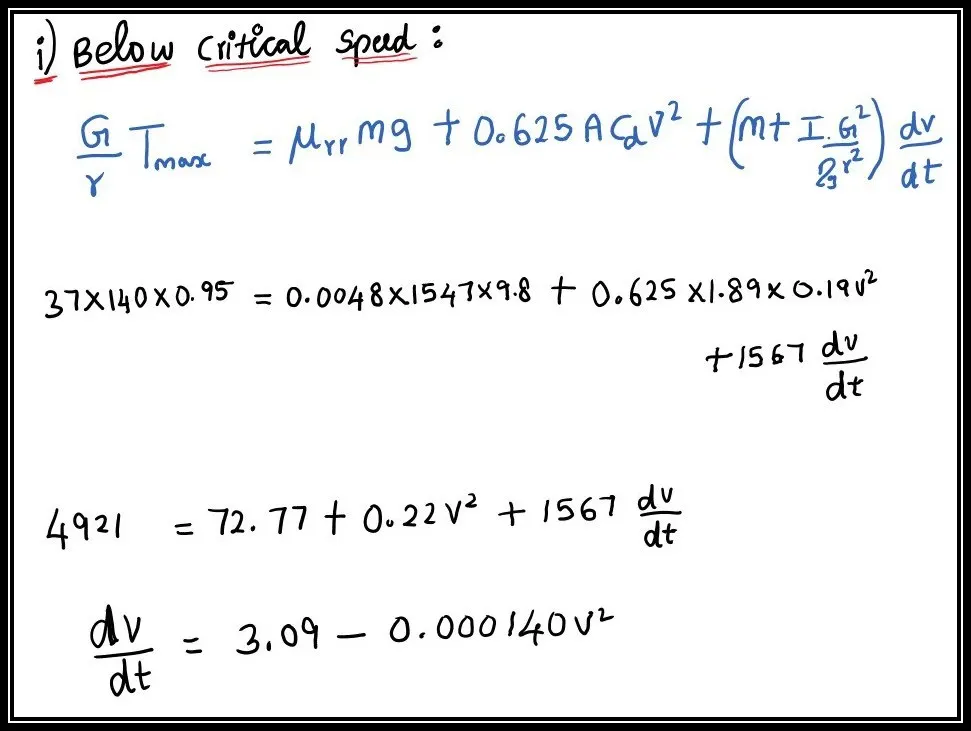
Mass=1400+147(5% increase)
Mass=1547Kg.
Frontal Area=1.89m^2 (5% increase)
Matlab Program:
clear all
close all
clc

t=linspace(0,20,201);
vel=zeros(1,200);
velocity=zeros(1,200);
d=zeros(1,100);
dt=0.1;


for n=1:200
    if velocity(n)<19.8
        velocity(n+1)=velocity(n)+dt.*(3.11-(0.000137*(velocity(n)^2)));

    elseif velocity(n)<33.33,velocity(n)>19.8
        velocity(n+1)=velocity(n)+dt.*((62.1/velocity(n))-0.046-(0.000137*(velocity(n)^2)));


    else velocity(n)>33.33

            velocity(n+1)=velocity(n);

    end

    d(n+1)=d(n)+0.1*velocity(n);
end
velo=velocity.*3.6;


for n=1:200
    if vel(n)<19.8
        vel(n+1)=vel(n)+dt.*(3.09-(0.000140*(vel(n)^2)));

    elseif vel(n)<33.33,vel(n)>19.8
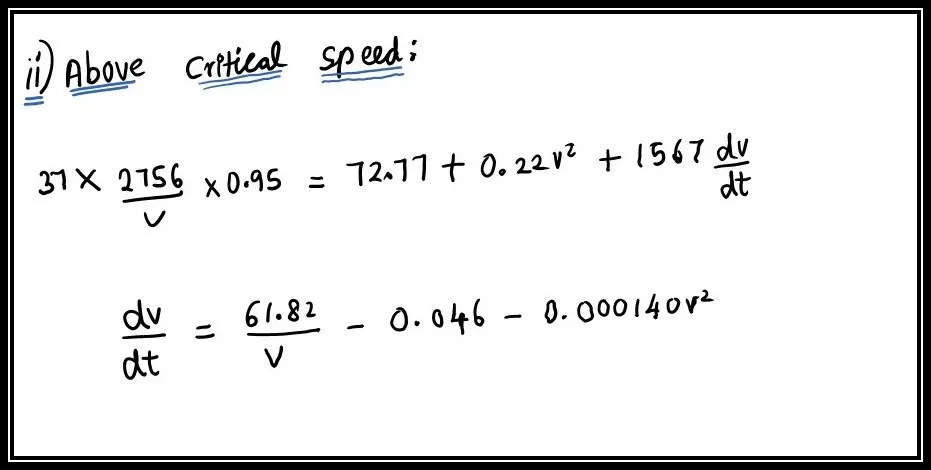
        vel(n+1)=vel(n)+dt.*((61.82/vel(n))-0.046-(0.000140*(vel(n)^2)));


    else vel(n)>33.33

            vel(n+1)=vel(n);

    end

    d(n+1)=d(n)+0.1*vel(n);
end

velo_change=vel.*3.6;

plot(t,velo,'color','r')
hold on
plot(t,velo_change,'color','b')
xlabel('Time(seconds)')
ylabel('velocity(Kph)')
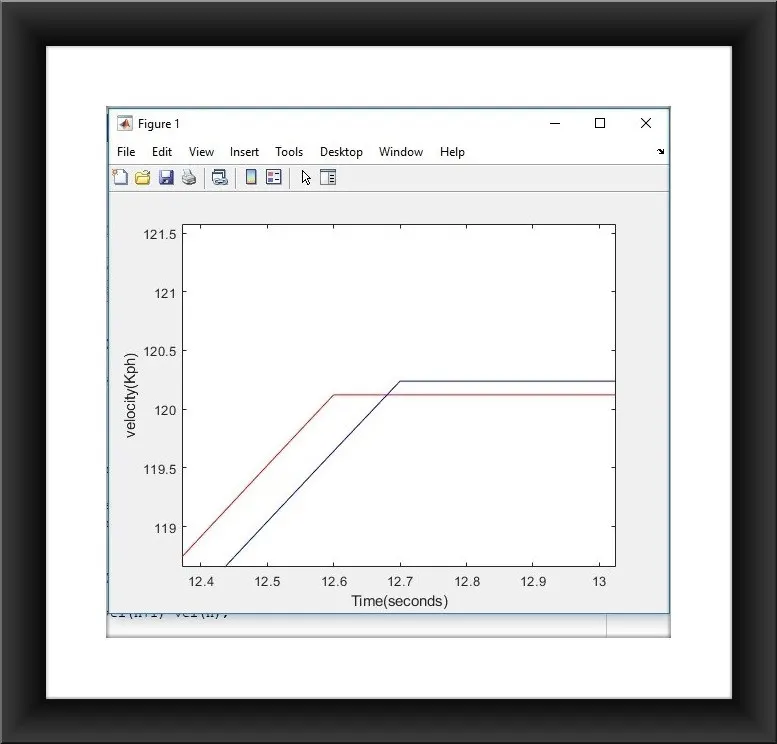
- Using the above same procedure,the program for 5% variation in mass and frontal area is created and plotted.
RESULT:
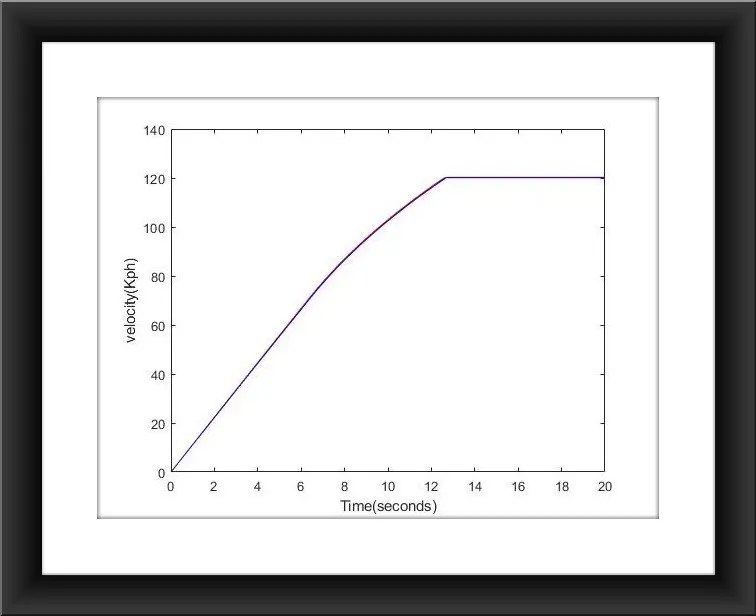
- Only slight variation is observed and due to this, both the curves get overlap. When we zoom it in, we can able to notify the slight variation more precisely.
INFERENCE:
- Due to the increase in the mass and the frontal area the time taken to attain the maximum speed get's increased.
- This confirms that the torque equation which we calculateed is true.