Week 9 Tension and Torsion test challenge
TENSILE AND TORSION TEST ON A STEEL SPECIMEN
Tensile test-
Tensile tests are used to determine how materials will behave under tension load. In a simple tensile test, a sample is typically pulled to its breaking point to determine the ultimate tensile strength of the material. The amount of force (F) applied to the sample and the elongation (∆L) of the sample are measured throughout the test. Material properties are often expressed in terms of stress and strain.
OBJECTIVE-
The objective of this challange is :
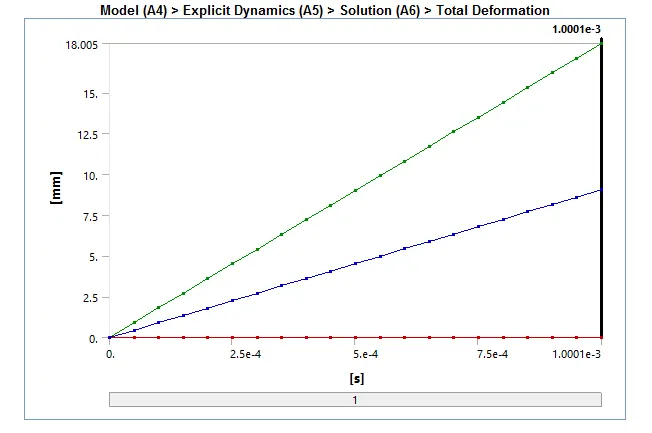
- For the tension test, displace one end of the specimen to 18mm while keeping the other fixed.We need to find out the total deformation, equivalent stress and temperature of the specimen.
- For the torsion test,we need to displace one end of the specimen to an angle of 1200 degree. Find out the total deformation, equivalent stress and temperature of the specimen.
PROCEDURE-
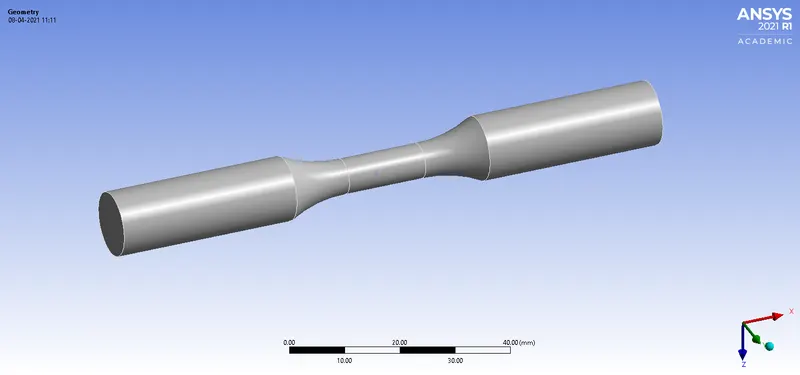
- Explicit Dynamics analysis system is used to carry out the Tensile test.
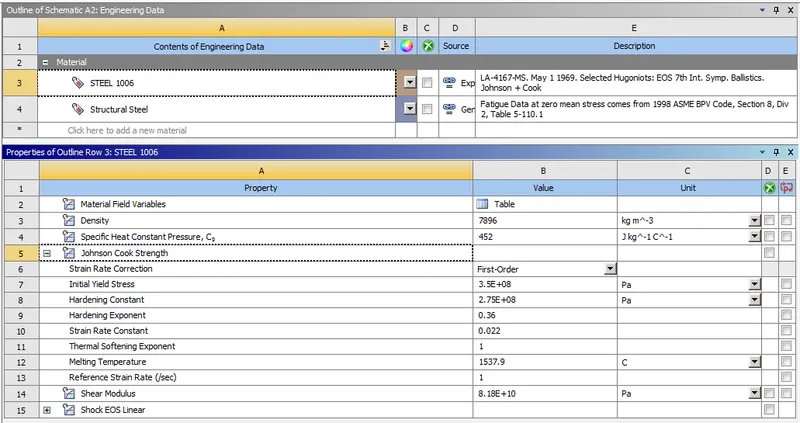
- This analysis is performed using "steel 1006" material from the general explicit materials library.
MESHING-
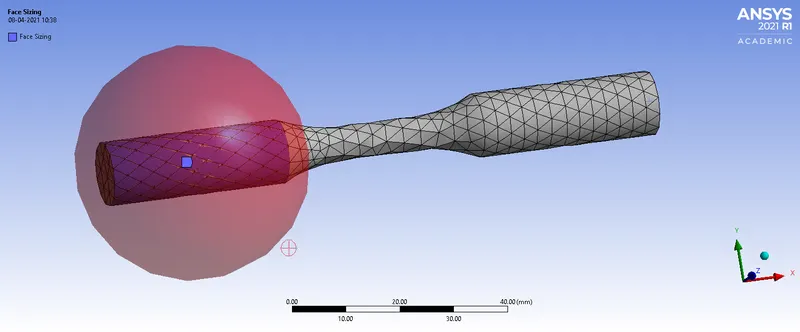
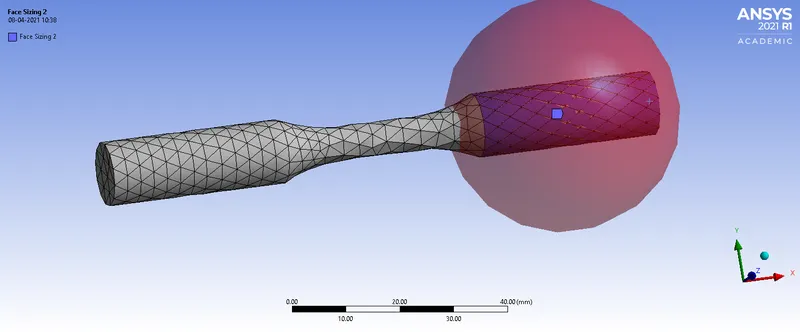
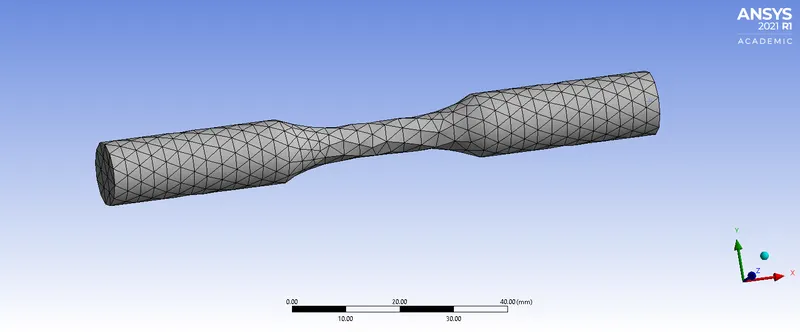
- Tetrahedron method with patch conforming algorithm is used for the steel specimen.
- Face sizing is used for the two ends with sphere of influence type of radius 22mm and element size 3mm.
BOUNDARY CONDITIONS-
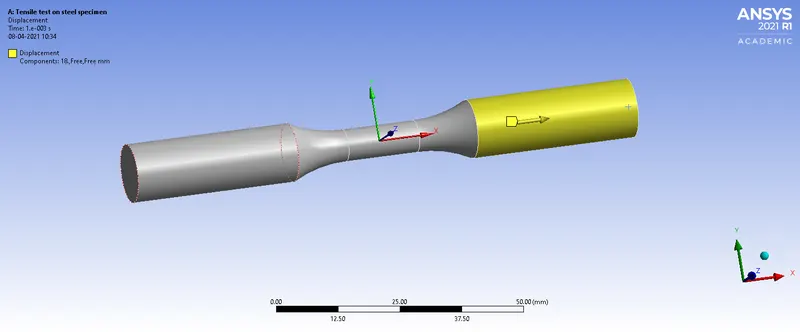
- A Displacement of 18mm is provided to one of the ends of the steel specimen along positive X-axis.
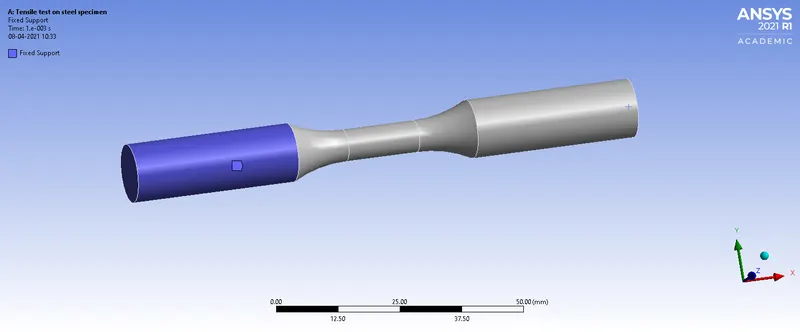
- Fixed support is provided to the other end of the steel specimen.
- End time for the analysis is feeded as 1e-3.
RESULTS-
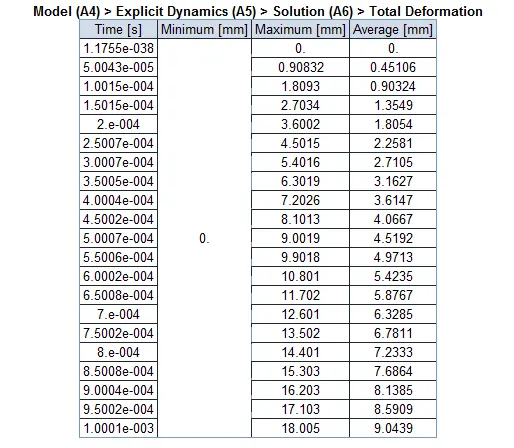
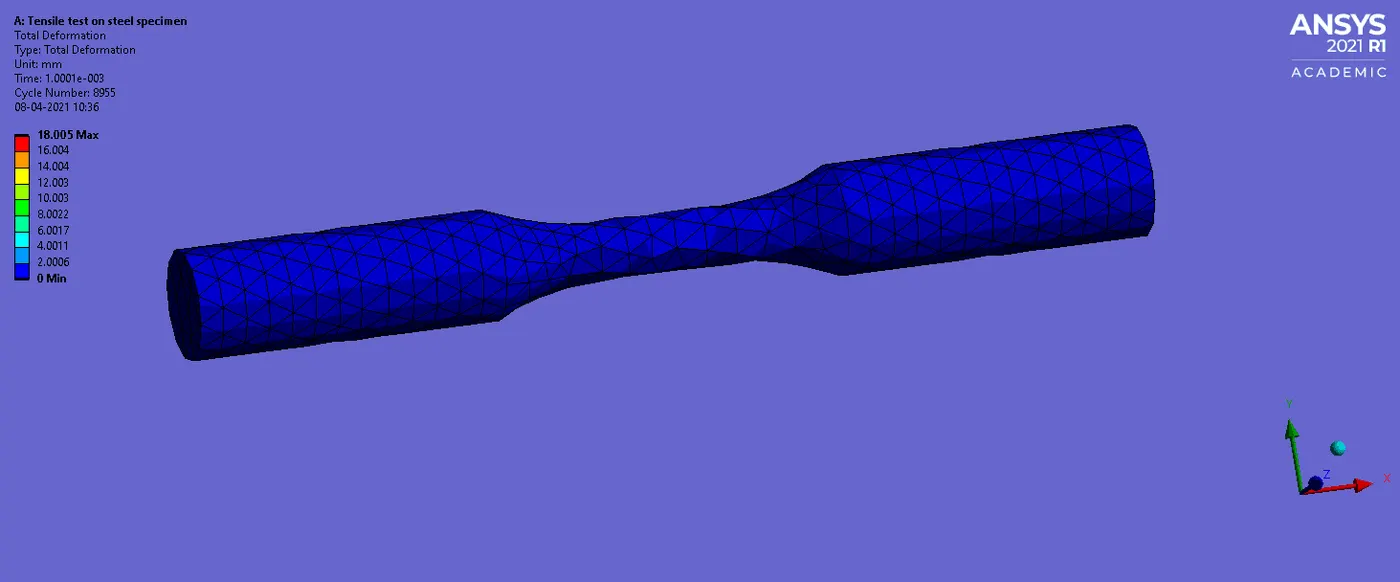
Total Deformation for the steel specimen during tension test:
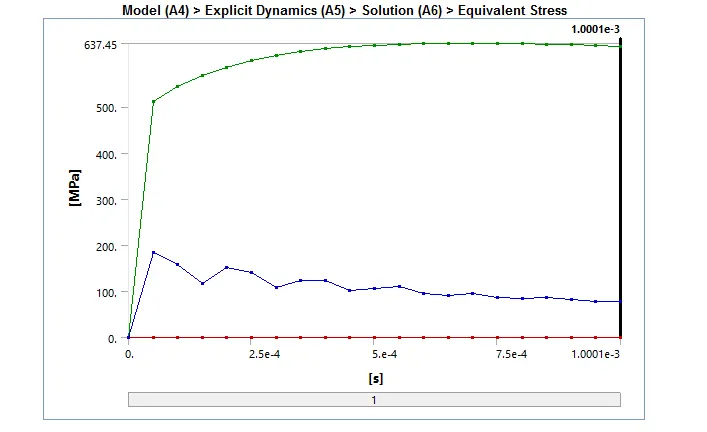
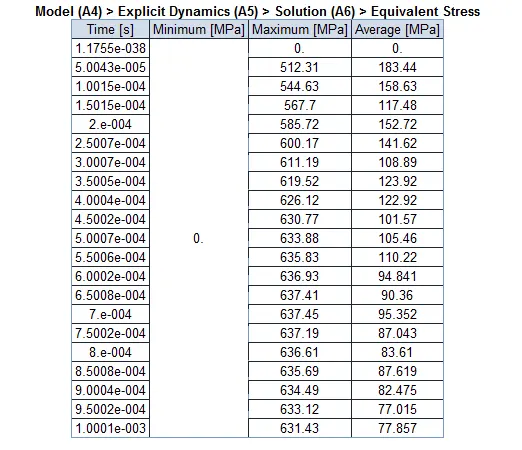
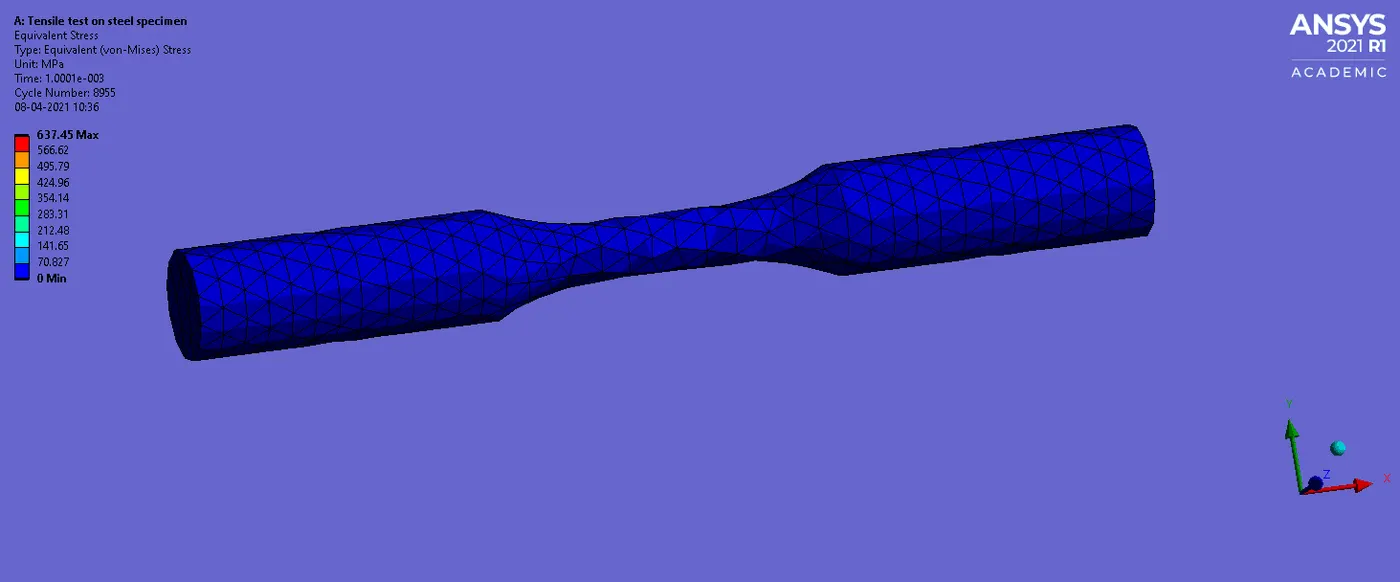
Equivalent stress for the steel specimen during tension test:
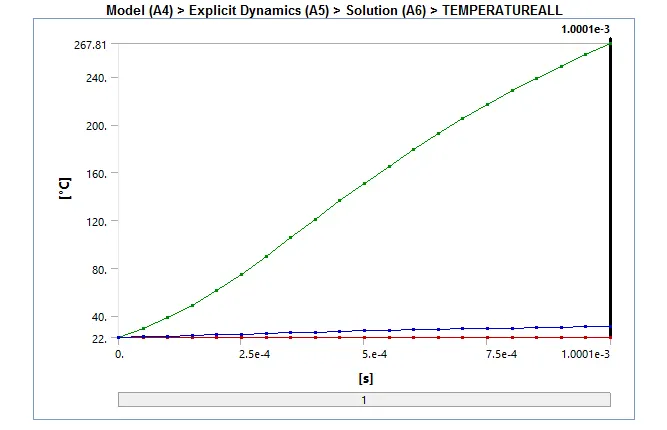
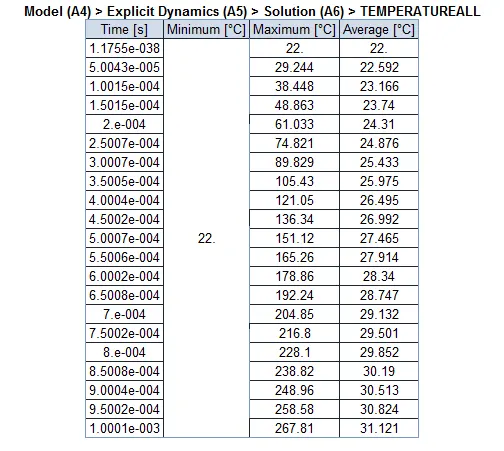
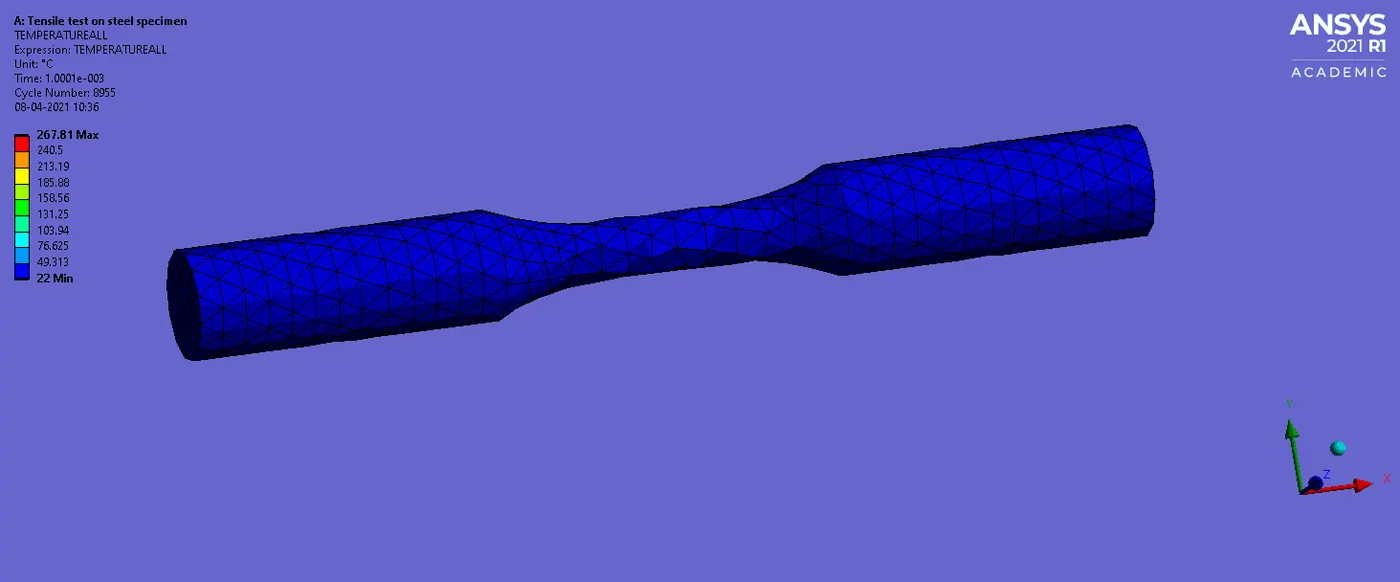
Temperature for the steel specimen during tension test:
TORSION TEST ON STEEL SPECIMEN
Torsion test-
Torsion testing is a type of mechanical testing that evaluates the properties of materials while under stress from angular displacement. Torsion testing can be split into two distinct categories: testing raw materials like metal wires or plastic tubing to determine properties such as shear strength and modulus, or functional testing of finished products subjected to torsion, such as screws, pharmaceutical bottles, and sheathed cables. The most common mechanical properties measured by torsion testing are modulus of elasticity in shear,yield shear strength,Ultimate shear strength and ductility.
MESHING-
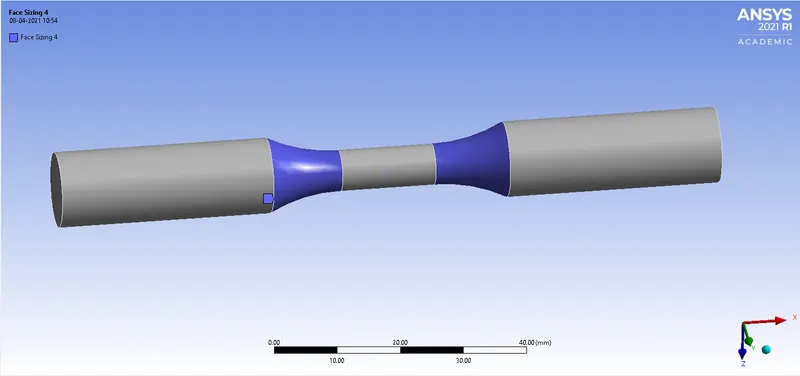
- Face sizing of 1.5 mm is applied for the two faces of the specimen as shown below.
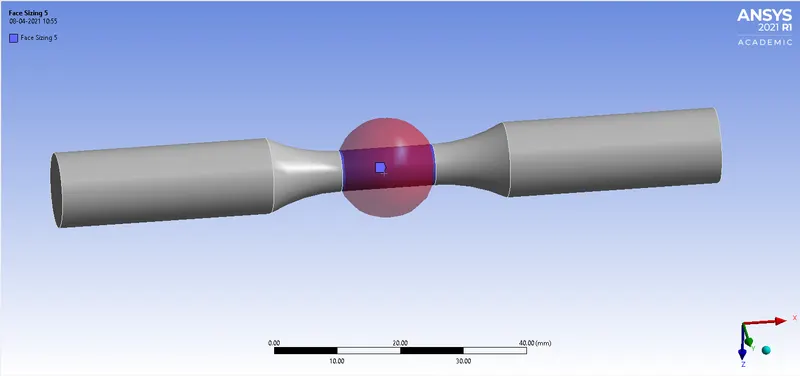
- Another sphere of influence sizing mesh is used for the center portion of the steel specimen with a radius of 8mm and element size of 1mm for better results.
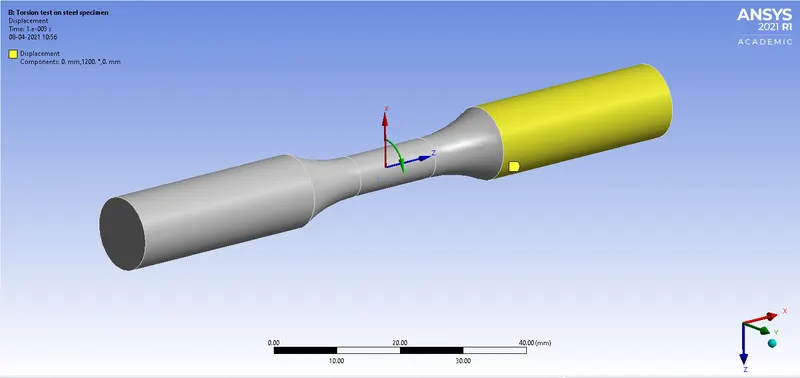
- A cylindrical coordinate system is used for providing the angular displacement of 1200 degrees.
RESULTS: -
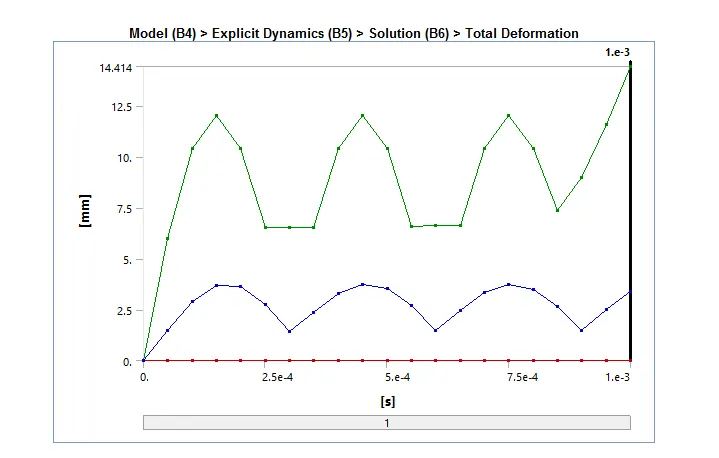
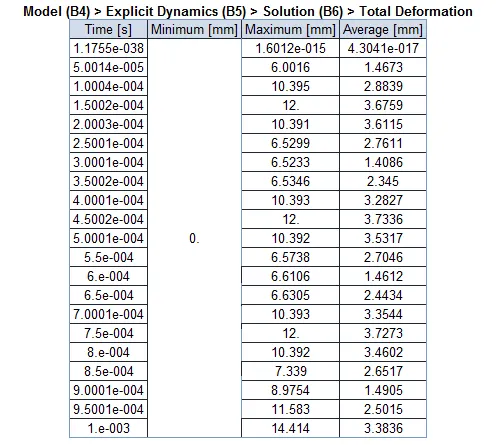
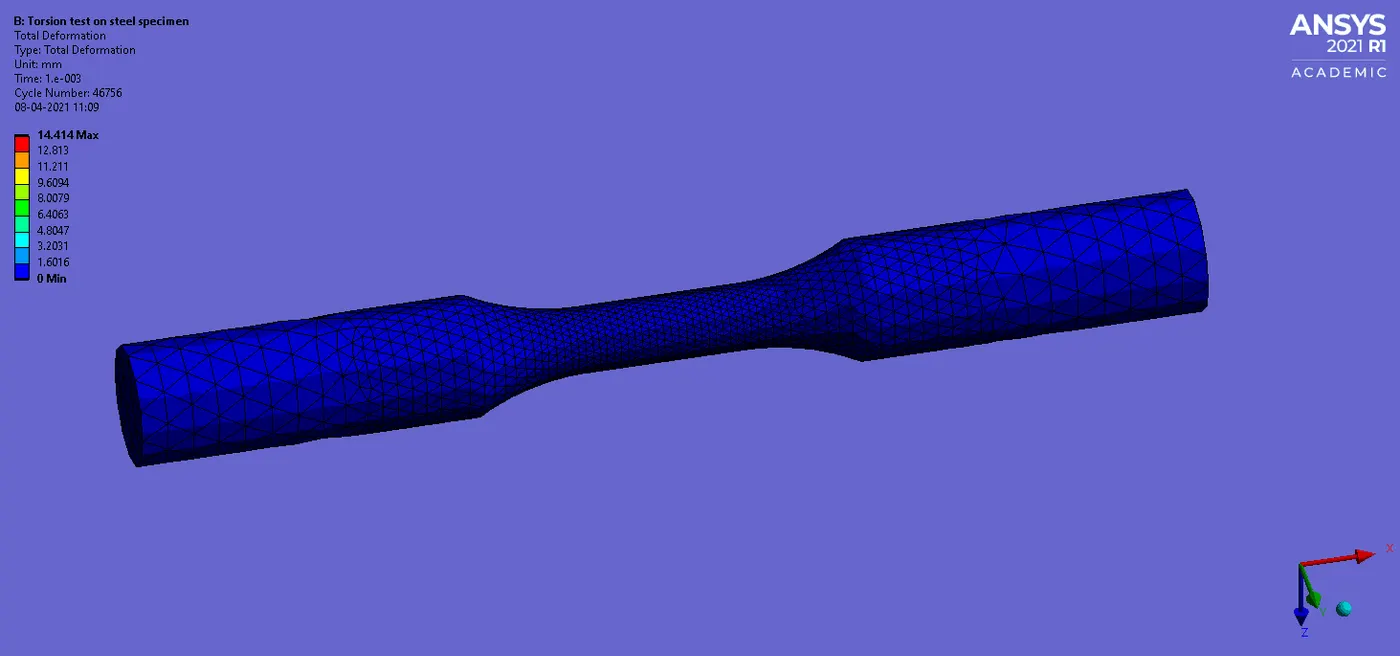
Total Deformation for the steel specimen during torsion test-
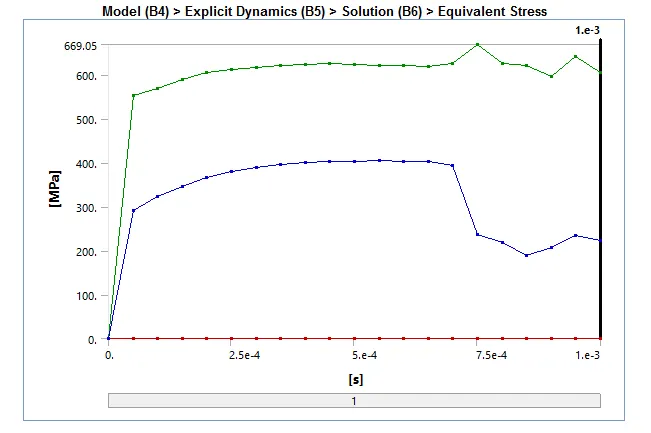
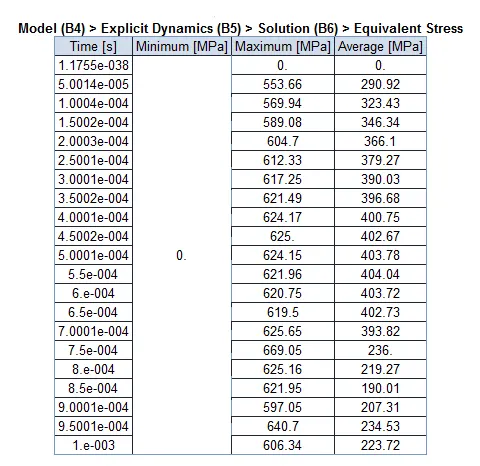
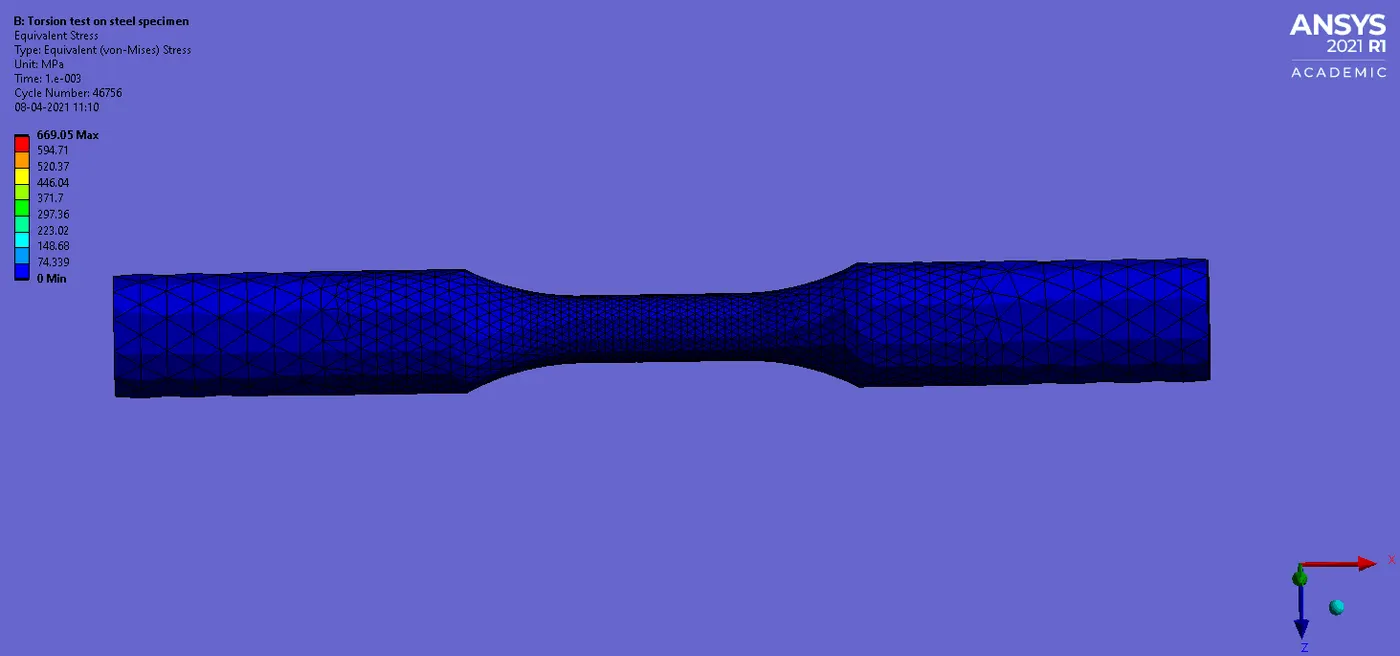
Equivalent stress for the steel specimen during torsion test-
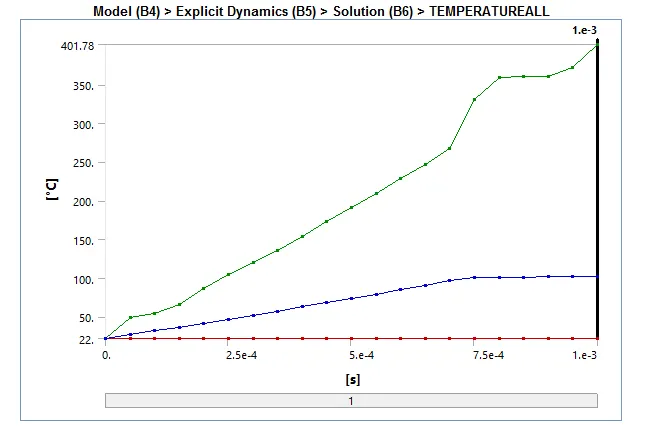
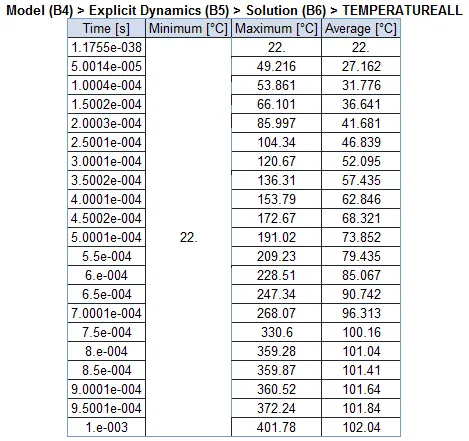
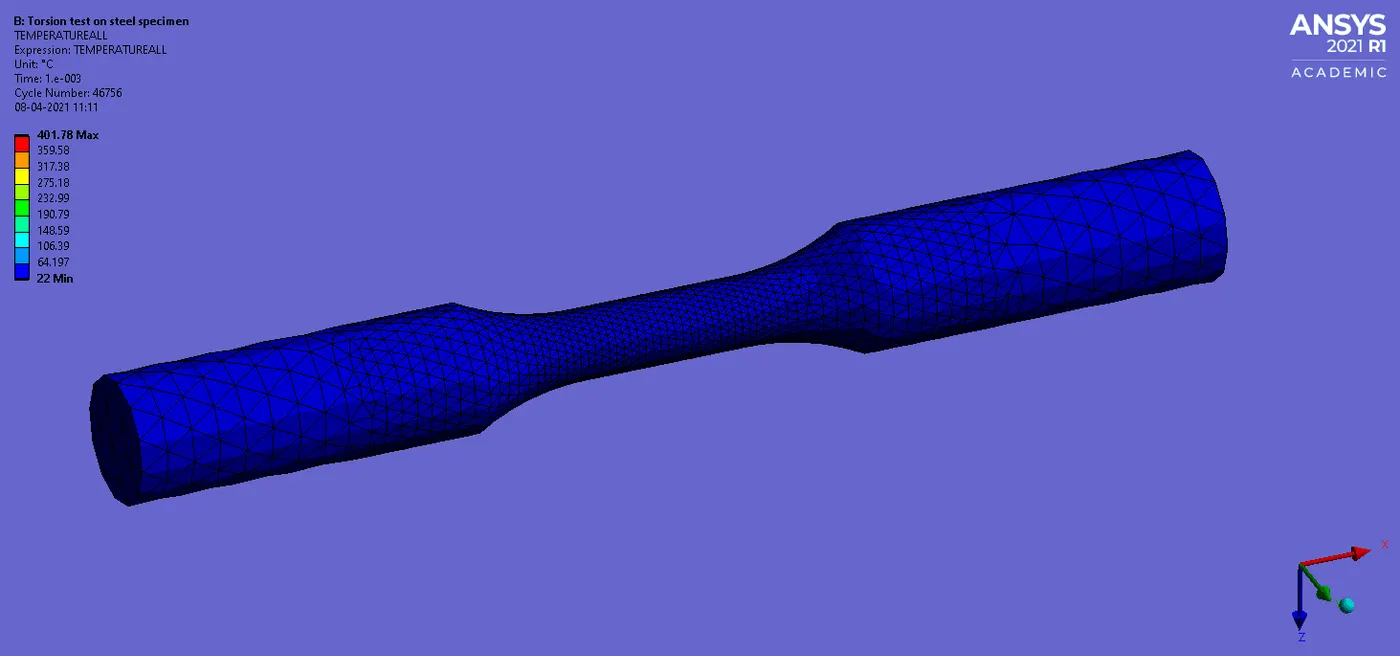
Temperature for the steel specimen during the torsion test-
The following results are summed up in the below table-
| CASES | Total deformation (mm) | Equivalent stress (MPa) | Temperature (C) |
| Tensile test | 9.0439 | 77.857 | 31.121 |
| Torsion Test | 3.3836 | 223.72 | 102.04 |
CONCLUSION-
- Total deformation is higher in the case of the Tensile test while the Equivalent stress is lower than the Torsion test.
- Higher temperature is experienced in the torsion test because of the twisting of the specimen.
- Fracture is not observed for the displacement of 18mm in tensile test.