Week 9 - Project 1 - Door Trim Lower with Engineering Features
AIM:
Create the Door Trim Lower Plastic component through the given Class-A surface. To begin with, the tooling axis for the given Class-A Surface should be created meeting the requirements of the draft angle and at the end perform the Draft analysis on the model.
Create the Heat Stakes and the locators considering the design rules mentioned in the video
CLASS A SURFACE:
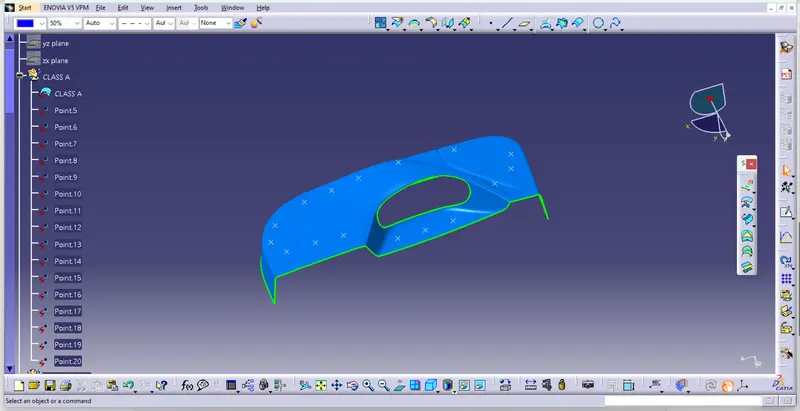
This is the styling surface which provides the aesthetic features of a component. A designer starts the design of component from a class A surface.
Given class A surface
TOOL AXIS CREATION
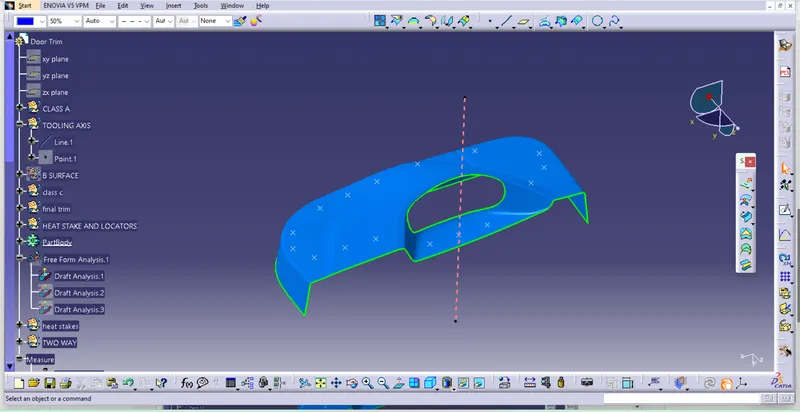
- The next step is to create the tooling axis for the part which will determine the direction in which the core and cavity of the mould will move.
- Designer must ensure that all holes and slots are covered in the main tooling and thus side core must be avoided whenever possible
- After analysing visually for the best possible tooling axis, an axis system is created on the centre of one of the surfaces of the door trim.
- The main tooling axis is created normal to the y direction
B SURFACE CREATION
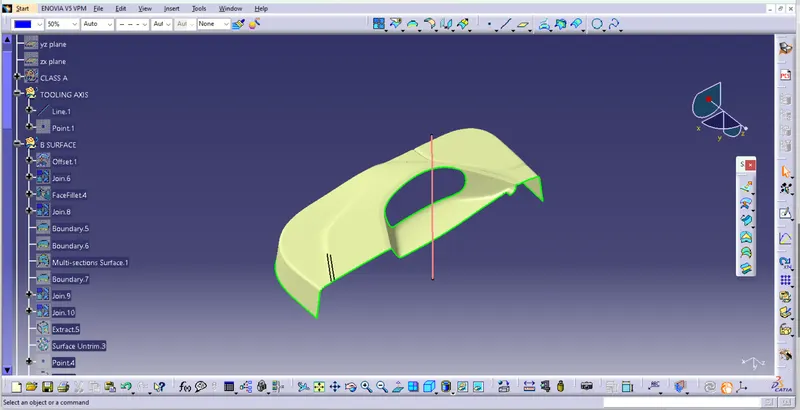
Class B surface is obtained by offsetting the class A surface by the component thickness value. This B surface contains all the engineering features of the component. So it is also called as Engineering Surface.
C SURFACE CREATION
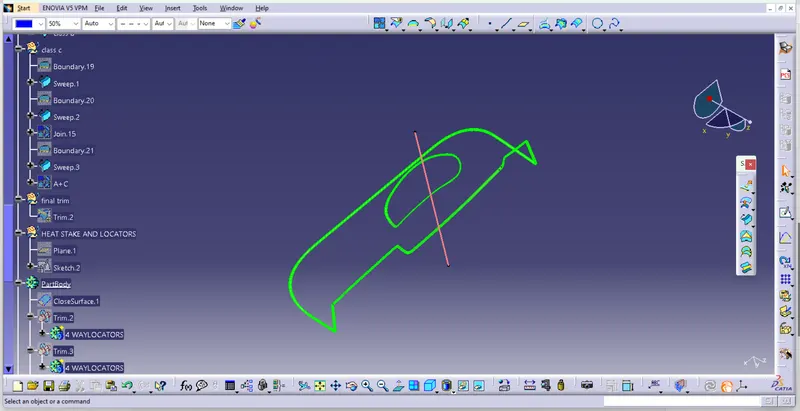
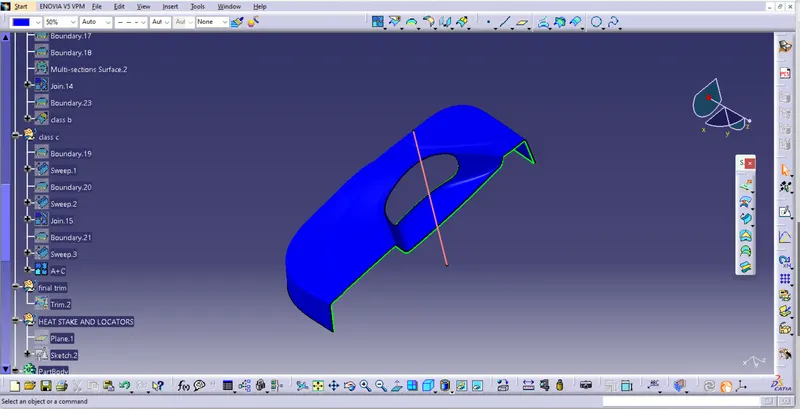
By using the MULTIPLE EXTRACT Command create a boundary and use SMOOTH CURVE Option to smooth the curve and use Sweep command to create a surface along "WITH REFRENCE SURFACE".
And the angle of draft given in Sweep is 93Degrees.
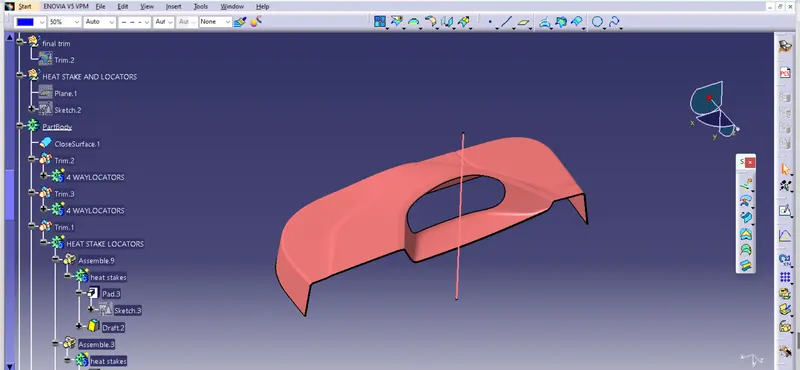
C+A SURAFCE
HEAT STAKES CREATION
In heat staking, we use local heating and cooling to raise the temperature of plastic components and allow plastic reforming to be carried out.Then fillet is applied to the faces of the rib. As per the design rule, the fillet can be 0.25 mm.These heat stakes will enter the mating component and using a heat staking machine these heat stakes are melted and cooled. When cooled this will get hardened and the two components will stick together. Thus all degrees of freedom are arrested.
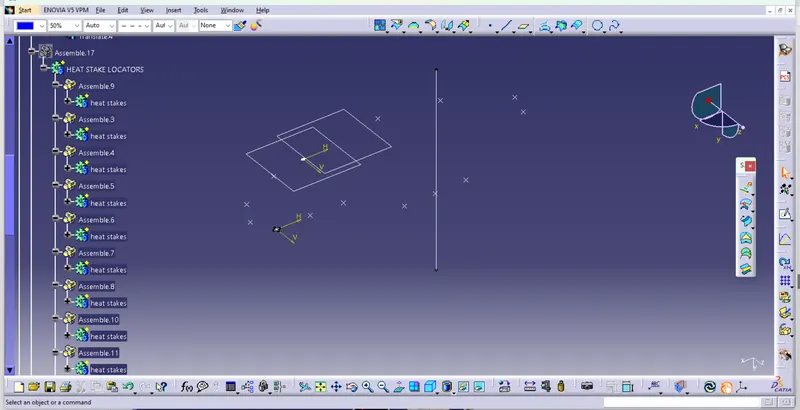
LOCATERS
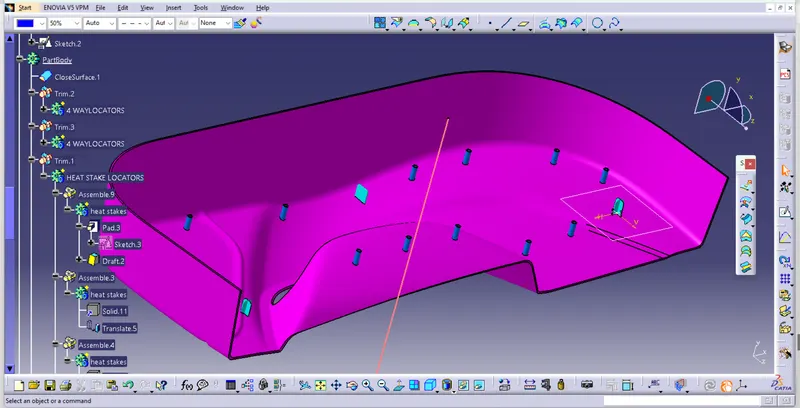
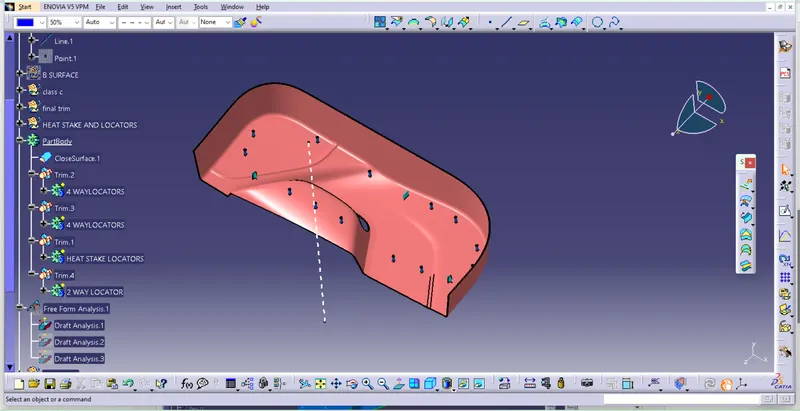
Final part of the closed surface
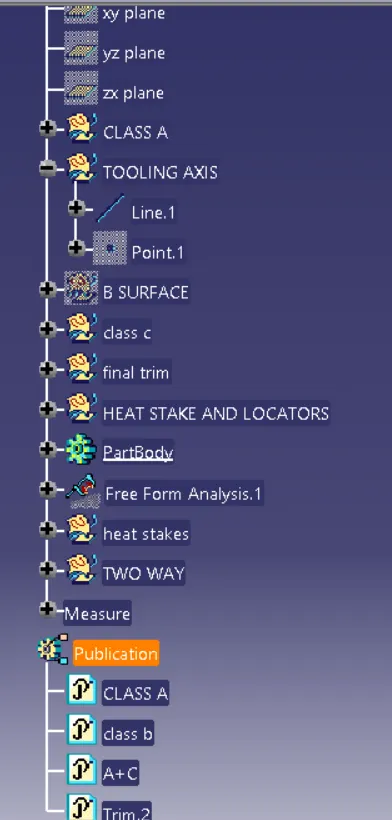
TREE STRUCTURE
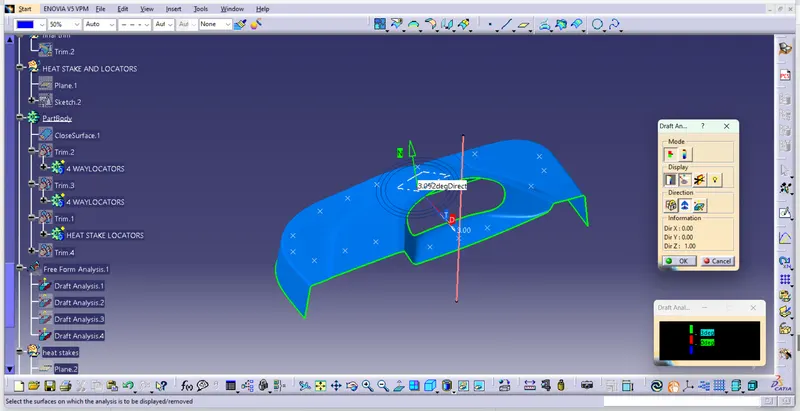
DRAFT ANALYSIS
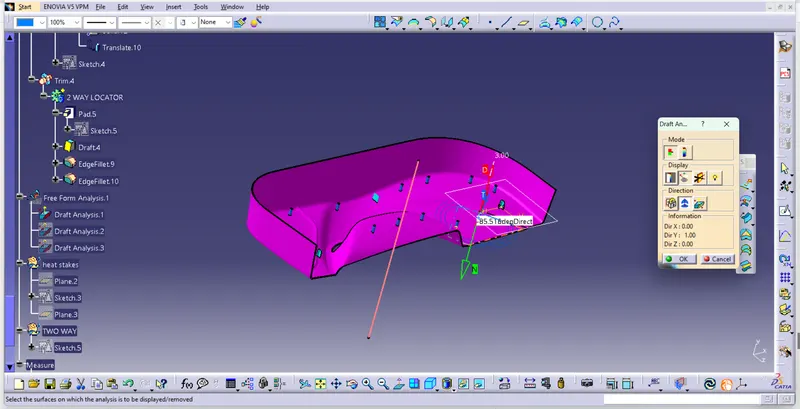
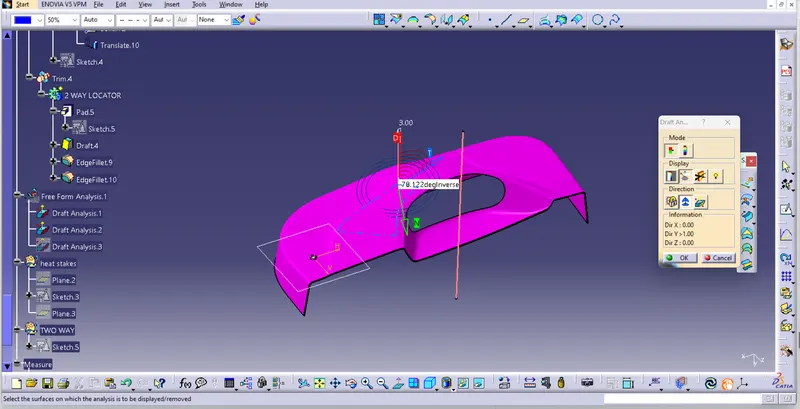
Draft analysis is an operation that is performed to know the draft angles of the surfaces concerning the tooling direction. The minimum feasible draft angle for this design is taken as 3 degrees. Generally for plastic components, a minimum draft angle that can be achieved is 0.5 degrees.
CONCLUTION
Successfully Created the DOOR APPLIQUE Plastic component through the given Class-A surface By Providing Engineering Features.