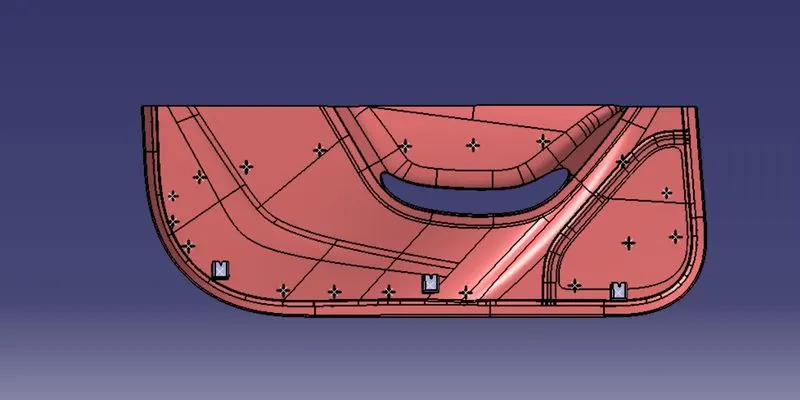
Week 9 - Project 1 - Door Trim Lower with Engineering Features
Week 9 - Project-1 Door Trim Lower with Engineering Features
OBJECTIVES:
- To create the class B and class C surfaces from the given class A surface
- To form a solid geometry by combining all the surfaces
- To create a dog house for the solid part whilst following the design rules
- To perform draft analysis on the class A surface and the solid part model
PRE-DESIGN CHECKS:
Before starting the creation of the class B surface we must ensure that the given class A surface is properly closed and the surface continuity is proper. This can be done either with the help of the join operation or by using the boundary feature.
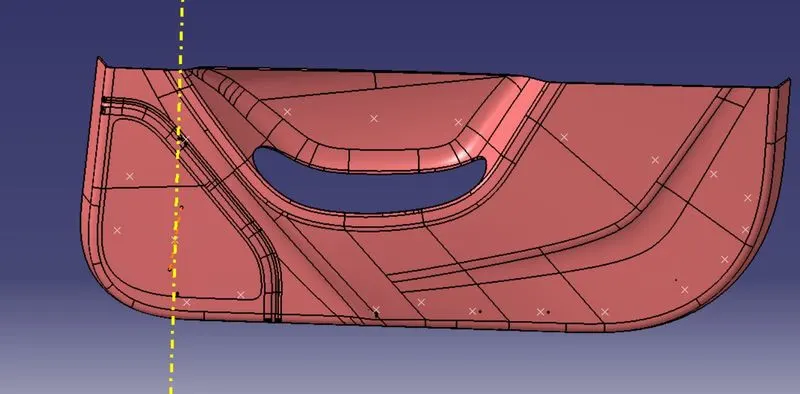
TOOLING AXIS:
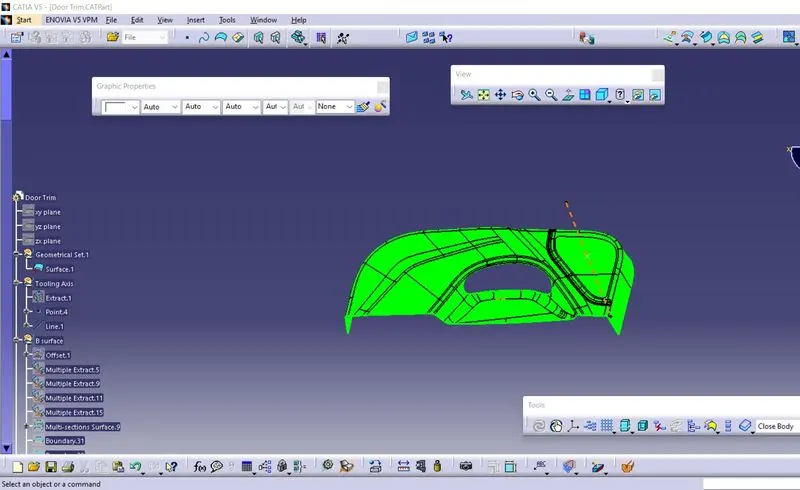
- The next step is to create the tooling axis for the part which will determine the direction in which the core and cavity of the mould will move.
- Designer must ensure that all holes and slots are covered in the main tooling and thus side core must be avoided whenever possible
- After analysing visually for the best possible tooling axis, an axis system is created on the centre of one of the surfaces of the door trim.
- The main tooling axis is created normal to the y direction
SIDE CORE AXIS:
The side core axis is created to normal to the X axis. The dog house inner walls will be cleared using the side core axis
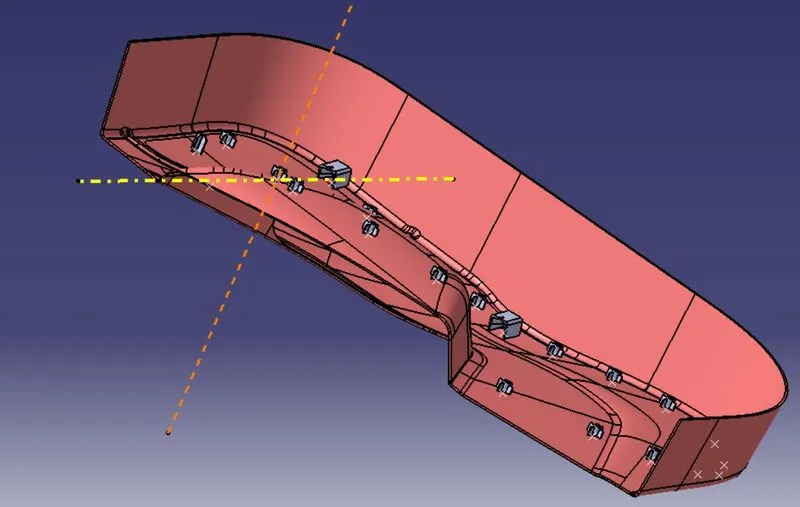
Engineering Features:-
Heat Stake:-
Heat staking also known as thermoplastic staking is the process of joining two dissimilar materials together. In heat staking we use local heating and cooling to raise the temperature of plastic components and allow plastic reforming to be carried out. This reforming can be used in a wide variety of applications.
Applications range from staking plastic bosses for assembly of car door panels to joining PCB’s to plastic housings. Benefits of this technique include; no vibration damage, no particulates, the ability to stake metalized coated applications and the capability to stake in difficult to access or restricted areas.
Advantages of Heat Staking
- Consistent, Fast & Economical Alternative to Rivets & Screws.
- Joins different materials Eg: Plastic to plastic , plastic to non-plastic or join 2 non-plastics.
- Able to handle difficult to weld plastics.
- Simple mechanism and accurate control.
Industry Applications
- Automotive : Reliable solution for interior parts, welding bumpers, tail light assemblies, dashboards & many more parts
- Textile : Creates durable seals without the need for glues, clips and yarns in product designs
- Appliances : Component welding for large or small household appliances
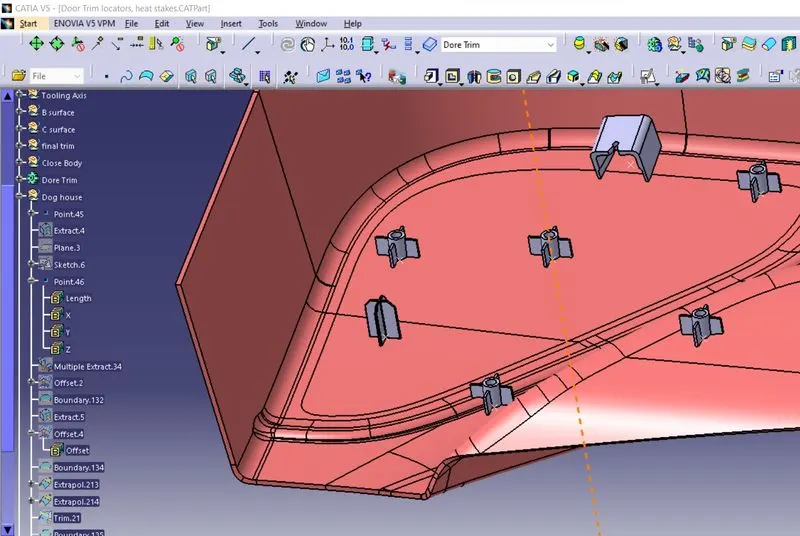
Locators:-
Locators provide a positive stop for the workpiece. Placed against the stop, the workpiece cannot move. Clamps, on the other hand, rely only upon friction between the clamp and the clamped surface to hold the workpiece. Sufficient force could move the workpiece
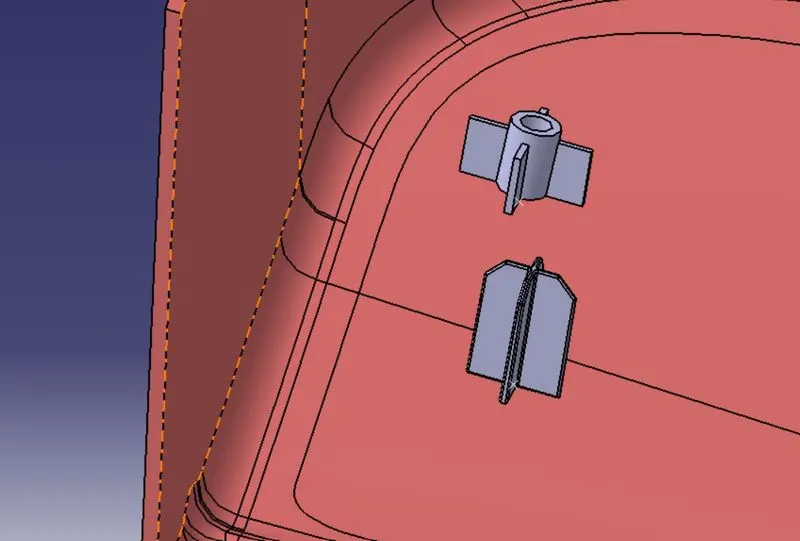
types of locators
4 way locator:-
A round locating pin located concentrically in a hole is a common application of a 4-way pin, and helps to further secure the piece. 4-WAY LOCATORS: 4-way mean you prevent movement at 2 axes (+X, -X, +Y and -Y) on the plane. Generally, you have cylindrical pin on the fixture and circular hole at workpiece part.
1.WALL THICKNESS:
Thick sections waste material and are simply uneconomic. So solid shapes that would do the job well in wood or metal must be transformed to a 'shell' form in plastics. This is done by hollowing out or 'coring' thick parts so you are left with a component which regardless of complexity is composed essentially of relatively thin walls joined by curves, angles, corners, ribs, steps and offsets. As far as possible, all these walls should be the same thickness. Wall thickness guide range is 0.75 mm to 3 mm for reinforced materials 0.5 mm to 5 mm for unreinforced materials.
Wall thickness = As material thickness
Coaring wall Thickness = Guide range is 40% of material thickness
2.DRAFT ANGLE:Tooling must be cleared for easy ejection of the component, from the core cavity. In order to clear tooling certain value of draft is given to the component. Minimum of 2-3deg is provides on all plastic components.
Minimum draft angle for the for all engineering features is 0.5 Degree (According to Skill-Lync data)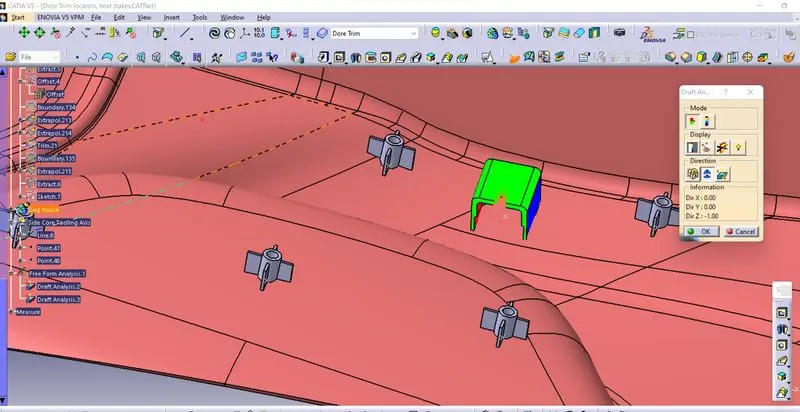
NOTE:- These data are provided by Skill-Lync