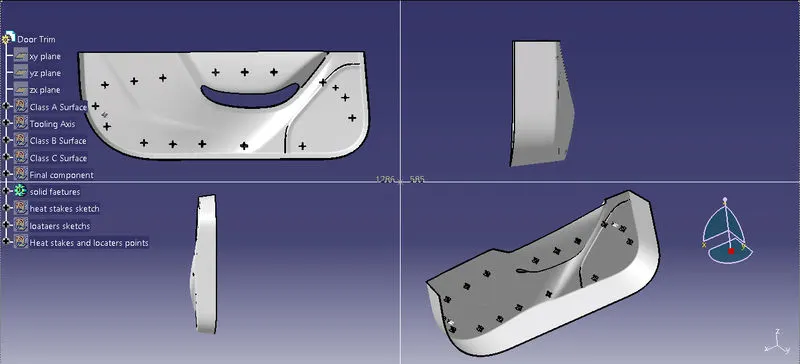
Week 9 - Project 1 - Door Trim Lower with Engineering Features
AIM:
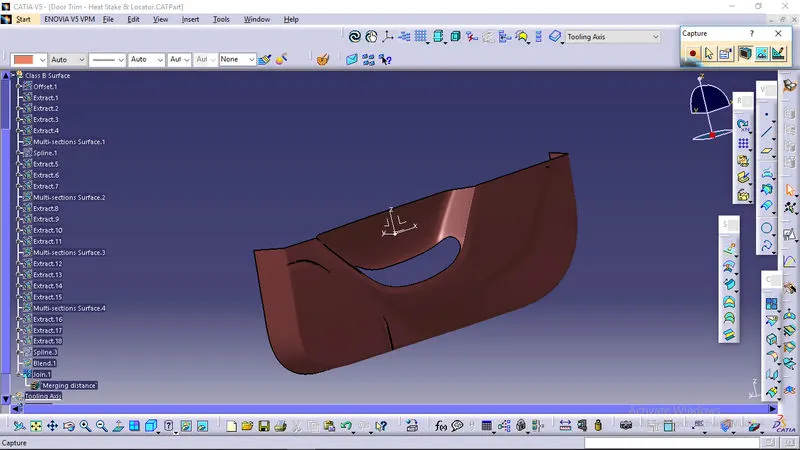
To creat HEATSTAKERS & LOCATERS for a gven CATPART Class A Syrface to make Class B &C Surface Attach with Engineering features heatstakes and locaters for DOOR APPLIQUE PLASTIC Component.
Used via
Catia V5 software- tools used given below,
- Point through on the centre of surafce
- Axis creation
- Line in point direction
- Bisectecting line
- Intersection
- Tool Axis
- Draft Analysis in Free from Analysis
- Untrim
- boundry
- extract boundry
- multiple extract boundry
- Extraploate
- Offset
- Trim
- Join
- Sweep command purticularly with draft direction
- blend
- fill surface
- Extruded surface
- multisection surface
- Fillet
- Closed Surface
- Thicken surface
- Pad
- Draft
- Fillet
TOOLING AXIS :
The tool axis is the parameter which decides whether the tool enters into mould or not as as it denotes the draft clearance angle where a moulded part is easily removed from the mould.
PROCEDURE FOR CREATING TOOL AXIS :
- Firstly we will be given with a class A surface which is looked as a asthetic and a smooth finish which is created with a Alias software workbench which is also known as a free imagination surface.
- For that class A surface we need to check a boundaries first to check any unattached faces is present in that surface.
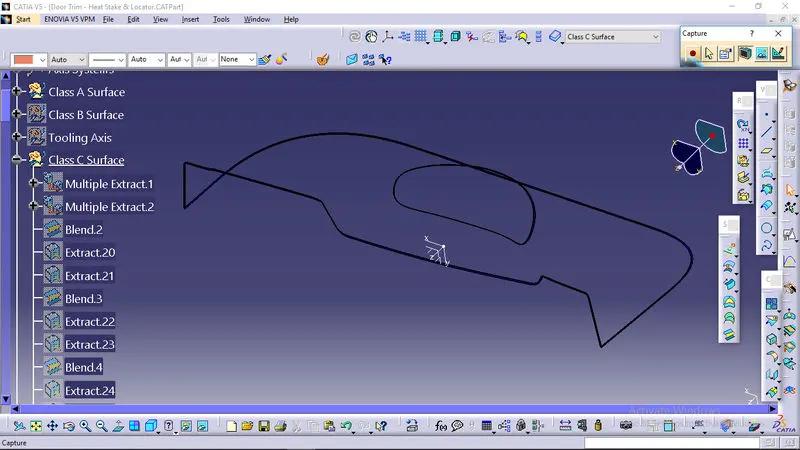
- The below is the image of a class A surface which is given as a input.
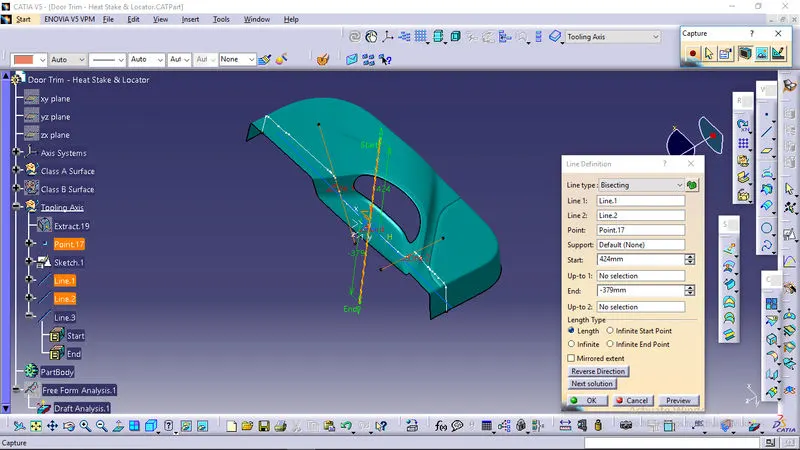
- So next we need to take a dummy tool axis to get a real tool axis.
- Next we take inclined lines to the surfaces we assume that draft is required.
- Then we intersect the both the lines and the bisecting line will be the tooling axis.
DRAFT ANALYSIS :
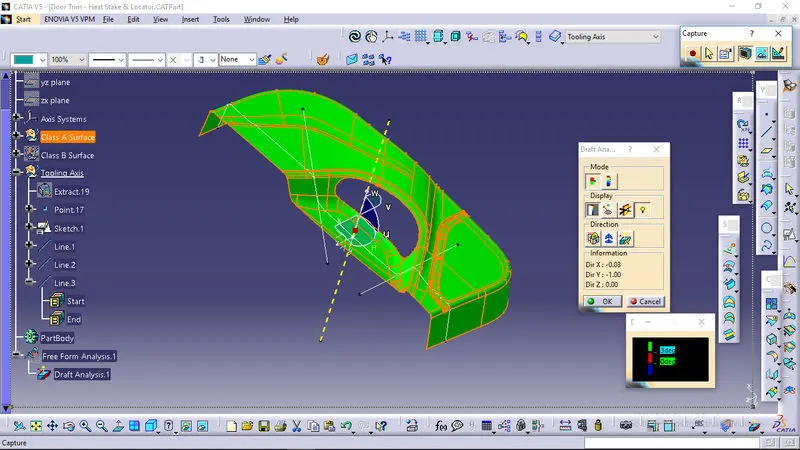
- No parts can be ejected from the tool if it is having a straight 90 degree profile from its base surface. A small draft angle is provided to each and every area of the component in order to get an easy removal of the component from the tool.
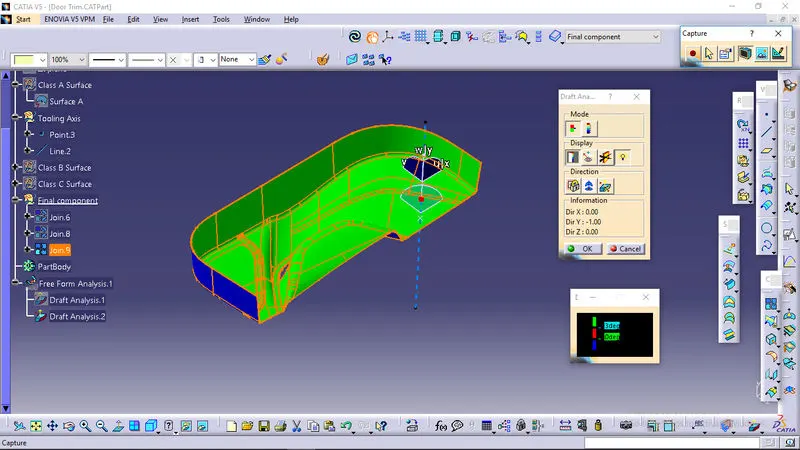
- Draft analysis technique is used to analyze whether our part model created in cad is manufacturable based on the draft condition applied. Here the part should get easily removed from the panel dies (in case of Sheet metal part) or Mold (in case of plastic).
- Here we are providing a direction in which components should eject inorder to get an easy removal of components from the tool. In other words it also lets us know whether the model is having a draft angle and how much is the draft angle from the tool direction.
Four way locator :
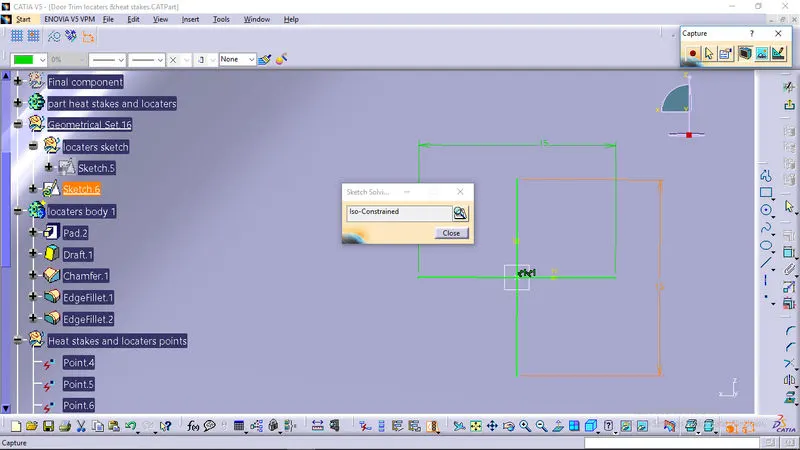
4-way mean you prevent movement at 2 axis (+X, -X, +Y and -Y) on the plane. Generally you have cylindrical pin on the fixture and circular hole at workpiece part.
Heat stakes :
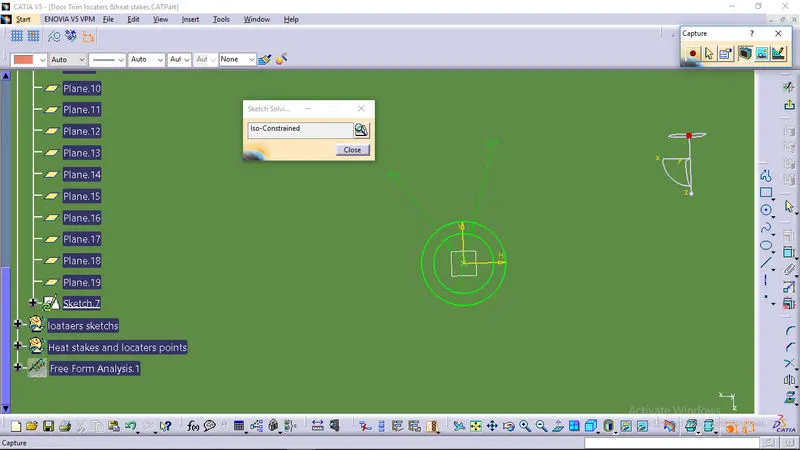
Heat Staking is a pulsed-heat process to join two or more parts out of which one at least is made of plastic. The process is to deform the plastic material using heat and force at a set process time. The bond is made by partially de-forming the plastic part in order to fix the other.
Heat Staking makes it easy to bond metal to plastic and is commonly used in high volume/low cost applications such as automotive, IT and consumer appliances.
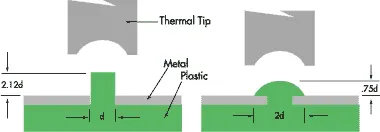
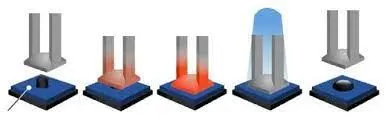
Shaping Plastic Using Heat and Pressure :
The plastic is deformed by heating it to a temperature above the glass transition temperature. Super-heated air or a thermode is used for this. Pressure is then applied to create the stake. After the stake has been formed, the plastic should be cooled down again below the glass transition temperature. Cooling is performed under constant pressure to ensure good fixation of the parts. Compressed air can be applied for cooling when a thermode is used.
Heat is used to facilitate the creation of the stake. Heat control is critical, especially for glass-filled plastics which often have a process window of less than 10 degrees Celsius. When the temperature is too high, the glass fibers come out of the plastic which leads to a rough surface and adhesion to the thermode. If the temperature is too low, the plastic will crack due to cold deformation.
SURFACE -A:
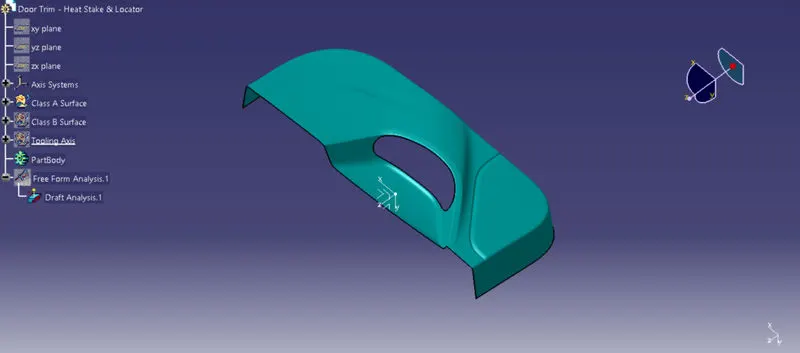
TOOLING AXIS:
DRAFT ANALYSIS:
SURFACE-B:
SURFACE-C:
LOCATERS SKETCH:
HEATSTAKES SKETCH:
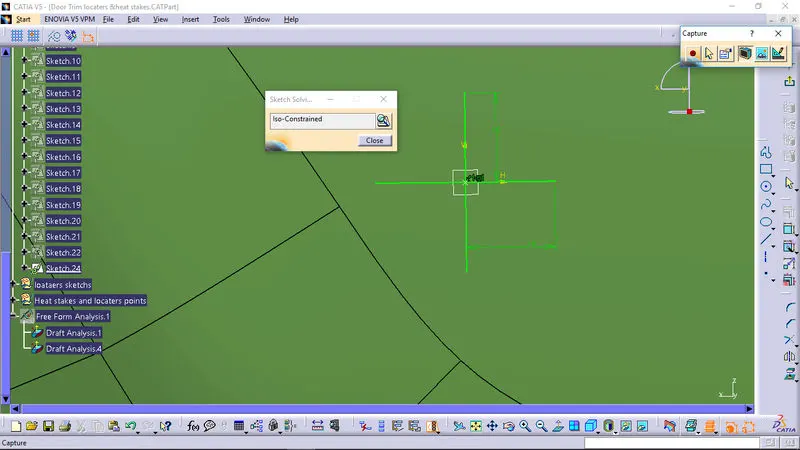
RIB SKETCH:
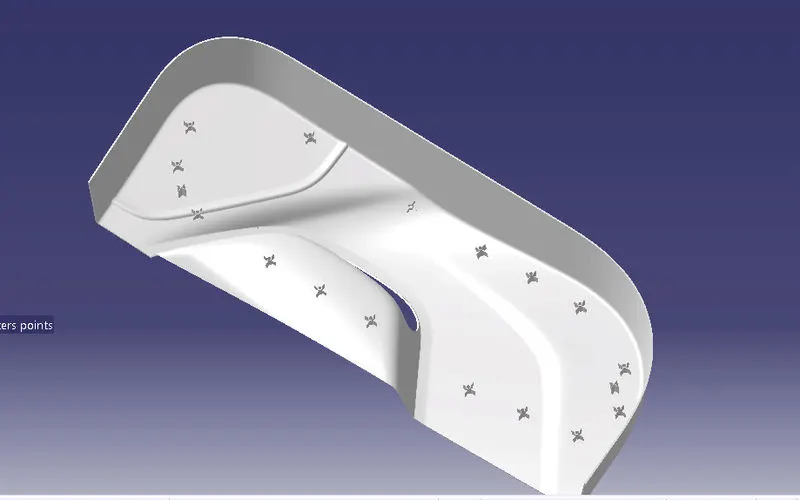
ORIENTATION: