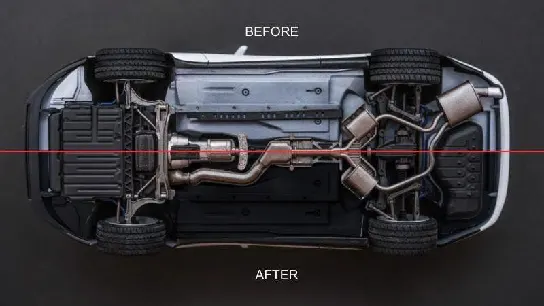
Underbody Coating
CAR UNDERBODY COATING
- Undercoating is the sprayed application of a wax or rubber-based composite onto the entire underside of the vehicle/car.
- It's designed to create a rust-proof layer between the underside of the vehicle and the water, ice, and salt of the road.
- Undercoating provides a more comprehensive protective layer for your vehicle.
- Underbody coating is usually a dense cladding (often based on rubber) applied uniformly to the undercarriage of the automobile.
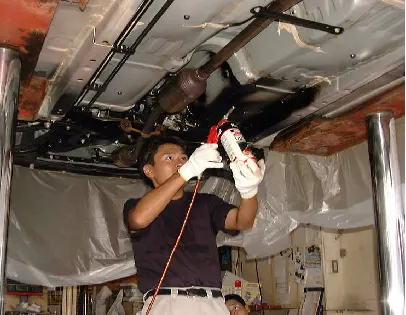
What is the underbody of a car?
- Underbody refers to the belly of your car, the underside that sits closest to the road.Everyday as you drive, rocks, road debris, and salt on snowy roads brushes up against the underbody of your car.
- One of the best and most effective ways to prevent scrape damage is to install skid plates or underbody shields on your car.
- Specifically designed to cover the car's undercarriage, skid plates are available in specific component sizes as well as full-underbody cover variations.
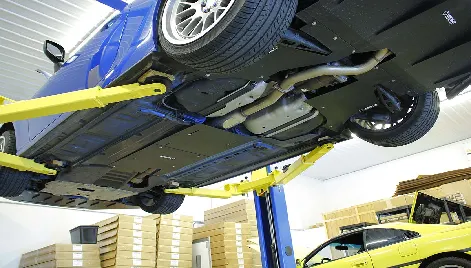
Is undercoating necessary on new cars?
- The short answer is no. Cars today are manufactured with corrosion protection, which makes this added treatment unnecessary, though it is profitable for car dealerships.
- Modern cars are made of lighter materials, which do not rust as readily or severely as heavier metals did before them. Plastics through to carbon fibre feature far more in cars these days, and they simply do not rust.
- In Indian road conditions, a cars underbody is most prone to corrosion. Underbody coating provides long term protection from corrosion to car's underbody. It also protects parts like internal body panels, frame rails and other inner cavities that are not physically accessible but are prone to corrosion.
Types of Underbody coating?
- Rubberized Underbody Coating
- Wax Based Underbody Coating
- 3M Undercoating
- Polyurethane Underbody Coating
RUBBERIZED UNDERBODY COATING
- Rubberized vehicle undercoating is easy to apply and offers sound-cushioning as well as protection from dust, moisture, and dings or dents.
- In addition to your undercarriage, rubberized undercoating is also safe to use on wheel wells and quarter panels, and dries to a soft rubbery finish that prevents further rust, damage, or moisture seeps.
- The coating can be painted over and, if necessary for bodywork, can be easily removed with an undercoating removal spray.Overall, rubberized coating is generally the best option for protecting your vehicle's undercarriage, as it provides the simplest and best protective measures against rust and moisture.
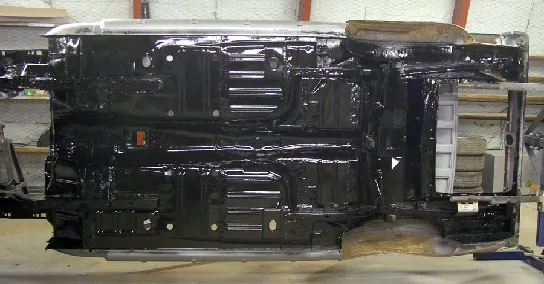
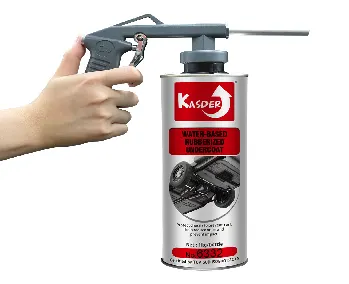
Benifits of ruberrized coating
- Heavy-duty undercoating seals, protects & insulates.
- Rubberized for maximum durability.
- Excellent professional blend all purpose coating Use it for rust prevention, sound deadening, abrasion resistance.
- Seals: frames, rocker panels, wheel wells and more.
- Fully cures in 24 hours at 77°F (25°C).
Applications
Rubber coating is applied to seal tools, flooring, and various other surfaces. The rubber coating is liquified having consistency of glue. Applying rubber coating to surfaces needs to be done evenly and quickly, so that all the sides of the surface might dry at the same time.
WAX UNDERCOATING
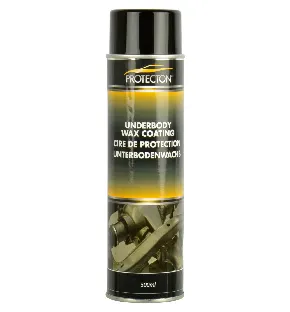
- A paraffin-based undercoating will be the cheapest and quickest option available with which to protect the undercarriage of your vehicle.
- However, keep in mind that it will wear off quicker than other types of undercoating and will need to be stripped and reapplied at least once every year.Wax-based undercoatings never truly harden.
- During application, they drip or flow into seams and cracks to provide protective properties.
- They are usually available in a spray gun canister or in an aerosol can and offer at least a base protection in moderately humid climates.
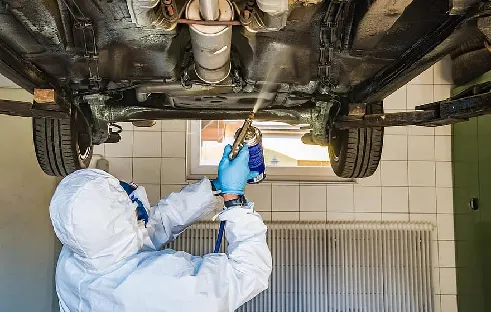
3M™ UNDERBODY COATING
- A car’s underbody is exposed to the most wear and tear caused by muddy water, potholed roads, stones and other obstacles on the road. Because it’s not in plain sight, we often do not see the damage.
- 3M™ Underbody Treatments offers you a long term solution for issues related to corrosion and rust.
- First, the car under body is washed and degreased.
- Then, the 3M™ Protective Coat is applied with Undershield, is a hard coating on the underbody of the car, that is fast-drying, paintable, rubberized, non-toxic and chip-resistant.
- It also minimizes sound from underneath the vehicle and insulates against the heat and cold.
- The 3M™ Underbody Treatment protects the car underbody from rust, increasing the longevity of the car and thus enhancing its resale value.
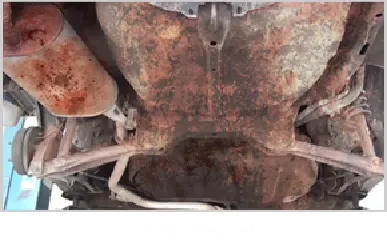
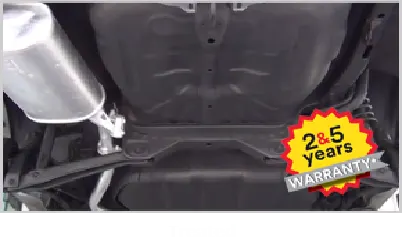
Before Treatment After Treatment
POLYURETHANE UNDERCOATING
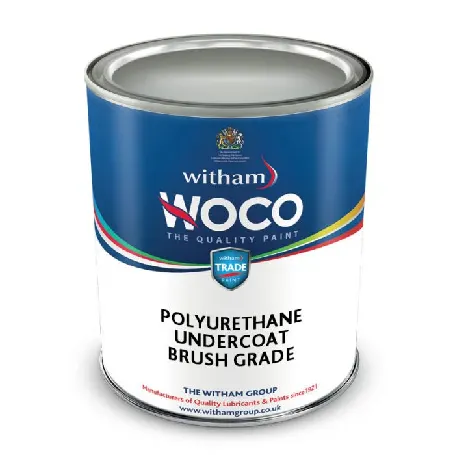
- The other option for undercoating your vehicle is to use a polyurethane-based sealant.
- This type of vehicle undercoating is a little bit quicker and easier to apply.
- Oftentimes, polyurethane undercoating will come in canisters ready to preload into an application gun.
- This type of sealant works by seeping into all cracks and seams, displacing salt and moisture around rusty areas to bond with and protect unoxidized metal.
- It also sands quickly in case you'll need to perform bodywork and can be painted over. On the flipside, this type of car undercoating generally requires a little bit more surface prep work before applying sanding and applying an etching primer to bare metals before using are generally recommended.
CONCLUSION
Overall, rubberized coating is generally the best option for protecting your vehicle's undercarriage, as it provides the simplest and best protective measures against rust and moisture.