Week 9 - Project 1 - Door Trim Lower with Engineering Features
AIM: To create a closed surface from the given (A surface)
INTRODUCTION:
CLASS-A SURFACE: a surface made by the designer which an aesthetic surface and the outer surface.
CLASS-B SURFACE: a surface below a certain thickness from the class-A surface is a class-B surface. This is the surface that contains
engineering aspects of a model.
CLASS-C SURFACE: a surface that joins class-A and class-B surfaces is a class-C surface.
METHODOLOGY:
In this model, we have performed
Tooling axis
Draft analysis
Class-B surface
Class-C surface
Extract
Trim
Extrapolate
Offset
Edge fillet
Boundary
Sweep
Join
Closed surface (part design)
FOR DRAFT ANALYSIS:
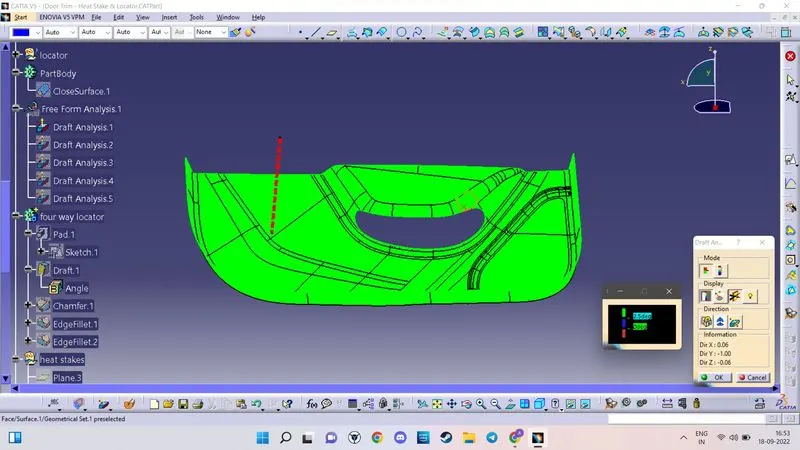
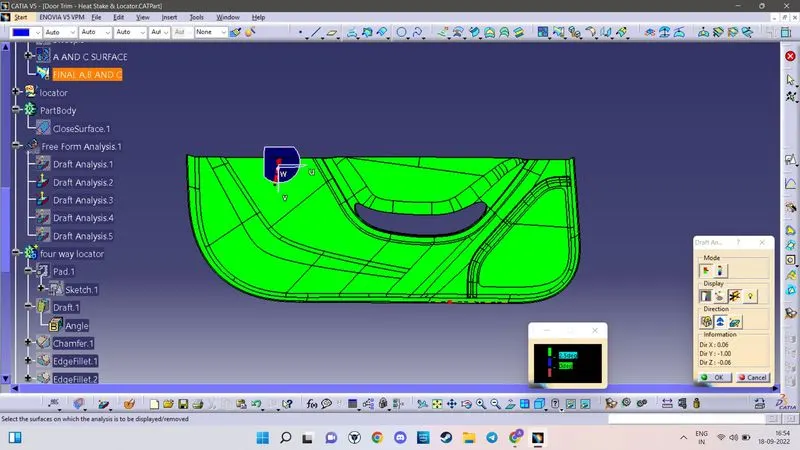
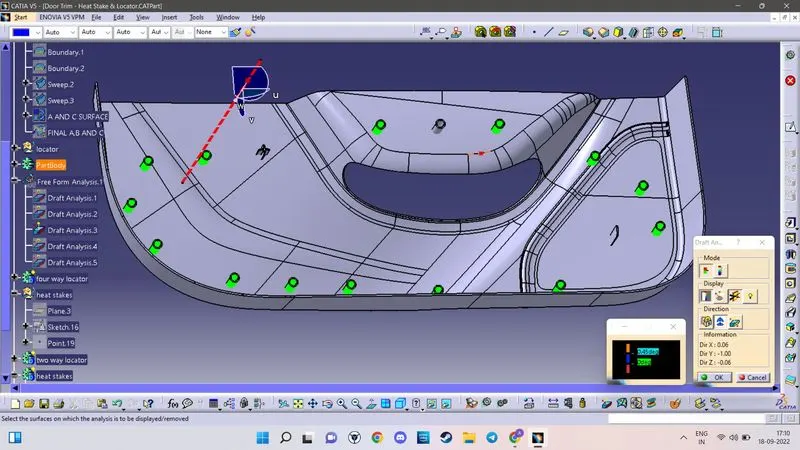
Draft analysis is the most important method. it is used to define where should the core and cavity should come in the model.
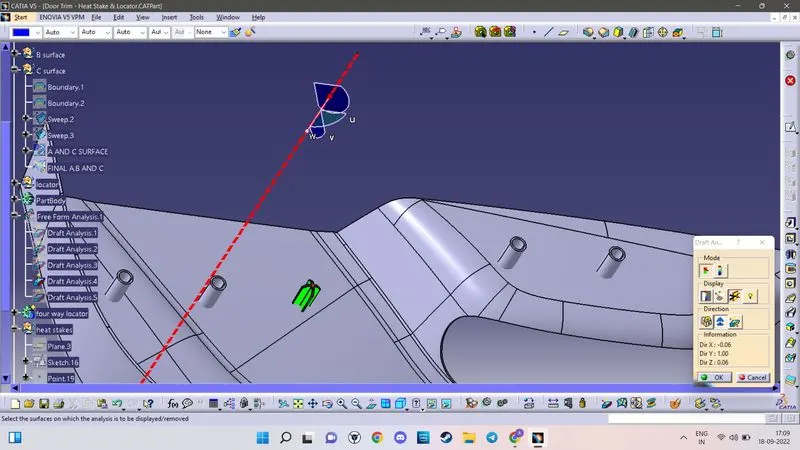
Now we go to insert< analysis< draft analysis and follow the usual procedure to do the analysis.
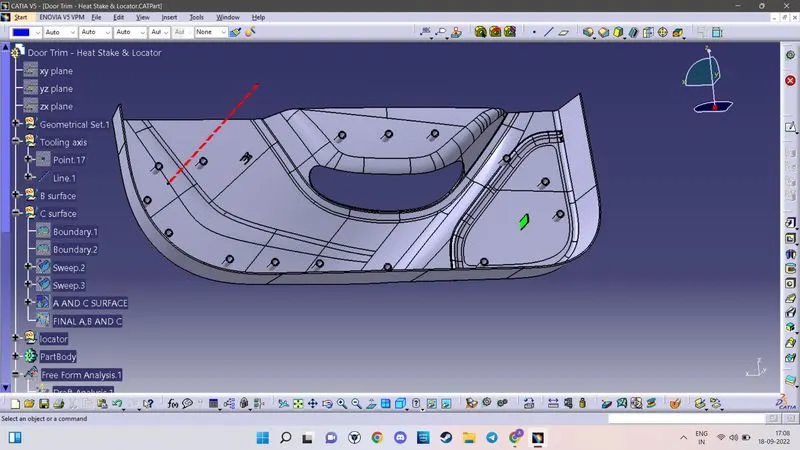
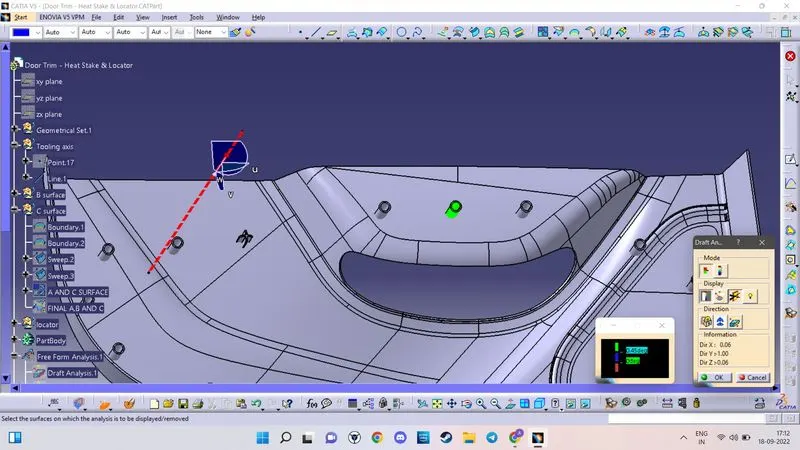
Align the compass and click on the surface and as expected the model is mostly in red i.e. negative draft concerning the axis.
To correct it as best as we can we moved the compass a bit till we got most of the surfaces in green and locked that position.
After hitting ok, we change the direction of the line from the z-axis to the compass direction. The axis will align itself accordingly.
FOR CLASS-B SURFACES
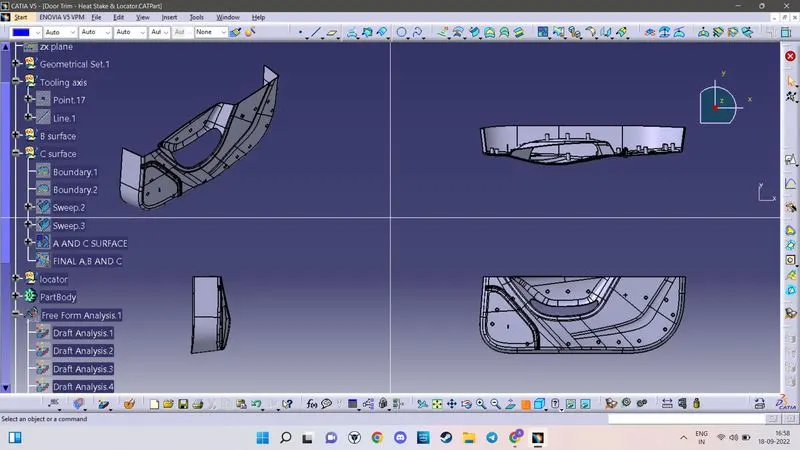
In the B surface, the A surface is offset by 2.5mm and after that, the B surface will have some patches after solving that issue with toolbars like sweep, extrapolate, multi sections surface, trim, join, etc after that the B surface will be finished and it will be ready to trim it with A and C surface
FOR CLASS-C SURFACES
In the c surface, the A surface and the C surface are joined.
FOR FINAL MODEL
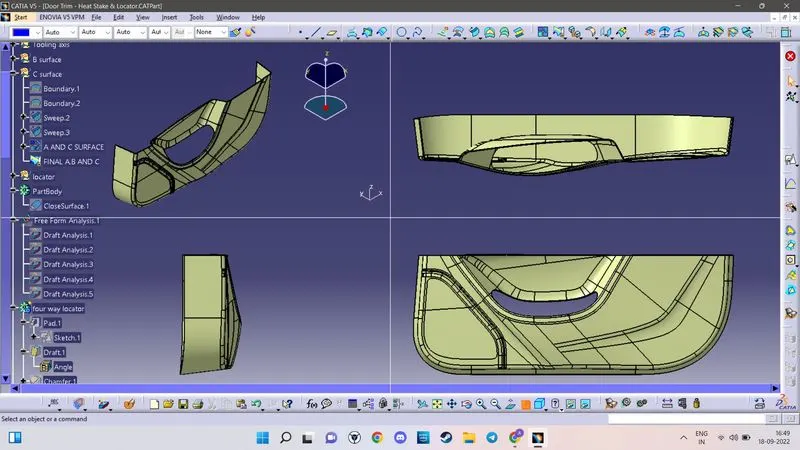
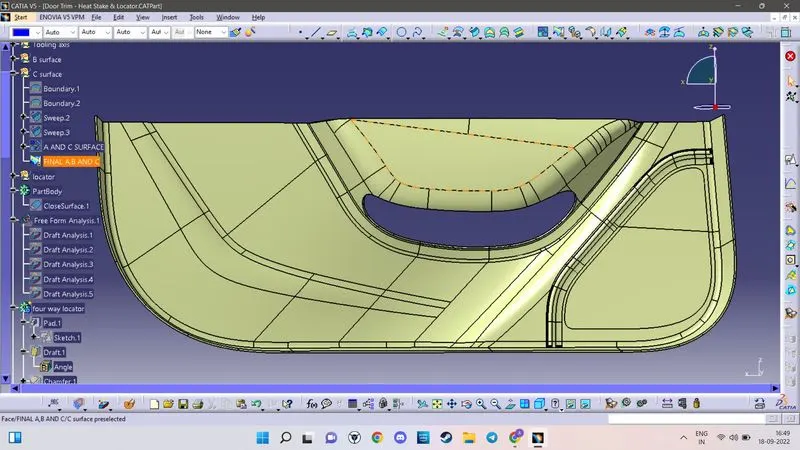
Now, Join class-A and class-C surfaces together by the join command.
Then Trim class A-C surfaces to B surfaces
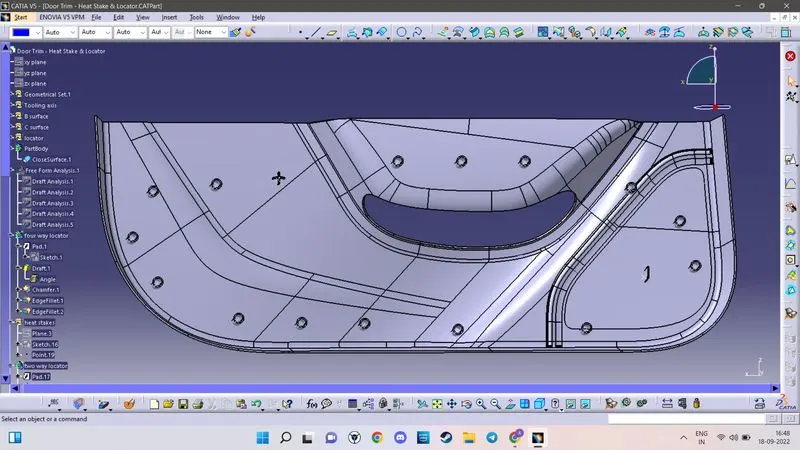
Now Go to the part design workbench and use the close the feature command to make the model solid.
At last, we should do the draft analysis for the final model.
B SIDE FEATURES CREATION
B side feature is created in the closed body. There are certain rules for creating B-side features the rules are shown below.
4-Way Locators:
These are the locators which arrest the 4 degrees of freedom by four ribs junctional together. These are of the following type specially used for mold designs.
2-Way Locators:
These are the locators which arrest 2 degrees of freedom by a single rib.
Heat staking:
Heat Staking is a pulsed-heat process to join two or more parts out of which one at least is made of plastic.
Heat Staking makes it easy to bond metal to plastic and is commonly used in high volumes/low-cost applications such as automotive, IT, and consumer appliances.
Conclusion:
The draft analysis, tooling axis, B & C surface, locators, and heat stakes are created in the class closed body surface of the door trim.