Door Applique Design with Engineering Features
DRAWING 1:
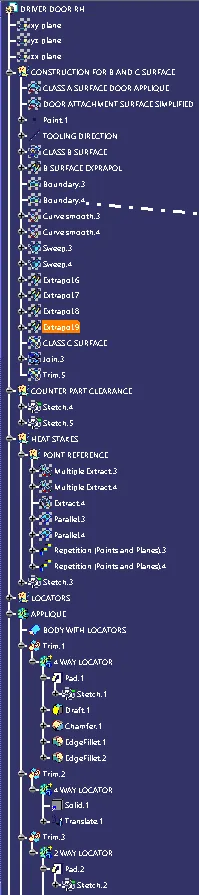
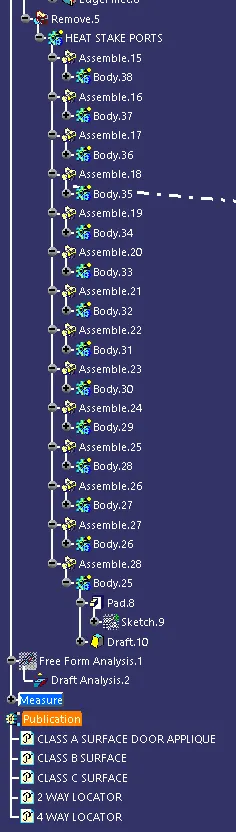
TREE STRUCTURE:

VIEWS:
TOP VIEW:
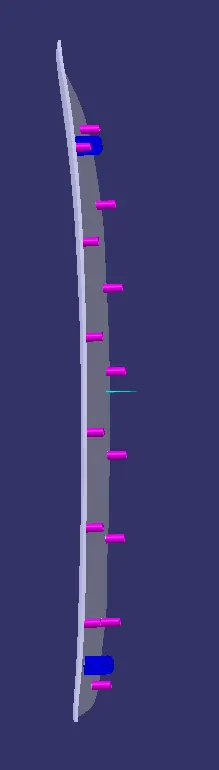
SIDE VIEW:
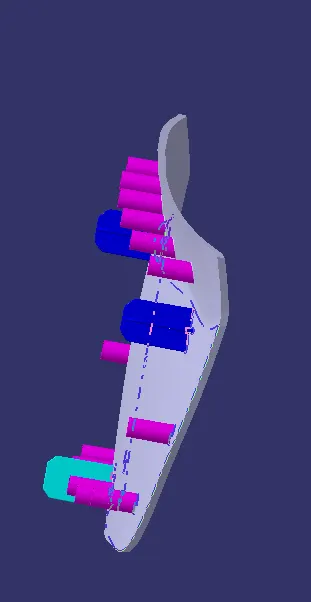
FRONT VIEW:
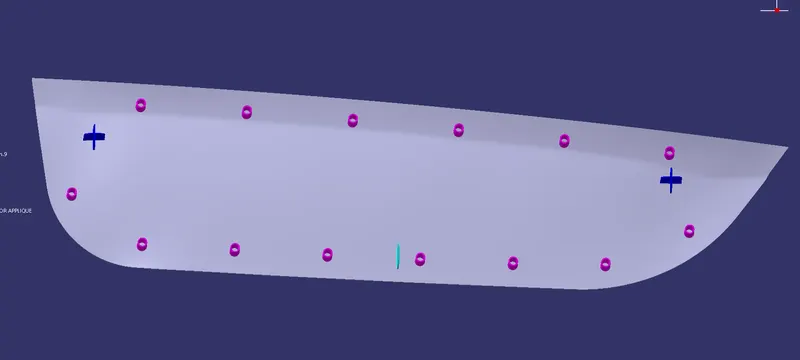
ISOMETRIC VIEW:
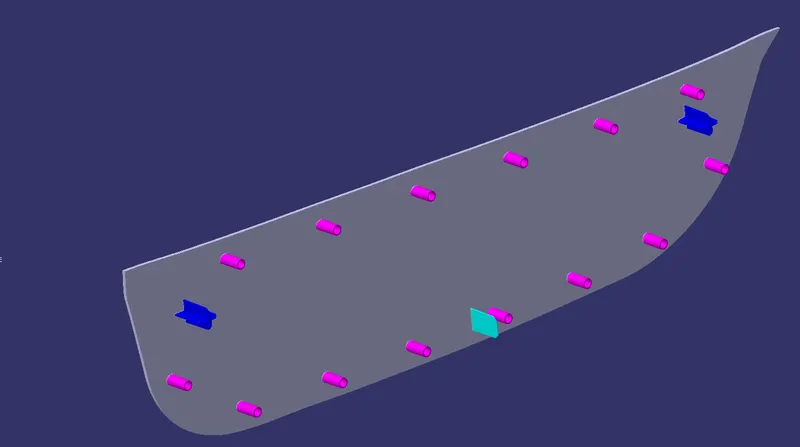
REPORT:
TOOLING AXIS:
The tooling axis was created by creating a line perpendicular to the class A surface at a point.
CREATION OF TOOLING AXIS USING BISECTION METHOD:
- In this case, the tooling direction is considered to be Z-direction as it has the easiest ejection and least complications compared to other directions.
- Initially an axis system is created at the centre of the model. a "Dummy Tooling Axis" is created along the Z-direction of the model.
- Then an "intersection" is created using the "Dummy Tooling Axis" as the first element and the class-A surface which is "FAN COVER" (in this case) , as the second element.
- The intersections are created along X-direction as well as Y-direction for the surface.
- For each intersection,the drafted surfaces are extended to create a bisecting line.
- The "Bisectors" of each intersection are again Bisected with each other to generate the "Tooling axis".
DRAFT ANALYSIS:
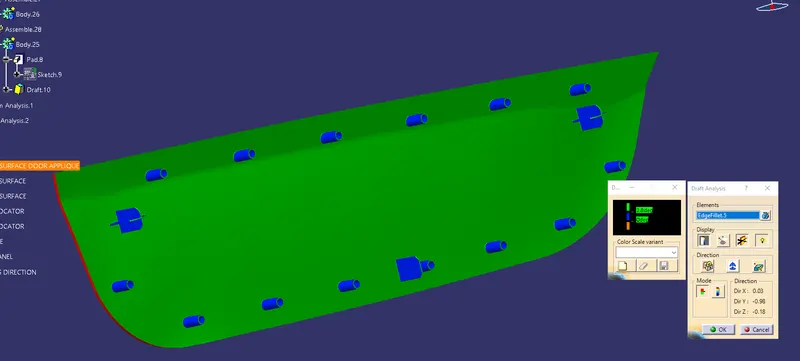
According to the draft analysis report, the part clears with out any difficulty. the faces of the heat stakes and locators are also drafted to ensure proper release from the mould.
CLASS A AND B SURFACE CREATION:
The class B surface was created by extracting and offsetting the class A surface to the required distance(i.e thickness = 2.5mm) and was extrapolated to inorder to intersect with the class C surface to ensure there are no open gaps between surfaces.
the Class C surface was created by extracting the boundary of the class A surface and the swept to intersect with class B surface.
LOCATORS :
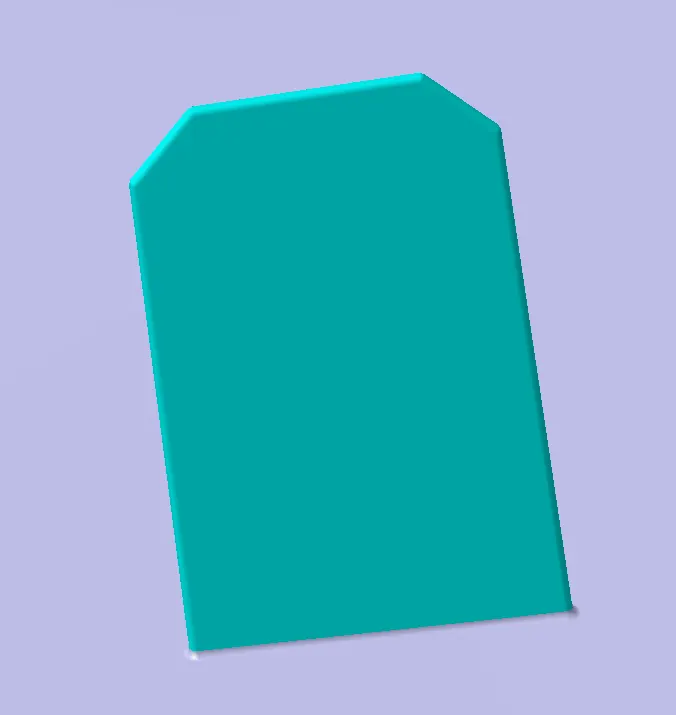
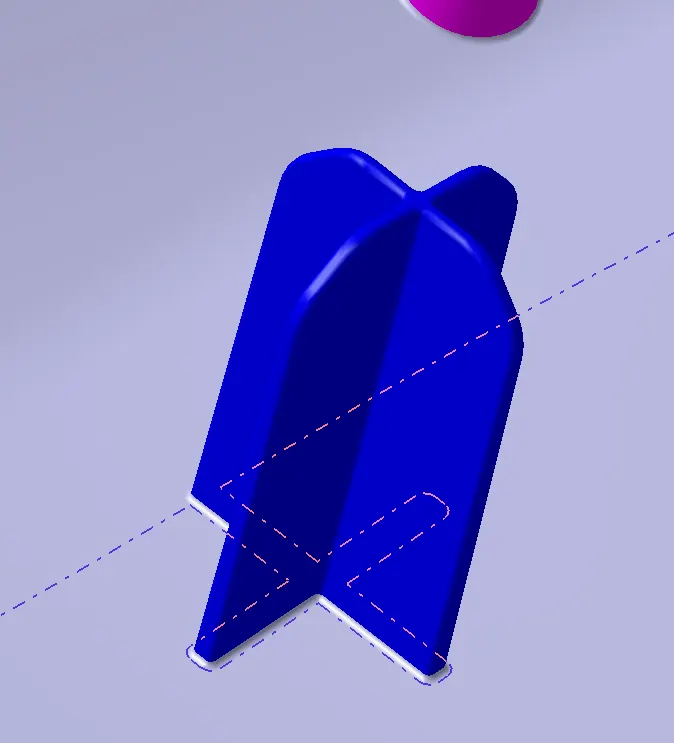
The 2 types of locators used in the door applique project are the 4-WAY LOCATOR and the 2-WAY LOCATOR. the locators are placed in the 3-2-1 principle followed by manufacturers. the clearance for the locators in the counter part used is around 0.1mm .
2 WAY LOCATOR:
4 WAY LOCATOR:
HEAT STAKES:
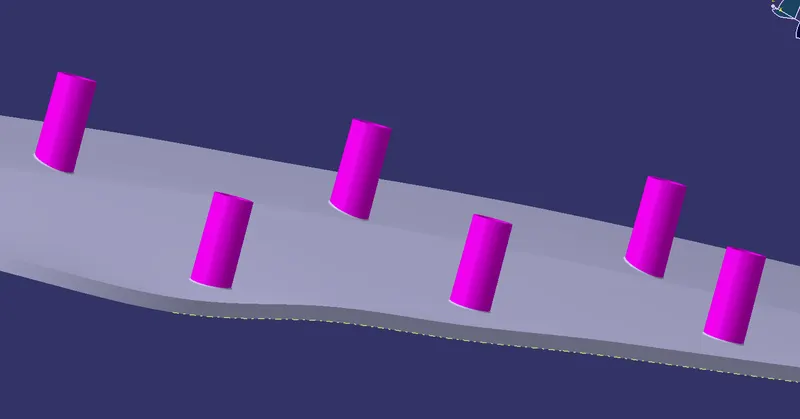
The heat stakes are used in order to bond parts using plastic. the stakes are melted in another process creating a bond with the counterpart. the clearance for the heat stakes in the counter part is around 0.3mm.