Week 9 Part 4 Project 5 - Attachment Feature Creation
It is also called Plastic Welding. In manufacturing products with thermoplastic components, it is often necessary to join a thermoplastic to a part of dissimilar material, whether it be metal, a dissimilar plastic, or other metal.
Thermal staking is an assembly method that uses controlled melting and reforming of a plastic stud or boss to capture or lock another plastic or metal component of an assembly in place.
The progressive melting of plastic under continuous pressure forms the head. When staking, the right combination of heat and pressure for the application is critical.
Advantages:
- Simplification of machinery
- Reduced cost of machinery
- Multiple fastening points
- Allows a higher density of welds compared to hot air cold form or ultrasonic welding
3-2-1 Principle:
To fix two components we need to have some principle. This principle follows the fixation of two components in the industry.
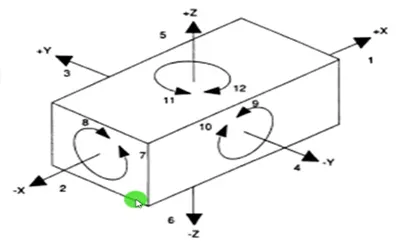
Any part which has to be fixed during welding or during the machining process has to be fixed. Every object is having 12 degrees of freedom.
- Translational movement along X-axis
- Translational movement along Y-axis
- Translational movement along Z-axis
- Rotational movement along X-axis
- Rotational movement along Y-axis
- Rotational movement along Z-axis
Fix two components together, we must arrest at least 11 degrees of freedom. The final degree is the fixing direction. We are going to move the component in a fixing direction.
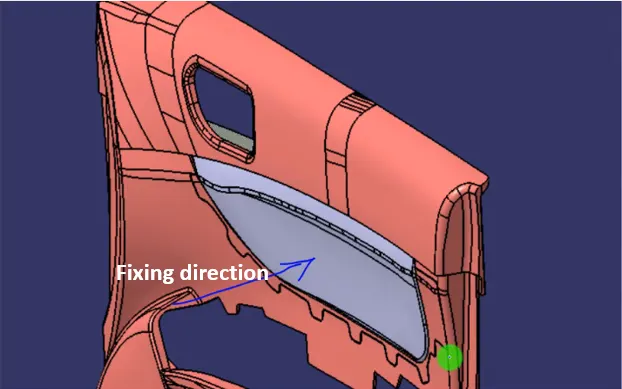
Car Door Assembly:
The door applique component has to be fixed in the door assembly along the fixing direction.
With these attachment features, we can attach the door applique to the door assembly.
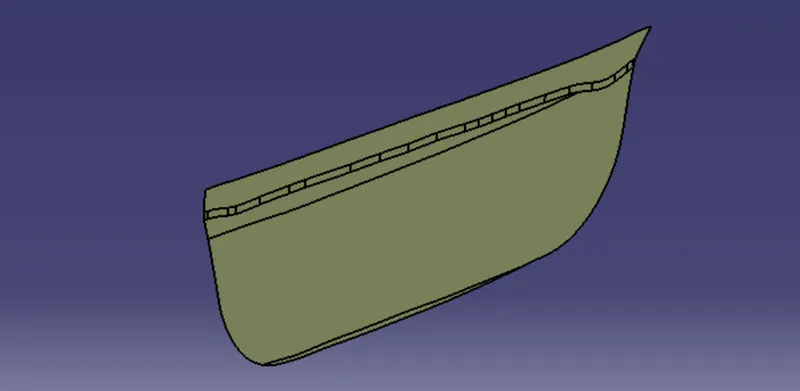
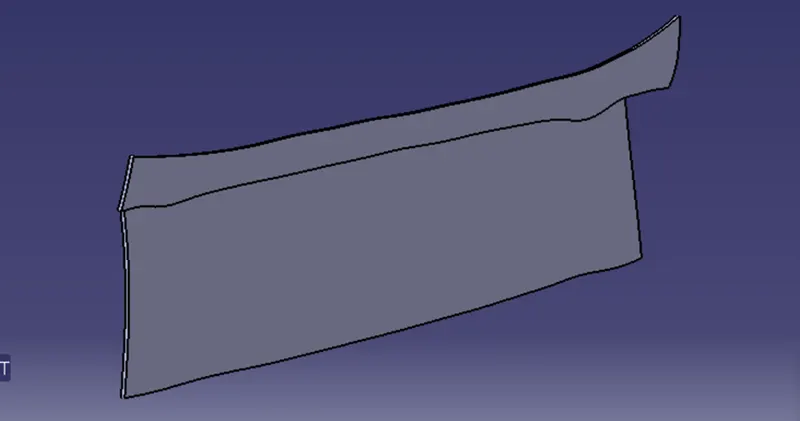
Door Applique Class A surface
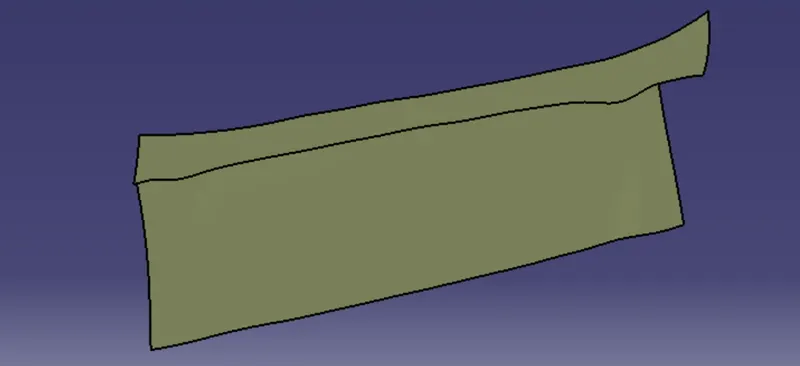
Door Applique mating part Class A Surface
B surface with the offset of 2.5mm from Class A
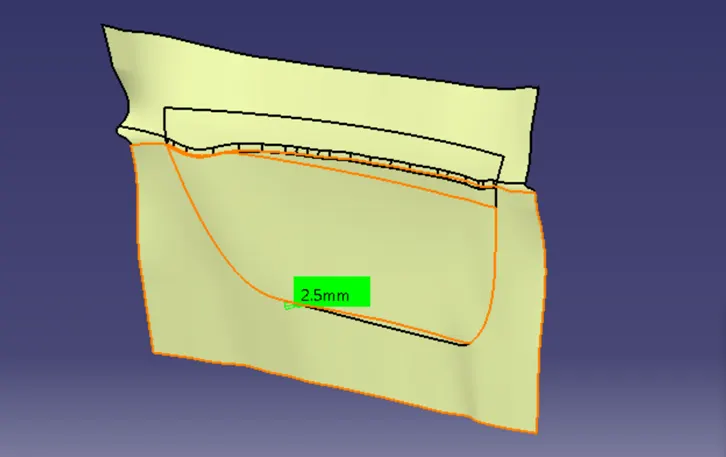
C surface
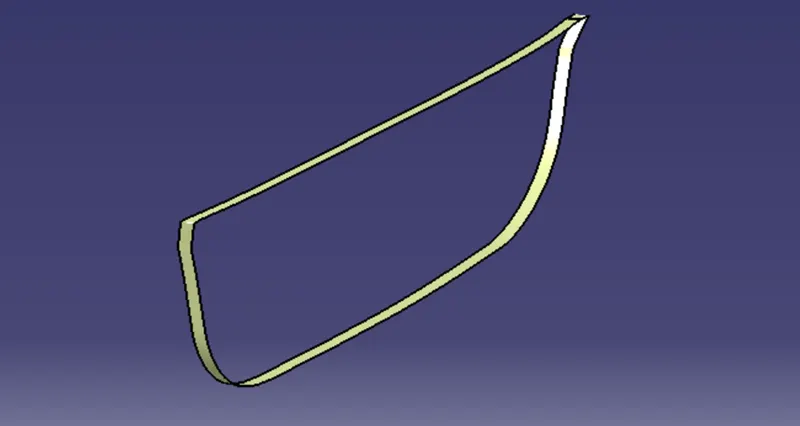
The final trimmed Surface
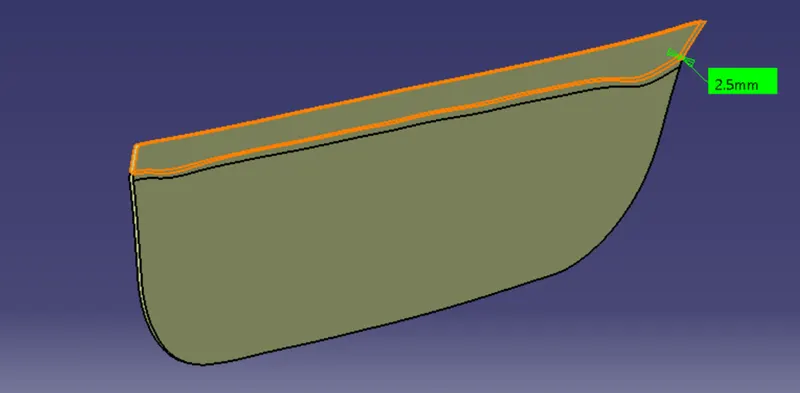
Creating a solid body by following design rules with a thickness of 2.5mm
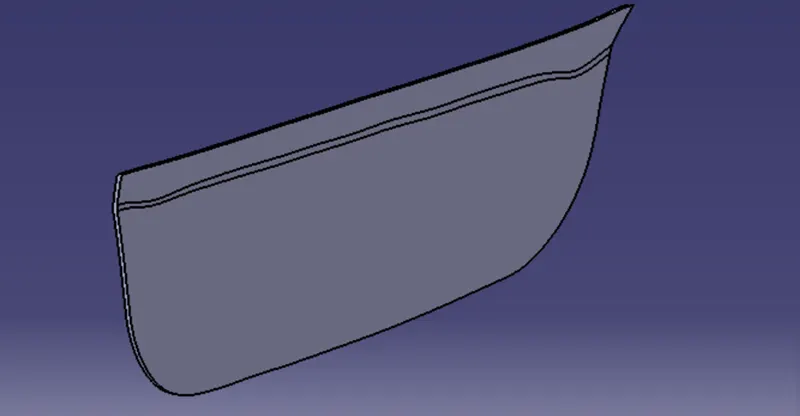
Creating a closed body of mating part by following the same design rules with a thickness of 2.5mm
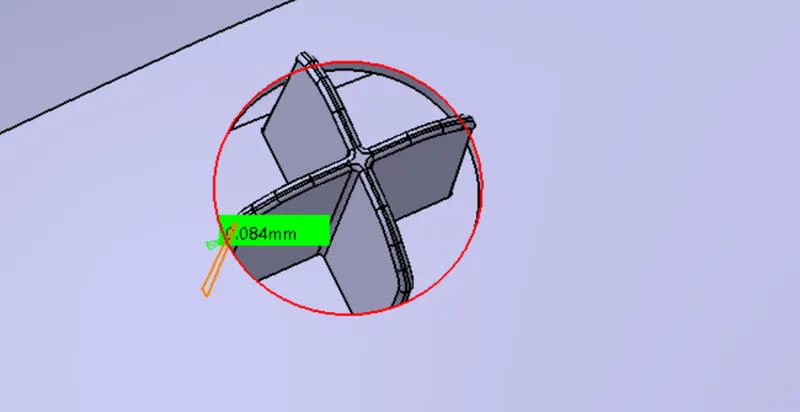
Creating these locators as per design guidelines to arrest the 10 degrees of freedom and in order to attach this component easily to the door assembly.
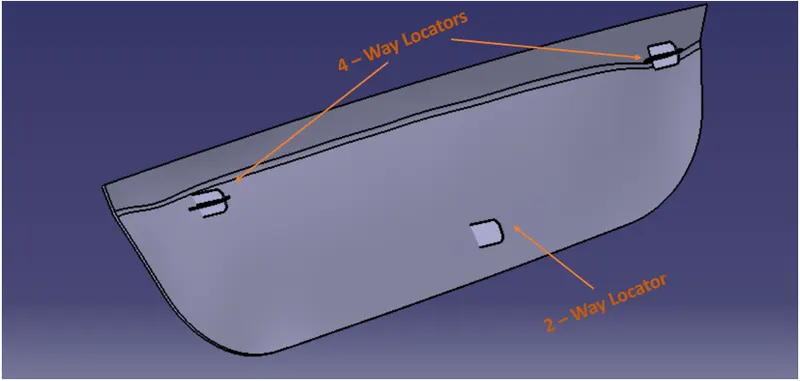
Translational along with X+ & X- should be arrested, for that, we are going to design heat stakes.
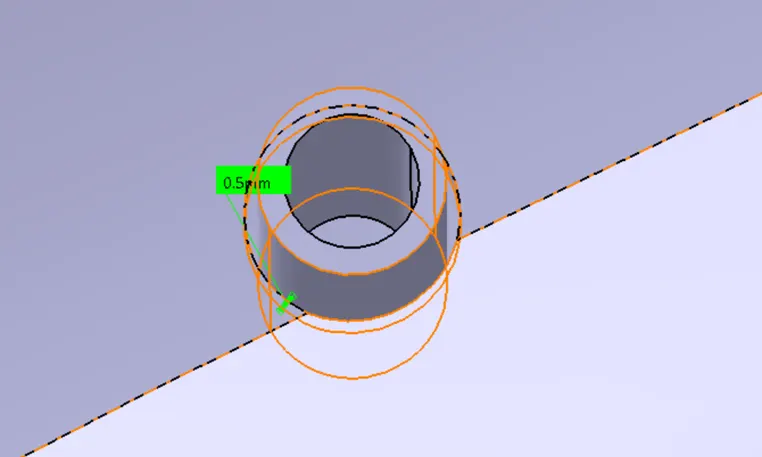
Creating heat stakes by following design guidelines to arrest the remaining degrees of freedom to fix the component.
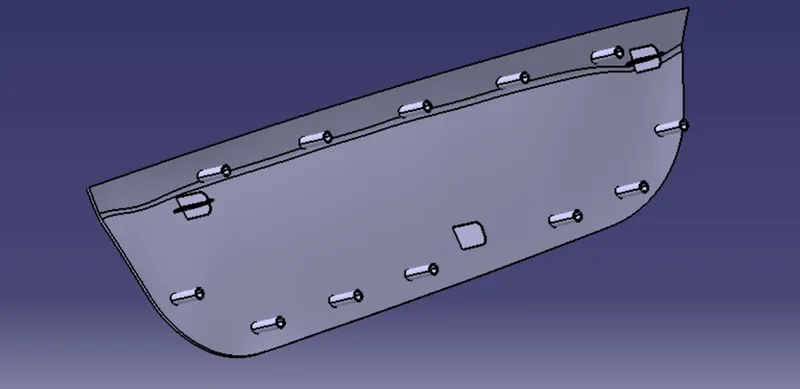
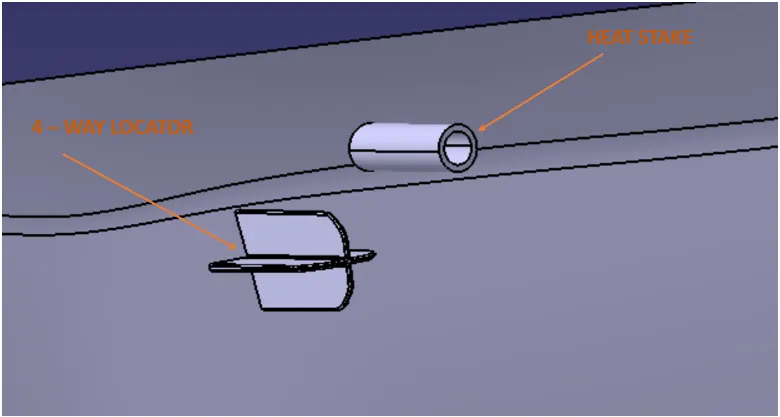
This door applique component mating with the other part along the fixing direction.
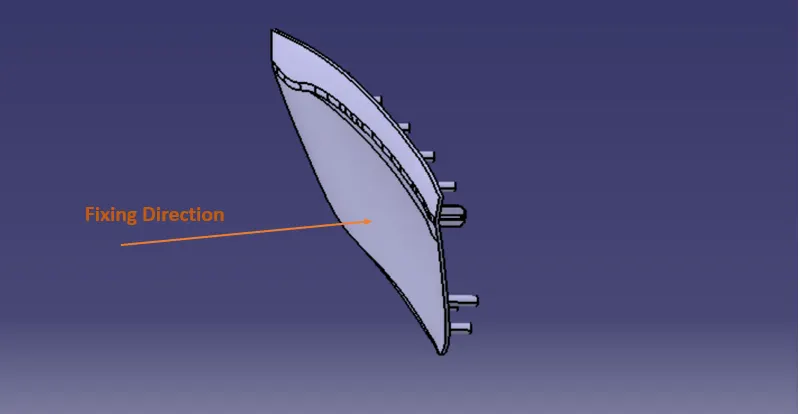
Final trimmed body
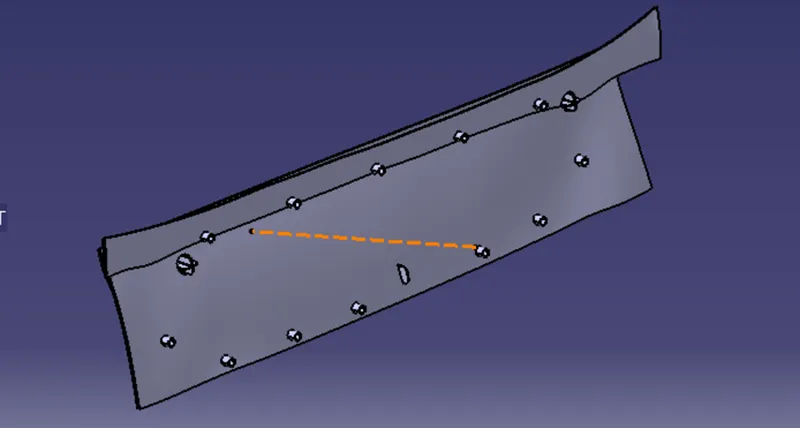
The counterpart clearance for the locators should be less than 0.1mm.
The counterpart clearance for the heat stakes should be less than 0.5mm.
The final design of the Door applique with the attachment features of Locators and Heat stakes.
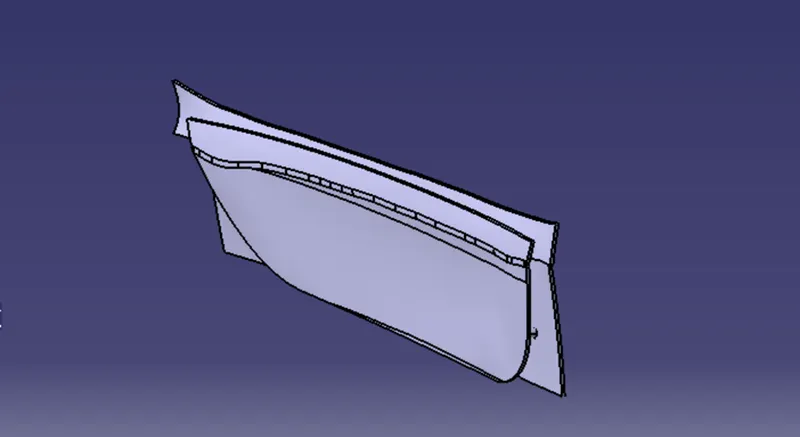
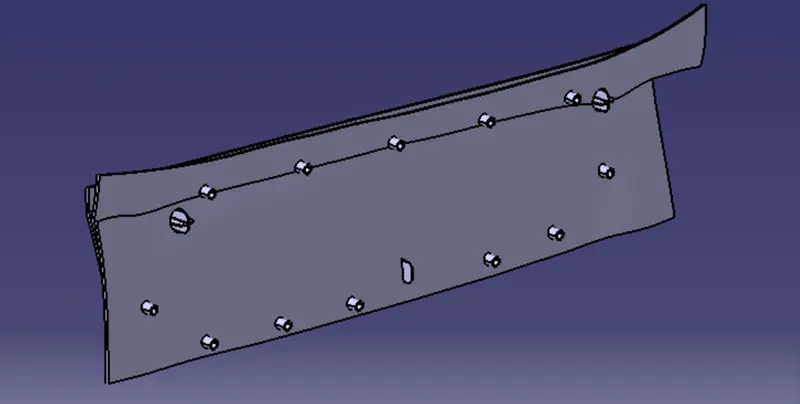
The final design with the tree structure
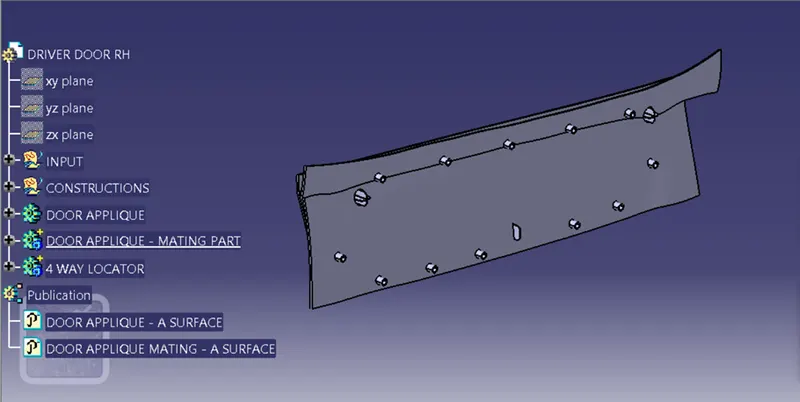
.CATPART files are attached below.