Week 9 Machining with Planer Challenge
MACHINING WITH PLANER
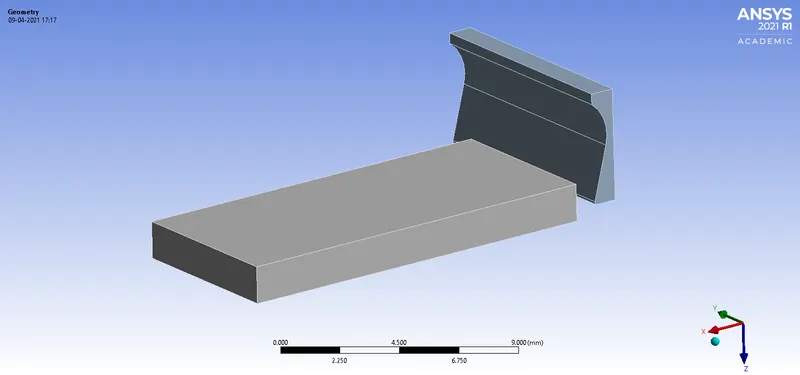
A planer is a type of metalworking machine tool that uses linear relative motion between the workpiece and a single point cutting tool to cut the work piece. A planer is similar to a shaper, but larger, and with the workpiece moving, whereas in a shaper the cutting tool moves.
OBJECTIVE-
The objective for this challenge is:
- Perform the simulation for 2 cases- One will be with a cutting velocity of 20000 mm/s and the other will be with a cutting velocity of 15000 mm/s
- Perform an explicit dynamics simulation to find out the Equivalent Stress, Total Deformation and a user defined result for the temperature of the body.
PROCEDURE
- We will use Explicit dynamics analysis system to carry out this simulation.
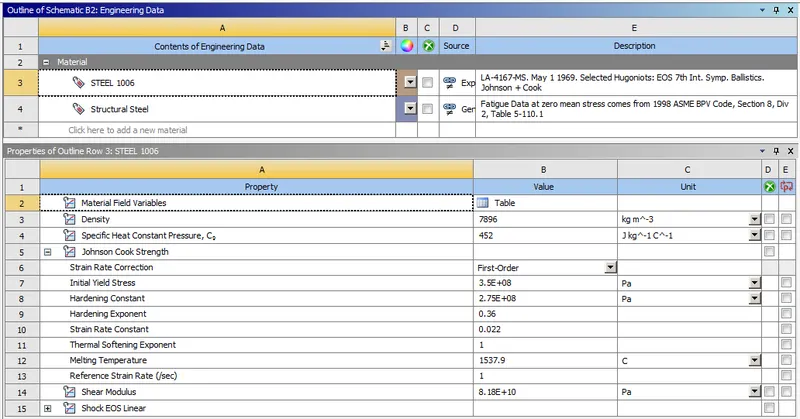
- Steel 1006 material is assigned to the workpiece.It can be loaded from the general explicit materials library.
- Stiffness behaviour for the cutting tool is set to rigid.
MESHING
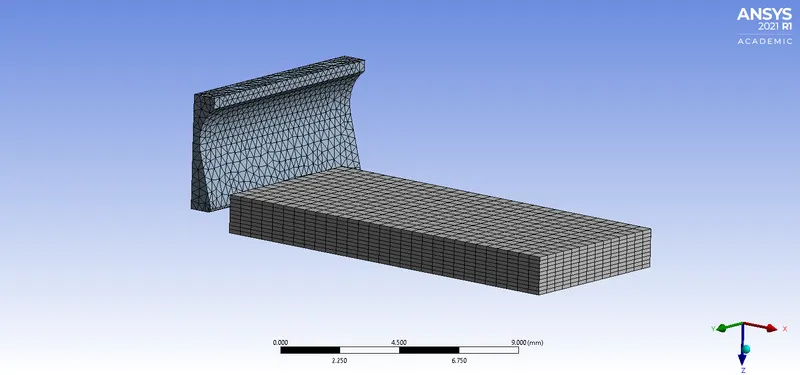
- Tetrahedron method with patch conforming algorithm is used to mesh the cutting tool.
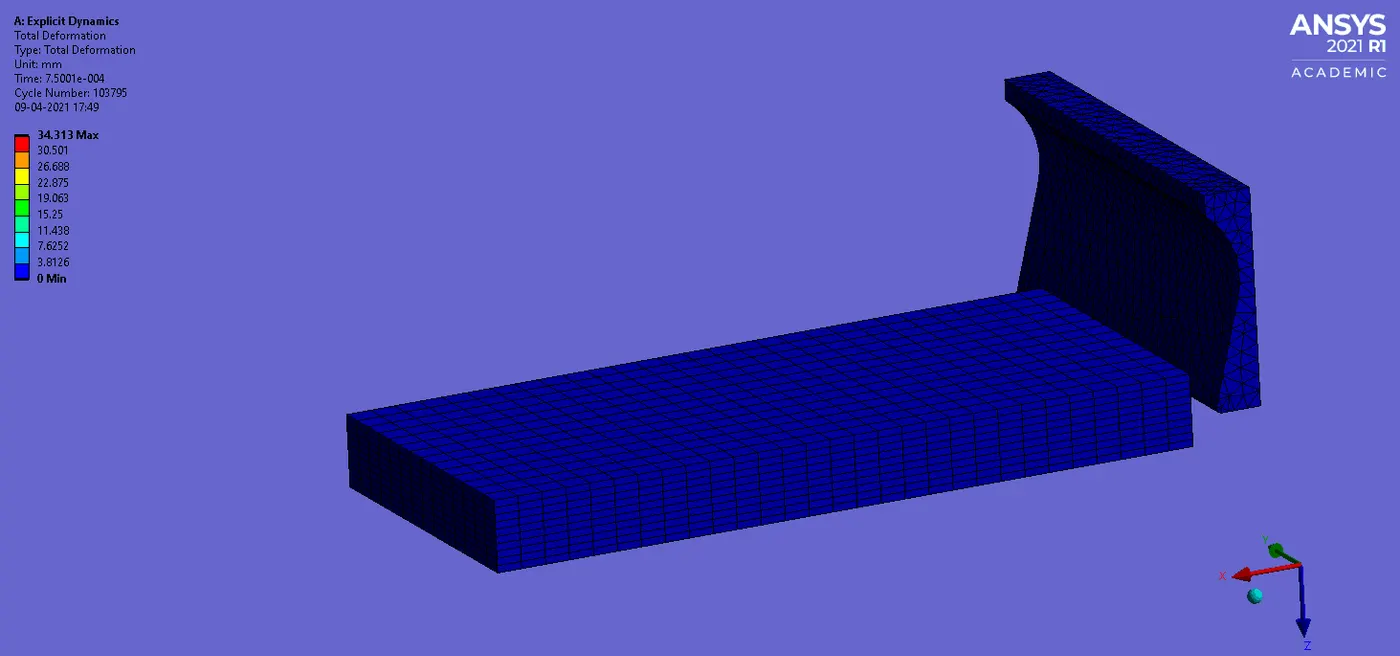
- Sizing is applied to the edges with number of divisions type set to 10 for the workpiece.Ansys generates Hexa mesh for the workpiece and tetrahedral mesh for the cutting tool.
BOUNDARY CONDITIONS
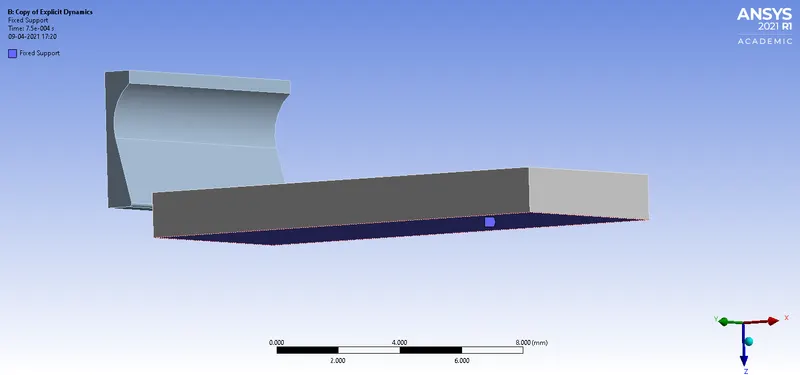
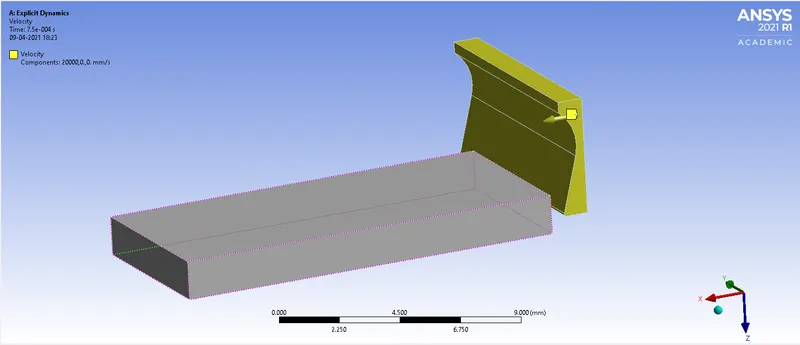
- Fixed support is provided to the bottom face of the workpiece.
- A Velocity of 20000 mm/s is given to the cutting tool along the positive X-direction.The movement of the tool is fixed for the other two directions.
- Body interactions between the cutting tool and the workpiece is set as frictionless.
RESULTS
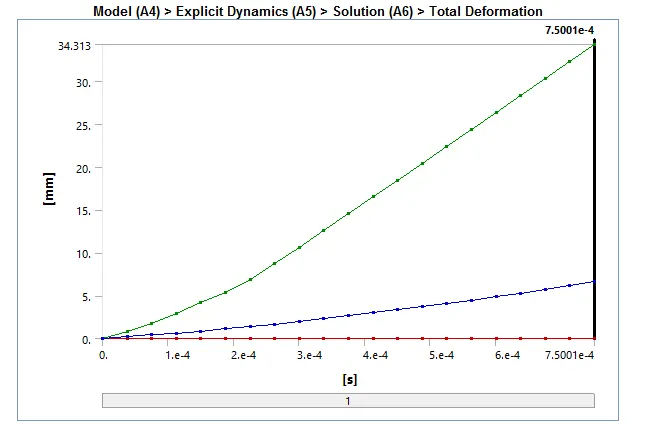
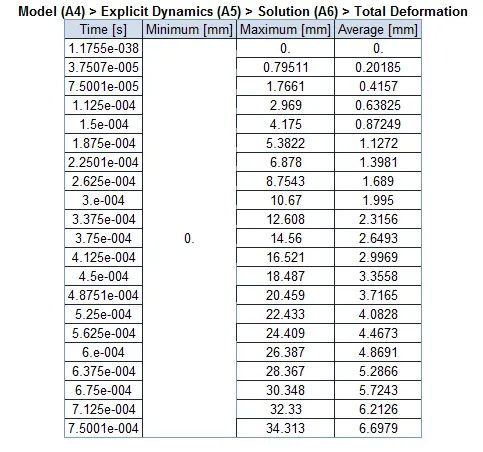
- Total deformation obtained for the workpiece.
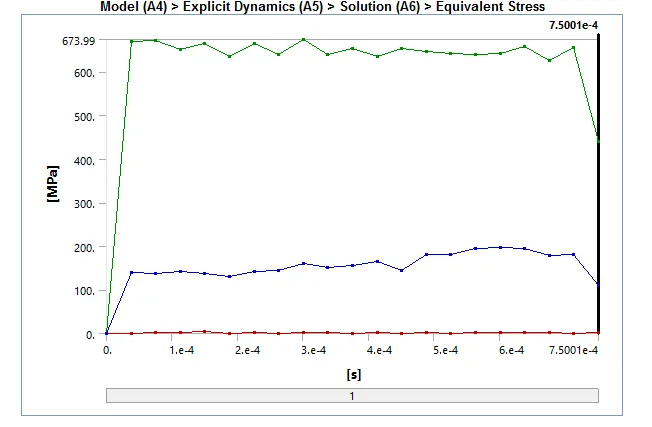
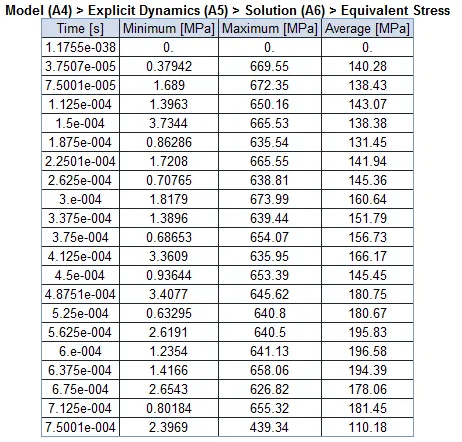
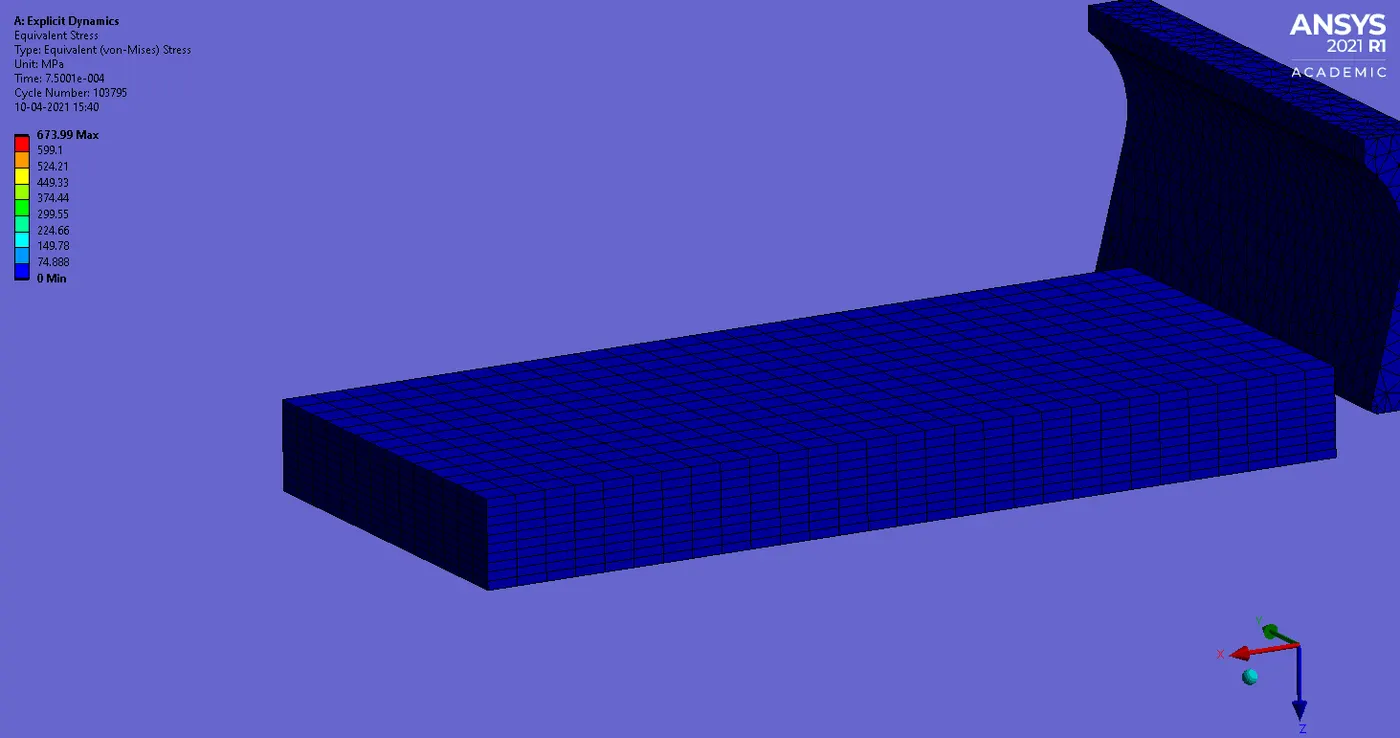
Equivalent stress observed for the Analysis.
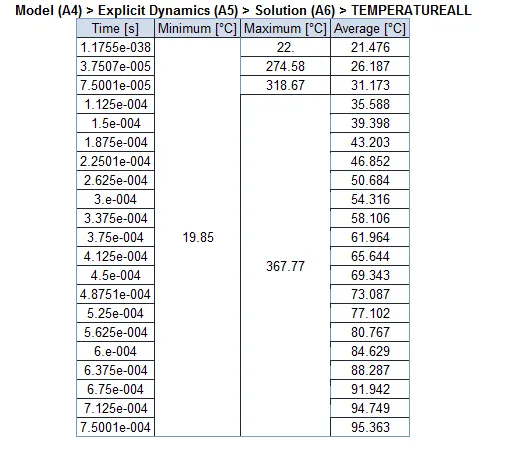
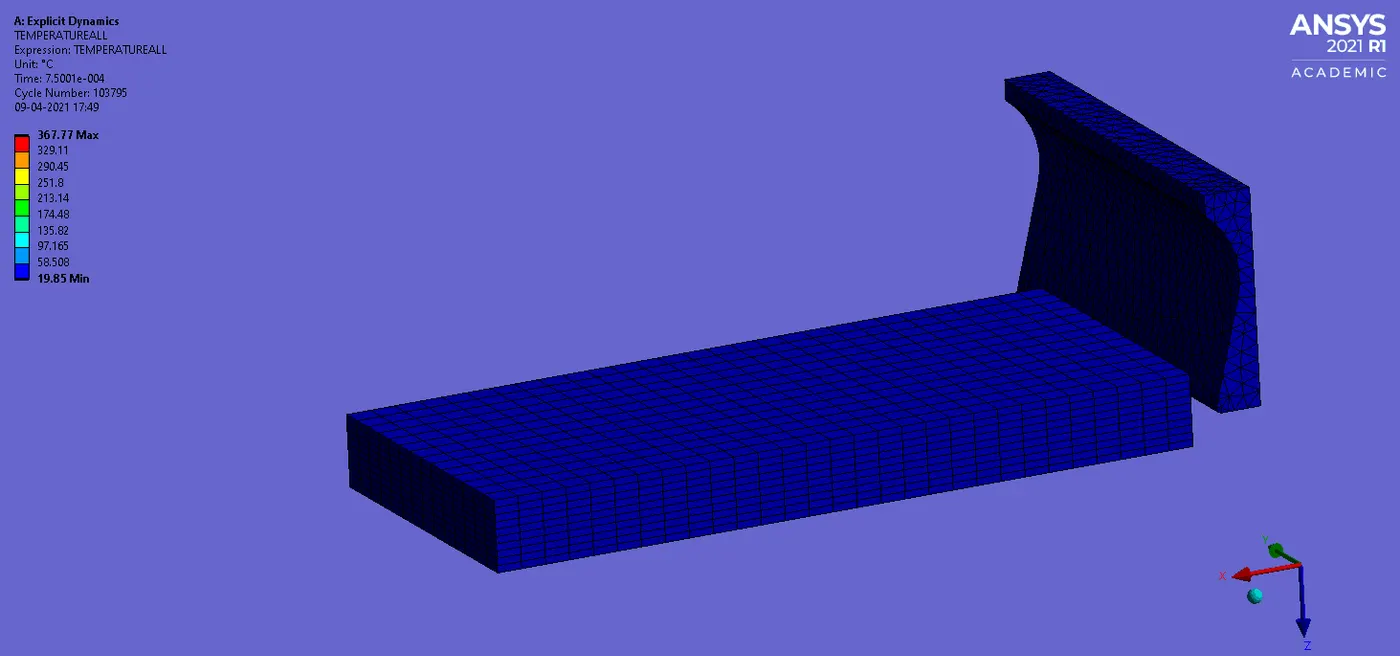
CASE II
- For the second case the velocity provided to the cutting tool is changed to 15000 mm/s.
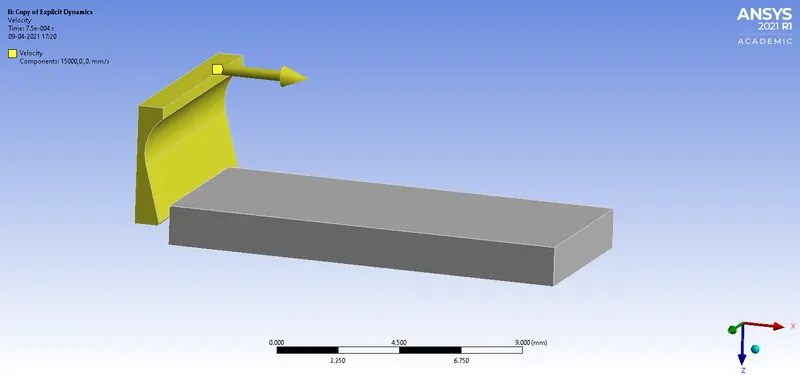
RESULTS
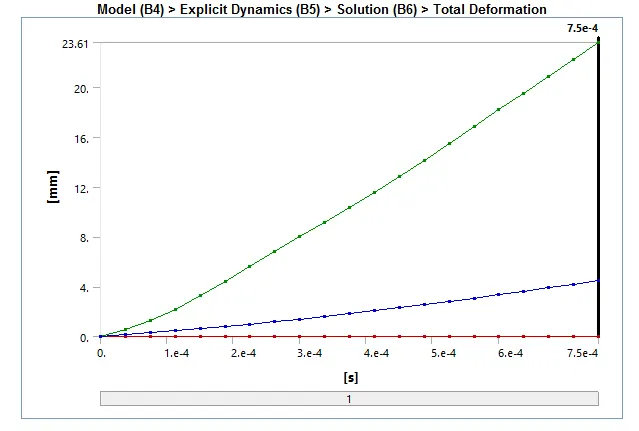
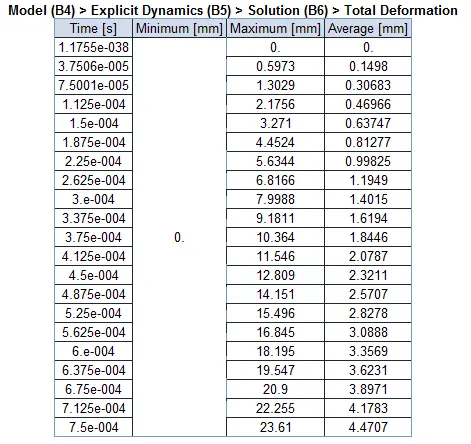
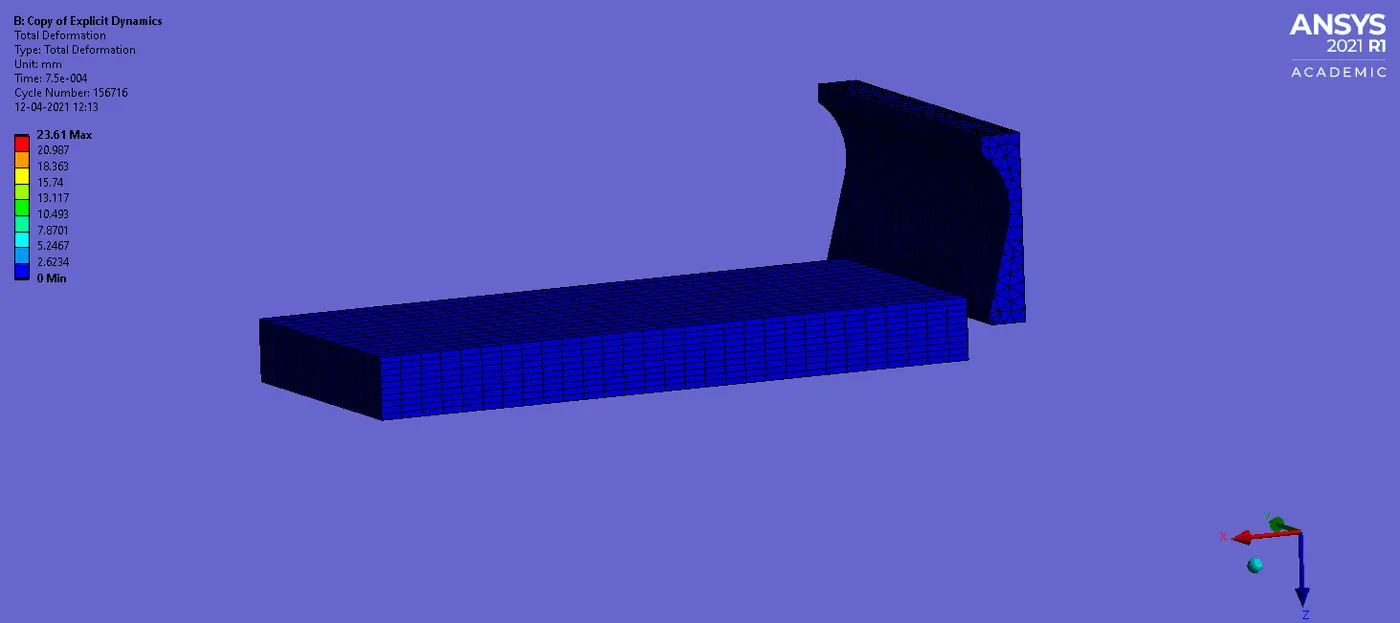
Total deformation observed for the case II
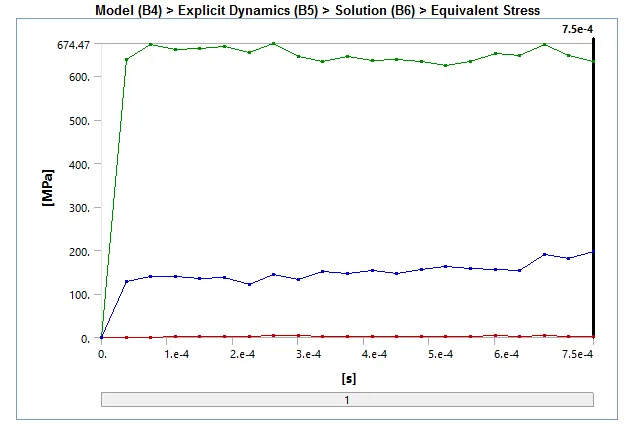
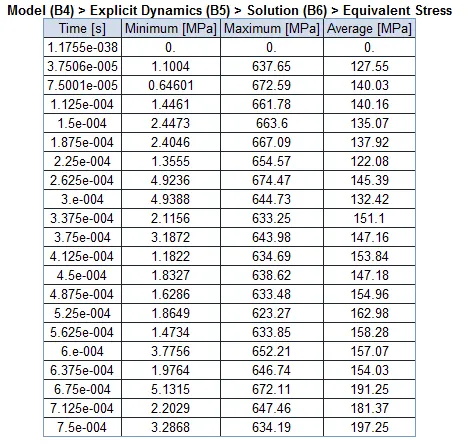
Equivalent stress observed for the case II
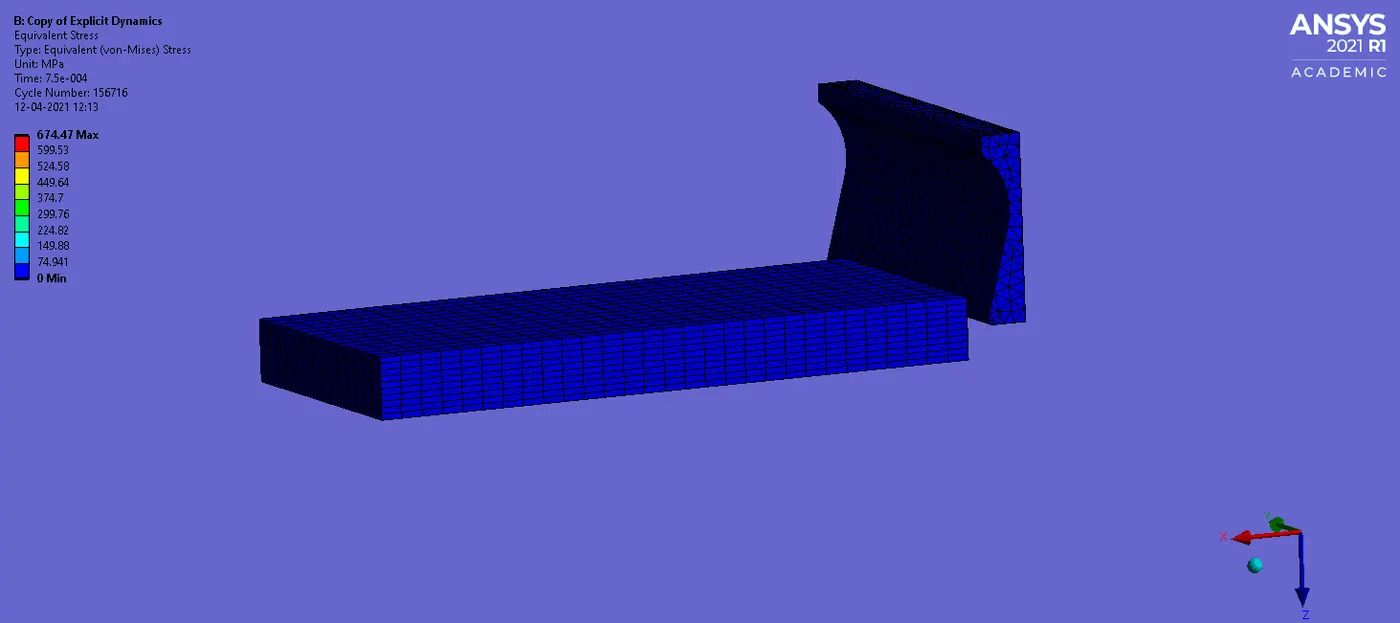
Temperature observed for the Case II
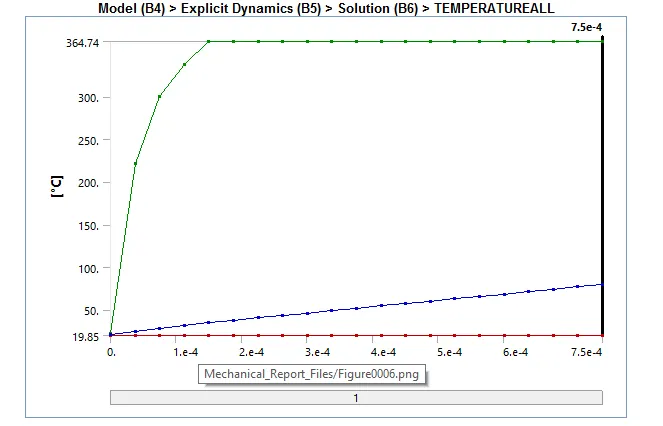
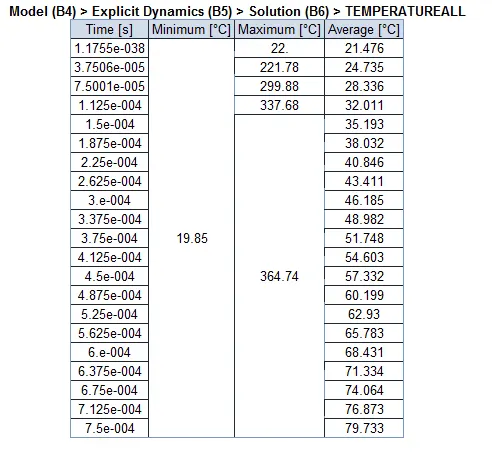
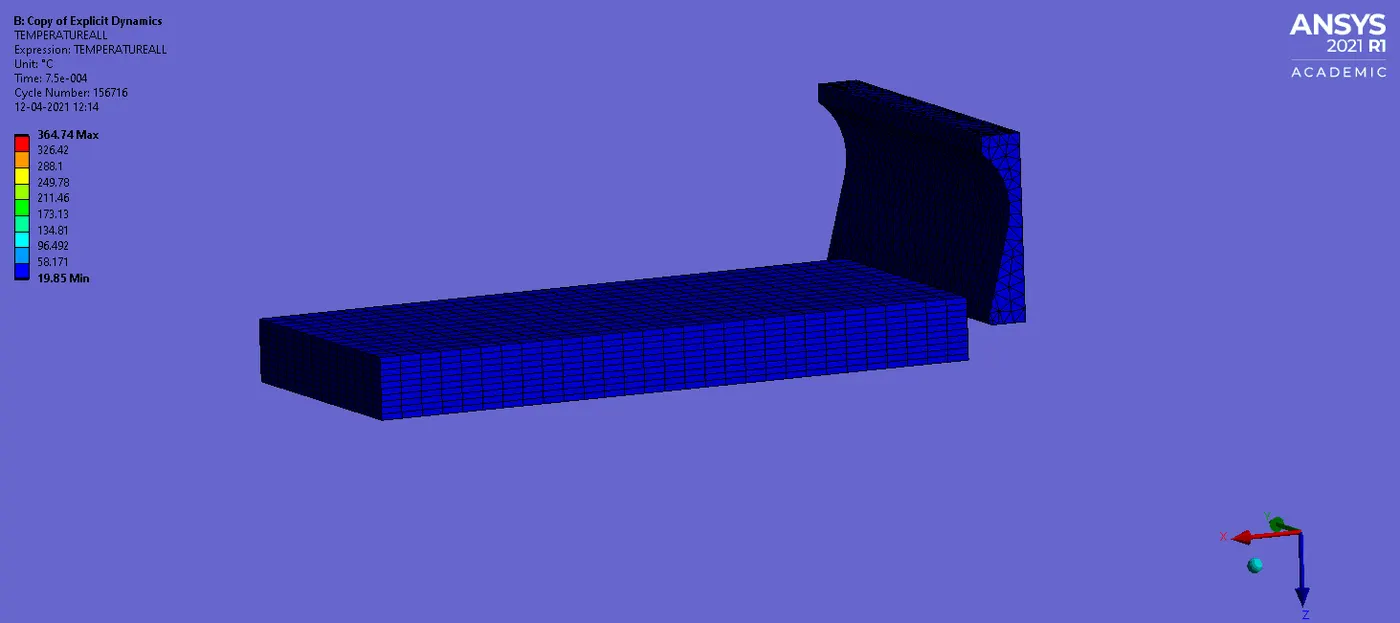
The observed results is summed up in below table-
| Cases | Cutting tool Velocity (mm/s) | Total deformation (mm) | Maximum Equivalent stress (MPa) | Temperature (C) |
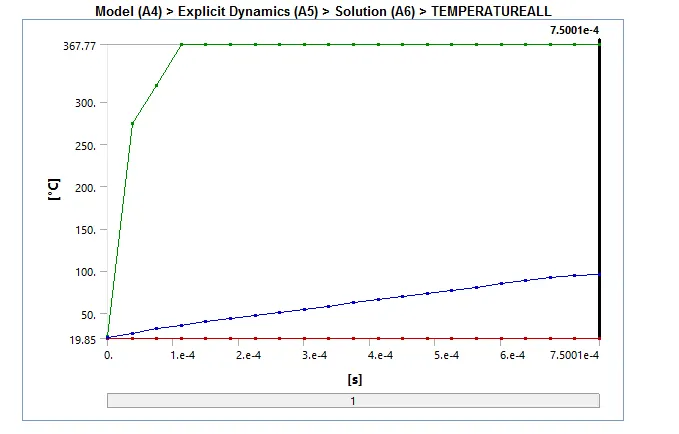
| Case I | 20000 | 34.31 | 673.99 | 367.77 |
| Case II | 15000 | 23.61 | 654.47 | 364.74 |
CONCLUSION
- Total deformation is higher for the case I since the velocity provided is higher in Ist case i.e 20000 mm/s.
- The temperature observed is higher in the Ist case, as it has a higher material removal rate.