Week 9 Machining with Planer Challenge

Introduction
Planer Machining:
The principle of the planner machine is the concept of relative tool-work motions. Reciprocation of the tool or job and the slow, intermittent transverse feed motions are imparted to the job or tool by the fast straight path cutting motion.
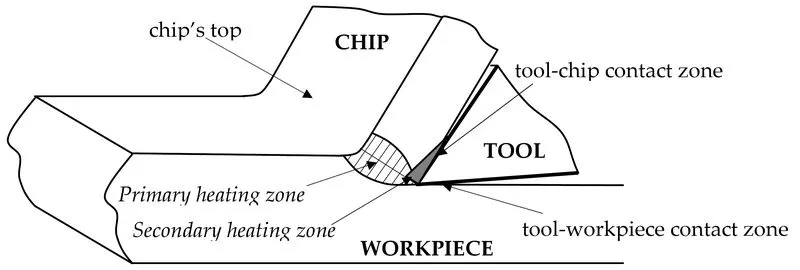
All the operations done in planning machines can be done in the shaping machine. Stroke length, larger size, and higher rigidity enable the planning machines to do more heavy-duty work on large jobs and their long surfaces.
It produces planes and flat surfaces with a single-point cutting tool. A planer machine is large and massive as compared to a shaper machine. The planer can do machining heavy workpiece, which cannot be done on a shaper surface.
Analysis
Here we see the analysis of a machining with a Planer in two different cases.
Two different cases based on the cutting tool velocity can be given as below:
CASE_1: 20,000 mm/s
CASE_2: 15,000 mm/s
_____________________________________________________________________________________________________________________
Geometry & Material Properties:
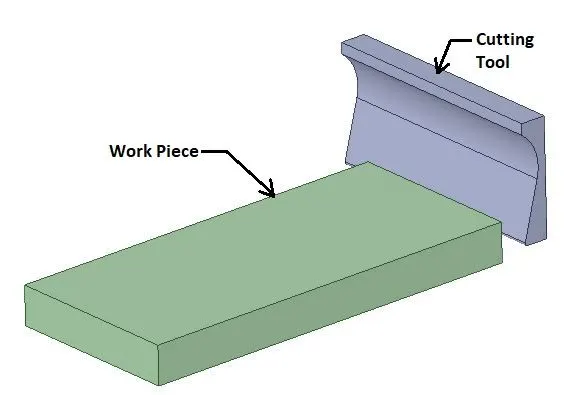
- Here in above image, we can see the cutting tool and the workpiece.
- Cutting tool is used for cutting the workpiece.
- Here the workpiece will be stable and velocity will be given to the cutting tool in order to perform the cutting operation as per planer machining.
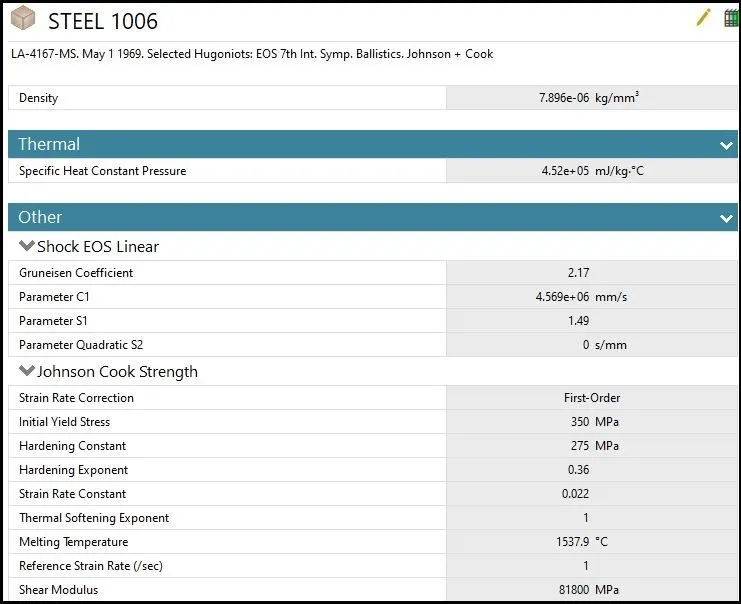
Material Specifications:
_________________________________________________________________________________________________________
Mesh:
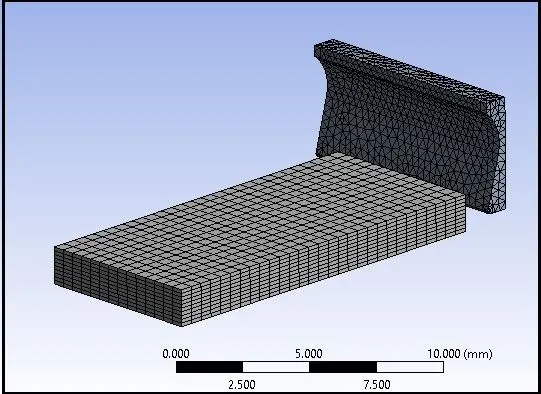
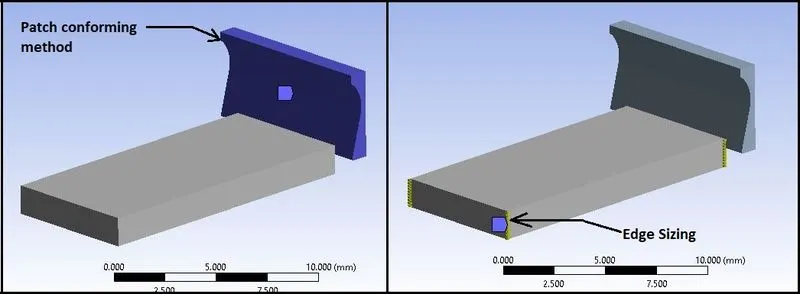
Mesh Details:
- Patch conforming method: Tetrahedron
- Body : Cutting Tool
- Edge Sizing: 4 short Edges
- Type: No. of Divisions
- No.of Divisions: 10
- Statistics:
No.of Nodes: 6557
No.of Elements: 10077
_________________________________________________________________________________________________________
Procedure:
- Import model in Explicit Dynamics in Geometry section.
- Then go to Mechanical model section.
- Check or Rename the Parts of the setup as “Workpiece” and “Cutting_Tool” as shown in above geometry image.
Boundary Conditions:
- After meshing as described above, create Boundary Conditions as given below:
Analysis Settings:
- No.of Steps: 1
- End Time: 7.5e-4
- Maximum Number of Cycles:1e+07
- Maximum Energy Error: 0.1 (for CASE_1) & 0.25 for (CASE_2)
- Initial Time Step: Program Controlled
- Minimum Time Step: Program Controlled
- Maximum Time Step: Program Controlled
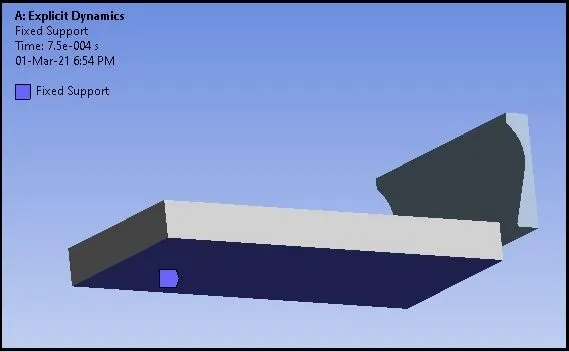
Fix Support (For CASE_1 & CASE_2):
- Keep bottom face of the Workpiece as a fixed to hold it which the machining is happening.
Velocity (For CASE_1):
- Apply velocity to Cutting_Tool in the positive X-Direction as given below:
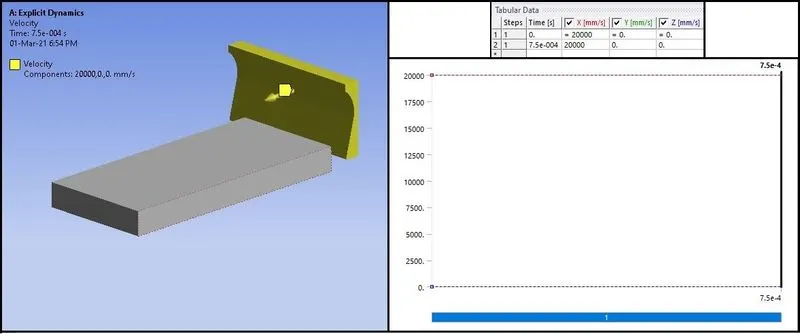
- Here the velocity of the Cutting_Tool is 20000 mm/s.
Velocity (For CASE_2):
- Apply velocity to Cutting_Tool in the positive X-Direction as given below:
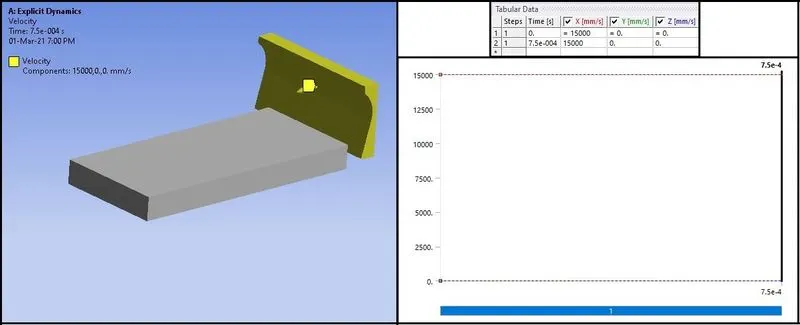
- Here the velocity of the Cutting_Tool is 15000 mm/s.
Solution:
- After giving proper boundary conditions, create desired solutions for output results.
- Create Solutions for :
- Total Deformation
- Equivalent Stress
- Equivalent Plastic Strain for Workpiece
- User Defined Result: Temperature ( With help of Worksheet)
_________________________________________________________________________________________________________
Results:
Now we will see all the results for CASE_1 & CASE_2.
CASE_1
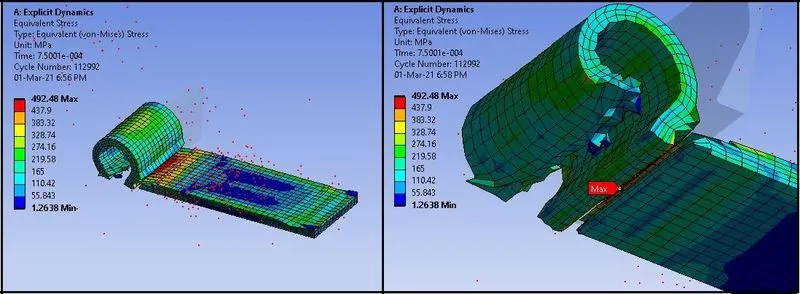
Stress Contours:
Stress Plot & Data:
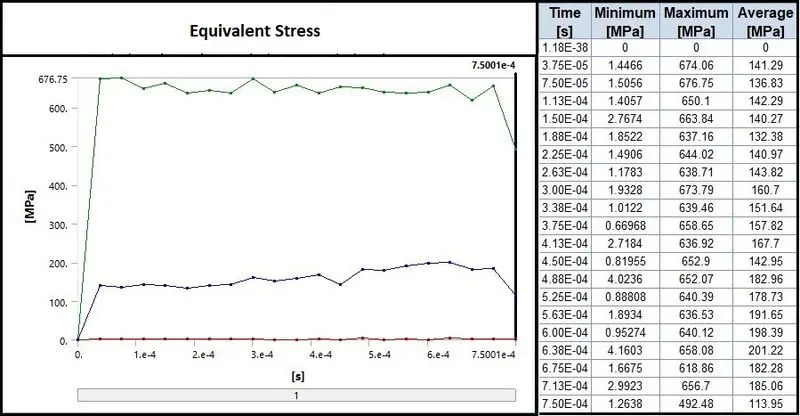
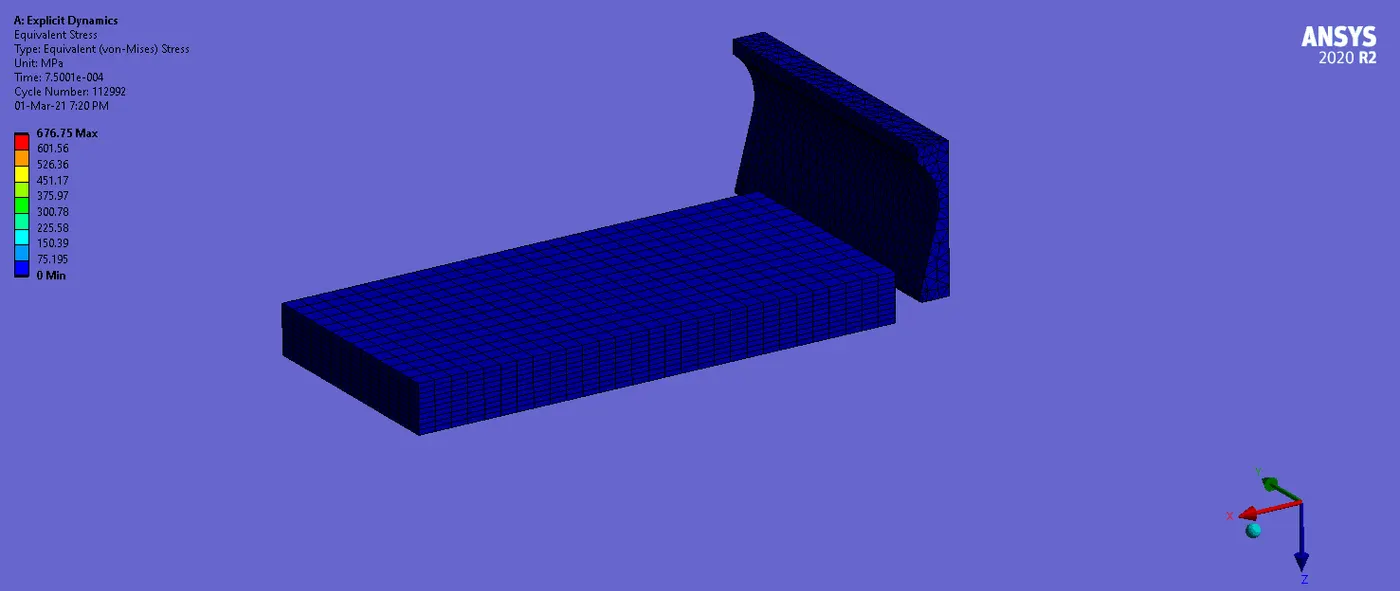
- Maximum stress is 492.48 Mpa at the end.
- AS per the plots and data, we can see that, once the value of stress reached up to 676.75 Mpa, then it ranges nearby it during the cutting time.
- We can see that max. stress is occurring at the edge of cutting tool, from where the chip is generation due to cutting.
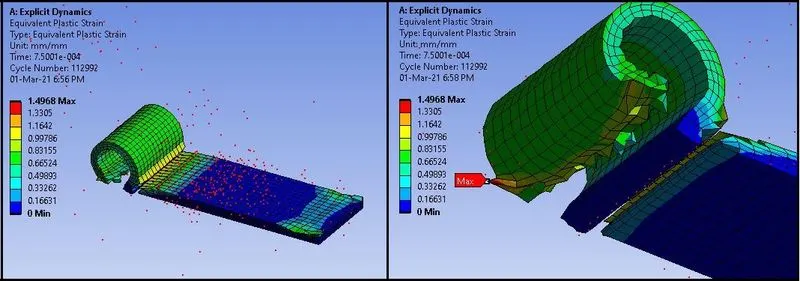
Plastic Strain Contours:
Plastic Strain Plot & Data:
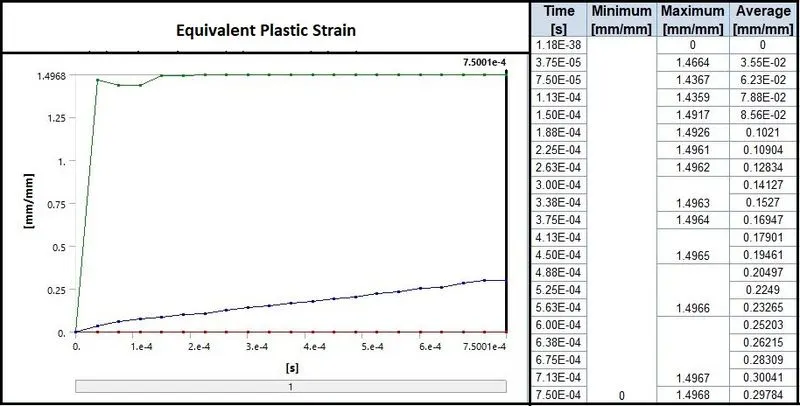
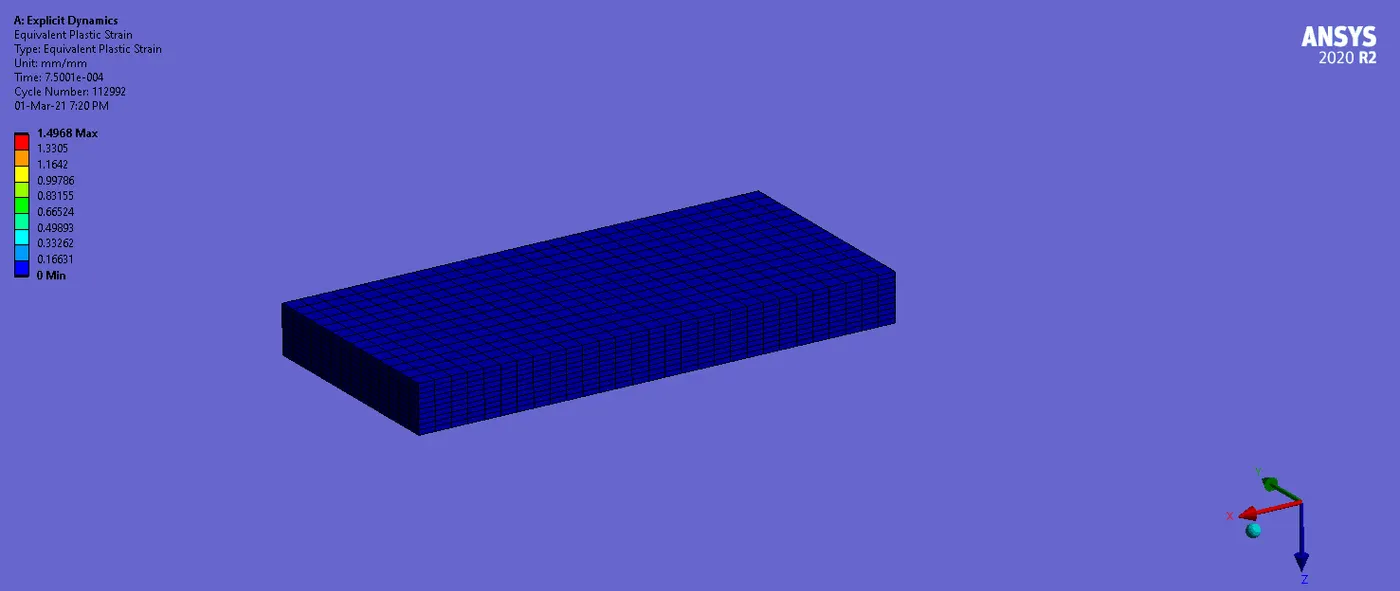
- We can see the plastic strain up to max. 1.4968 Due to deformation of the material.
- Due cutting process, cut chips are generally deforms permanently, so the plastic deformation is desirable here.
Directional Deformation Contours:
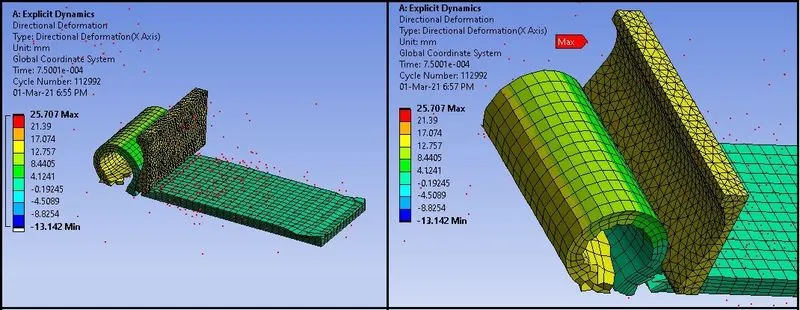
Directional Deformation Plot & Data:
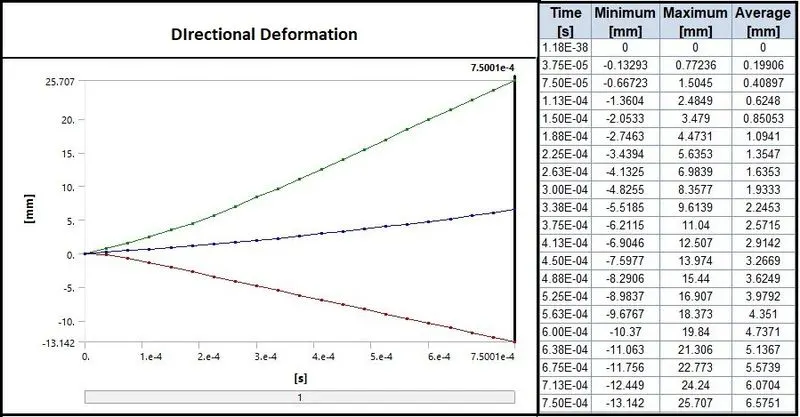
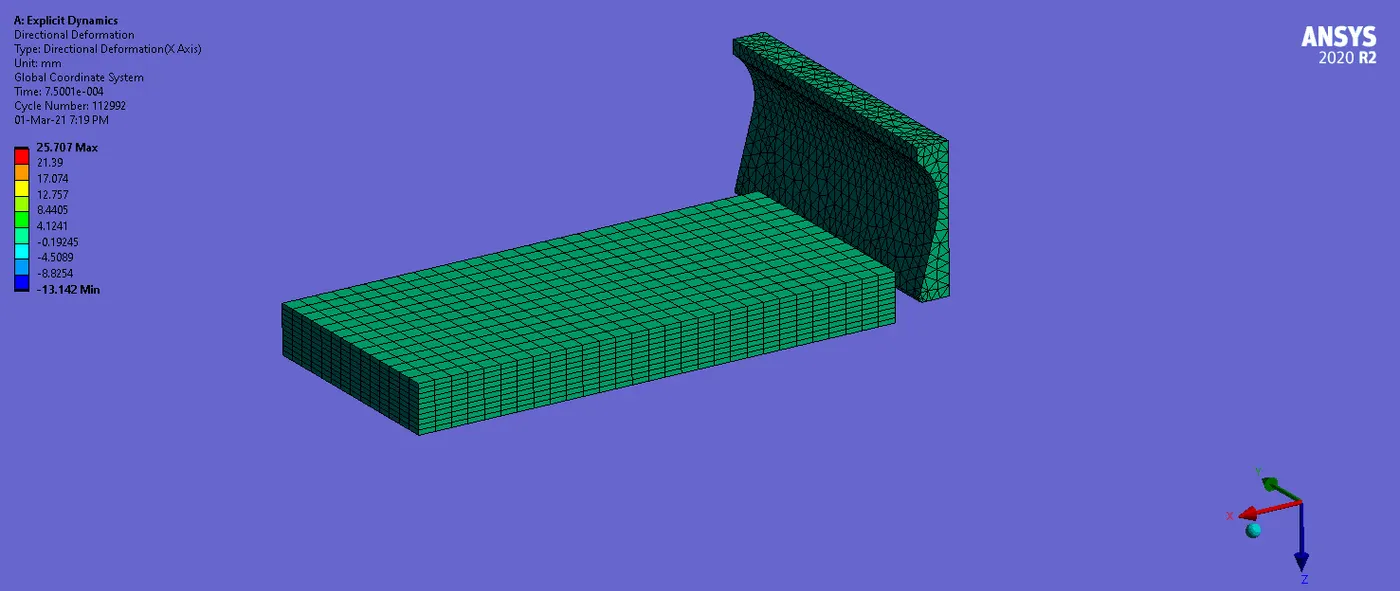
- Deformation is 25.707 mm in the X-Direction.
Temperature Contours:
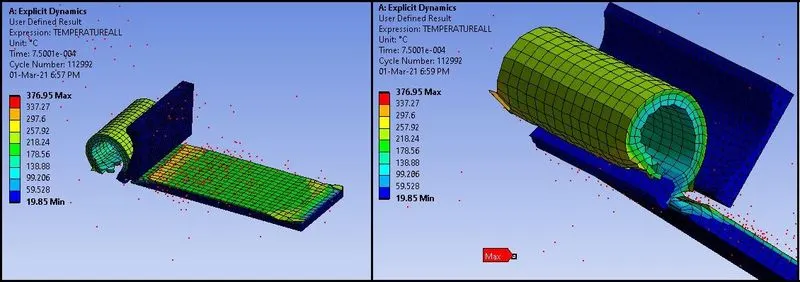
Temperature Plot & Data:
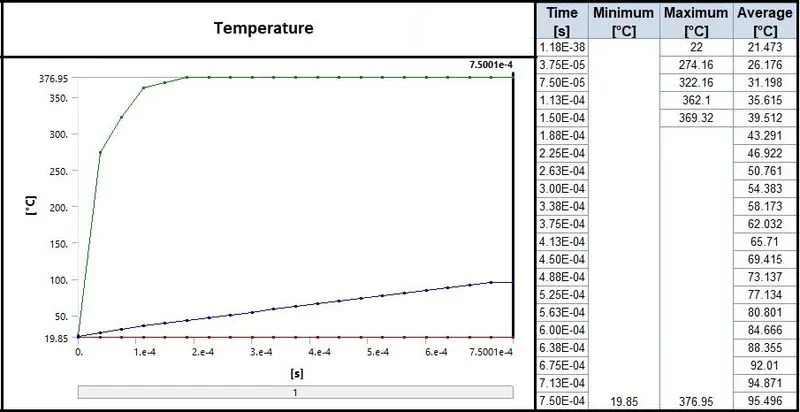
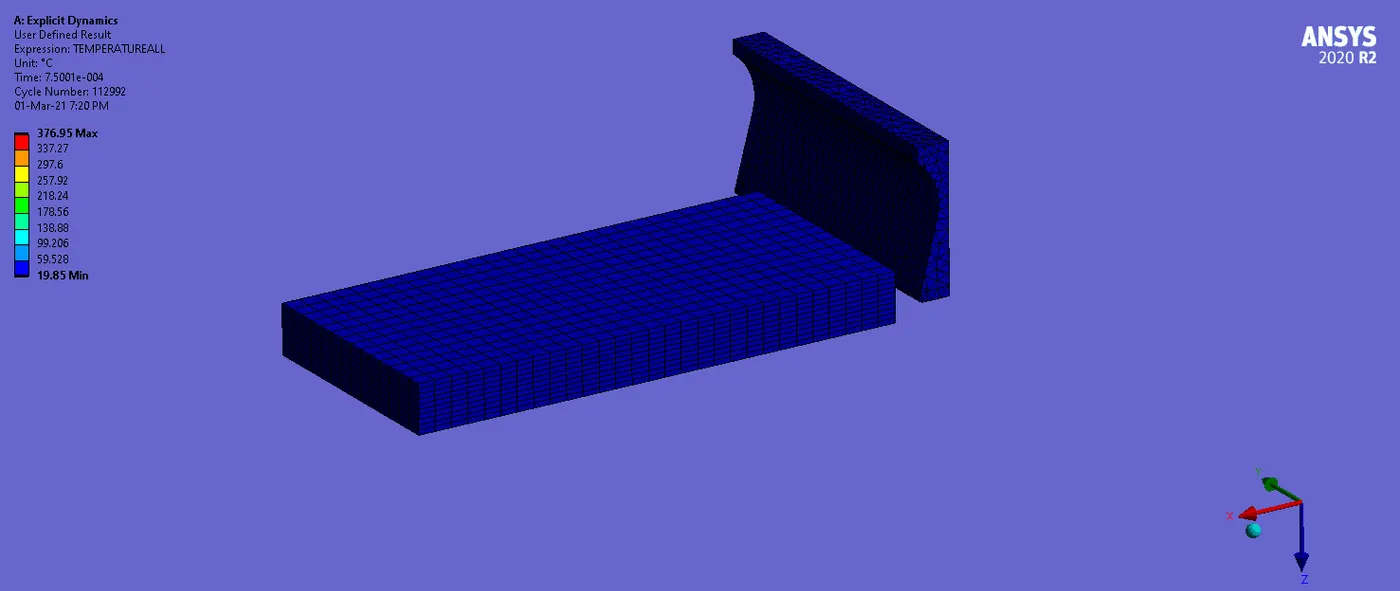
- Due to high speed cutting, we can see the temperature is going up to max. 376.95 0 C.
_ _ _ _ _ _ _ _ _ __ _ _ _ _ _ _ _ _ _ _ __ _ _ _ _ _ _ _ _ _ _ _ _ _ _ _ _ _ _ _ _ _ _ _ _ _ _ _ _ _ _ _ _ _ _ _ _ _ _ _ _ _ _ _ _ _ _ _ _ _ _ _ _ _ _ _ _ _ _ _ _ _ _ _ _ _ _ _ _
CASE_2
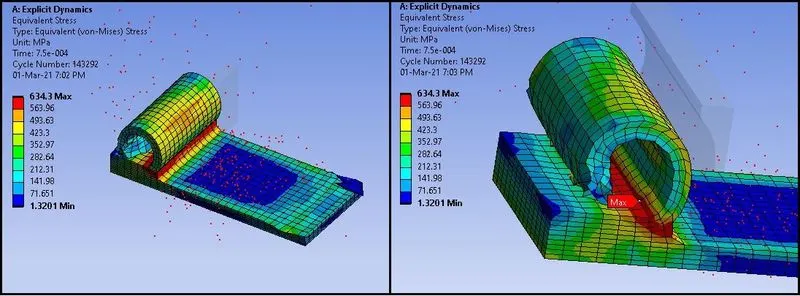
Stress Contours:
Stress Plot & Data:
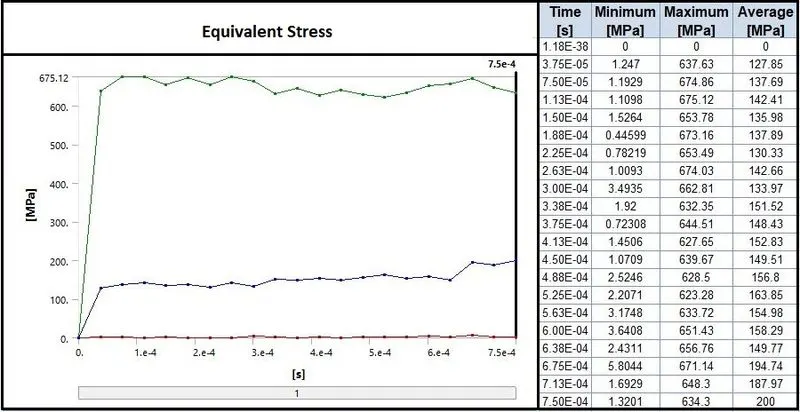
- Maximum stress is 634.3 Mpa at the end.
- AS per the plots and data, we can see that, once the value of stress reached up to 675.12 Mpa, then it ranges nearby it during the cutting time.
- We can see the red portion where max. Stress is occurring at the edge of cutting tool. Chip is generating due to cutting and to resist the tool, very high stress is observed.
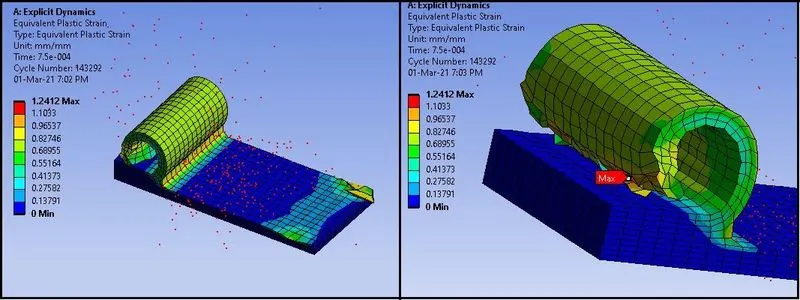
Plastic Strain Contours:
Plastic Strain Plot & Data:
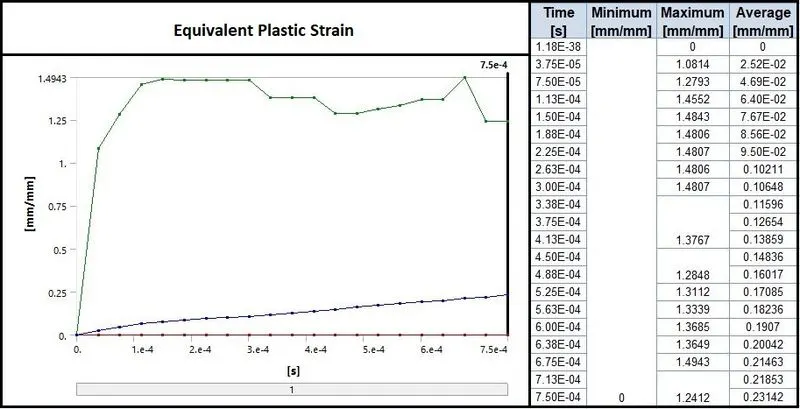
- We can see the plastic strain up to max. 1.2412 Due to deformation of the material.
- Due cutting process, cut chips are generally deforms permanently, so the plastic deformation is desirable here.
Directional Deformation Contours:
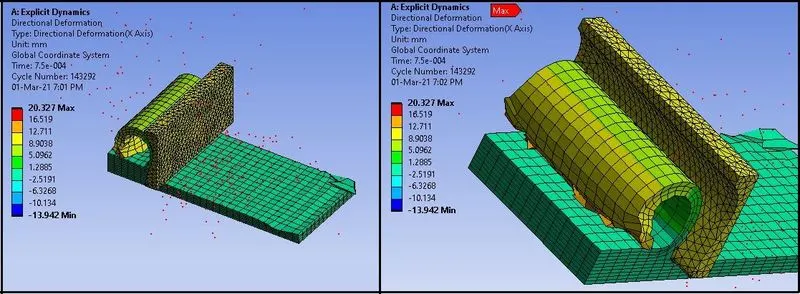
Directional Deformation Plot & Data:
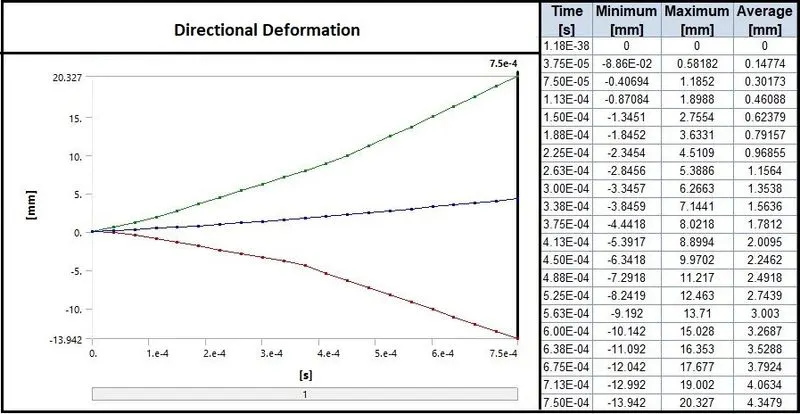
- Deformation is 25.327 mm in the X-Direction.
Temperature Contours:
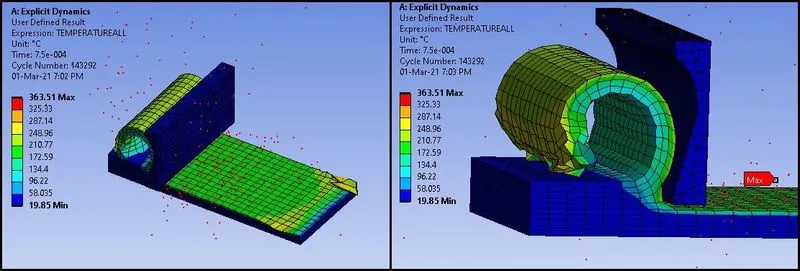
Temperature Plot & Data:
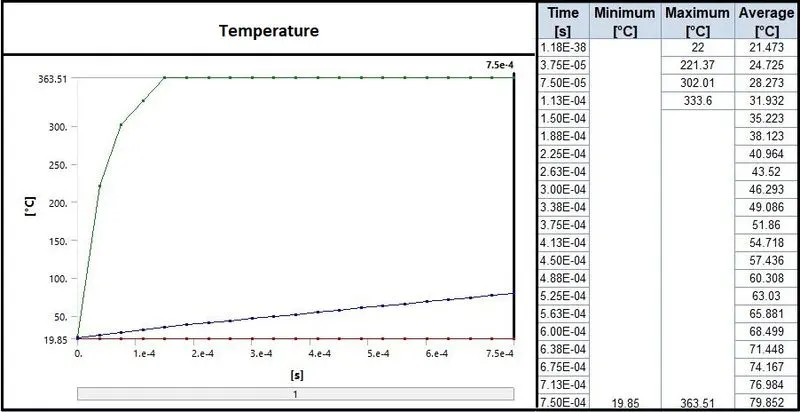
- Due to high speed cutting, we can see the temperature is going up to max. 363.51 0C.
_________________________________________________________________________________________________________
Comparison:

- Here from the comparison, we can see that stress in CASE_2 is higher when the velocity is 15000 mm/s. When the velocity is low, material can resist more to the tool and the stress can be higher.
- But the Plastic Strain and Deformations are higher in CASE_1, which is due to high velocity up to 20000mm/s.
- Also the Temperature in CASE_1, is higher, as we know that the velocity in CASE_1 is 20000 mm/s, so with the speed, more amount of cutting of material will be faced by the tool in short time, so the heating will be more due to higher interaction between Tool and Workpiece. So the Temperature will be higher in CASE_1.
_________________________________________________________________________________________________________
Conclusion:
- From above results, we can conclude that during the planer machining, high stresses in the chip formation zone, secondary deformation zone as well as on the machined surfaces can be generated.
- Intensity of stress and the behavior of the chip formation depend on the sheer angle of the cutting tool.
- We can observe excessive increase in the temperature during the machining process.
- When the velocity of the cutting tool is low, stress is high, which can cause the failure of the cutting tool or the wearing of the tool, will be high.
- By analyzing different velocity of cutting tool, we can find the optimum velocity and can reduce the stress generation on the workpiece.
- For better machining process, optimized layer of cutting surface, shear angle of tool and the velocity are important parameters, through which we can get smooth machined surface and good chip formation behavior.
_________________________________________________________________________________________________________
References:
- Planer (metalworking) - Wikipedia
- No Slide Title (iitk.ac.in)
- Chapter 12: Milling Cutters and Operations | Cutting Tool Applications | American Machinist
- Planer Machine: Definition, Parts, Working Principle, Types, Operation, Advantages, Application [Notes & PDF] (themechanicalengineering.com)
- "Plastic deformation and chip formation mechanisms during machining of " by Hong. Zhang (uwindsor.ca)
_________________________________________________________________________________________________________
Animations:
Here I have given the animations for Stress, Plastic Strain, Directional Deformation and Temperature regarding CASE_2,
(Cutting Tool Velocity = 20,000 mm/s) as below:
Stress:
Plastic Strain:
Directional deformation (X-Direction):
Temperature:
_________________________________________________________________________________________________________
Thanks & Regards,
Dharmesh Joshi