Week 9 - Challenge 1 - Base Bracket Design
BASE BRACKET
AIM: To make a model from the provided class-A surface.
INTRODUCTION:
CLASS - A SURFACE: a surface made by the designer which is given as an input to the plastic modeler to work on. It is aesthetic surface and the outer most surface.
CLASS - B SURFACE :a surface below a certain thickness from the class-A surface is class-B surface. This is the surface that contains engineering aspects of a model.
CLASS - C SURFACE :a surface that joins class-A and class-B surfaces is class-C surface
METHODOLOGY :
- Tooling axis
- Draft analysis
- Class-B surface
- Class-C surface
- Making a solid model from surface.
Following tools were used to reach the final step:
- Extract
- Un-trim
- Trim
- Extrapolate
- Offset
- Edge fillet
- Boundary
- Sweep
- Join
- Close (part design)
INPUT CALSS A SURFACE
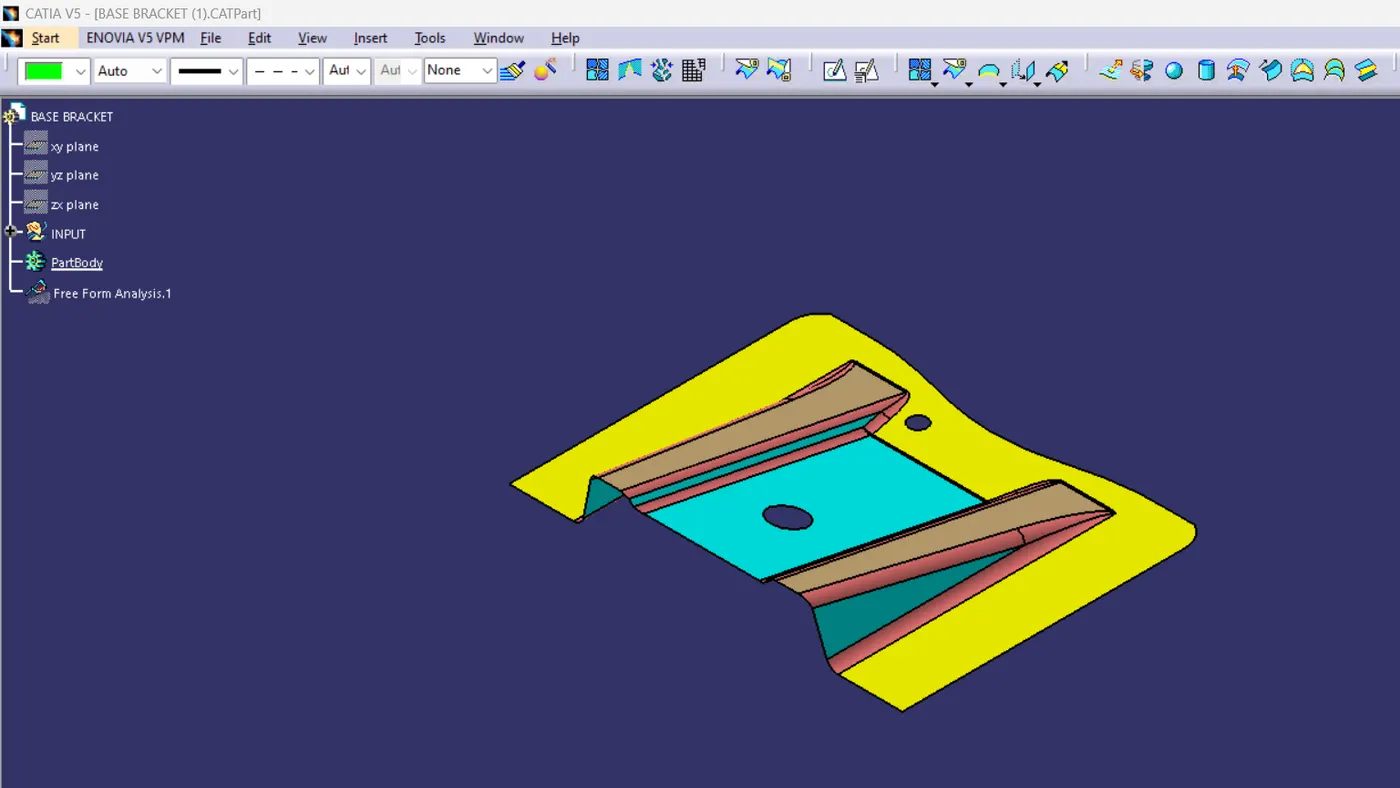
- Analyze the model manually or visually to see which direction is most suitable for tooling axis.
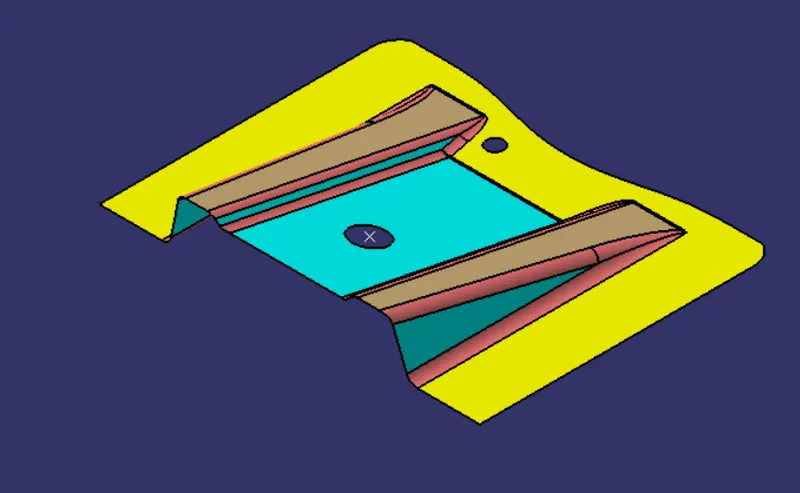
- Point is created at the centre of a hole.
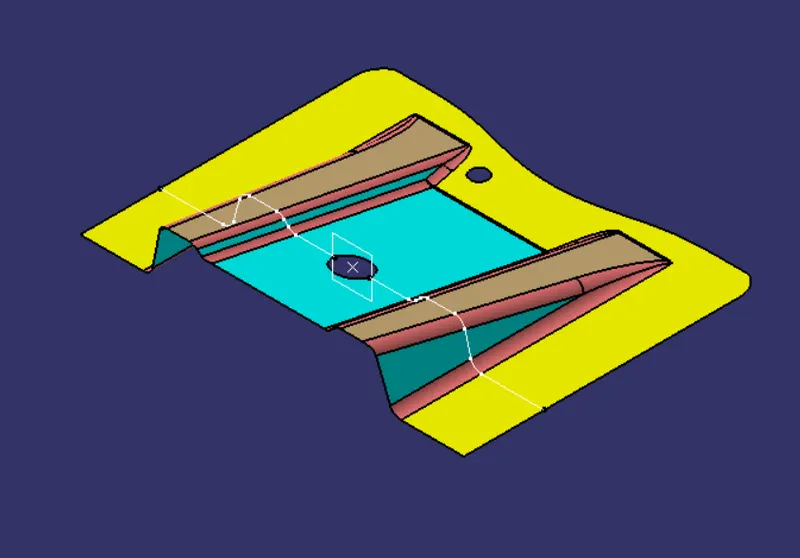
- YZ Plane is created at the center of the hole and intersection of a surface is taken along the created plane.
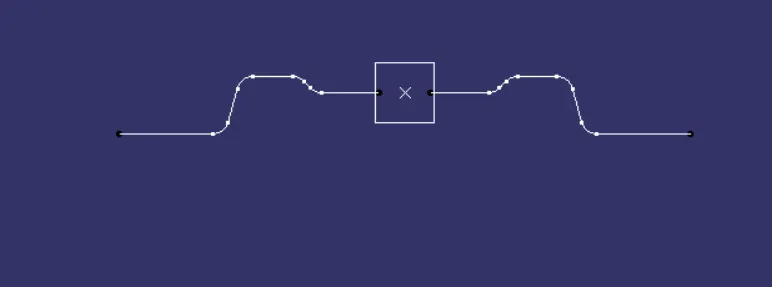
Lines are drawn to the side faces of the intersected curves then bisecting line is created between these two lines.
In this way we can create the tooling direction.
Draft analysis :-
Draft analysis is performed based on color ranges identifying zones on the analyzed element where the deviation from the draft direction at any point, corresponds to specified values. Minimum draft angle is considered as 3 degree.
FLAT SURFACE:
- Extract the flat surface.
- Un-trim the surface.
- Extrapolate it.
- Offset it by 2.5mm i.e. thickness.
SLANT SURFACE:
- Extract the slant surface.
- Un-trim the surface.
- Extrapolate it.
- Offset it by 2.5mm i.e. thickness.
RIBS SURFACES:
- Extract the rib surfaces (1 rib at a time).
- Un-trim the surface.
- Extrapolate it.
- Offset it by 2.5mm i.e. thickness.
- Trim to get the desired shape.
- Repeat it with the second rib too.
- Once we have finished doing this, we have to trim the surface to get exact shape of the class-A surface (without fillet) below 2.5mm. After the trimming part is done, fillet the model. Formula for filleting= fillet value+thickness (if the surface is below). We get our class-B surface.
FILLET 3mm THICKNESS 2.5mm =5.5mm
CLASS-C SURFACE:
Extract the boundary of the class-A surface
- Extract the boundary of the holes on the class-A surface.
- Use sweep command on the boundaries one by one to get the class-C surface.
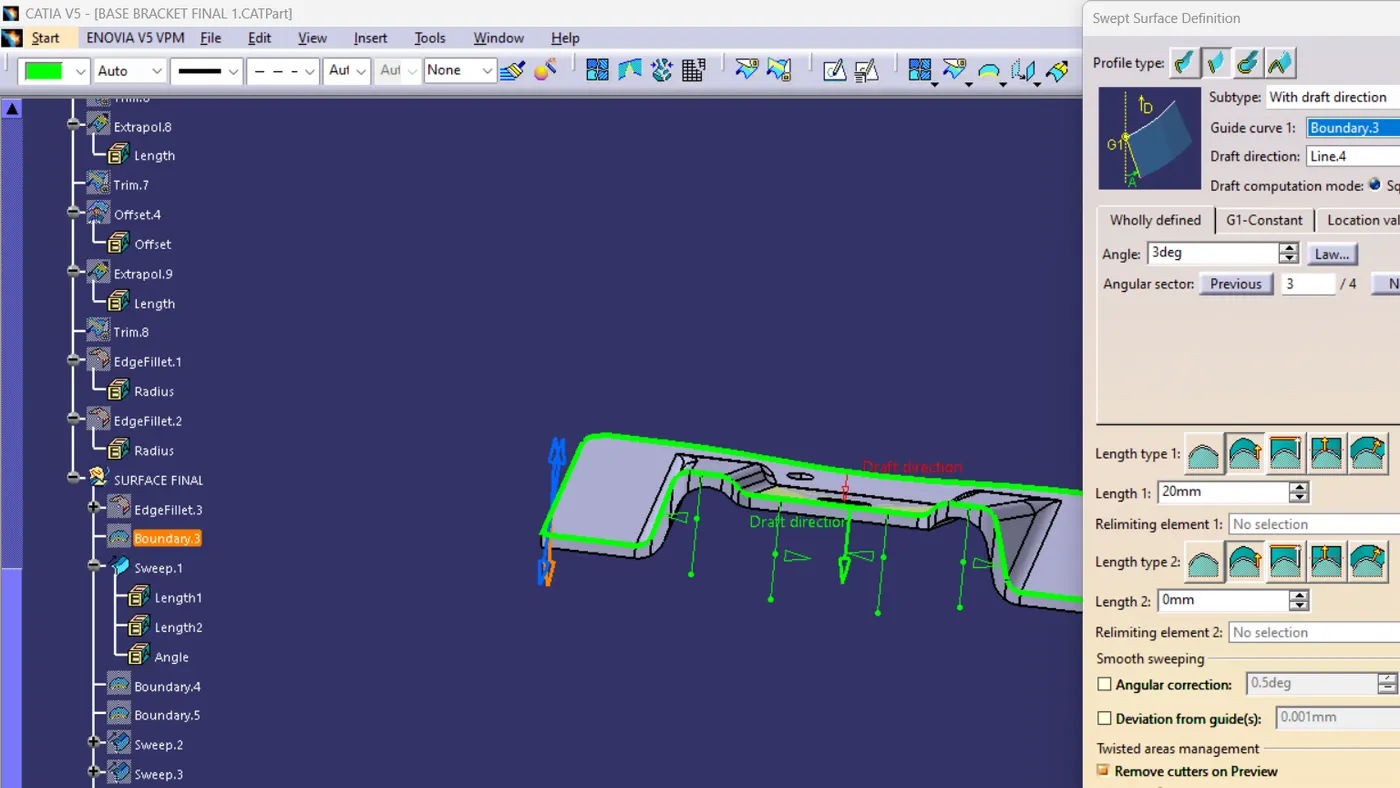
- FINAL BASE BRACKET:
- Join the class-A and class-C surfaces together
- Go to part design and close the model.
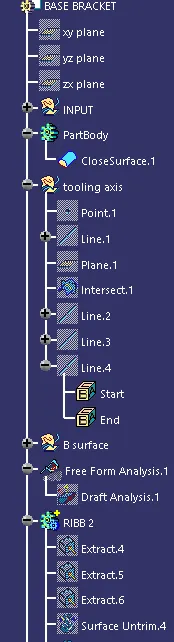
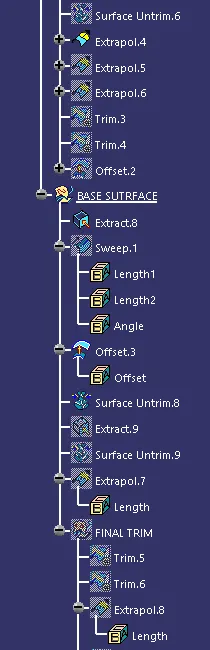
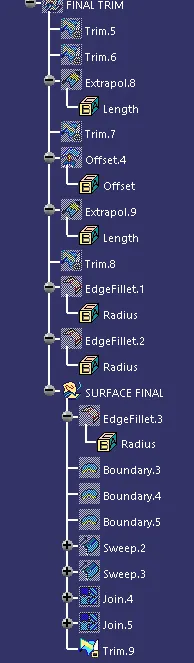
Tree structure ;