Week 9 - Attachment Feature Creation - Challenge 2
AIM:
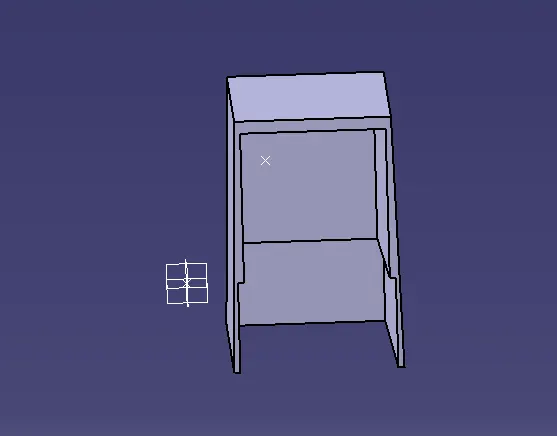
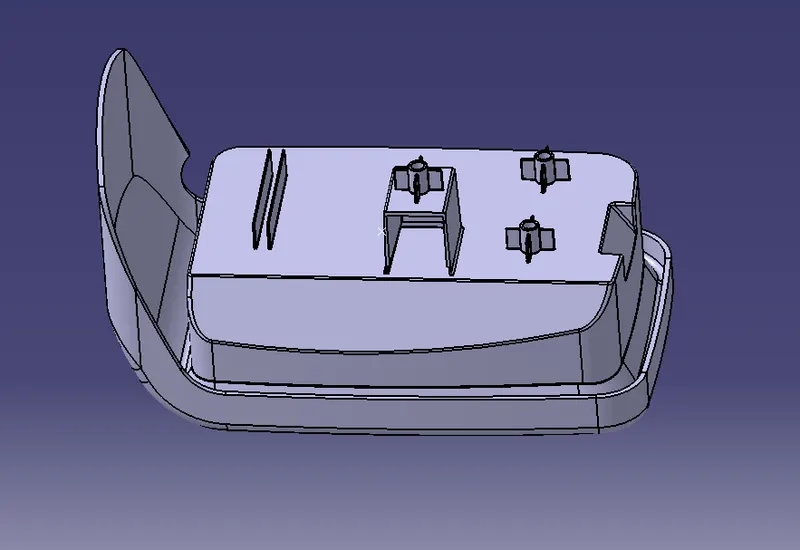
To create a Coin holder with ribs from the given A class surface by adding a thickness of 2.5 mm to it and to create screw boss and dog house as per the design standards.
PROCEDURE:
1)Tooling Axis
Tooling axis is nothing but the direction in which the core and cavity opens and closes. Design engineer works is to analyse the Class A surface and find out the best possible tooling direction keeping in mind all the draft angle is with respect to the tooling axis so that the component can be easily ejected from the moulds.
2) A Class Surface
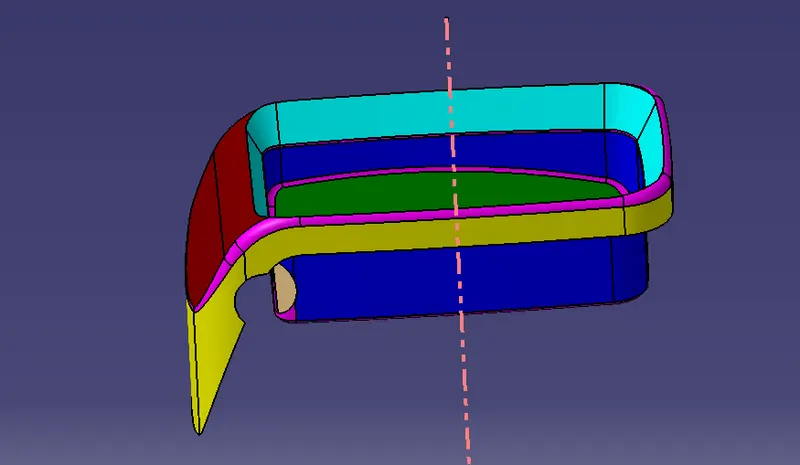
In automotive design, a class A surface is any of a set of freeform surfaces of high efficiency and quality. Although, strictly, it is nothing more than saying the surfaces have curvature and tangency alignment – to ideal aesthetical reflection quality, many people interpret class A surfaces to have G2 (or even G3) curvature continuity to one another. Class A surfacing is done using computer-aided industrial design applications. Class A surface modellers are also called "digital sculptors" in the industry. Industrial designers develop their design styling through the A-Surface, the physical surface the end user can feel, touch, see etc.
3) B Class Surface Creation
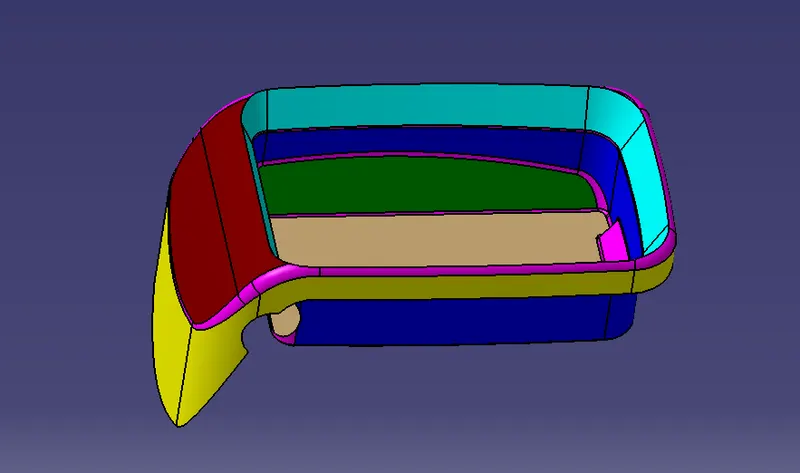
Represent internal and/or functional surfaces. This cluster exemplary includes derived surfaces created by offset operations from class A surfaces to define the thickness of material. In this file it is important to link class B surfaces geometrically to enable an adaptation to class A surfaces automatically in case of styling change.
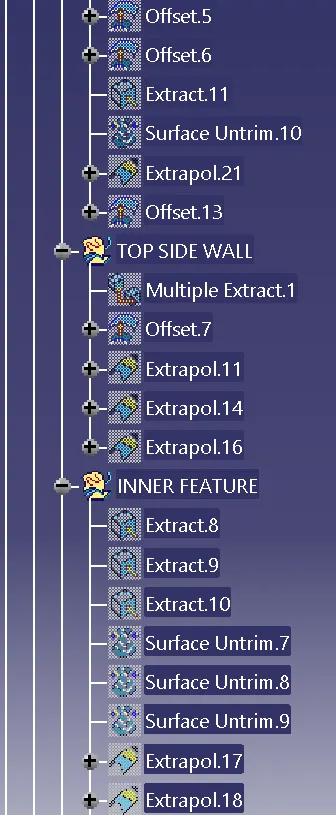
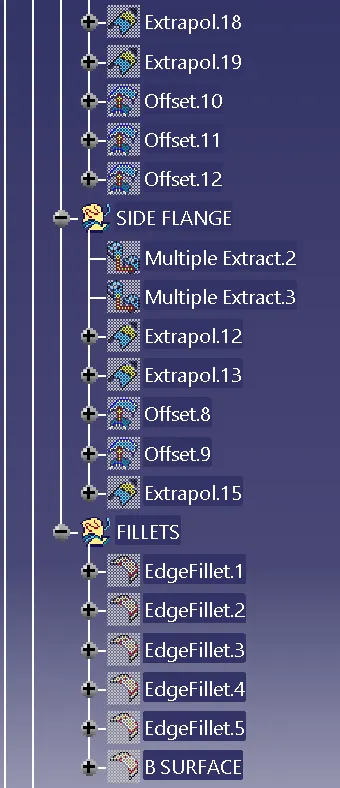
After creating the tooling axis, B surface is to be created which is nothing but the surface parallel to the A surface. B surface contains all the fillets and the edges which the A surface contains.
4) C Class Surface Creation
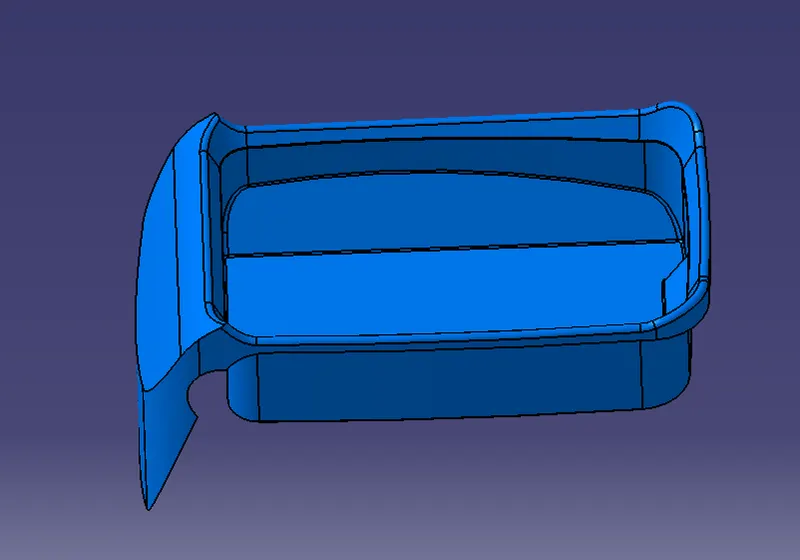
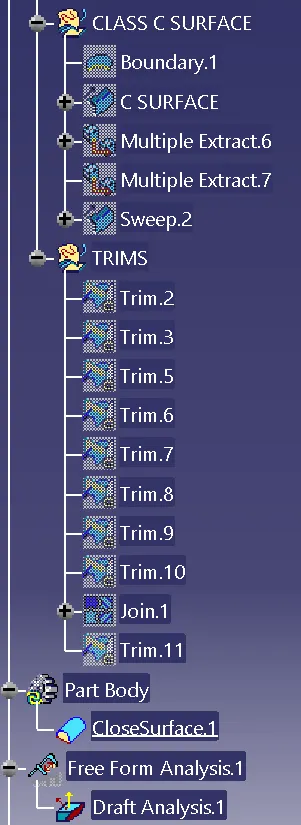
Class C Surface is swept along the boundry of the Class A at an angle perpendicular to the CLASS A surface with respect to the tooling axis direction with a draft angle of 3 degree.
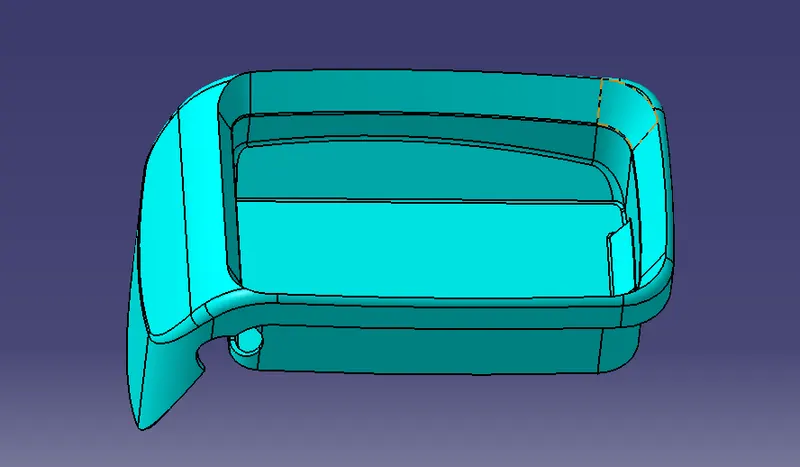
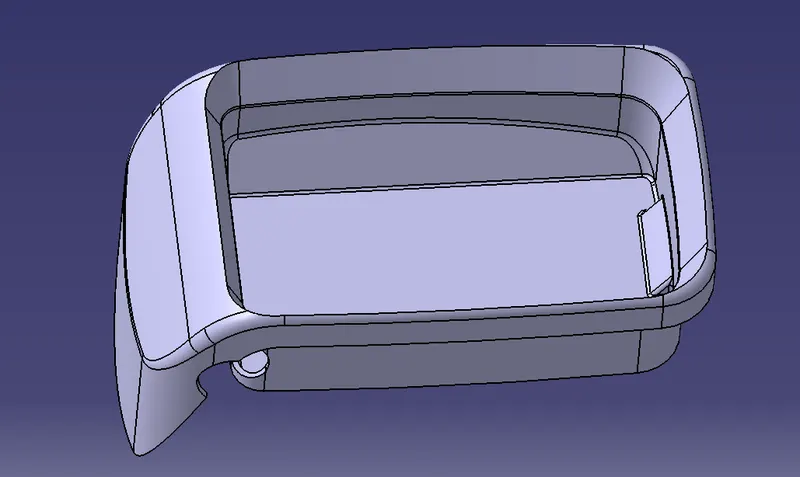
5) Joining CLASS A, B and C Surfaces to get a Closed Surfaces
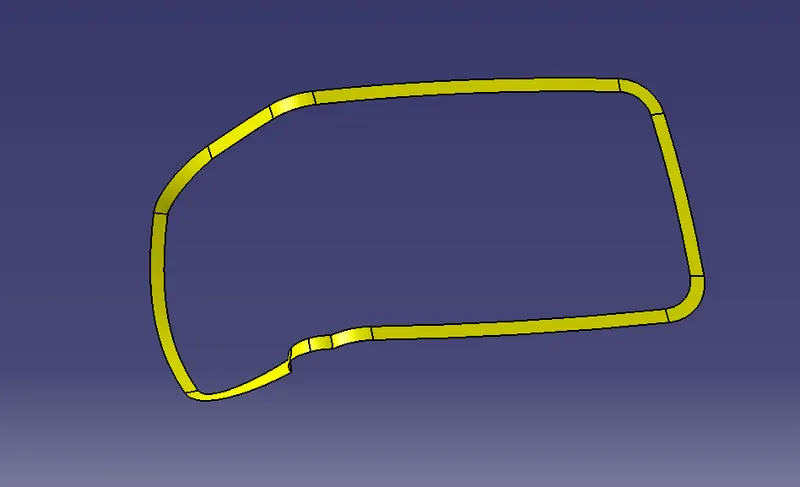
After finishing all the 3 surfaces, join the class A and class C surface together using the Join command. Now, the joined surfaces are then trimmed with class B surface to form a closed surface.
6) Draft Analysis
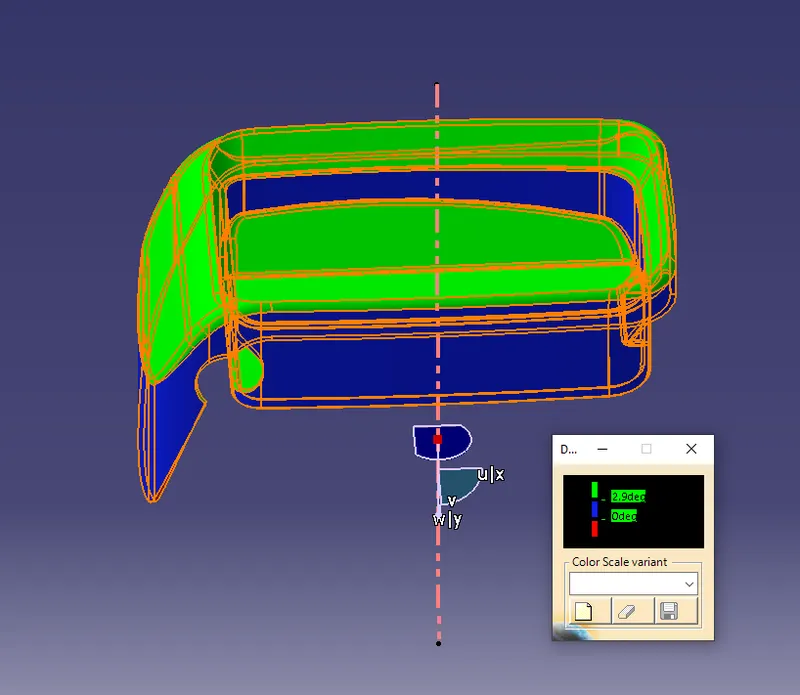
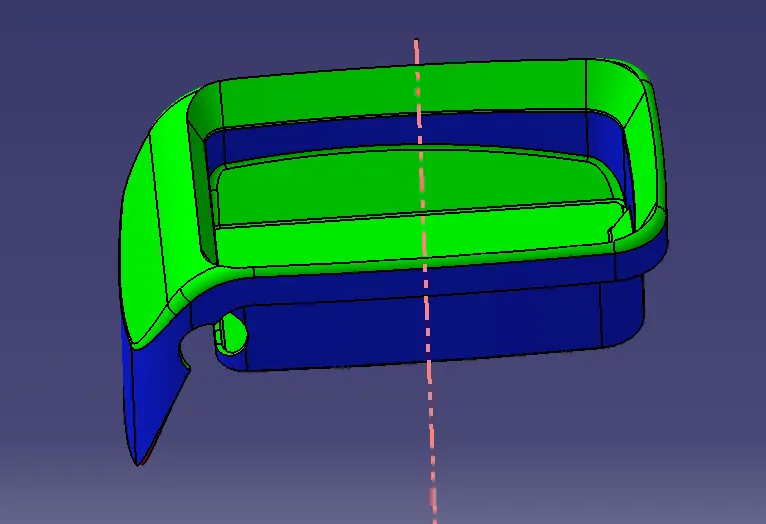
The Draft Analysis command enables you to detect if the part you drafted will be easily removed. This type of analysis is performed based on color ranges identifying zones on the analyzed element where the deviation from the draft direction at any point, corresponds to specified values.
Draft angles are very important in thermoforming product design. If the product is formed onto a female or negative mold, it shrinks away from the mold sidewalls. As a result, true female or negative products can be thermoformed with vertical walls having zero draft angles.
7) Creating Screw Boss :
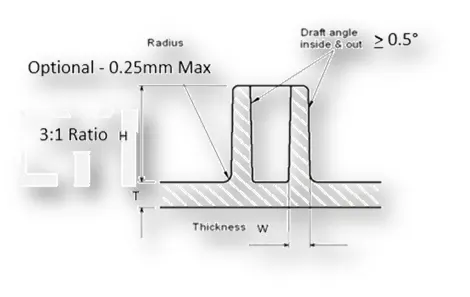
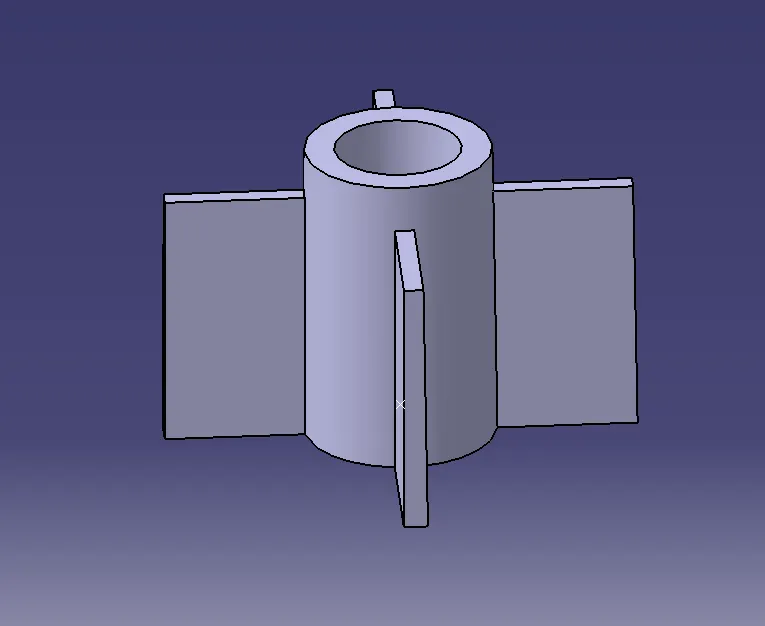
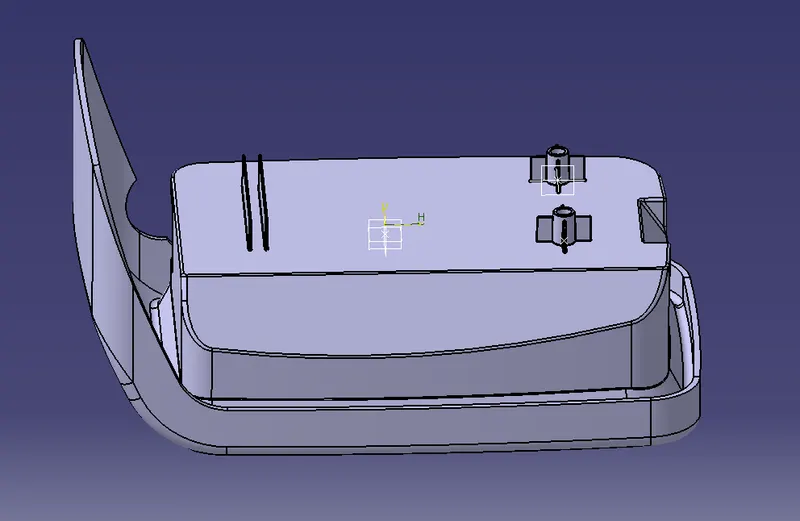
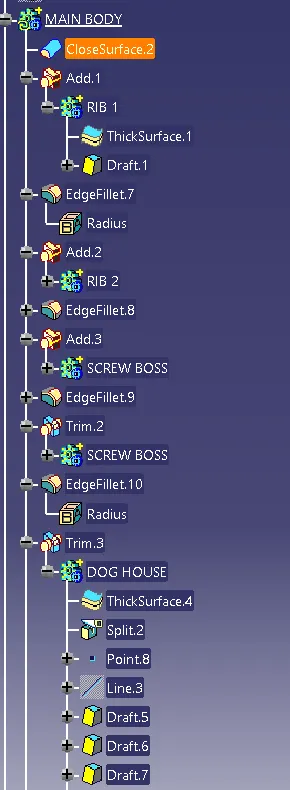
Create the screw boss as per the design rules and give the required draft angle.
Boss features are commonly found in injection molding designs. They are used to aid in the assembly of molded parts by providing a channel for a screw. To get these specifications, refer to the screw manufacturer's guidelines for recommended hole size and surrounding wall thickness for your given screw.
8) Creating Dog House :
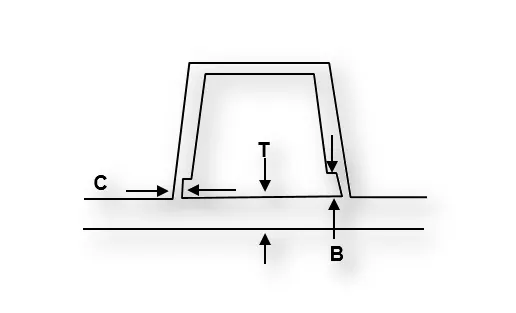
Create the dog house as per the design rules and give the required draft angle.
-
Doghouse wall thickness at the intersection of the part wall ( C ) should be 40% or less than the main wall stock ( T ).
-
Height of ( B ) should be between 3.0 – 6.0 mm
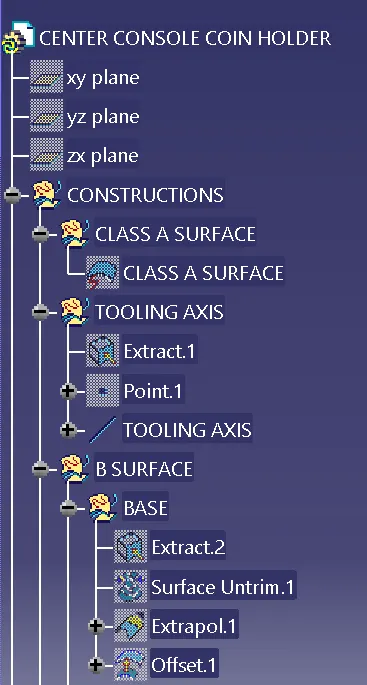
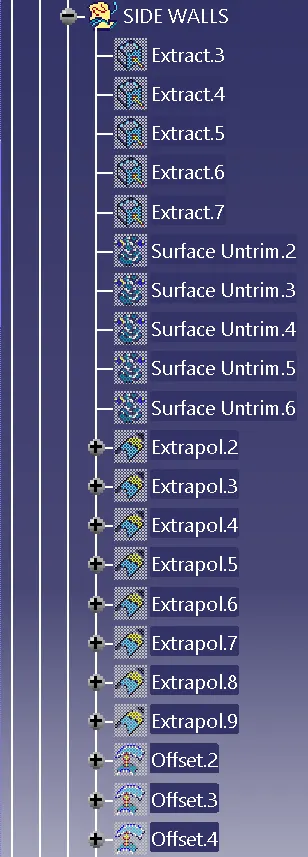
Tree Structure images :
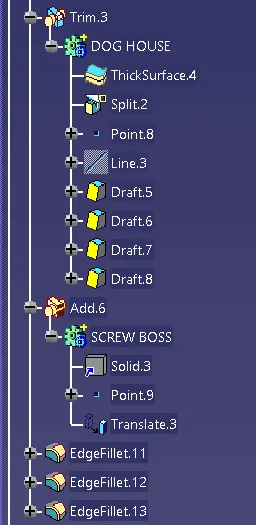
Result :
- Class A, B and C surface was created as per the automotive standards using catia v5software.
- Draft analysis was performed for the built model and it could be seen that the draft was under permissible limit for the manufacturing of the component.
- Screw Boss and Dog House were created for the component as per the design rules.