Week 9 - Attachment Feature Creation - Challenge 1
RIB DESIGN FOR COIN HOLDER
AIM –To create Rib For given component as per industrial considerations
Tooling Axis Creation –
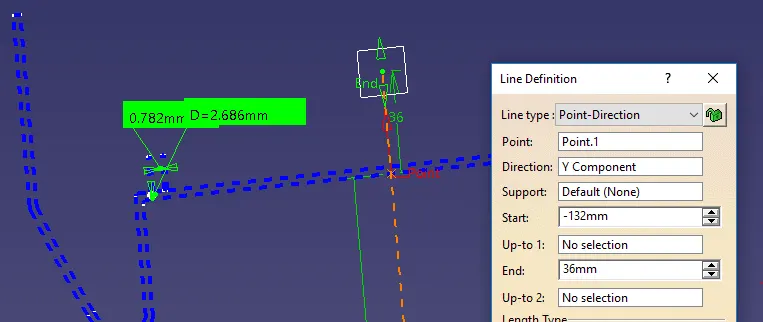
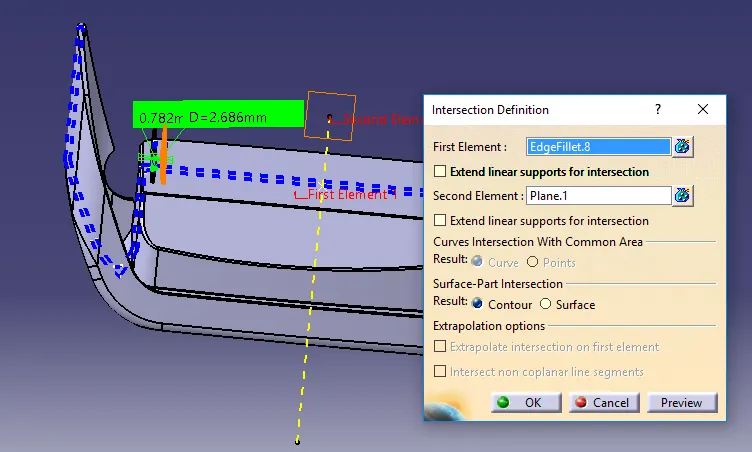
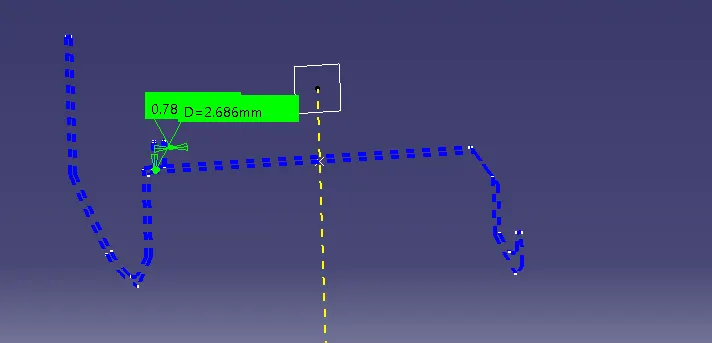
Checking the possibility in all direction of axis and find what are the problem creation parts of the component or model. the clearance checking along all the axis direction will be done by creating an intersection along an axis on a plane with the walls, the line bisecting the two line and passing through the point will be tooling axis.
First we Extract Surface and Create the point on the surface, Next draw the line along Y-Axis with reference point. That line Consider as the Tooling Axis.
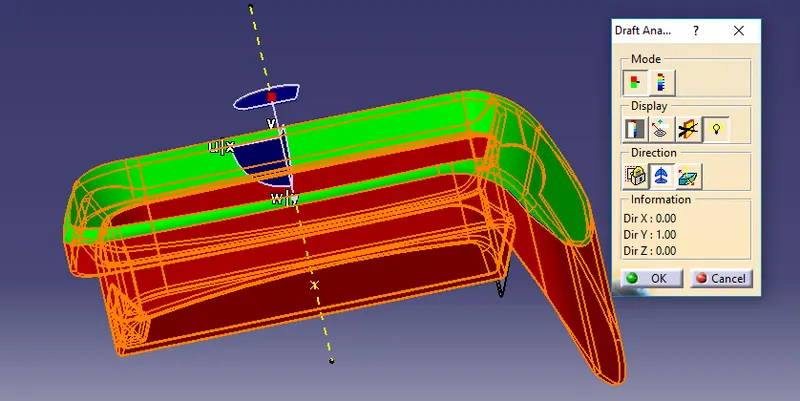
Draft Analysis –
Draft Analysis is done after determining the tooling Axis, draft analysis is used to check whether the minimum draft 3 degree is maintained or not.
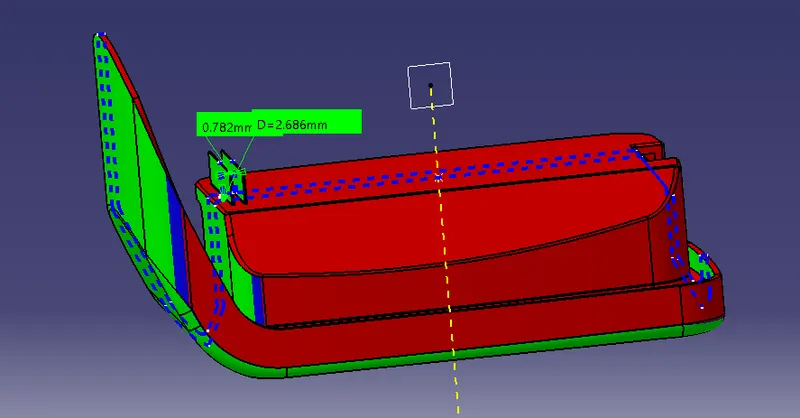
RIB –
Rib are used to Strengthen the walls of mould with out increasing the wall thickness which means that you minimize the problems that come into play when the wall thickness have to be increased. If the wall is too thick, Wraping and sinking can result so that the entire design may need to be rejected.
ADVANTAGES –
Acting as stops or guide for mechanisms.
Locating and arresting component of an assembly.
Providing alignment in mating parts.
Support proper handling for Rollers, Gear bodies and cylindrical parts..etc
Disadvantages –
Increase the weight of the component proportionally cost.
Increase the Molding Cycle time For Cooling the Component.
Increase the probability of sink marks.
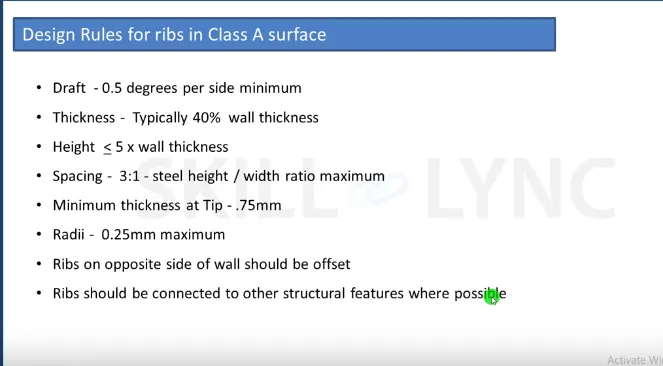
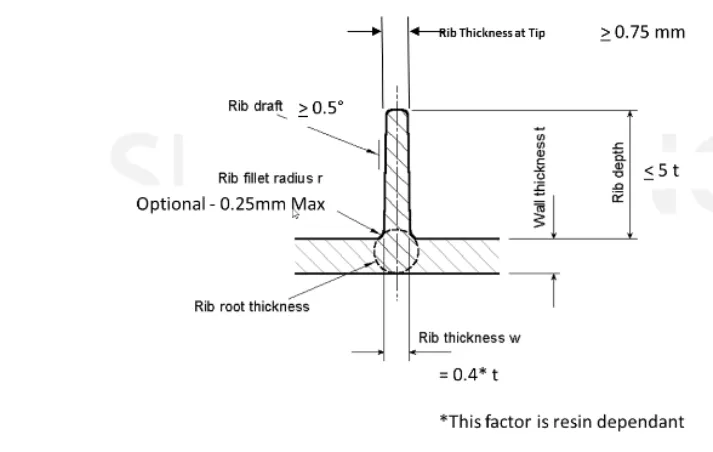
MAIN RULES FOR RIB CREATION –
Thickness
Height
Spacing
Fillet radius
Location
Quantity
Manufacturability
PROCESS OF CREATION OF RIB -
Sketch -
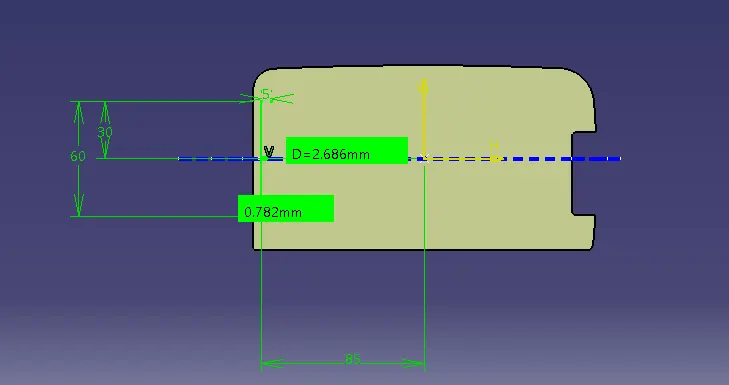
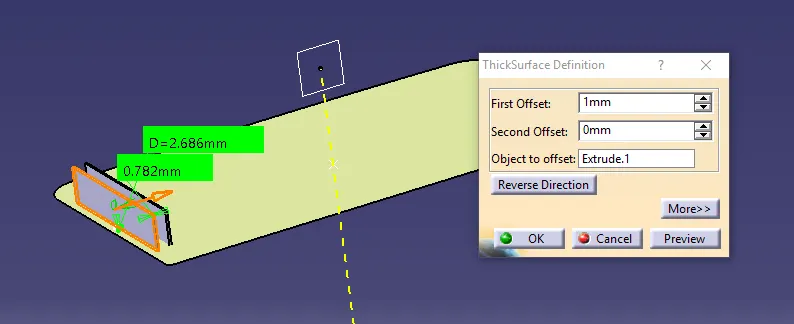
Sold Cretion -
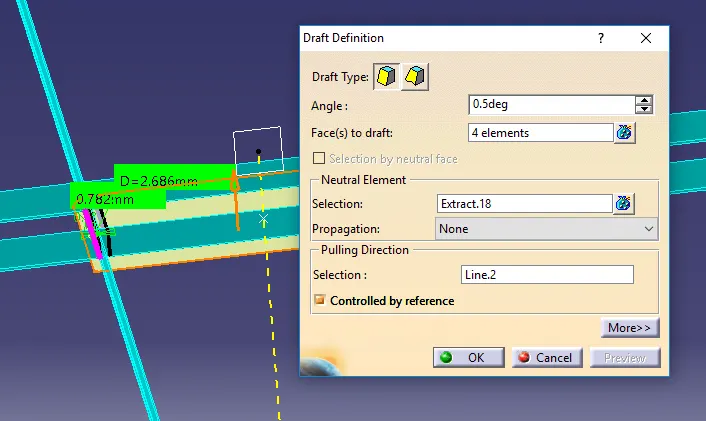
Draft Design -
Intersect line -
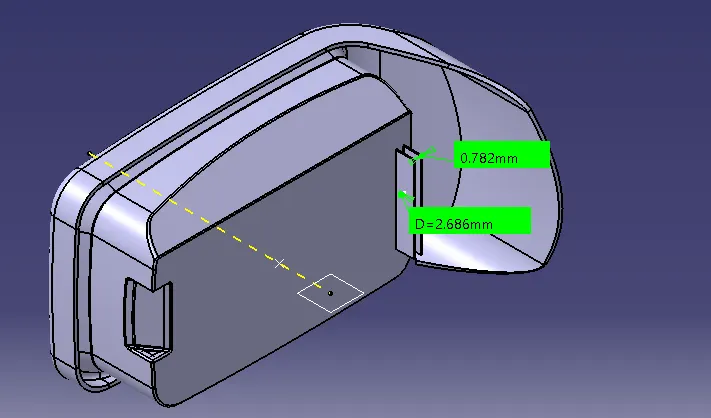
Final Part -
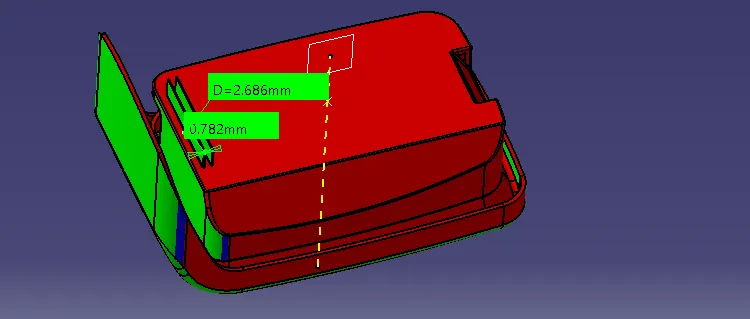
DESIGN CONSIDERATION –
RIB Thickness – 1mm
Rib height –12.5mm
Rib Draft –0.5 Degree
Rib fillet Radius –0.25 mm
Rib to Rib Spacing – 5mm
CONCLUSION -
Hence, Ribs were designed by considering the design Rules of RIB.