Week 8 - Universal Joint
- Objective: Perform a transient structural analysis on a double universal joint with a spring using three different materials: Structural Steel, Stainless Steel and Titanium alloy(They can all be found in the General Materials section) The three materials must be used on the joint with the springs alone.
- Procedure: Create a Transient Structural analysis in ANSYS Workbench
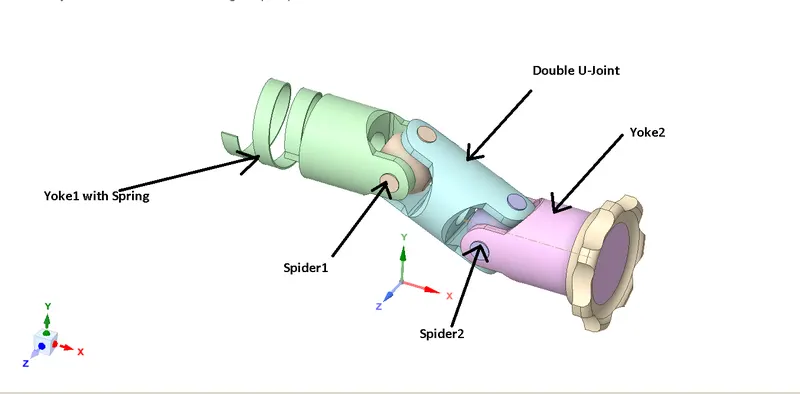
- Importing and Checking Geometry: We will import the model and check for any geometry error in SpaceClaim. The given model had no issues. After importing we will rename the parts as below:(Left to Right) Yoke1, Spider1,
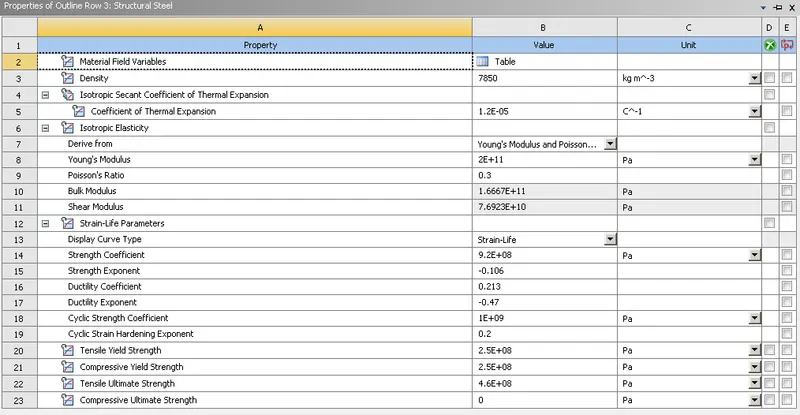
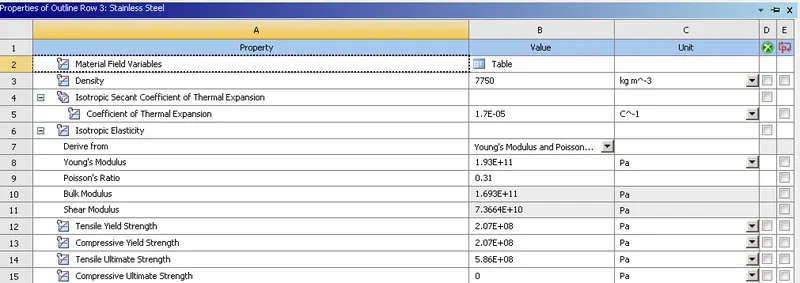
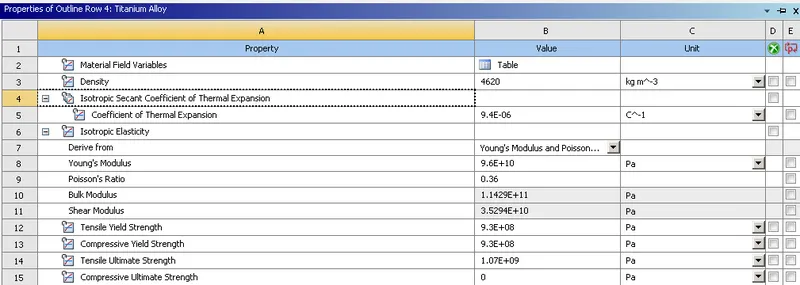
- Assigning Materials: For this challenge, we have to use three different materials for Spring.
Structural Steel:
Stainless Steel:
Titanium Alloy:
- Setting up Contacts & Joints: We will remove the contacts as they are not required for this analysis. We will setup joints to define the boundary conditions:
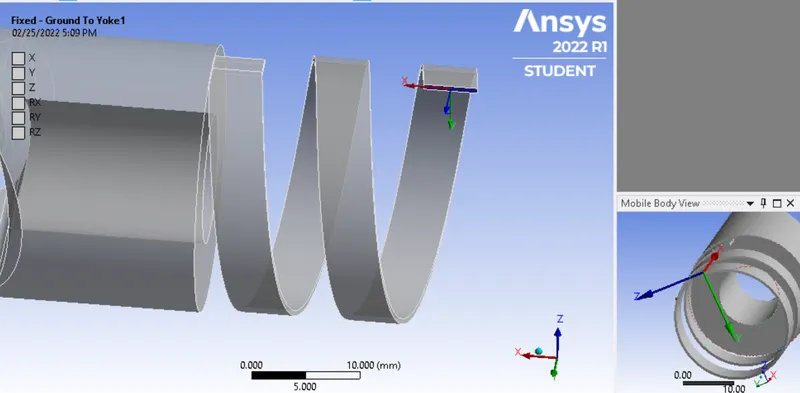
Fixed Joint: We will fixed on end of the spring as shown in the image below:
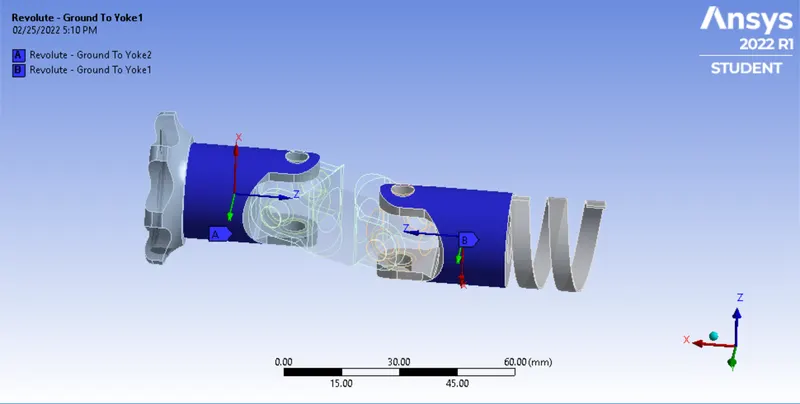
Body to Ground Revolute Joints: We will take both the Yokes and assign a revolute joint with rotation in Z direction, th image below shows the same:
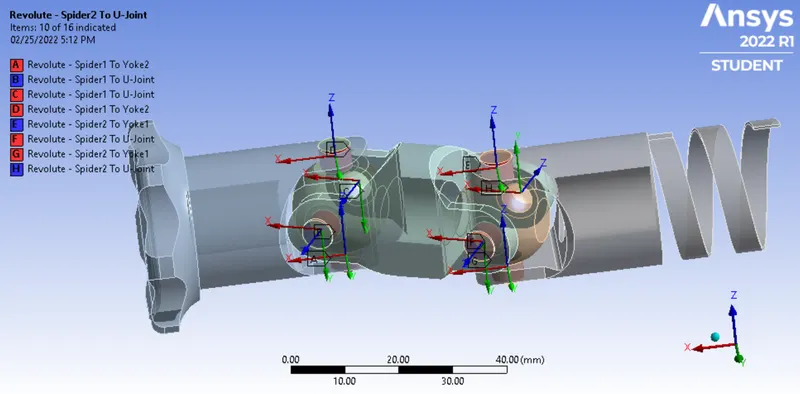
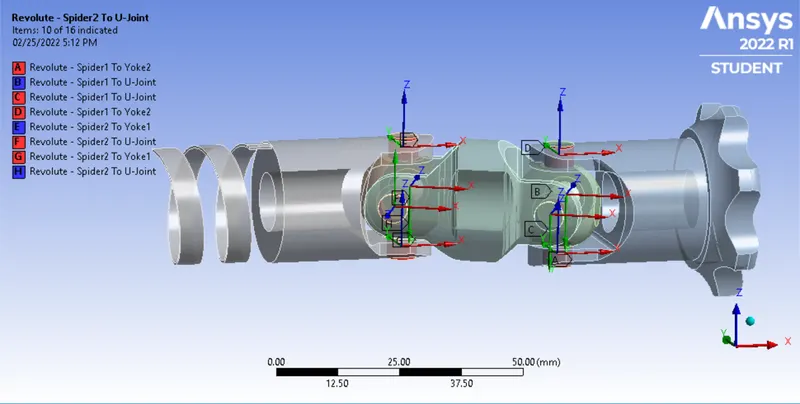
Body to Body Revolute Joints: Similarly, we will assign the Body to Body revolute joints. here we have will create a separate joint for each Spider Pin and the attached part. Below images show the same:
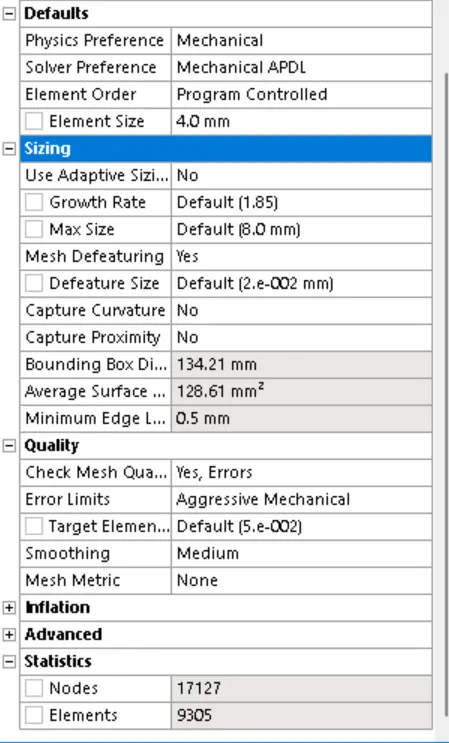
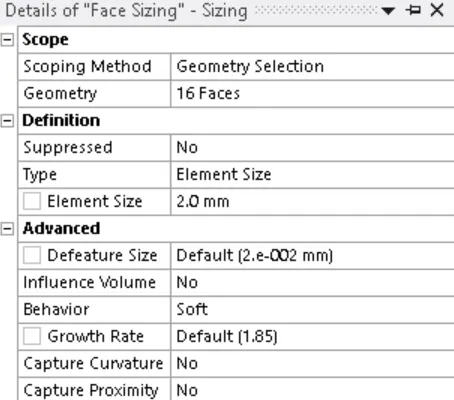
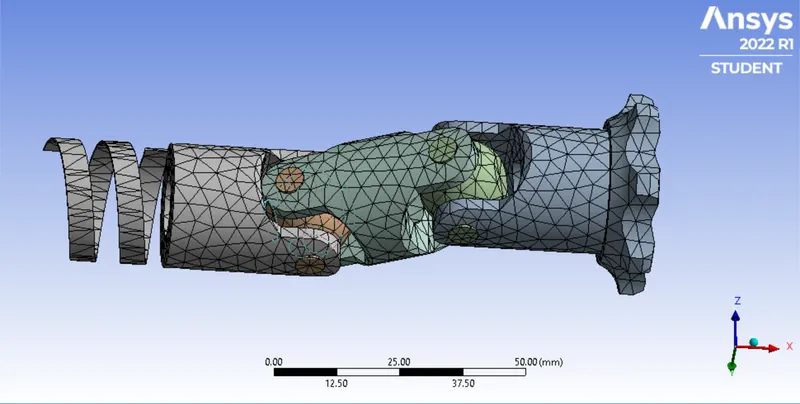
- Mesh: For the mesh, we will use 5mm nesh for all the parts of the model, also we have assigned face meshing for the faces in contact with 2 mm mesh. Below image shows settings used.
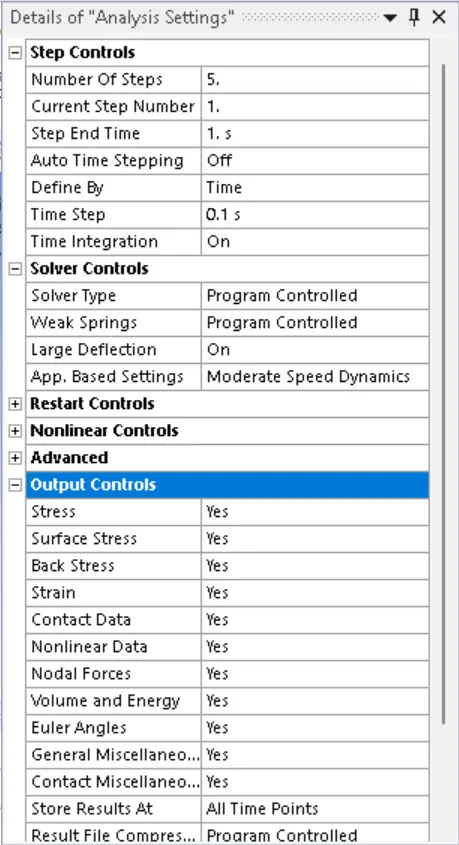
- Analysis Settings: We ran the simulation for 5 steps, we turned off Carry Over time step gave the initial time step as 0.1sec. Change the Weak Springs to Programme COntrolled and Large Deflection ON. Turned ON all the options in Output Controls as shown in the image below:
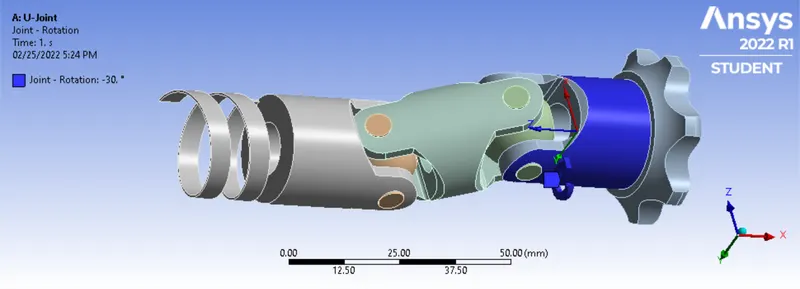
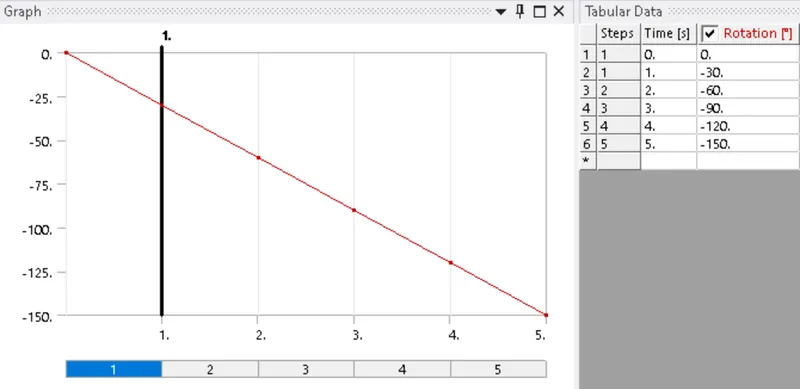
Rotational Joint: We will assign rotational joint at Yoke2, we gave 30de gree rotation for each step, the below image shows the same:
- Results:
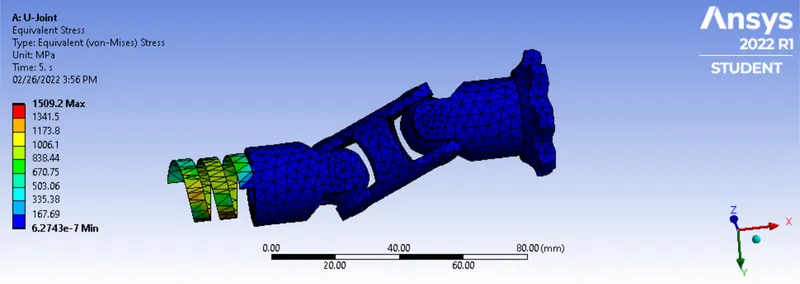
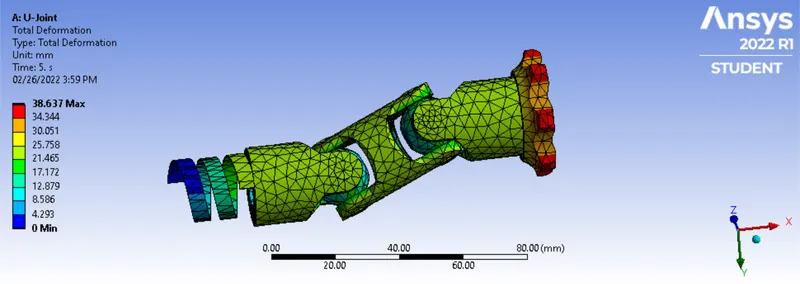
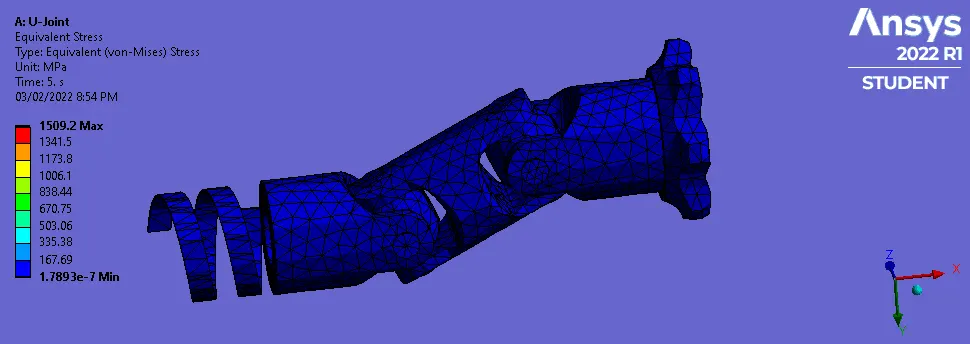
- Case1: Structural Steel
Equivalent Stress:
Total Deformation:
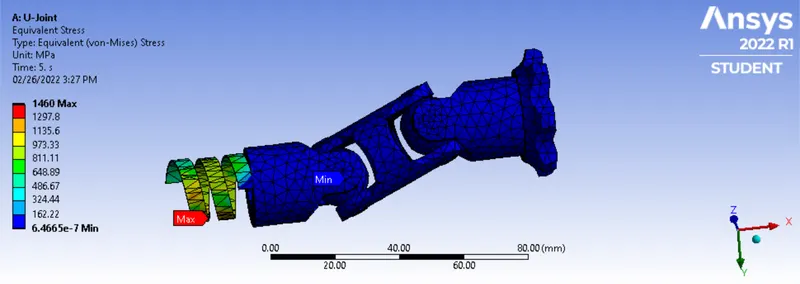
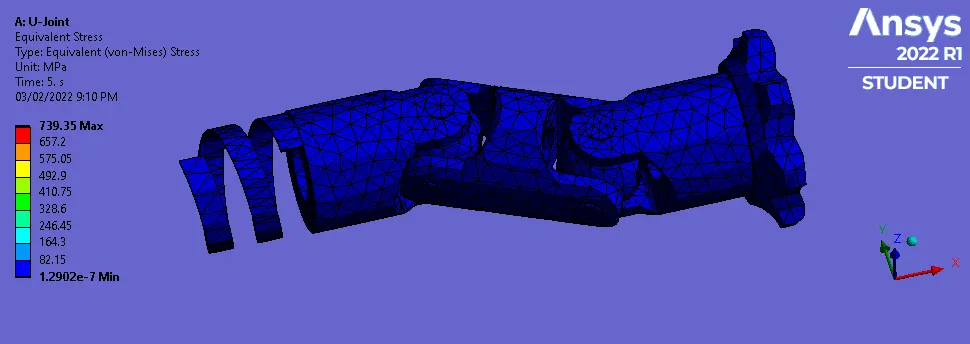
- Case2: Stainless Steel
Equivalent Stress:
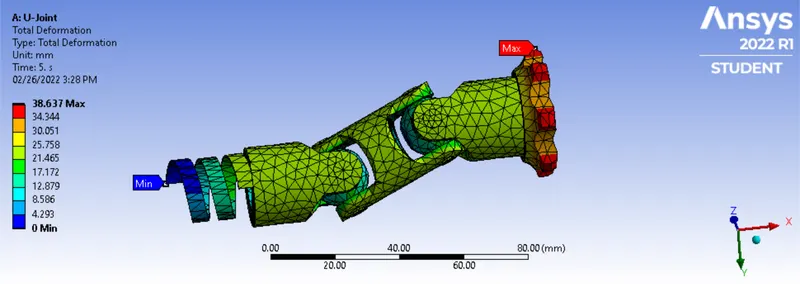
Total Deformation:
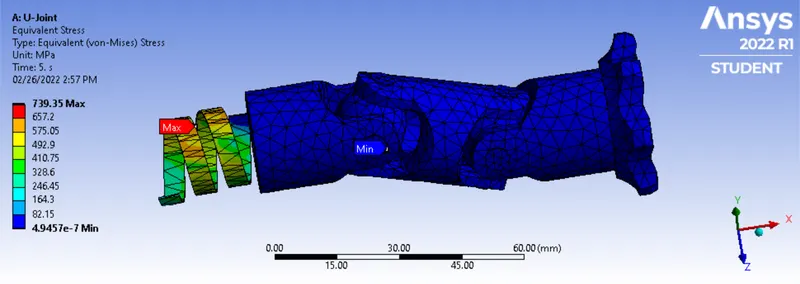
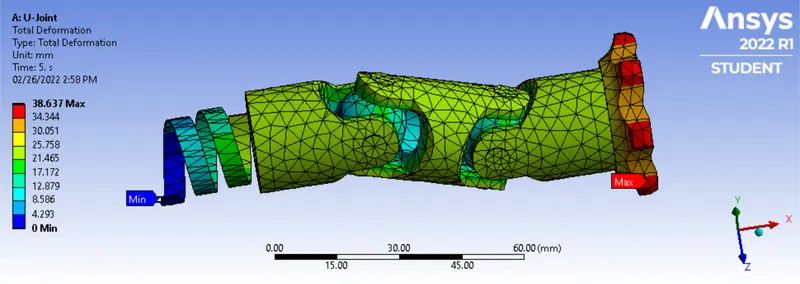
- Case 3: Titanium Alloy
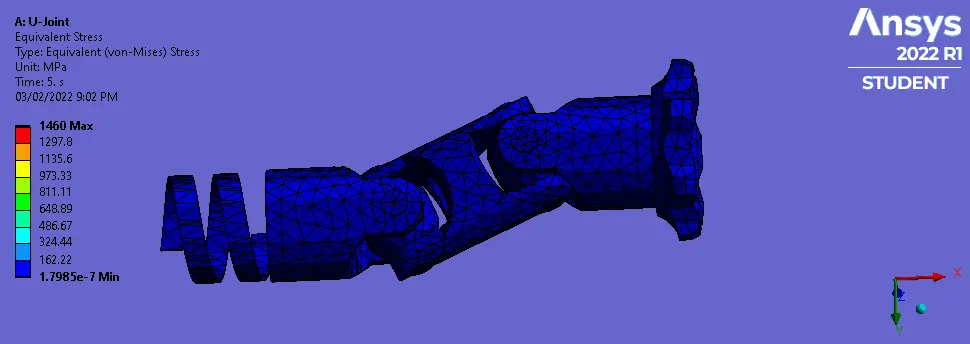
Equivalent Stress:
Total Deformation:
- Conclusion:
| Equivalent Stress | Total Deformation |
| MIN | MAX | MIN | MAX | |
| Structural Steel | 6.2743e-007 MPa | 1509.2 MPa | 0. mm | 38.637 mm |
| Stainless Steel | 6.4665e-007 MPa | 1460. MPa | 0. mm | 38.637 mm |
| Titanium Alloy | 4.9457e-007 MPa | 739.35 MPa | 0. mm | 38.637 mm |
From the results above we can say that the deformation in all three cases is same, however, the Titanium has the least stress developed whereas it is highest in Structural Steel.