Week 8 - Universal Joint
Transient Structural Analysis of Universal joint using Ansys
Objective: To perform a Transient structural analysis on a double universal joint with a spring using three different materials
Case1- Structural steel
Case2- Stainless Steel
Case3- Titanium alloy
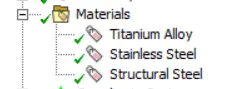
The three materials must be used on the joints with the springs alone
Simulation Process:
Create Transient structural analysis and in engineering data select the material structural steel
Input Geometry
Import the Geometry and check in space in Space Claim for any irregularities
Then open Ansys mechanical and assign the structural steel material to all components.
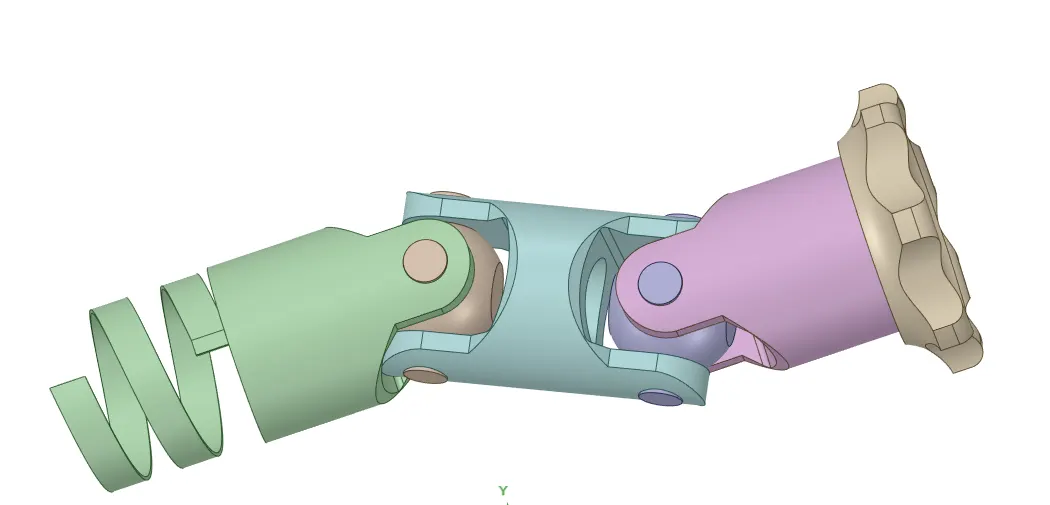
Material:
The material used for the entire simulations was structural steel
Joints:
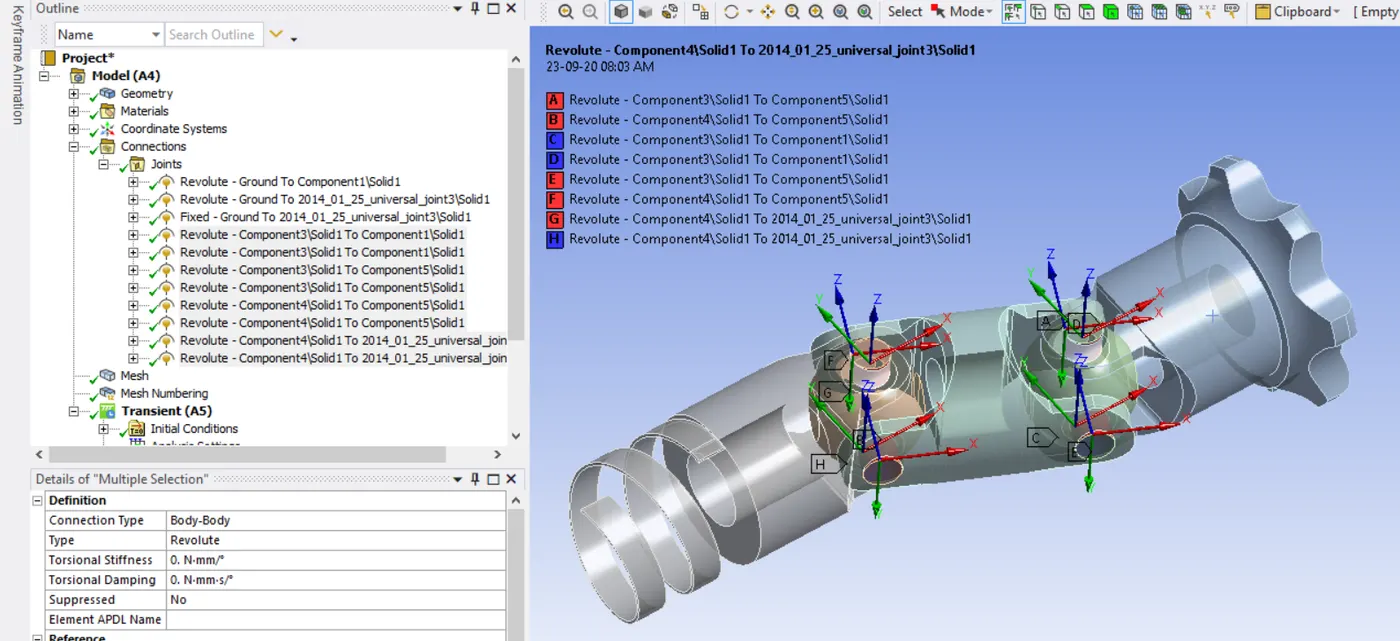
Fixed- Body to Ground Joint- the spring at the end it provided a Fixed joint
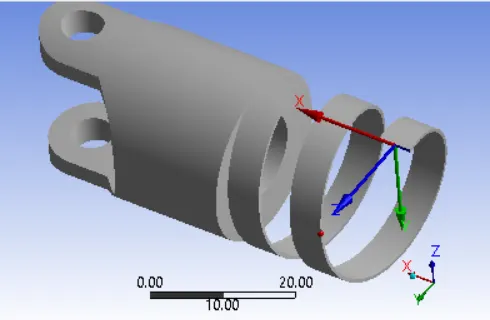
Revolute-Body to Ground Joint
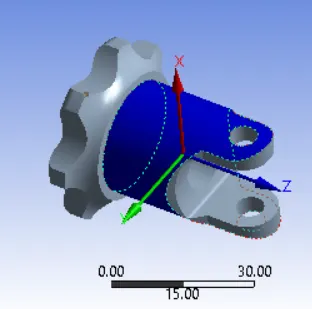
Revolute-Body to Ground Joint
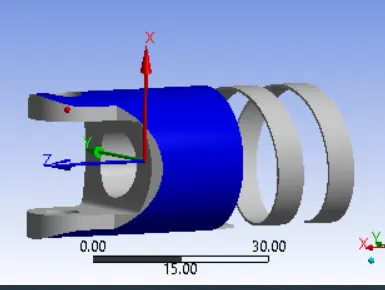
Revolute- Body to Body joint is given to all the Pins and Gears
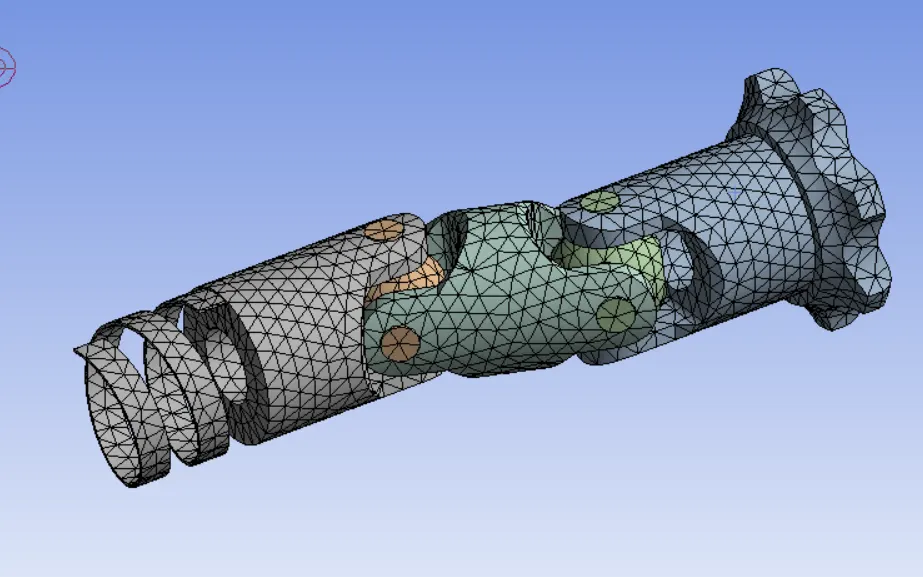
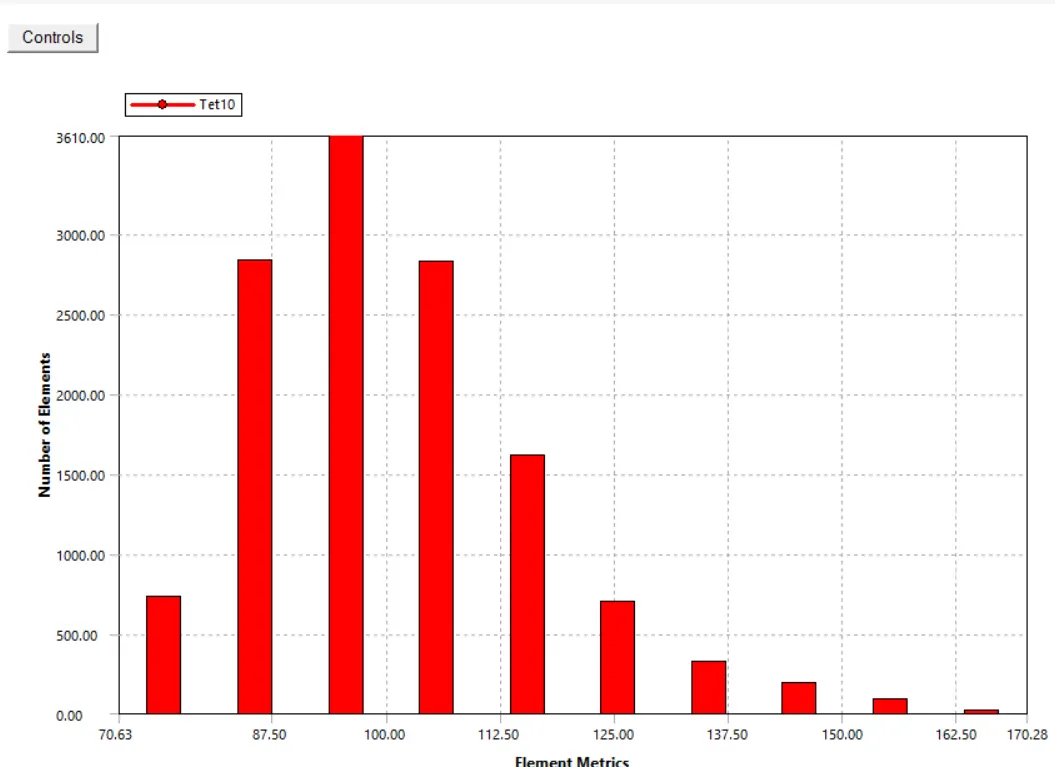
Mesh
Mesh the whole geometry with 3mm element size and set adaptive sizing to no
Analysis setting:
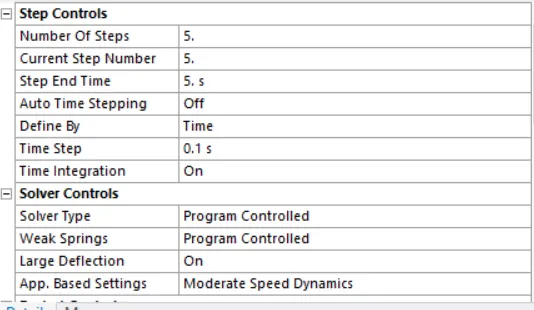
- The Simulations runs for 5 steps. So, the number of steps is set as 5.
- Large deflections set to on, auto time stepping to off, defined by time steps set to 0.1s.in output set all output to yes.
Boundary conditions
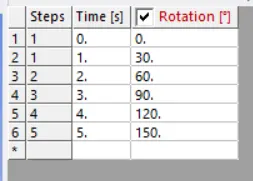
- Joint- Rotations- the revolute joint of the gear is provided rotations of 150 degrees.
Solutions:
All the necessary output variable are selected such as von Mesis stress, stress intensity, equivalent strain etc.
Note- for all three cases the set are same as above we discuss
Result –
Case1- Structural steel
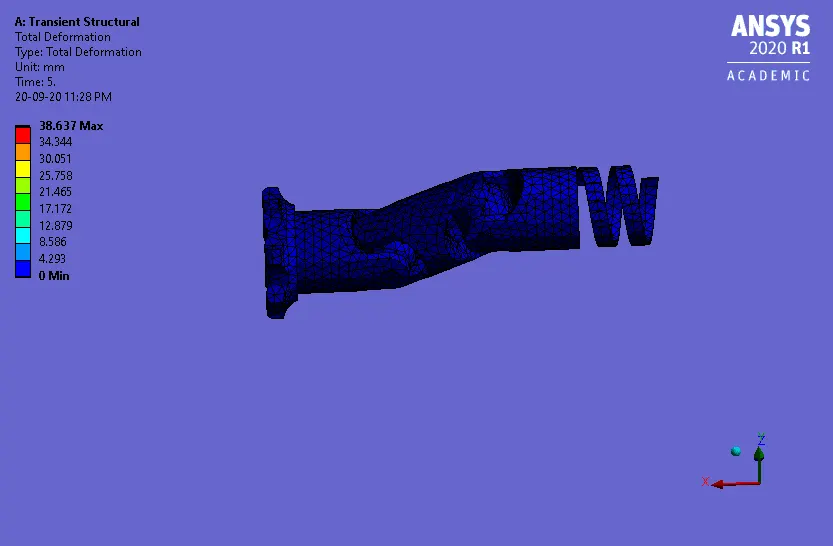
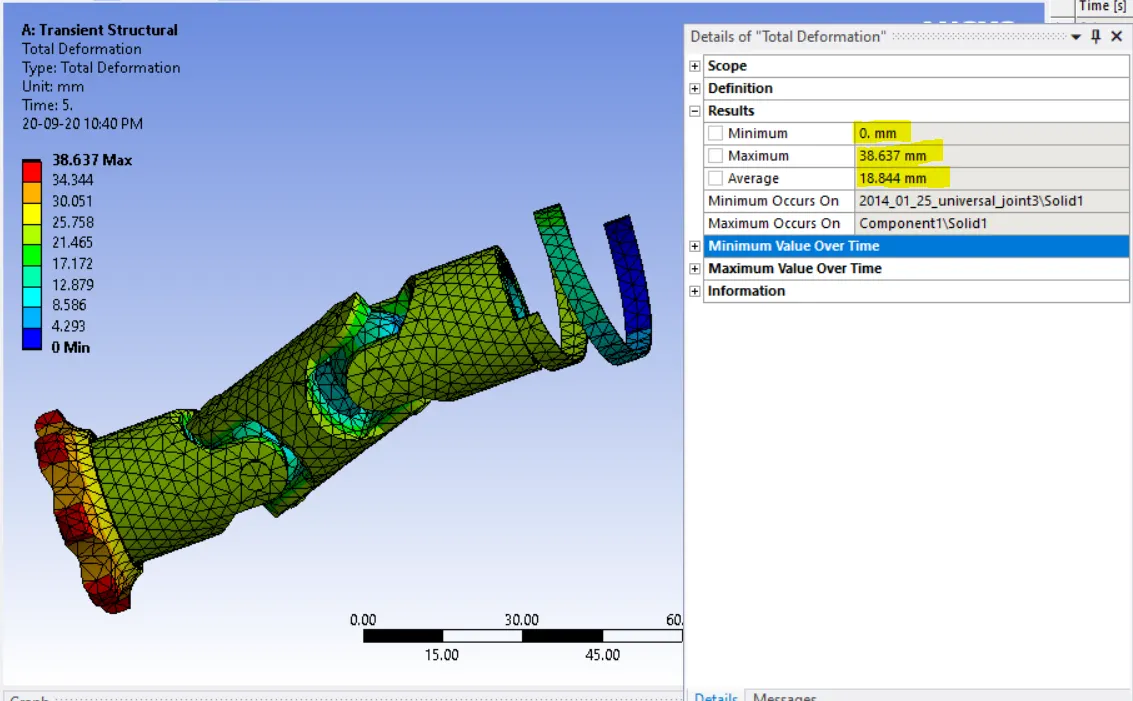
Total Deformation Max
Equivalent stress Max
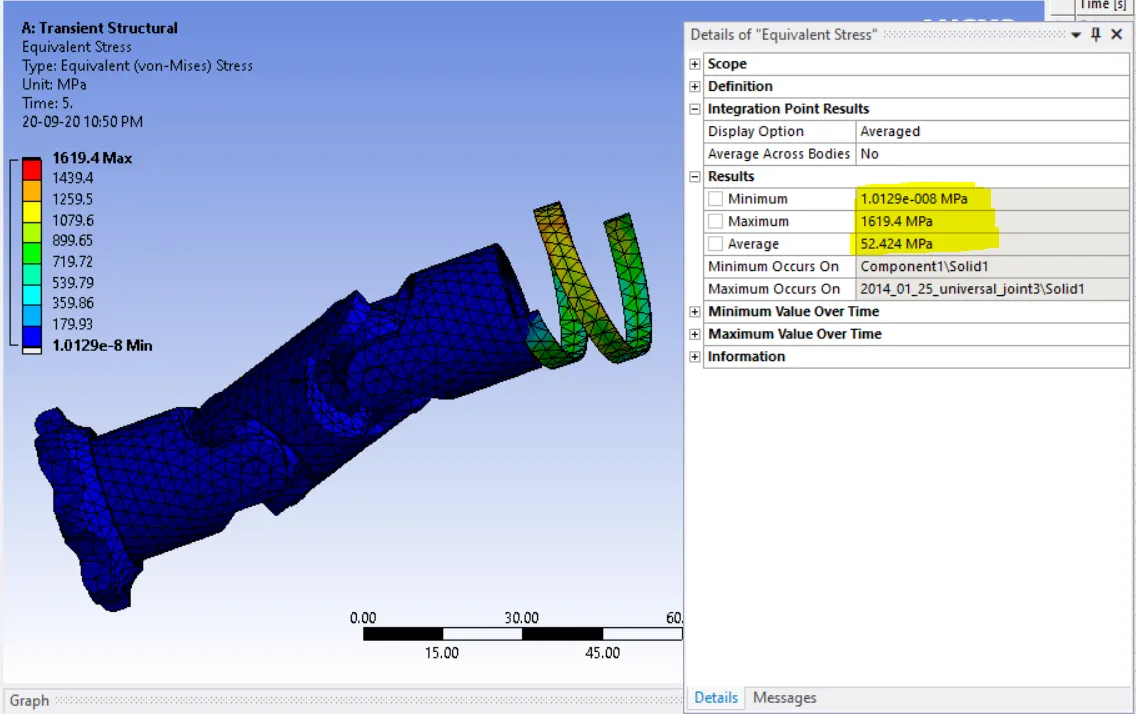
Equivalent stress at joint Max
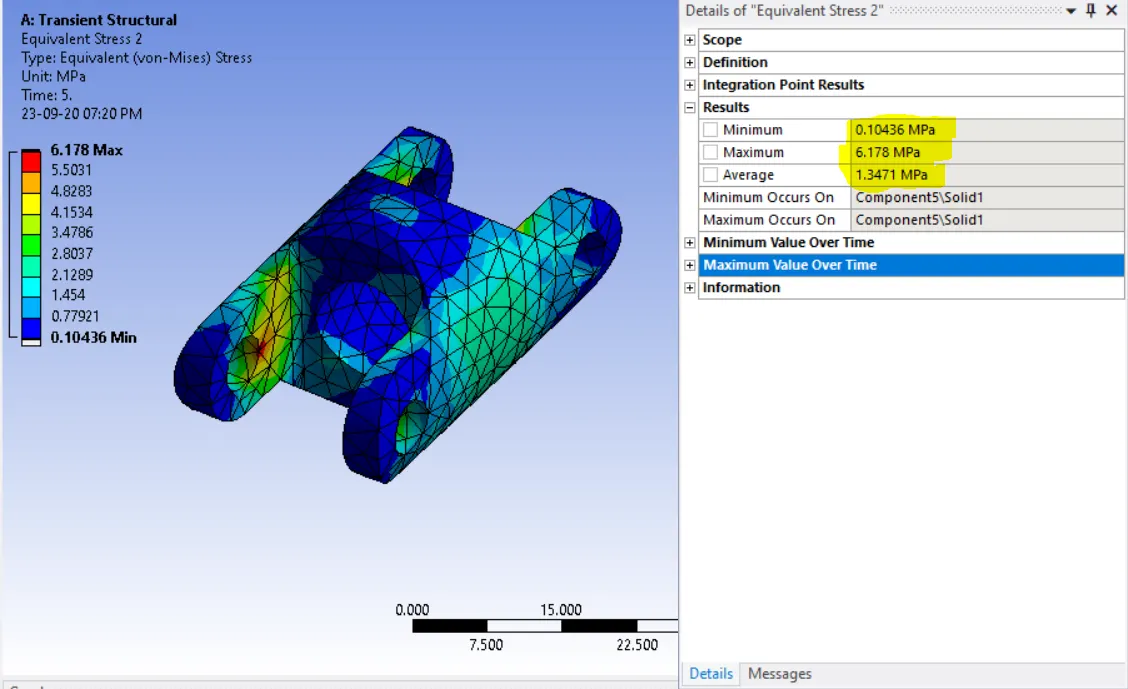
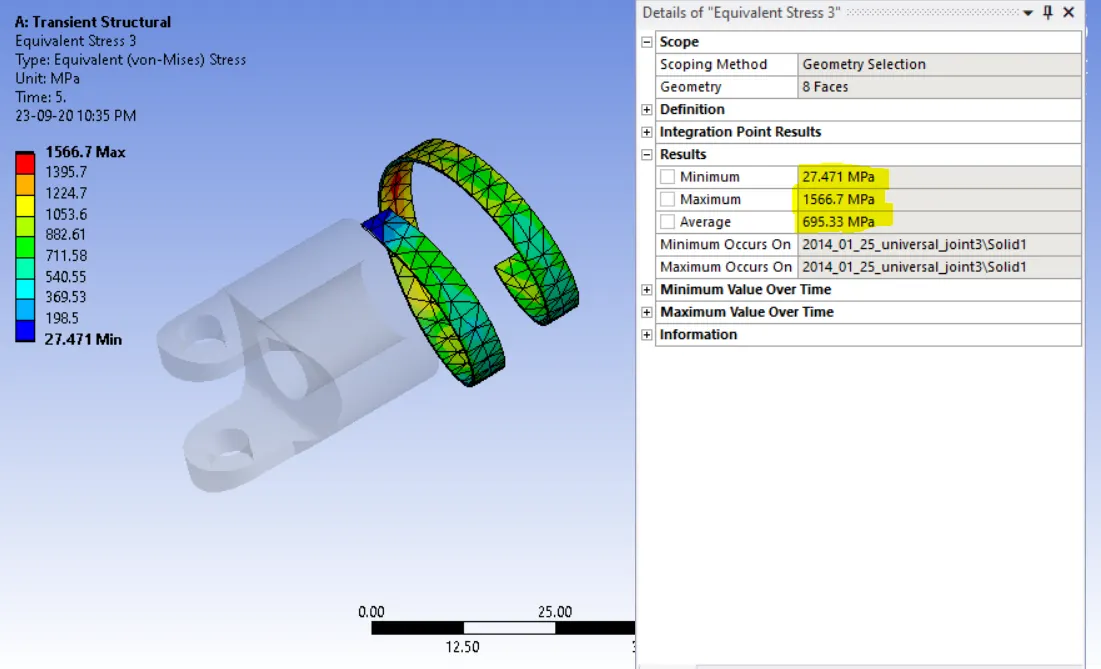
Equivalent stress at spring
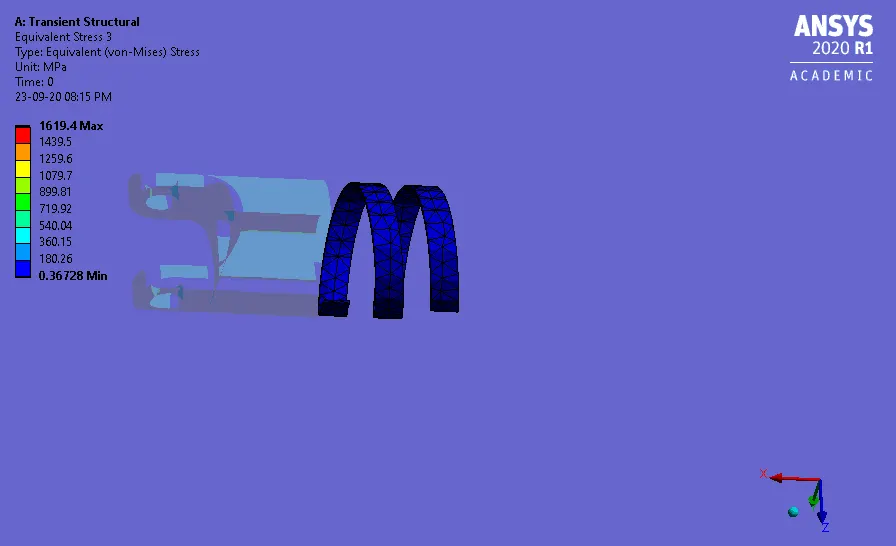
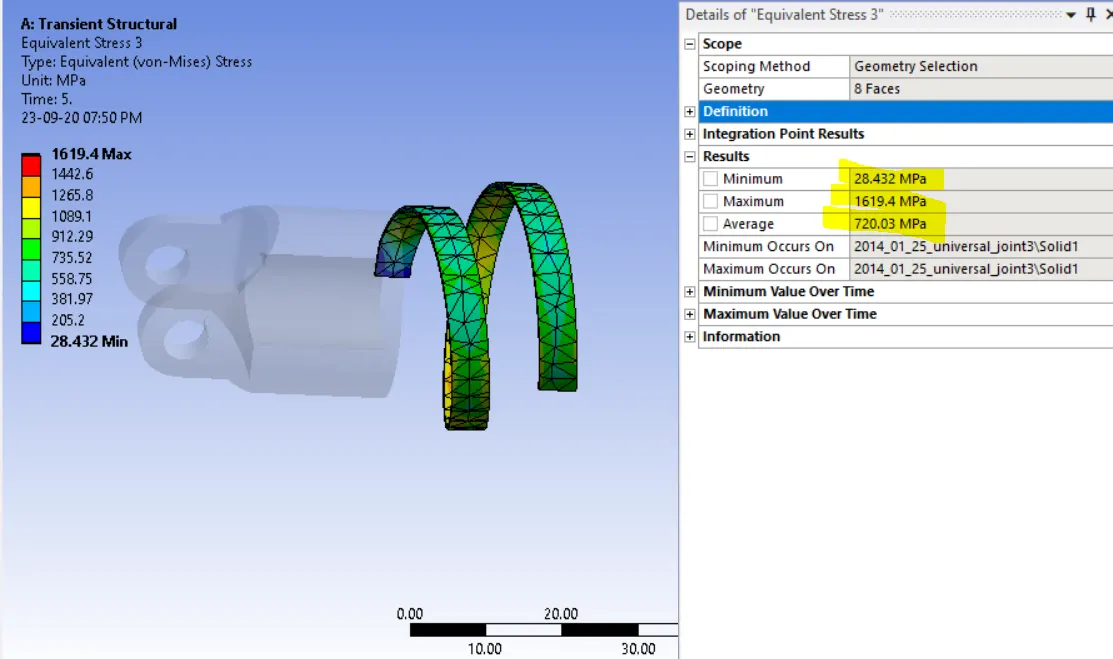
Case2- Stainless Steel
Total Deformation Max
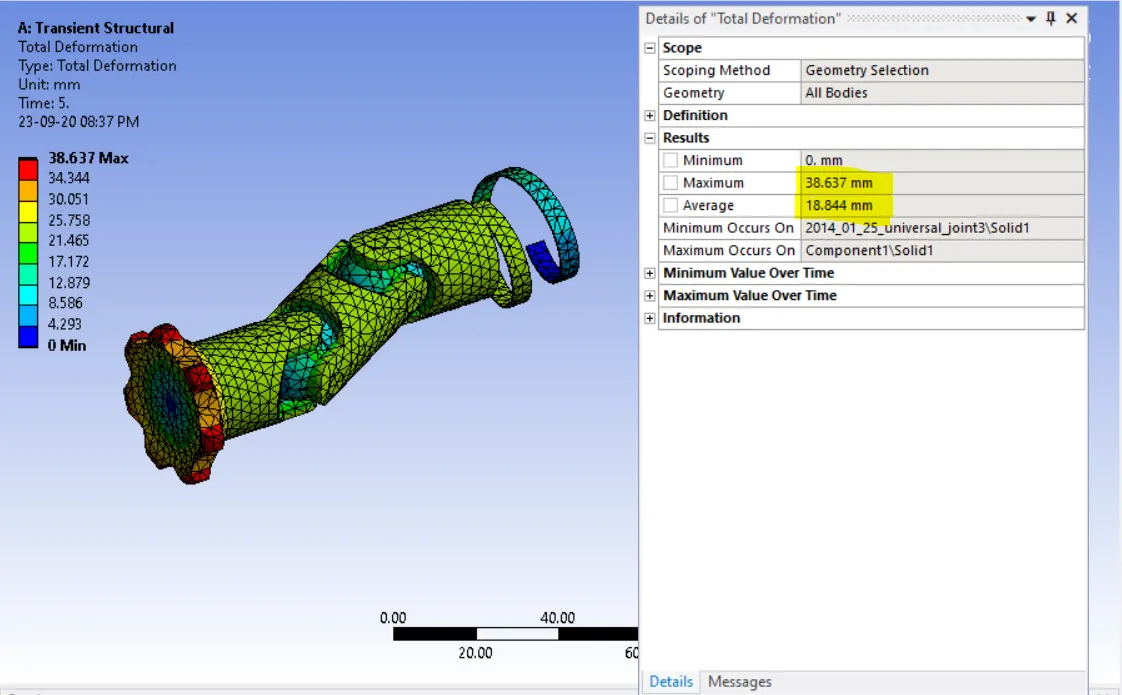
Equivalent stress Max
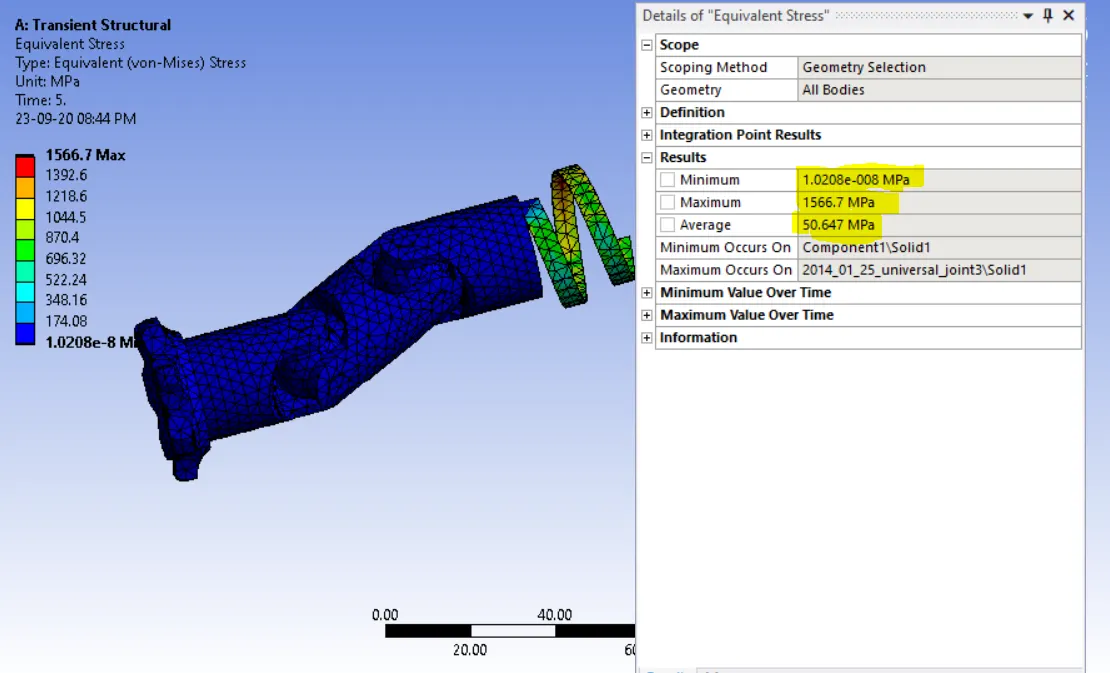
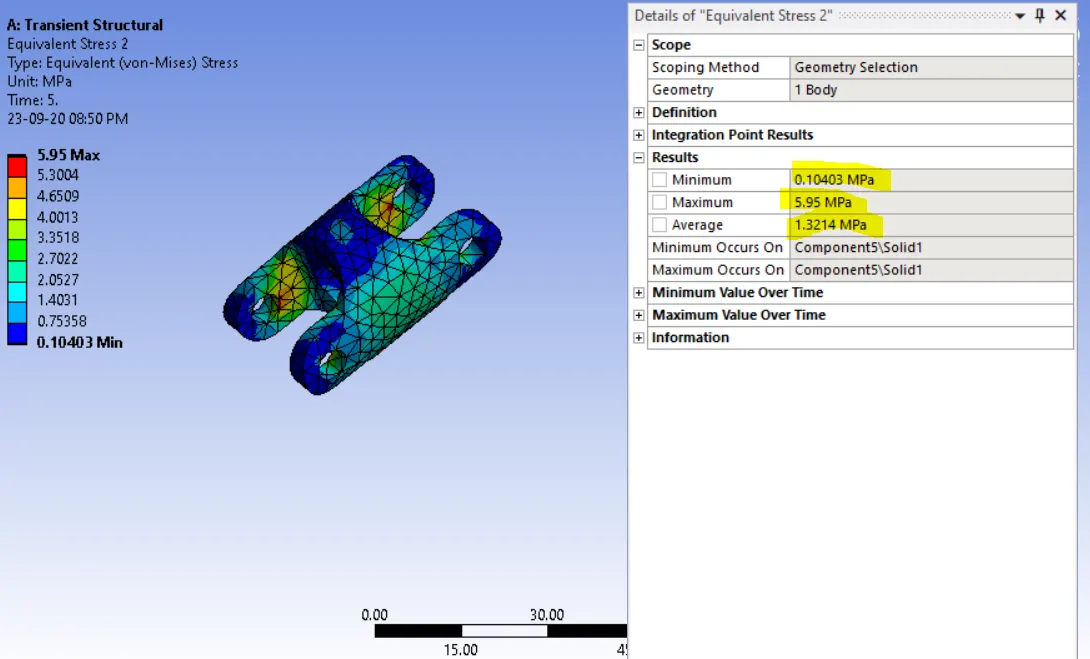
Equivalent stress at joint Max
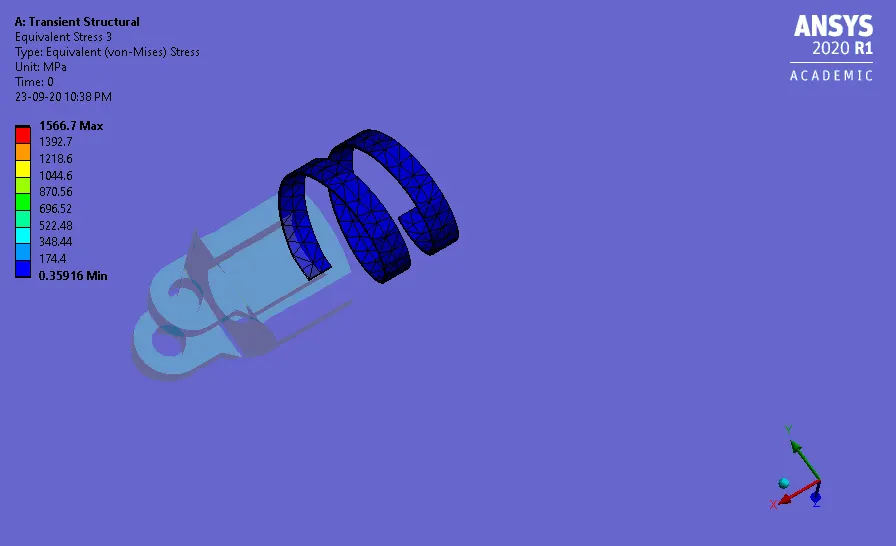
Equivalent stress at spring
Case3- Titanium alloy
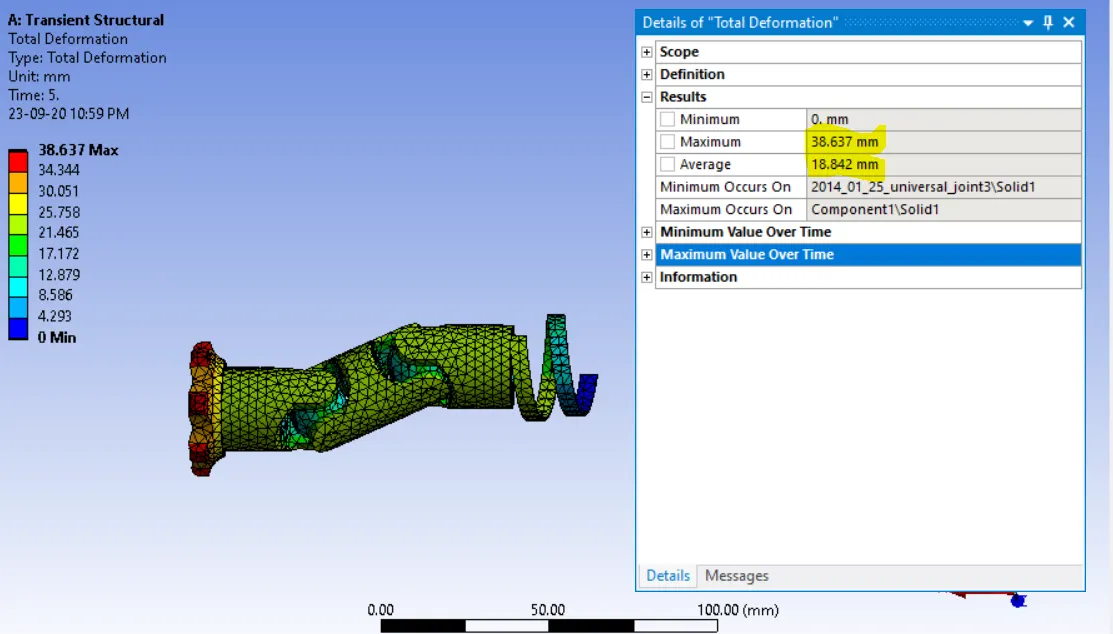
Total Deformation Max
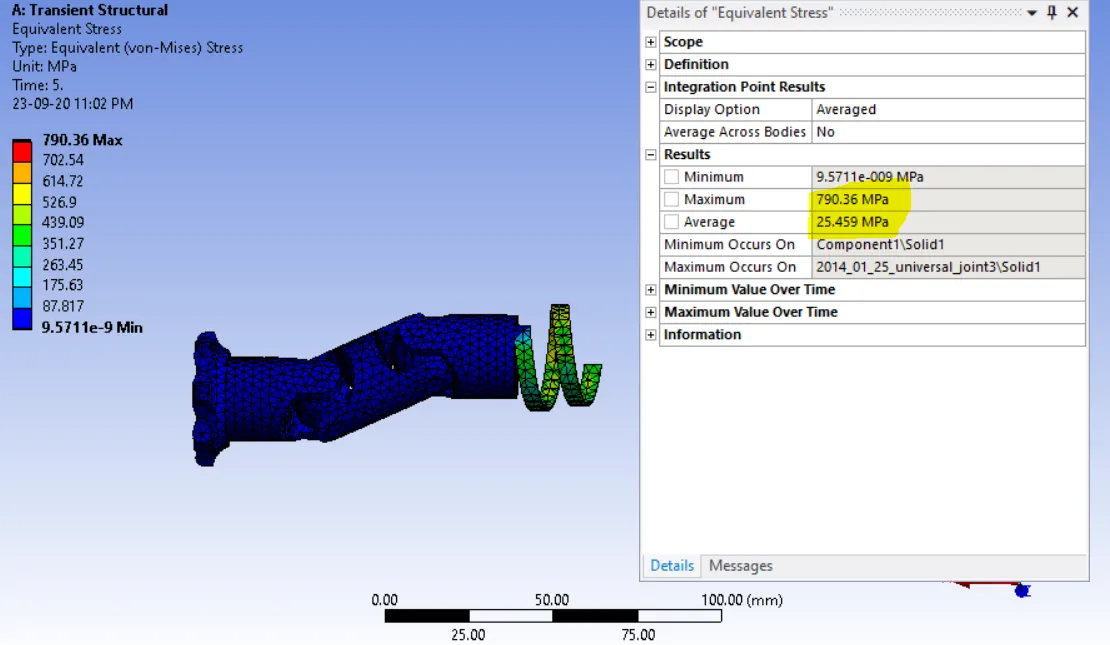
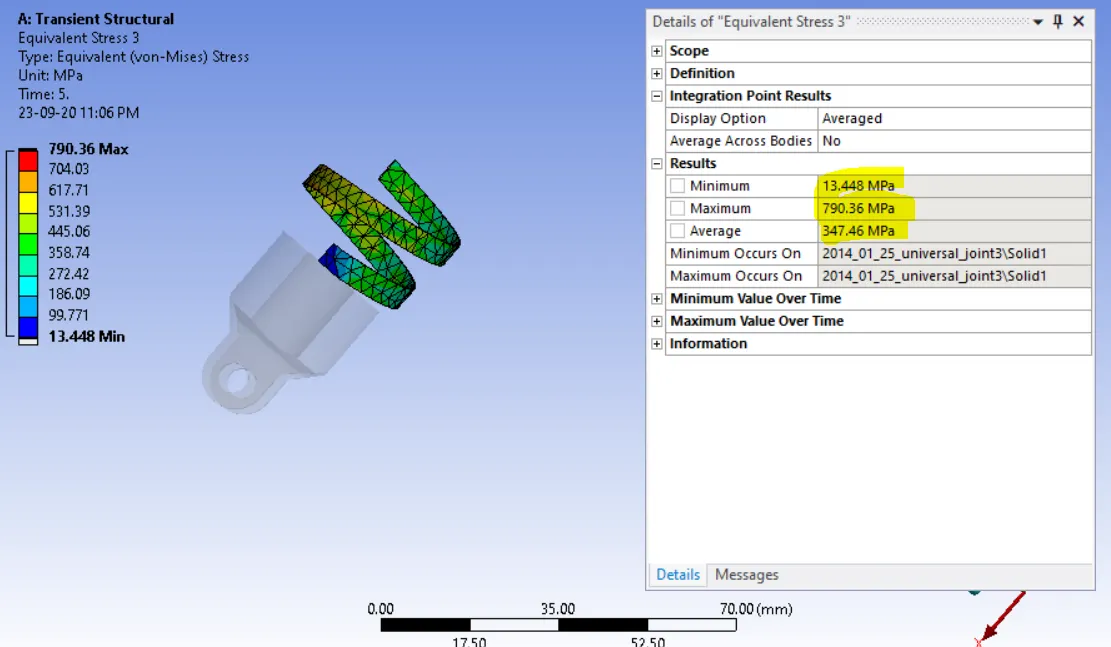
Equivalent stress Max
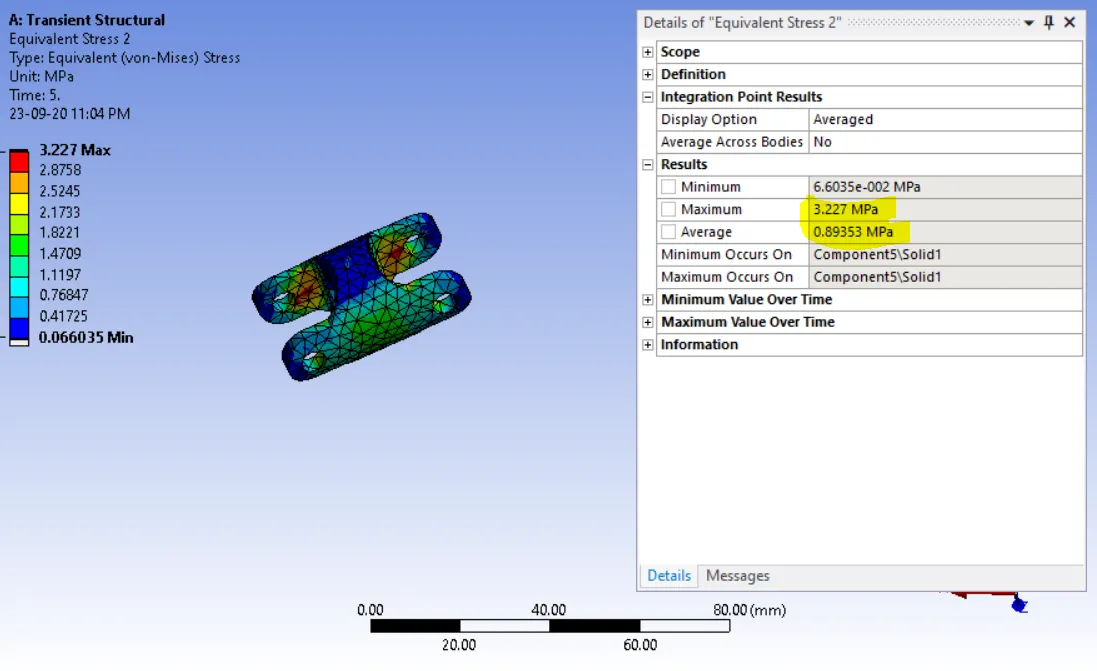
Equivalent stress at joint Max
Equivalent stress at spring
| Total Deformations Max mm | Equivalent Stress Max Mpa | Equivalent stress on Spring MPA | |
| case1-Structural Steel | 38.637 | 1619.4 | 1619.4 |
| case2-Strainless Steel | 38.63 | 1566.7 | 1566.7 |
| case3-Titanium Alloy | 38.63 | 790.36 | 790.36 |
Conclusion:
Structural steel experience maximum stress due to the highest young’s Module. Stress is Directly Proportional to Young’s Module .so, the maximum value is in Structural steel and the minimum value is inn titanium alloy
Total Deformation is the same in all the cases due the equal amount of rotation given