Week 8 - Universal Joint
DOUBLE UNIVERSAL JOINT WITH SPRING
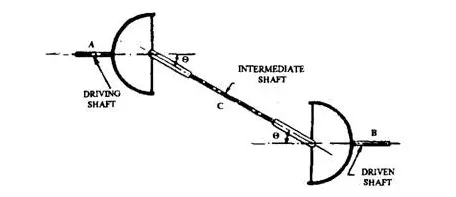
Double Universal joint (also known as Hooke's joint) connects driving shaft A and driven shaft B which are parallel but lie in different axis through an intermediate shaft C.The yokes of shaft A and B lie in the same plane and the two yokes of shaft C also lie in another plane. The correct positioning of the yokes specially those on the intermediate shaft is essential to keep the angles same for both joints and thus to obtain constant velocity ratio.
This double Hooke’s joint is specifically suitable for heavy duty vehicles with rigid front wheel drive live axle requiring large lock to lock wheel swivel.This type of joint is relatively large in size compared to its torque transmitting capacity.This forms a major limitation with this joint.
OBJECTIVE-
For this challenge, you will have to perform a transient structural analysis on a double universal joint with a spring using three different materials: -
- Structural Steel,
- Stainless Steel and
- Titanium alloy.
The three materials must be used on the joint with the springs alone.Obtain the Equivalent stress and total deformation for all the three cases.
PROCEDURE-
- We will use transient structural analysis system as the load is a function of time.Transient structural analysis system uses Ansys mechanical APDL solver.
- In the first case we will use Stainless steel as material for Yoke with spring end.
CONNECTIONS-
We are not considering contacts for this simulation.Deleting contacts means there will be no stress, just the transfer of motion.
JOINTS-
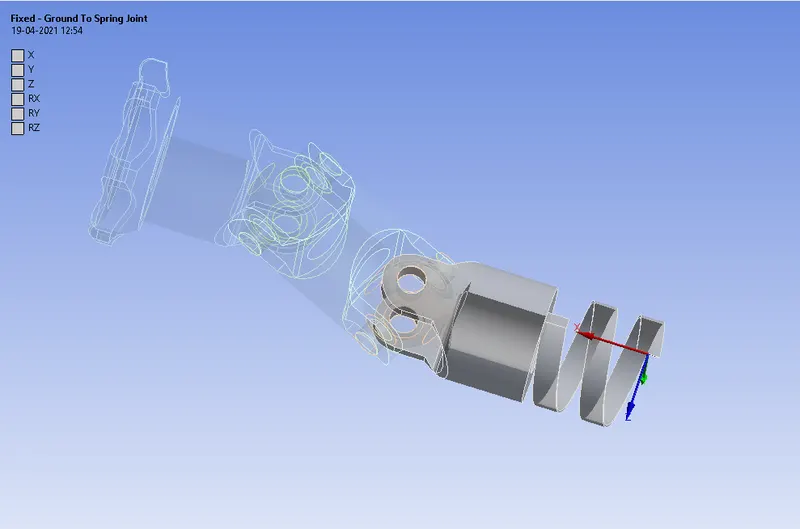
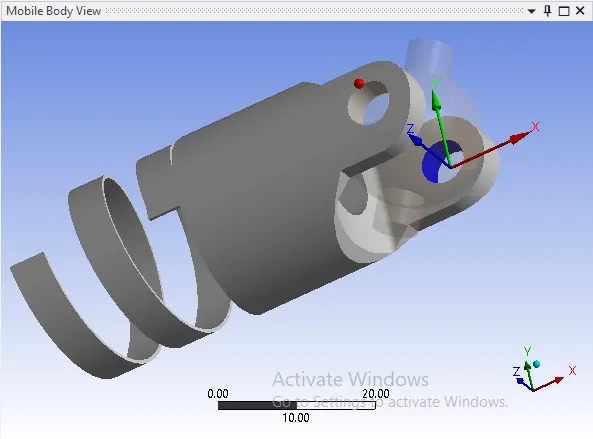
- A Fixed joint is provided to the bottom face of the spring.
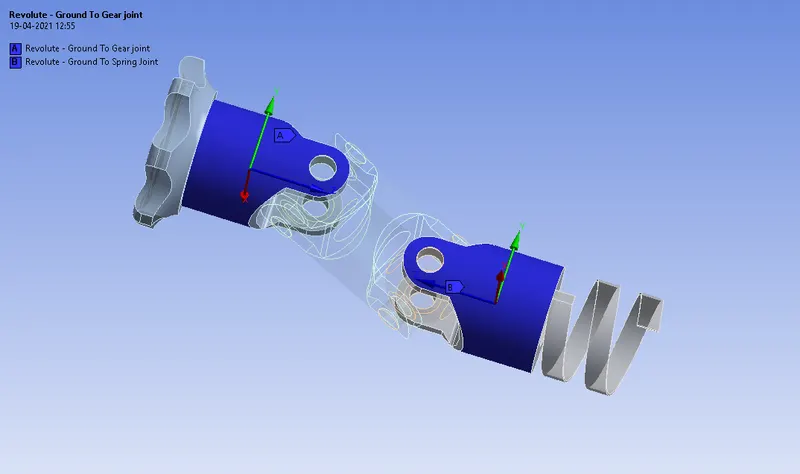
- A Body ground Revolute joint is provided to both of the Yoke with Gear end and yoke with spring end.
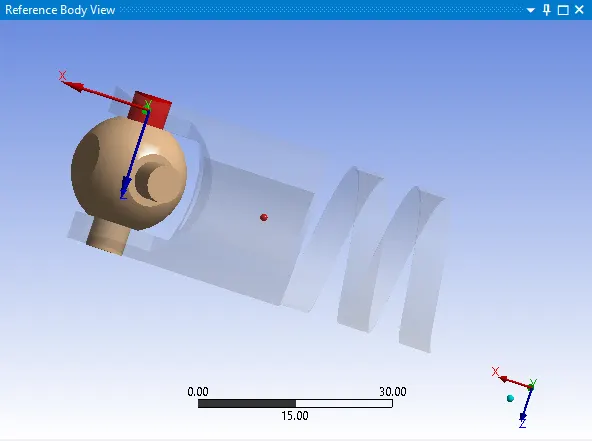
- Ball 1 is assigned two Revolute joints with the coupling end and two Revolute joints to the Yoke with gear end.
- Ball 2 is also assigned two Revolute joints with the coupling and two Revolute joints to the Yoke with the spring end.
MESHING-
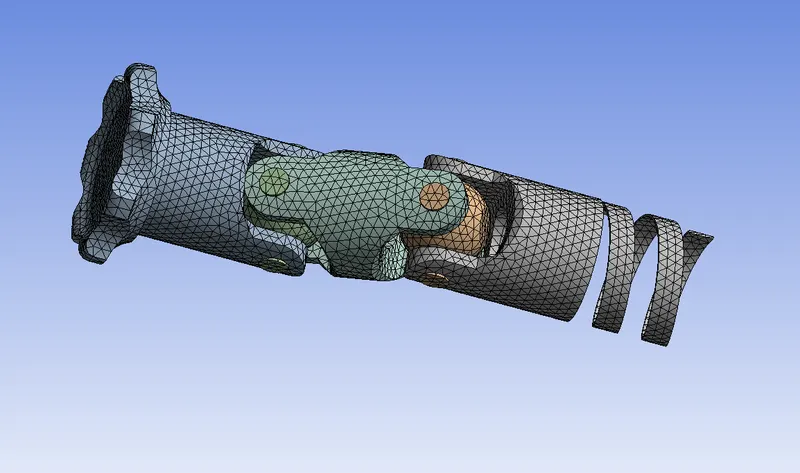
We will use an element size of 2mm to mesh the model.Adaptive sizing is kept off in this case.
ANALYSIS SETTINGS
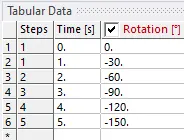
Number os steps- 5
Weak springs- Program Controlled
Solver type- Program Controlled
Auto time stepping- OFF
Time step - 0.1
Large deflection- ON
BOUNDARY CONDITIONS-
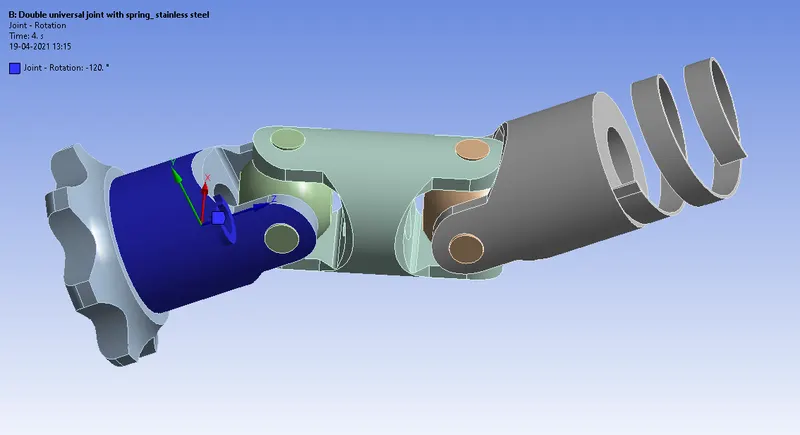
- Revolute joint load is provided to the Yoke with Gear end.
RESULTS-
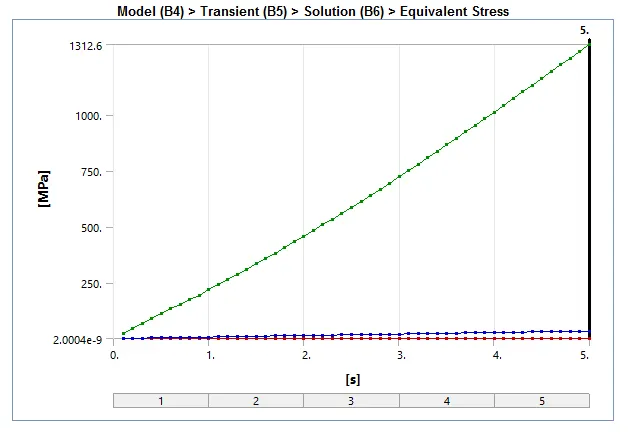
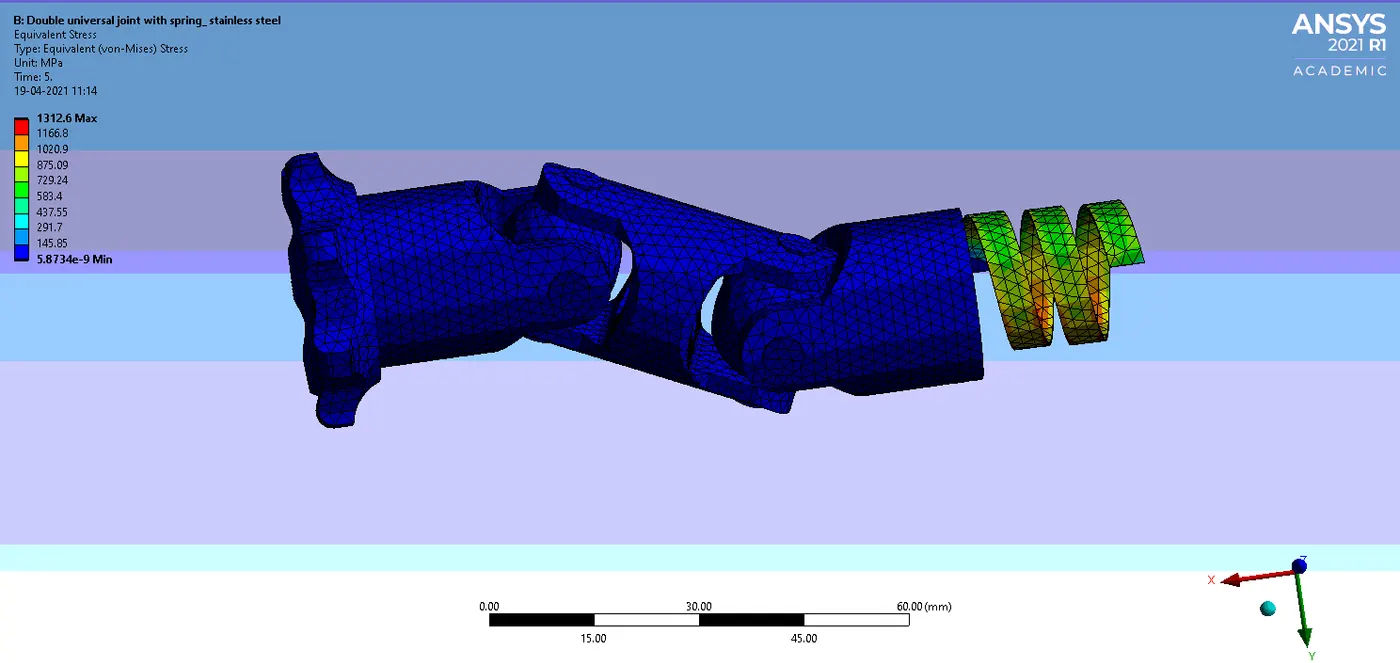
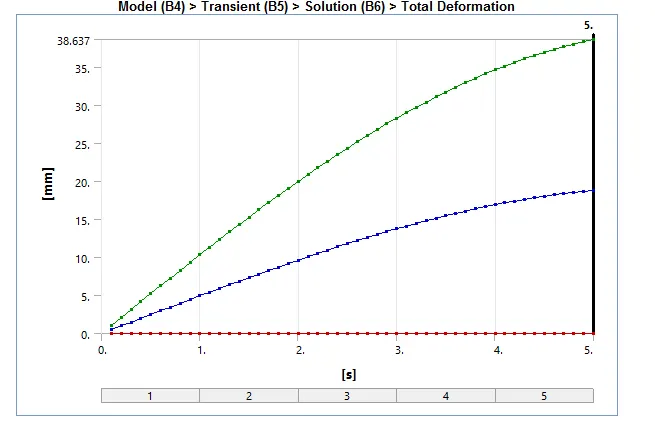
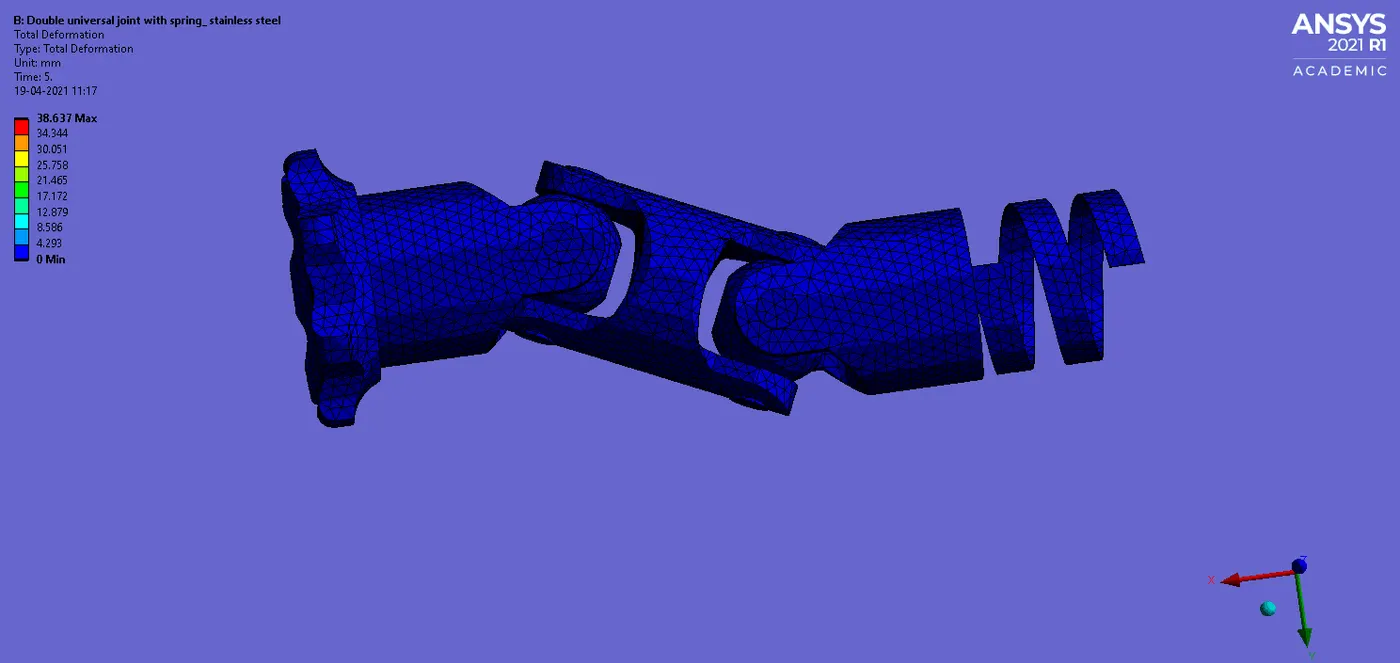
CASE-I: Stainless steel is used as material for the Fork joint with spring
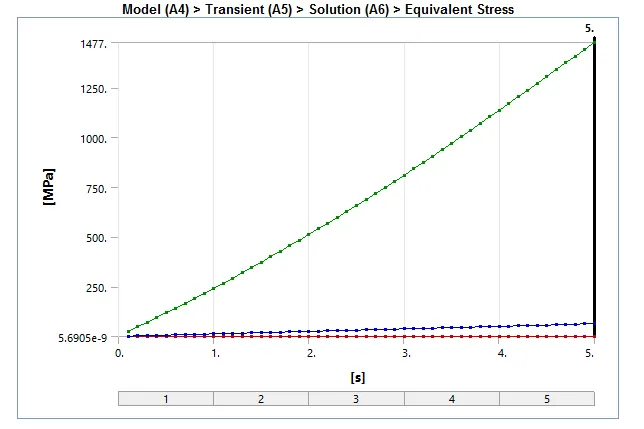
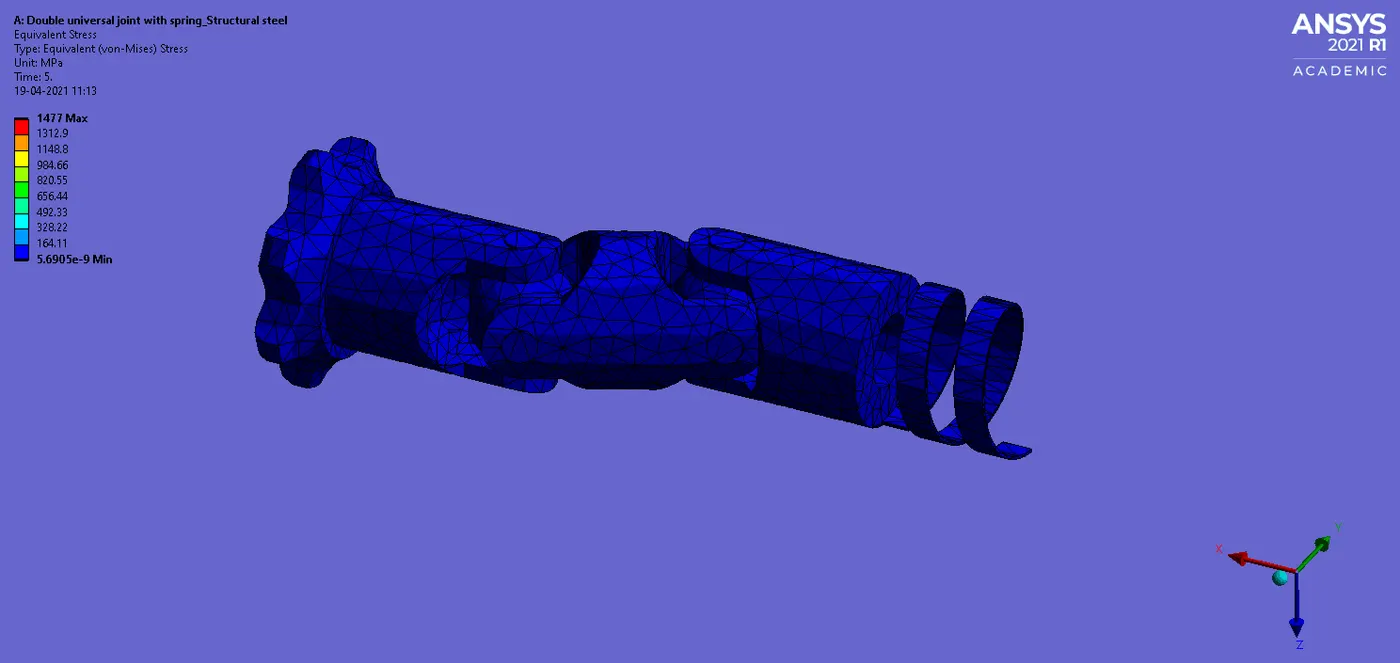
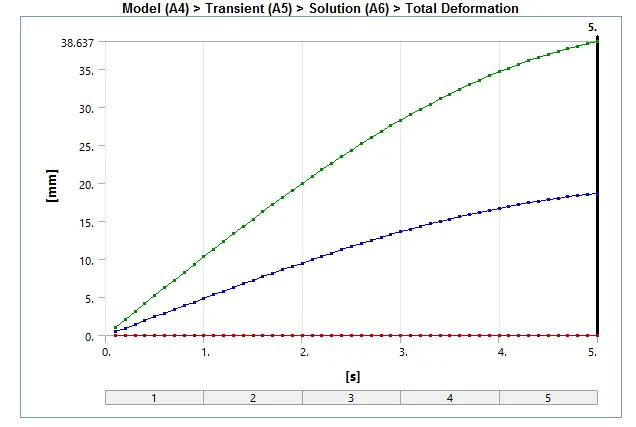
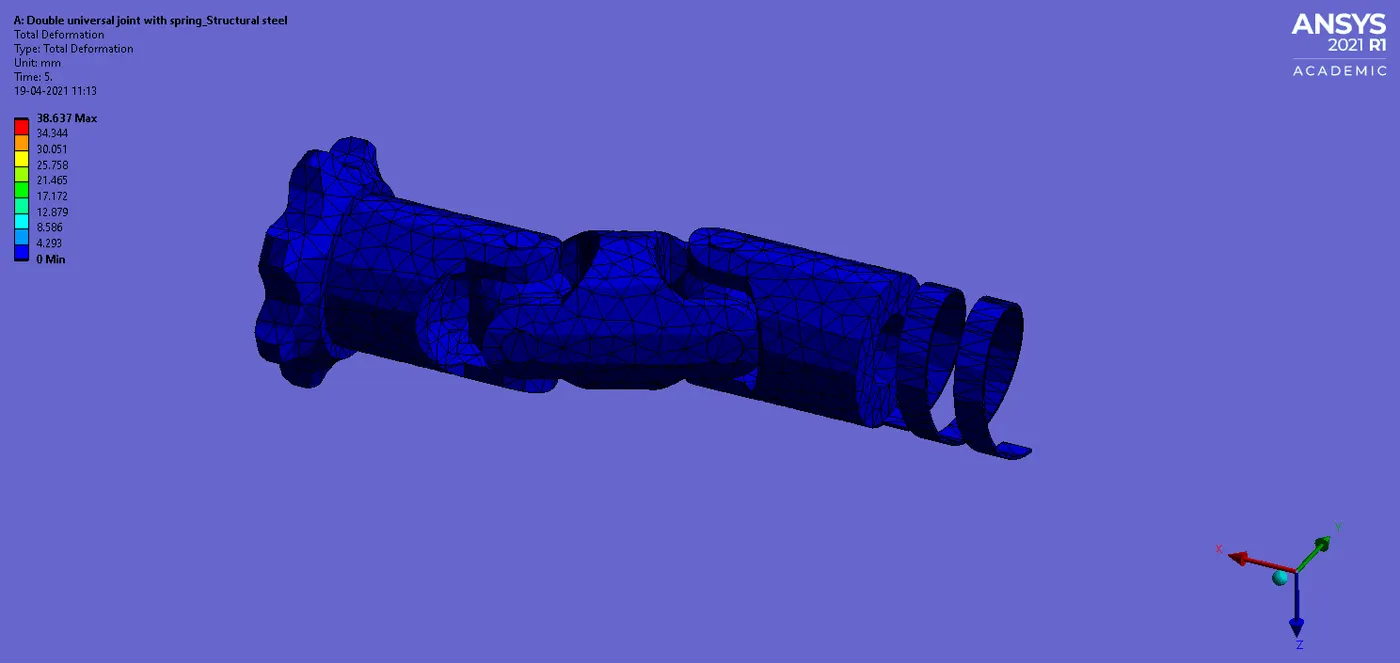
CASE-II: Structural steel is used as material for the Fork joint with spring
CASE-III: Titanium Alloy is used as material for the Fork joint with spring
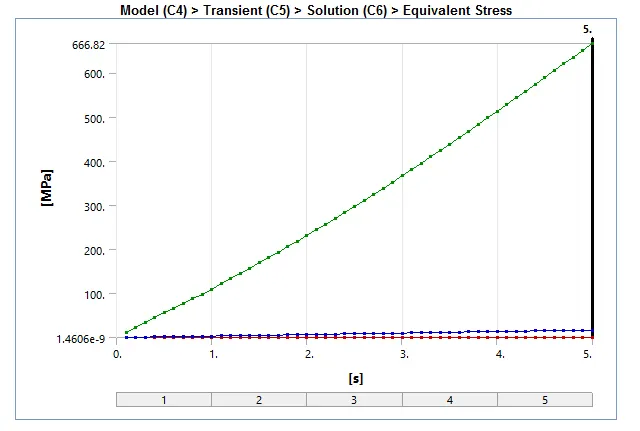
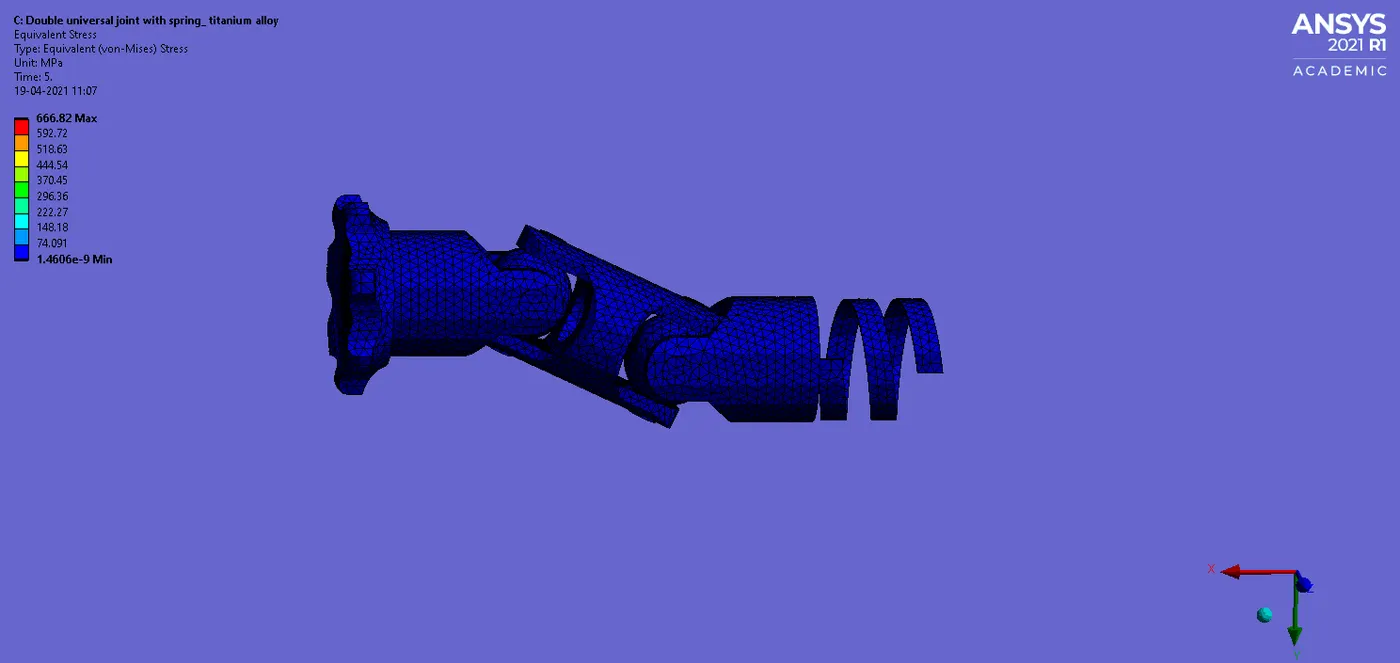
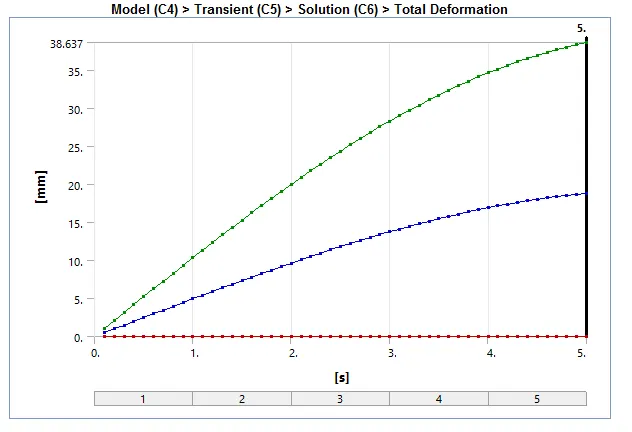
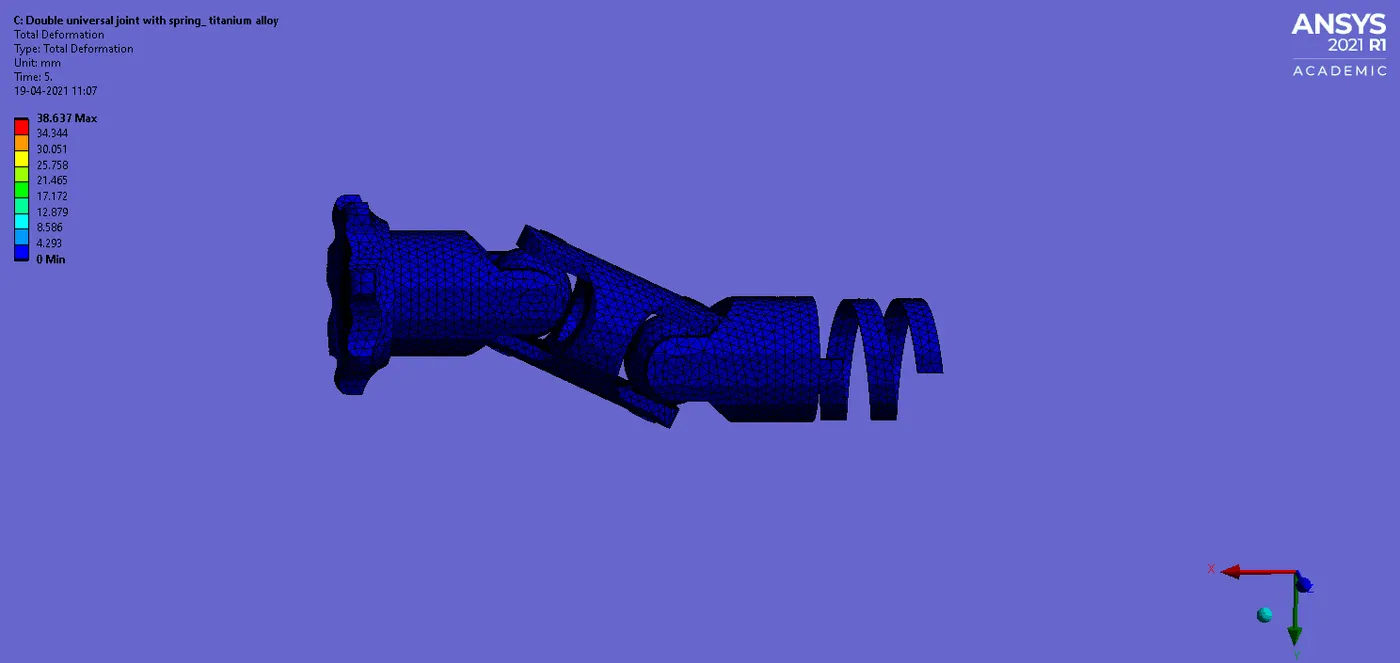
The results in the above observed cases is summed up in the below table.
| CASES | Materials | Maximum Equivalent stress (MPa) | Total Deformation (mm) |
| I. | Stainless Steel | 1312.6 | 38.637 |
| II. | Structural steel | 1477 | 38.637 |
| III. | Titanium Alloy | 666.82 | 38.637 |
CONCLUSION-
- Structural steel will experience the maximum Equivalent stress while the Titanium alloy will experience the lowest maximum Equivalent stress.The hardness and density of the material will define the extent of stress.
- We can observed that the Total deformation is same in all the three cases.