Challenge

Week 8 - Simulating Cyclone separator with Discrete Phase Modelling

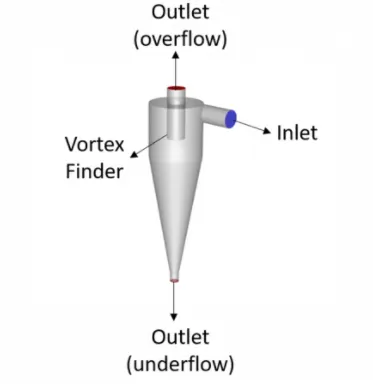
Cyclone separators

Cyclone separators are separation devices (dry scrubbers) that use the principle of inertia to remove particulate matter from flue gases. Cyclone separators is one of many air pollution control devices known as precleaners since they generally remove larger pieces of particulate matter.

Cyclone Separator performance is determined by pressure drop and collection efficiency.
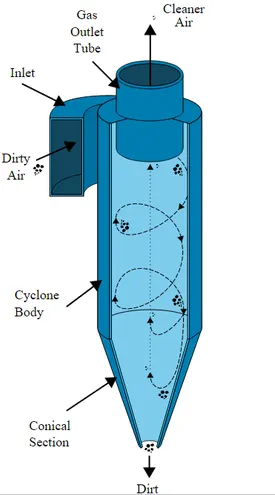
Four empirical models used to calculate the cyclone separator efficiency.
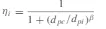
1. Iozia and Leith Model
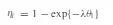
Iozia and Leith model which is developed based on force balance.The model assumes that a particle carried by the vortex e1dures the influence of two forces: a centrifugal force, Z and a flowresistance, W .
The collection efficiency η,
2. Li and Wang Model
The Li and Wang model includes particle bounce or re-entrainment and turbulent diffusion at the cyclone wall. A two-dimensional analytical expression of particle distribution in the
cyclone is obtained. Li and Wang model was developed based on the following assumptions:
•The radial particle velocity and the radial concentrationprofile are not constant for uncollected particles within the cyclone.
•Boundary conditions with the consideration of turbulent diffusion coefficient and particle bounce reentrainment on the cyclone wall are profile are not constant for uncollected particles within the cyclone.
The tangential velocity is related to the radius of cyclone by:
uR^n= constant
The resultant expression of the collection efficiency for particle of any size is given a
3. Koch and Licht Model
Koch and Licht collection theory recognized the inherently turbulent nature of cyclones and the distribution of gas residence times within the cyclone. Koch and Licht described
particle motion in the entry and collection regions with the additional following assumptions:
•The tangential velocity of a particle is equal to the tangential velocity of the gas flow, i.e. there is no slip in the tangential direction between the particle and the gas.
•The tangential velocity is related to the radius of cyclone by:
u R^n=constant
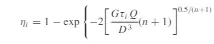
A force balance and an equation on the particles collection yields the grade efficiency η
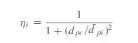
4. Lapple Model
Lapple model was developed based on force balance without considering the flow resistance. Lapple assumed that a particle entering the cyclone is evenly distributed across the inlet
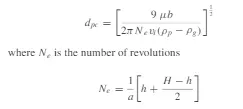
opening. The particle that travels from inlet half width to the wall in the cyclone is collected with 50% efficiency. The semi empirical relationship developed by Lapple to calculate a
50% cut diameter, dpc, is
The efficiency of collection of any size of particle is given by

Aim:- To perform analysis on cyclone separator and calculate the separation efficiency and pressure drop.

Case 1:

with varying Particle Diameter: 1 μm to 5 μm

velocity = 3m/sec

Case 2 :

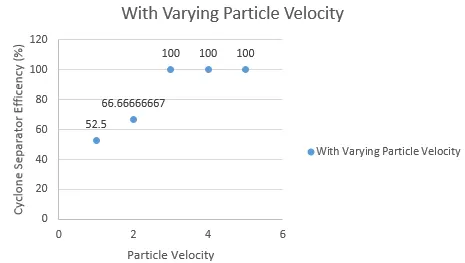
with varying Particle velocity: 1 m/sec to 5 m/sec

Particle diameter size = 5 μm

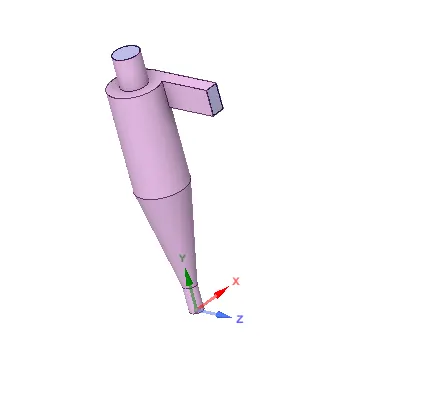
Volume Extraction from geometry

Given Geometry Extracted Geometry
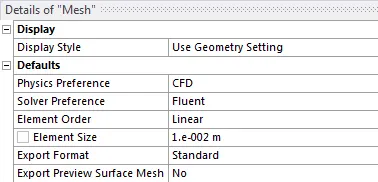
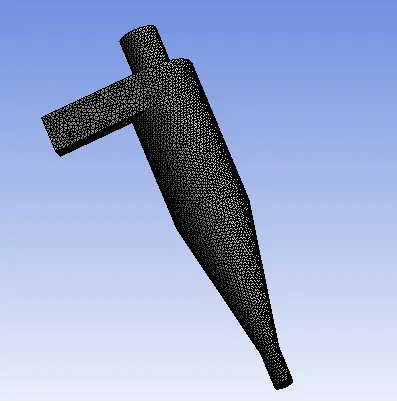
Mesh Settings:
Problem Setup:

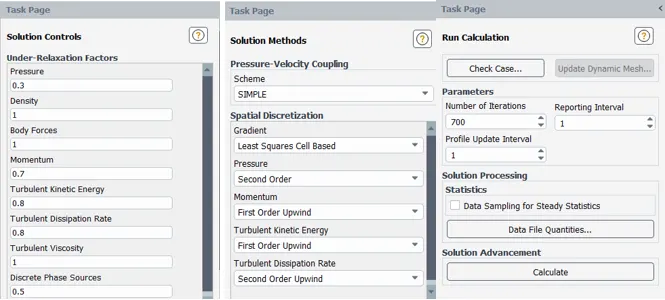
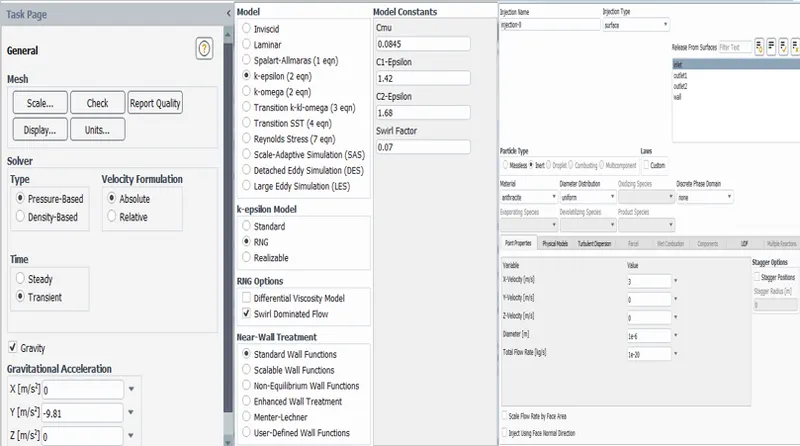
Solver Settings:
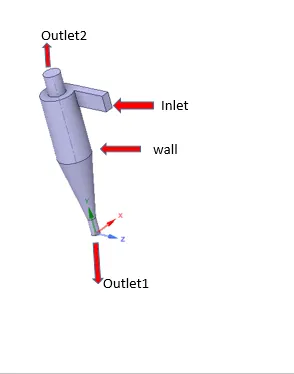
Boundary Conditions:

Inlet and wall:- Reflect

Outlet(Top):- Escape

Outlet(Bottom/dustbin) - Trap

Problem Case 1:

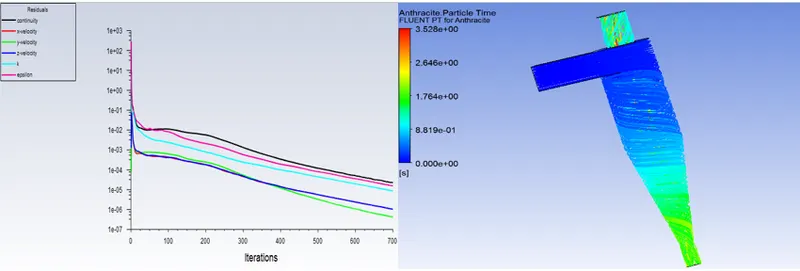
1.With varying Particle Diameter: 1 μm & velocity = 3m/sec
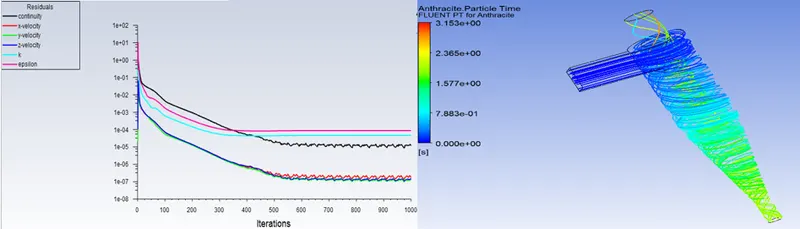
2.With varying Particle Diameter: 2 μm & velocity = 3m/sec
3.With varying Particle Diameter: 3 μm & velocity = 3m/sec
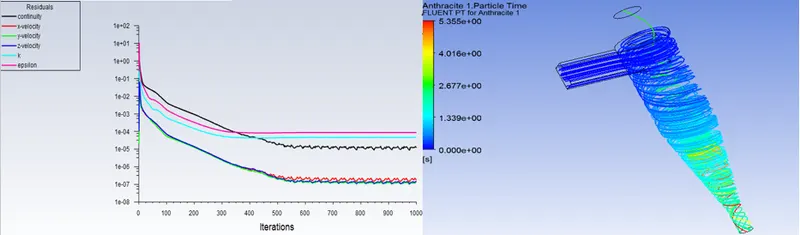
4.With varying Particle Diameter: 4 μm & velocity = 3m/sec
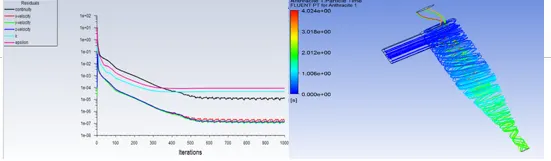
5.With varying Particle Diameter: 5 μm & velocity = 3m/sec
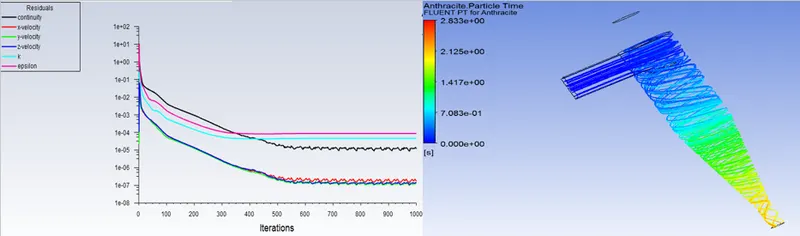
Problem Case 2:

1.With varying Velocity: 1 m/s & Particle Diameter = 5 μm
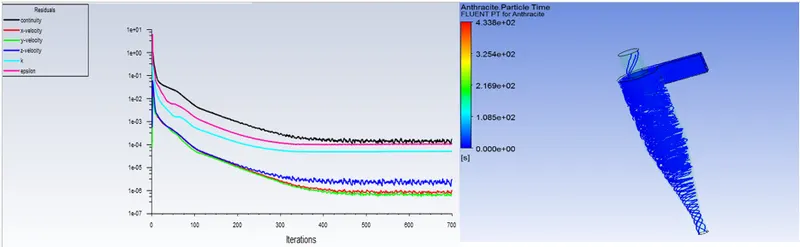
2.With varying Velocity: 2 m/s & Particle Diameter = 5 μm
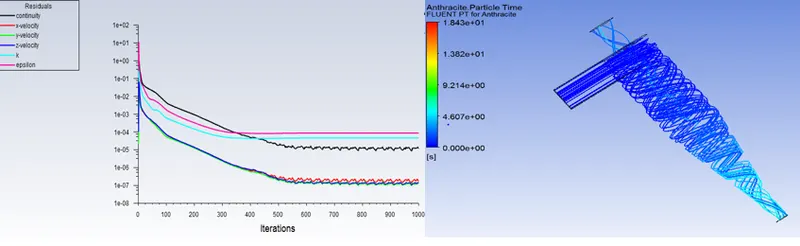
3.With varying Velocity: 3 m/s & Particle Diameter = 5 μm
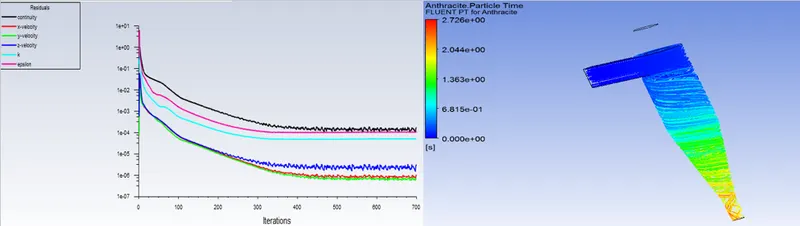
4.With varying Velocity: 4 m/s & Particle Diameter = 5 μm
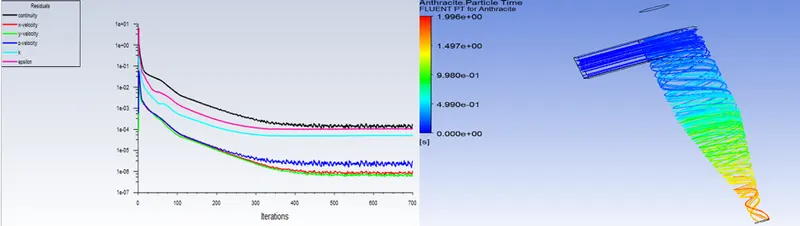
5.With varying Velocity: 5 m/s & Particle Diameter = 5 μm
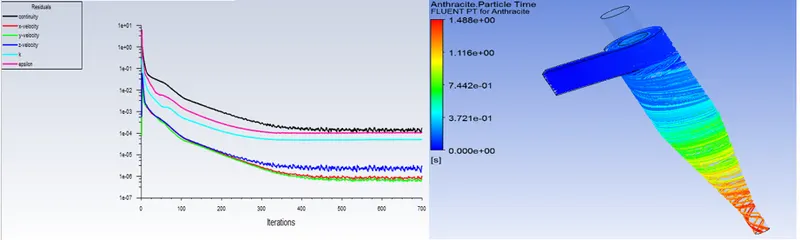
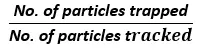
To calculate Separation Efficiency of cyclone separator following way has been adopted as below:

Separation Efficiency=
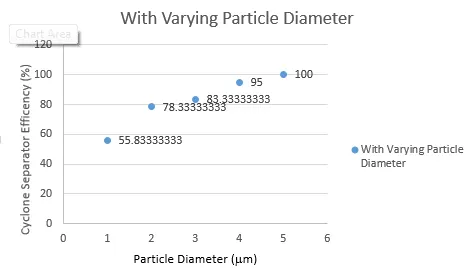
With increase in particle diameter at fixed velocity,separation efficiency increases
With varying velocity at a fixed particle diameter separation efficiency increases and pressure drop also increases.

Conclusion :

As velocity and particle diameter both has effect on the separation efficiency of cyclone separator So, From the data it can be said that the above cyclone separartor is more efficient enough to separate particle diameter of more than equal to 5 μm with higher velocity provides 100 % efficiency rate.

Your portfolio, next

Ship work like this
in your own course.

Talk to a career counsellor

Free 20-minute call. We'll map the right course to where you want to work.

By submitting you agree to our Terms and Privacy Policy.

Talk to a career counsellor

Free 20-minute call. We'll map the right course to where you want to work.

By submitting you agree to our Terms and Privacy Policy.