Week 8 - Simulating Cyclone separator with Discrete Phase Modelling
Simulating Cyclone separator with Discrete Phase Modelling
Aim: To simulate the cyclone separator with discrete phase modeling and perform analysis on the cyclone separator and calculate the separation efficiency and pressure drop
Theory:
Cyclones are devices that employ a centrifugal force generated by a spinning gas stream to separate particles from the carrier gas. Their simple design, low maintenance costs, and adaptability to a wide range of operating conditions such as sizes and flow rates make cyclones one of the most widely used particle removal devices. By using suitable materials and methods of construction, cyclones may be adapted for use in extreme operating conditions: high temperature, high pressure, and corrosive gases. Cyclones are important particle removal
devices in both engineering and process operations. Most cyclone model depends on inlet flow rate, temperature and pressure used.
Models .
Mostly,four different cyclone efficiency empirical models are used namely
Lapple
Koch
Licht, Li
and Wang, and Iozia and Leith.
To perform an analysis on a given cyclone separator model by varying the particle diameter from 1μm to 5μm and velocity 3m/s
Geometry setup:
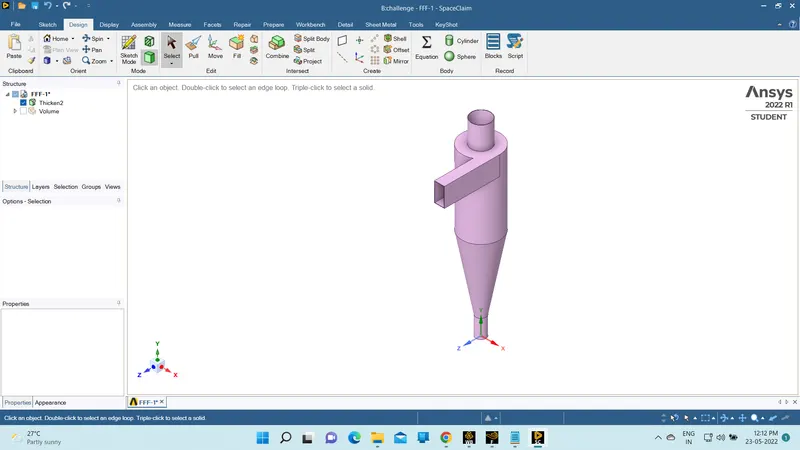
and extract the fluid volume to analysis and simulate:
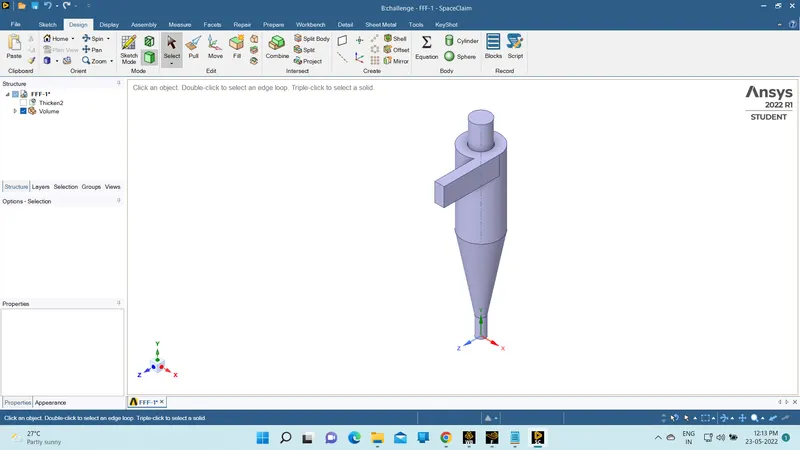
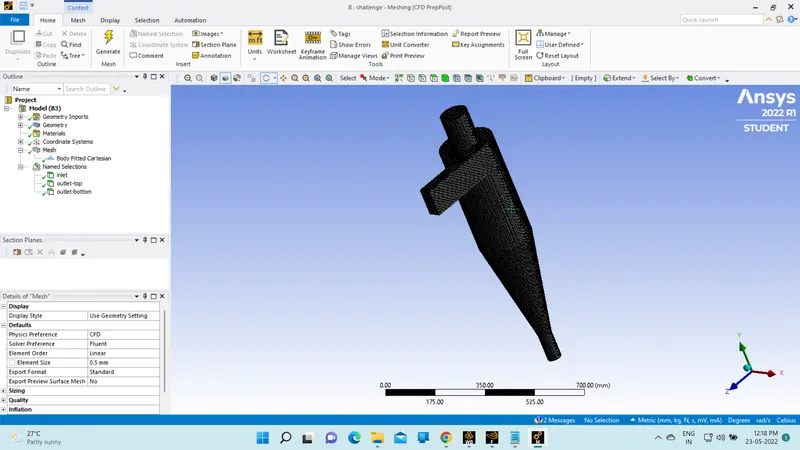
Meshing:
Mesh the file with the required size and give method as cartesian to get the suitable and appropriate meshing to simulate
Fluent setup:
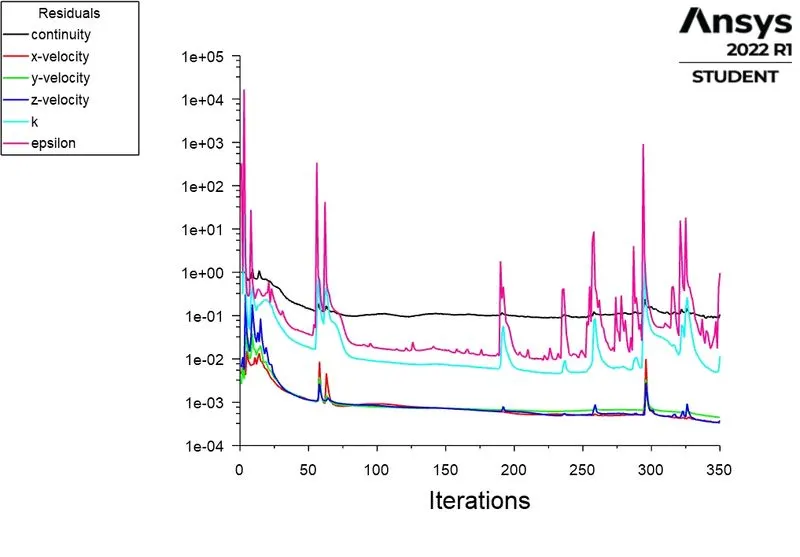
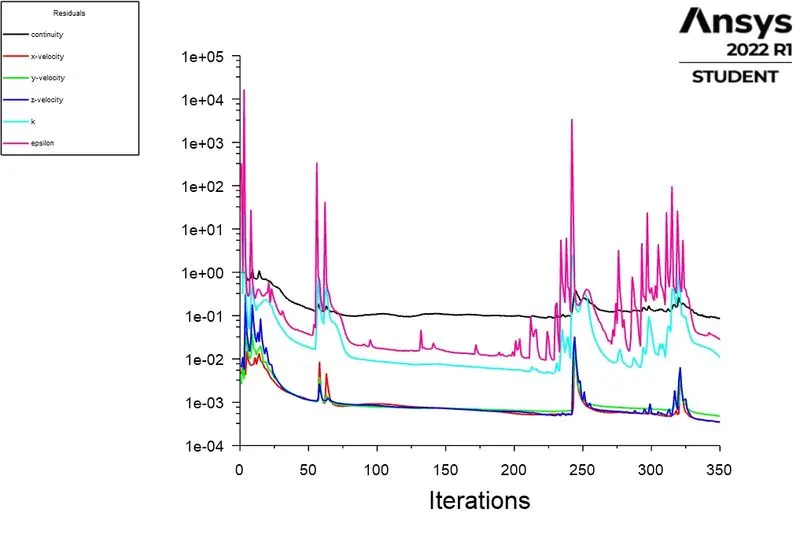
To setup the simulation we should give setup conditions and input values like materials choosing, boundary conditions, physics type, slover type, sloution method, choose DPM option and etc.
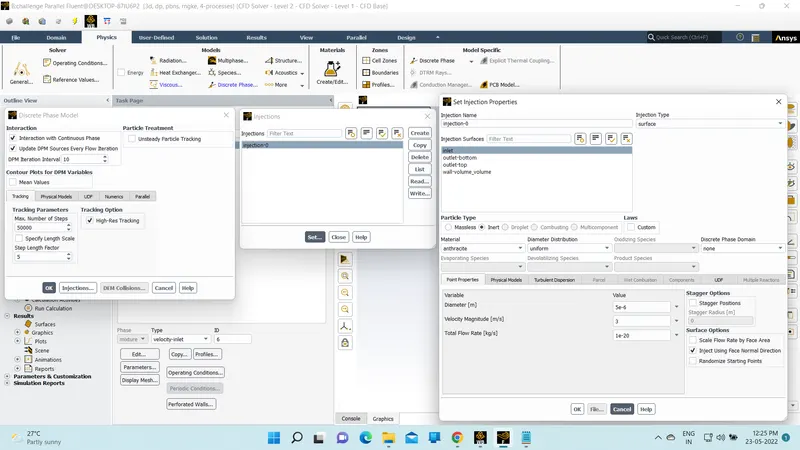
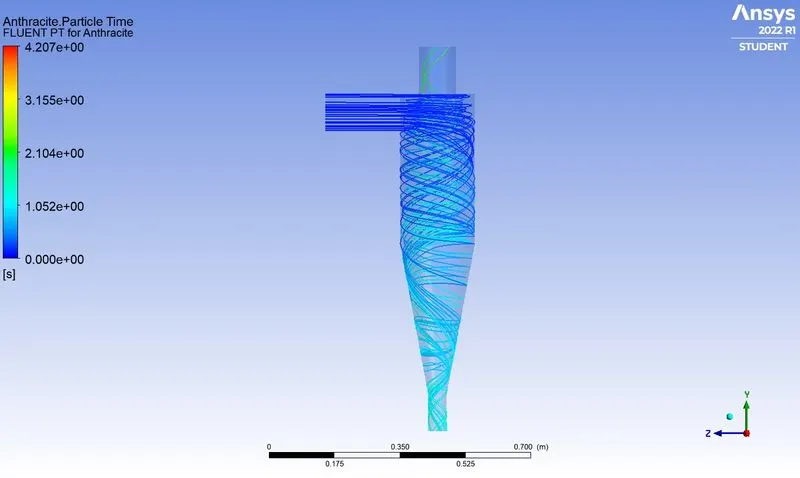
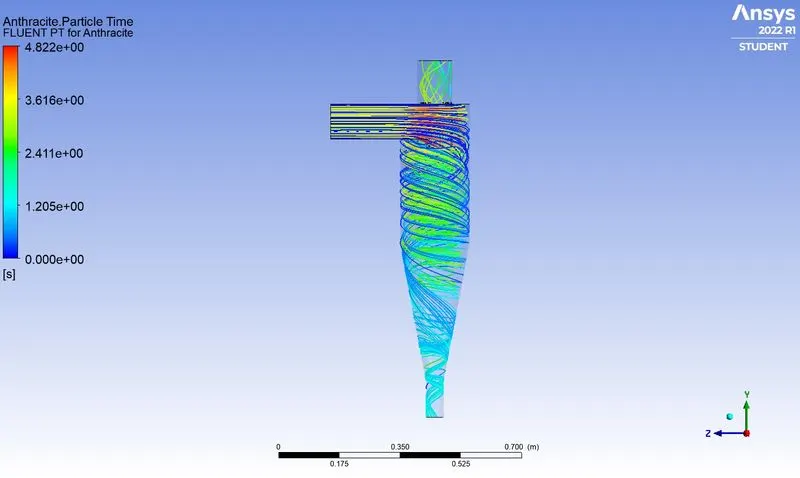
particle size is given one by one to simulate with same velocity 3m/s 1e-6,3e-6 and 5e-6.
Particle size 1e-6
Particle size 3e-6
Particle size 5e-6
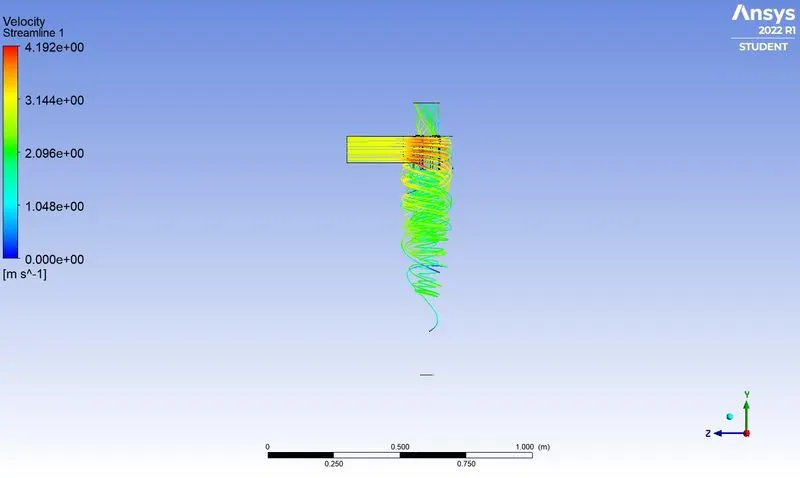
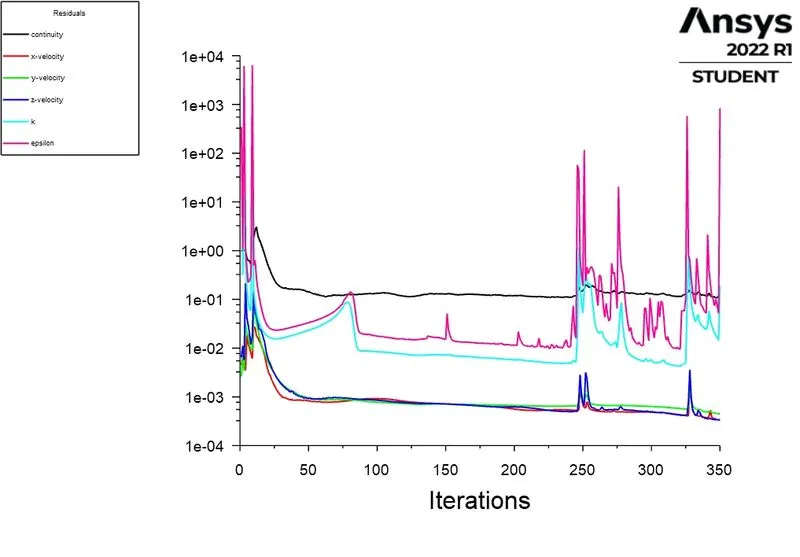
Results:
0.00001
DPM Iteration ....
number tracked = 378, escaped = 60, trapped = 318
0.00003
DPM Iteration ....
number tracked = 378, escaped = 48, trapped = 330
0.00005
DPM Iteration ....
number tracked = 378, escaped = 48, trapped = 330
As particle size is increased the particles are got trapped .
To perform an analysis on a given cyclone separator model by varying the particle velocity from 1 m/sec to 5 m/sec
velocity at 1m/s and particle size is 5e-5:
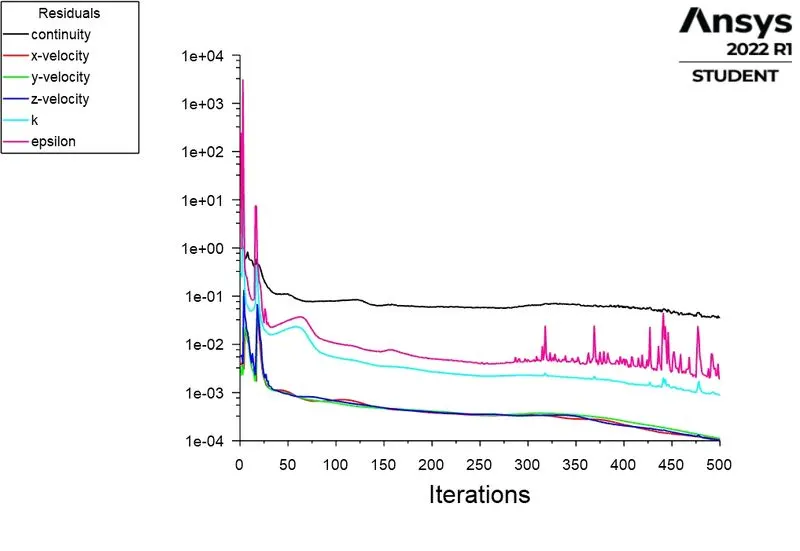
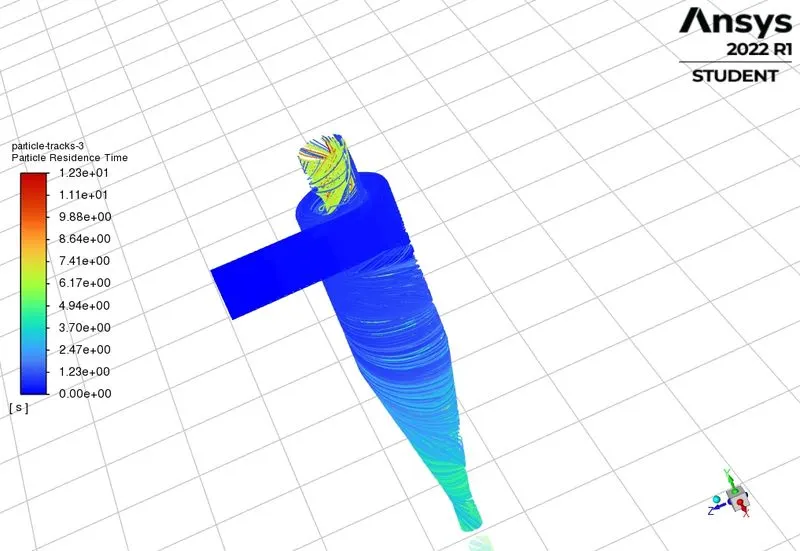
velocity at 3m/s:
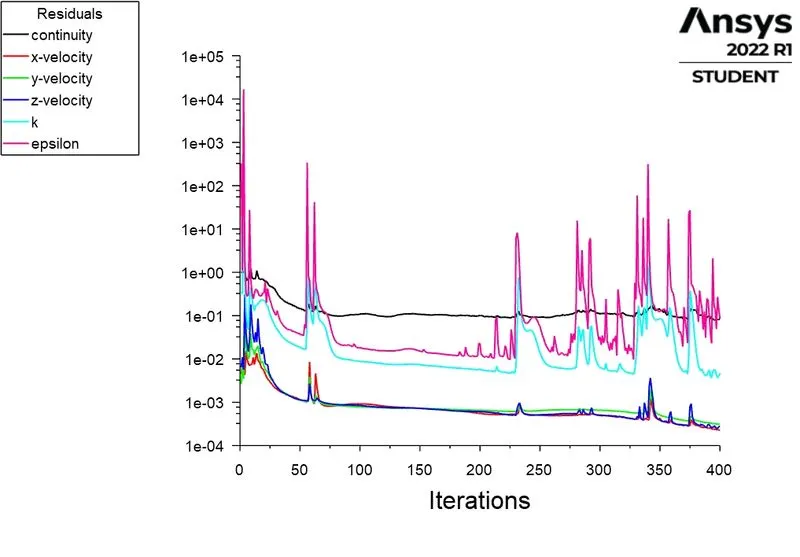
velocity 5m/s
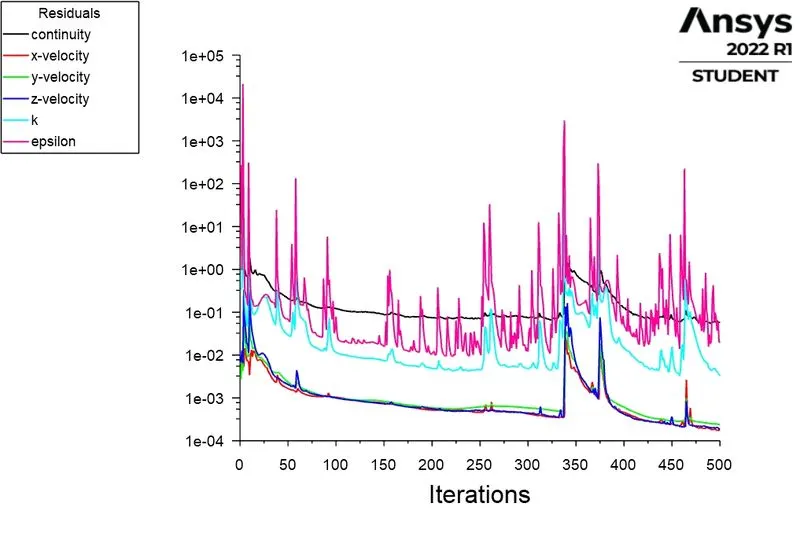
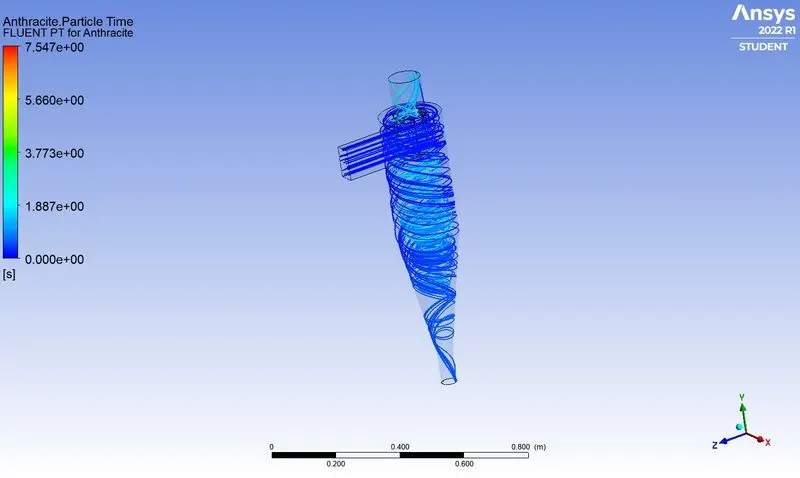
efficiency=no of particles escaped/no of particles trapped.
Impressions:
| cases | size of particle | velocities | pressure at inlet | pressure at outlet 2 | pressure drop | No of particles | escaped | trapped | efficiency |
| case 1 | 5.00E-06 | 1m/s | 2.0464617 | 0.18360369 | 1.8624 | 378 | 73 | 305 | 23.93 |
| case 2 | 5.00E-06 | 3m/s | 17.510386 | 1.4434142 | 16.06 | 378 | 48 | 330 | 14.545 |
| case 3 | 5.00E-06 | 5m/s | 64.171835 | 6.6190169 | 57.552 | 378 | 108 | 268 | 40.29 |
Number Of Particles Tracked depends on the size of element, smaller the size of element greater the Particles tracked.
With the same particle and inlet flow velocity an increase in Particle Diameter, seperator efficiency decreased.
Pressure drop is higher when the particle and inlet flow velocity is higher.