Week 8 - Simulating Cyclone separator with Discrete Phase Modelling
AIM
To perform the analysis on cyclones separator by applying discrete phase and calculating the efficiency and pressure drop in it .
It has widely used in industrial uses
It is used in send blasting machine for removing dust from particles
It is used in vacuum life filter for separation of air and oil particles
Its used in industries for removing dust and collecting the particles in water
In such areas we can make accurate and efficient separator for collecting and measuring the particals
Cyclones are increasingly used in the household, as the core technology in bagless types of portable vacuum cleaners and central vacuum cleaners
Large scale cyclones are used in sawmills to remove sawdust from extracted air.
USED IN CEMENT INDUSTRIES
USED IN PETROCHEMICAL INDUSTRIES.
METHODS USED TO MEARURE THE EFFICIENCY AND PREASSURE DROP ARE AS
- LOZIA AND LEITH MODEL METHOD
- LI AND WANG MODEL METHOD
- KOCH AND LICHT MODEL METHOD
- LAPPLE MODEL METHOD
SEPARATION EFFICIENCY
IS THE RATIO OF TOTAL PARTICALS TO PARTICAL TRAP
All efficiency is measured and given below .
Solving and modelling analysis
- In space claim we consider volume extraction by selecting in prepare and giving in edges sections which select the total volume, suppressing the geometry and the go to the meshing sections.
- In meshing section providing proper name of inlet , outlet 1 and outlet 2 at down section, then generating meshing by giving refine mesh and elements size of 5 mm.
- The in fluent section by applying double precisions and 4 processors, applying gravity in -y direction 9.81, and applying k epsilon, rng and swing dominated flow .
- Then done discrete phase model open , by considering continuous phase and enabling dpm then applying injection section , in injection section , injection type surface injection and from inlet section , after then velocity and diameter of particles , so we can apply the particle as per size and velocity and applying closed .
- After then we go for boundary condition , applying velocity to it and then go to DPM section and applying inlet and wall – reflect
Outlet – escape
Outlet bottom – trap
- Then applied the method with second order for both turbulences.
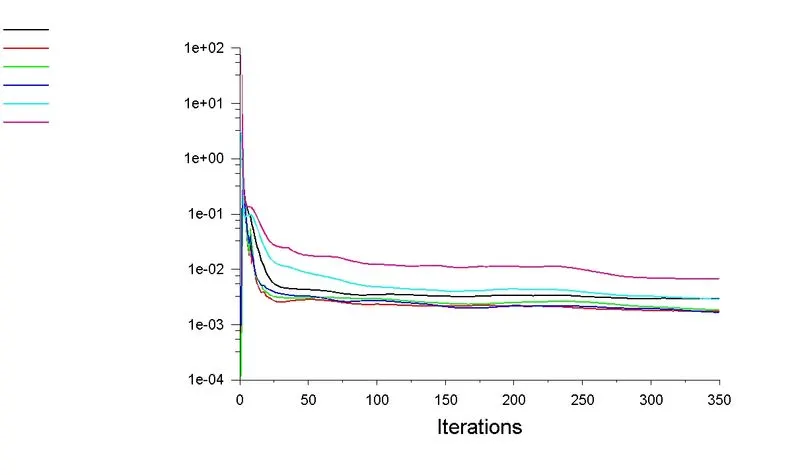
- Then in initialization section by giving standard initializations and starts from inlet section in it and the applying initialize . and applying 650 iterations and applying calculations
- We go in file section and export the particle file history and calculate the all particlas details , attached below
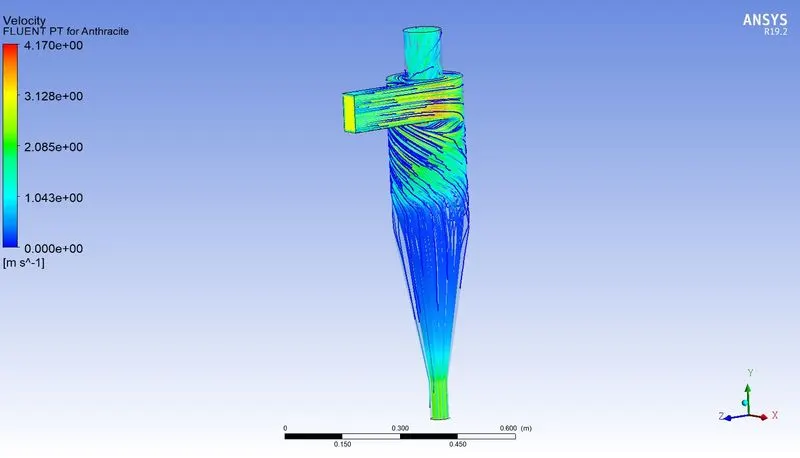
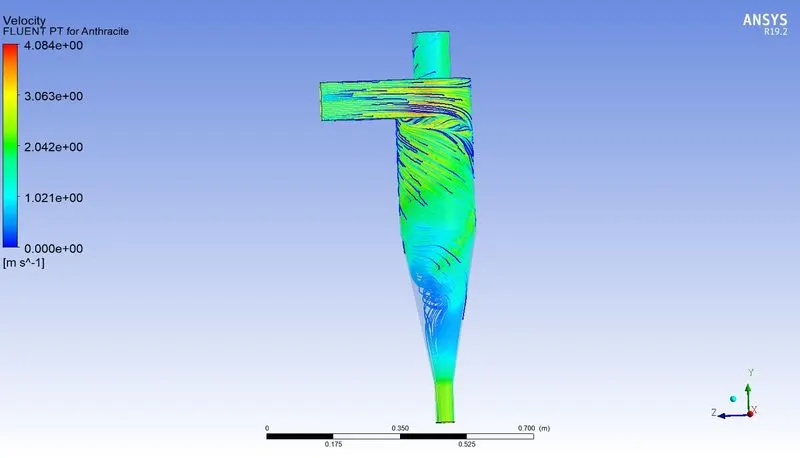
- Then we go to the result section , importing the particle history from file , and opening the section , and measuring the velocity , pressure and particle time of it , and measured the vortex all the details are attached .
Case 1
DPM Iteration .... 5nm 3m/s
number tracked = 438, escaped = 125, aborted = 0, trapped = 132, evaporated = 0, incomplete = 181, incomplete_parallel = 0
efficiency 30.1%
DPM Iteration .... 1nm 3 m/s
number tracked = 438, escaped = 149, aborted = 0, trapped = 96, evaporated = 0, incomplete = 193, incomplete_parallel = 0
efficiency is 21.9 %
Case 2
DPM Iteration .... 5nm, 5m/s
number tracked = 438, escaped = 110, aborted = 0, trapped = 86, evaporated = 0, incomplete = 242, incomplete_parallel = 0
efficiency is 19.6%
DPM Iteration .... 5nm, 1 m/s
number tracked = 438, escaped = 193, aborted = 0, trapped = 67, evaporated = 0, incomplete = 178, incomplete_parallel = 0
efficiency is 15.29%
Conclusion
Variation in trap , escape, and reflect depends in incoming velocity and and particle diameters .
High efficiency cyclone separator hase high pressure drop
Higher the inlet velocity higher the efficiency
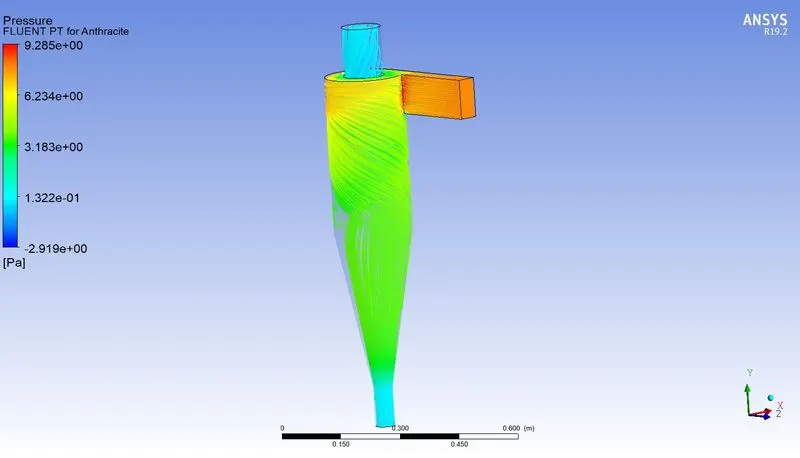
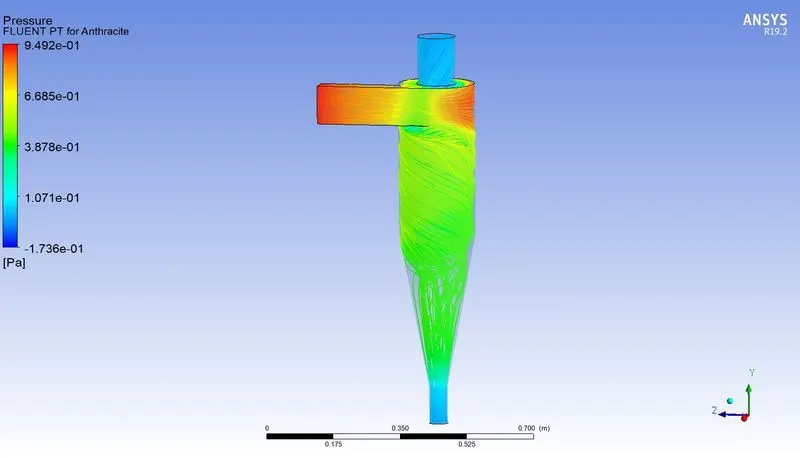
Pressure drop is measured from pressure couture , changes in pressure .
CASE 1
VELOCITY 3M/S AND 5NM PARTICAL
VLOCITY CONTURE FOR V=3M/S AND 5 NM PARTICAL SIZE
PRESSURE CONTURE FOR V=3M/S AND 5NM PARTICALS SIZE
VELCITY CONTURE FOR V=3M/S AND 1NM PARTICALE SIZE
PRESSURE CONTURE FOR V=3M/S AND PARTICAL SIZE 1NM
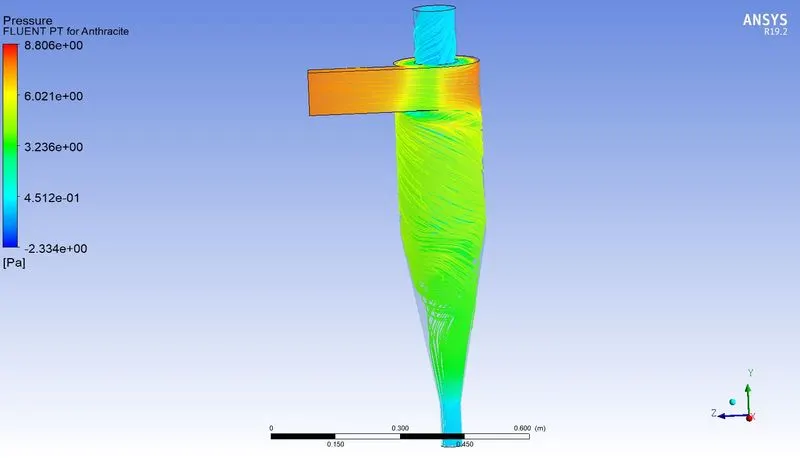
PARTICLE TIME FOR V=3M/S AND SIZE 1NM
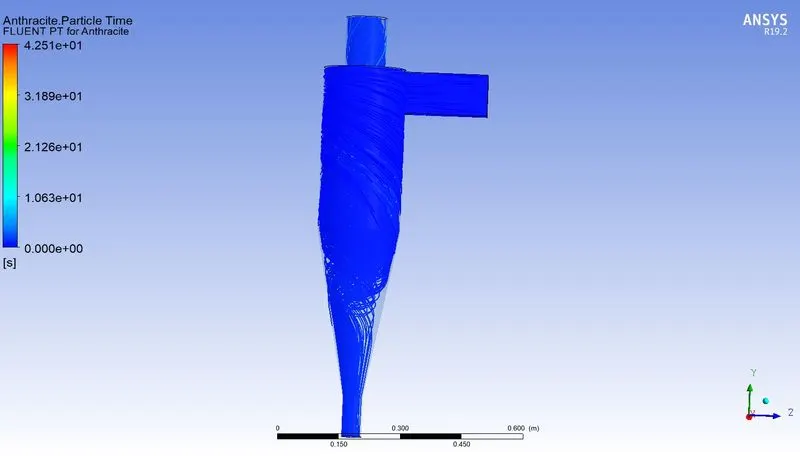
PARTICAL SIZE V=3 M/S AND SIZE 5NM
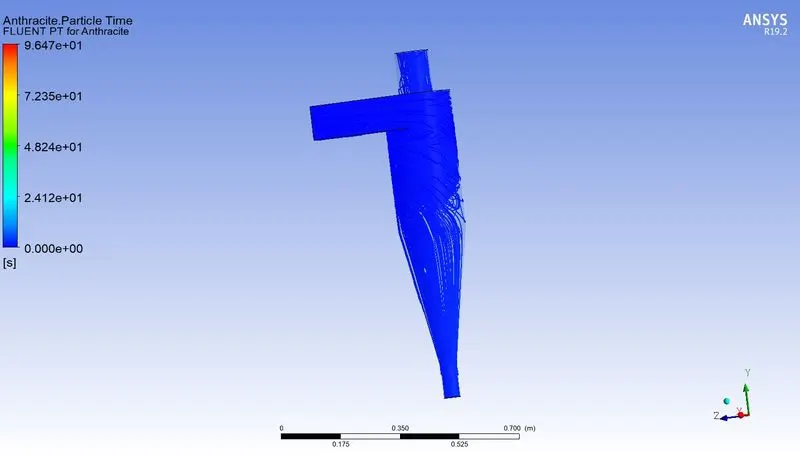
CASE 2
RESIDUAL CURVE FOR V=1M/S AND SIZE 5NM
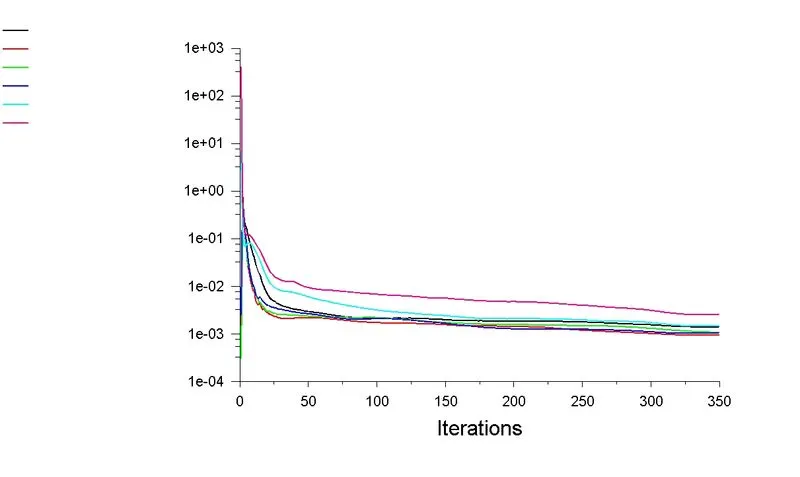
PRESSURE CONTURE FOR V=1M/S AND SIZE 5NM
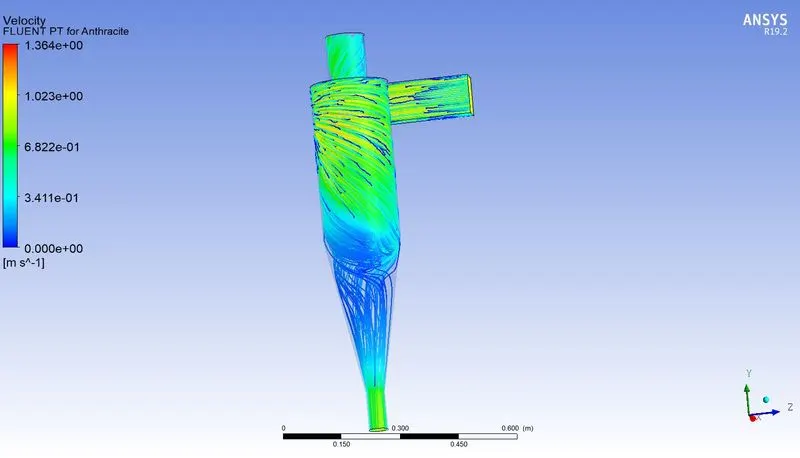
VELOCITY CURVE FOR V=1 M/S AND SIZE 5NM
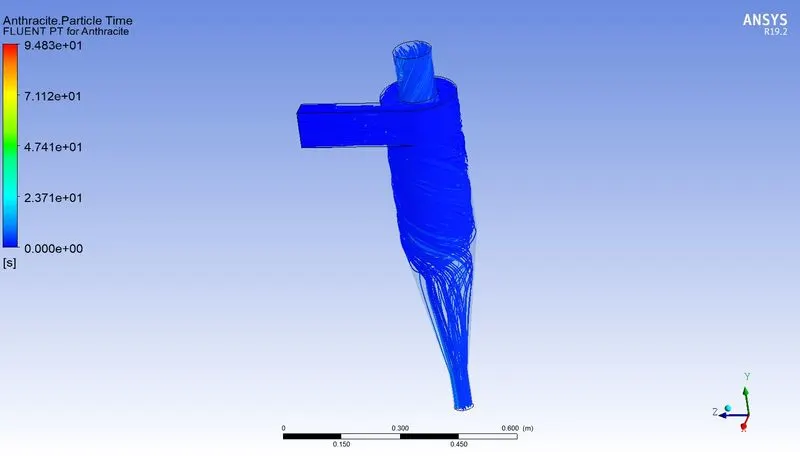
ANTHRACITE PARTICAL TIME FOR V=1M/S SIZE 5NM
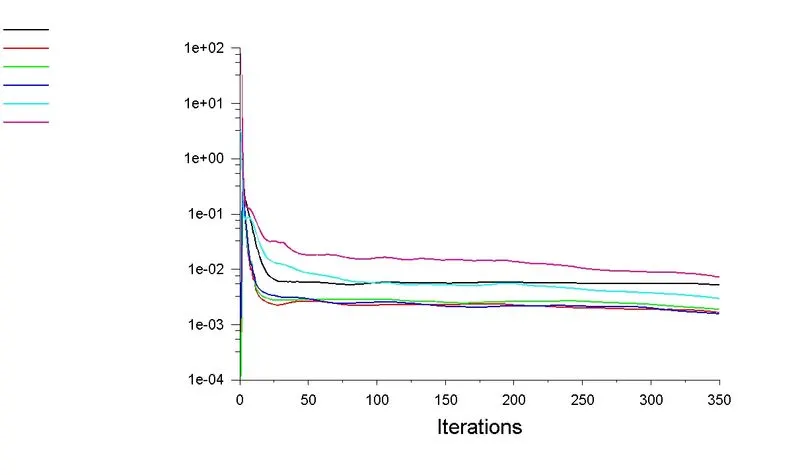
RESIDUAL CURVE FOR V=5M/S AND SIZE 5NM
PRESSURE CONTURE FOR V=5 M/S AND SIZE 5 NM
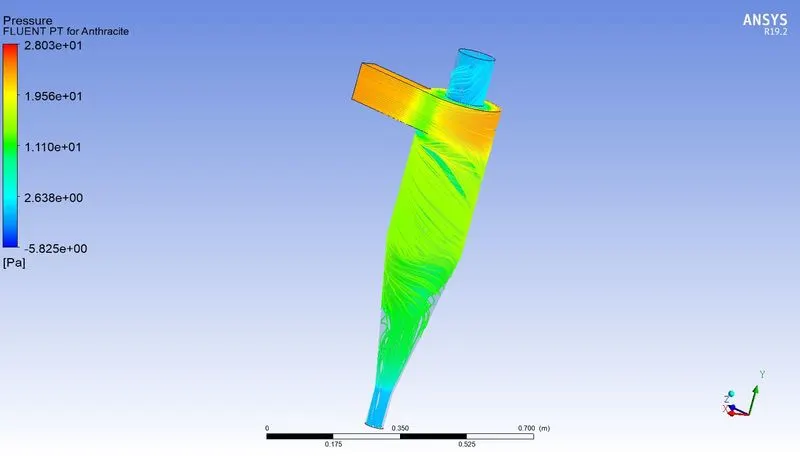
VELOCITY CONTURE FOR V=5 M/S AND SIZE = 5 NM
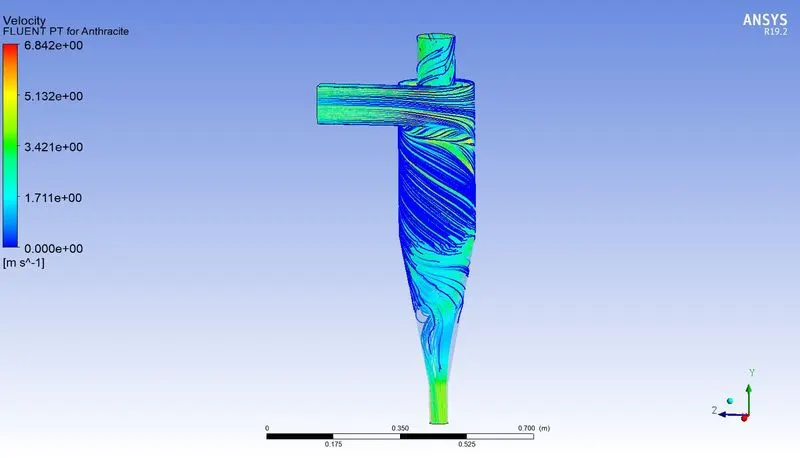
PARTICAL TIME DETAILS FOR V=5 M/S AND SIZE 5 NM
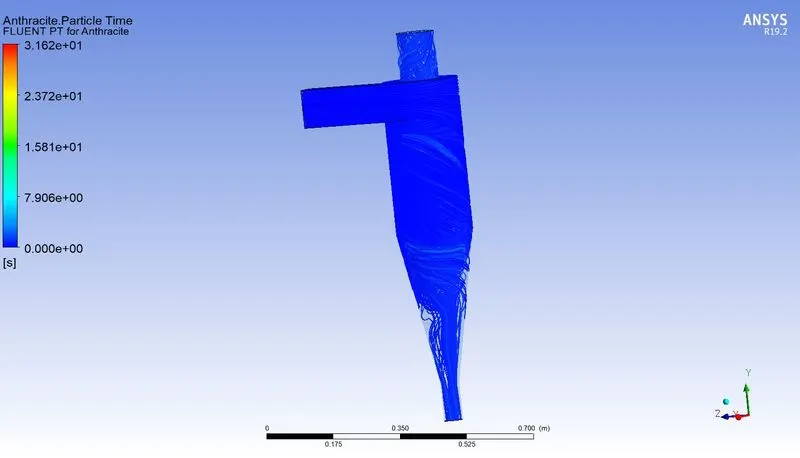
VORTEX CORE FOR V=5 M/S AND SIZE 5NM
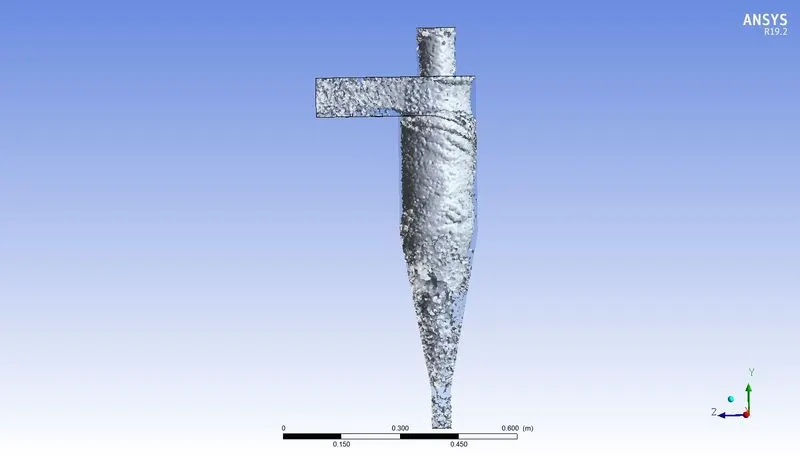
VORTEX CORE FOR V=1 M/S AND SIZE 5NM