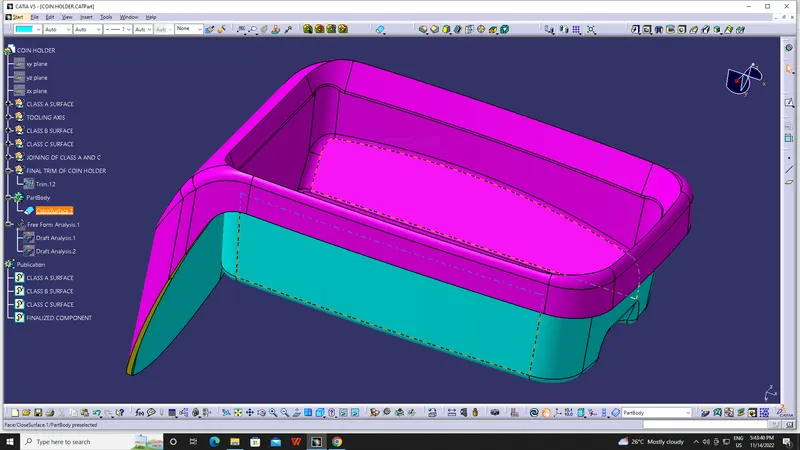
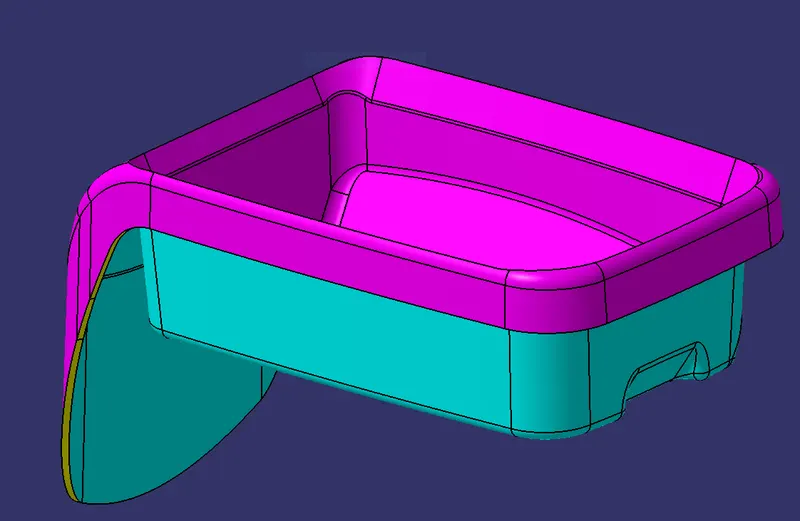
Week 8 - Challenge 3 - Coin Holder Design
ABOUT COIN HOLDER
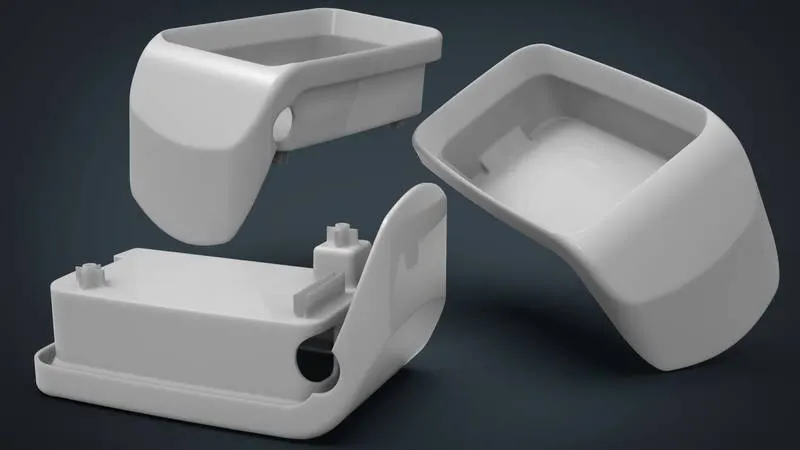
- To create a coin holder plastic component by closed method with reference to the class A surface and do the draft analysis for the component.
MATERIAL USED FOR COIN HOLDER
ABS(Acrylonitrile butadiene styrene)
WHY ABS(Acrylonitrile butadiene styrene)
- COST EFFECTIVE
- LOW MELTING POINT
- HIGH IMPACT STRENGTH
COMPAEISION OF MATERIAL TO CHOOSE FOR COIN HOLDER
| Attributes | ABS | NYLON |
|---|---|---|
| Impact strength | High | low |
| Cost | Low | High |
| Melting point | low | High |
| Plastic Type | Thermoplastic | Thermoplastic |
| Properties | ABS | Nylon |
| Melting point | 190 -270 | 268.8oC |
| Density | 1.05 g/cm3 | 1.31 g/cm3 |
| Molecular weight | 211.3 g/mol | 224.3 g/mol |
| Ultimate tensile strength | 35MPa | 85MPa |
| Elongation at break | 30% | 90% |
Comparing ABS and Nylon
| Attributes | ABS | NYLON |
| Plastic class | Engineering | Engineering |
| Impact strength | High | low |
| Cost | Low | High |
| Melting point | low | High |
| Plastic Type | Thermoplastic | Thermoplastic |
| Surface | Smooth | Smooth low friction |
| Variant | Composites e.g. ABS/PVC | Chemical variants e.g. PA 6, PA 6,,6Glass-filled nylon etc |
| Rapid prototyping | Preferred for rapid prototyping. Works in 3D printing and CNC machining. | Less common for prototyping. But can also get 3D printed and CNC machined |
| Natural color | ivory | Off white |
| UV sensitivity | high | High |
| Flammability | moderate | High |
| Moisture absorption | Low | High |
| Dimensional stability | High | Prone to warpage |
| Acid/ Alkali resistance | Good | Poor |
MECHANICAL PROPERTIES OF ABS(Acrylonitrile butadiene styrene)
-
Key Properties of ABS
- High rigidity.
- Good impact resistance, even at low temperatures.
- Good insulating properties.
- Good weldability.
- Good abrasion and strain resistance.
- High dimensional stability (Mechanically strong and stable over time)
- High surface brightness and excellent surface aspect.
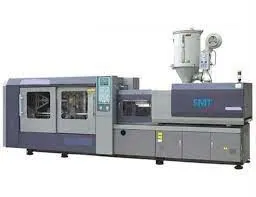
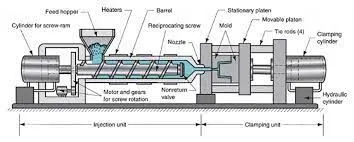
MANUFACTURING MACHING FOR COIN HOLDER
INJECTION MOLDING MACHINE
TOOLING AXIS
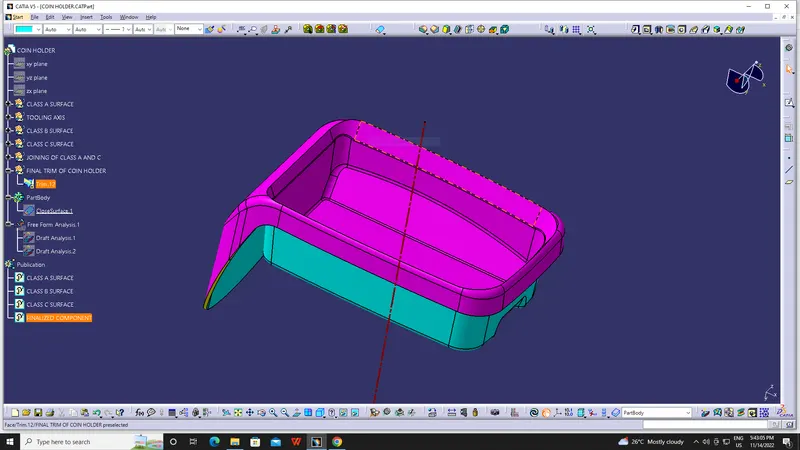
- The direction in which the mold or core and cavity opens is the tooling axis.
Steps Followed:
- Tooling Axis creation.
- Checking Draft analysis for created tooling Axis.
- Creating parting Surface.
- Creating Core Side.
- Creating cavity side.
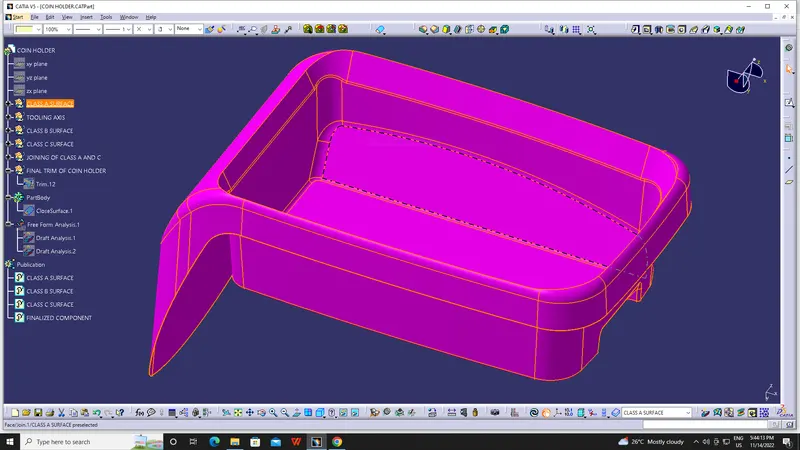
CLASS A SURFACE
- Class-A (or 'Strak') is a term used in specifically in automotive design.
- It describes the final production surface data for the aesthetic parts of the car.
- The term 'Class A' is often misunderstood, but it's generally seen as the 'Holy Grail' of surface modeling.
- Class A surface is used to show to the customer visulization,and it is a aesthetic syurface.
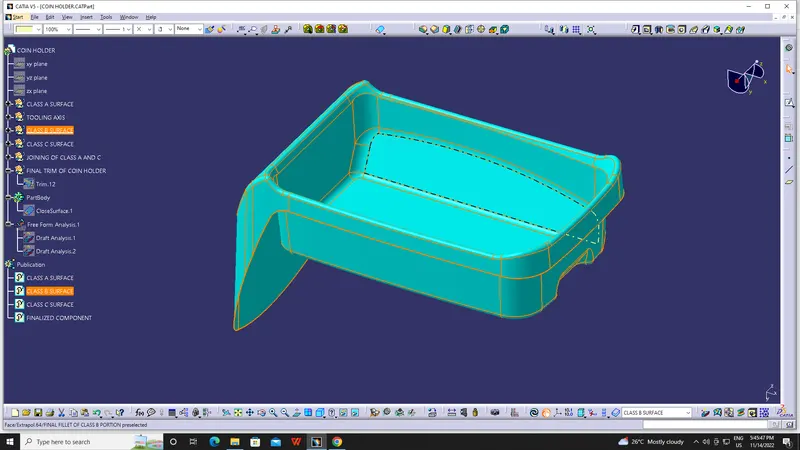
CLASS B SURFACE
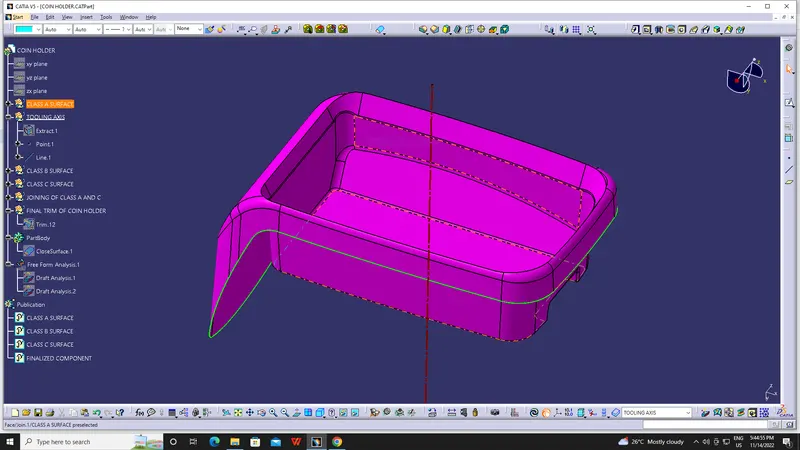
- The Class B finish is a quality finish with only minimal imperfections.
- A Class B finish is the most common finish for exterior surfaces.
- It is normally specified on surfaces such as external covers, panels, and parts that are fairly prominent.
- It is a offset surface of A,Which the surface were can not able to see Over the customer.
CLASS C SURFACE
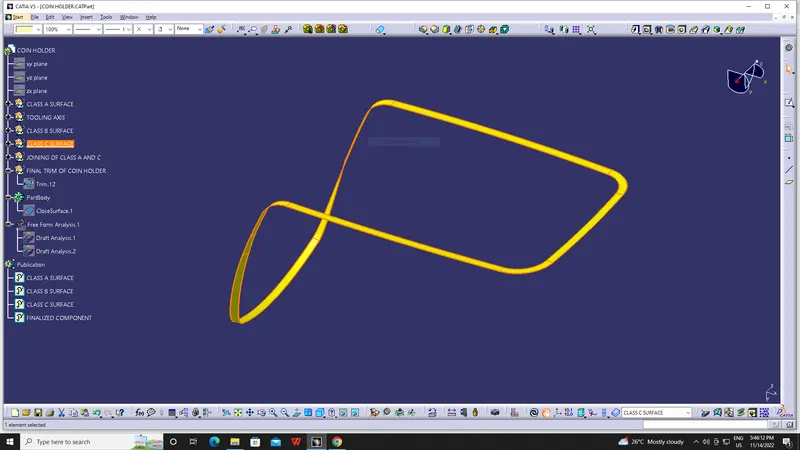
- The Class C finish allows more imperfections than Class A or B.
- Class C is often specified for interior surfaces not readily visible, surfaces that will be covered by another part when assembled, or surfaces which the Customer feels do not need to meet a high cosmetic finish.
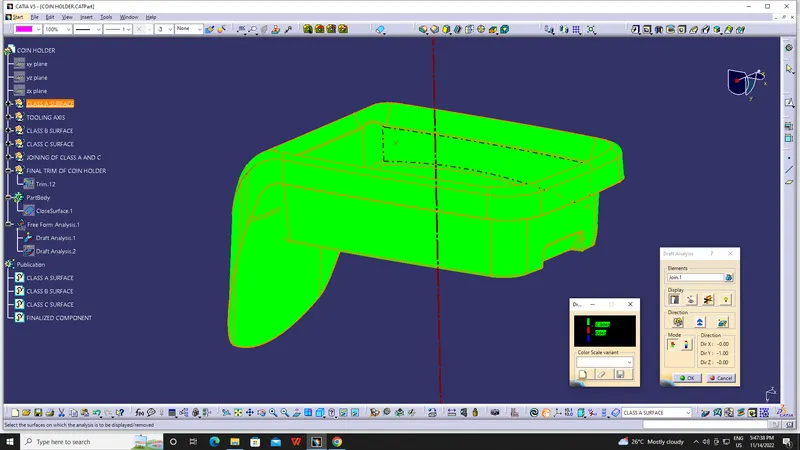
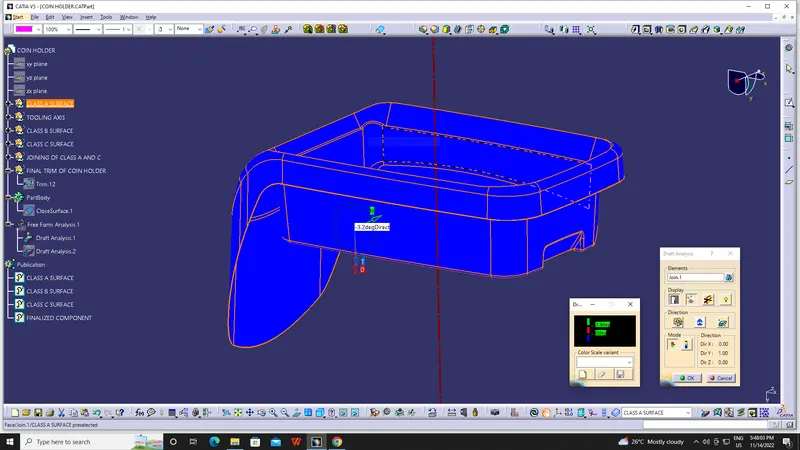
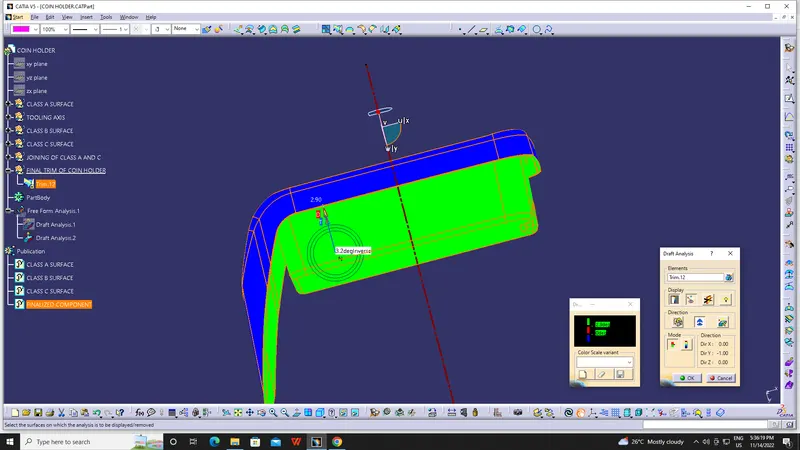
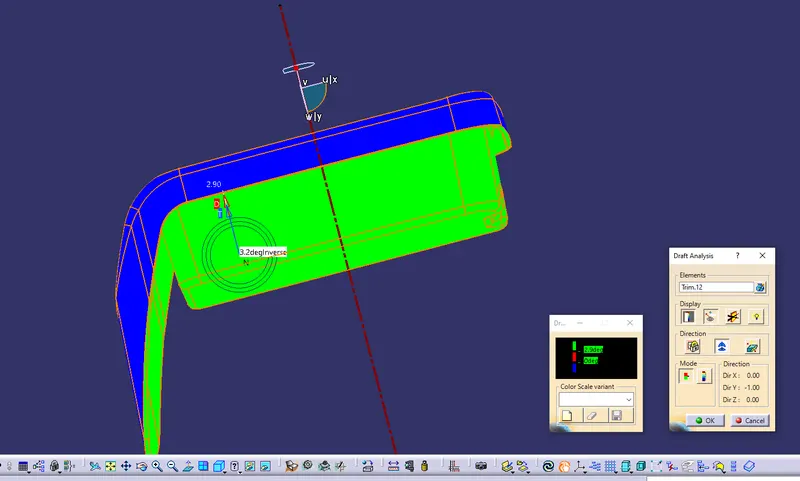
DRAFT ANALYSIS
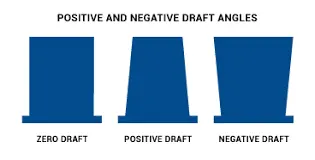
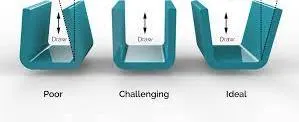
- The draft analysis technique is used to analyze whether our part model created in CAD is manufacturable based on the draft condition applied.
- Here the part should get easily removed from the panel dies .
DRAFT ANALYSIS OF COIN HOLDER CLASS A
DRAFT ANALYSIS OF COIN HOLDER FINAL COMPONENT
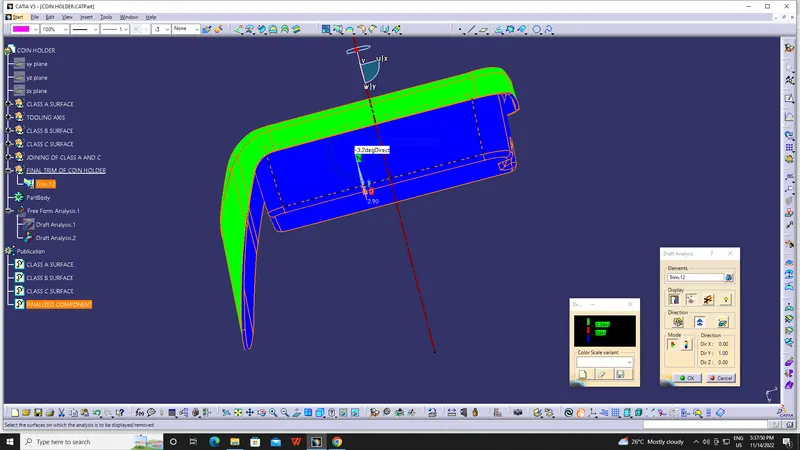
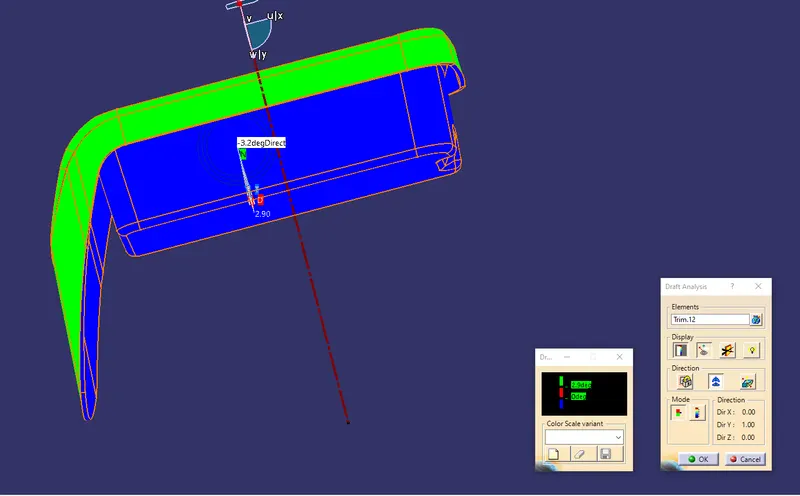
SCREEEN SHOT OF TREE STRUCTURE
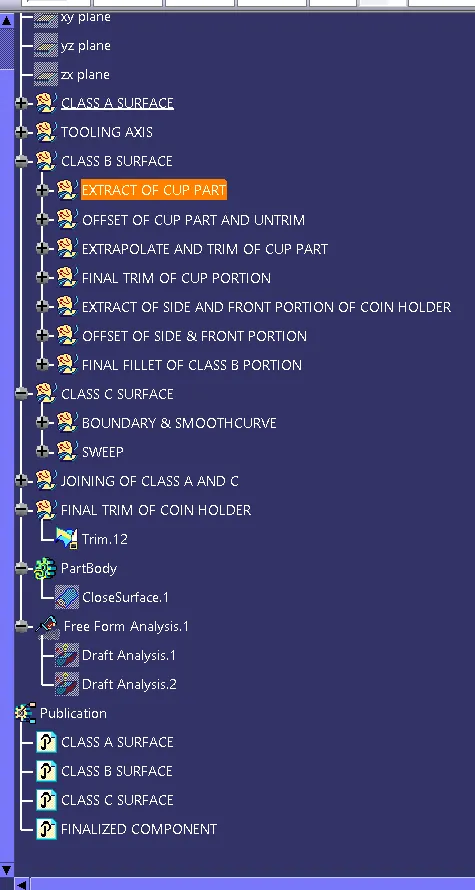
SCREEEN SHOT OF SOLID BODY WITH PROPER COLOUR COATED OF CLASSES A,B&C