Week 8 - Challenge 1 - Draft Analysis on a Fan Cover
Draft Analysis on a Fan
The objective of the project is to perform Draft Analysis by creating the Tooling Direction for the given Class-A surface.
INTRODUCTION
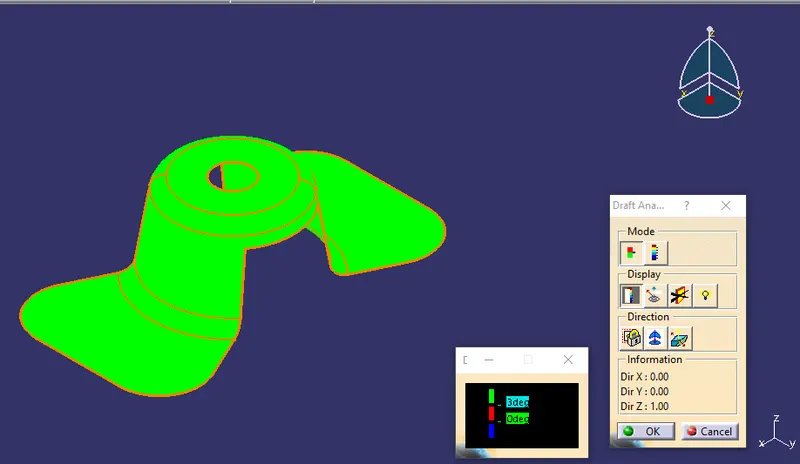
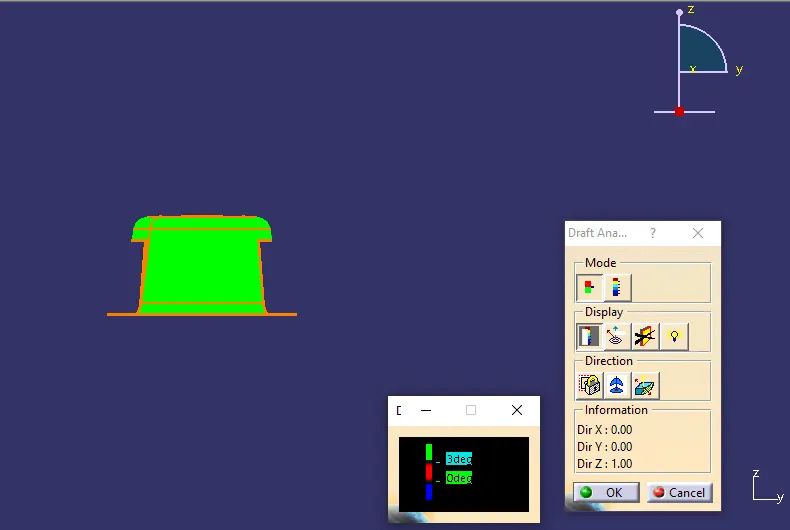
The Draft Analysis command enables you to detect if the part you drafted will be easily removed. This type of analysis is performed based on colour ranges identifying zones on the analyzed element where the deviation from the draft direction at any point, corresponds to specified values.
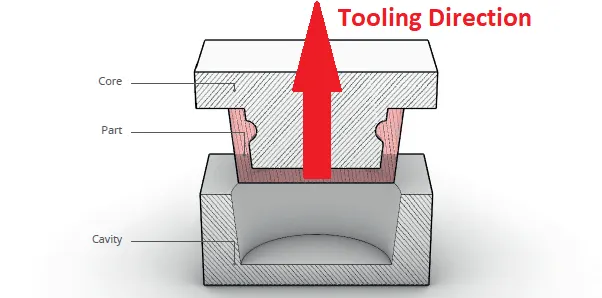
Tooling direction is the main consideration for plastic part and mould parts because it defines the movement of the mould part and the possibility of the plastic part coming out from the mould part (Core and Cavity).
TOOLING DIRECTION
The Tooling Direction is basically the direction that the mold pulls apart. The mold is built in two separate pieces, basically. You have a Cavity side and you have the Core side. The Core pulls apart from the Cavity and that's the Dyeline or the Tooling Direction.
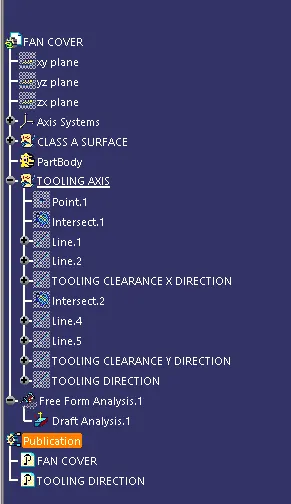
PROCEDURE FOR CREATING TOOLING AXIS
Firstly import the given class A surface to the catia.
- Check For any defects in the surface such as boundries and estimate the possible tooling direction
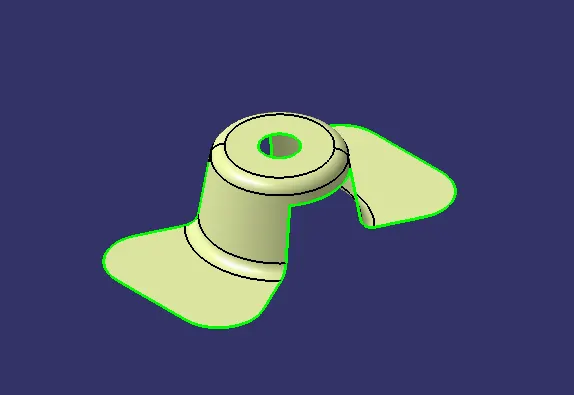
- Create the point at the center
- Add axis system to the point for better visualisation of axis
- Use intersect option to create intersection curve between surface and X-axis
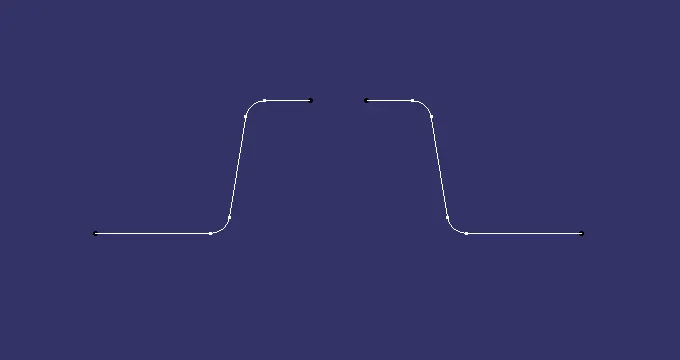
- BY using Bisect line option create a bisecting line between both the inclined lines
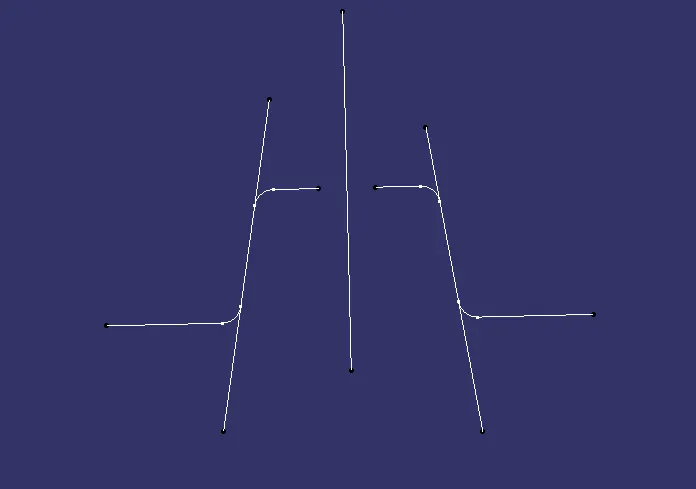
- This creates tooling clearance of X-direction
- Repeat the steps for Y direction
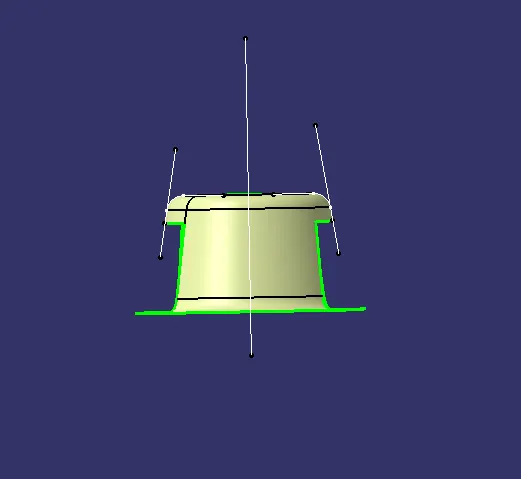
- create a bisecting line of both the lines to create clearance of Y-direction
- From the both X and Y direction line create a bisecting line
- THe bisecting line created from X and Y direction clearance lines is the TOOLING AXIS of the surface
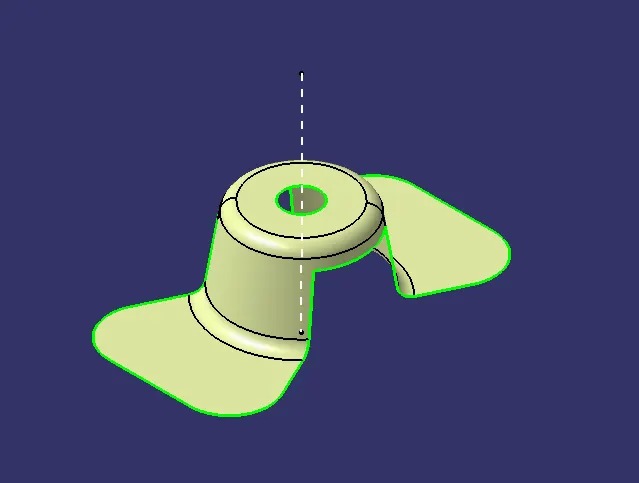
Draft Analysis
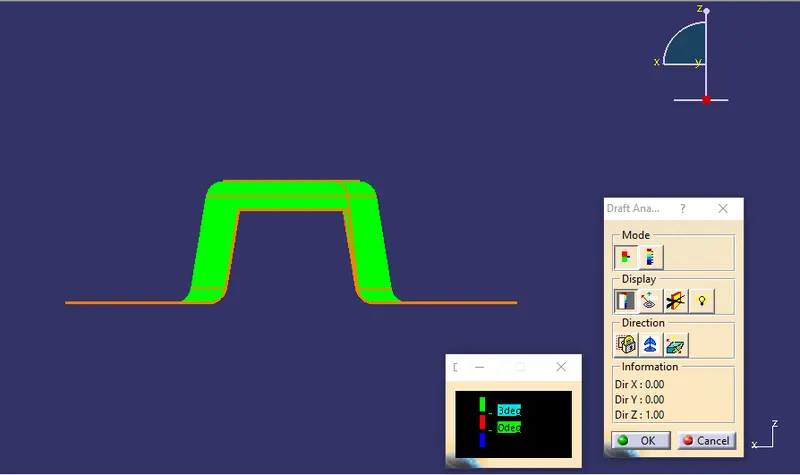
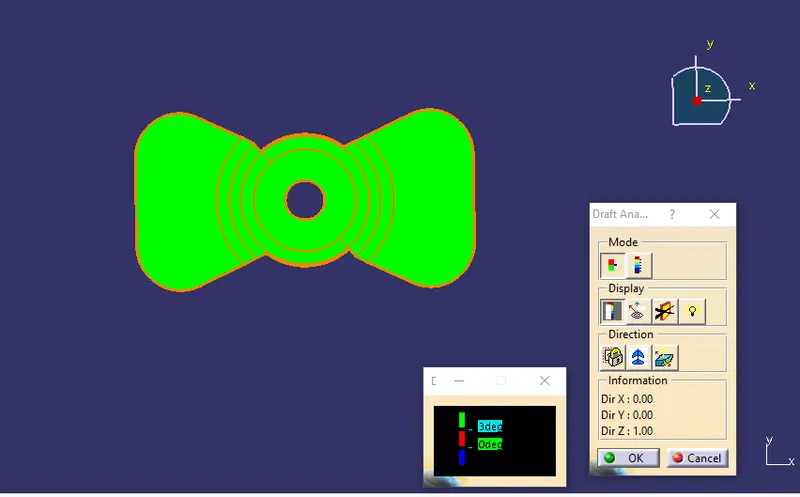
Using the feature draft analysis, perform draft analysis on the surface considering the tooling axis
3 degrees draft is optimum for the plastic moulding component
CONCLUSION
Thus the draft analysis for fan cover was carried out by creating the perfect tooling direction and the given class-A surface was ready to move on for further operations.