Week 8 - Challenge 1 - Base Bracket Design
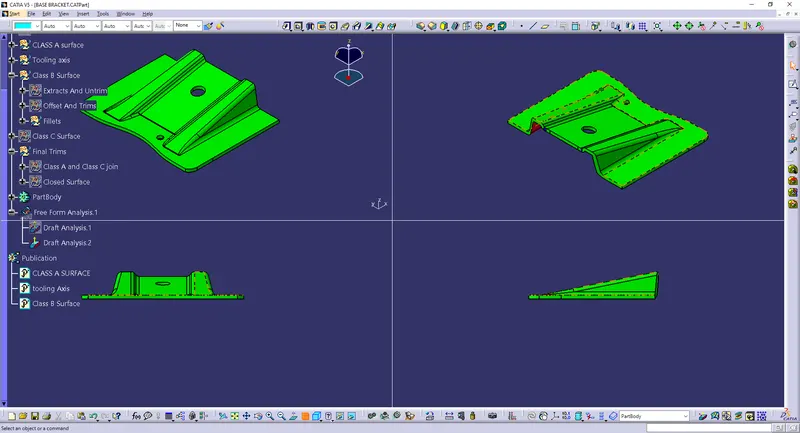
Tooling Axis :
- The direction in which the mold called the tooling axisor core and cavity opens is Tooling axis
- Considering the ejection from the cavity of the mold after manufactering the interior trim must have the nominal 3 degree draft angle. Hence the tooling axis is crested by considering this factor
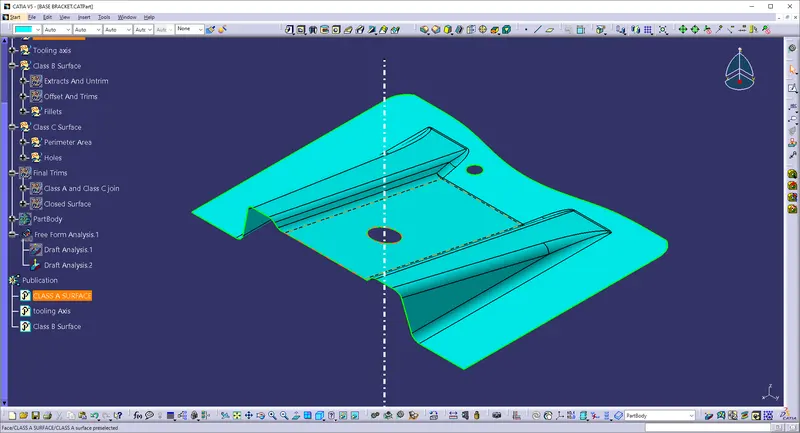
- The white clour line is the tooling axis of this surface
Material :
PBT – polybutylene terephthalate
- It has good chemical resistance and electrical properties, hard
and tough material with water absorption. - Very good resistance to dynamic stress, thermal and
dimension stability. - Easy to manufacture.
- Fast crystallization, fast cooling.
- It is an material for molding thin cross sections due to its low melt viscosity
Class A Surafce :
- Class surface are the one which will be visible to the customer
- It's the exterior of the parts
- It has a optimal asthetic shape and high surface quality
Draft Analysis :
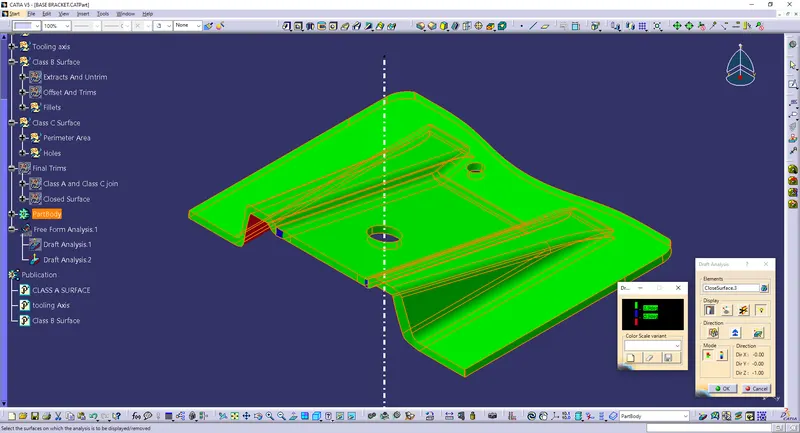
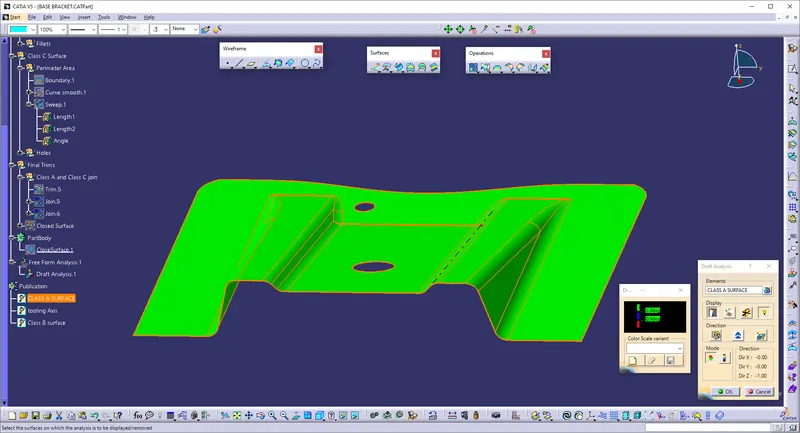
- This type of analysis is performed based on colour ranges identifying zones on the analysed element where the deviation from the draft direction at any point.
- The Green colour denotes the draft angle is in the standards (3 degree).
- The Blue colour denoted its is below (3 degree).
- The Red colour denotes the surface is not producable.
For Part :
For Class A Surface :
Class B Surface :
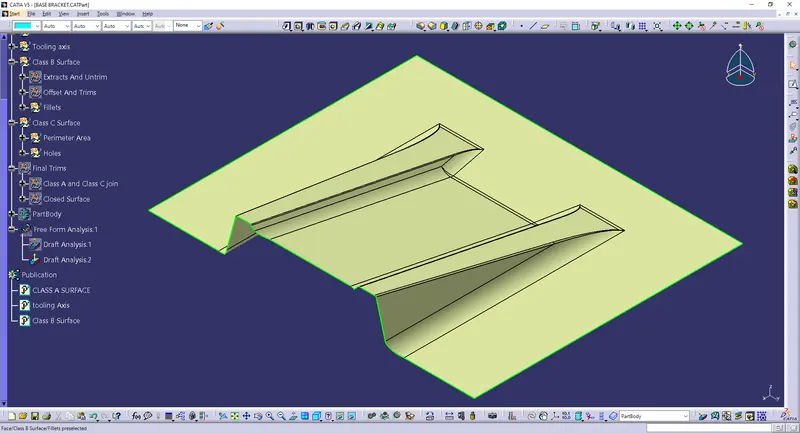
- Class B is the inner side of the Class a surface which will not be seen by the customer
- where it will faced in the side of core
- where the ejection will make there contact
- It contains the engineering aspects of a model.
Class C Surface :
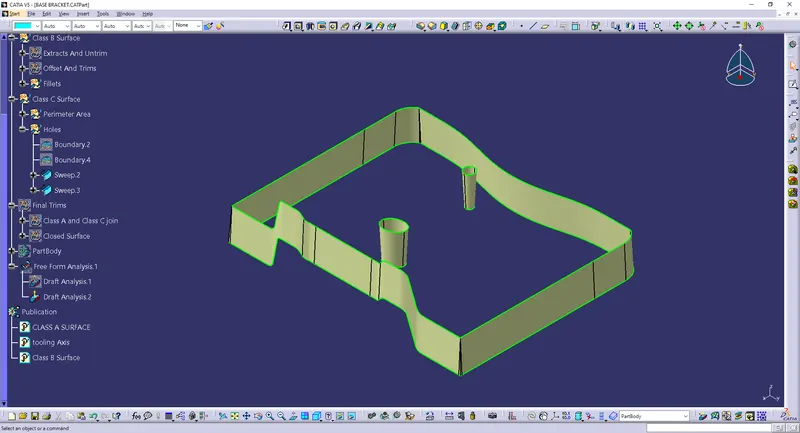
- Surface that joins class-A and class-B surfaces is class-C surface.
- Which will determine the thickness.
- Class C is often specified for interior surfaces not readily visible.