Week 8:- 3D Finishing - Challenges 1
1. 3D finish is the process where design is being completely finish & to be ready for final simulation & 2D detailing. - While finishing the design the nominality of holes is checked which ensures the easy assembly of all the units
2.Hole concentricity & hole sizes-All parts Hole concentricity should be checked & confirmed for easy assembly while finishing the parts.
1) Lift and carry mechanism-
Takes component from station to station.
Fixed distance travel
Forward movement and fast return movement possible
2) Overhead Gantry
3) Robotic Gripper
4) Shuttle
3.Rough locators are used to help locate workpieces in the automation process. Locating refers to the desired location where you want the workpiece to be when it is getting worked on either by a person, team, or robot.It is a device to establish and maintain position of a part in a jig or fixture.
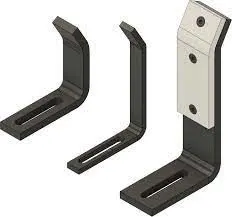
4.The adjustable supports are used when the surface is rough or uneven, such as in cast parts. Adjustable locators are normally used with one or more solid locators to allow any adjustment needed to level the work.
To perform properly, workholders must accurately and consistently position the workpiece relative to the cutting tool, part after part. To accomplish this, the locators must ensure that the workpiece is properly referenced and the process is repeatable.
5. The most basic equipment setup in most semi- or fully automatic arc welding processes usually consists of the welding machine,The process uses two shaped copper alloy electrodes to concentrate welding current into a small "spot" and to simultaneously clamp the sheets together. Work-pieces are held together under pressure exerted by electrodes. ... Forcing a large current through the spot will melt the metal and form the weld.
6.evaluate the welding process most appropriate for the job at hand, the following factors would typically be considered:
- Type of material being welded (see table below)
- Thickness of the material.
- The welding position.
- Type of welding power source and the amount of current available.
- Time requirements.
- Working conditions.
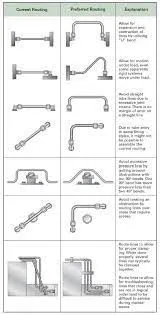
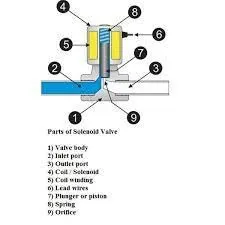
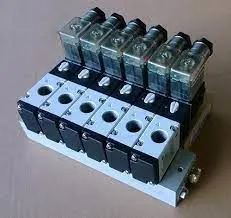
11.
We live in a World of Sensors. You can find different types of Sensors in our homes, offices, cars etc. working to make our lives easier by turning on the lights by detecting our presence, adjusting the room temperature, detect smoke or fire, make us delicious coffee, open garage doors as soon as our car is near the door and many other tasks.
All these and many other automation tasks are possible because of Sensors. Before going in to the details of What is a Sensor, What are the Different Types of Sensors and Applications of these different types of Sensors, we will first take a look at a simple example of an automated system, which is possible because of Sensors (and many other components as well).
Outline
- Measuring range. ...
- Environment. ...
- Digital lowers costs. ...
- Intelligent sensors. ...
- Accuracy and Precision. ...
- Excitation. ...
- Signal Conditioning.