Week 8:- 3D Finishing - Challenges 1
Q.1. What do you understand by the 3D finish process?
ANS. 3D Finish Process is the a process in which finishing of fixture is done means making fixture ready for final 2D detailing and simulation.
Following are the steps followed while doing 3D finish:
- Holes, free hole and tapping are checked for easy assembly of unit in fixture. Concentricity of holes are ensure in this step.
- Gaps or clearance is maintain between different units to unsure proper working.
- Fasteners are used accordingly and color are applied according to customer standard.
- Standard colors are used for easy understanding like yellow for tapping and blue for dowel holes.
- Renaming of every parts is done.
- After all this steps fixture is sent to simulation and final 2D detailing.
Q.2. What are the points need to be taken care of while finishing the design?
ANS. Points need to be taken care of while finishing the design are:
- Hole Concentricity and sizes: Holes, free hole and tapping are checked for easy assembly of unit in fixture. Concentricity of holes are ensure in this step.
- Machining area: This area is defined and highlighted using color code.
- Nominality: Most of the dimension of parts are maintain nominal.
- Holes color Standard: Standard colors are used for easy understanding like yellow for tapping and blue for dowel holes.
- Pneumatic Layouting: Pneumatic Layouting is done properly for neat working of each unit in fixture.
- Gap Checking: Gaps or clearance is maintain between different units to unsure proper working.
- Fastners Implementation: Fasteners are used accordingly and color are applied according to customer standard.
- Mylar Splittting as per panel profile: Mylars are splitting according to profile of car panel as they are in direct contact.
- Proper Renaming: Renaming of every parts is done.
Q.3. What are Rough Locators & what is their use?
ANS.
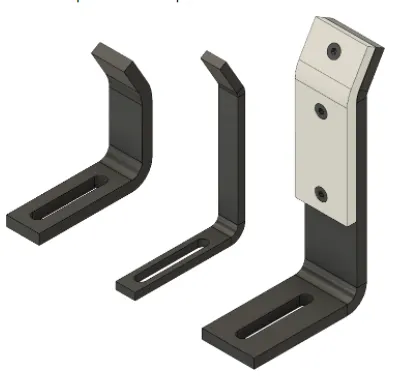
As name suggest Rough Locators are used to locate car panel and also guide the operator to load the car panel in the fixture correctly. Standard Rough Locator are also available.
Uses:
- Used to locate car panel in fixture correctly.
- It is also known as Pokayoke or Fool Proofing as part is located in fixture accurately
- Accuracy is maintained due to use of rough locators
Q.4. What are the points you need to consider while designing a rough locator?
ANS. Points you need to consider while designing a rough locator:
- It should placeed at edges of car panel
- Maintain 2 to 5mm of gap between car panel edge and rough locator
- It should guide car panel in direction of pin arresting
- It should guide car panel 10 to 15 mm before pin engaugement
- Entry angle should be 30 to 45 degrees
- it must have two slot for adjustment
- These two slot are in the direction of guiding
Q.5. What is the gun study process?
ANS.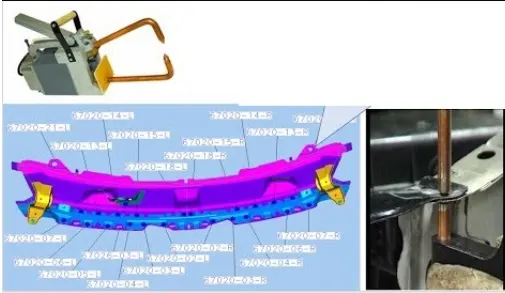
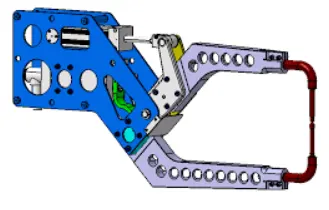
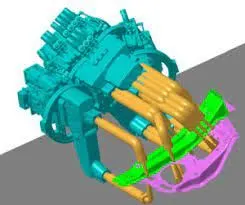
Gun Study is the process of checking whether the gun is able to weld the selected car panels. The above images shows the weld gun doing spot welding and the weld location where the spot is created on the car panel. Gun study is necessary as the BIW car panels are complex in shape and size. In 3D software gun study is done by actually introducing welding gun in fixture that we have designed. According to that units are designed so that there is no problem while welding process.
Q.6. What are the points need to consider during the gun study?
ANS. Points need to consider during the gun study:
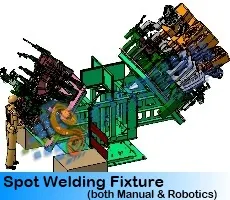
- The axis of weld spot along weld direction must be normal to weld surface.
- Total no. of weld spot and time required for each is calculated for knowning total time required for welding that car panel.
- Robat cycle time is calculatied while doing proper gun study.
- Collusion checking is done on simulation software to check whether the welding process is done without any collision with any units in fixture.
Q.7. What is pneumatic routing?
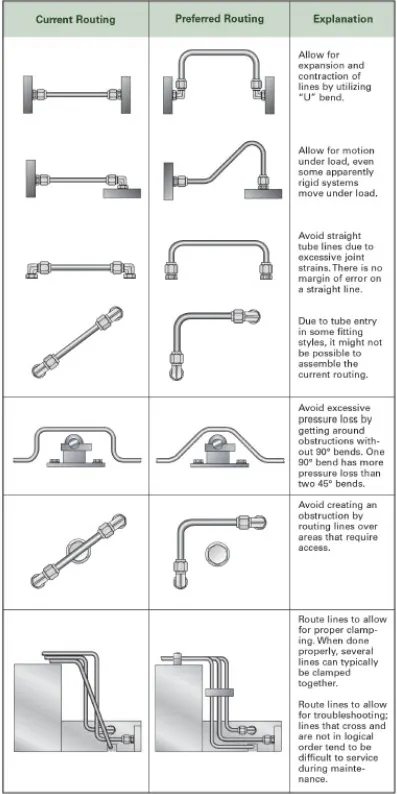
ANS. As name suggest pnematic routing in nothing but a planing tube lines routes for proper, leak proof and efficient working of pnematic devices used in a fixtures like cylinders, solenoid, etc.
Guidelines while planning pnematic routing are as:
Q.8. What is the solenoid valve?
ANS. 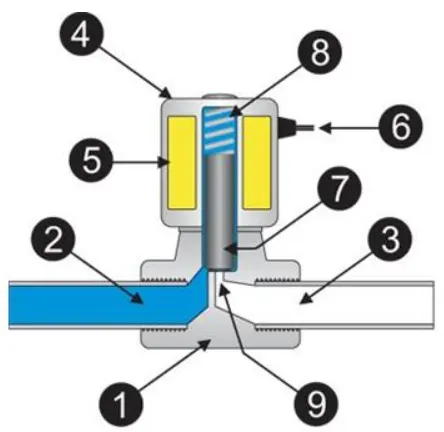
Solenoid is the electromechanical device used to control or regulate the flow of fluid. It is used in fluid power pneumatic and hydraulic systems and also to control cylinders, fluid power motors or larger industrial valve. Components of solenoid valve are as shown in above diagram:
- Valve body
- Inlet Port
- Outlet Port
- Solenoid or Coil
- Coil Winding
- Lead wire
- Plunger or piston
- Spring
- Orifice
Q.9. What is the valve bank?
ANS. 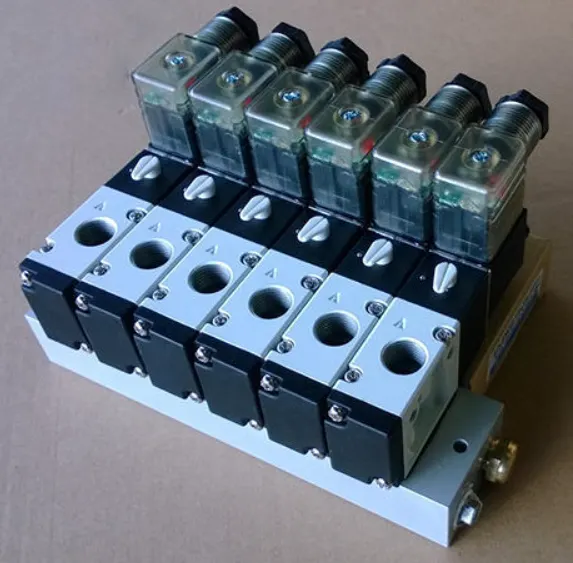
Valve Bank is nothing but collection or group or arrangement solenoid valve. Image shows a valve bank. Some of the features of valve bank are:
- designed for high vibration level
- uses aluminium alloy manifold for light weeight
- also designed for high temprature environment
Q.10. What is sensor & brief about its application in automation?
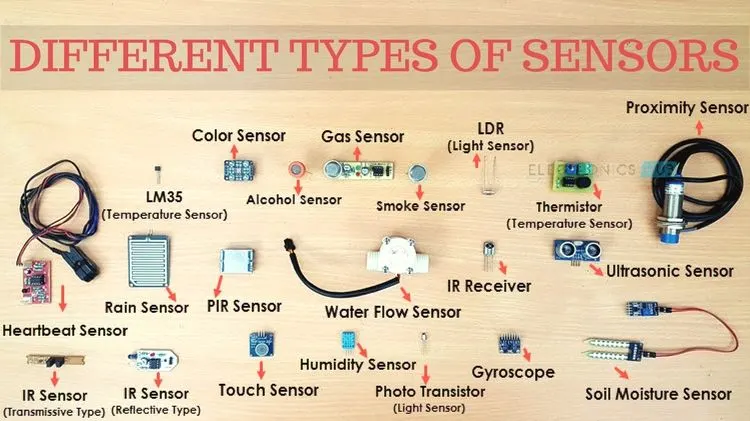
ANS. Sensor is a device used to measure or detect physical properties like temparature or distance. Unit used to sense the car panel are known as Sensor Unit. The input from sensor is supplied to PLC for further operations. Different types of sensor are shown in figure:
Applications:
- To check the presence of car panel
- To detect the position of sliding unit
- When there is no. of similar car panels weld on same fixture sensor are used to detect car panel placed in fixture
Q.11. What are the types of the sensor?
ANS. Sensor is a device used to measure or detect physical properties like temparature or distance. Types of Sensors are as below :
- Temparature Sensor
- proximity Sensor
- Accelerometer Sensor
- IR Sensor
- Pressure Sensor
- Light Sensor
- Ultrasonoc Sensor
- Smoke, gas and alcohole Sensor
- Touch Sensor
- Color Sensor
- Humidity Sensor
- Tilt Sensor
- Flow and Level Sensor
Q.12. What are the fundamental points that need to consider while designing or selection of sensor?
ANS. The fundamental points that need to consider while designing or selection of sensor are as below:
- Electrical Sensor are used to detect car panel in car panel
- Output from sensor are given to PLC as an input signal
- To check the presence of car panel in the fixture
- Sensor unit must have two slot for adjustments
- Sensor provide safety to operator
- Usually proximity, photo and laser sensor are used in automation industry