Week 7 State of charge estimation
1.Simulate the 3 test cases from harness dashboard and write a detailed report on the results
First of all download the project file from the link provided, it contains following files.
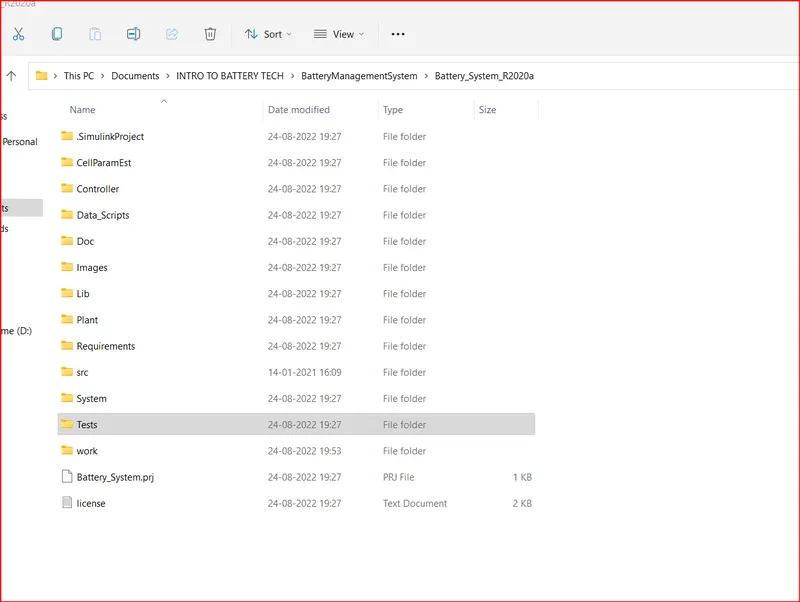
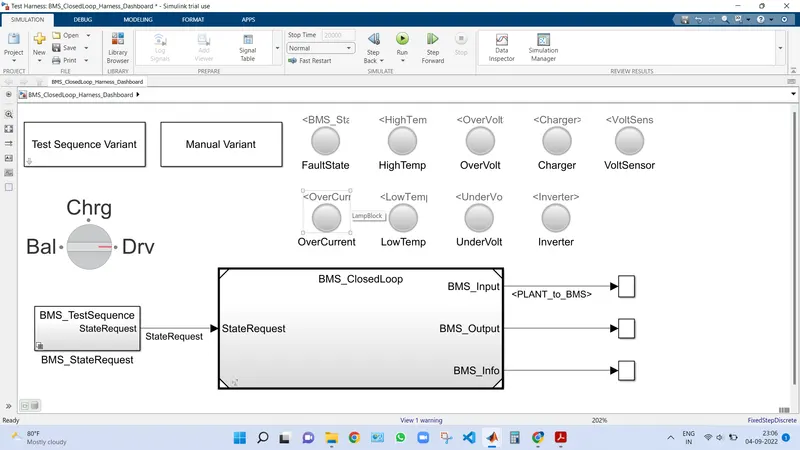
Go to tests>system>BMS_ClosedLoop_Harness_Dashboard.
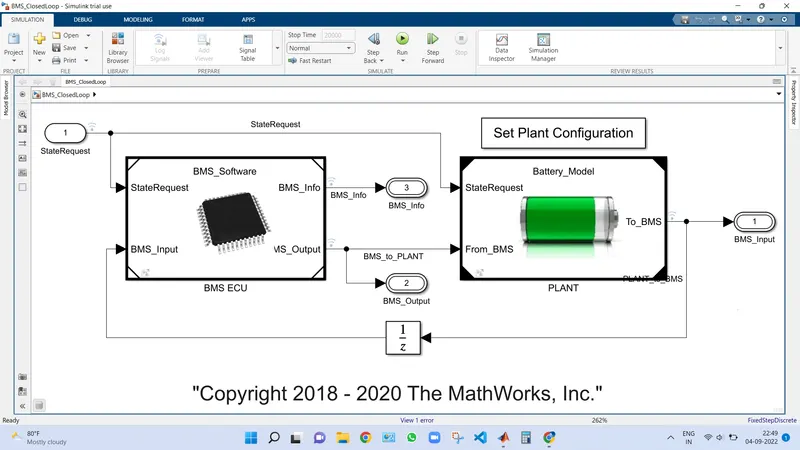
The BMS model consists of a BMS ECU (electrical control unit) and a plant. The control unit with its various monitoring and control algorithms is connected to a block with the representation of the battery pack and associated circuitry and peripherals. This model contains two versions of the battery pack: a small one with just 6 cell series, and a larger 16-module pack, each module containing a 6-cell series string. The architecture is 6s-1p and 96s-1p packs, respectively.
Inside the BMS ECU:
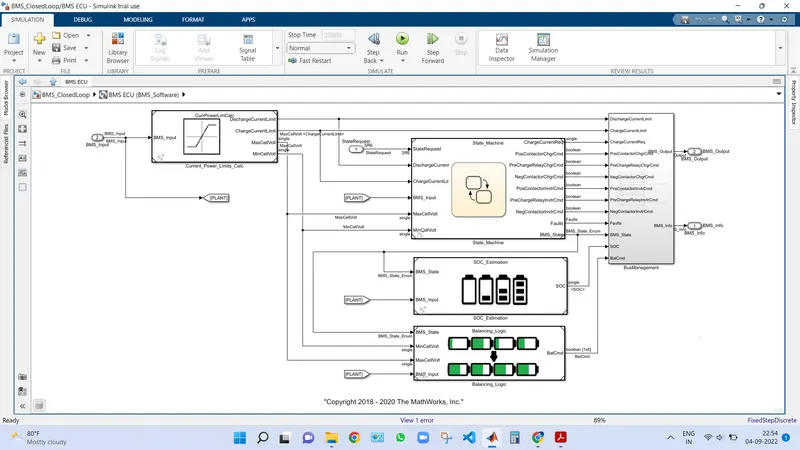
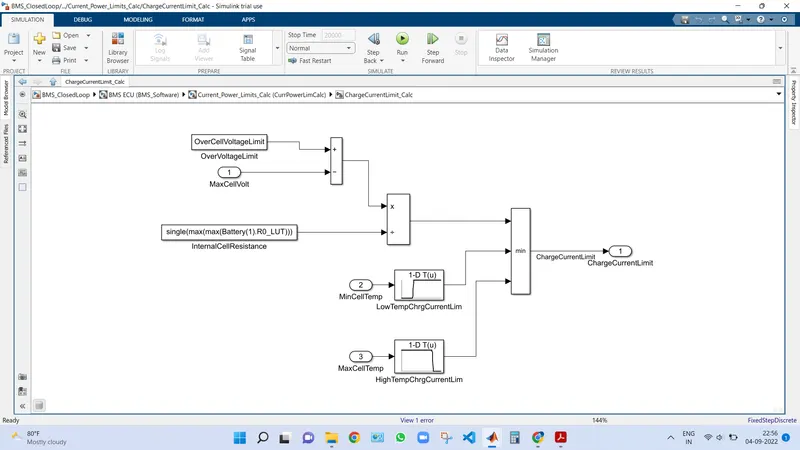
Current power limits calc:
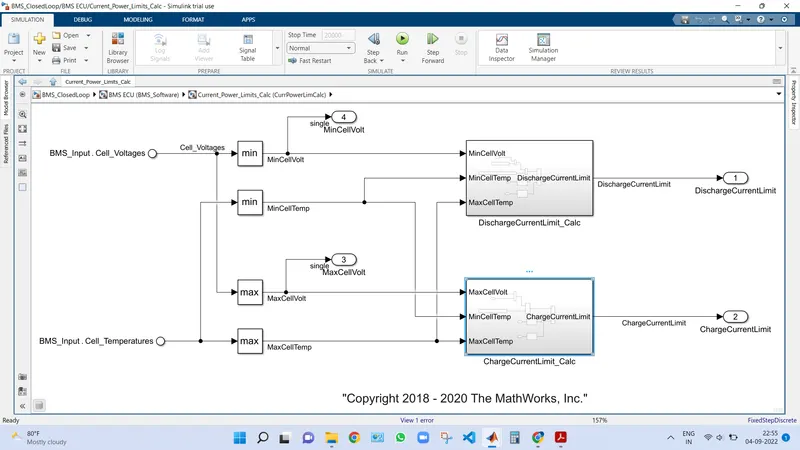
Discharge current limit calc:
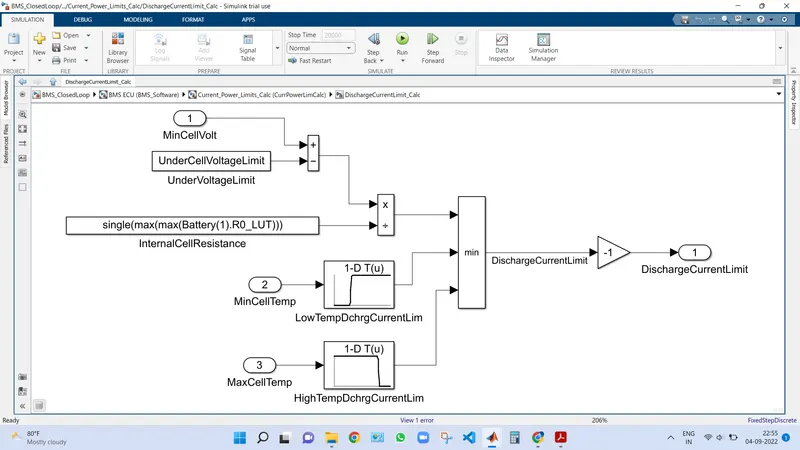
Charge current limit calc:
State machine:
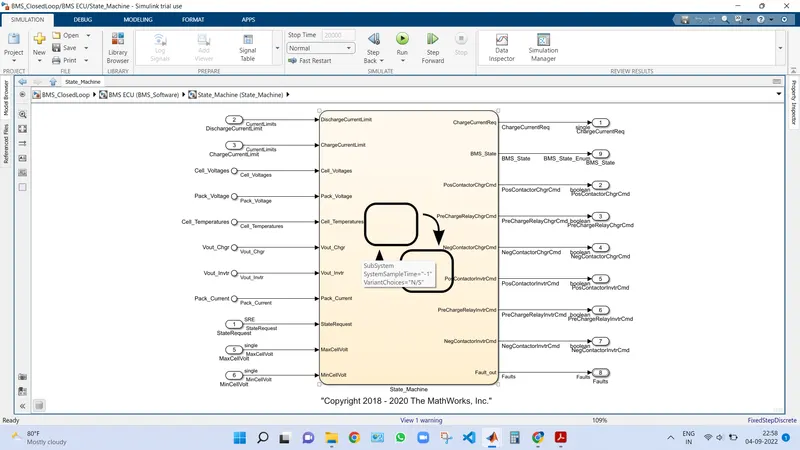
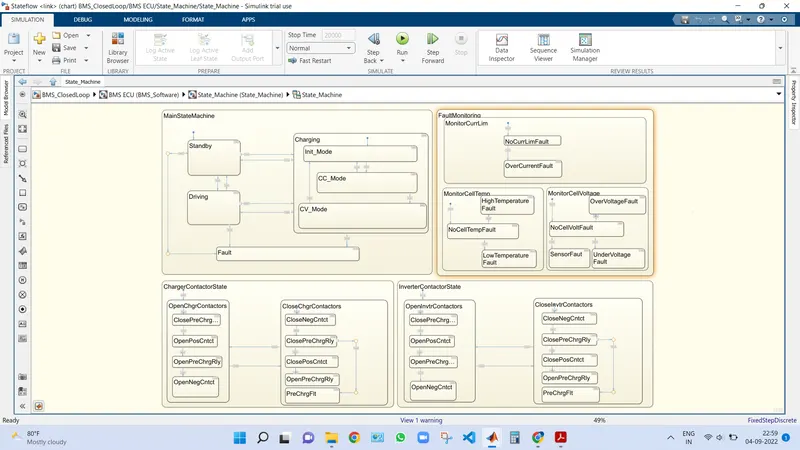
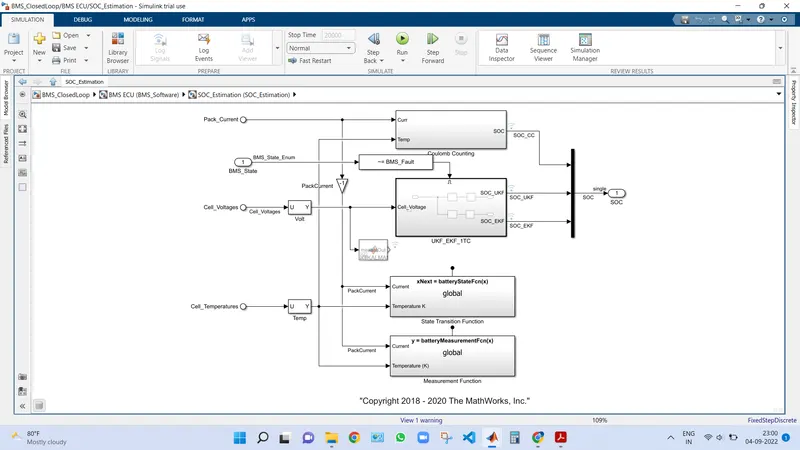
SOC Estimation
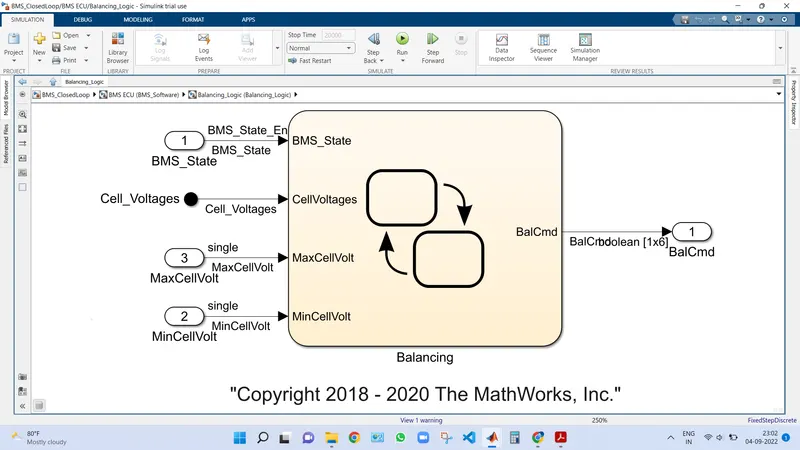
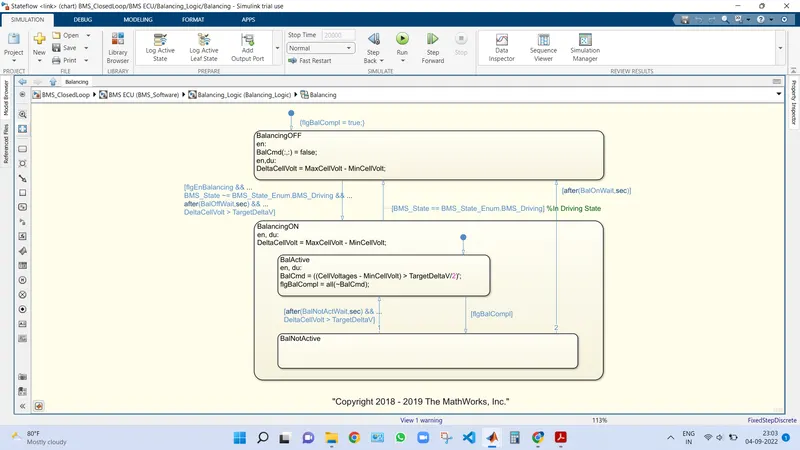
Balancing logic:
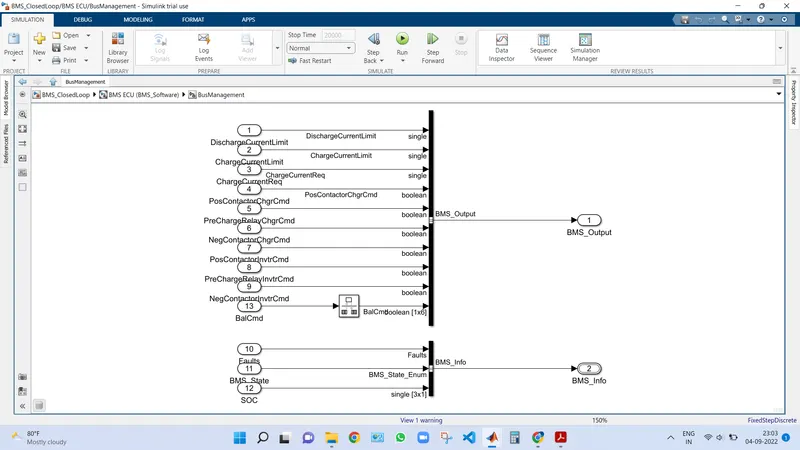
Bus management:
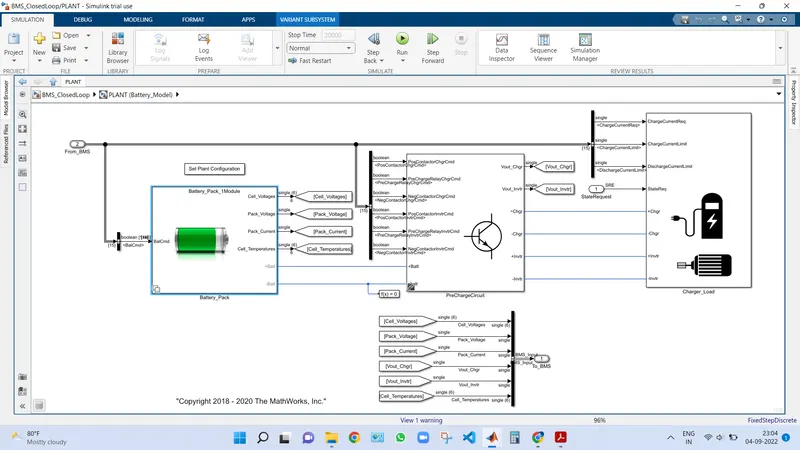
Inside Plant (Battery Model)
BMS Closed loop harness dashboard:
Simulation Results:
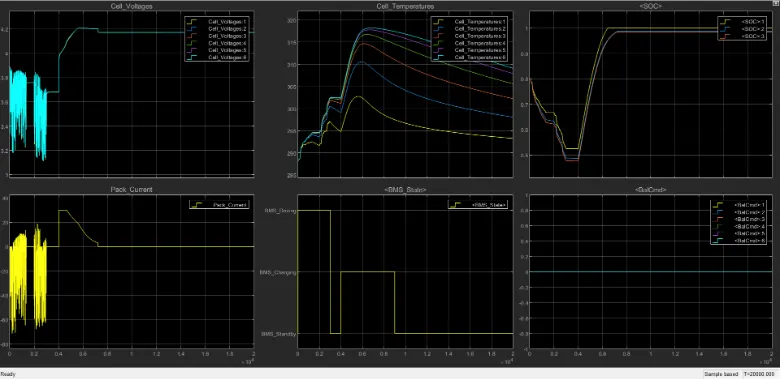
Case 1:
Total runtime of the simulation is 20000 secs.
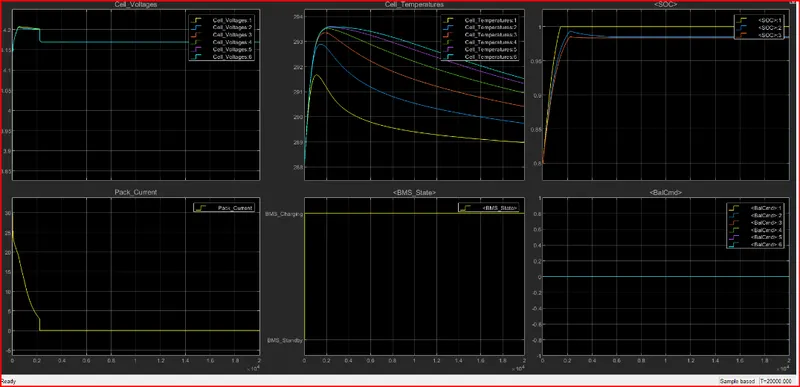
Here the vehicle is driven for 3000 secs then charging and balancing for 1000 secs and the charging up to 5000 secs.
CAse 2:
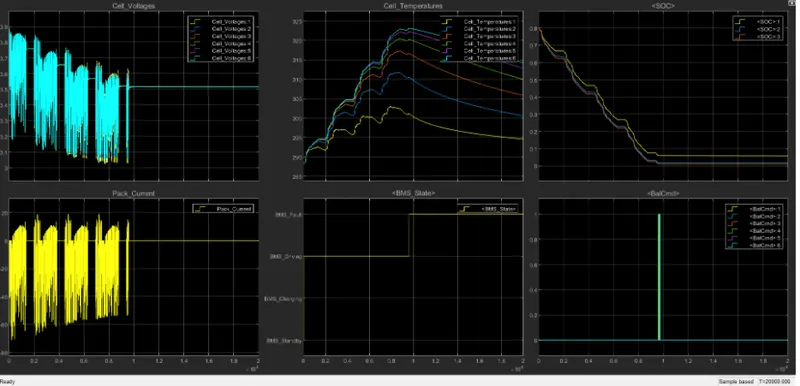
Here vehicle is driven for 10000 secs and then kept for charging but due to the fault condition the vehicle is unable to charge and the soc drops to zero.
Case 3:
Here thevehicle is in the stand by mode and chaging takes place:
2.What is coulomb counting? Refer to the above model and explain how BMS implements coulomb counting for SOC estimation ?
SoC Estimation by Coulomb Counting is based on the measurement of the current and integration of that current over time.
The State of Charge (SoC) of a battery cell is required to maintain it’s safe operation and lifetime during charge, discharge and storage. However, SoC cannot be measured directly and is estimated from other measurements and known parameters. This leads to errors in the estimated SoC and that means it is not possible to fully exploit the full capability of the cell.
Coulomb counting gives a relative change in SoC and not an absolute SoC. If you measure the current over a given time step you have a measure of the number of Ah that have left or been received by the battery.
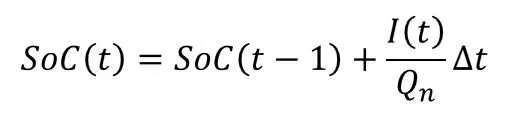
where:
- SoC(t) = estimated State of Charge at time, t
- SoC(t-1) = previous State of Charge at time t-1
- I(t) = charging or discharging current at time, t
- Qn = battery cell capacity
- Δt = time step between t-1 and t
If you want to know the absolute SoC you need to know the starting SoC of the cell, SoC(t-1) as given in the equation. One option is to fully charge the cell to a known voltage. Charging to maximum cell voltage and SoC can be used as a reset and known point.
There are a number of sources of error with the coulomb counting method:
- Starting SoC accuracy
- Current measurement accuracy
- Current integration error
- Uncertainty in battery capacity
- Timing error
In order to define the accuracy you need it is important that you firstly look at what the SoC is used for.
- capacity of the cell that is remaining (fuel gauge on your phone or electric vehicle)
- an input to estimate the available charge and discharge power capability of the battery
- used in the calculation of State of Health
The accuracy required for these values will determine the accuracy that is required for the inputs to the SoC algorithm. This will impact the selection of:
- components for cell voltage measurement
- voltage sense wires, connectors and connection locations
- current sensor or sensors
- voltage and current measurement channel accuracy
- timing circuit
SOC Estimation
SOC EStimation using coloumb counting:
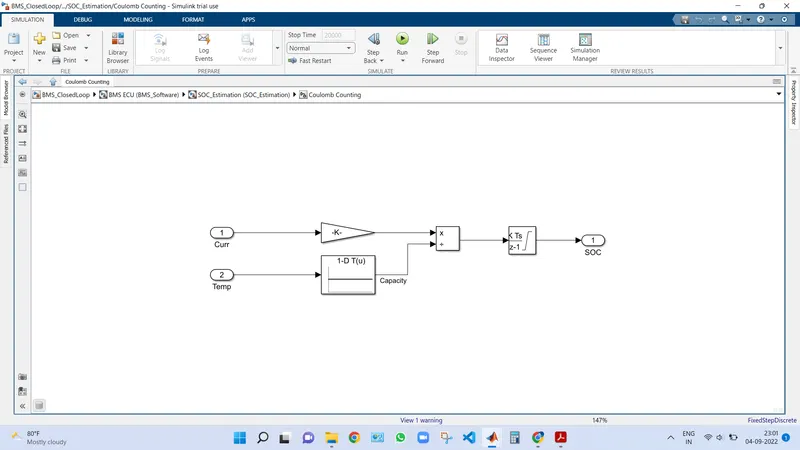
Here the value of the instant current is taken and divided by the overall capacity of the battery at that particular temperature and the resultant value is integrated over time to get the charge which is ultimately used to determine the soc.