Week 7 State of charge estimation
1.Simulate the 3 test cases from harness dashboard and write a detailed report on the results
he lithium-ion batteries can be used only in specified conditions, and therefore battery management system (BMS) is necessary in order to monitor battery state and ensure safety of operation. The different BMS structures have been compared and their advantages have been shown depending on battery system size. Moreover, typical functions of BMS have been described with special attention to state of charge (SoC) estimation. Advantages and drawbacks of various estimation methods have been introduced that help a BMS user with understanding when a SoC indication might be misleading.
A Battery Management System AKA BMS monitors and regulates internal operational parameters, i.e. temperature, voltage and current during charging and discharging of the battery.
In technical terms, the BMS estimates the STATE OF CHARGE and SoH (State of Health) of the battery to improve safety and performance.
It avoids over-charging and over-discharging of the BATTERY PACK . This way, it maintains charge level within maximum and minimum allowed capacity to prevent sudden accidents [explosion].
Hence a BMS is a highly crucial device to ensure the safety of the battery and user.
There are many other benefits of using BMS; we will discuss them later in this article.
A BMS is an electronic board consisting of a variety of components and circuitry. After detecting a problem in operational parameters (voltage, temperature etc.) BMS triggers input to the alarm system followed by disconnecting the battery pack from the load or charger
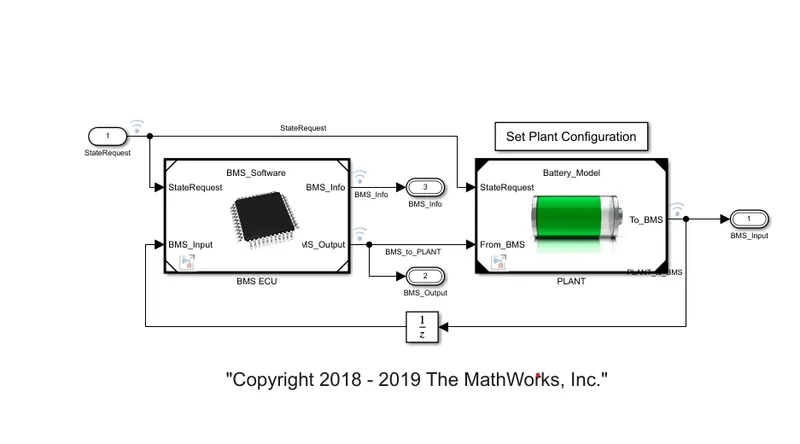
Battery management system is the model shown above
this model represents a battery pack
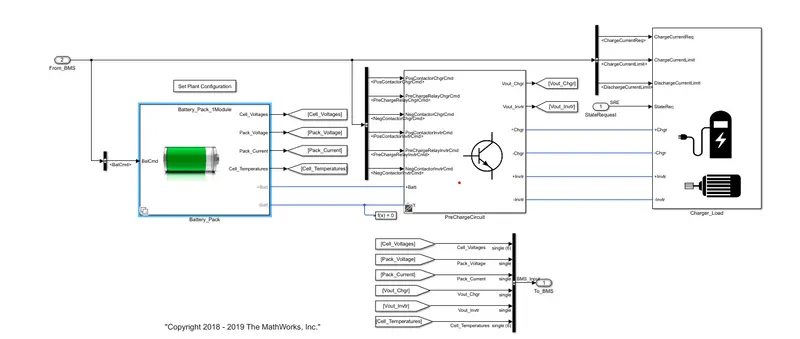
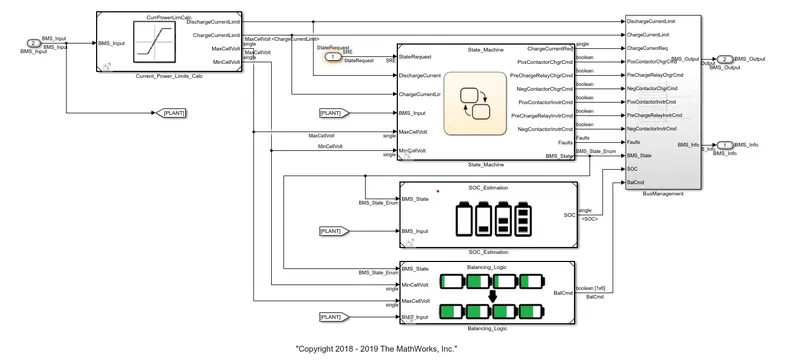
All the led blocks here shows all the parameters of the battery ,like balancing,charging, driving etc.
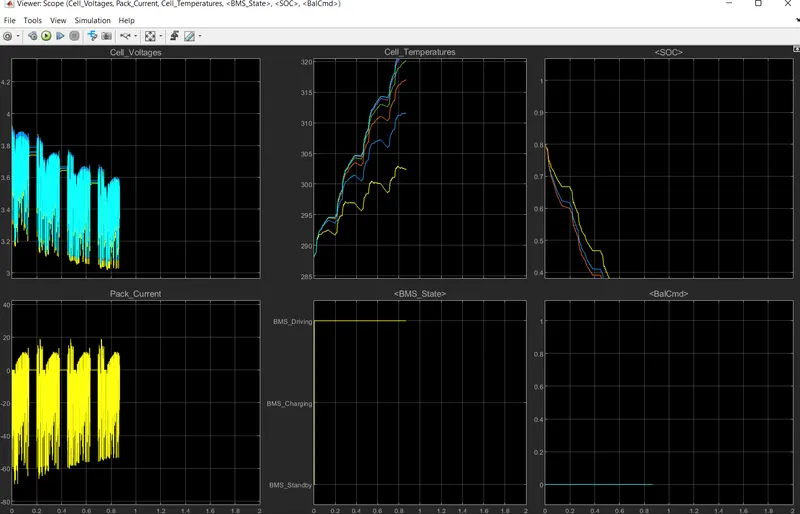
for our model we have 3 test sequences so we need to select the sequence note down the output accordingly
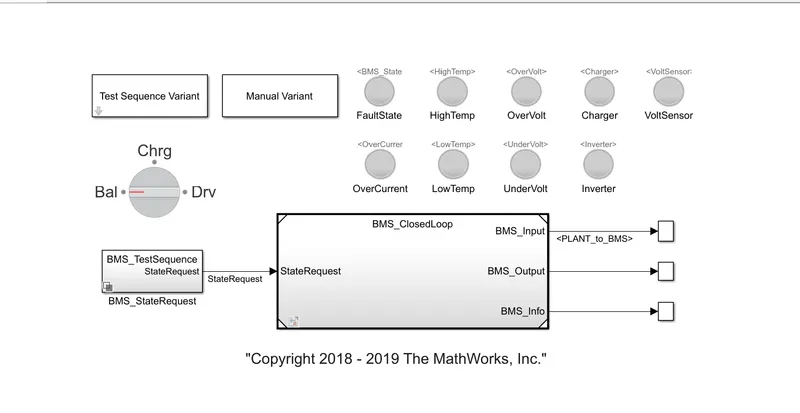
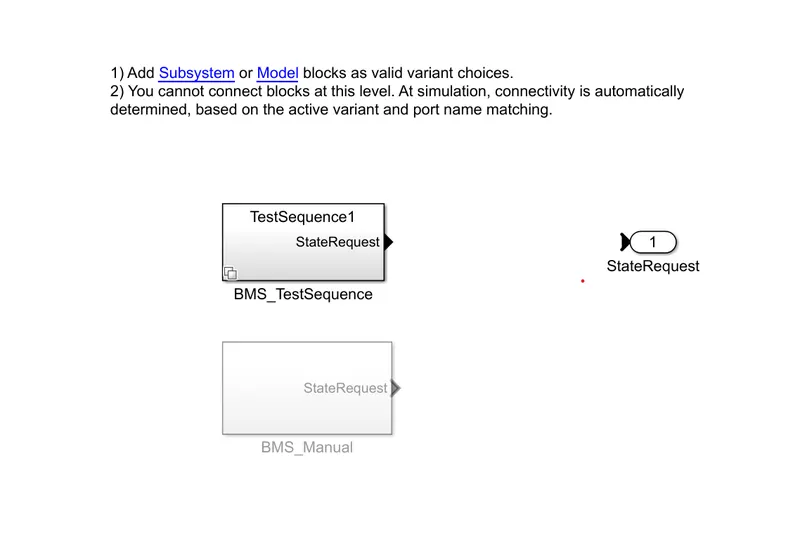
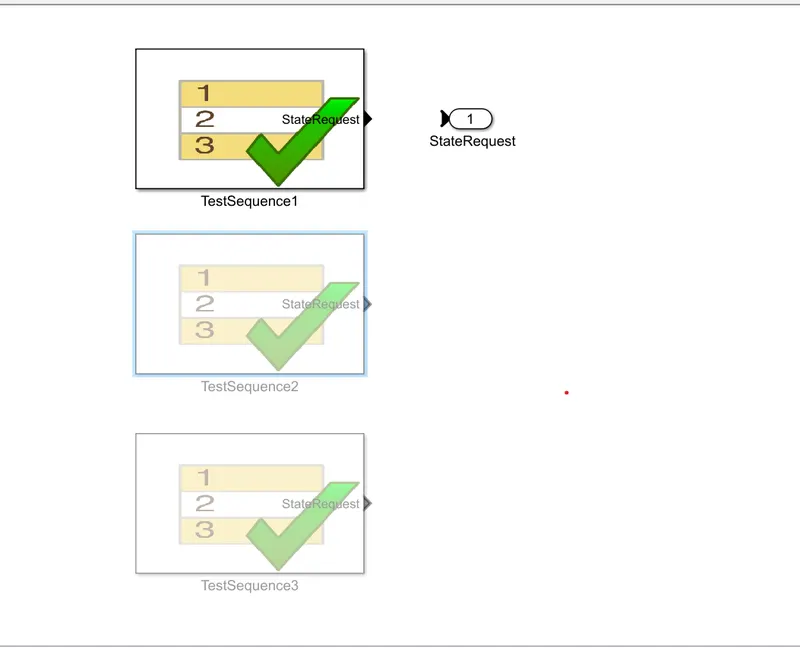
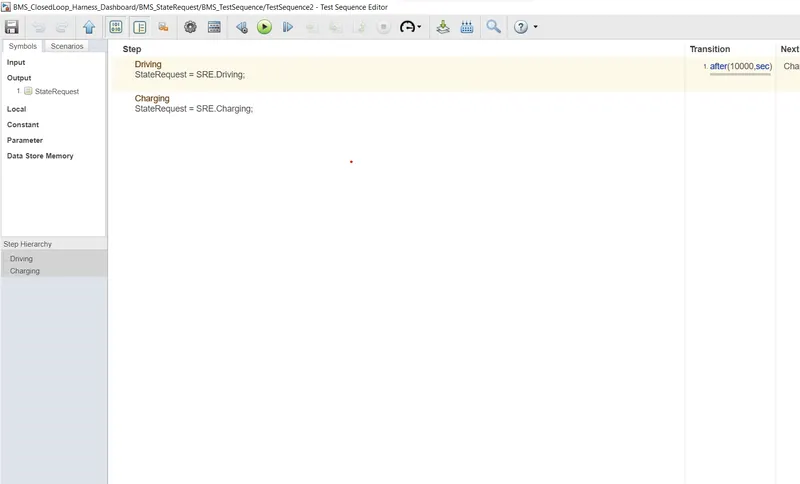
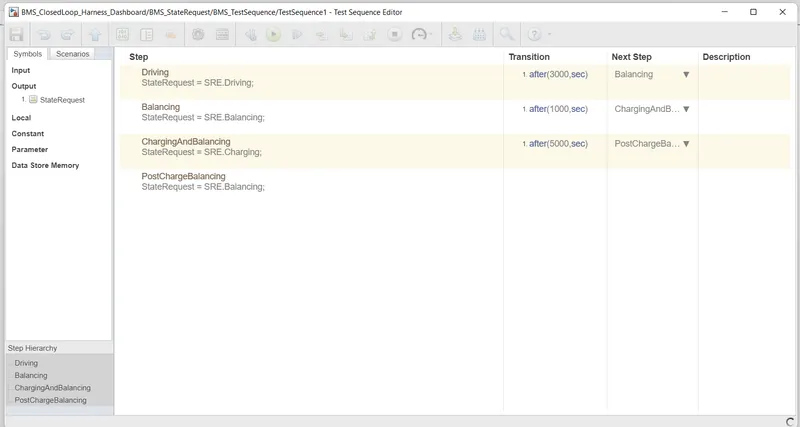
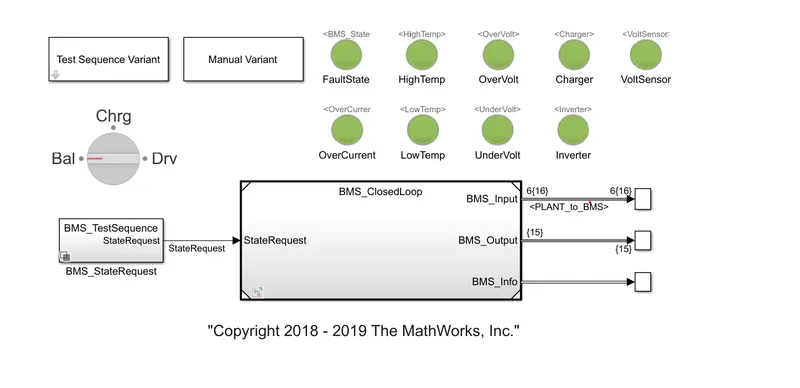
following is the test case 1
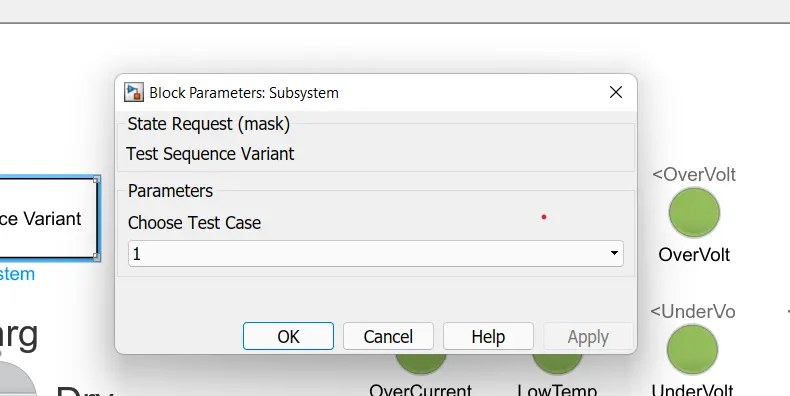
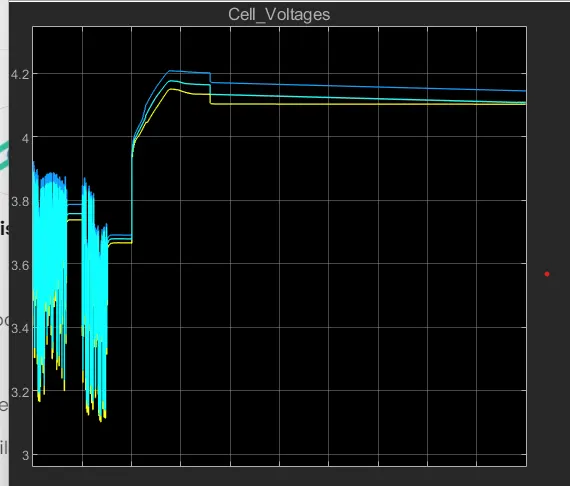
results of case 1-balancing-charging-balancing
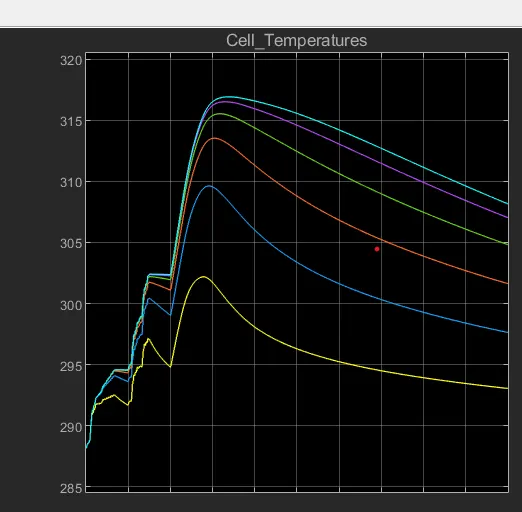
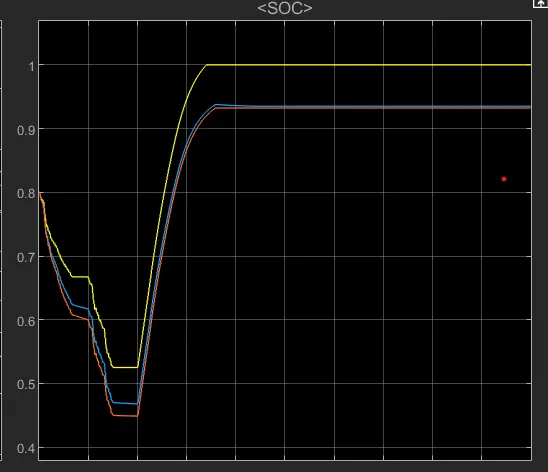
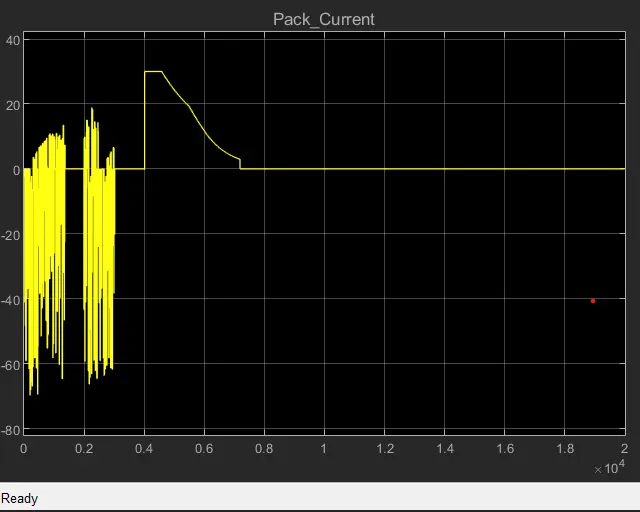
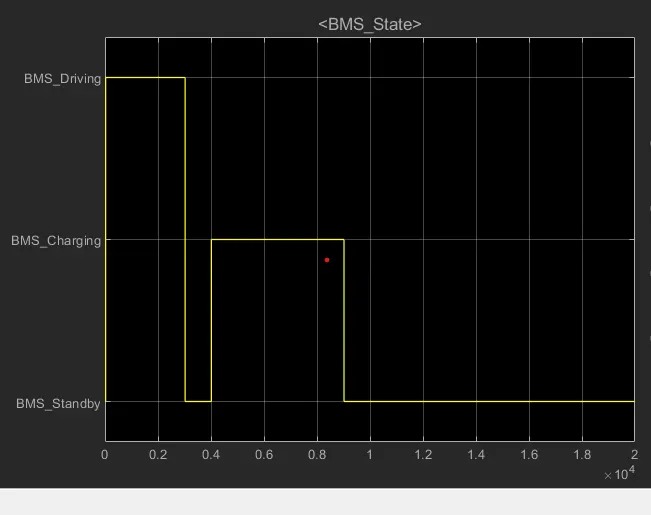
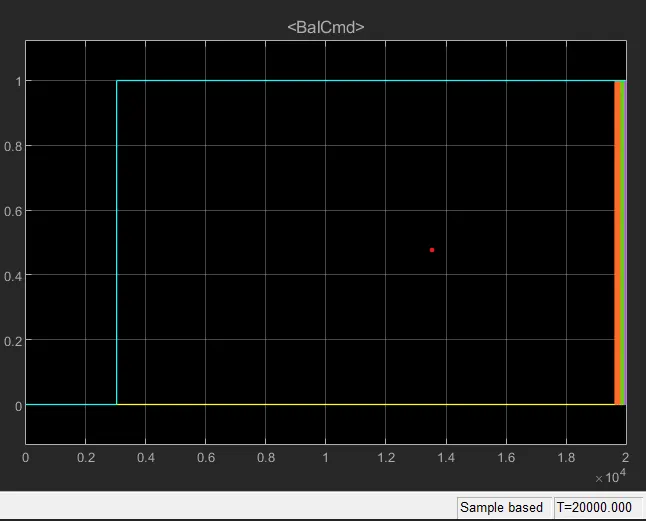
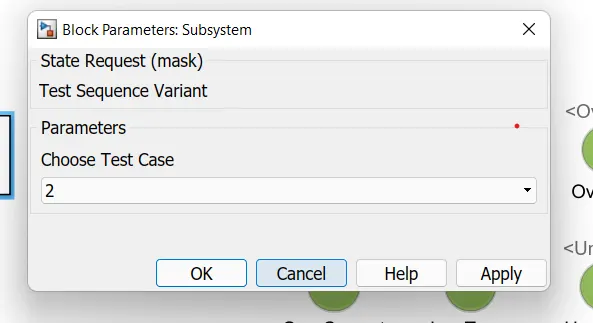
for test case 2 results -drive charge
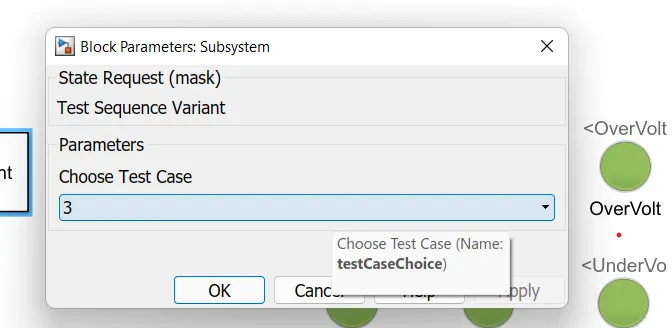
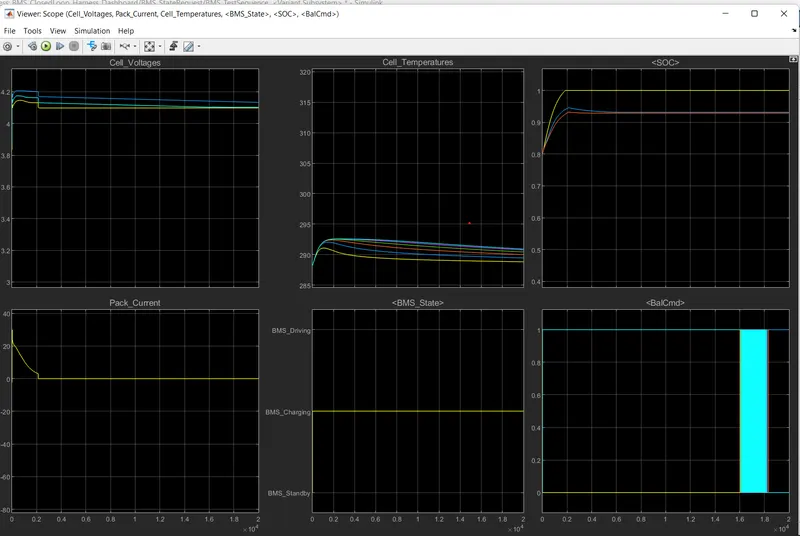
for test case 3-charging
The ‘coulomb counting’ or CoulCount method was developed by Schmitt l. as a heuristic method, although the underlying theory is reasonably accessible. It depends on the recording of the current noise only. The signal is filtered with a high-pass filter with a cut-off frequency of 0.01 Hz. The filter may be either analogue (although the implementation of a good-quality 0.01 Hz analogue filter is difficult) or digital. The absolute value of the measured current samples is then summed over time. A steep slope is taken as an indication of rapid corrosion, although it is not possible to calibrate this in terms of an estimated corrosion rate.
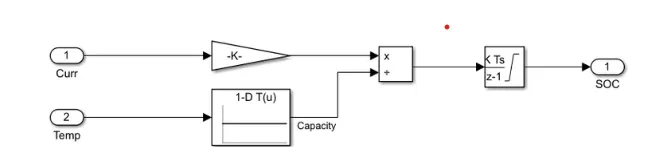
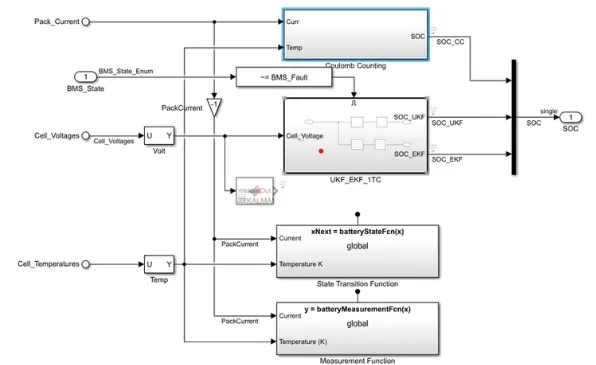
FROM coloumb countuing soc can be calculated
tempreture and current are given as inputs for coloumb counting.
current signals given to gain block
input are integrated and currrent is integrated wrt to time
this output is didvided by capacity and soc is calculated.