Week 7 State of charge estimation
AIM:- To simulate the 3 test cases from the harness dashboard
EXPLANATION:-
1. We need to first go to the dashboard which has various determining parameters like over-voltage, high temperature, over-current, low voltage, inverter, and finally a fault state dashboard.
The green light indicates that there are no errors detected in the particular domain unless it appears to be red.
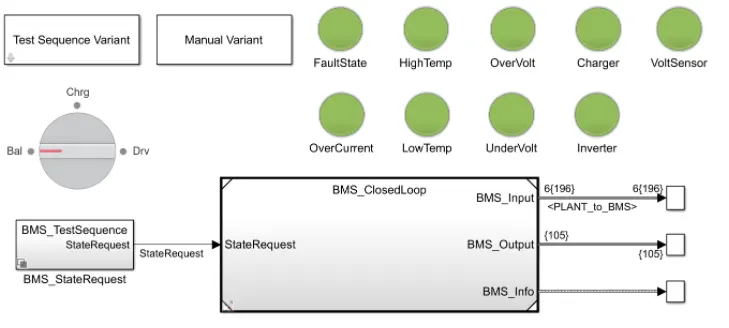
2. Now we go and open up the BMS test sequence and select the first test case and then the program is run. just like the picture given below.
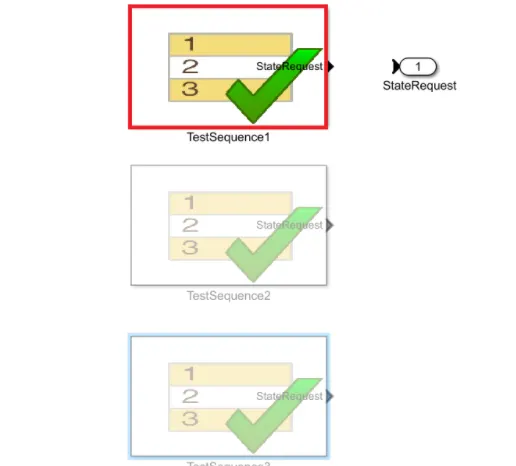
3. There name three stages in the program namely driving, charging, balancing, and stand-by. Driving indicates that the vehicle is in motion, charging indicates that the SOC of the vehicle is increasing over time. Balancing is the period where cells are being balanced, and it's on stand-by when it's in rest position.
4. We hereby simulate the test results of the first test case.
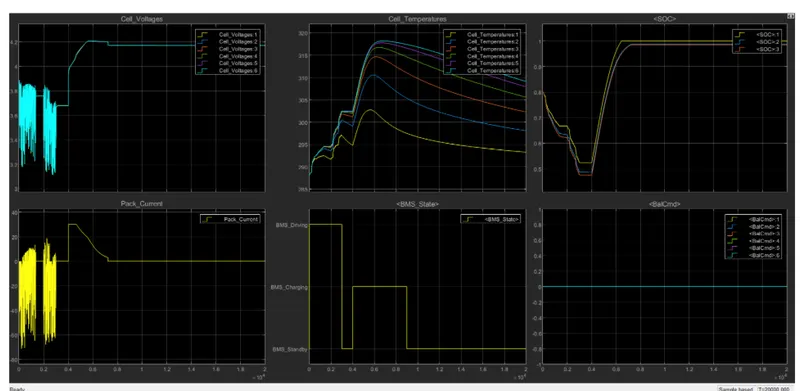
5. The results and the dashboard showcase that there are no faults observed in the test sequence 1 run. The vehicle is in a driving state for first 3000 seconds and then goes for a resting state for 1000 seconds. The vehicle is charged up to 9000 seconds and the vehicle is at complete rest. The six graphs depict it perfectly.
6. Now we run the second test simulation. and detect whether there are any faults present in it or not.
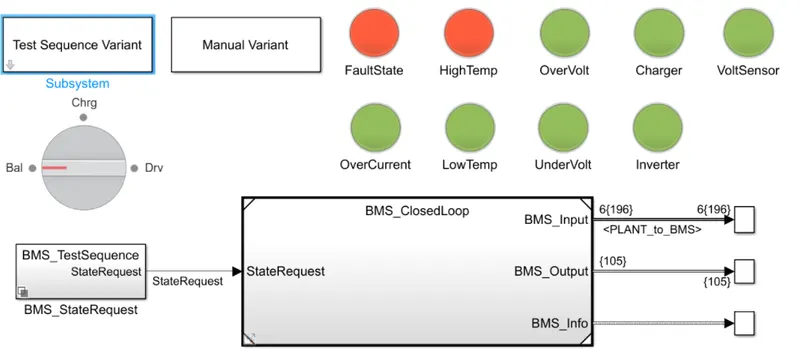
7. As you can see in the dashboard, a fault has been detected, the red light indicates that overheating has been detected in the battery pack, so we need to now analyze what seems to be the problem.
8. This driving sequence has only two modes, that's driving and charging
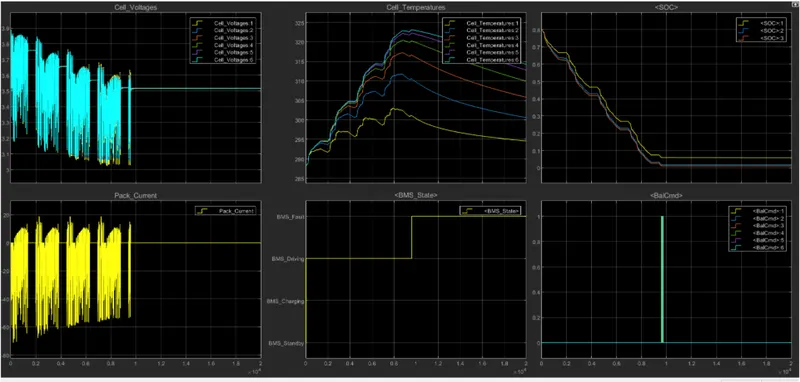
9. As one can observe the error is detected after 10,000 seconds when the vehicle is in charging mode. Same reason why the SOC of the battery doesn't increase.
10. Now we shall go back to the dashboard and choose the third test sequence, this sequence has only one mode and that is the charging mode.
11. As you can see, there is no fault observed and so now we shall check the scope to observe how successfully is our program running.
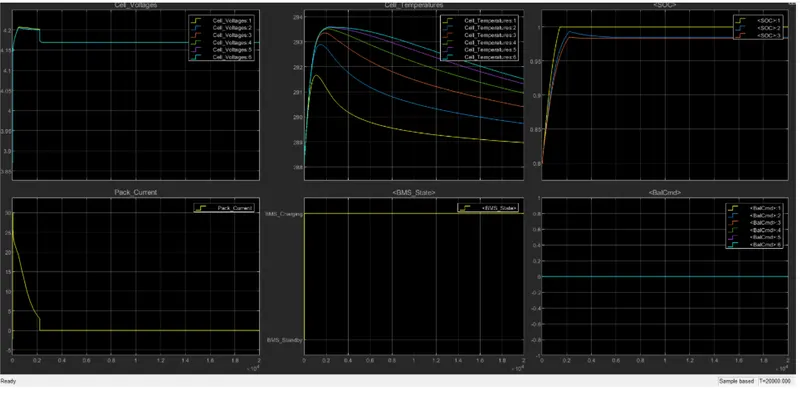
12. The only operation observed here is charging and hence the SOC graph just keeps increasing over time for different cells.
Coulomb counting:-
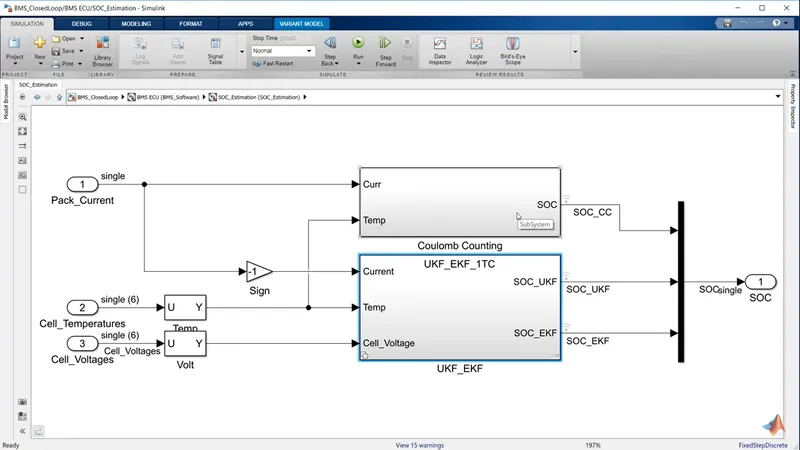
It is one of the primitive methods in the state of charge estimation. The prime objective of this method is to keep the track of current flowing and later integrate the sum of it to calculate the total energy that's flown through the battery. below is the state of charge estimator block
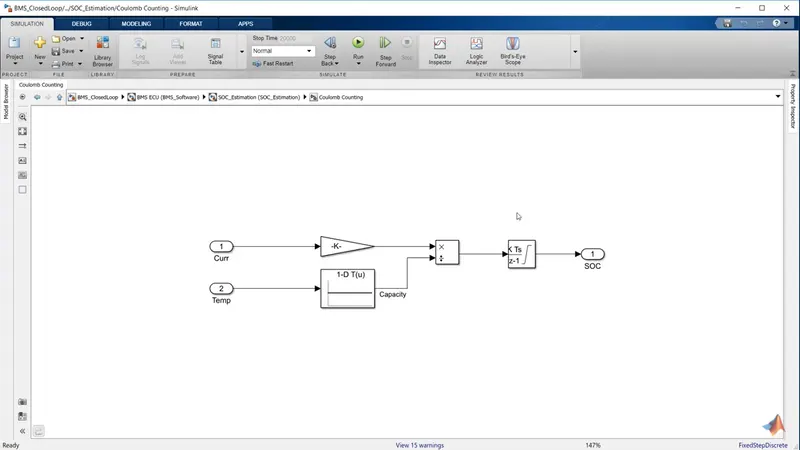
Below here is the coulomb counting block
Explanation
The coulomb counting block consists of an integrator block that keeps track of the current that enters and leaves the cell to keep track of the safe charge over time. It is simple in construction but it is equally inefficient compared to its other compatriots. The accumulation of current sensor error and its ability to recover from wrong initial conditions are few of the drawbacks