Week 7 State of charge estimation
Coulomb counting:
This is a methode that is used to calculate the discharge current over the battery . thus using this methode the SOC can also be calculated over the time . the below equation is used to calculate the SOC :-
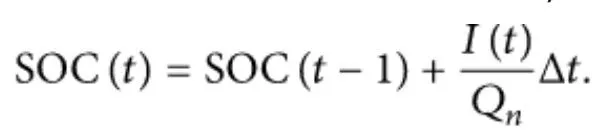
This methode can also be modified to use the live current values to estimate SOC and discharge currents more dynamically.

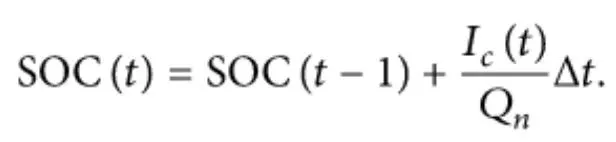
k is obtained expirementally and are constsnts.
the factors that effect Coulomb counting:-
- temperature
-battery history
- battery life cycle
- discharge current
The example model downloaded has an BMS system which uses the columb counting equations and methode which is observed for better understanding.
- the methode is relatively simple and uses very simple equations for computation.
- it simplicity reduces the computational time and costs.
- the temperature and the battery current are required as imputs.
- The current and temperature are given to gain and capacitance blocks as the performance varies with temperature.
- the SOC is estimated by integrating over the time.
- operational conditions
Errors in model:-
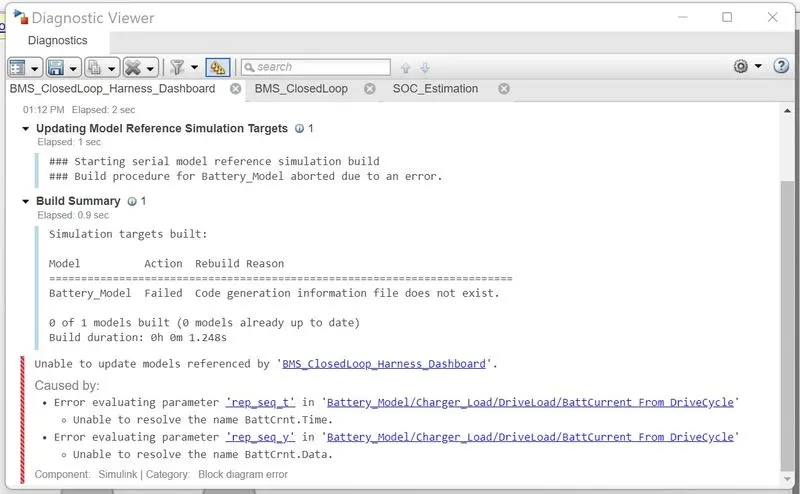
- First the error was caused due to the file loaction not being properly intrepreted.
- The sub models and data required for the calculation was unable to open and the each sub file required for battery calculations needed to be run seperately.
- there was alos a connection missing in the SOC_estimation block. and the batterycapd.time and .out files were not being loaded.
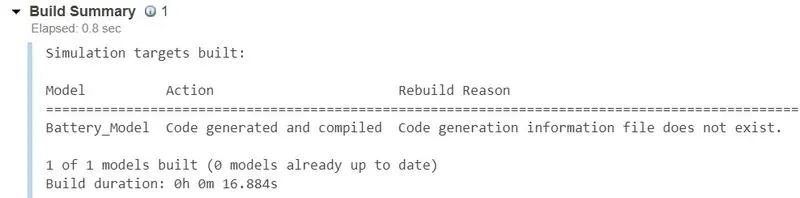
- running the reference models and doing the above fixed the problem .

Test Case 1:-
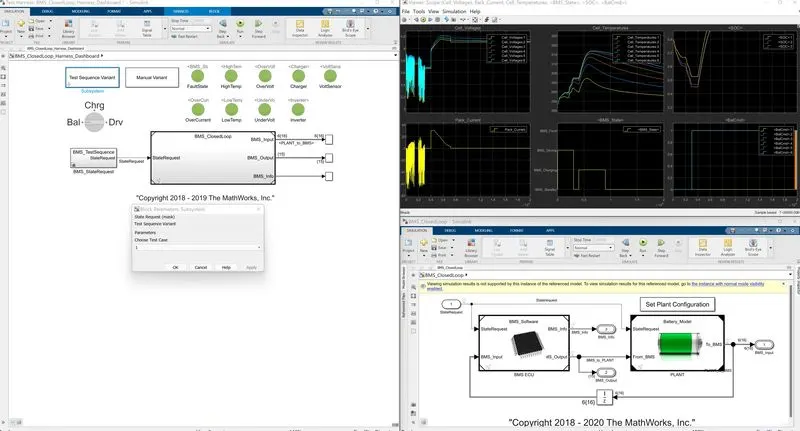
The model is set in such a way that the first 3000S the model is in a driving mode and charge depiliation occurs. over the next 1000S the model shifts to a charging mode.
the charts can be viewed using the BMS sequencing block .
Results 1`:-
As the first thing we can see that all the indicators are green. this indicates the most optimal functioning without any erroes.
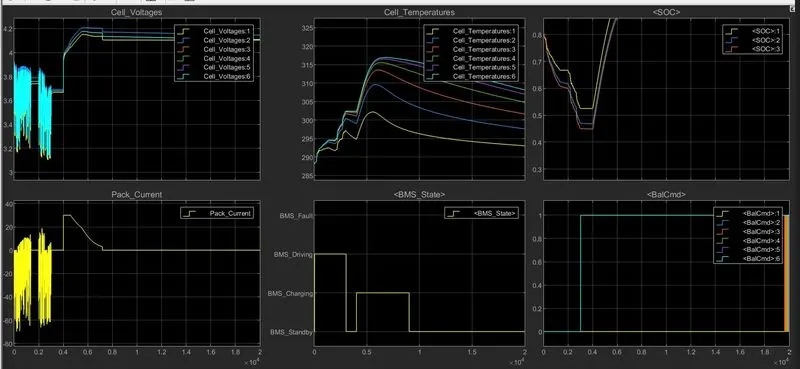
from the plots it can be observed that the vehicle initially is in driving state for the first 3000s after which it shifts to a charging stste for the next 1000S. the charging is done till the battery levels reach 90% after which it enters into a standby mode. this helps preserve and protect the battery . the battery temperature as its in use increases , from the plote we observe that the temperature first rises up and then is maintained. the cell voltage is raised up to 4.2 V and the SOC value is not dropped under 50%.
Test Case 2:-
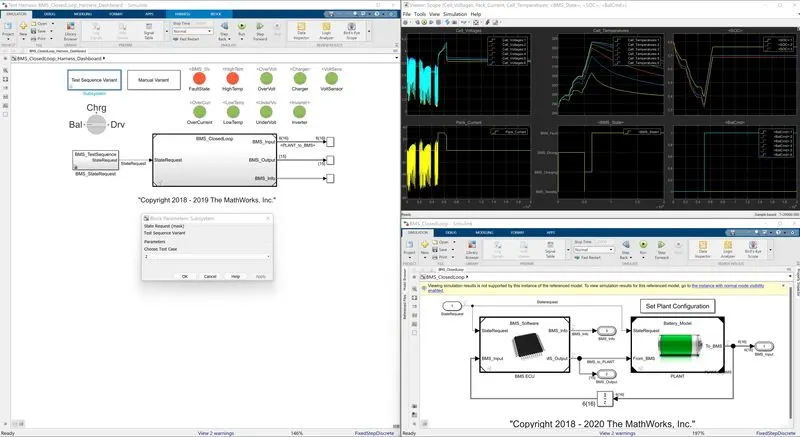
In this case the model is set to run for 10000s . and is set for a charging condition
Result 2:-
from the model we notice that some error has occured at BMS and the Thermal Sensors.
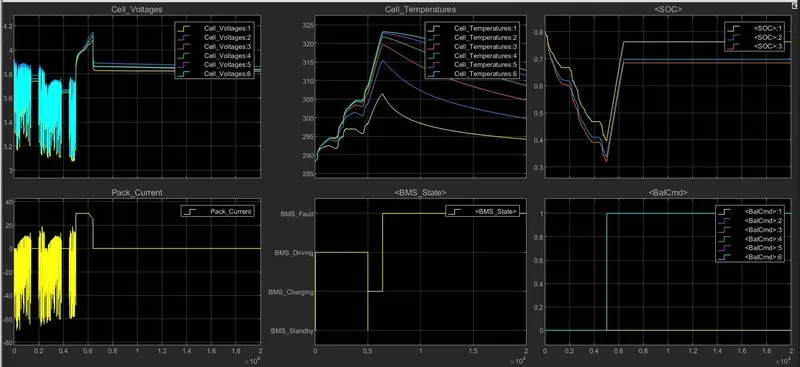
from the graphs we can obsere that although charging is going on the SOC levels seemingly decrease. The BMS first tries to stay in the driving cycle but changes to a faulty condition. and the cell temperatures also quickly raise and the BMS state changes to fault, the temperature starts to drop . the balance current and SO also stay neutral at roughly 500s.
Test case 3:-
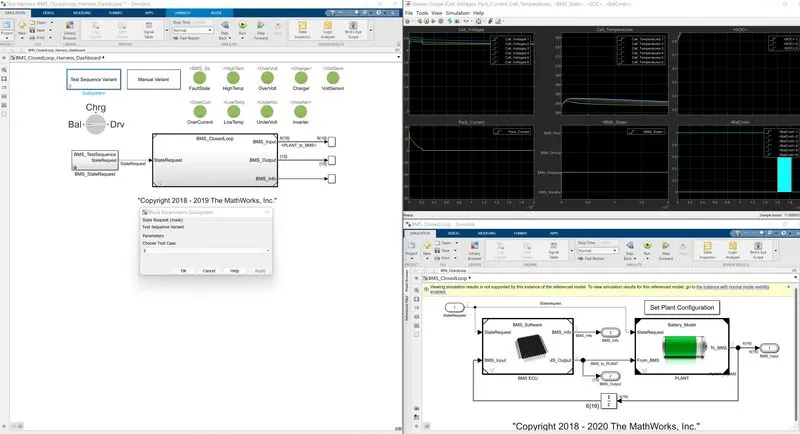
This too only has one phose which is charging and lasts for 0 to 20000s We can see that the simulation runs perfectly without errors.
Results:-
In this we notice that the charging starts at 80% SOC and the charging to 100% is completed within 2000s .
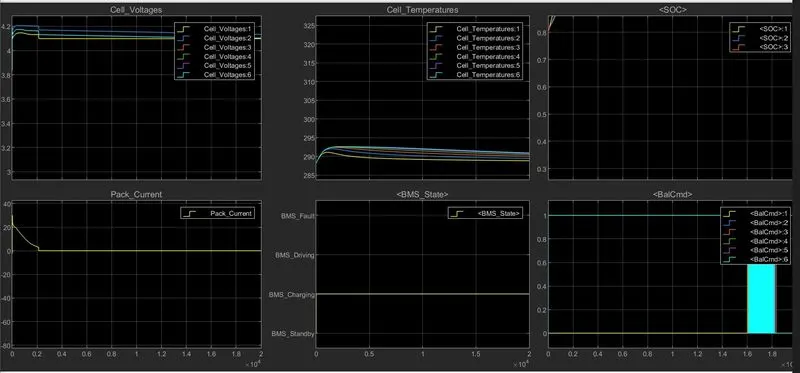
After which the values drop to the constant values and remain there for the remaining duration. If compared with the above two we notice that the temperature curves are maintained to be more stable and the charging cycle is initated from the begining. the battery reaches full charge under 1000s and the back current drps to 0. the voltage is maintained at a stable 4.1 to 4.2 volts.
We can say that the EV battery packs hafto be carefully managed for proper functioning and safety.
No files are attached as all required files can be downloaded from the data sheet mentioned with the problem .