Week 7 State of charge estimation
OBJECTIVE
1.Simulate the 3 test cases from harness dashboard and write a detailed report on the results
2.What is coulomb counting? Refer to the above model and explain how BMS implements coulomb counting for SOC estimation ?
SOLUTION
Q.Simulate the 3 test cases from harness dashboard and write a detailed report on the results
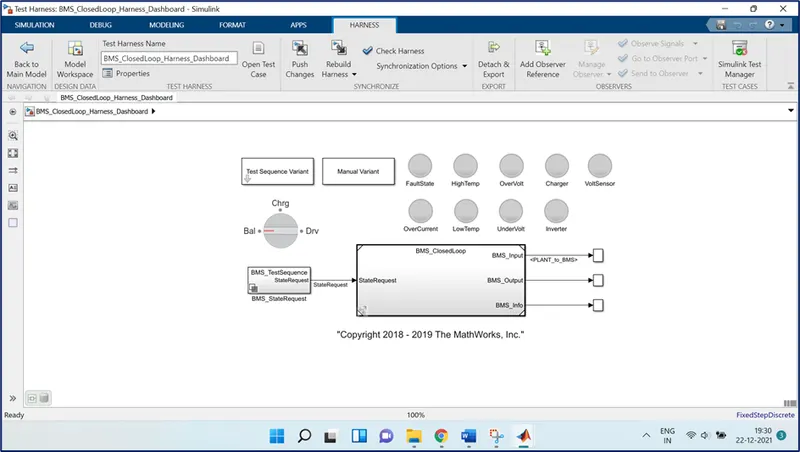
- The closed loop harness dashboard model by mathworks is downloaded from the provided link, and is run for 3 different test cases.
- For each test case, the test sequence has to be chosen (thus 3 sequences for 3 test cases).
CASE-1:
OBSERVATION
- The first variant is selected for simulation.
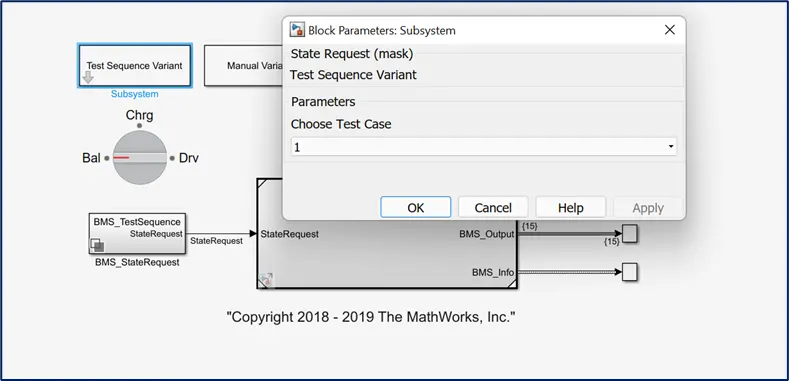
- The test variation shows that initially it will be in driving condition.
- After 3000 seconds, it will be in balancing mode.
- After 1000 seconds, it will be in charging and balancing mode.
- After 5000 seconds, it will be in post charging balancing mode.
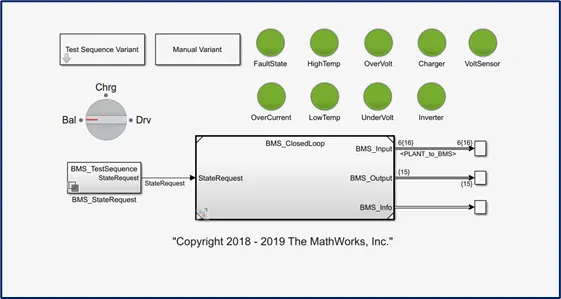
- On completion, we see the harness dashboard parameters are in green, thus stating that there is no error in the model.
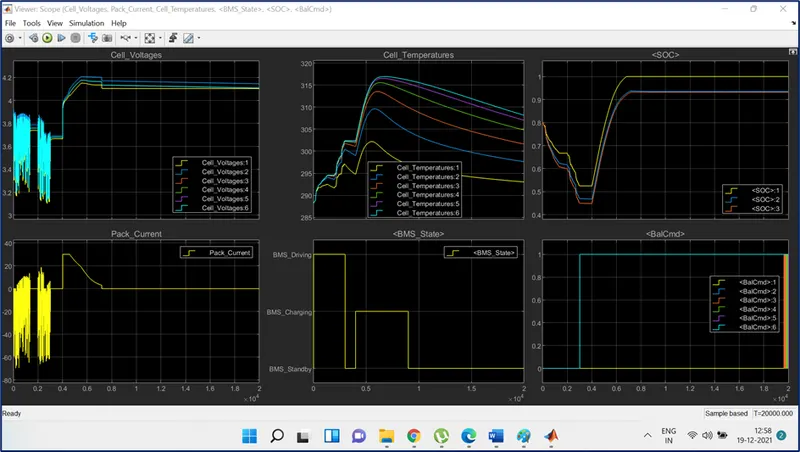
- Vehicle is initially under charging state till 90%.
- Next, the battery goes into standby mode as seen from the graph.
- But the temperature of cells rise while it's being driven and charging.
- Due to the same the voltage rises to 4.2V and the current graph has been plot.
- In all, the SOC drops to 50% in the same driving condition, which indeed has increased during the charge.
CONCLUSION
- In the first case, the three conditions were simulated (driving, charging & stable state).
- Hence, the charging and discharging were observed.
- At the end, 100% SOC was seen which states that the vehicle was under standby.
CASE-2:
OBSERVATION
- The second variant is selected for simulation.
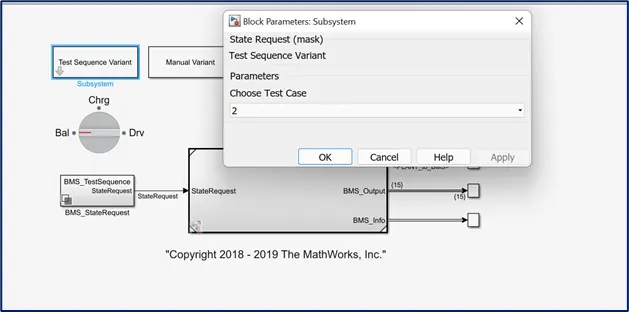
- On completion, we see the harness dashboard parameters are in green, thus stating that there is no error in the model.
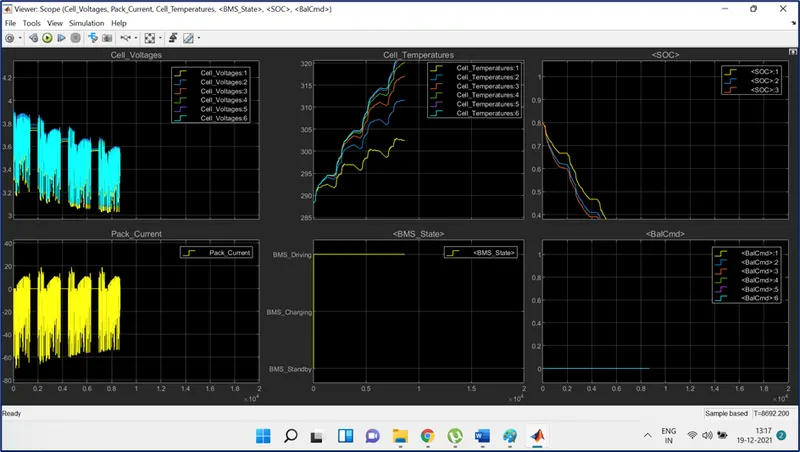
- Initially, it is in the driving condition.
- After 10,000 seconds it undergoes charging.
- But it gets completely discharged at 8692 seconds and the vehicle stops there itself.
- Therefore simulation stops midway.
CONCLUSION
- In the second case, it was about discharging.
- The SOC dropped to 0 in the midway, i.e, 8600 seconds.
- Thus, charging state was not achieved at 10,000 seconds.
CASE-3:
OBSERVATION
- The third variant is selected for simulation.
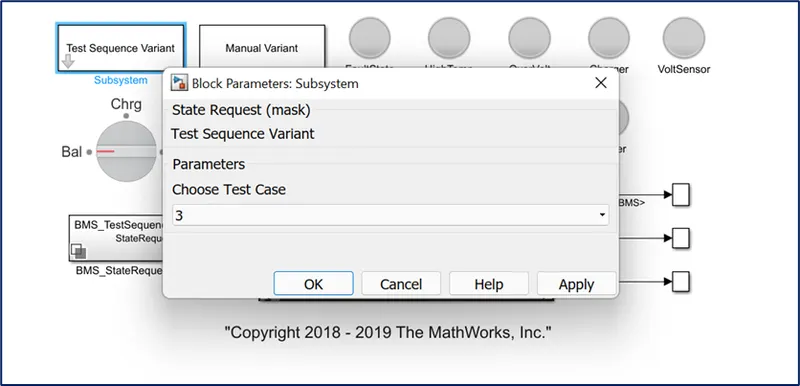
- On completion, we see the harness dashboard parameters are in green, thus stating that there is no error in the model.
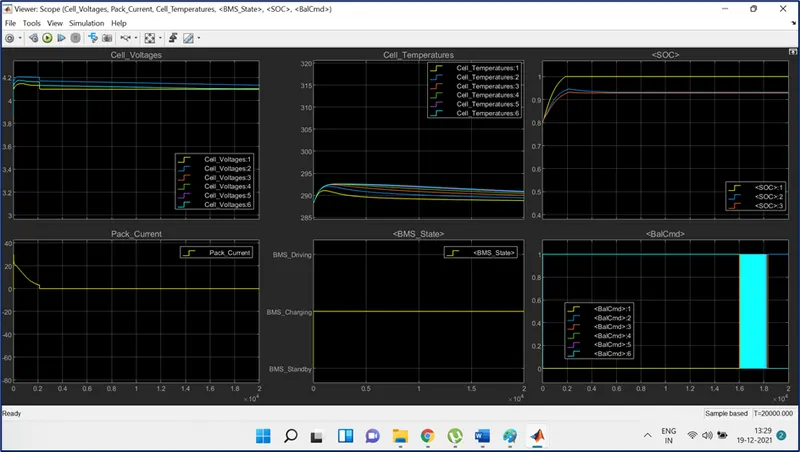
- This is the continous charging condition from the beginning till the completion of 20,000 seconds of simulation.
- We notice from the plot that the battery starts charging and the SOC starts increasing till the end
- Thus, stays stable at 100% from 2000 seconds upto 20,000 seconds.
- Peak current plot drops from 0 to 2000 seconds and stays constant.
CONCLUSION
- In the third case, it was about charging.
- The charging was observed for first 2000 seconds.
- SOC remained at 100% for the next 18,000 seconds.
Q.What is coulomb counting? Refer to the above model and explain how BMS implements coulomb counting for SOC estimation ?
COULOMB COUNTING METHOD
- Coulomb counting method measures the discharging current of a battery and integreates the discharging current over time inorder to estimate the SOC.
- Mathematically,
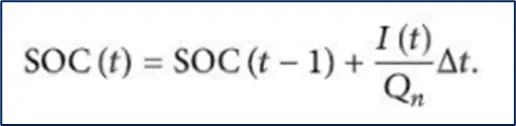
- There are several other factors that affects the accuracy of coulomb counting method including temperature, battey history, discharge current, and cycle life.
MODIFIED COULOMB COUNTING METHOD
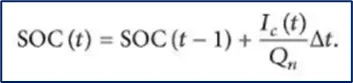
- This uses corrected current to improve the accuracy of estimation.
- The corrected current is the function of the discharging current itself.
- We can say, it is the quadratic relationship between the corrected current and discharge current.
- Mathematically,
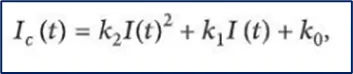
where k0,k1,k2 are constants obtained from experimental data. - Thereofe the modified mathematical equation is as follows,
As per the question, yes BMS implements coulomb counting for SOC estimation. For that we have to break BMS closed loop model into low level design.
Level-1
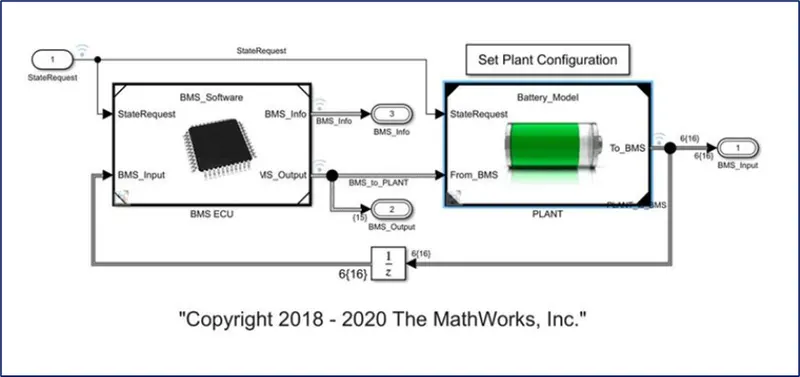
Level-2: we have to go into BMS ECU
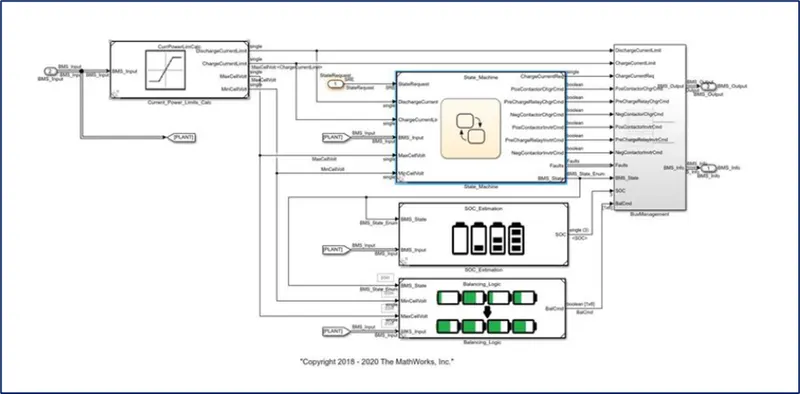
Level-3: Going into SOC estimation block, here we can find the coulomb counting block
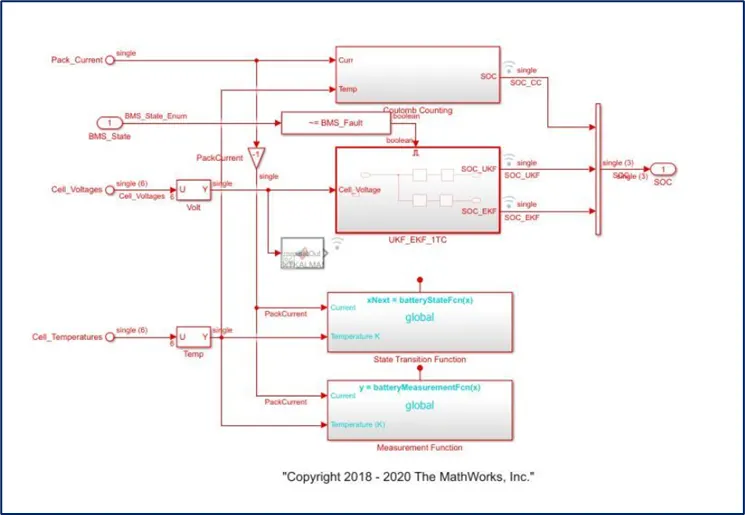
- The added advantage of coulomb counting is that it's low computation cost.
- Inputs (temperature and current) are taken from the battery
- The current signal signal is given to the gain block
- The temperature is given to the capacity
- These are given further for integration of current wrt time.
- Output of the same is provided to another block as input that is further divided by capacity
- Thus, SOC is estimated.