Week 7: Shock tube simulation project
Introduction
Shock Tube
Shock tubes are devices for studying the flow of high-temperature and high-velocity compressible gas.
A high-temperature supersonic gas flow is initiated in a shock tube as a result of rupture of a diaphragm separating two gases in high-pressure and low-pressure chambers.
The shock tube is an instrument used to replicate and direct blast waves at a sensor or a model in order to simulate actual explosions and their effects, usually on a smaller scale. Shock tubes (and related impulse facilities such as shock tunnels, expansion tubes, and expansion tunnels) can also be used to study aerodynamic flow under a wide range of temperatures and pressures that are difficult to obtain in other types of testing facilities. Shock tubes are also used to investigate compressible flow phenomena and gas-phase combustion reactions.
Operation
The test begins with the bursting of the diaphragm. Several methods are commonly used to burst the diaphragm.
- A mechanically driven plunger is sometimes used to pierce it or an explosive charge may be used to burst it.
- Another method is to use diaphragms of plastic or metals to define specific bursting pressures. Plastics are used for the lowest burst pressures, aluminum and copper for somewhat higher levels, and mild steel and stainless steel for the highest burst pressures. These diaphragms are frequently scored in a cross-shaped pattern to a calibrated depth to ensure that they rupture evenly, contouring the petals so that the full section of the tube remains open during the test time.
- Yet another method of rupturing the diaphragm utilizes a mixture of combustible gases, with an initiator designed to produce a detonation within it, producing a sudden and sharp increase in what may or may not be a pressurized driver. This blast wave increases the temperature and pressure of the driven gas and induces a flow in the direction of the shock wave but at a lower velocity than the lead wave.
Application
In addition to measurements of rates of chemical kinetics shock tubes have been used to measure the dissociation method and Molar relaxation Rate they have been used in aerodynamic tests. The fluid flow in the driven gas can be used much as a wind tunnel, allowing higher temperatures and pressures therein to replicate conditions in the turbine sections of the jet engine. However, test times are limited to a few milliseconds, either by the arrival of the contact surface or the reflected shock wave.
Simulation Parameter
Run Parameter
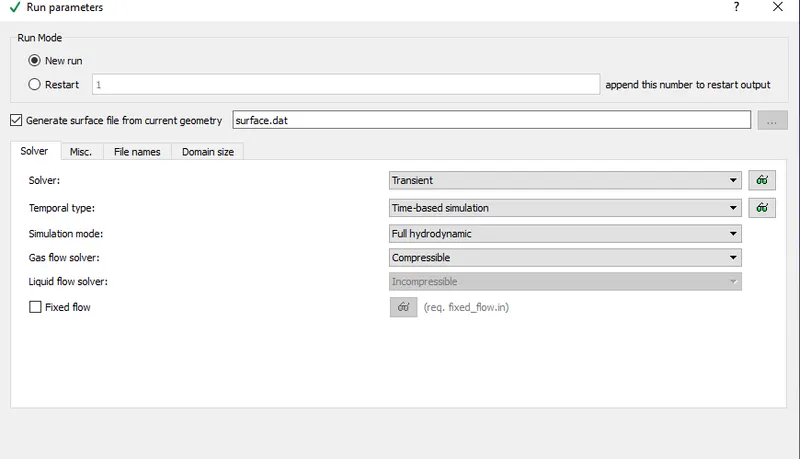
Simulation Time Parameter
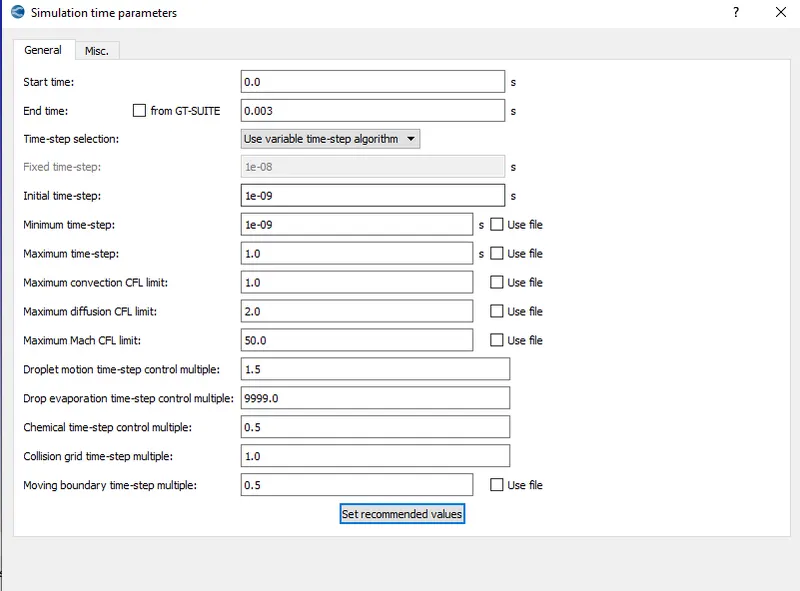
simulation for 0.003s
Boundary condition
Boundary
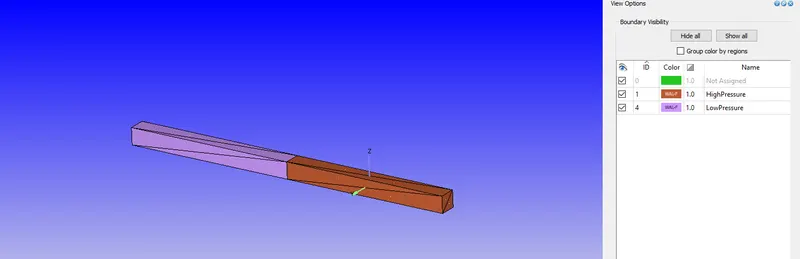
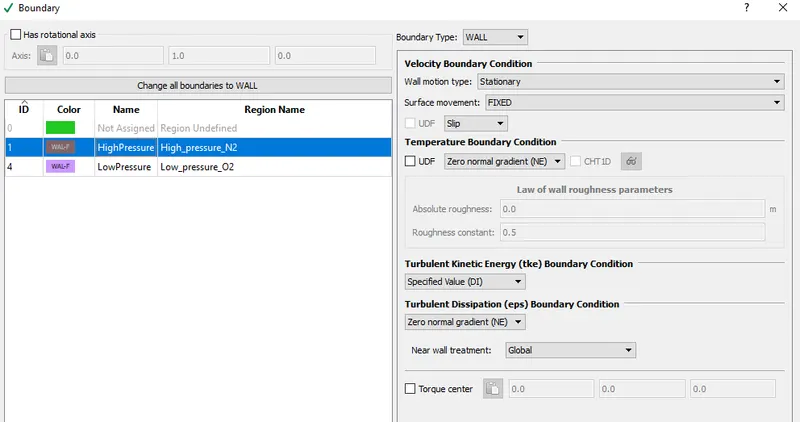
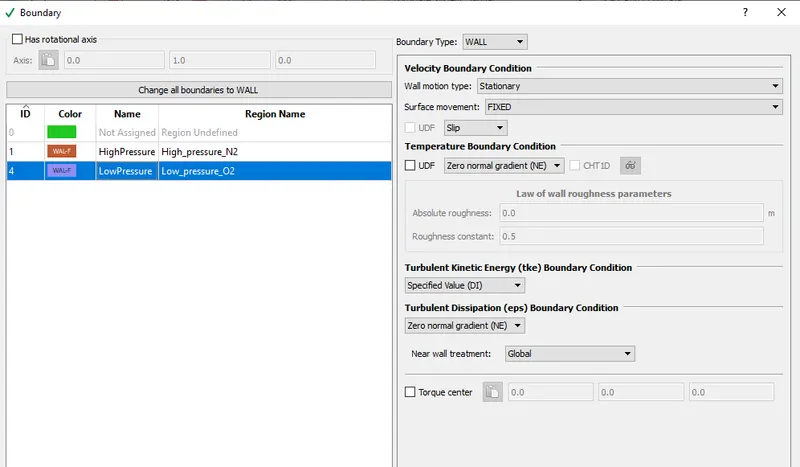
Both regions are slip wall boundary condition
Region
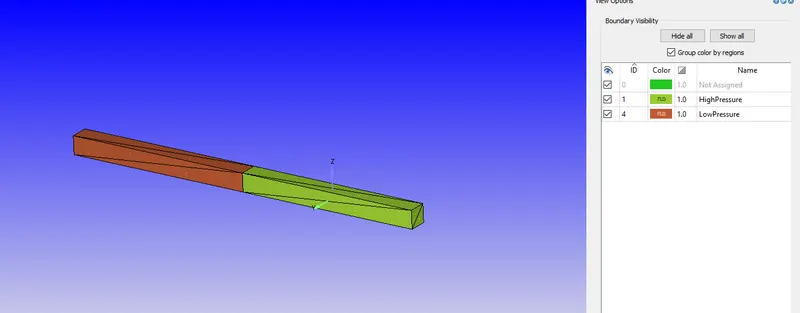
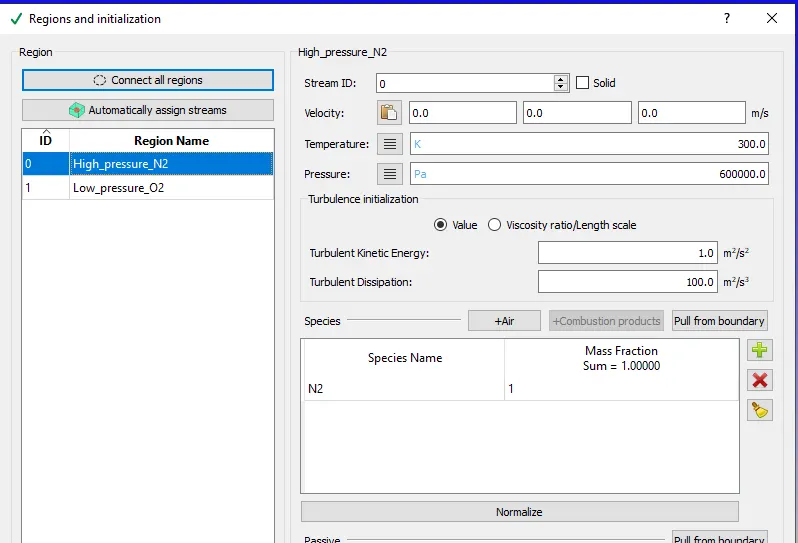
High Pressure
Low Pressure
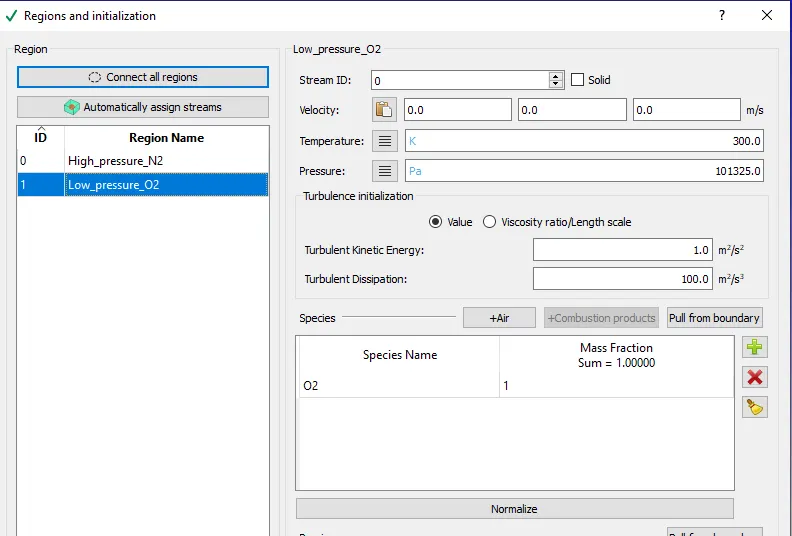
Different Region at different pressure conditions as High 6bar & Low 1atm
Events
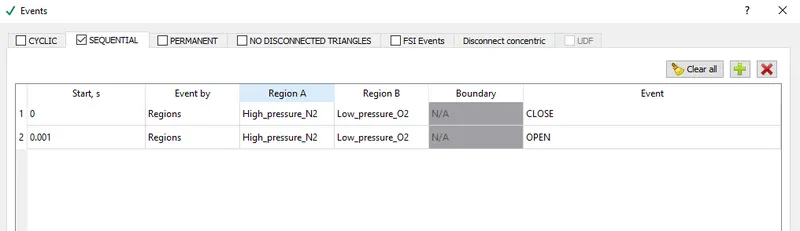
It defines as after 0.001s break the barrier as an open condition of Region to mix species
Physical Model
Turbulent- RNG K-epsilon
GRID Control
Base Grid
dx,dy,dz=0.003
Adaptive Mesh Refinement
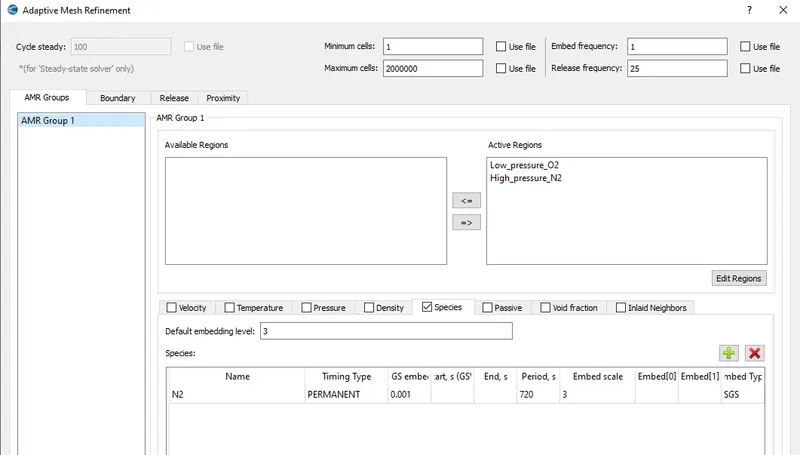
Refine species at embedded level -0.001 N2 Species
Output

Cell Count
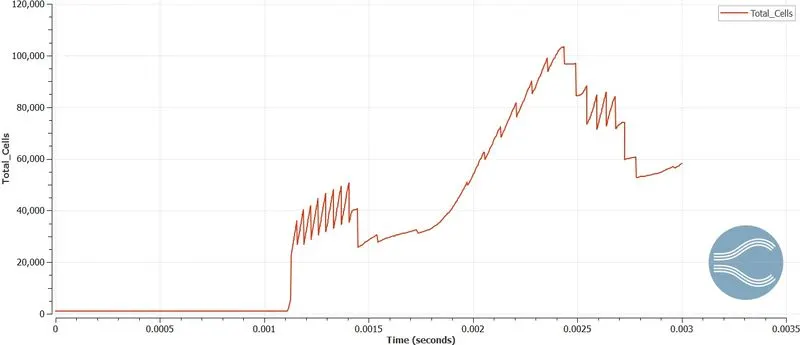
Due to Adaptive technic increase in Mesh as N2 Species react with O2
Species
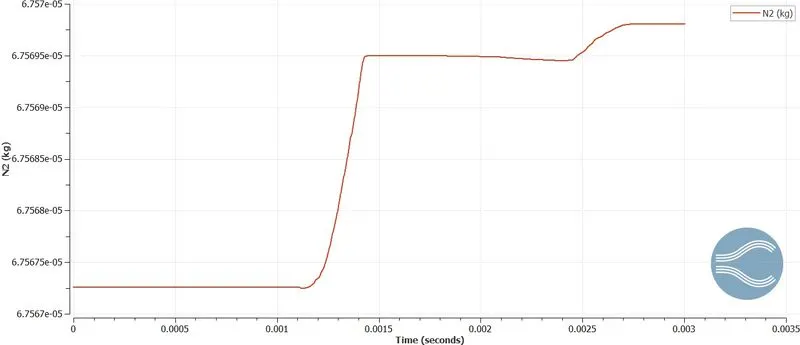
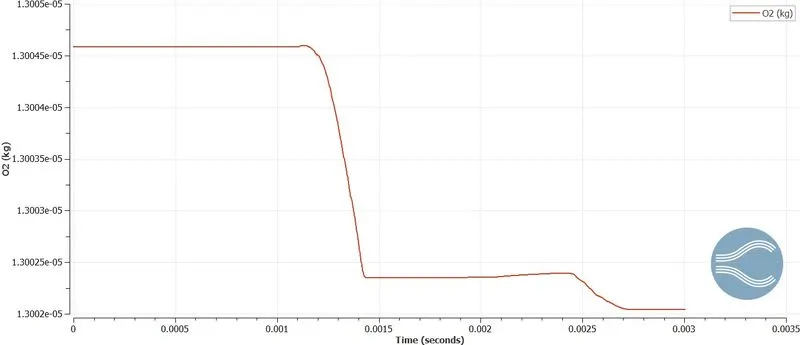
O2
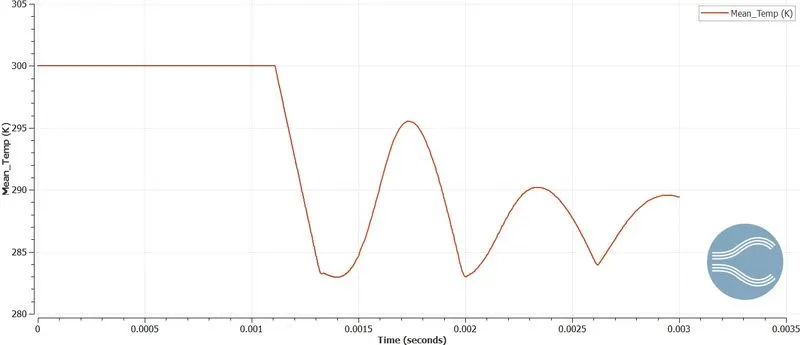
Temperature
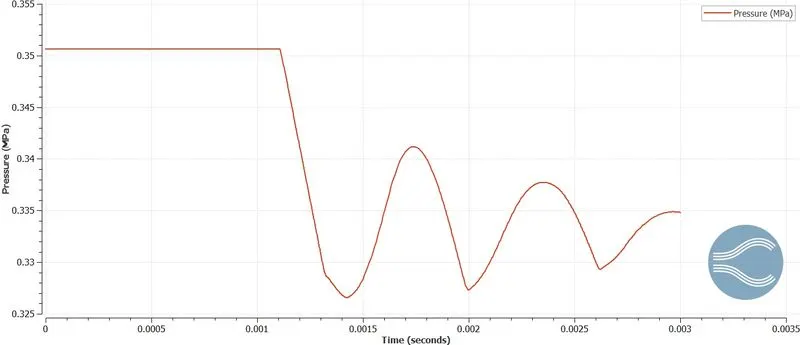
Pressure
Density
Result
At 0.001s the Diaphram Breaks there is a sudden expansion in pressure and velocity between two regions increase mesh count due to the adaptive technic method in the N2 region.
where N2 is greater and O2 is lesser due to the reaction of the diaphragm effect
From literature review dp/dt=0 where ignition start. it means a steady-state condition for the fluctuation of relaxation energy
Reference
https://www.thermopedia.com/content/1124/
https://en.wikipedia.org/wiki/Shock_tube
https://cefrc.princeton.edu/sites/cefrc/files/Files/2015%20Lecture%20Notes/Hanson/pLecture11.pdf