Week 7-Long Piston With Cam
LONG PISTON WITH CAM
WHY ANALYSIS OF A LONG PISTON WITH CAM??
A cam is a rotating element that gives oscillating or reciprocating motion to the follower which is another element of this machine by direct contact. Cams generally do the opposite job to cranks, they turn rotary motion into reciprocating motion. Whatever you need to move up and down (or back and forth) rests on top of an oval wheel, sometimes mounted off-center (the cam).
A follower is a rotating or an oscillating element of a machine that follows the motion of cam by direct contact.
OBJECTIVE-
The objective of this project is to perform a transient analysis on a piston and cam mechanism-
- We need to run the analysis with Frictionless contact, Frictional with 0.1 and 0.2 as the frictional contact for a total of 3 cases.
- Finding out the Equivalent Stress, Directional Deformation and Equivalent Elastic Strain and compare them for all the three cases.
PROCEDURE-
- This simulation is carried out on a transient structural analysis system.
- The material used for this analysis is Structural steel.
GEOMETRY
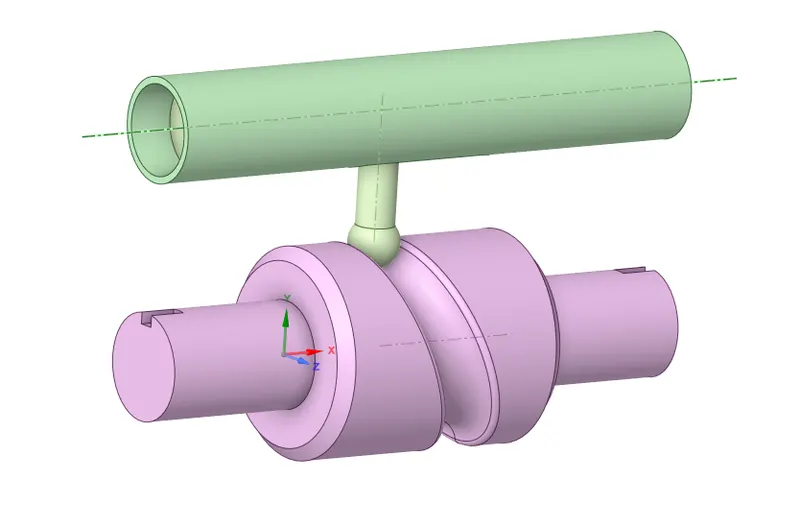
CONNECTIONS-
As we are asked to run the analysis with three different contact natures between the Cam,follower and the Barrel.In the first case we will set the both contacts as frictionless.
CASE-I : FRICTIONLESS
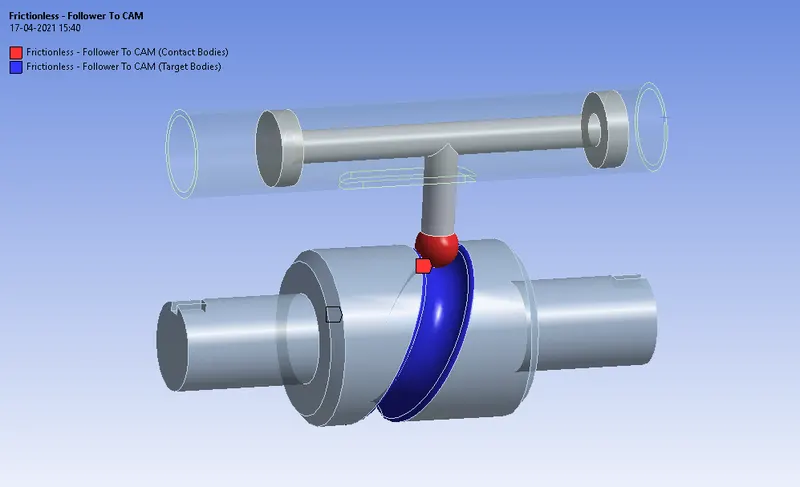
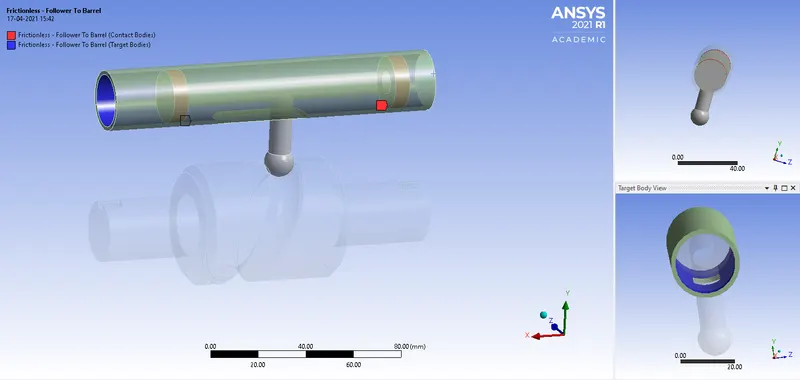
- Fixed joint is provided to the Barrel with the ground
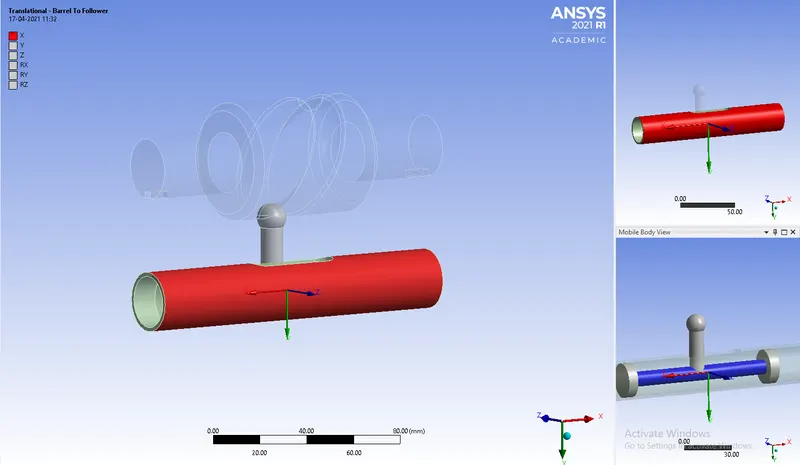
- Body-Body Translational joint is given to one of the follower in reference with the Barrel.
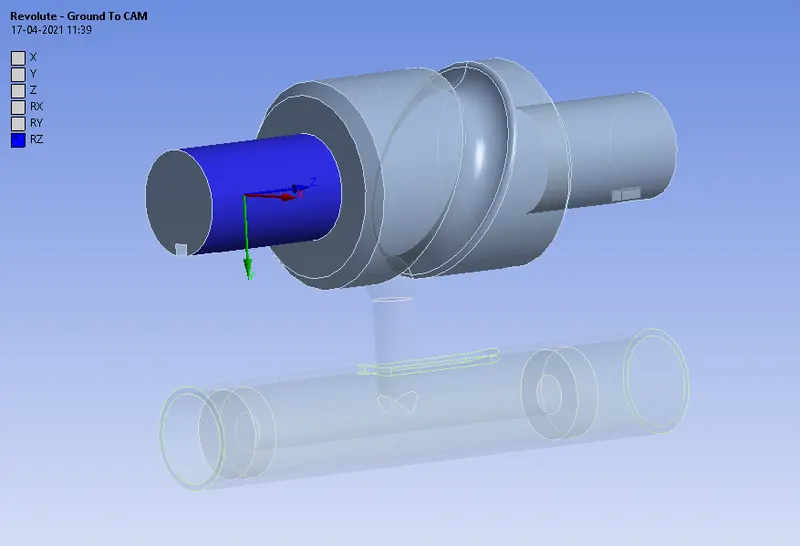
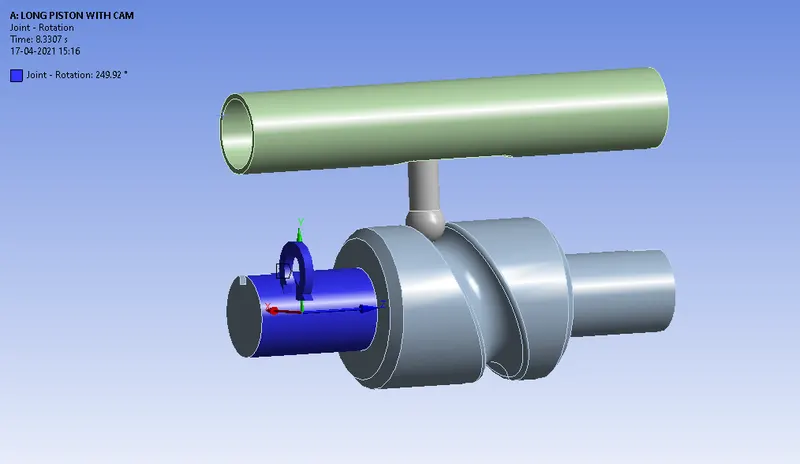
- Body-Ground Revolute joint is given to the Cam.
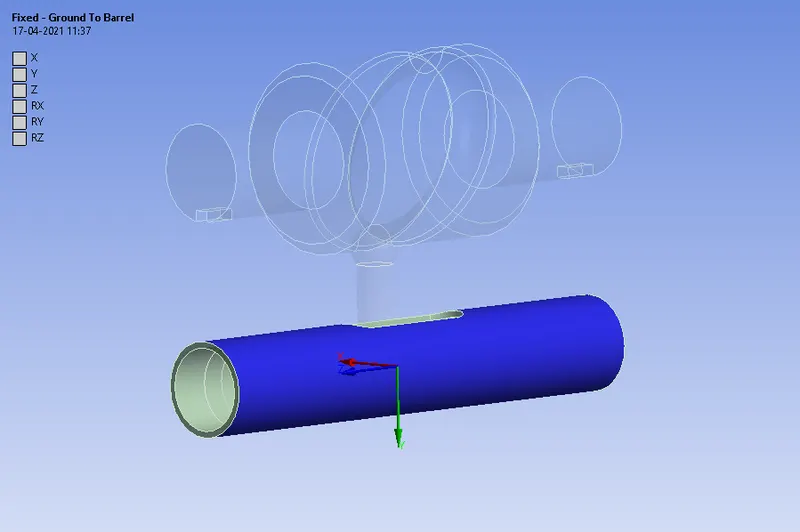
MESHING
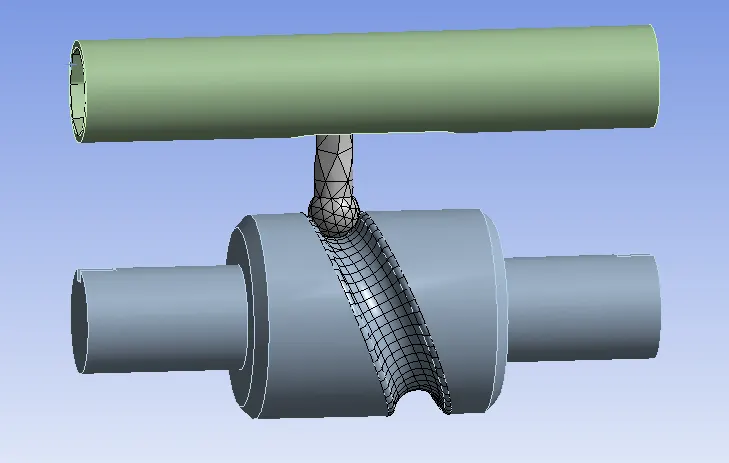
- Face sizing of 4mm is applied to the contact faces of the cam and the follower.Adaptive sizing is switched on for a better mesh.
- As we set the stiffness behaviour for the Cam and the barrel as rigid, mesh will not be generated for these bodies. Solver will consider them as point masses located at the center of mass.
ANALYSIS SETTINGS: -
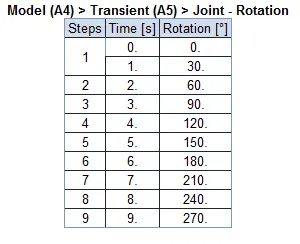
Numbe rof steps- 9
Initial time step- 0.1
Minimum time step- 5e-2
Maximum time step- 0.2
Weak Springs- Program Controlled
Large deflection- ON
Stabalization- Constant
Energy dissipation ratio- 0.1
Activation for First step- YES
FOR STEPS 2-9
We will follow the same time steps for Initial and minimum time step.
Maximum time step- 0.3
Carry over time step- ON
BOUNDARY CONDITIONS-
- Revolute joint is provided to the Cam with the ground
RESULTS-
CASE- I
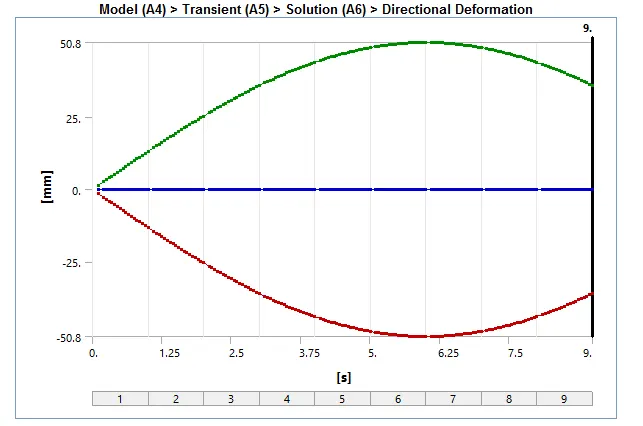
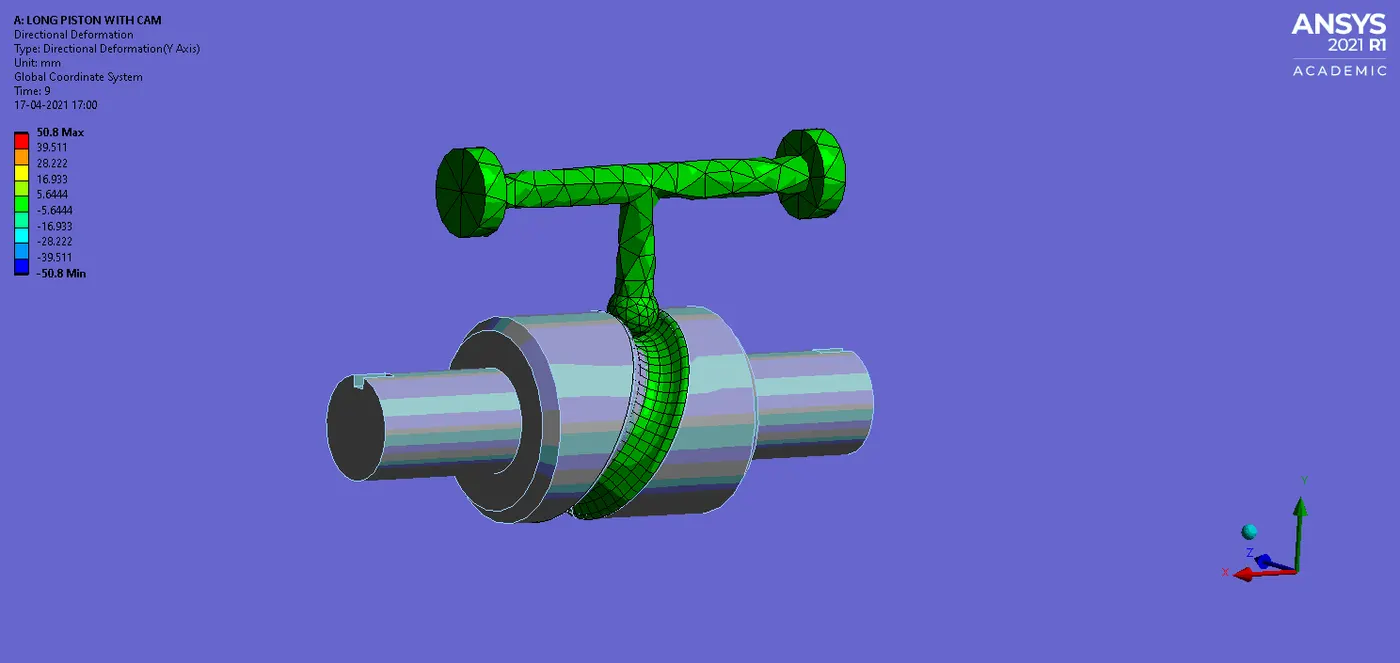
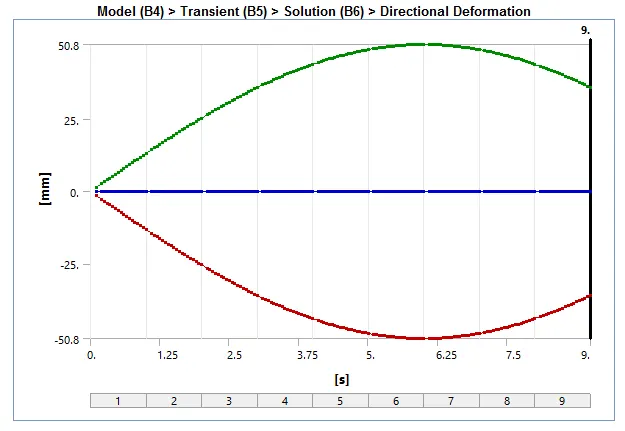
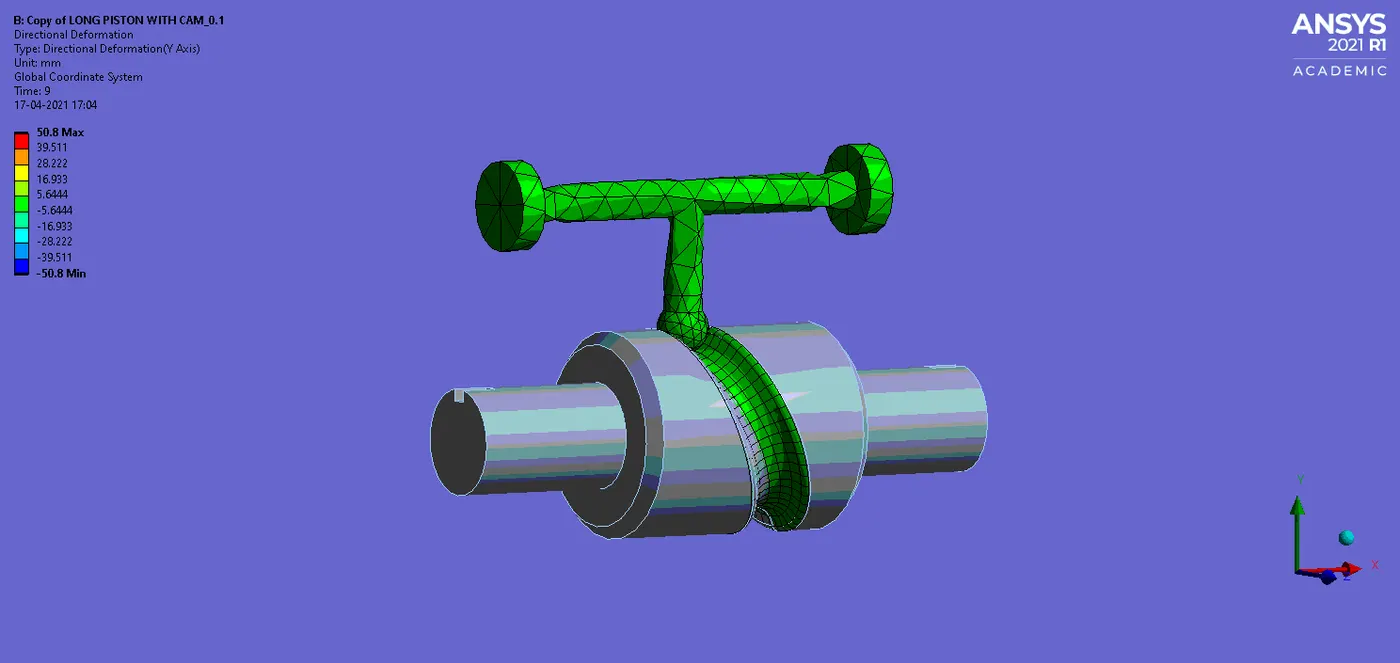
Directional deformation along Y-Axis
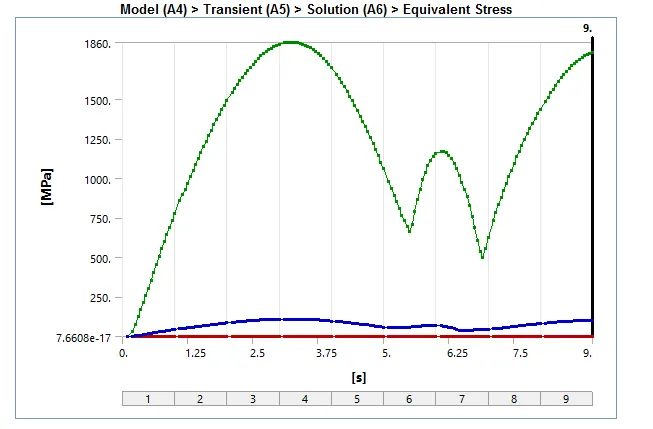
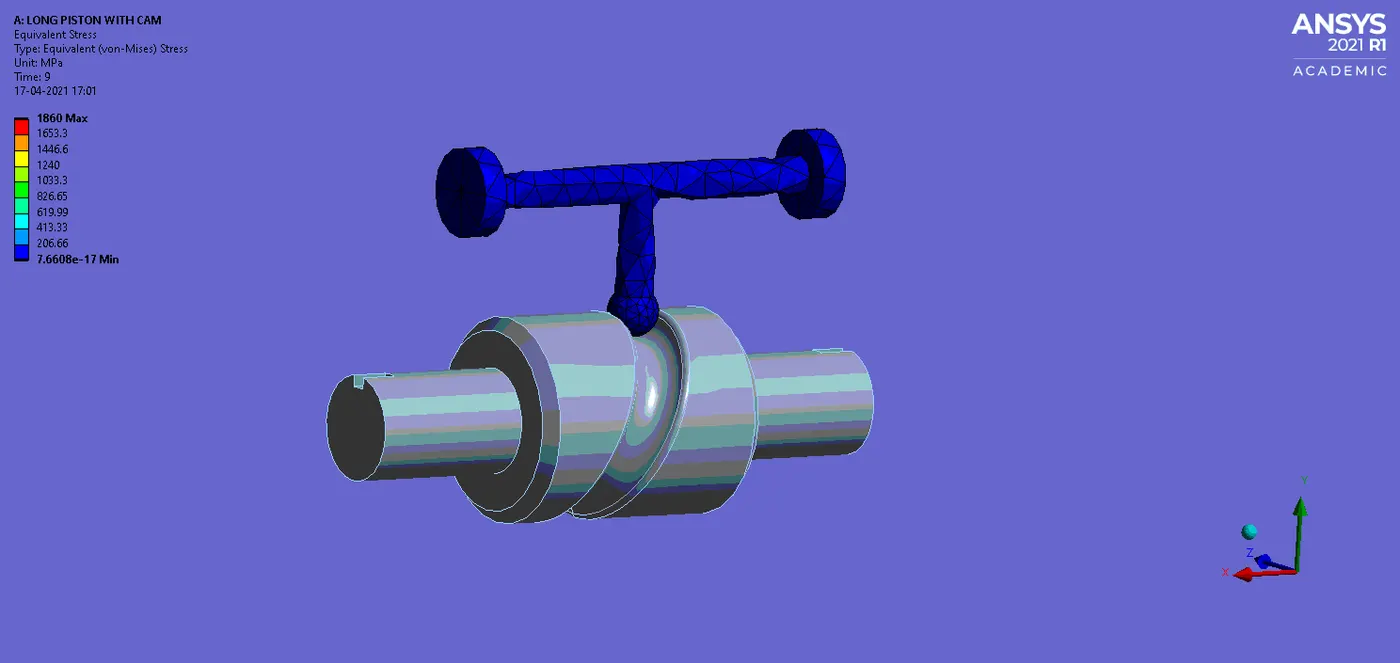
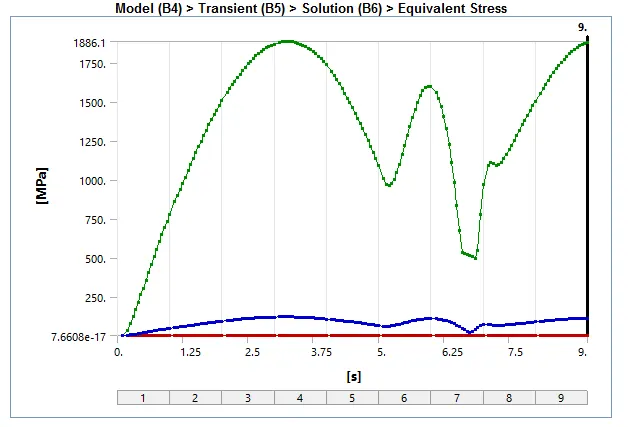
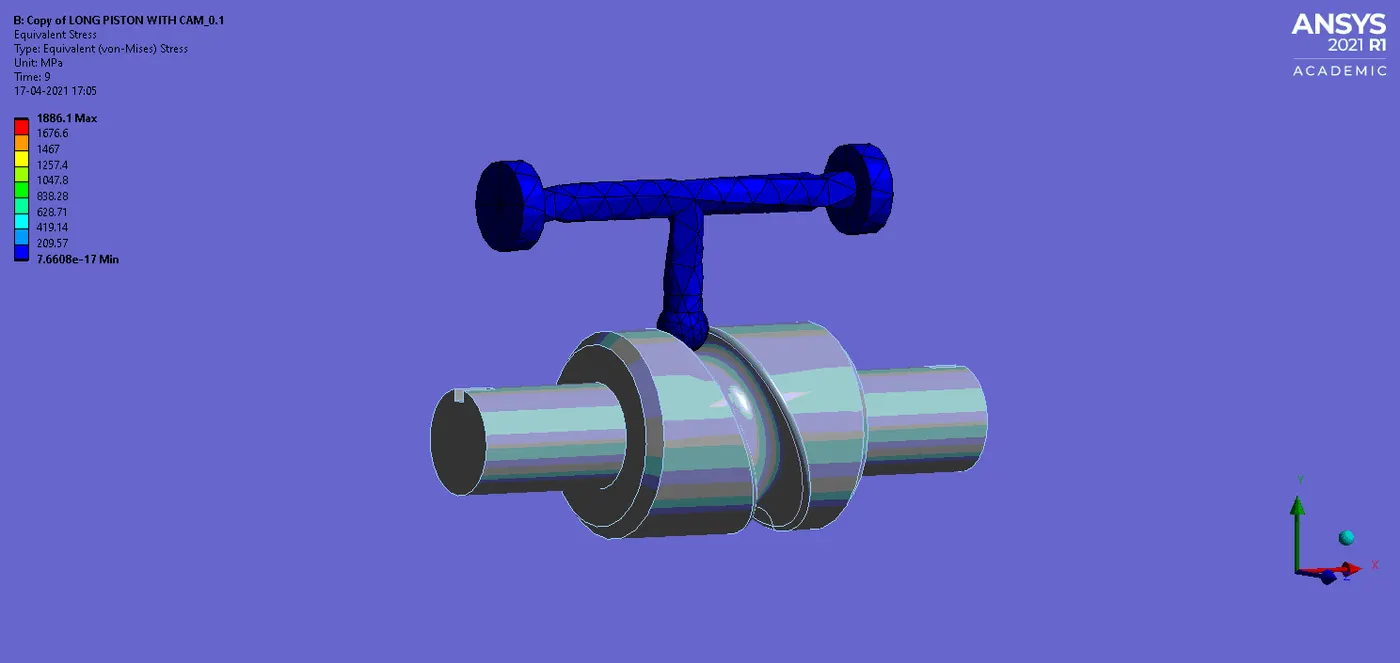
Equivalent Stress for the follower-
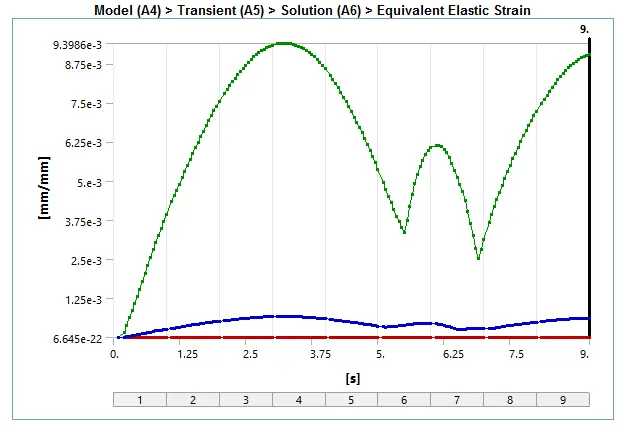
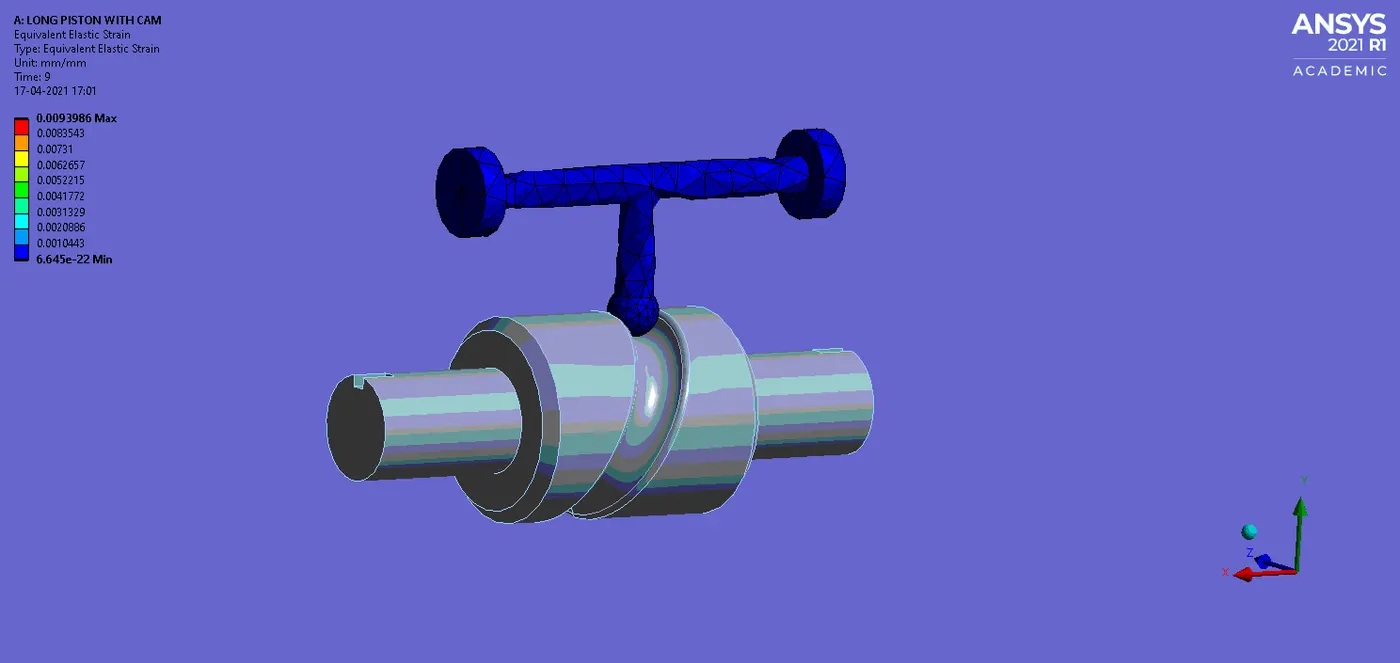
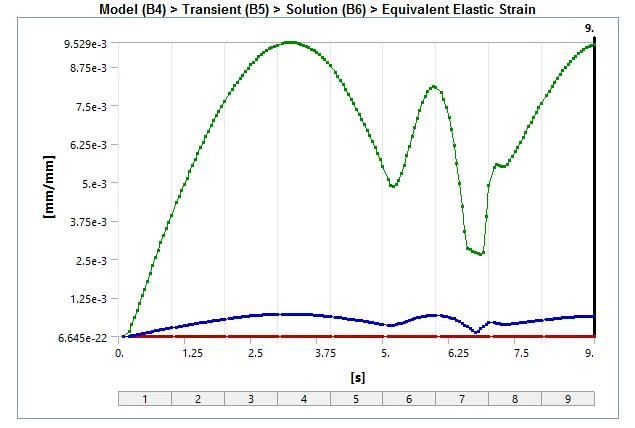
Equivalent Elastic Strain for the follower-
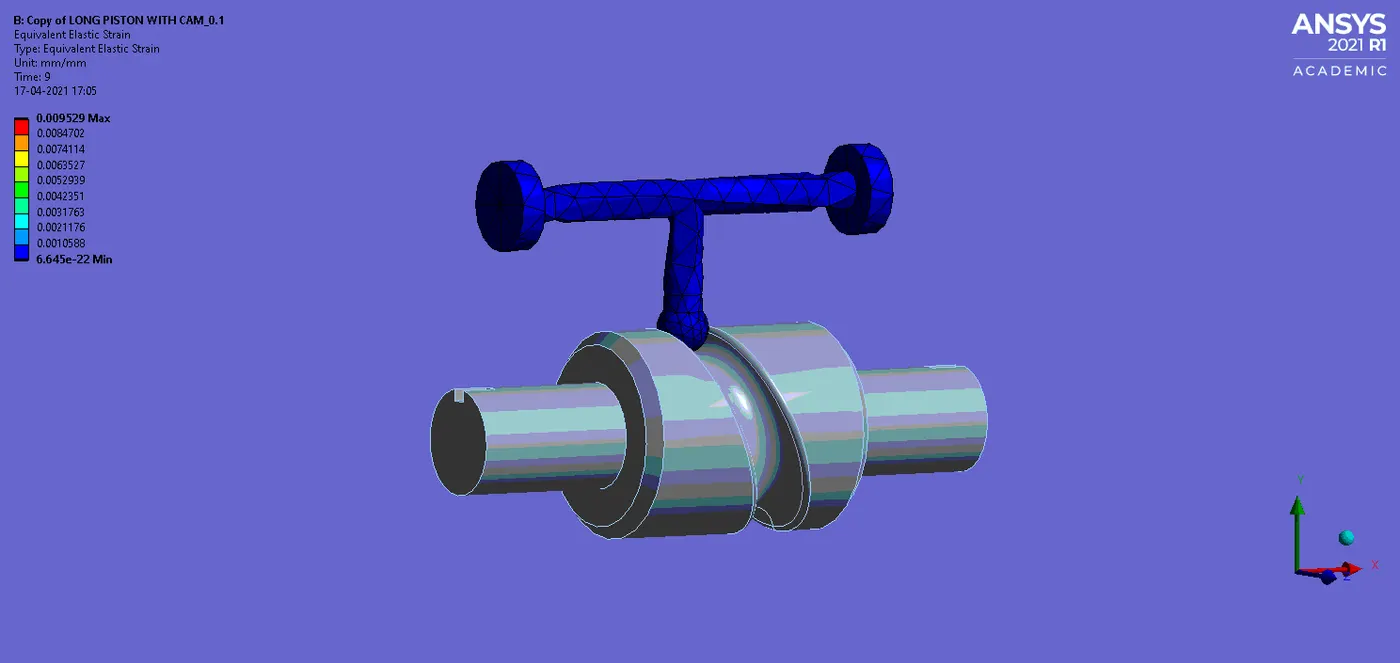
CASE-II: Frictional Coefficient is provided between the contacts as 0.1
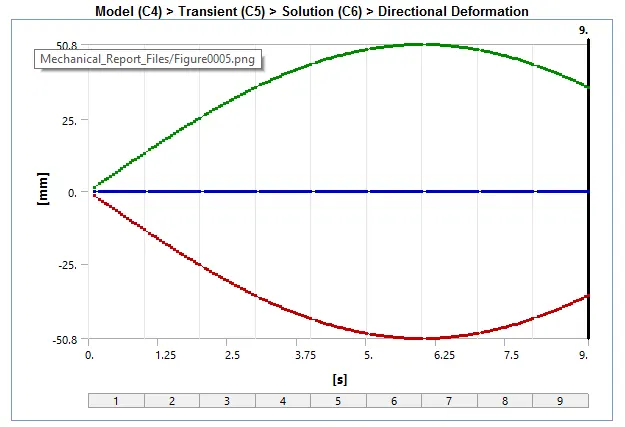
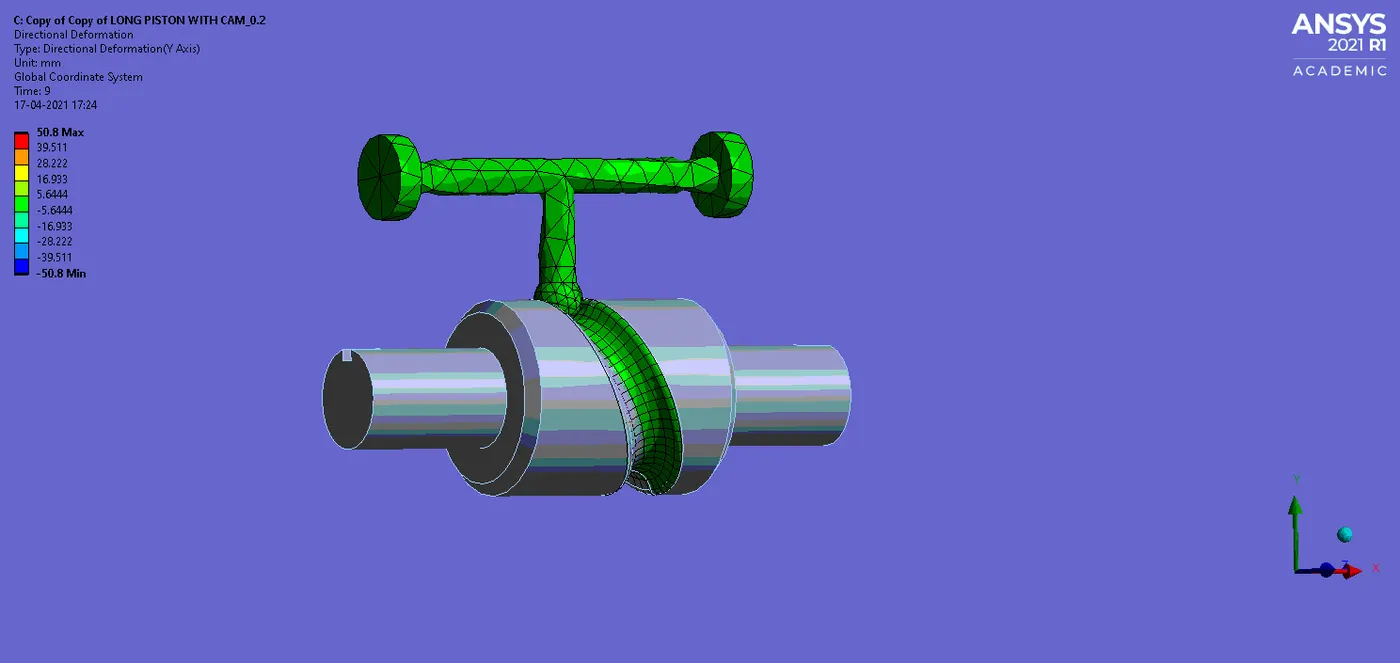
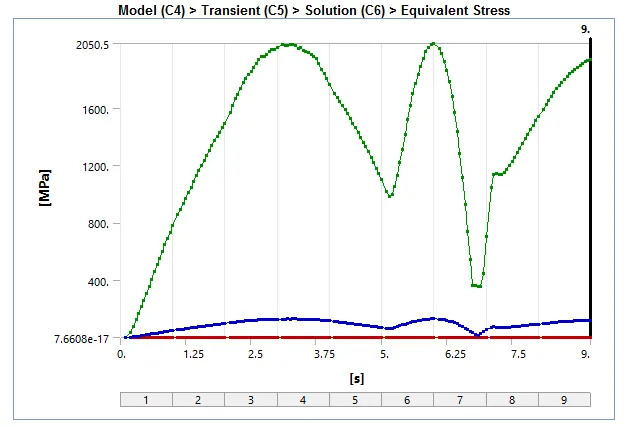
CASE-III: Frictional coefficient provided between the contacts as 0.2
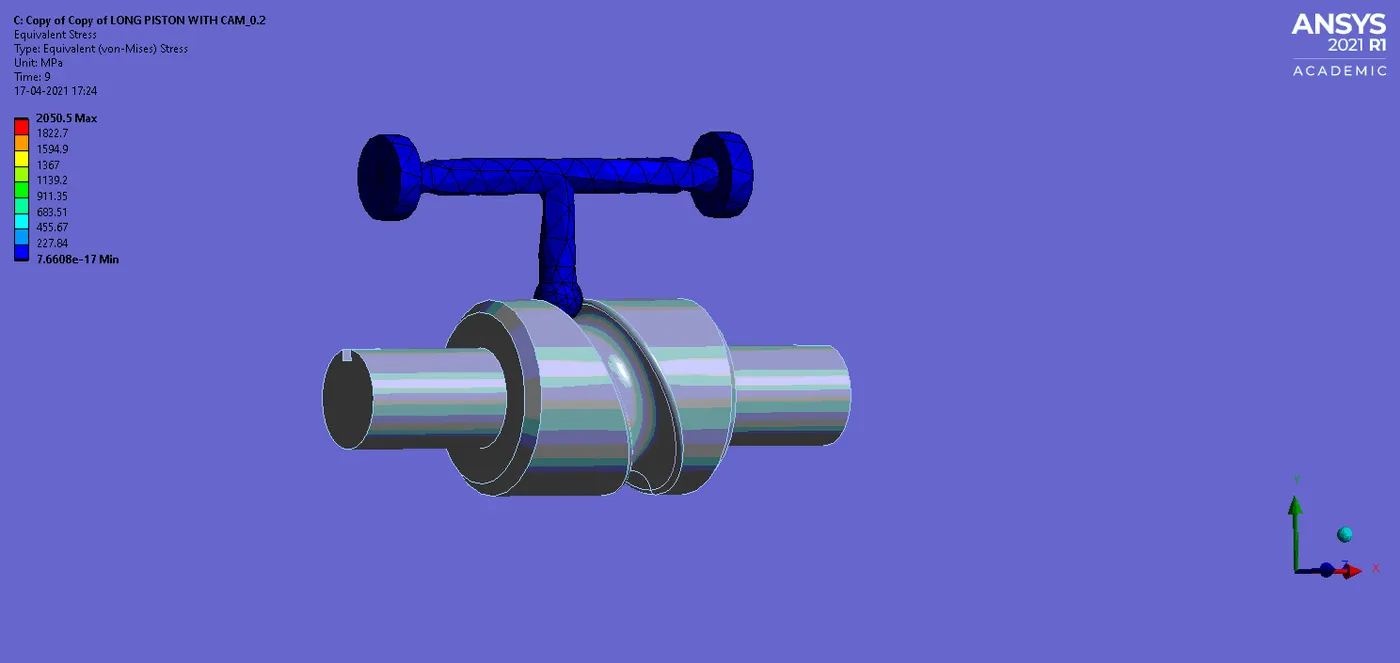
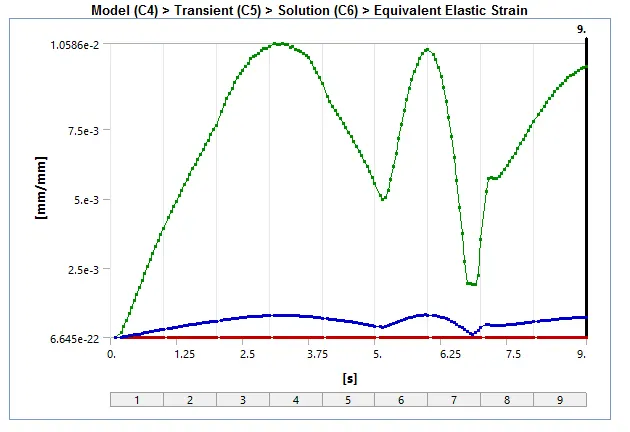
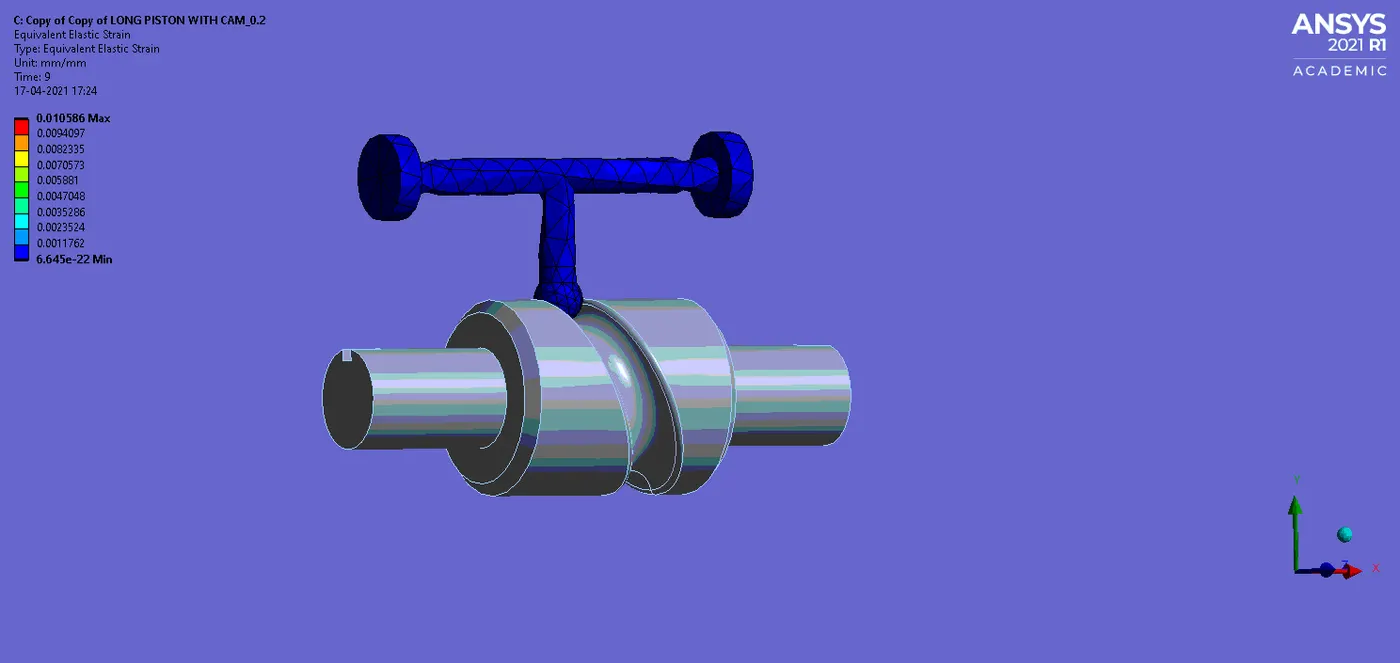
From the above case we can summarise the results as:
| Cases | Contact Nature | Maximum Equivalent Stress | Directional deformation(Y-Axis) | Equivalent elastic strain |
| I | Frictionless | 1860 | 50.8 | 9.3986e-3 |
| II | Frictional (0.1) | 1886.1 | 50.8 | 9.529e-3 |
| III | Frictional (0.2) | 2050.5 | 50.8 | 1.0586e-2 |
CONCLUSION-
- We can observe that with increase in frictional coefficient there is an increase in Equivalent stress.There is not any change in directional deformation for the three cases.
- Equivalent Elastic strain also keeps on increasing with higher frictional coefficient.