Week 7-Long Piston With Cam
OBJECTIVE :
- To find out directional deformation ,equivalent stress and equivalent strain in given model
PROCEDURE :
- Open the ANSYS WORKBENCH R2
- select transient structural analysis
- select engineering data and choose structual steel from general material list
- import geomtry
- rename its part
- select structural steel as material for all parts
- in contact section ,select both contact and flip the contact and target
- select target and contact scopes properly
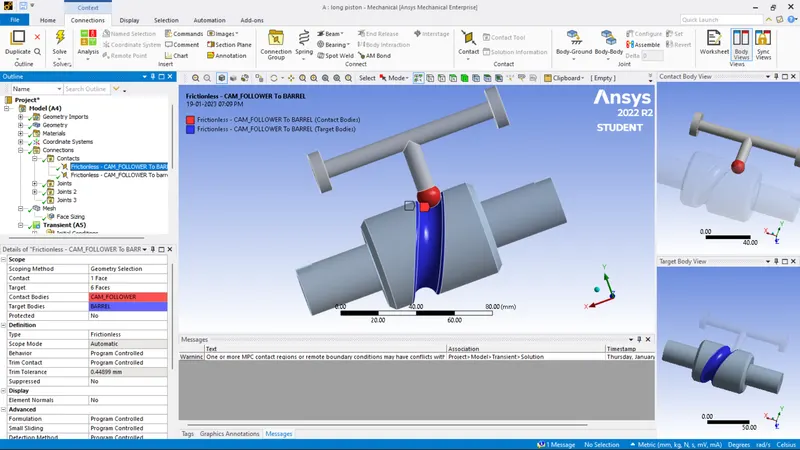
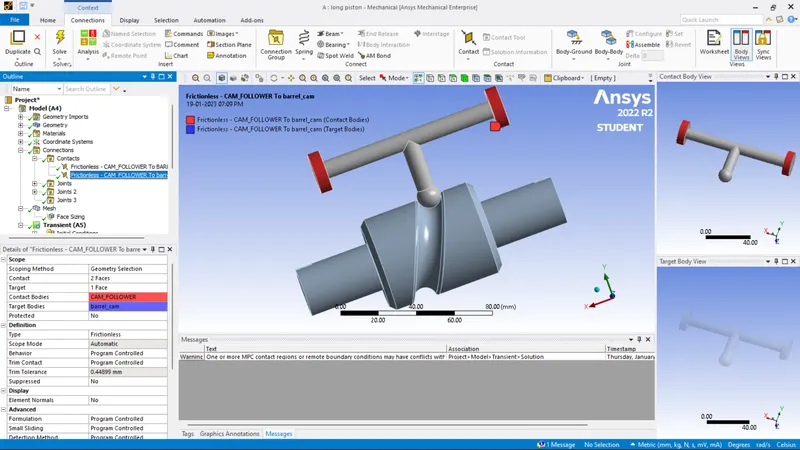
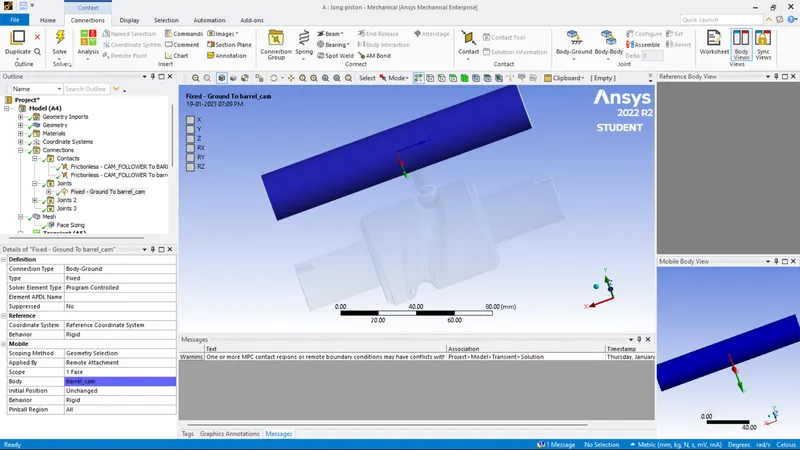
- insert the body ground fixed joint ,select barrel follwer outer cylinder as its scope
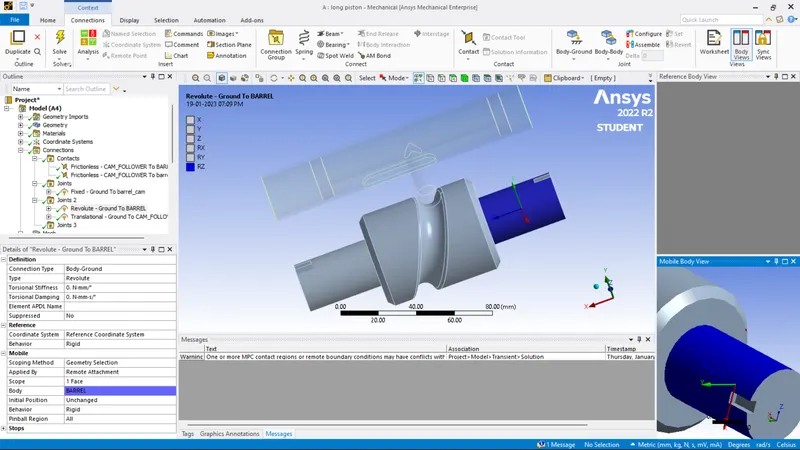
- insert body ground revelute joint and choose barrel shaft as its scope
- insert body ground transilational joint and choose cam follower as its scope
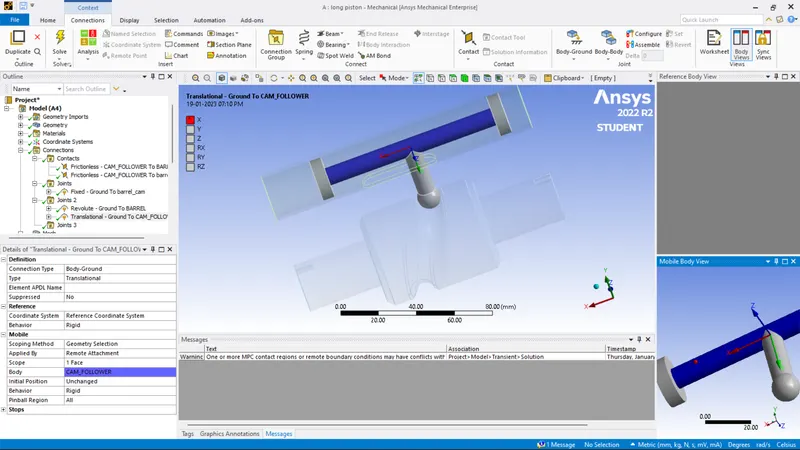
- select both joint contact in connection and change type to friction less for first cse and for the second and third cases choose frictional and input frictional coefficient as .1 and .2 respectivly
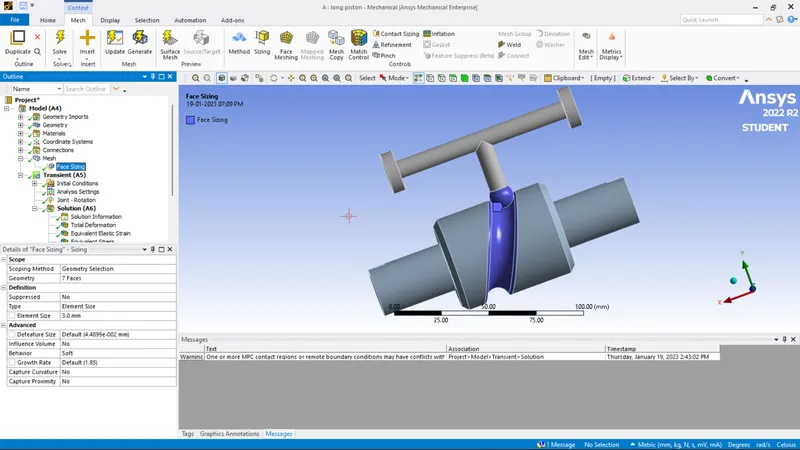
- insert sizing in mesh section and select cam and groove which cam sliding in it as aits scope ,input element size as 3 mm
- In analysis section input number of step as 9
- select for the first step keep large deflection on weak spring as program controlled
- in non linear controls select stabilisation as constant input value as .1,keep ON activation for first substep
- in output controls keep no for contact miscellaneous others keep as yes
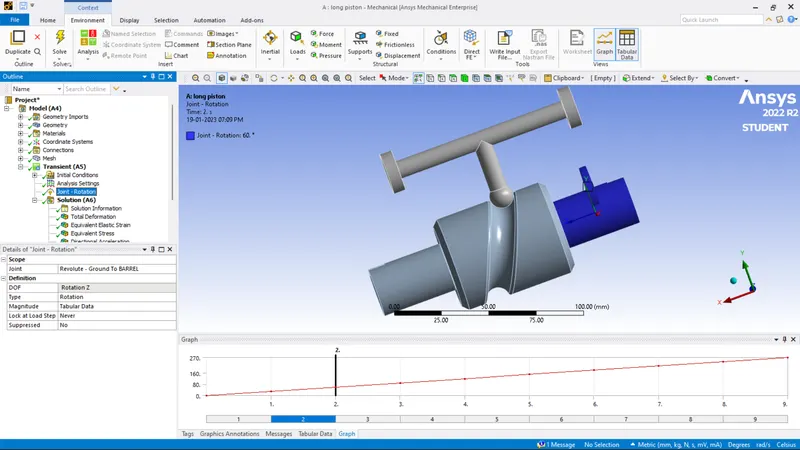
- insert joint load in transient settings select joint revolute -groundto barrel ,choose type as rotation input data by tabular data
- insert direcional deformation equivalent stress and equivalent strain in solution section
- run slove
RESULT :-
CASE I :-
FRICTION LESS CONTACT :-
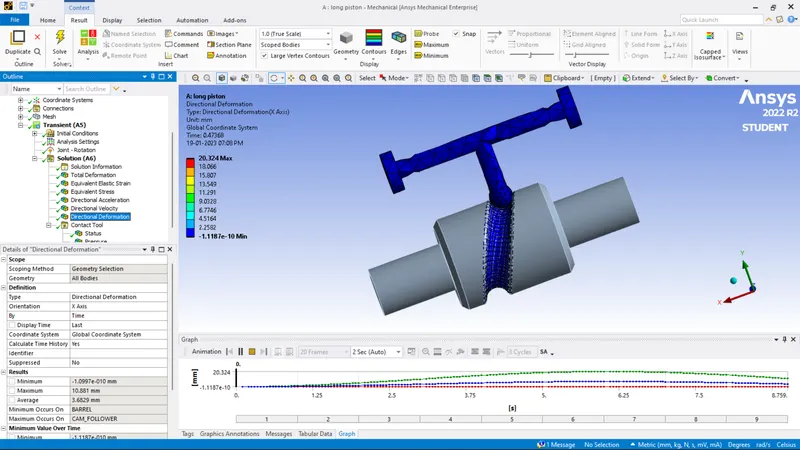
1 . DIRECTIONAL DEFORMATION :-
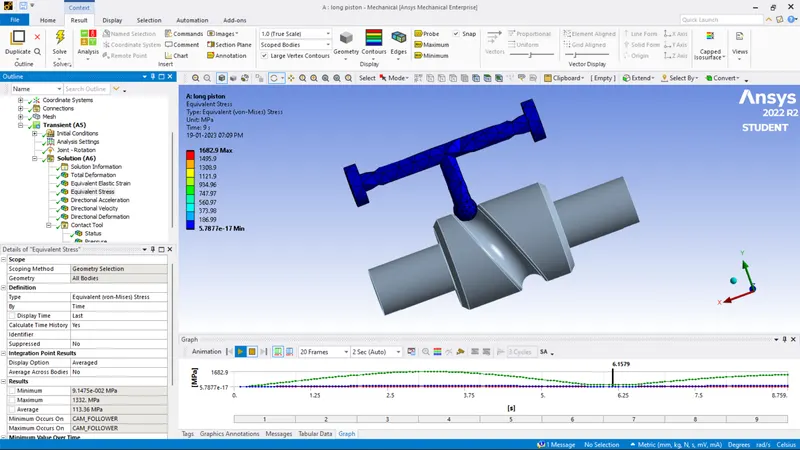
2. EQUIVALENT STRESS :-
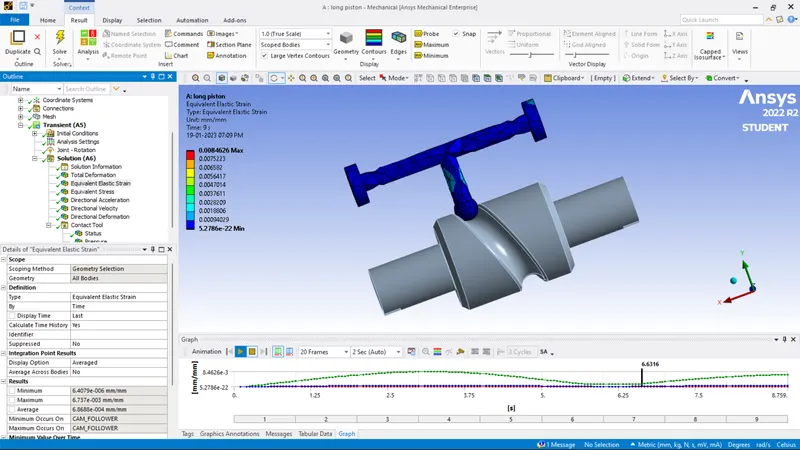
3. EQUIVALENT STRAIN :-
CASE II :-
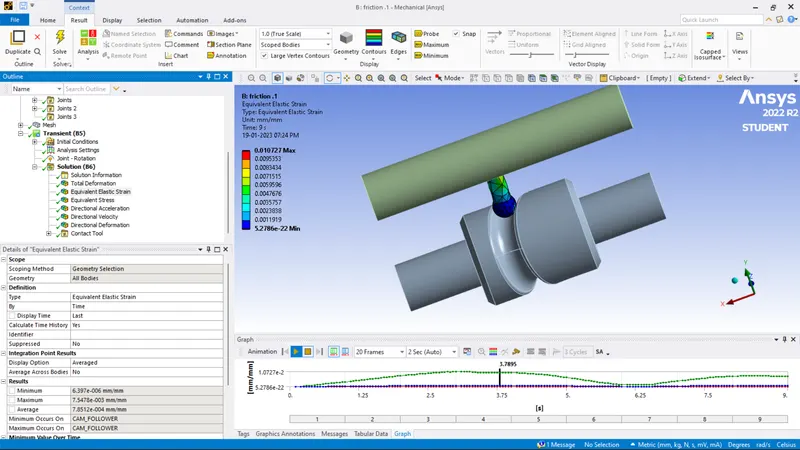
FRICTIONAL CONTACT (COEFFICIENT OF FRICTION IS .1)
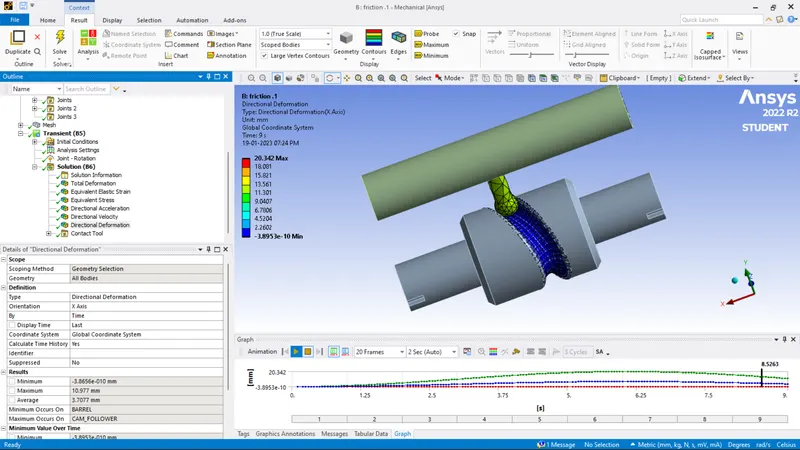
1 . DIRECTIONAL DEFORMATION :-
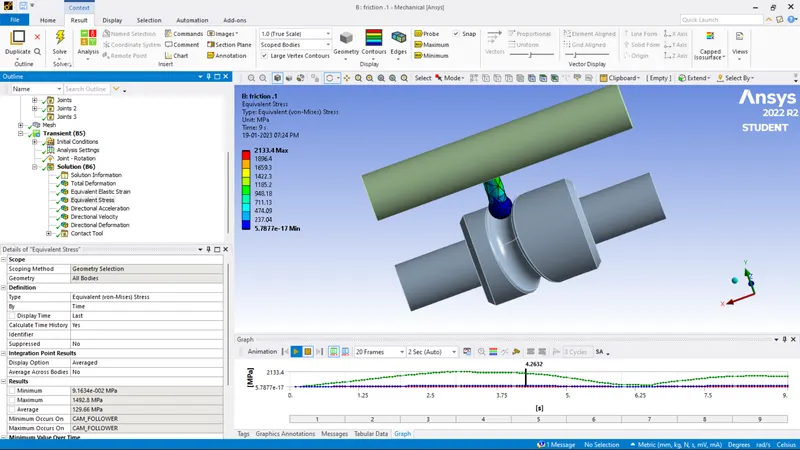
2. EQUIVALENT STRESS :-
3. EQUIVALENT STRAIN :-
CASE III :-
FRICTIONAL CONTACT (COEFFICIENT OF FRICTION IS .2)
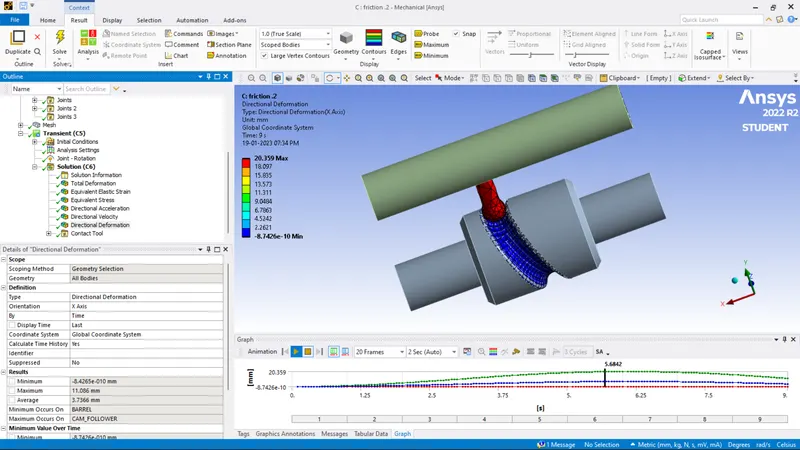
1 . DIRECTIONAL DEFORMATION :-
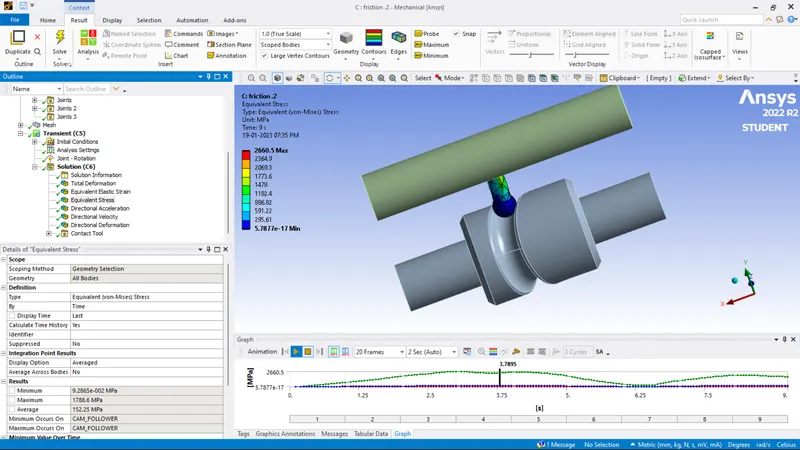
2. EQUIVALENT STRESS :-
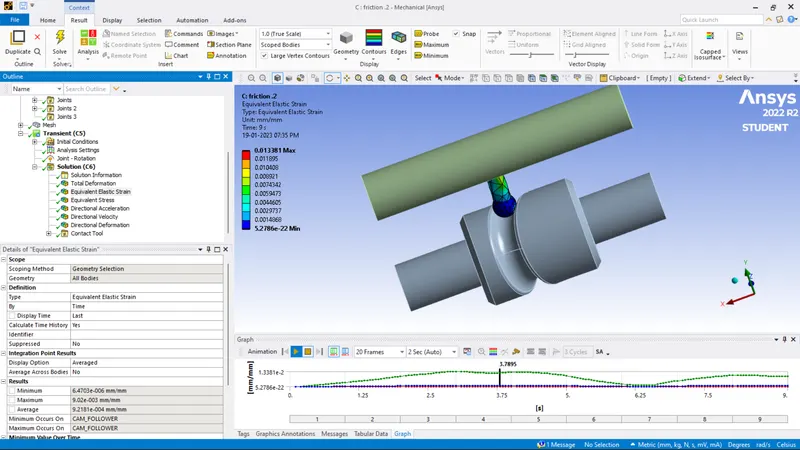
3. EQUIVALENT STRAIN :-
TABULATION :-
| CONTACT TYPE | DIRECTIONAL DEFOMATION (mm) | EQUIVALENT STRESS (MPa) | EQUIVALENT STRAIN (mm/mm) |
| FRICTIONLESS | 20.324 | 1682.9 | 0.0084626 |
| FRICTIONAL(COEFFICIENT OF FRICTION IS .1) | 20.342 | 2133.4 | 0.010727 |
| FRICTIONAL (COEFFICIENT OF FRICTION IS .2) | 20.359 | 2660.5 | 0.013381 |
CONCLUSIONS :-
- Directional deformation is more infrictional contact which coefficient of friction is .2
- equivalent stress is high as 2660.5 MPa in frictional contact which coefficient of friction is .2 and equivalent strain is maximum shown in frictional contact of coefficient of .1 and it is 0.013381
- equivalent strain and directional deformation is minimum among three cases is fricionless contact and is 0.0084626 and 20.324 mm respectivly
INFERENCE :-
- Directional deforamtion and equivalent stress are mximum shown in frictional contact due to frictional effect its causes more stress developement and it leads to deform more than that of same model with frictionless contact