Week-7 Head Impact
Pedestrain Head Impact
Pedestrian protection CAE is a part of vehicle safety engineering from a crash perspective. In pedestrian protection, we look for imparting minimum injury to head, upper leg (thigh), and lower leg (including knee) in case of an accident with a human subject. These tests are usually done at a lower velocity from 20-40 kmph as accidents tend to result in more severe circumstances above these velocities and braking in case of an accident often results in collision at low velocities.
Aim:
This project involves pedestarain head impact of simple head,children head impact and head impact with hood simulations has to perform.
Introduction:
A pedistrain is a person travelling on the road it may be by a walking,jogging,running,the person travelled by a bicycles,scooters etc.,in the pedestrain we will mostly prefered someone walking in the road and side walk.
vehicle safety is the most important in automotive.vehicle safety is just not focus on occupant safety (in side the car) and also focus on protecting the pedestrain safety. EEVC and NHTSA had been developed pedestrain subsystem test methods. these test methods assess vehicle capabilites to protect the pedestrain.
head injury is the most common injury and also most harmful for the pedestrains.
the head injury criterion (HIC) is a measure of the likelihood of the hood injury arising from an impact.HIC can be used to assess safety related to vehicles,personal protective gear and sport equipment.
HIC=max(t1,t2) {[1/t2-t1)integralof t1 to t2 a(t)dt]^2.5 (t2-t1)}
SI=integral of 0 to T a(t)^ndt
for example HIC=650
90% of the probability is at level1
55% of the probabilityis at level2
20% of the probability is at level3
5% of the probability is at level4
the small HIC value does not mean that the head injury will be low level.like wise the large HIC value does not mean that a high level of head injury.the real meaning is that higher the HIC value and the higher the probabilty of getting high level head injury.
Abbreviated injury scale,
level1:slight damage to the brain, with headache dizziness, no loss of consciousness,contusions.
level2:concussion with or without skull fracture,less than15 minutes of unconsciouness,detached retina,face and nose fracture.
level3:concussion with or without skull fracture more than 15 minutes of unconsciousness without severe neurological damage,multiple skull fracture,loss of vision,multiple facial fracture,cervical fracture without damage to spine.
level4:multiple skull fracture with severe neurological damage.
level5:concussion with or without skull fracture,more than 12 hours of unconsciouness,hemorrhage in skull and critical neurological condition
level6:death,cervical fracture with damage to the spine.
procedure:
Case1:
simple Head impact on the Rigid wall :
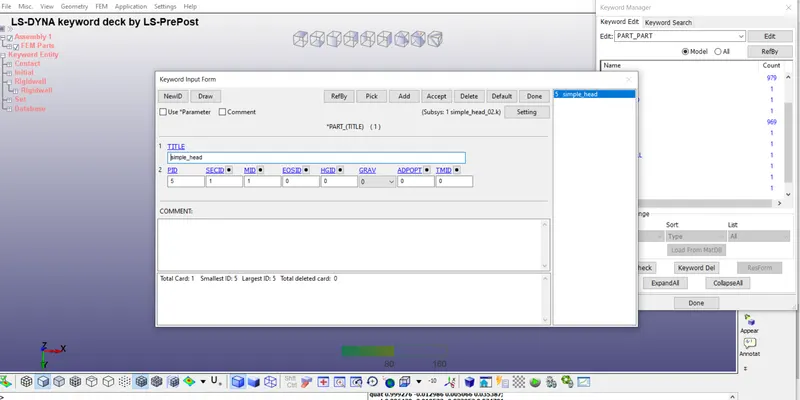
imported the simple head meshed elements in the the ls-prepost. in this case simple head model impacts on the rigid wall.Rigid wall planar is created in the *RIGID_WALL,along the y-direction at a distance of 80mm from the bottom the simple head.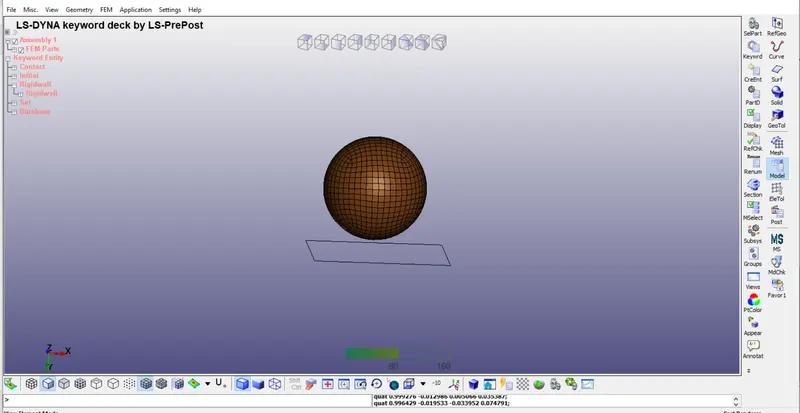
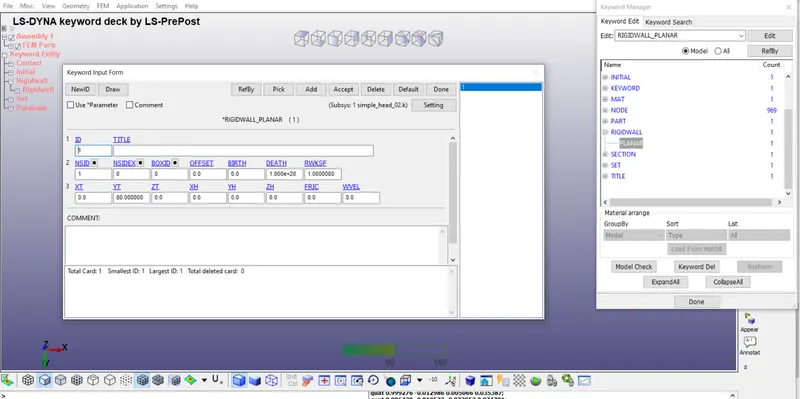
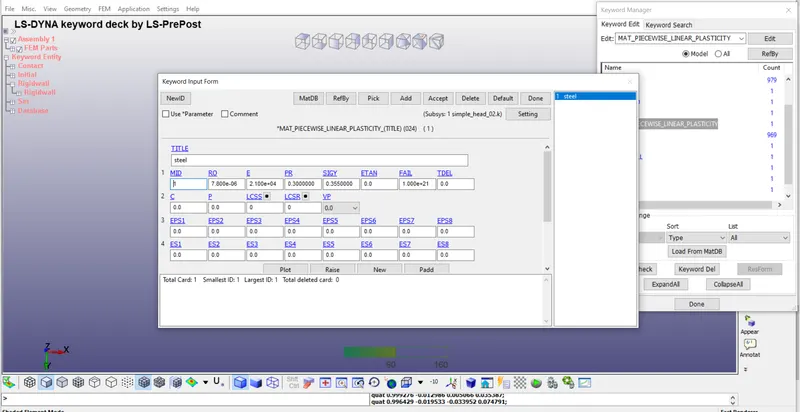
created the both section and material properties and assigned in the part.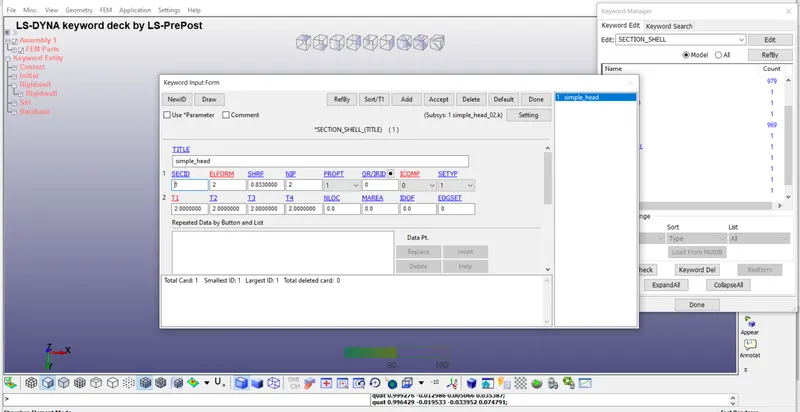
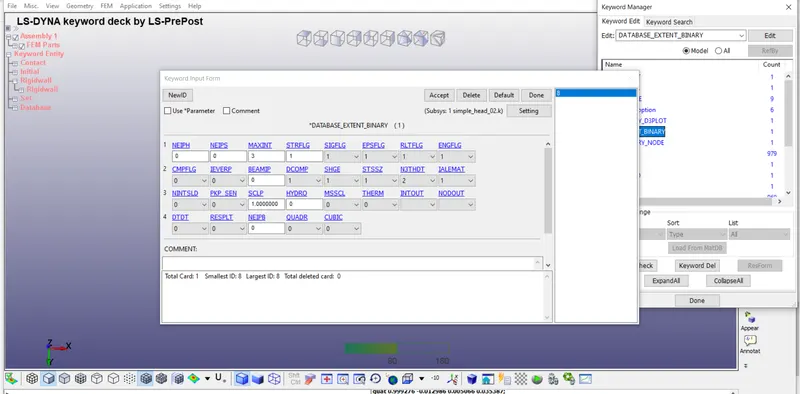
given the output Datacards in *DATABASE to check Plots that are the BinaryD3plot and Extent_binary
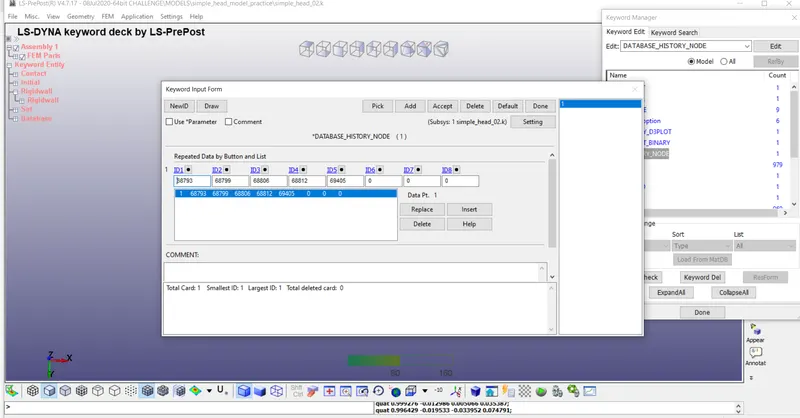
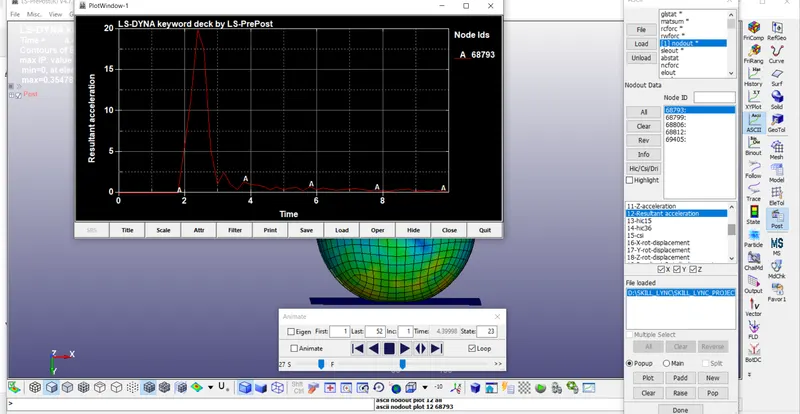
AscII opton for checking global and material energies to get the Rigid wall forces and to check the acceleration i have given the node id's in *history_node.given 0.2ms at each of these energies.
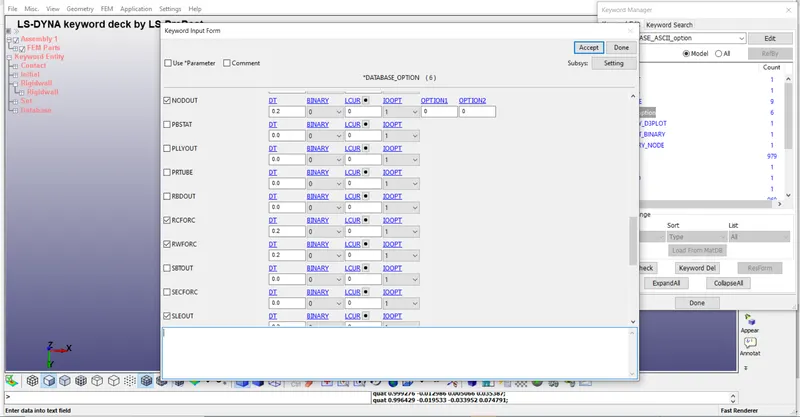
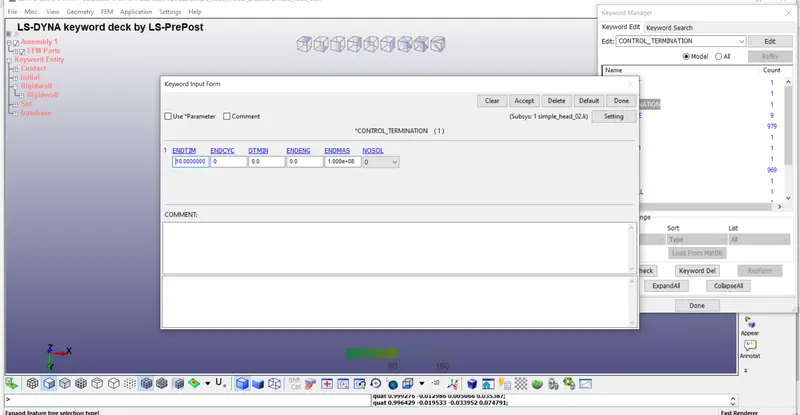
given endtime in *control_trmination i.e,Endtime=10ms
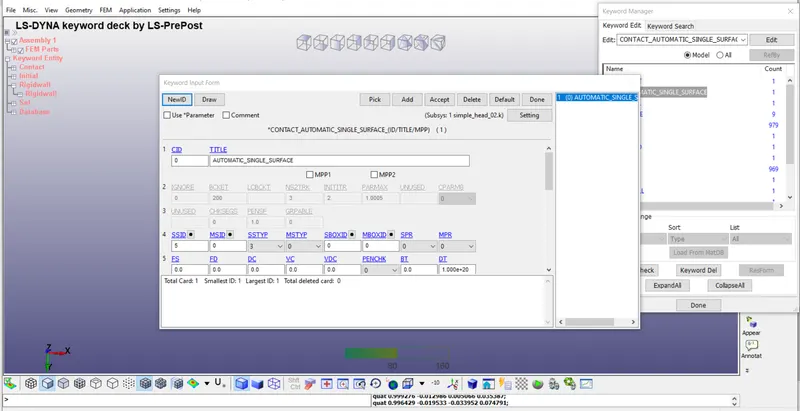
specified automatic single surface contact in *contact in this the simple head is taken as the slave set.
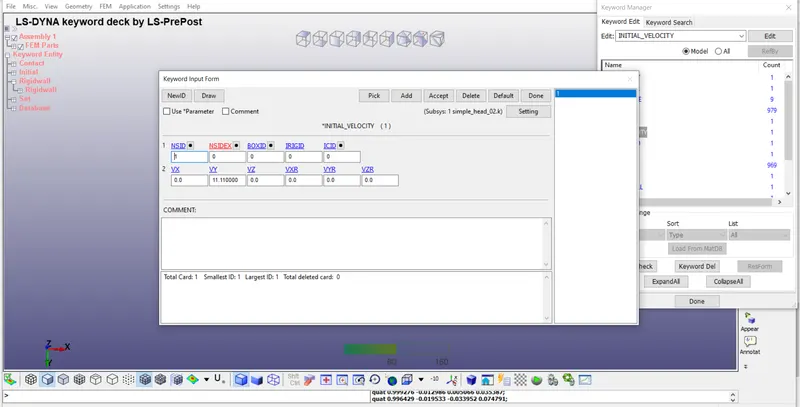
given input velocity as 40kmph(11.11mm/ms) in the y-direction of rigid planar wall.
Animation plots:
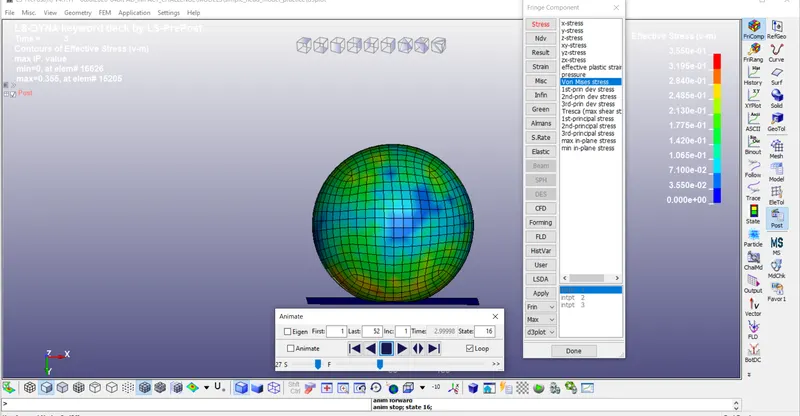
from this animation the simple head is hitting on the rigid wall planar and agian bounce back after getting the deformations.at maximum vonmises stresses at 3.550e-01.
CASE2:
Pedestrain Child Head form model impacting on the Rigid wall
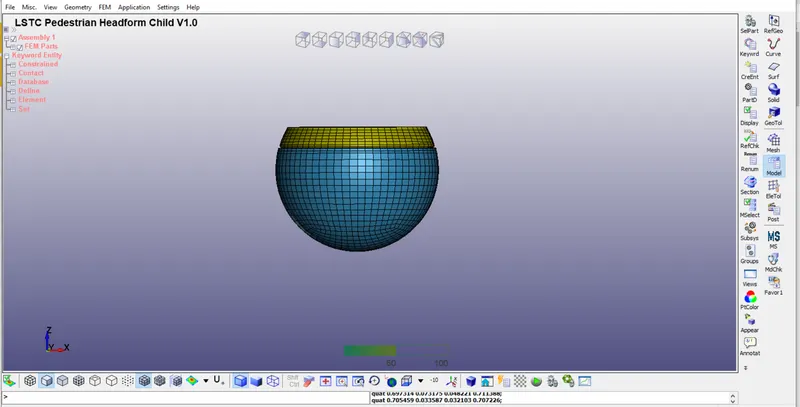
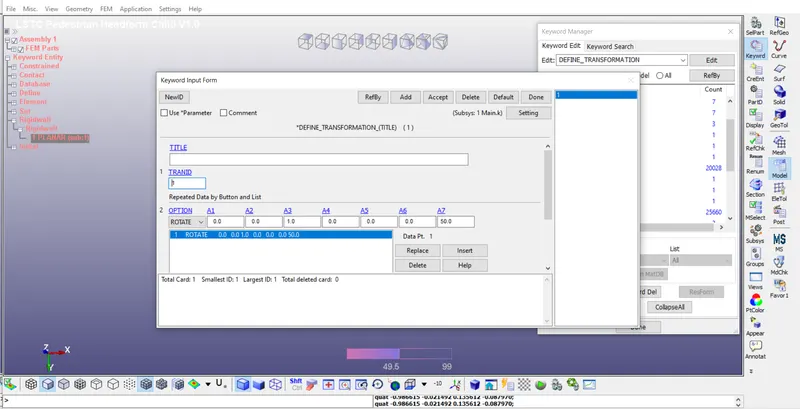
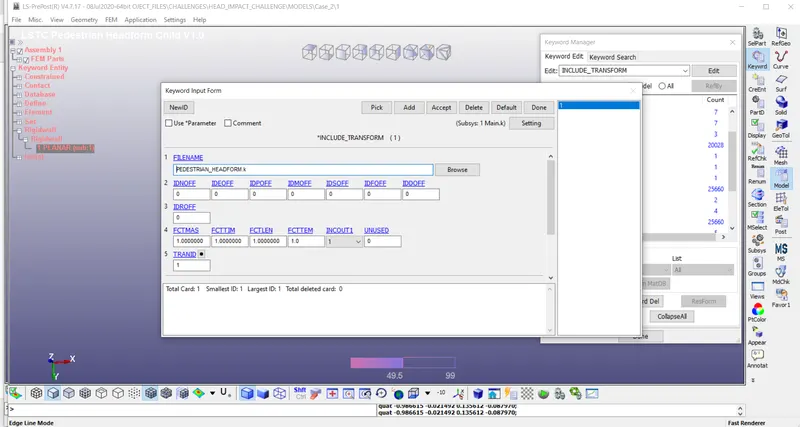
follow the same procedure like simple head impact model it involves to rotation of the part so create the impact angle 50degrees with the rigid wall.
the angle can be given in the *Define_tranformation and *include_transform.
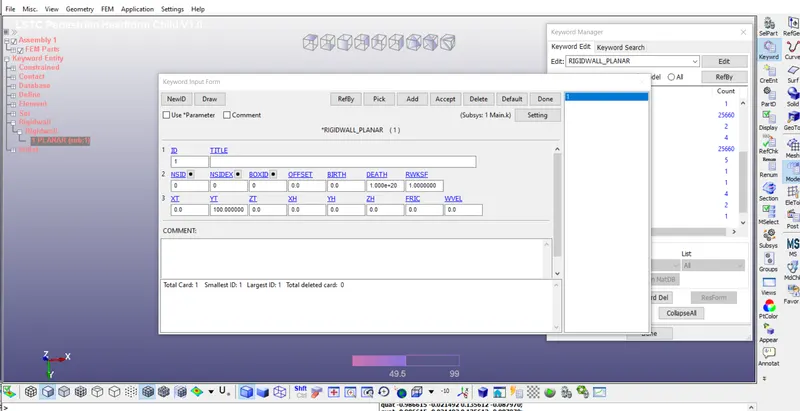
created the rigid wall planar in the *Rigid_wall at a distance of 100mm along the y-direction.
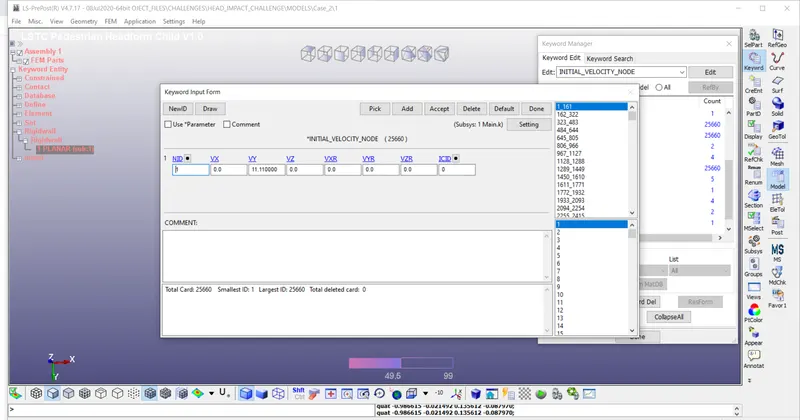
velocity has given in *initial_velocity in the y-direction.the value 40kmph(11.11mm/ms).
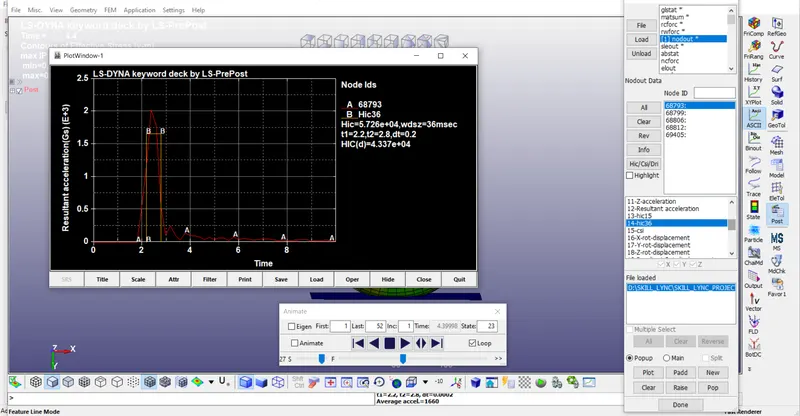
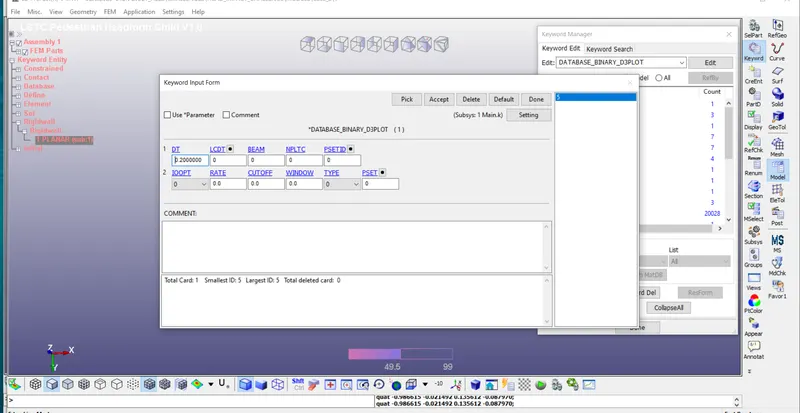
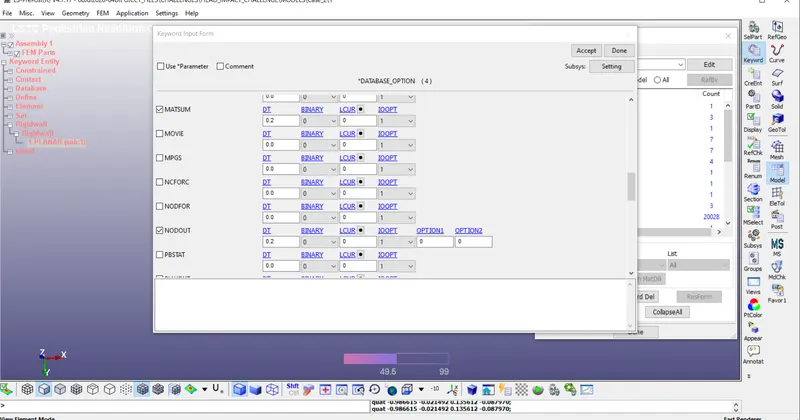
given the output cards in*Database those are global,material energies,nodal acceleration and rigid wall forces are given in the AscII option.
and also given the Binary_D3 plot and Extent_binary.
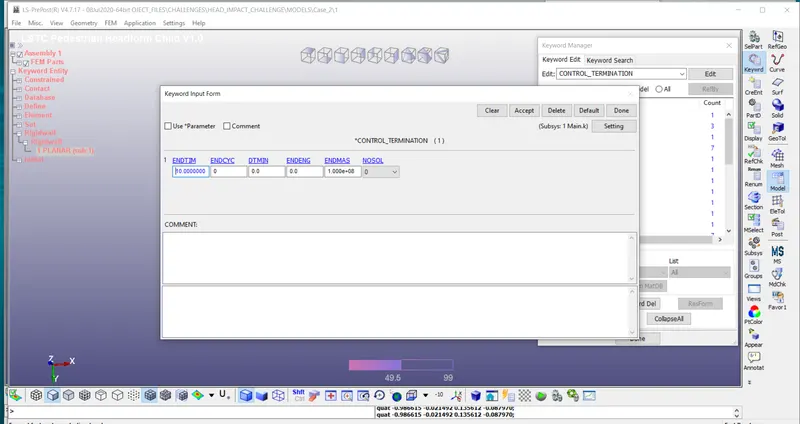
given the endtime in *control_Termination. end time is 10ms.
Animated plots:
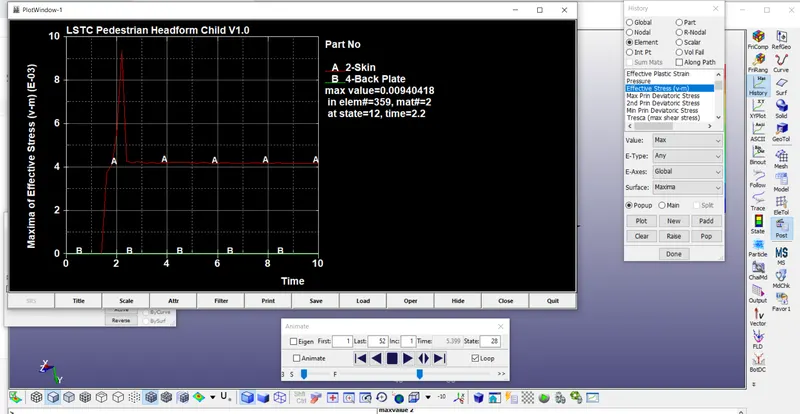
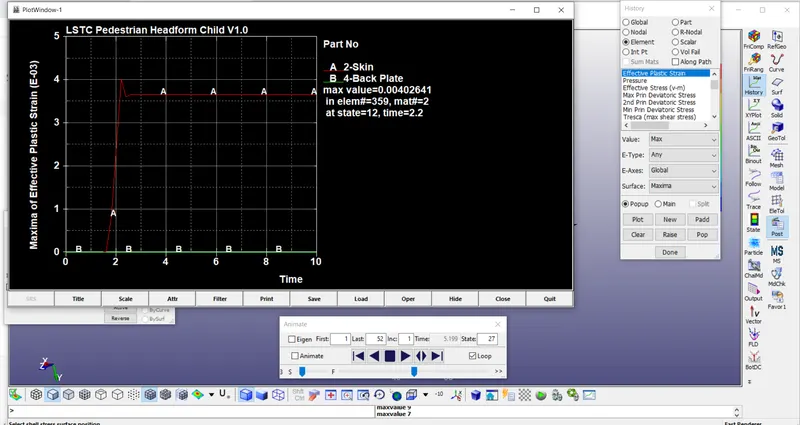
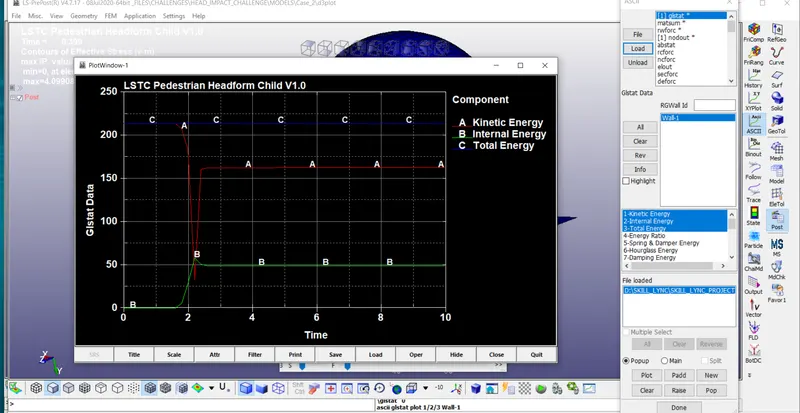
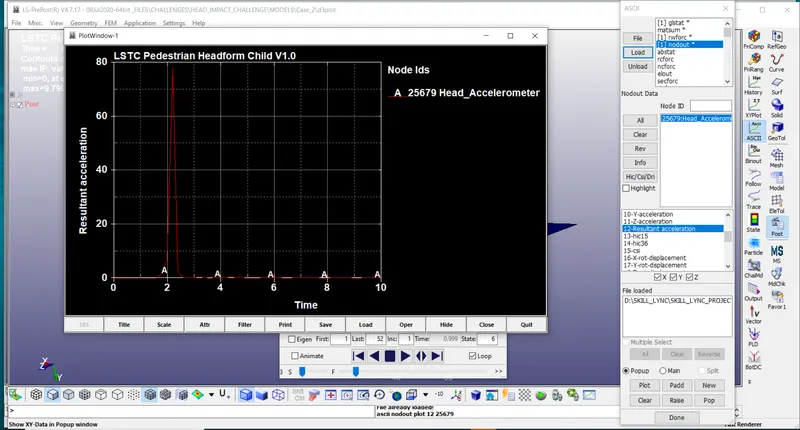
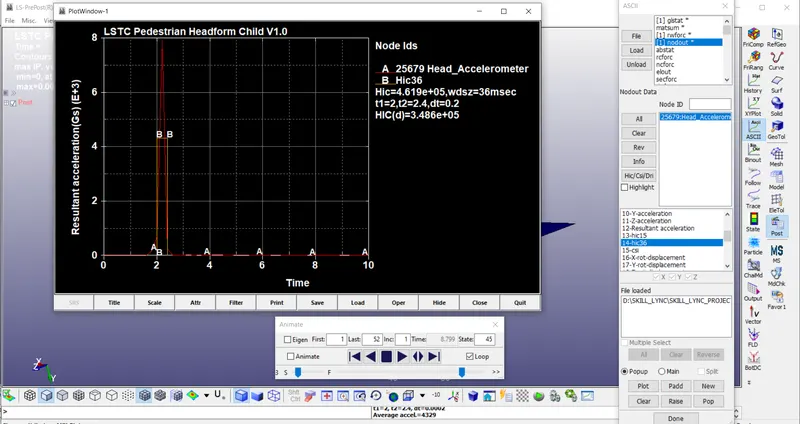
from the above plots the HIC value for the pedestrain head impact on the rigid wall. HIC value obtained from the child head impact simulation is HIC=4.619e5 and HIC(d)=3.486e5.
Case3:
pedestrain head form model impacting on the Rigid hood:
the hood model is imported in the ls-prepost.
in this case simulation occurs in the real life pedestrain accidents.
for this pedestrain head model at 50degrees towards the hood rigid.by using *Difine_tranformation and *include_transform.
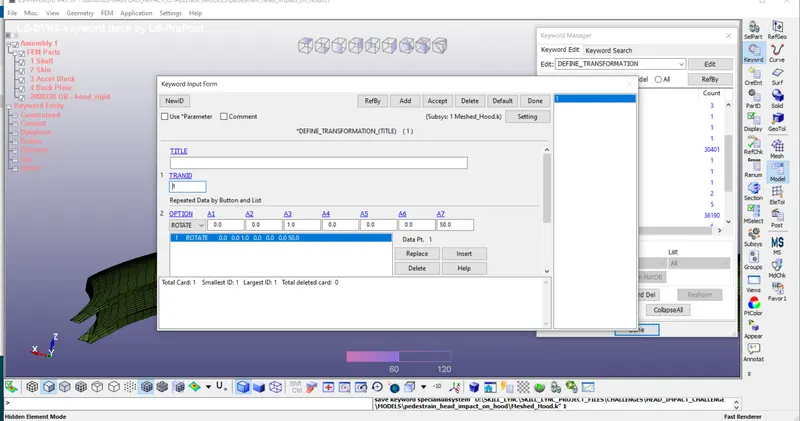
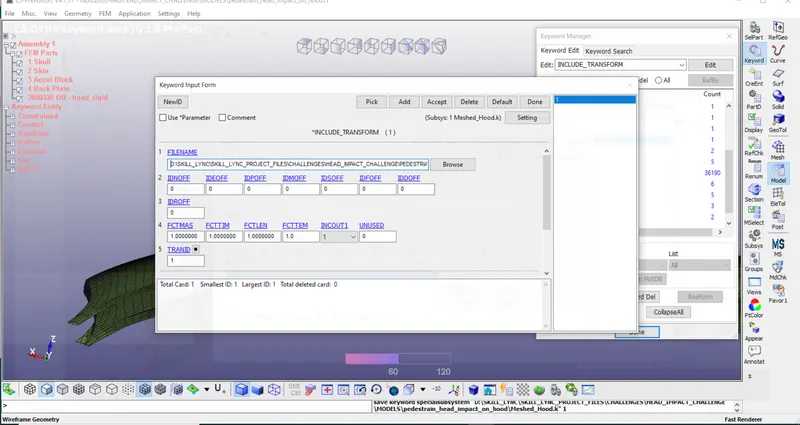
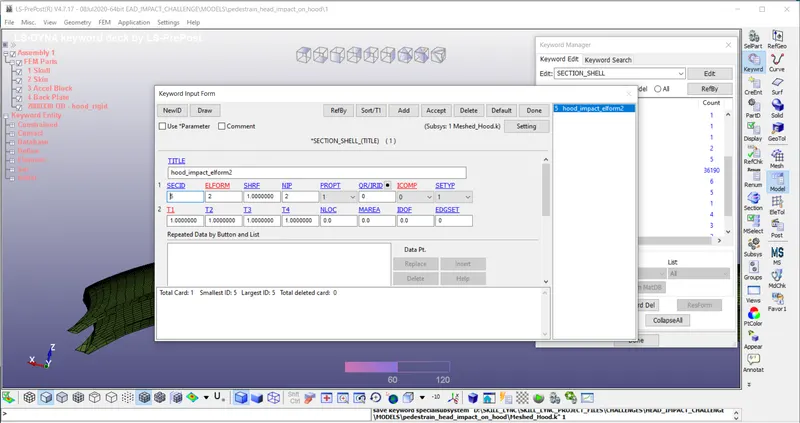
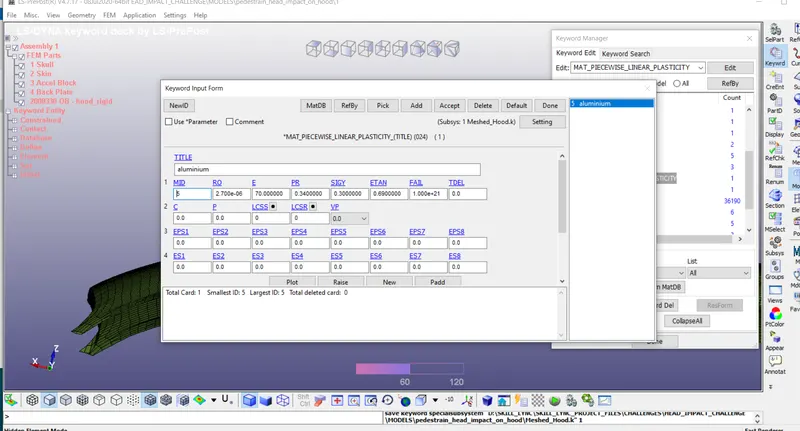
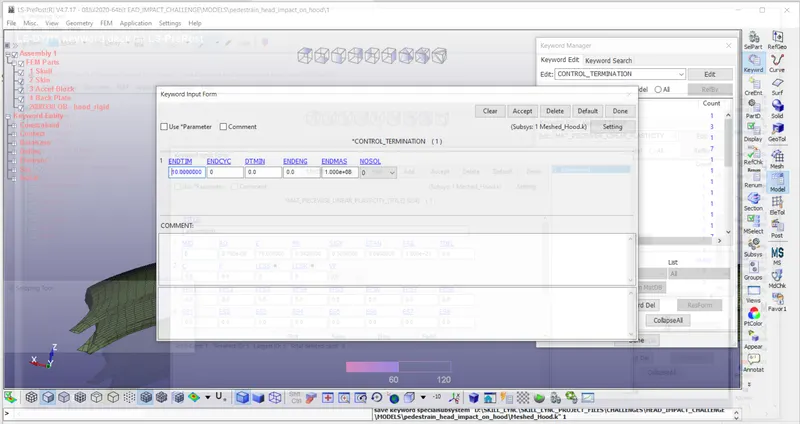
given section and material properties for the hood.and updated in the part and also given termination end time in *control_termination.
End_time is 10ms.
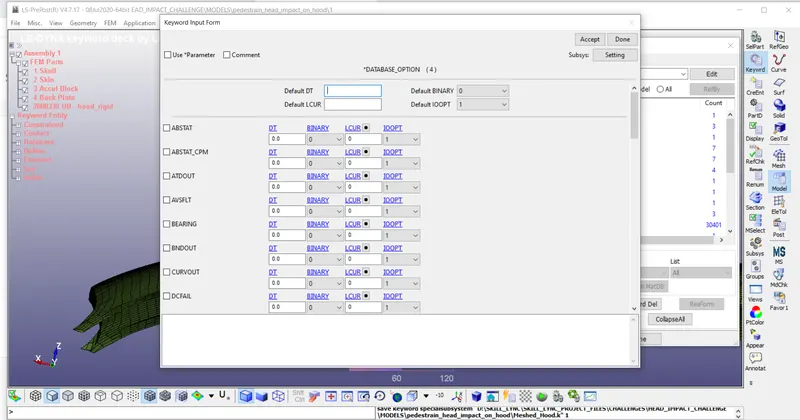
given databasecards like binary_d3plot,extent_binary and ascii.
Animation plots:
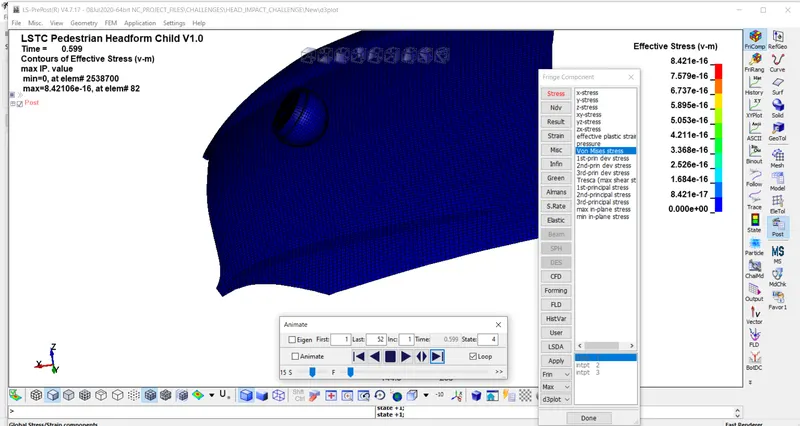
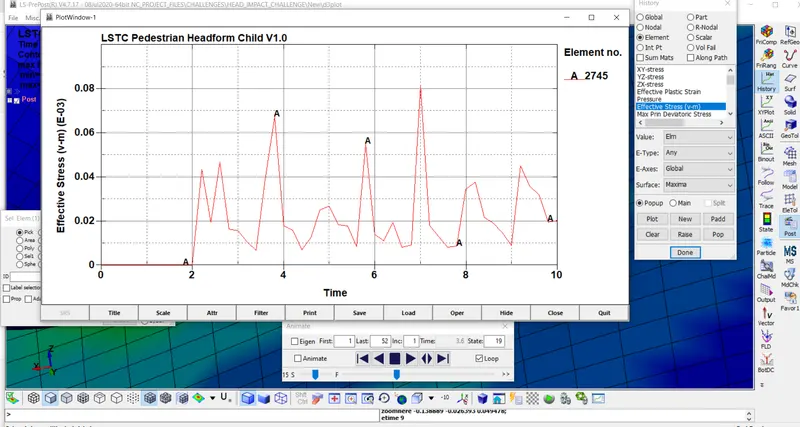
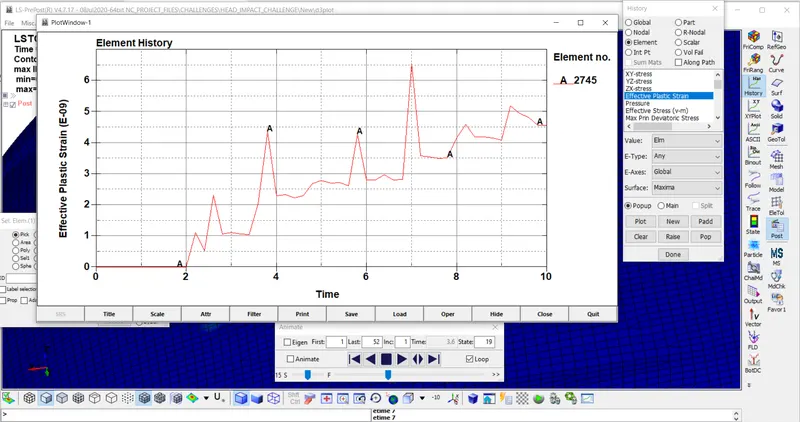
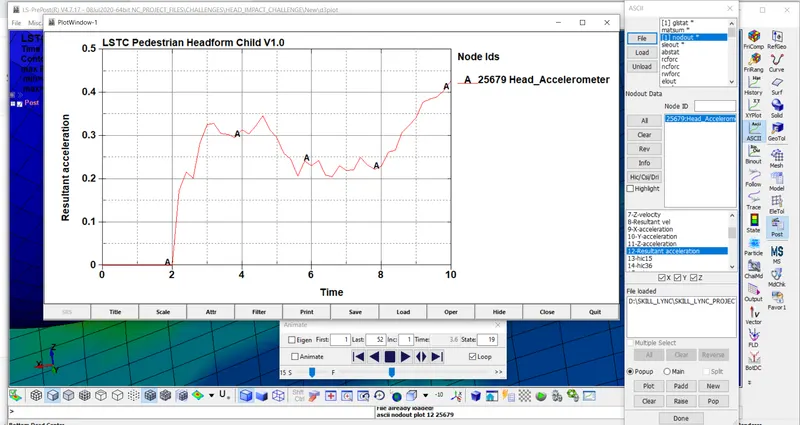
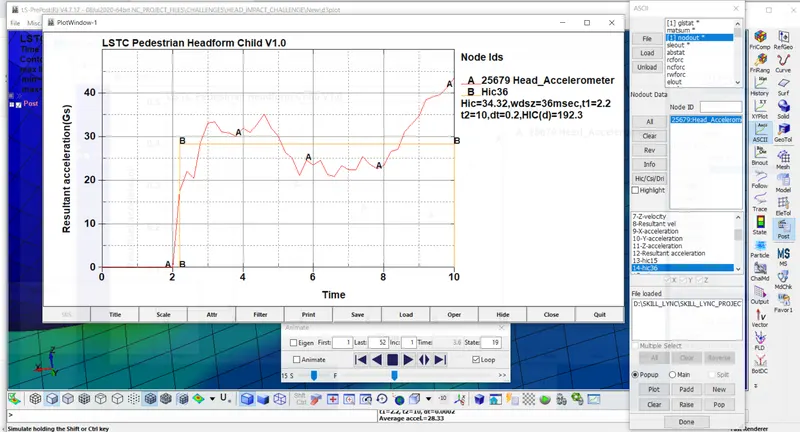
from the above plots HIC is obtained from the head impact on the hood is
HIC36=34.32
HIC(d)=192.3
Conclusion:
head impact simulations are performed by 3 cases
1.simple head impact on the rigid wall.
2.pedestrain head impact on the rigid wall.
3.pedestrain head impact on the hood.
for simple head impact basic model performed and the simulation has done.
in pedestrain head impact on the rigid wall and also done the simulation the HIC vlaue is 4.619e5
and fanal case is the main it is real life pedestrian head impact on the car hood pedestrain head impact on the hood had done and the simulation is carried out.the HIC value is34.32.