Week-7 : Converting a detailed engine model to a FRM model
Fast Running Model (FRM) - FRMs execute much more rapidly than the typical detailed GT-POWER engine model, and are ideal for integrating with other vehicle systems where an accurate and predictive engine plant model is desired and where computational speed is critical. FRMs adapt to changing conditions like valve timing, spark/injection timing, turbo lag, external temperature, altitude, cooling system conditions, etc. without the need to apply non-physical correction factors. Whether studying changes to ambient conditions, or simulating events that are heavily transient in nature, FRMs will maintain the predictive capabilities of a detailed engine model while allowing for the fast computational speeds that are expected when performing drive cycle analysis and other transient-focused simulations.
Tutorial 9
Tutorial9 explains the conversion of detailed model into FRM, step by step. There are eight steps explained.
Step 1 –
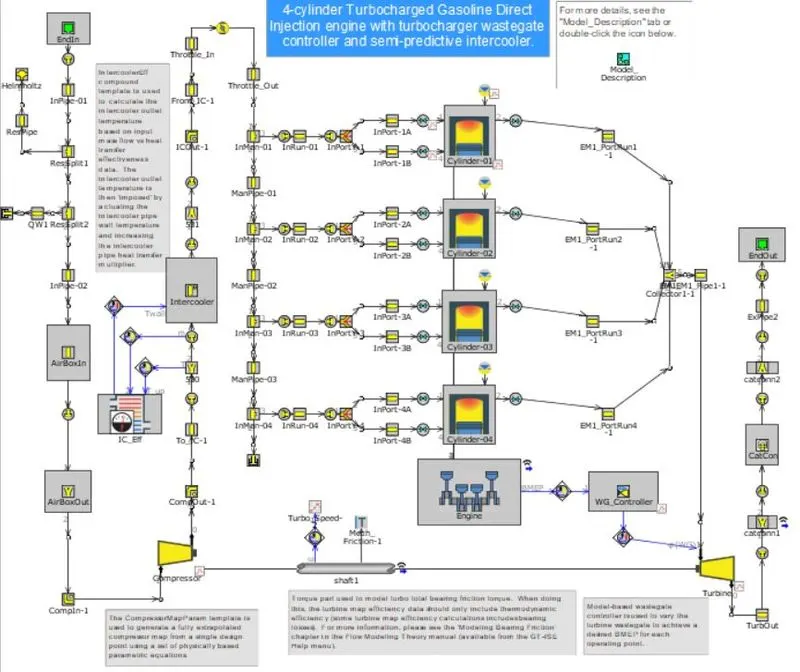
This step is explaining the detailed model. The intake system is implemented with intercooler which is reducing the temperature and increasing the density of air, which is coming from compressor. Intercooler is calculating its outlet temperature based in the mass flow rate vs effectiveness data. The intercooler outlet temperature is then 'imposed' by actuating the wall temperature and increasing the intercooler pipe heat transfer multiplier.
Model has single turbo assembly. Compressor is generating its map using the parametric equations, there is no data used. Turbine is implemented with wastegate and it is controlled by controller to achieve desired BMEP.
Engine has four cylinders with gasoline fuel intake mode direct injection. Engine is modelled with two inports and single outport.
Step 2 –
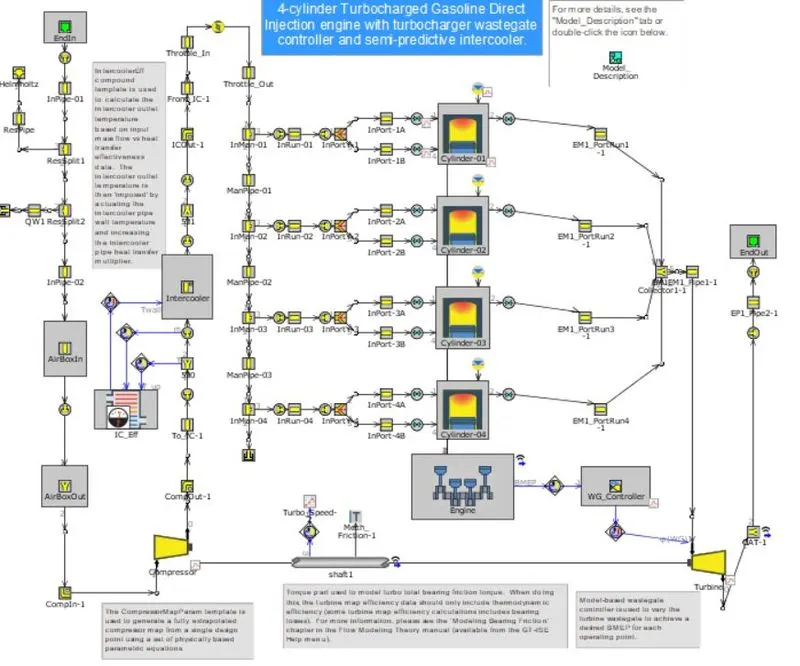
It is always preferred to start with exhaust system in FRM building. It can be seen that catalyst, flow splitter, some orifice and pipes has removed after turbine, to simplify the model. The exhaust piping has converted into single volume.
Step 3 -
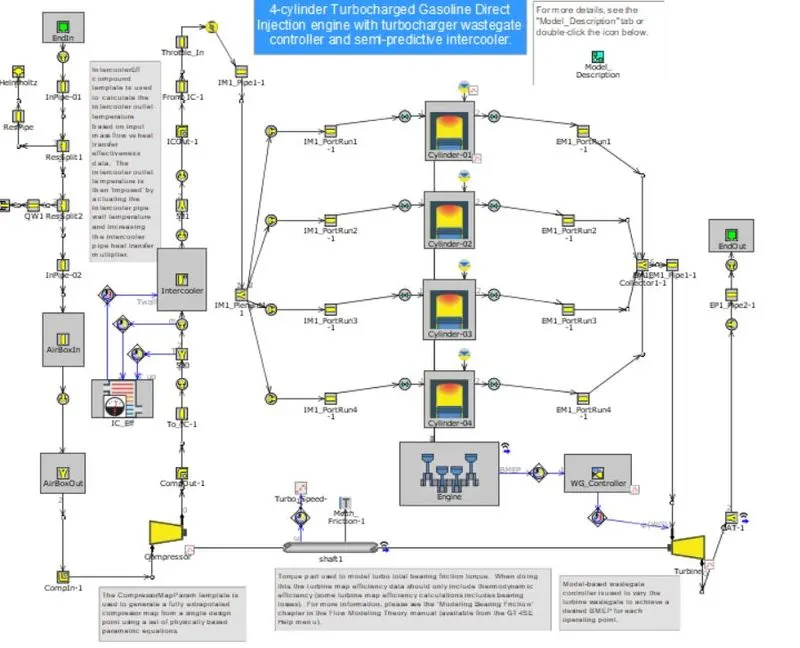
In this step the intake manifold and its associates has converted into single volume, in the same manner, as we did in step2.
Step 4 –
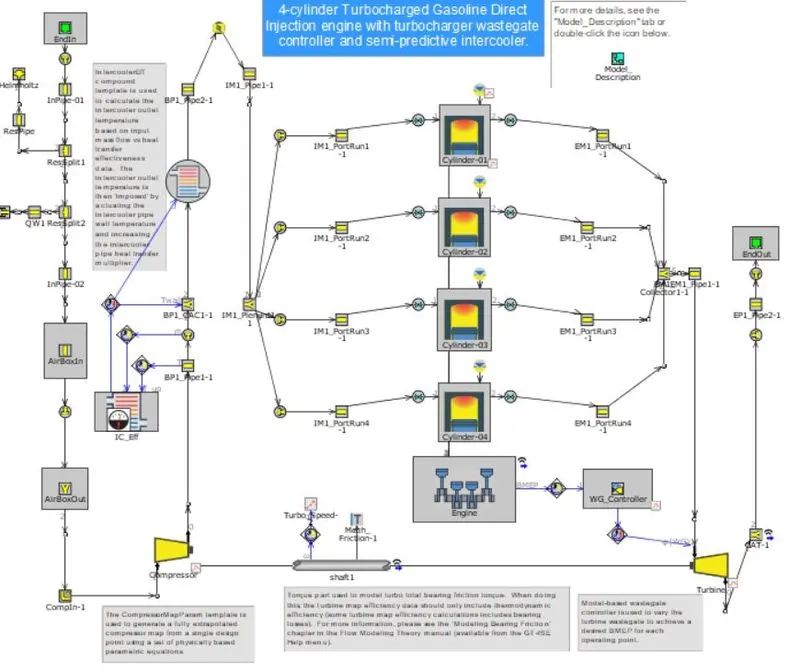
It is clear from the following images that, in step orifice, pipe has removed around the intercooler.
Step 5 –
In this step the line between ambient or end environment and compressor has simplified.
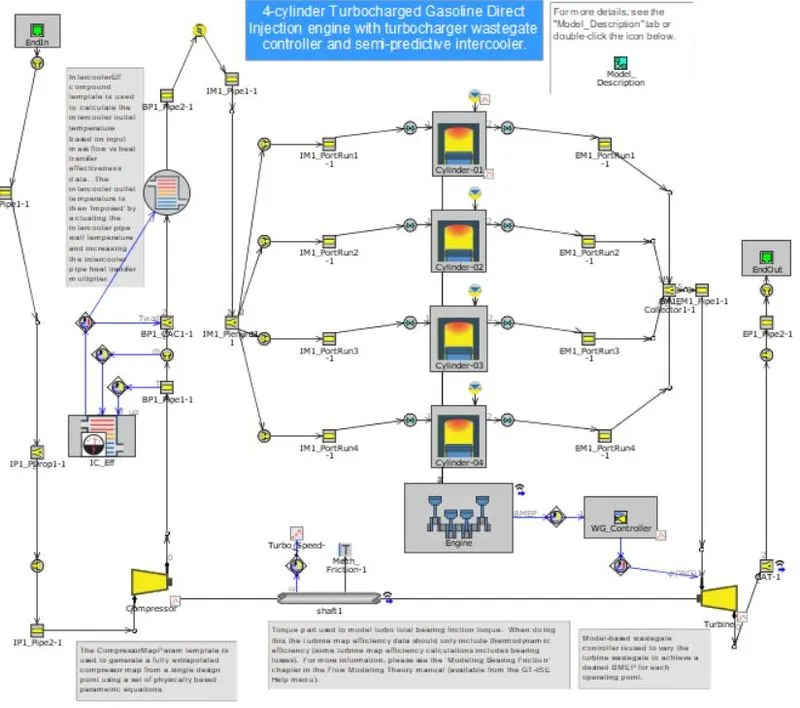
Step 6 –
All the runner port in exhaust system has removed and now exhaust gases making their way towards flow splitter directly, from exhaust valve.
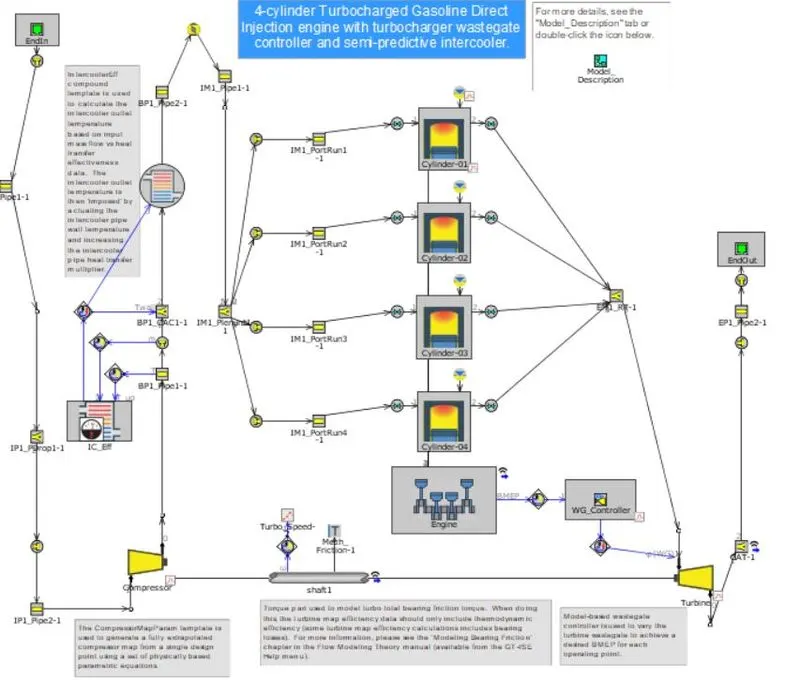
Step 7 –
In this step cylinder slaving has done. Cylinder slaving means on cylinder will work as master and other will work as slave, GT will solve the parameter related to master cylinder only and it will copy the same data to all slave cylinders. In this model we made cylinder1 as master cylinder.
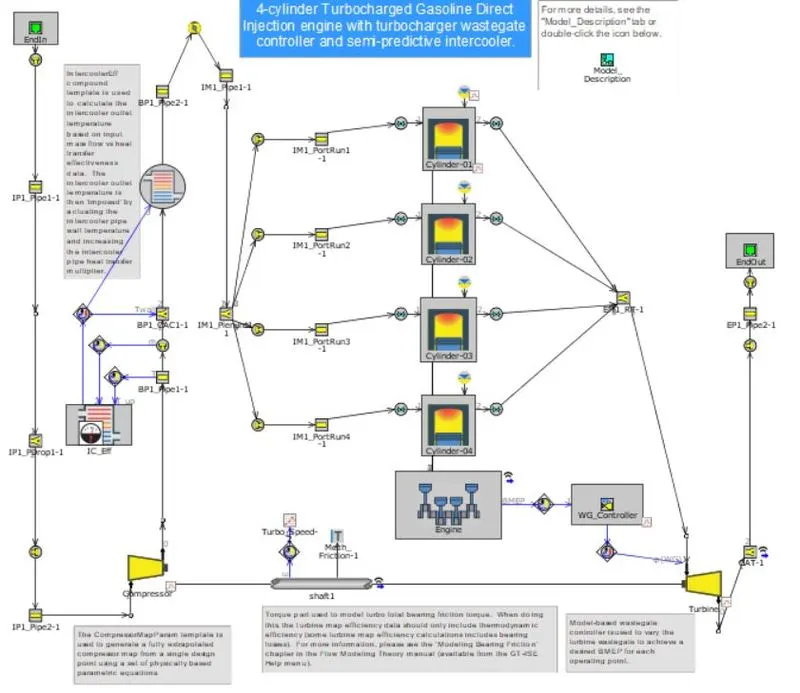
Step 8 –
In the last step real time solver is implemented with RLT variables.
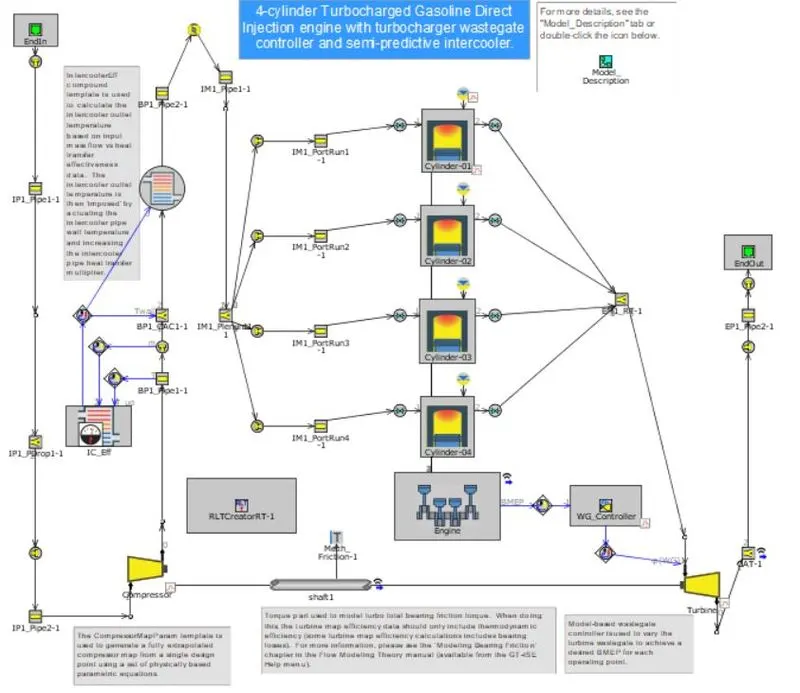
Model building with FRM builder –
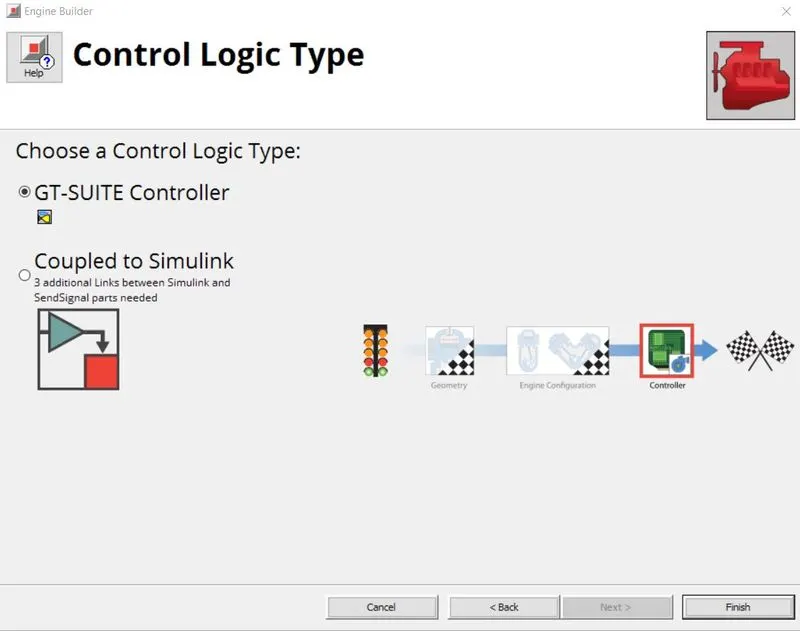
GT provides cool feature called FRM builder, which asks for some features like architecture type, type of engine, number of cylinders, type of turbo etc. and provides us FRM in seconds. We made the FRM as shown by following images –
tools > FRM builder
Step 1 -
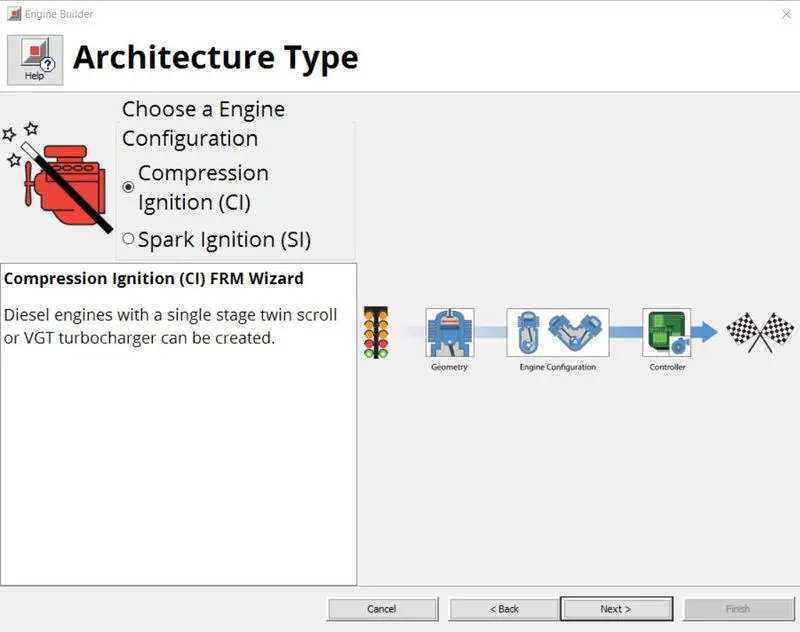
Step 2 -
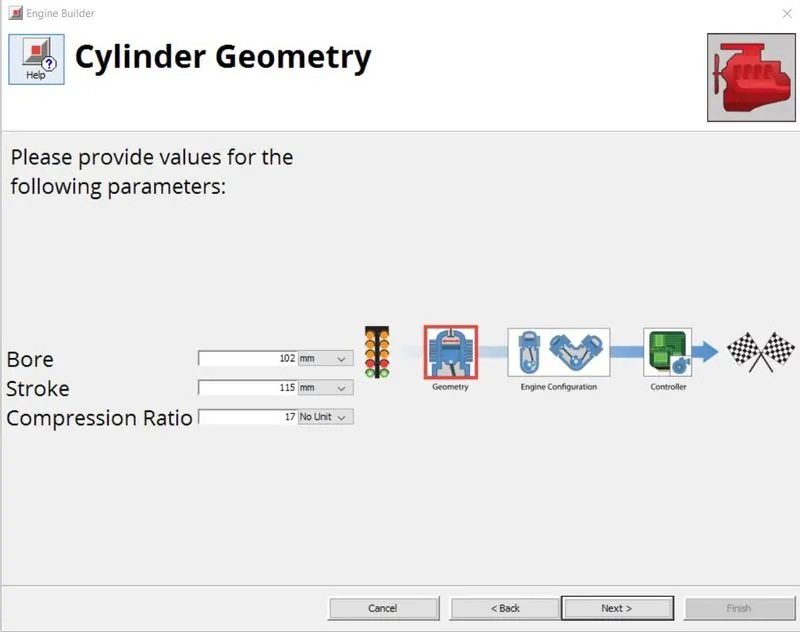
Step 3 -
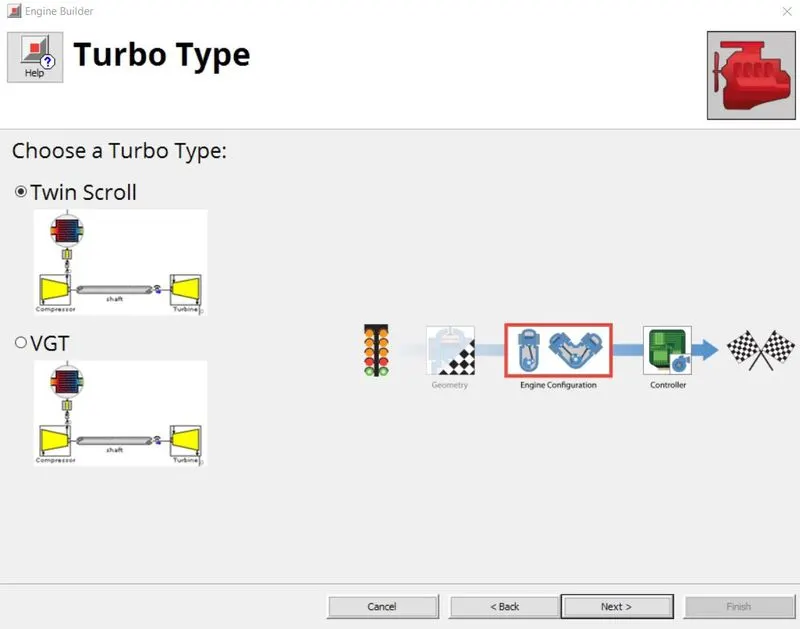
Step 4 -
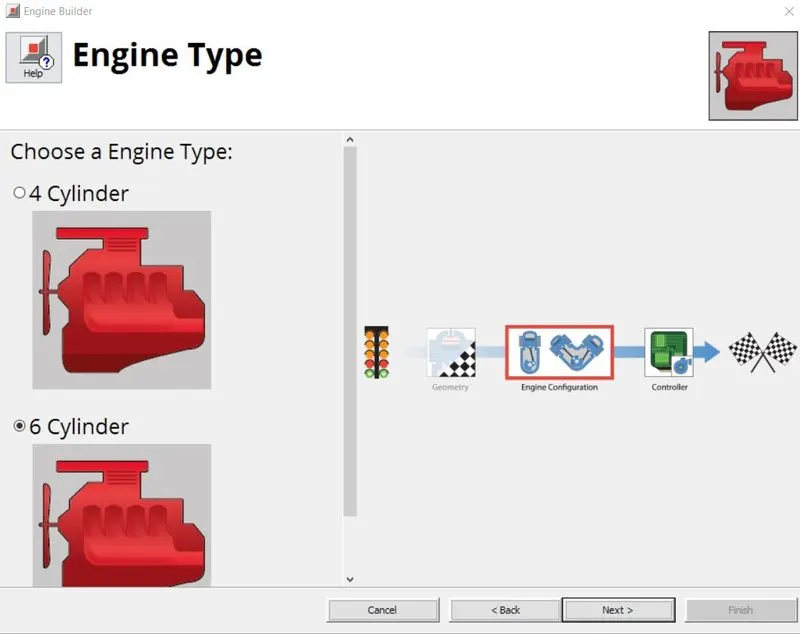
Step 5 -
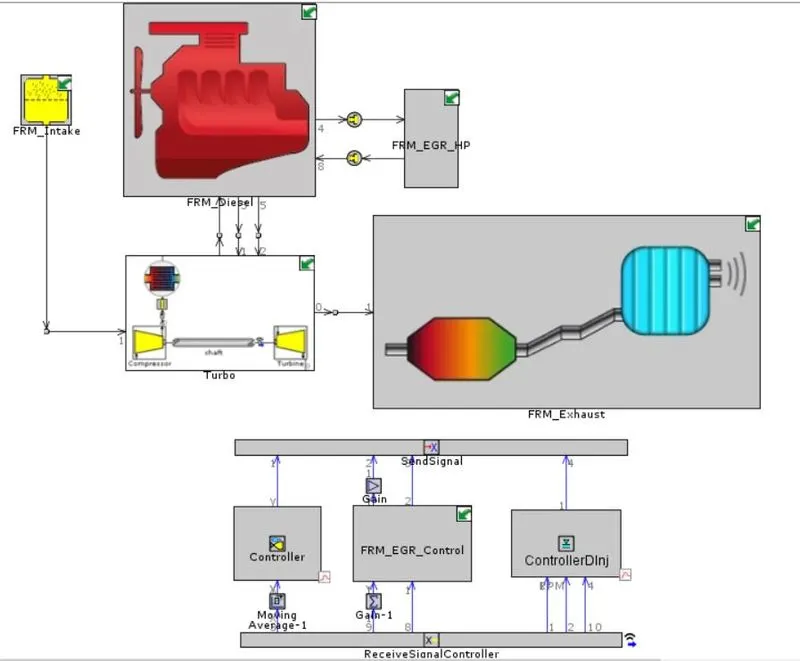
Model description –
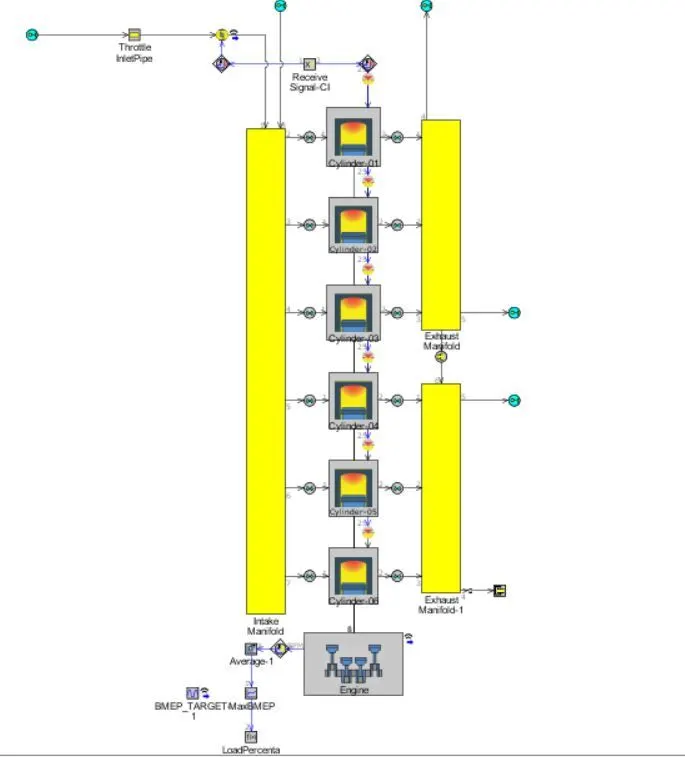
Engine Block -
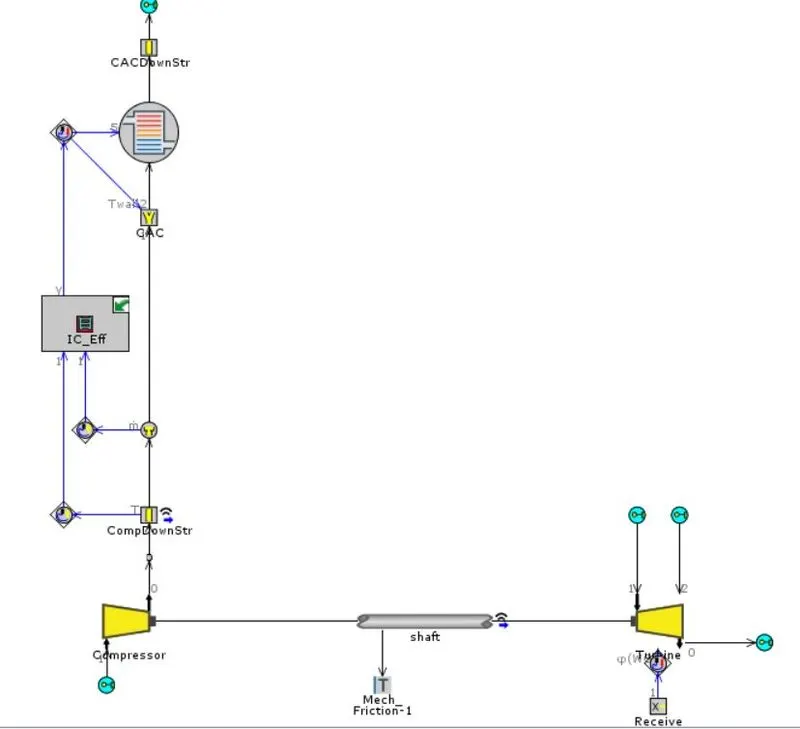
Turbocharger -
ERG -
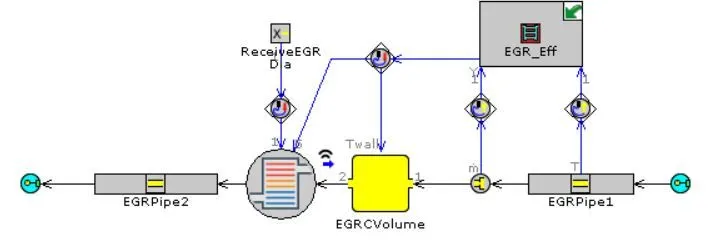
This is a 6cylinder CI engine build with turbocharger, high pressure EGR and its controller. Since it is a FRM, so it can be seen inport and outport are represented by single volume. A special sub assembly is there to send and receive the signals, this removes complexity.
Case setup –
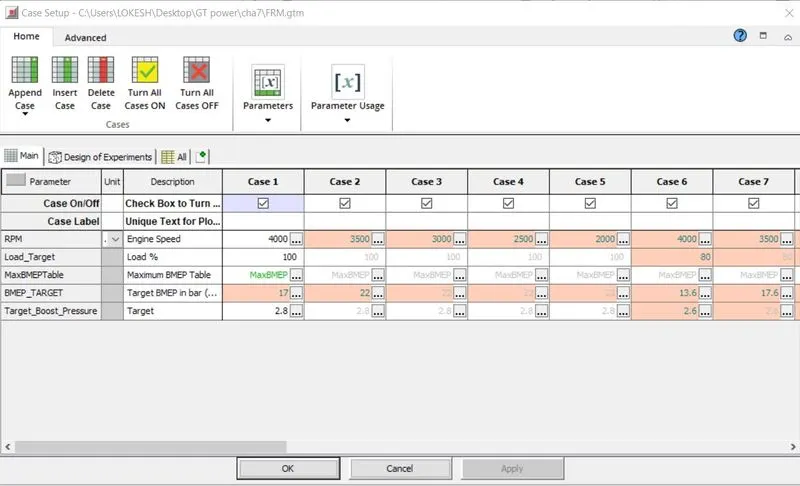
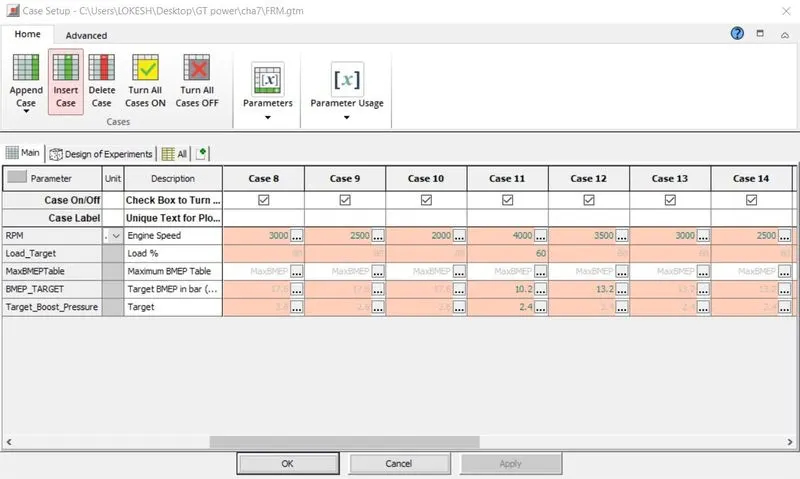
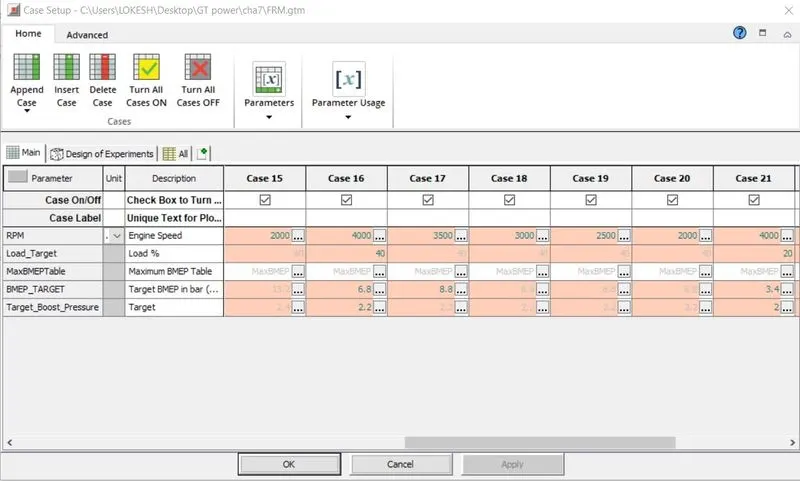
There are 25 cases which are varying RPM, target boost pressure, load target and BMEP target.
case 1-7 -
case 8-14 -
case 15-21 -
Remaining cases -
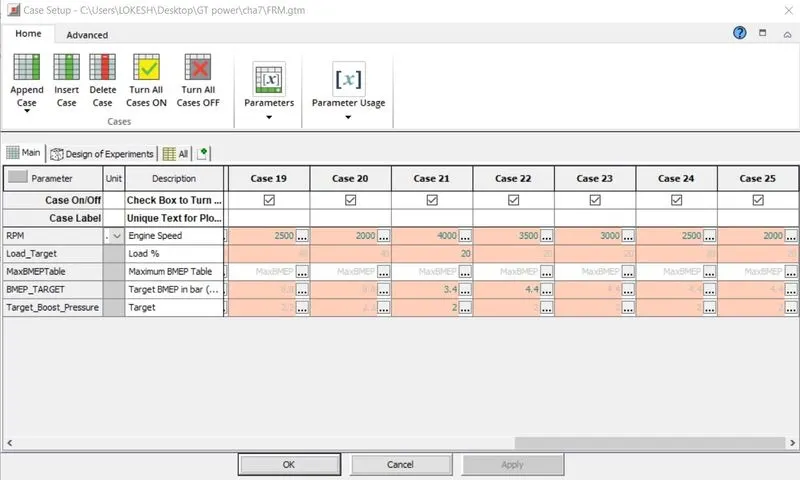
Results –
Case 1-8 -
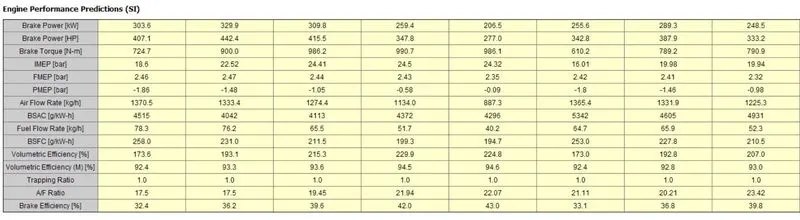
Case 9-16 -
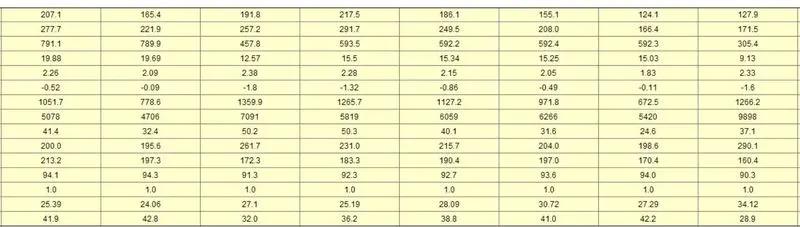
remaining cases -
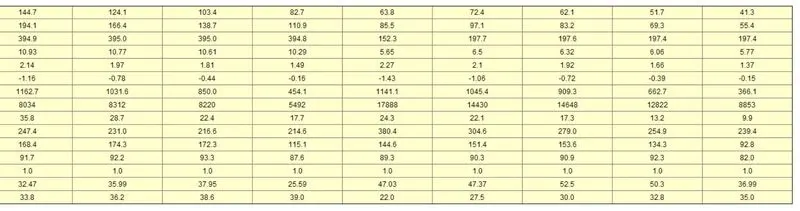
In the case 1-5 power is decreasing because the engine speed is decreasing and we can see boost pressure target is maintained constant but in case6 it is decreased, which results into surge in power. The story with the toque, it is increasing till boost pressure is maintained and then a surge and then again it decreases. BSFC and air flow rate is following same trend. BMEP is slightly above the targeted values.