DC Motor Control using MATLAB Script
- Run MATLAB demo ‘Speed control of a DC motor using BJT H-bridge’. Modify the model such that armature current doesn’t shoot up when motor changes direction from forward to reverse.
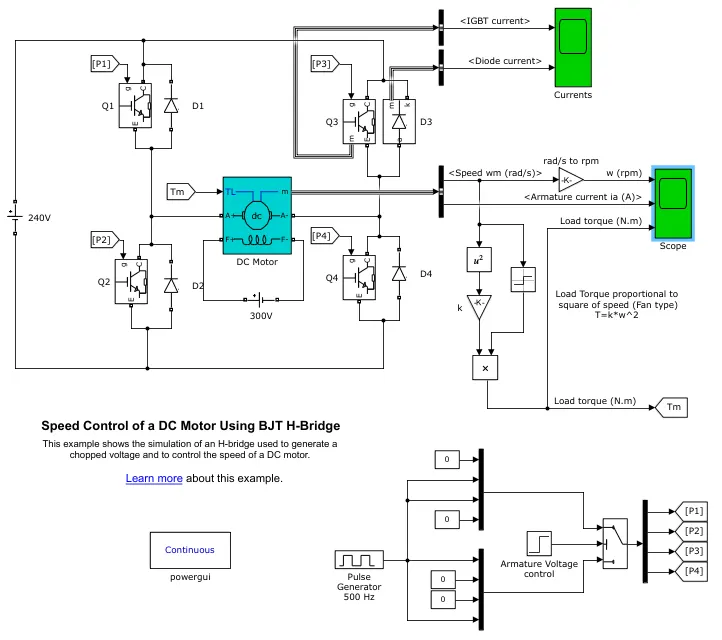
default model simulated:
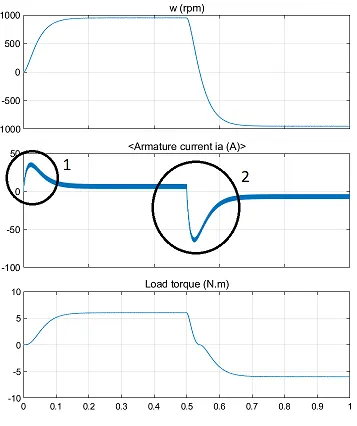
We can evident,
1 - Forward shootup of armature 2- Reverse shoot up of armature.
Shootup of armature, (i.e inrush current in armature):
Inrush current of a DC motor is given by
i=(V−E)/r">i=(V−E)/ri=(V−E)/r
where,
r is the armature resistance,
V is the terminal voltage and
E is the developed back emf which is directly proportional to the speed of the motor (N).
During starting the motor was initially standstill, hence the speed of the motor (N) as well as back emf (E) is zero. It means that inrush current during start is only V/r">V/rV/r . For a DC motor, the armature resistance is very small hence the inrush current drawn is very high. As motor starts rotating, E develops and hence current value falls down.
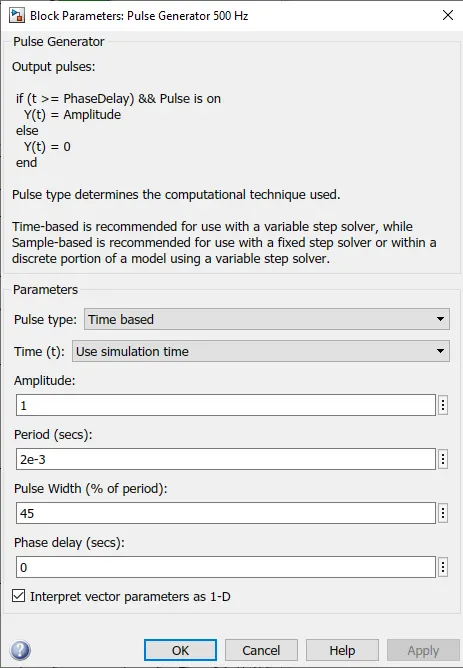
From the above explanation, it is clear that the input if controlled can be the solution for the shoot up of armature current. In the pulse signal
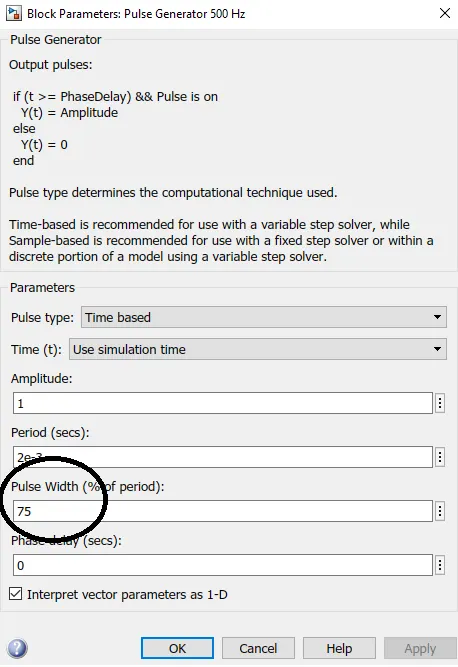
The pulse width is to be reduced, which in turn with doesn't shoot up the armature current.The pulse width intensifies the armature with high current as the armature have very low resistance. which can also be avoided by employing snubbers.Pulse width is given as 45 and simulated.
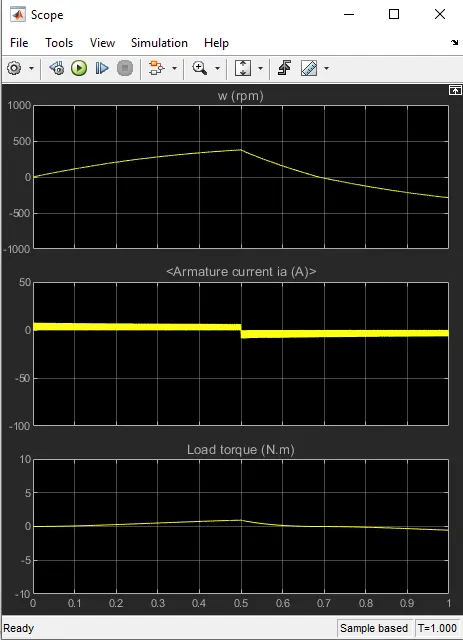
OUTPUT:
From the graph, it is seen, the armature current doesn’t shoot up when the motor changes direction from forward to reverse.
-------------------------------------------------------------------------------------------------------------------------------------------------------------------
2. Refer to the help section of ‘The Four-Quadrant Chopper DC Drive (DC7) block’. Compare it with H-bridge model.
* BJT H-Bridge BJT is a 2 Quadrant model which is applied in this model and DC7 is a four-quadrant model.
* H Bridge uses BJT, Whereas IGBT is employed in Four quadrant chopper.
* H BJT model Motor is self-excited. DC7 doesn't employ separate power sources.
-------------------------------------------------------------------------------------------------------------------------------------------------------------------
3. Make a suitable EV model using DC7 block and make result report.
DC7 BLOCK :
The Four-Quadrant Chopper DC Drive (DC7) block represents
* A four-quadrant (forward motoring, reverse regeneration, reverse motoring, and forward regeneration)
* DC-supplied,
* Chopper (or DC-DC PWM converter) drive for DC motors.
This drive features closed-loop speed control with the four-quadrant operation. Using a PI current controller, the chopper duty cycle corresponding to the commanded armature current is derived. Due to the use of high switching frequency DC-DC converters, a lower armature current ripple is obtained. However, four switching devices are required, which increases the complexity of the drive system.
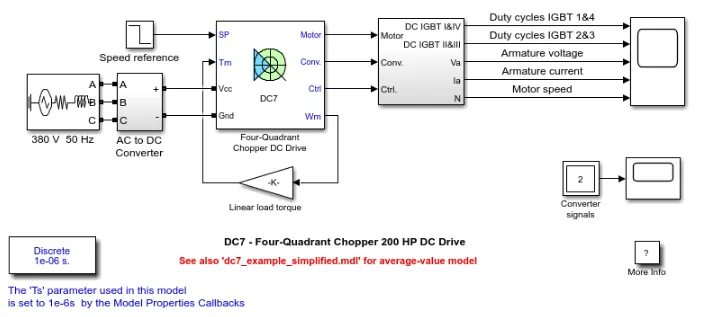
DEFAULT DC7 BLOCK
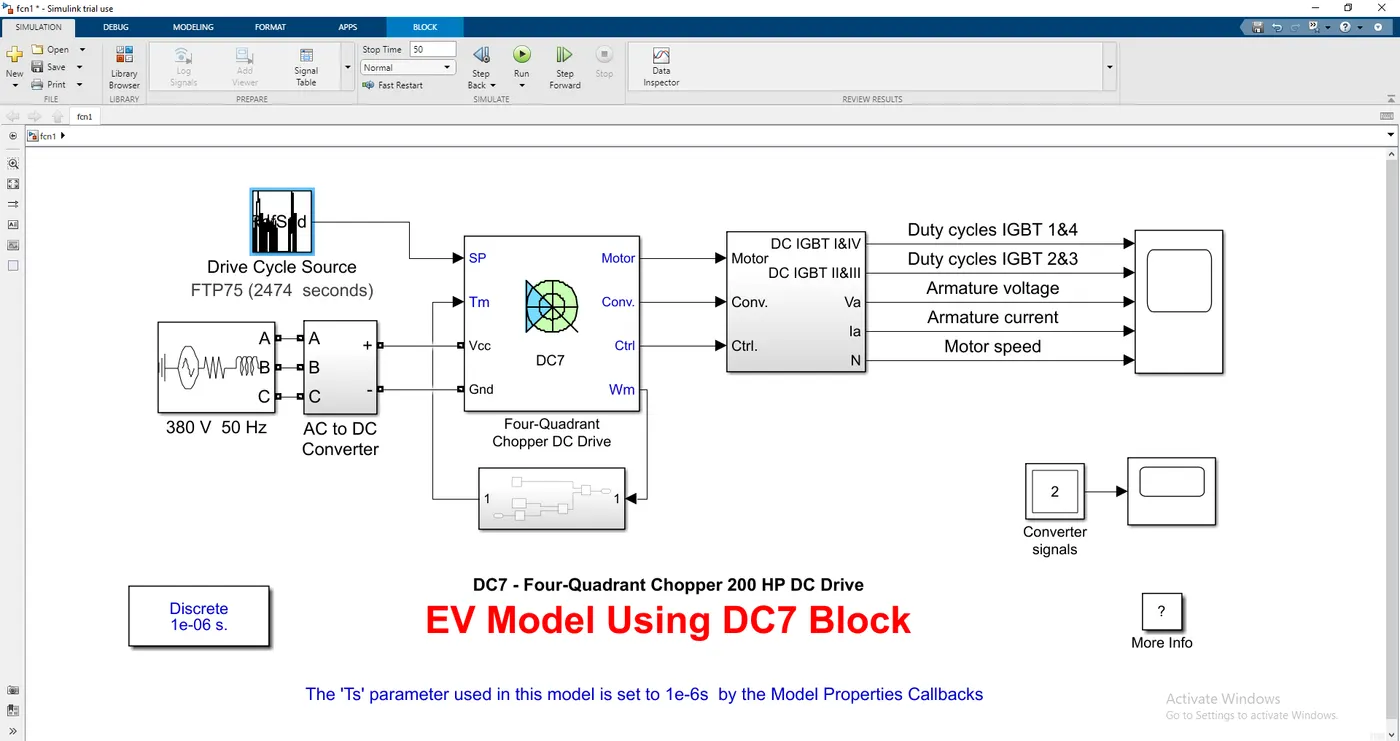
MODIFIED DC7 BLOCK
In this model to be converted into the EV, Ac plug-in is being considered which is converted into DC Supply and then power is fed into the DC7 Circuit. The DC7 Features inputs as,
* Speed patrol,
* Torque for motor
* Vcc (Positive)
* Ground (Negative)
Outputs as,
* Motor Data,
* Convertor data,
* Control Data
* Speed Data
The
The torque load for vehicles is entered by using a subsystem block. Torque equation is given as
Tm = 24.7+0.0051w^2,
in which motor is made suitable for a vehicle and the driving cycle is given as per the driving pattern, in which changes are made as follows,
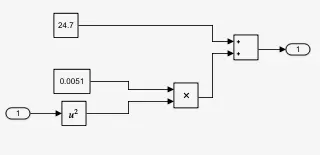
Torque data in subsystem block
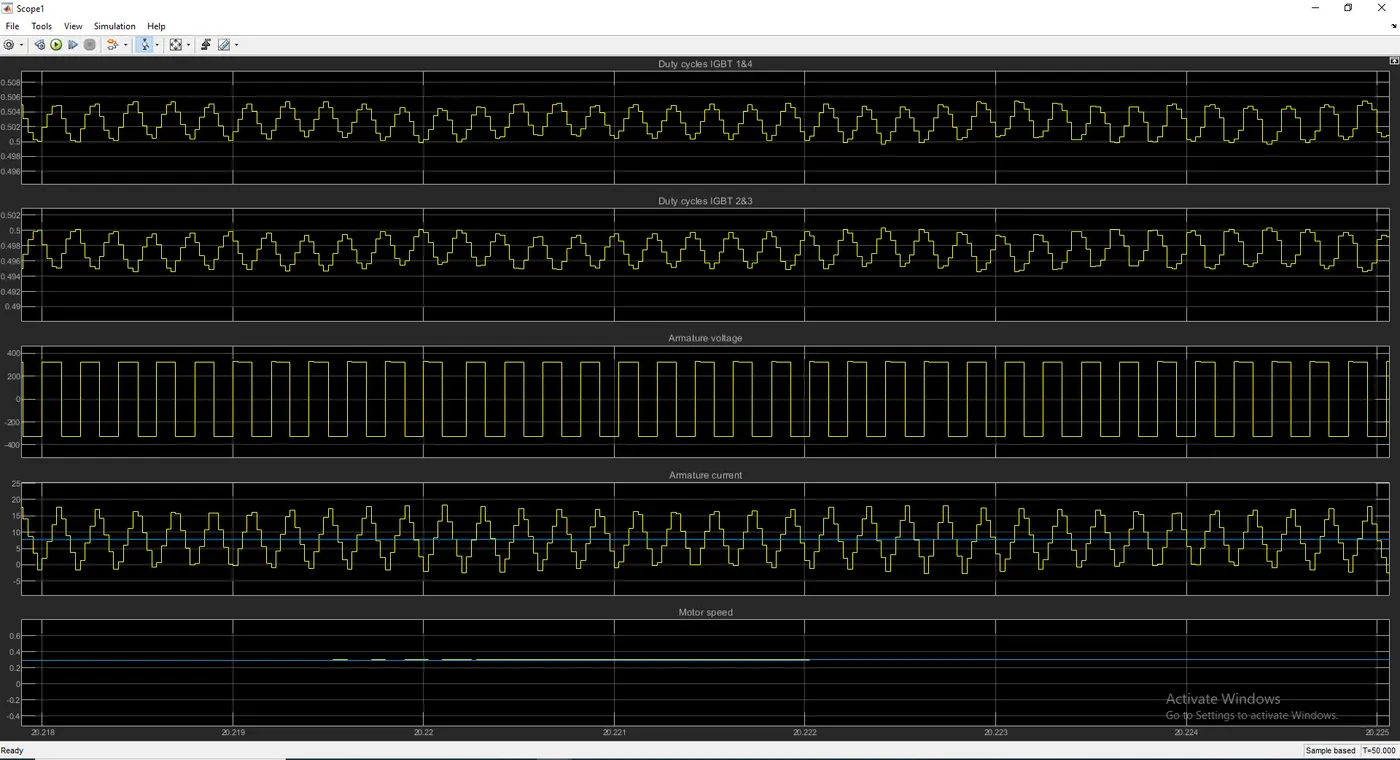
Output result :
Datas derived are,
* Duty cycle IGBT 1&4
* Duty cycle IGBT 2&3
* Armature Voltage
* Armature Current
* Motor Speed
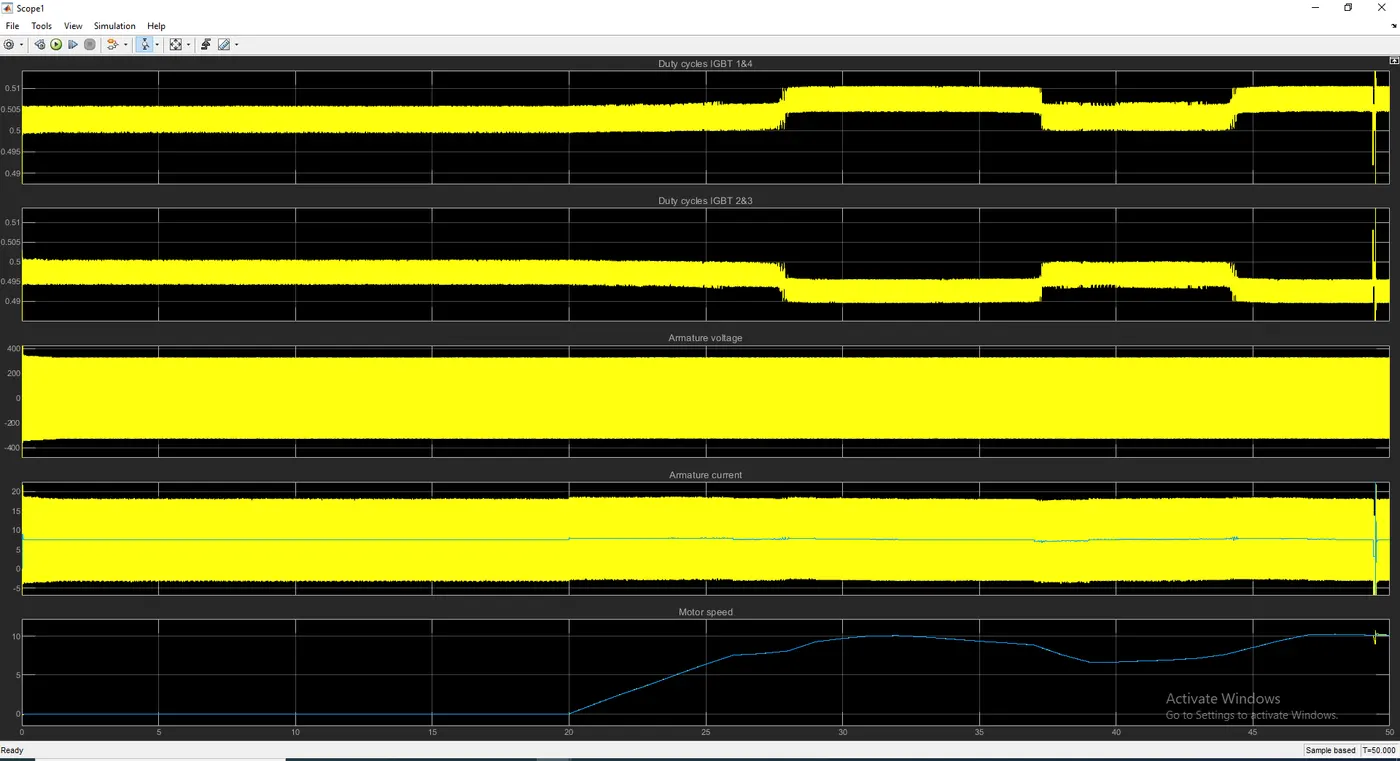
Zoomed in:
* The choppers converted the AC into DC.
* The motor speed raising with the time, due to the driving pattern from driving cycle.(i.e, of 50secs).
* Inrush current spikes not observed.