Week 7- Base Unit Design Challenges 2
AIM:
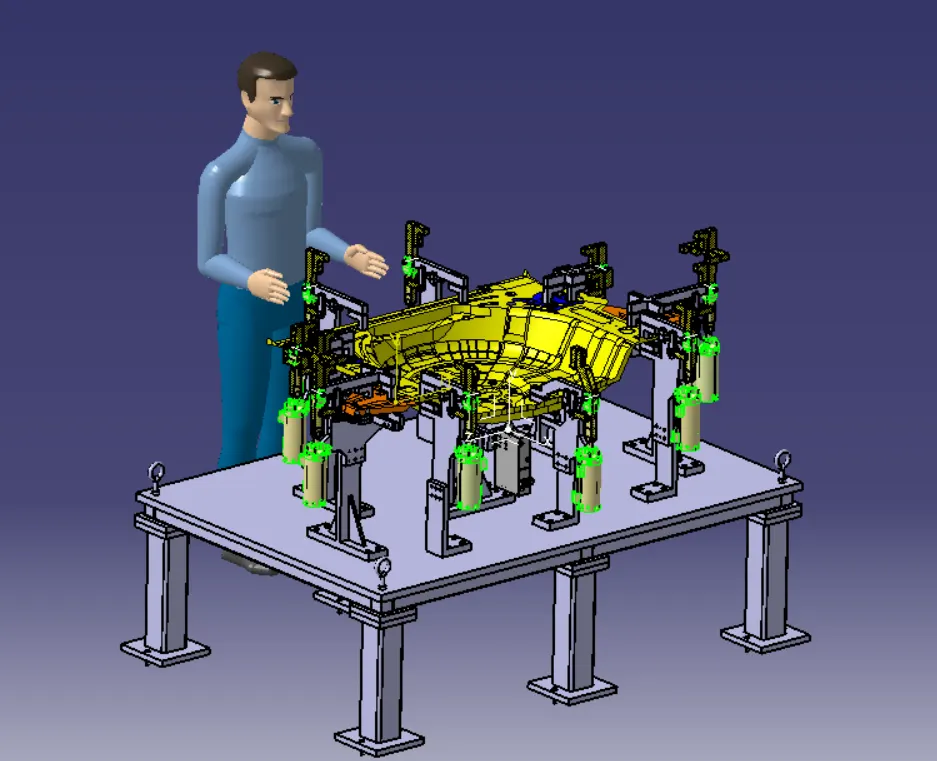
Design a base unit with all required weldments and pedestals as required by the fixture.
INTRODUCTION:
A base unit is a steel or aluminium plate of 20-40mm to which all other pin and clamp units are attached. It must also provide space for parts like a pneumatic controller, eye bolts, pneumatic cable trunking paths etc.
DESIGN FUNDAMENTALS OF BASE PLATE DESIGN:
- The Base unit should enclose all the units to the periphery including in the open position.
- The Baseplate should be designed as per BCS coordinates.
- It should have datum holes and measuring holes with a pitch of 1000mm in general.
- Depending on the size of the plate the number of holes may vary.
- Datum holes should be places at nominal positions like X=150, Y=120, Z=380
- Datum holes should be at least 100mm from other units
- Datum holes should be covered with cover plates.
PARTS OF BASE UNIT:
Base Plate:
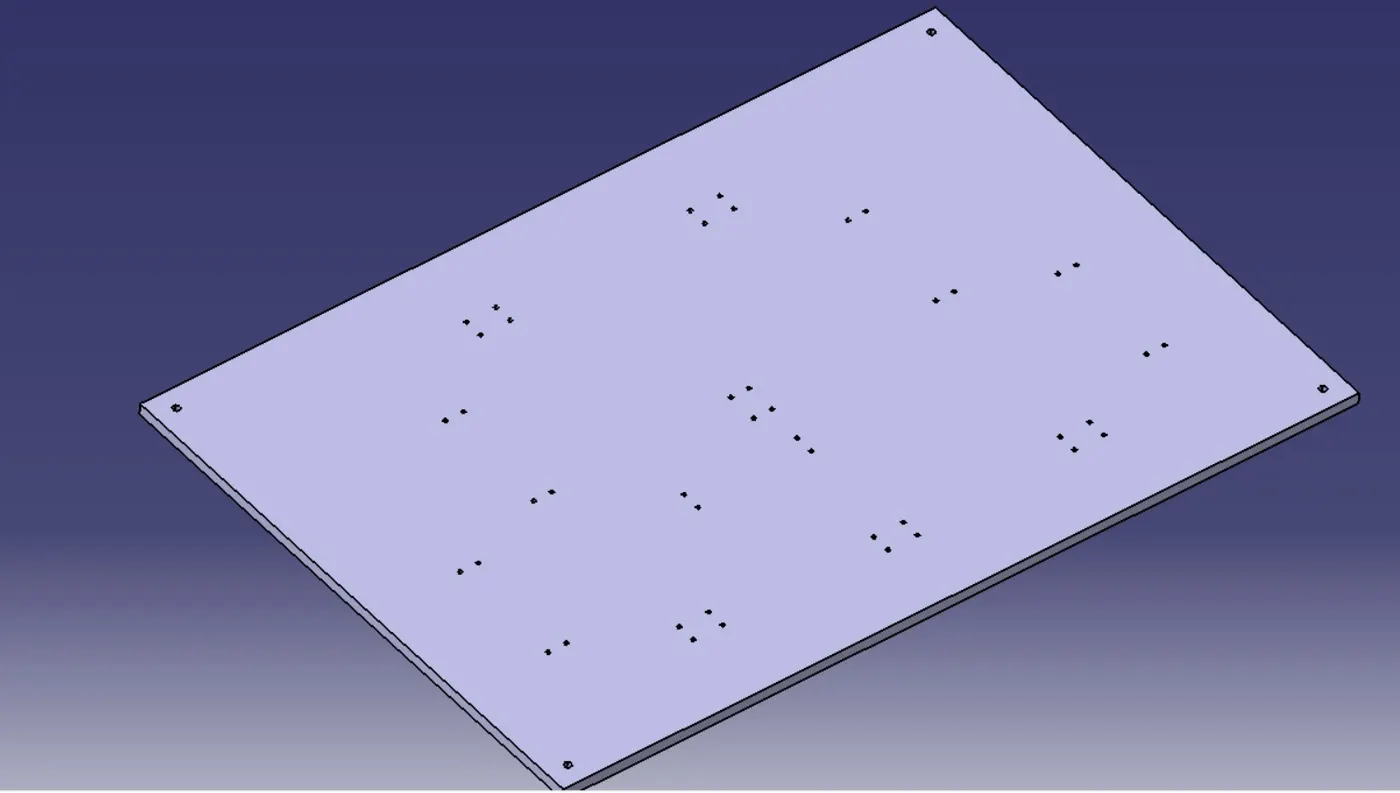
The base plate is a plate of 20-40mm thickness to which all other units are mounted. It is a plate on which all other units like pin and clamp units are mounted. It has holes that act as datum holes that help locate the positioning of units.
Weld Frame:
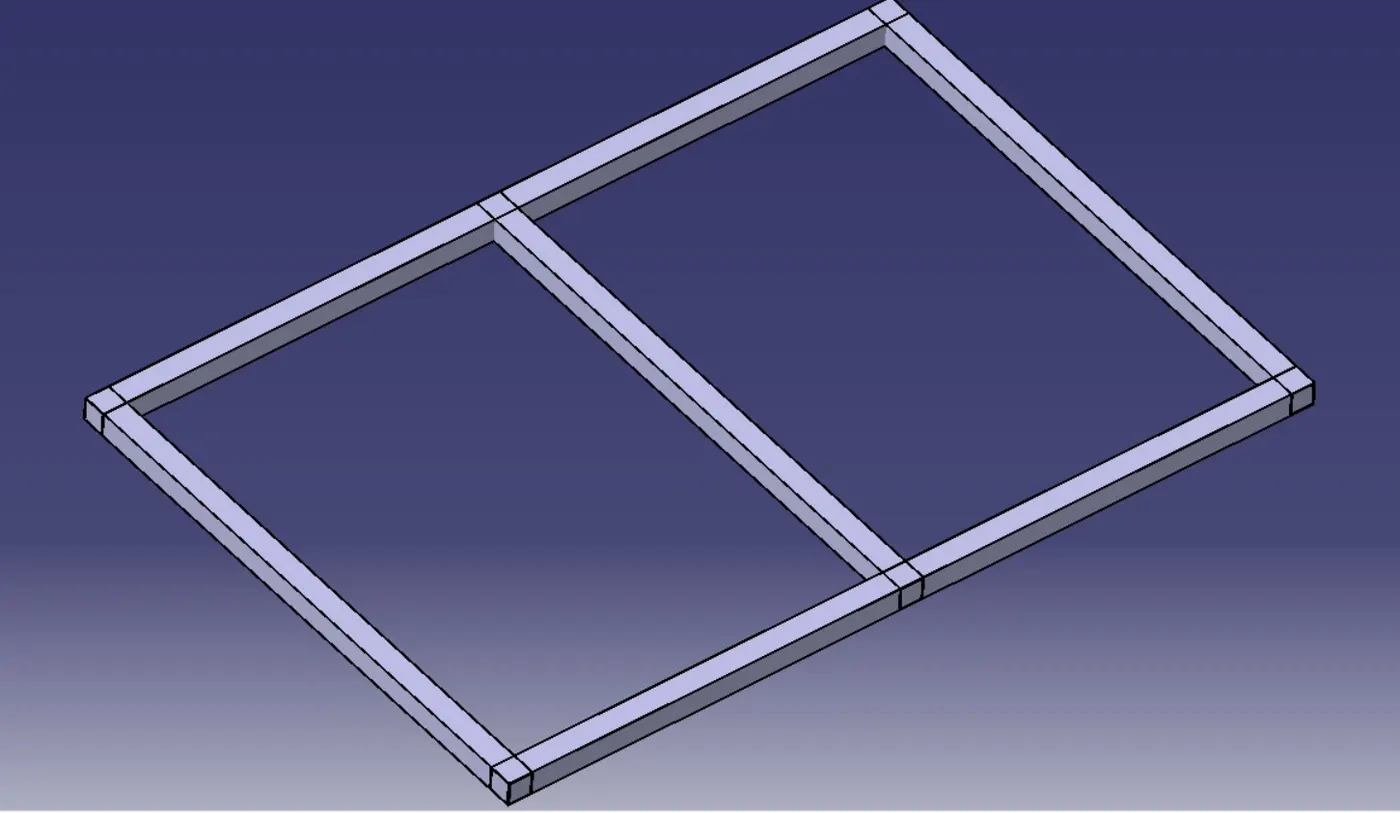
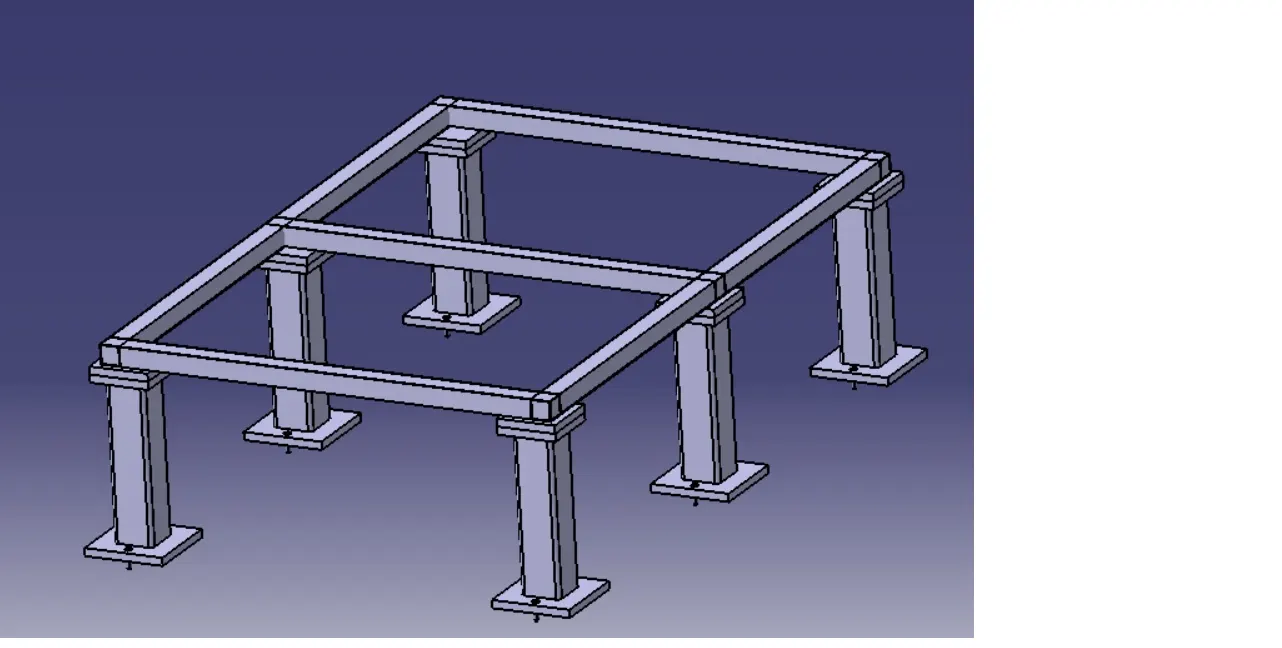
This provides the necessary support and structure to the base plate, it is a frame welded to the bottom of the base plate. Depending on the size of the plate the number and positions of the crossbars in the weld-frame may vary.
Pedestal:
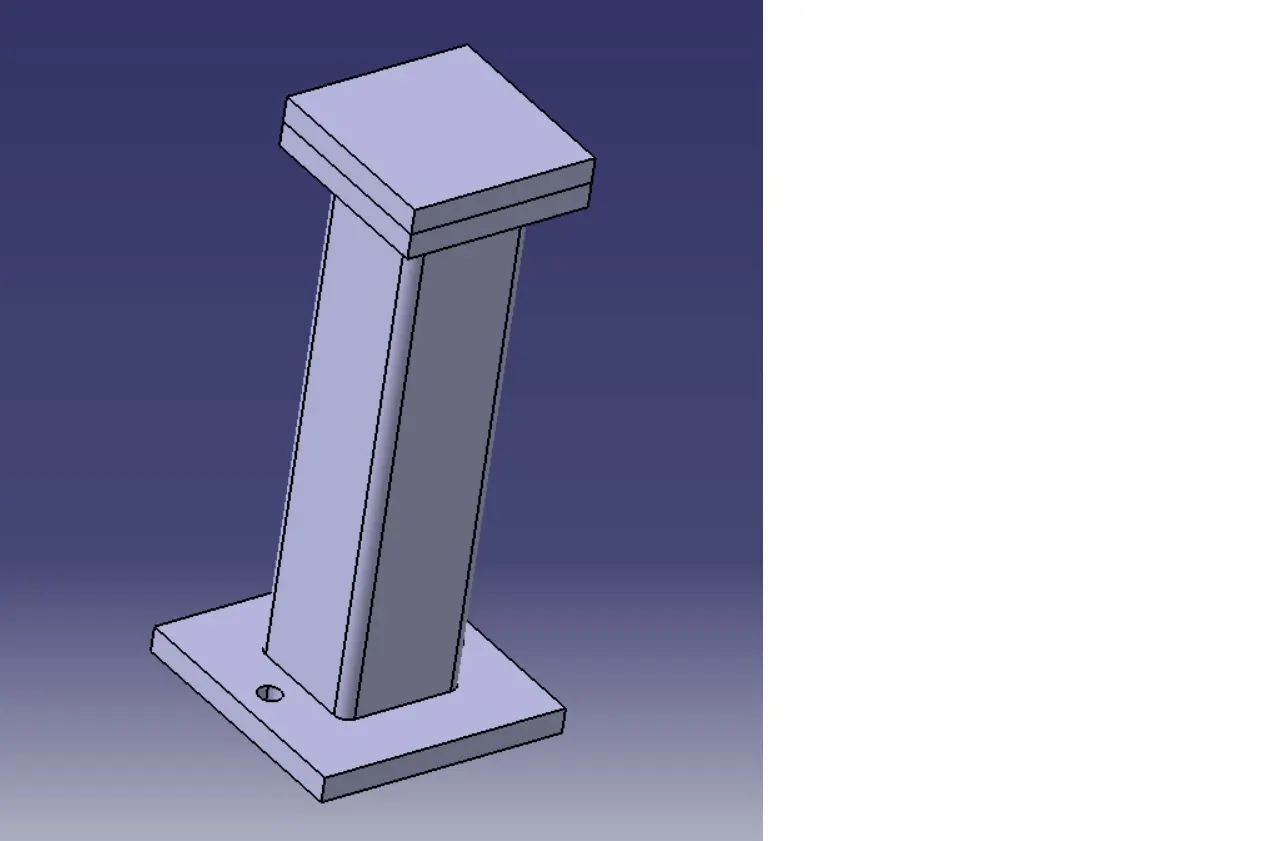
The pedestal is used to raise the height of the unit to the desired height from the floor. The size and number of pedestals may vary according to the size of the base unit and the total mass that it supports.
Floorplates:
Floor plates are mounted on the floor and are connected to the base of the pedestals via screws that are used to level the base unit and the fixture as a whole.
Trunking Channels:
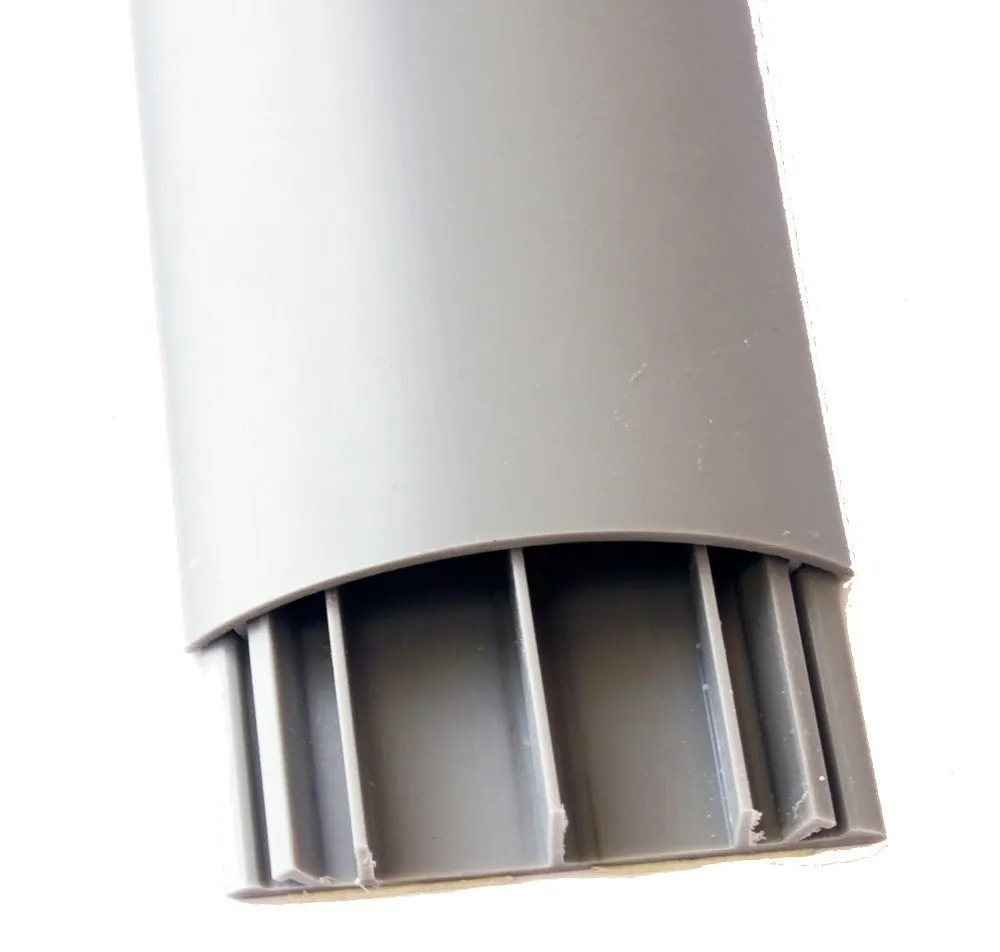
These are tubes through which all the pneumatic piping for the fixture is routed and are usually cut from standard tubes.
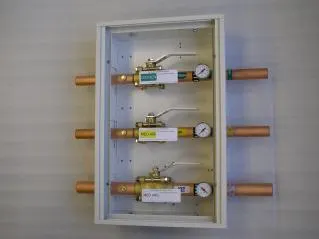
Valve Boxes:
This box contains all the valves and pneumatic controls of the fixture.
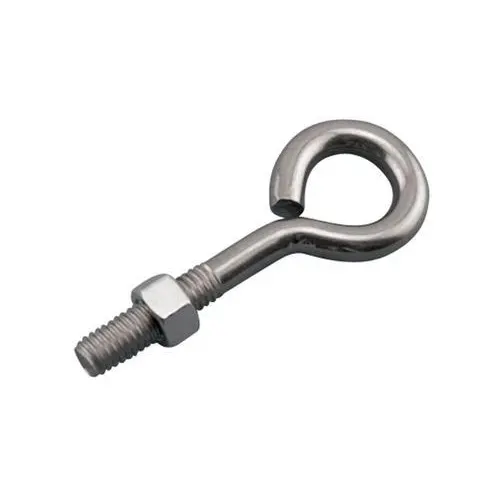
Eye Bolt:
Eyebolt is used to lift and transport the fixture. The size and number may vary depending in the size of the fixture
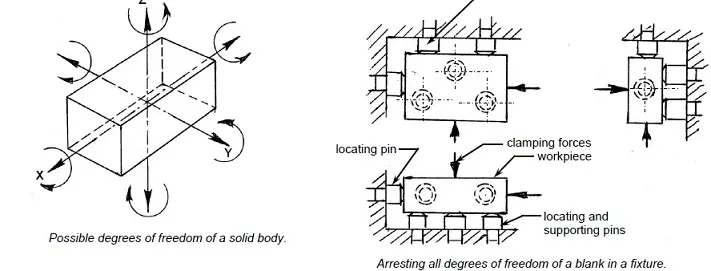
3-2-1- PRINCIPLE:
The 3-2-1 principle of location (six-point location principle) is used to constrain the movement of the workpiece along the three axes XX, YY, and ZZ. This is achieved by providing six locating points, 3 pins in the base plate, 2 pins in the vertical plane and 1 pin in a plane which is perpendicular to the first two planes.
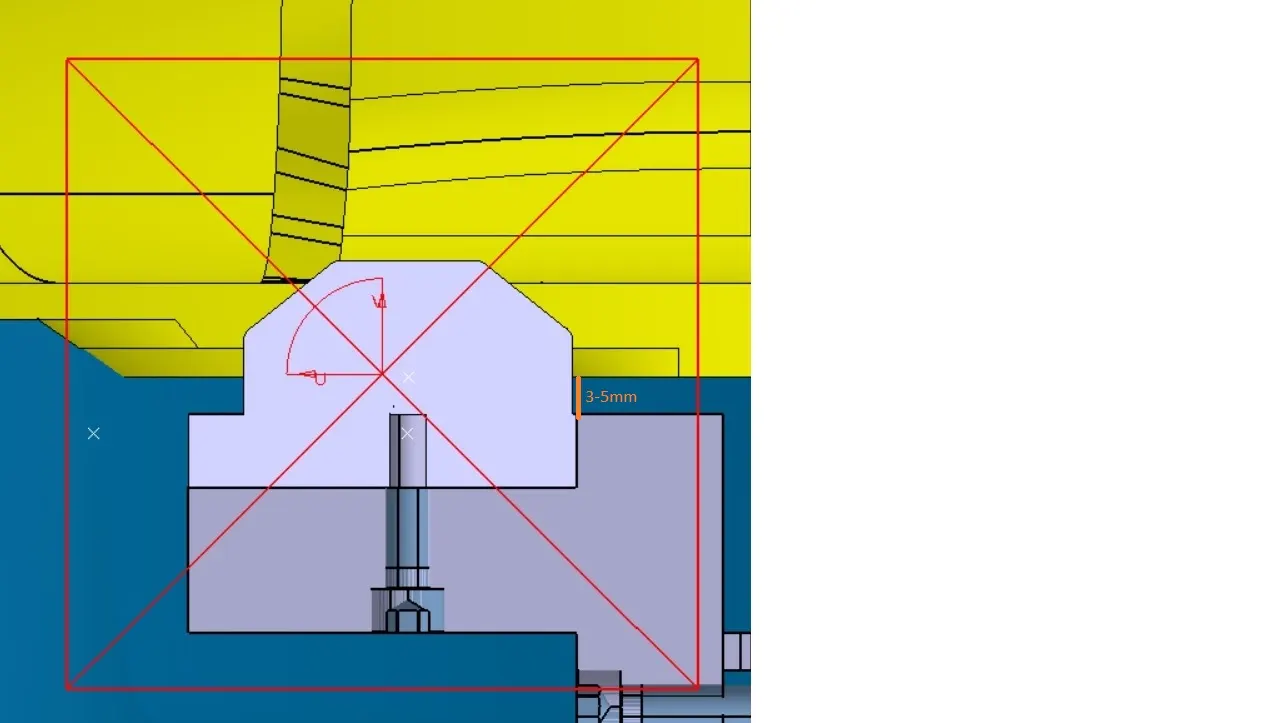
Pin Unit:
It is used to locate the part on the fixture. It is used to stop the movement of part along 2 axis. The pin unit may be fixed or movable.
- Pins should engage 3-5mm from car entry surface. All pins should be adjustable by 2 way shims.
- The component should be arrested in at least 2 pins one hole and one diamond pin.
Clamp Unit:
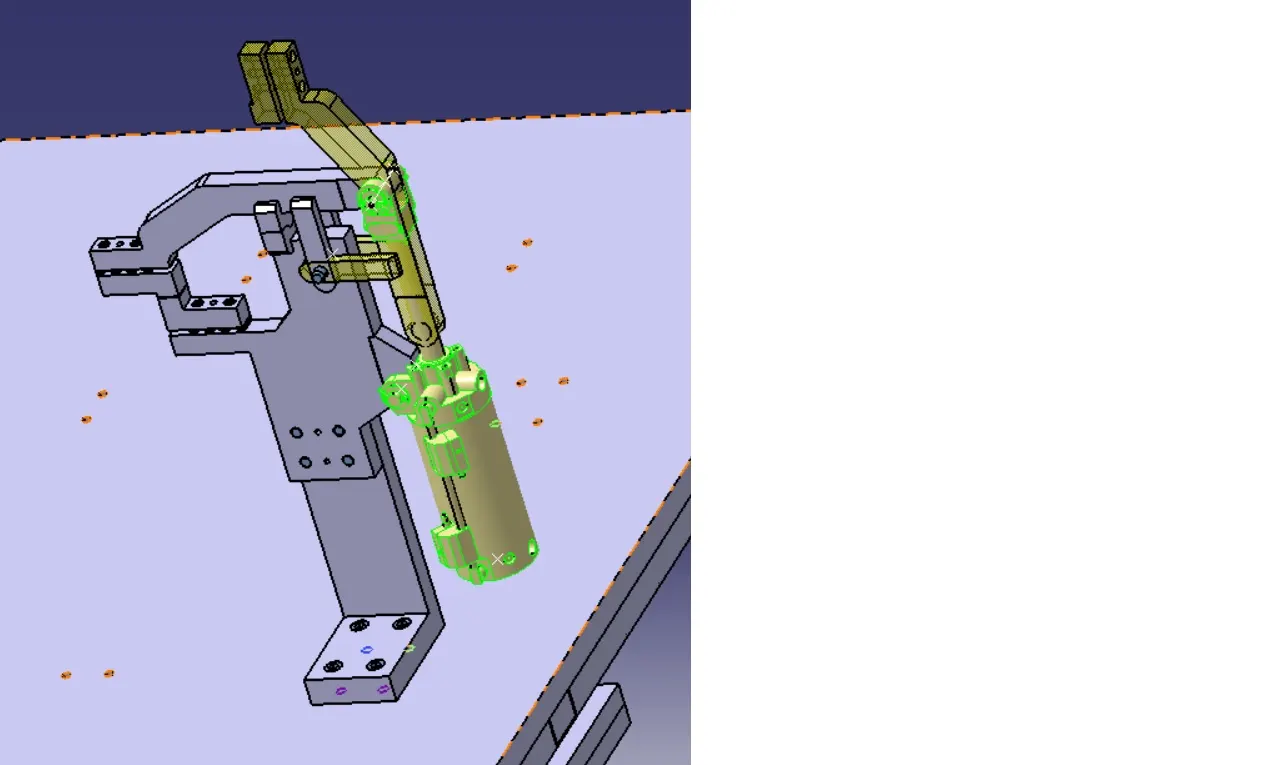
A clamp unit is used to clamp the part to the fixture. It is used to stop the movement of the part along one axis. It is usually actuated by a pneumatic cylinder
- All parts should be at least 10 mm away from the component.
- Mylars should be used at the end of the fingers to avoid damaging the component.
- Clamp units require shims in only one direction as they only arrest the component in that direction. T
- he unit must have the proper holding force as to avoid deformation due to welding or bonding.
- The swivel cylinder should be designed so that it does not clash with the component or unit.
DESIGN CONSIDERATIONS:
Working Height:
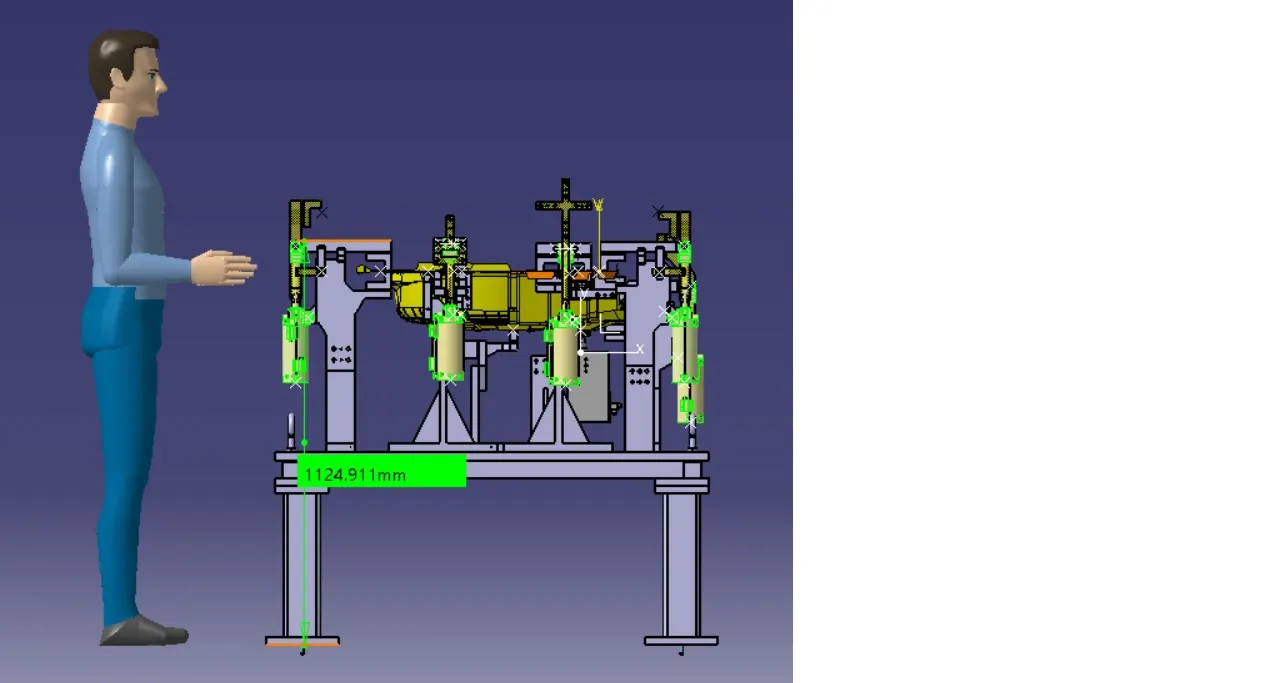
The height of the component should be at an optimal range depending on if the fixture is manual or robotic. In case of manual fixtures, it ranges from 850-1100mm.
Structure:
Depending on the size of the base plate additional supports may be given for the weld-frame and the pedestals.
The positioning of the fixture:
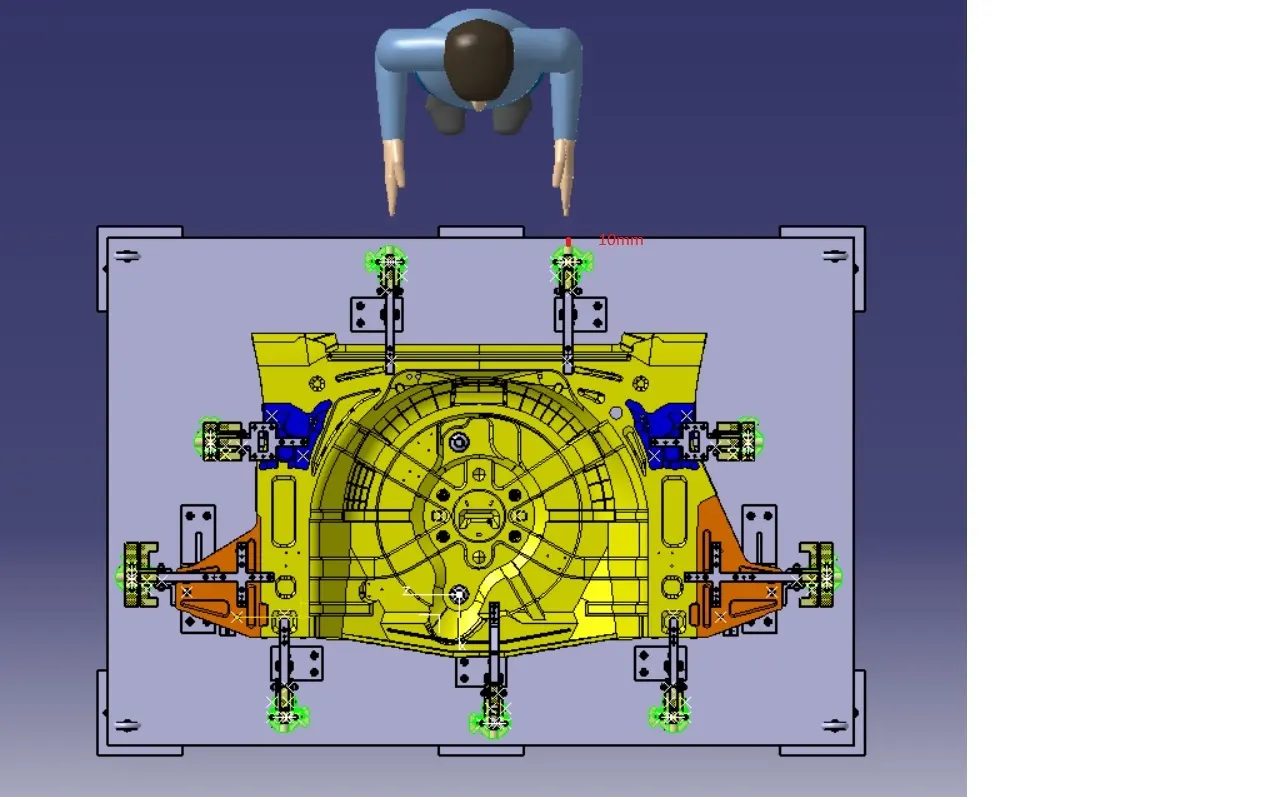
The fixture edges must be at least 10mm inside of the base plate edges. The holes drilled for the fixtures should be of nominal values.
FINAL PRODUCT:
CONCLUSION:
Thus all the parts of the base fixture are designed as per requirements and design considerations.