Week 6 Session 13
AIM:
For any 3 electric vehicles compare the battery pack and charging system requirements.
Solution:
EV Battery pack:
- An electric vehicle battery (EVB, also known as a traction battery) is a rechargeable battery used to power the electric motors of a battery electric vehicle (BEV) or hybrid electric vehicle (HEV). Typically lithium-ion batteries, they are specifically designed for high electric charge (or energy) capacity.
- Electric vehicle batteries differ from starting, lighting, and ignition (SLI) batteries as they are designed to give power over sustained periods of time and are deep-cycle batteries.
- Batteries for electric vehicles are characterized by their relatively high power-to-weight ratio, specific energy and energy density; smaller, lighter batteries are desirable because they reduce the weight of the vehicle and therefore improve its performance. Compared to liquid fuels, most current battery technologies have much lower specific energy, and this often impacts the maximum all-electric range of the vehicles.
- The most common battery type in modern electric vehicles are lithium-ion and lithium polymer, because of their high energy density compared to their weight. Other types of rechargeable batteries used in electric vehicles include lead–acid ("flooded", deep-cycle, and valve regulated lead acid), nickel-cadmium, nickel–metal hydride, and, less commonly, zinc–air, and sodium nickel chloride ("zebra") batteries.
- The amount of electricity (i.e. electric charge) stored in batteries is measured in ampere hours or in coulombs, with the total energy often measured in kilowatt-hours (kW).
- Nowdays, Lithium-ion battery packs are most commonly used in the electric vehicle. By calculating required power for electric motor to develop propulsion power, which decides the battery pack capacity and based on that no. of small Li-ion cells/modules are connected in series and parallel combinations. While building battery pack all safety rules like the thermal, cell short ckt conditions are followed.
EV Charging System:
- EV chargers currently come in three different models: Level 1, Level 2, and Level 3. Level 3 is also commonly known as Direct Current Fast Charging (DCFC). In Level 1 & 2. the EV is connected to AC power, 120V or 240V, and a battery charger in the EV converts the AC power to the DC needed to charge the battery and controls the charging process.
- In DCFC the DCFC converts the AC power to DC and the DC power is sent directly to the EV battery bypassing the onboard battery charger. This allows the DCFC to charge the EV battery directly.
- Level 1 & 2 charging is generally limited by the AC power available and the size of the onboard battery charger installed in the EV.
- DCFC is limited by the rating of the DCFC equipment and the amount of power available from the utility or other primary power sources.
- The charge rate, range of the EV, and the amount of time that the EV is available to recharge, known as the dwell time, work together to determine the best type of EV charging system needed for the application.
Level 1
- This charge level is the simplest level of EV charging and consists of plugging the EV into a standard 120V AC receptacle using a unique electrical cord with the appropriate plugs in each end.
- The built-in battery charger in the EV then charges the battery. This type of charging is generally limited by the amount of power that can be supplied by the receptacle usually, 12-16A or less (1.44-1.92kW) which based on an EV with a 3 MPkWh rating will add up to 5.8 miles for each hour of charging. If we charge for 10 hours overnight, it would only add up to 58 miles to the battery.
- Level 1 charging is useful for only limited range EVs when daily miles driven are low, or when several days of dwell time are available between EV usage.
- Level 1 chargers are inexpensive, readily available, and can be carried with the EV.
Level 2
- Level 2 chargers allow the EV to be connected to a 240V receptacle, like that used for an electric range or clothes dryer.
- Level 2 chargers are currently available up to around 20kW and continuing our example would add 60 miles for each hour of charging at 20kW. Many Level 2 chargers are in the 7kW to 10kW range. Enough to fully recharge most EVs overnight.
- A long-range car or a delivery van might have a battery capacity of 100kWh and could be recharged over a little more than 10 hours by a Level 2 10kW charger taking system losses into account.
- Level 2 chargers are readily available and moderately priced. Higher capacity Level 2 chargers are fixed in place, but lower capacity portable ones are available. Finding a 240V receptacle to plug into can be much more challenging than a Level 1 120V receptacle though.
Level 3 or DCFC
- DCFC charging uses DC to charge the EV battery without needing to go through the onboard AC battery charger. This charging level allows for a much higher capacity battery charging system.
- DCFC chargers, due to the cost and need for 480V electrical service, are usually limited to commercial use, either in commercial fast charging stations or in fleet operations.
- A 100kW DCFC can recharge an EV with a 100kWh battery in about an hour. At his rate, a 3MPkWh EV will gain 300 miles for each hour of charging.
- DCFC chargers are significantly more expensive than Level 1 or 2 chargers and require 480V 3 phase power. This limits them mostly to commercial EV charger installations.
Limits on the Speed of EV Charging
- There is a limit on the amount of power an EV battery can accept during a charge known as the acceptance rate. This limits the speed that DCFC can charge the EV battery. For instance, if the EV has a 50kW acceptance rate and a 100kW DCFC is connected, the EV will only charge at 50kW.
The electric vehicle market is dominated by established organizations like Tesla, BYD, Volkswagan, SAIC motors, Stellantis, Morris Garage, Tata Motors, Hyundai, Mahindra etc. Everyone has different features of their products likes battery pack assembly, charging system, powertrain architecture, traction motors used and other auxillaries, so these are one of the most important parameters which determines the vehicle performance and efficiency.
So, now we analyze the features like battery pack capacity, charging system, motor specifications and also performance of some of the latest ongoing electric vehicles in EV markets.
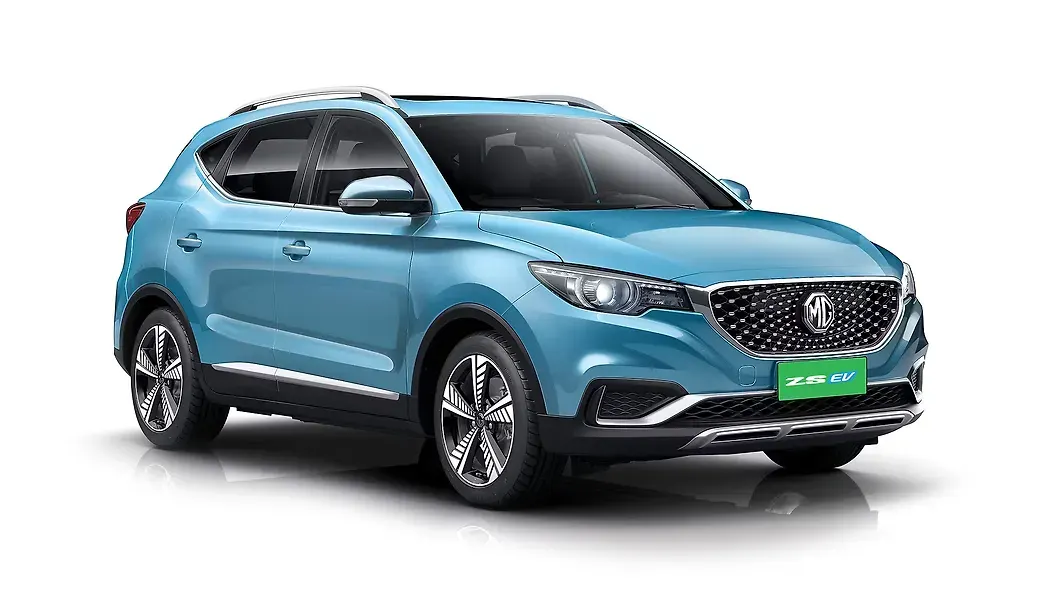
MG ZS EV
- The ZS EV comes as standard with a simple to use automatic transmission, controlled by a rotary gear selector in the centre console. Engineered to provide ultimate refinement in all driving conditions, owners benefit from a stress-free driving experience over long distances, and in stop-start city traffic.
Battery pack:
- Battery pack capacity of MG ZS EV comes with a 44.5 kWh lithium-ion battery. It’s water-cooled which optimises charging capabilities and range whatever the weather.
- These 44.5KWh battery pack supplies maximum power upto 143 KW to the traction motor used to generate required torque.
Electric motor:
- MG ZS EV has installed synchronous motor to generate required torque.
- This motor generates maximum torque upto 353 Nm, and attains a maximum speed of 140 Kmph.
- It attains 0-62mph in just 8.5 seconds.
Charging system:
- The new Charging is best done overnight at home on a 7 kW domestic charger, with a full charge taking 6.5 hours.
- On the go, the MG ZS EV can be rapid charged to 80% in just 40 minutes.
- It can be charged using most Type 2 or CCS charging points installed across the charging stations.
Other Features of MG ZS EV:
- The ZS EV is equipped with three levels of regenerative braking, which extends your driving range, improves the braking efficiency and energy conservation.
- There are also three driving modes on the new MG ZS EV — Eco, Normal and Sport, allowing the car to fully adapt to your everyday driving needs.
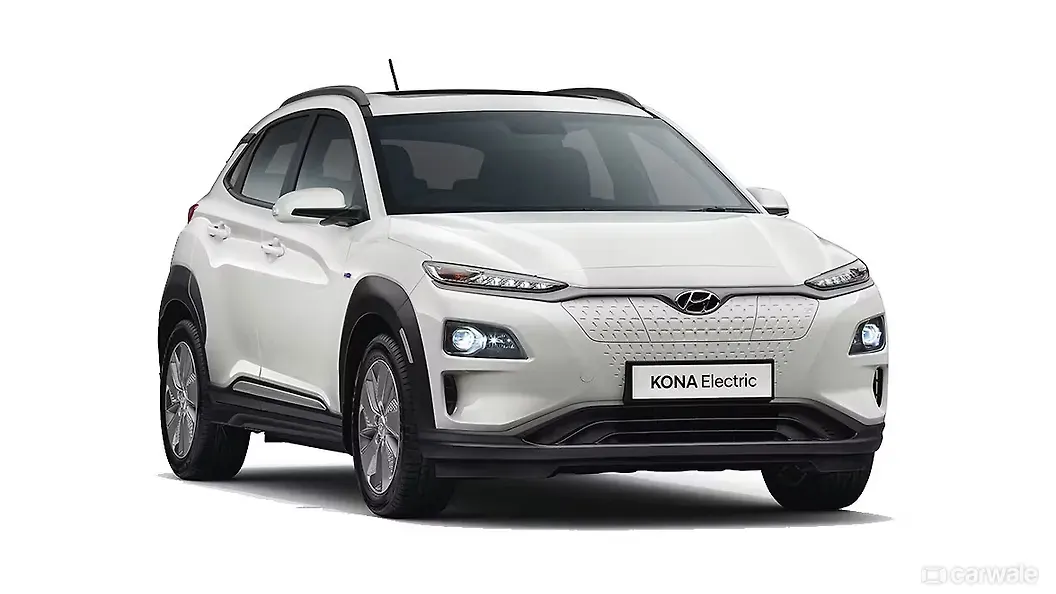
Hyundai KONA Electric
- Fully-electric vehicles such as the KONA Electric don’t use any combustible fuel and driving is emissions-free. Because there is no clutch or gears, costly maintenance is reduced, and acceleration off the line is fast thanks to 395 Nm of torque. That smooth and fast acceleration makes them a dynamic and exciting drive.
- The KONA Electric delivers exceptional electric performance and a generous driving range of up to 484 km. And when you do finally have to plug in, fast charging returns its battery from 10% to 80% state of charge in just 47 minutes.
EV Battery Pack:
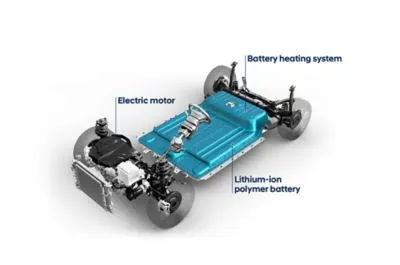
- The carefully matched components of the electric powertrain have been engineered to provide excellent driving characteristics and a practical everyday driving range.
- The specially designed platform enables a space-saving integration of the battery packs without compromising roominess.
- The KONA Electric’s lithium-ion polymer battery has a lower memory sensitivity and excellent charge efficiency compared to conventional batteries.
- With the 64kWh battery gives continous supply upto range of 484 km with a power output of 204 PS and 395 Nm of smooth torque and delivers a top speed of 167 km/h
- In sporty drive mode, it accelerates from 0 to 100 km/h in only 7.9 seconds.
Electric motor:
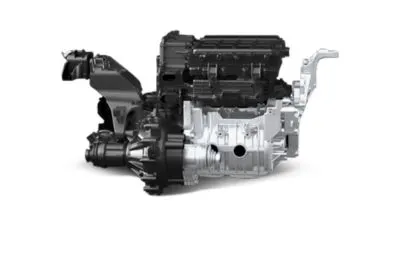
- KONA Electric uses Permanenet Magnet Synchronous Motor which takes power from battery pack to develop propulsion power.
- The 64 kWh battery is paired with an electric motor which delivers of 204 PS (150 kW). The 39.2 kWh battery comes with an electric motor delivering 136 PS (100 kW).
Charging system:
Depending on your grid connection at home or the type of fast charging station you have access to, the KONA Electric offers various possibilities and plug types for charging.
- Fast charging: When using a 100 kW direct current (DC) fast-charger station, KONA Electric’s lithium-ion polymer battery only takes about 47 min to charge from 10% to 80 % state of charge (SOC). If connected to a 50 kW station, this charging time is 64 min.
- Normal charging: When connected to a home wallbox or public AC charging station, it takes 6 h 50 min to charge the long-range 64 kWh battery pack from 10-100% SOC using the 10.5 kW triple phase on-board charger (OBC) and 9 h 15 min using the 7.2 kW single phase OBC.
- Programmable charging: The new KONA Electric’s advanced battery management system gives you complete control over when and how you want to charge it. Pick a time that best fits your schedule and budget, with clear overview of remaining charging time.
Regenerative Braking system:
- Maximise your range while driving with KONA Electric’s regenerative braking systems which let you charge the battery by using the electric motor to slow the car.
- Braking is optimised to get the most out of the regenerative braking system, helping KONA Electric maintain a healthy state of charge (SOC). The driver can easily adjust the level of regenerative braking through the paddle shifters behind the steering wheel.
- The smart regenerative braking system utilizes the on-board radar sensor to automatically control the level of regenerative braking to react to the traffic ahead. Additionally, it also detects if the KONA Electric is driving up or downhill and adjusts accordingly.
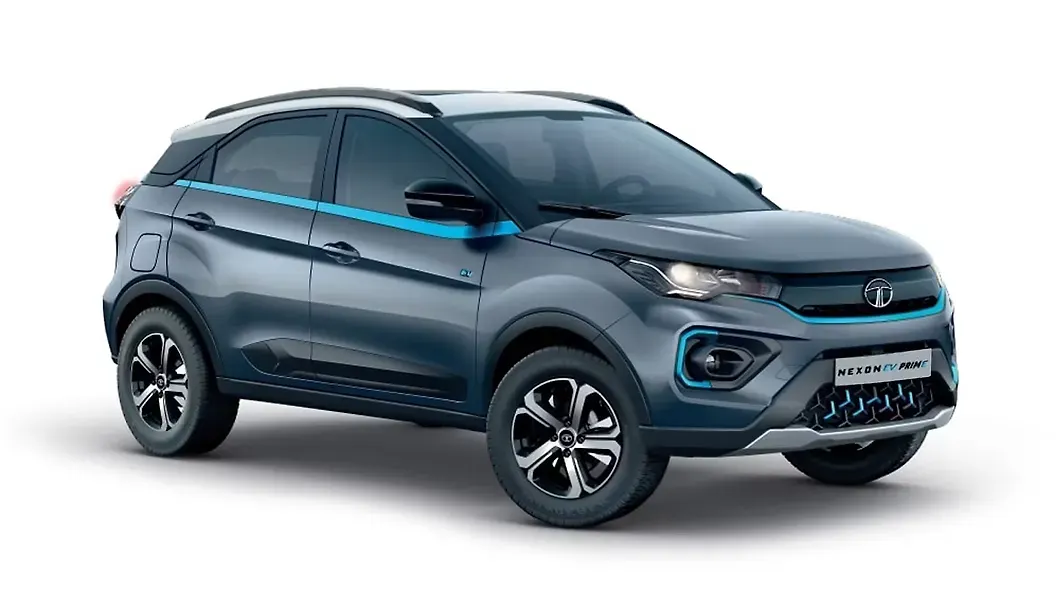
TATA NEXON EV Prime
- Tata Nexon EV Prime is available with a single battery-motor configuration and one of the cheapest EV in the current market with optimum performance as well as range.
EV Battery pack:
- The Tata Nexon EV Prime gets a 30.2 kWh high energy density Lithium-ion battery pack that develops 127 bhp and 245 Nm of torque. The battery pack supplies constant power to the motor, the range upto 312 km.
- While building battery pack, all the safety related concerns are taken by the manufacturer.
- Liquid cooled thermal protection are provided to the battery pack in order to rapidly dissipate generated heat in the battery back. So overall performance is improved.
Electric Motor:
- Tata Nexon uses Permanent Magnet Synchronous Motor which develops 129 PS and 245 N-m torque output
- The Nexon EV Prime can accelerate from 0 to 100 kmph in 9.9 seconds while achieving a top speed of 120 kmph.
- The motor as well as battery pack are comes with ingress protection IP67.
Charging system:
- For charging system, they used CCS 2 charging standard, the Tata Nexon EV Prime takes 60 minutes to charge from SOC 10% to 80% using a fast charger.
- Also, by regular charging method full recharge using a domestic charger i.e., like any 15A plug point takes nine and a half hours to charge from SOC 10% to 90%.
Other Features:
- Nexon consists of multi-mode regenerative braking of 4 Levels (Level 0 - 1 - 2 - 3) 0 No regen, 3 Max regen, Hill Ascent Assist & Hill Descent Assist.