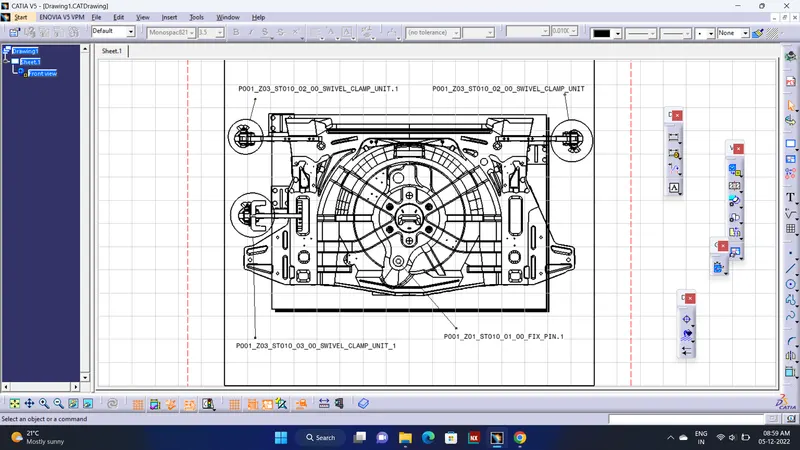
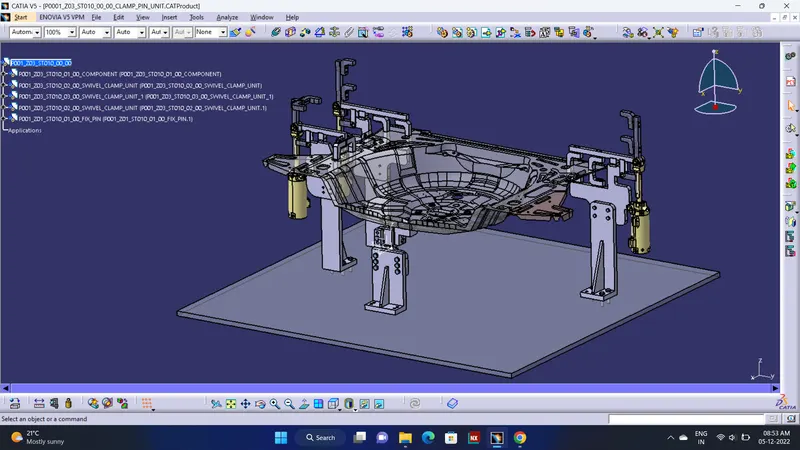
Week 6:- Clamp Unit & Pin-Clamp Unit Design Challenge
- Design 3 Different types of Swivel Clamp Unit with Different Riser, Blade and Clamp Arm for the given Car Panel.
- Design a Pin-Clamp unit for the given Car Panel.
Aim/Introduction/ Objective: In this challenge we have to Design 3 Different types of Swivel Clamp Unit with Different Riser, Blade and Clamp Arm for the given Car Panel & Design a Pin-Clamp Unit for the given Car Panel with the optimum use of material & space constraint also considering panel thickness as 1 mm for this unit.
Report & theory:
3-2-1 principle achievement:
3-2-1 principle is basis of any fixture design. Holding fixtures used in assembly operations often follow a 3-2-1 locating scheme to position parts. Under this scheme, three locators position a part in a primary plane or direction (e.g., high/low).
(3) minimum: Three locator blocks to establish part plane. Three locators or supports are placed under the work piece. Three locators are usually positioned at primary locating surfaces. This restrict two translation motion i.e. upward & downward & four rotational motion ( i.e. clockwise or anticlockwise). Together tree locators with clamp restrict six degrees of freedom. Below figure shows how (3) minimum in 3-2-1 locating scheme achieved by clamping & resting.
(2) Round locating pin in a round hole that defines location in four directions (4 ways) perpendicular to the plane previously established. This restricts four axial movements
With the four Swivel clamp unit restrict four rotational motion & two translation motion as shown in below figure. With the use of pin unit we restrict four translation motion. Together we restrict 10 degrees of freedom.
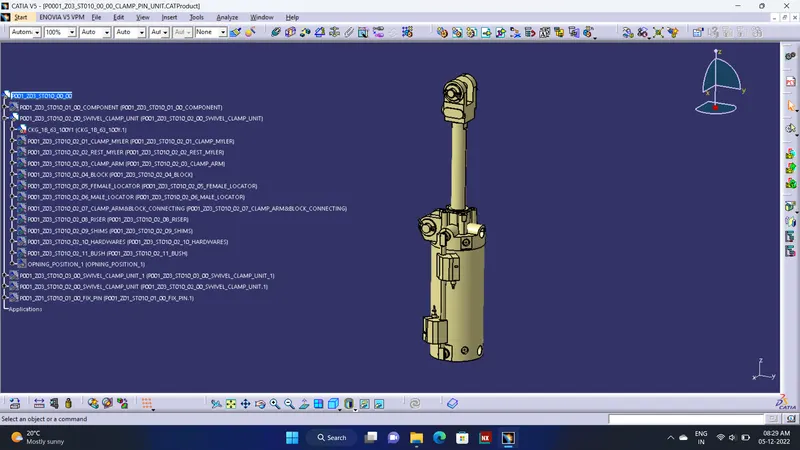
Clamp unit: Clamp unit is unit designed to clamp / hold the car panel with NC blocks/ mylar/ rest by using a pneumatic clamp cylinder & below are different parts of a clamp unit in general. Usually clamp open position is 90°. Fingers are attached to clamp mylar. In clamp unit shim to one side is more enough because it will restrict translation motion in upward & downward direction only. There is another type of clamp unit knows as swivel type. There is pivot pin around which clamp arm rotate.
Factors should be considered while designing a clamp unit:
- There should be adequate space between the cylinder & another part like riser, car panel because cylinder moves or swing while opening & closing
- Pin clamp unit used where two panel or component are located for welding.
- Clamping make in such way that it clamps two car panels at once
- All parts should snap & butt properly to each other.
- Make sure that parts of the clamping unit are 10 to 12 mm away from car panel so they do not damage car panel
- Avoid any clash. It will not arises issue at assembly.
Below are general parts of swivel clamp unit.
a) Clamp Cylinder:
Cylinder designation: In this unit we used Clevis cylinder for clamping designated as CKG_1B_63_100Y
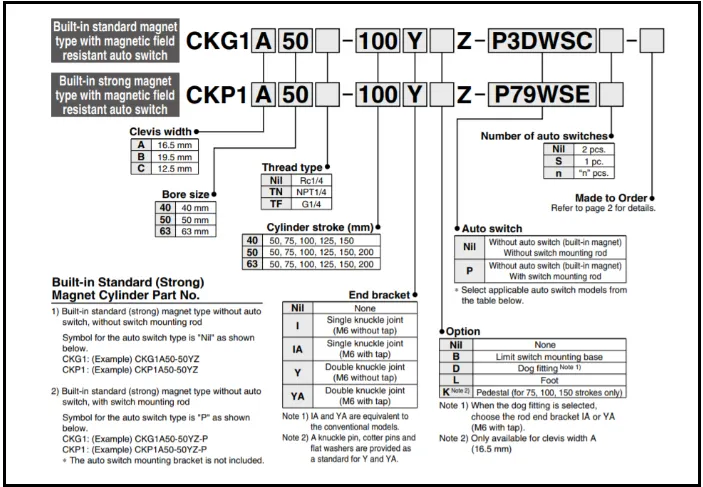
Nomenclature of cylinder as belows:
CKG1: Series of cylinder
B: Clevis width as 19.5 mm.
63: Bore size
100: Stroke of cylinder
Y: End bracket i.e. double knuckle joint (M6 without tap)
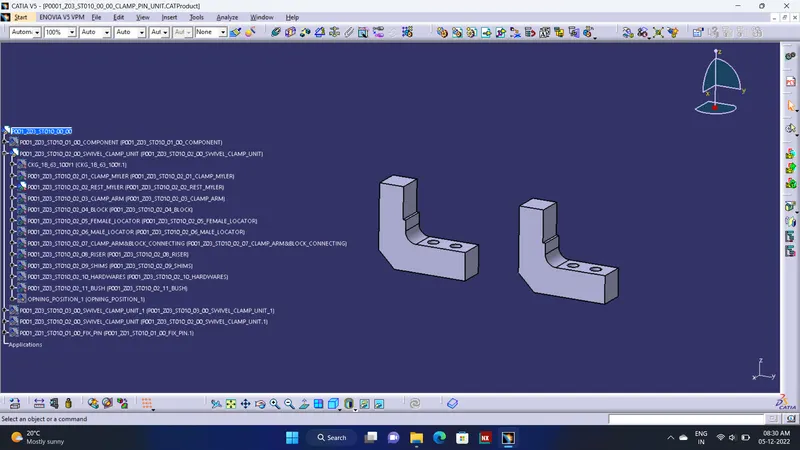
CLAMP MYLER:
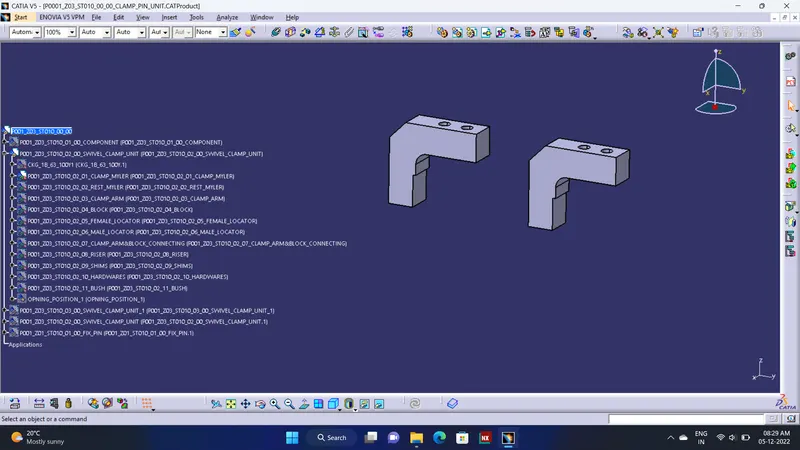
REST MYLER:
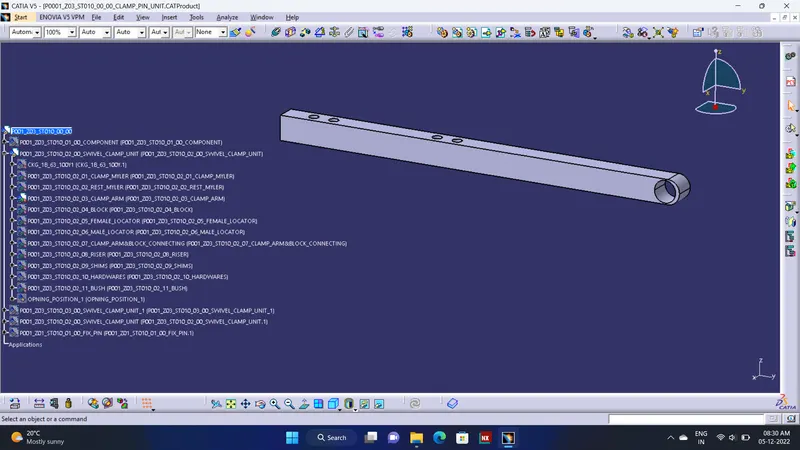
CLAMP ARM:
BLOCK:
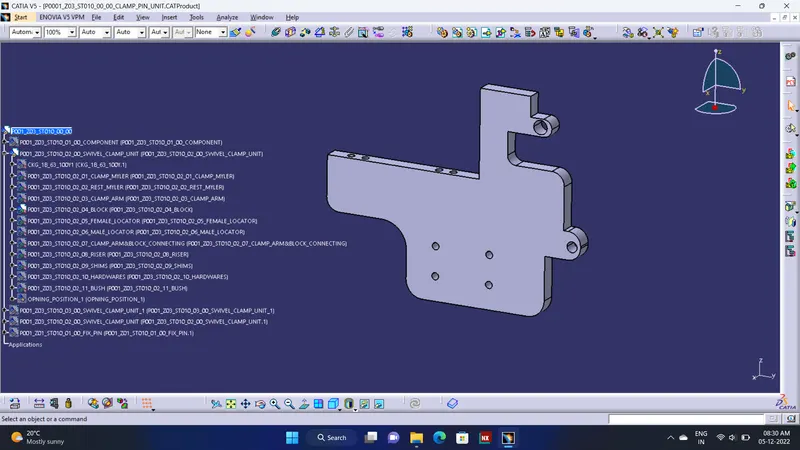
MALE & FEMALE LOCATING PORTION:
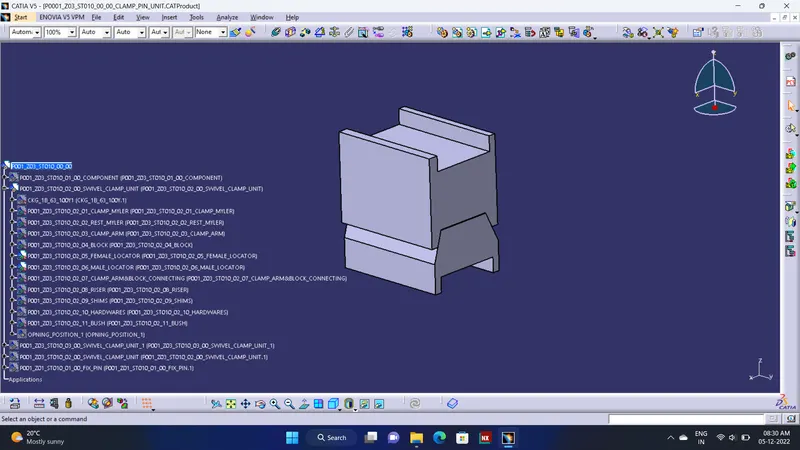
CLAMP ARM & BLOCK CONNECTING PORTION:
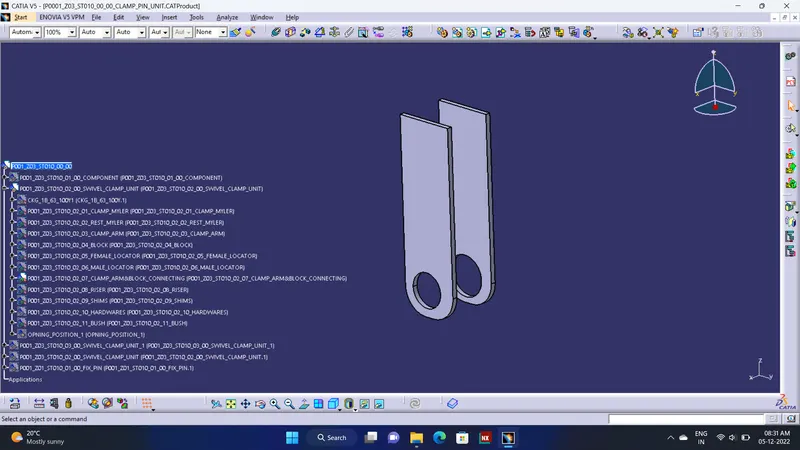
ASSEMBLE:
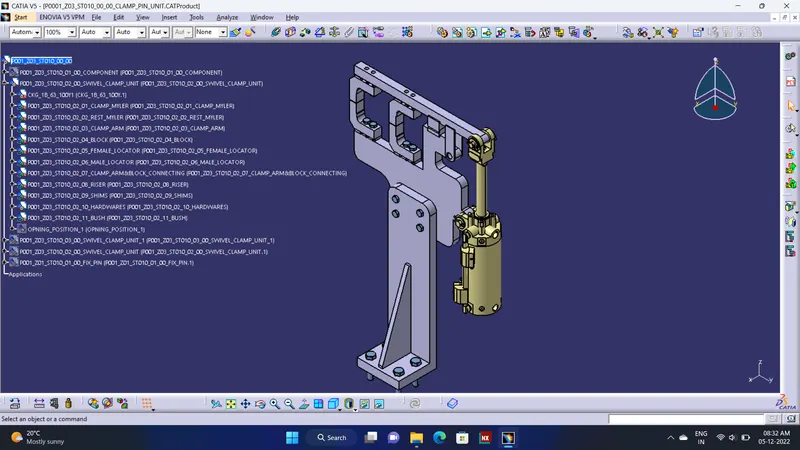
OPENING PORTION 90'
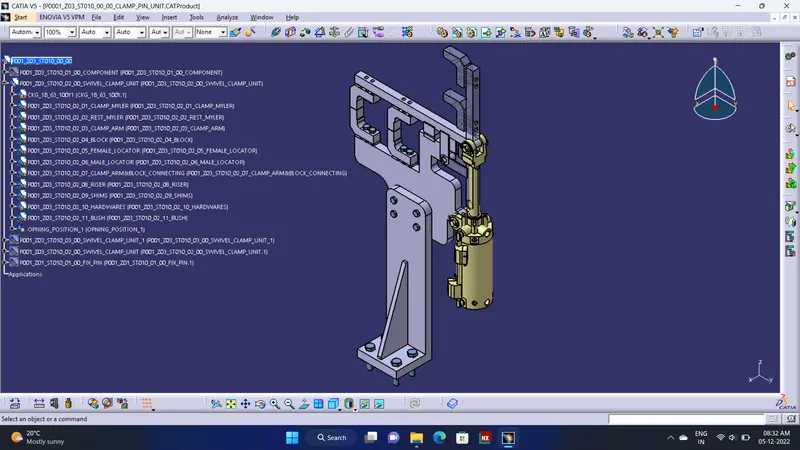
CLAMPING UNIT 2:
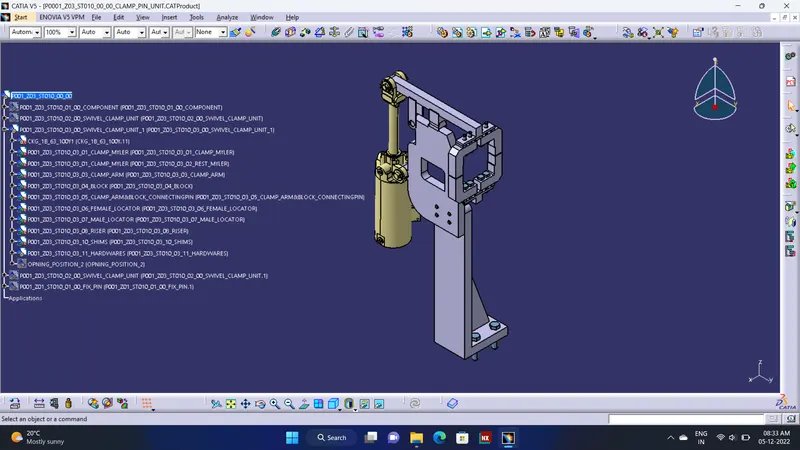
OPENING POSITION 90'
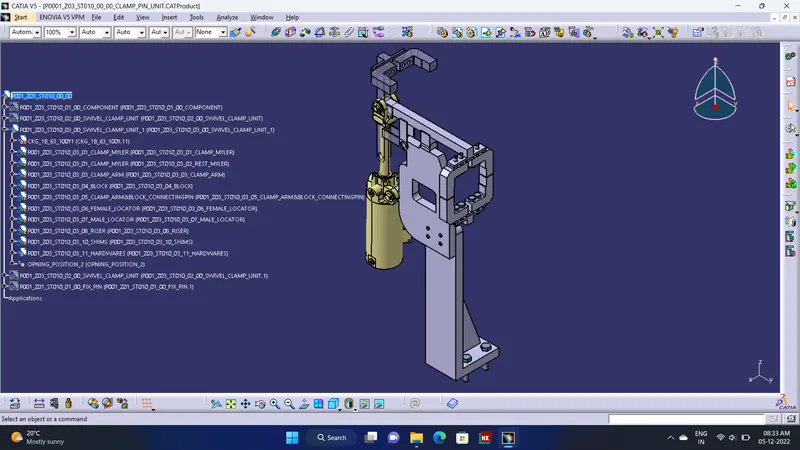
FINAL ASSEMBLE OF CLAMPING UNIT:
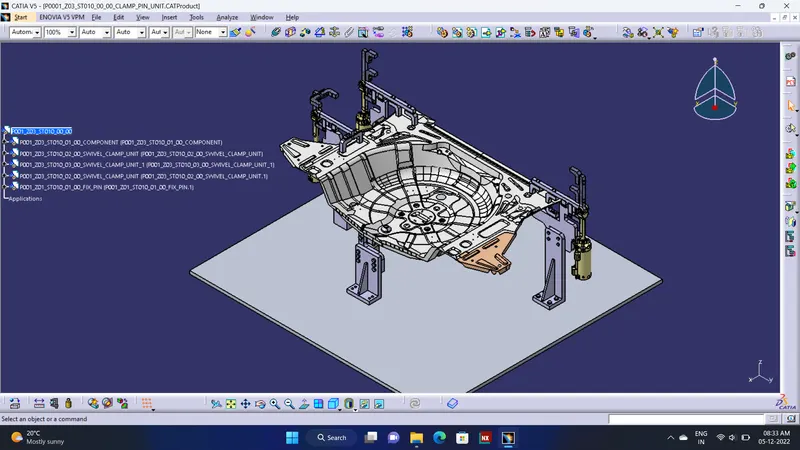
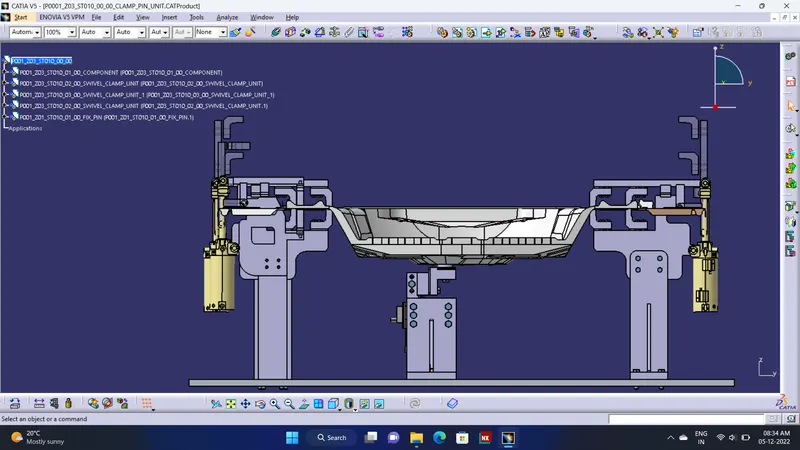
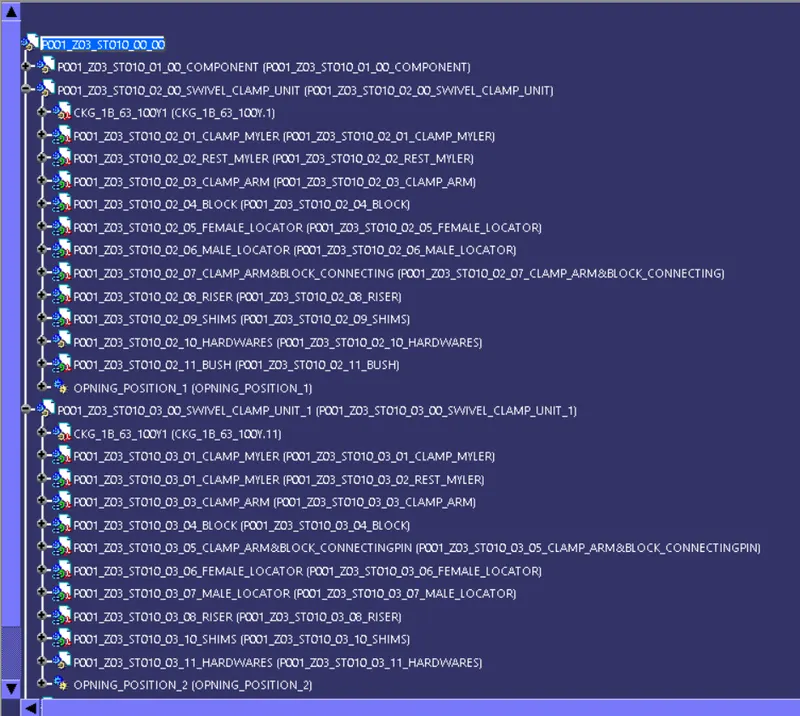
Structuring a design tree:
Structuring a design tree implies process where all the assemblies & parts are named in specific manner. Different customers have different set of standard like how to structure a design tree? So they will be give standard template based on that design tree structured, which helps us to identify specific part of assembly. It specifies the Project number, station number, unit number; part number of each component so that it is easy to identify the parts.
It is an important process which helps us to identify a specific part or assembly as to which project, tool or unit, it belongs to.
This helps us to avoid error during design study, manufacturing, assembly, inspection etc.
If parts or assemblies are not named properly or the design tree is not structured properly, it will create confusion to understand & create major possibilities of making an error.
Naming of a fixture, a unit or a part gives the information as to which project or zone or assembly they do belong.
It can help us to identify quantity of items of same type or different types that are being used in assembly for e.g. bolt. It actually tells you how many bolts are particularly require