Week 6 - CHT Analysis on a Graphics card
Aim: Perform a steady-state conjugate heat transfer analysis on a model of a graphics card.
Material used:
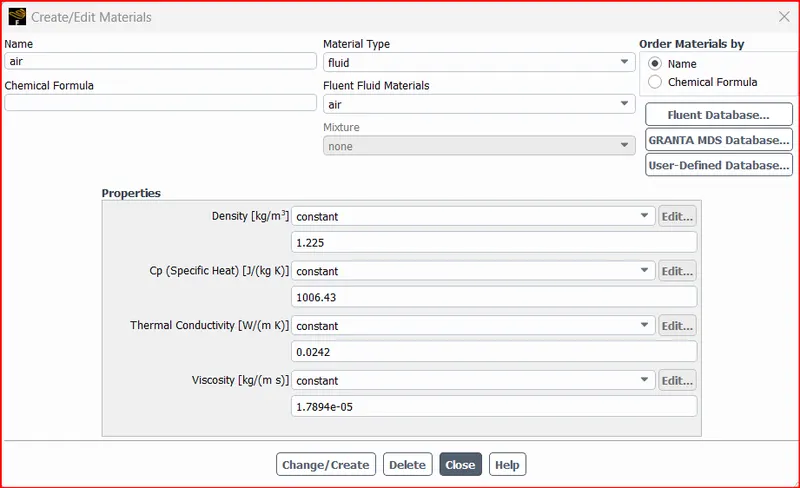
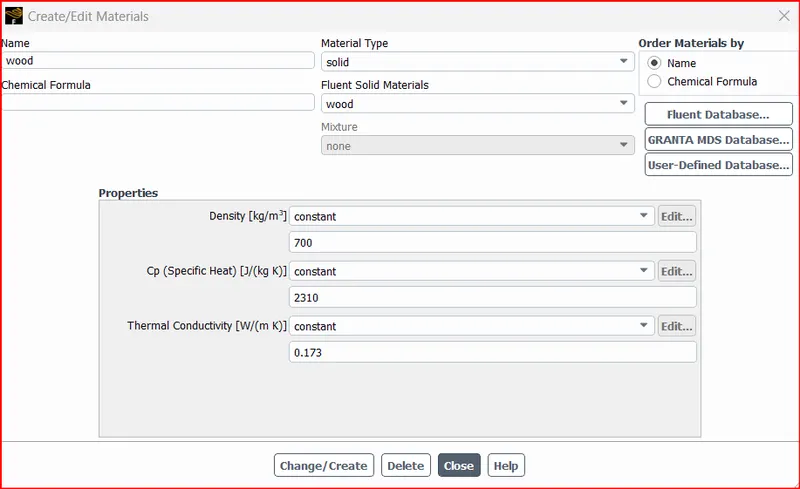
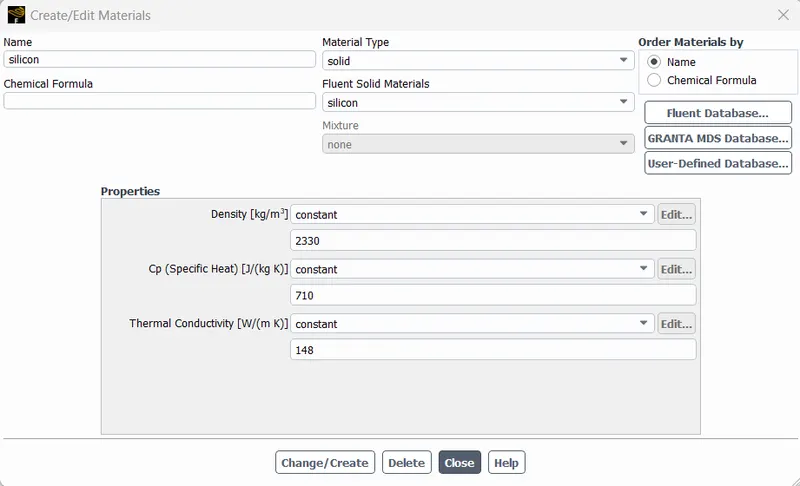
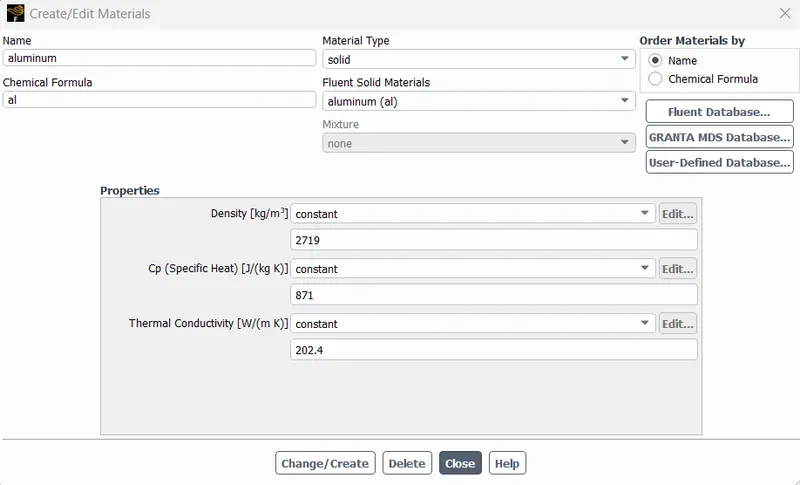
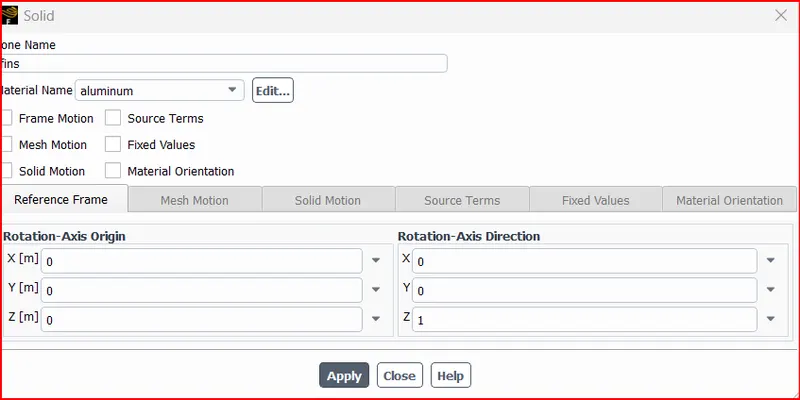
Fins-Aluminium.
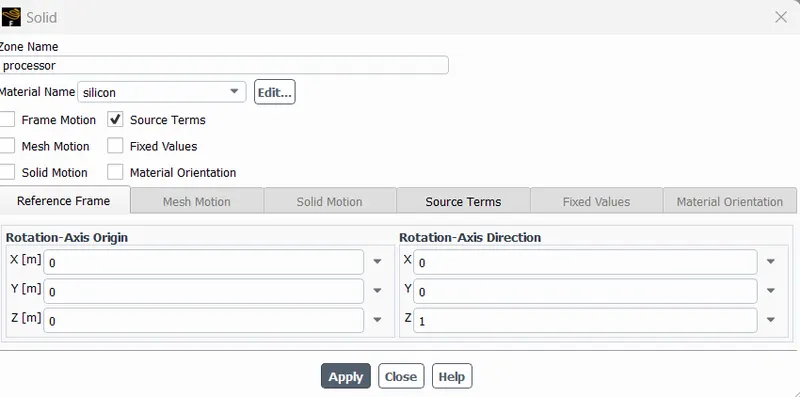
Processor-Silica.
Base-Wood.
Geometry
Base
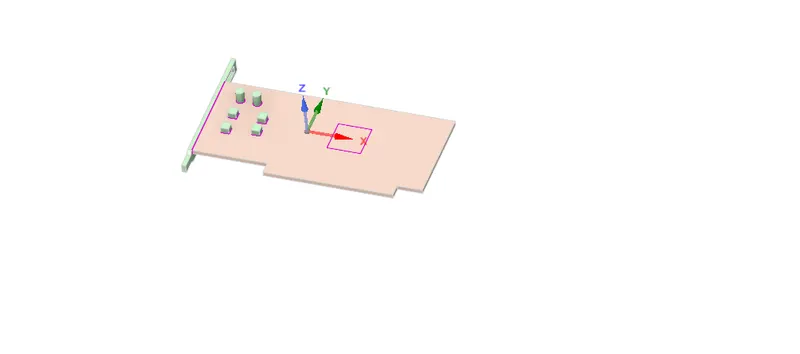
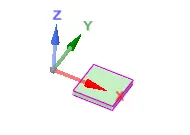
Processor
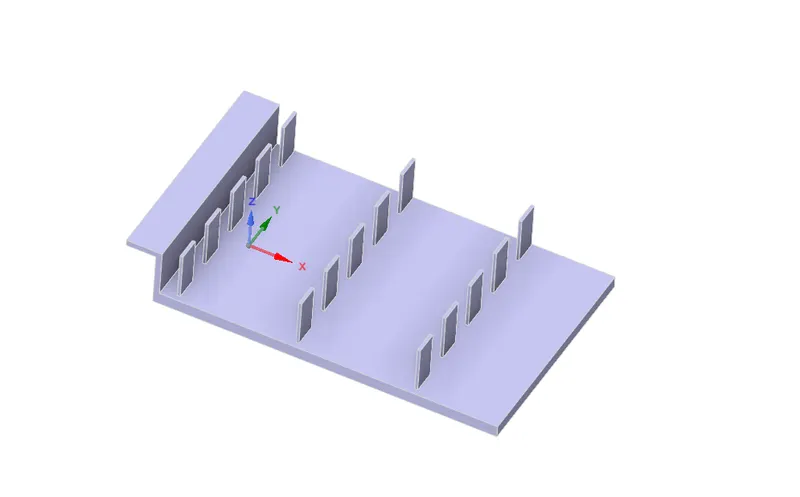
Fin Base
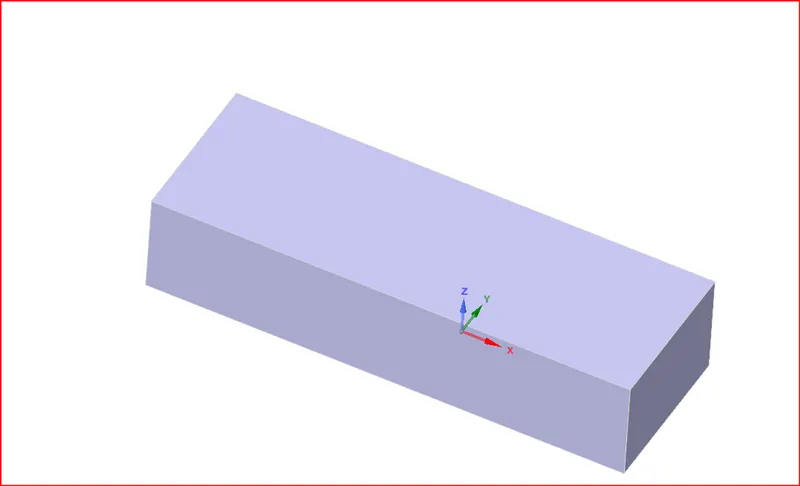
Enclosure
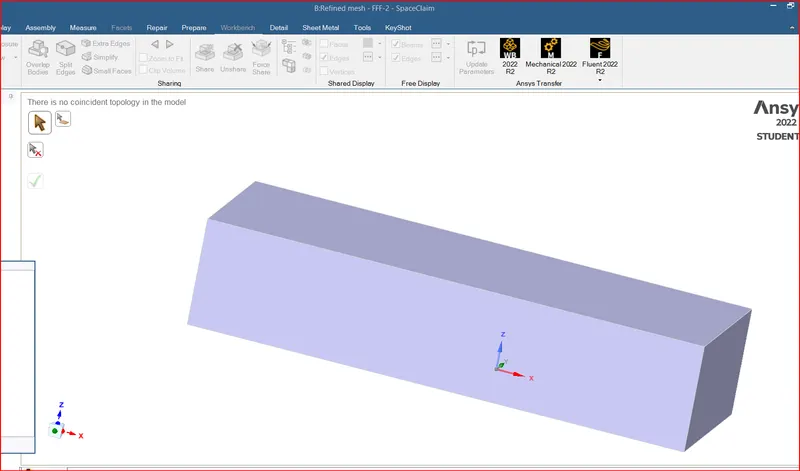
Using Share Topology:
Go to workbench> click on share and press ok.
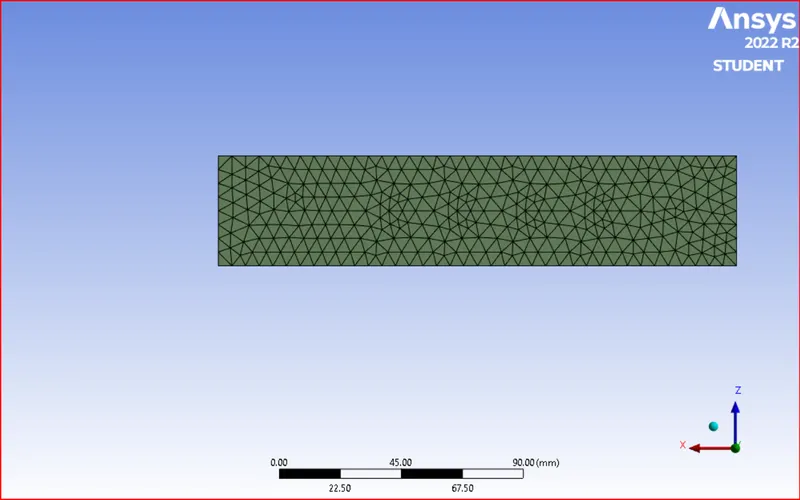
Mesh
Base Mesh
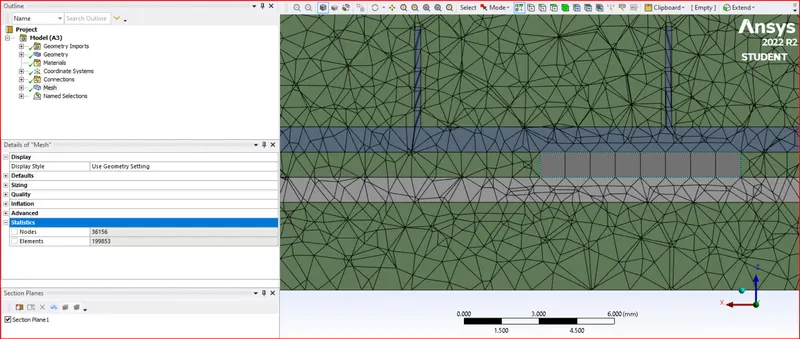
Closer view:
Below Image shows Mesh is Conformal.
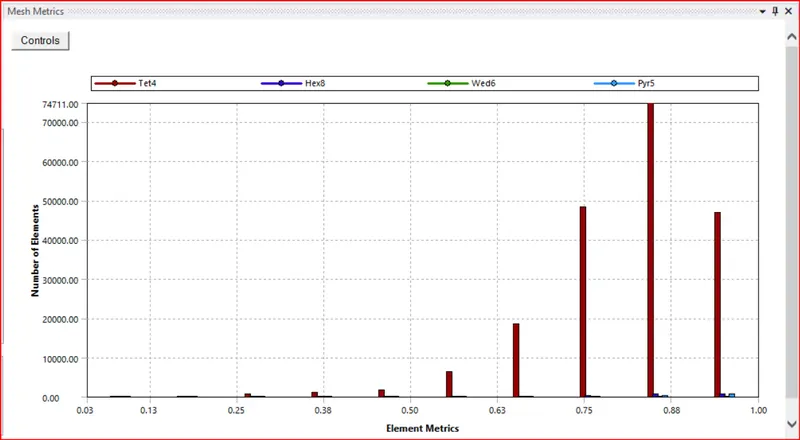
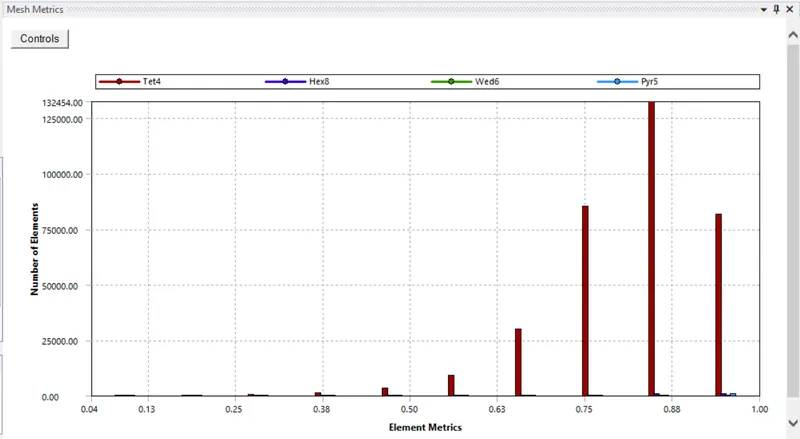
Mesh Metrics
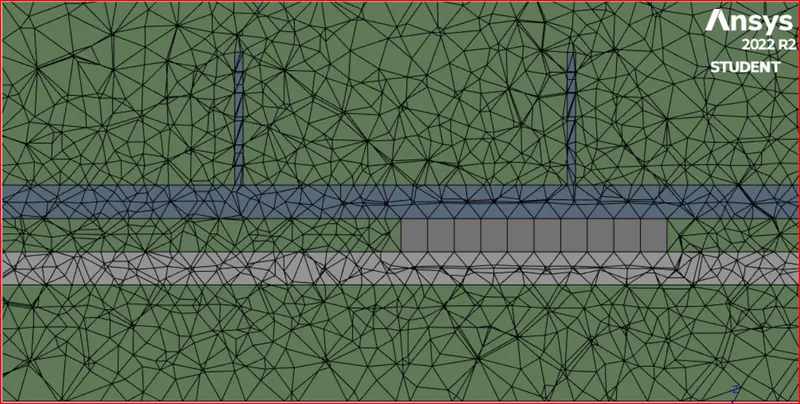
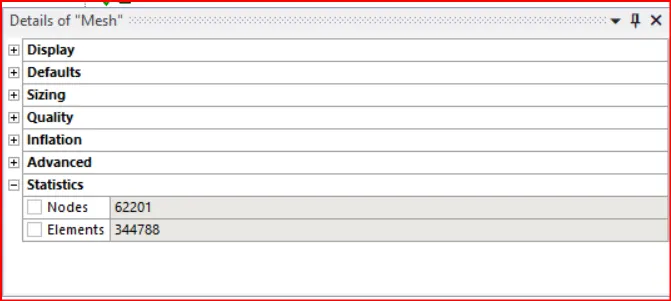
Refined Mesh
Using Body sizing option we refine the mesh by defining particulat element size to each named selection component.
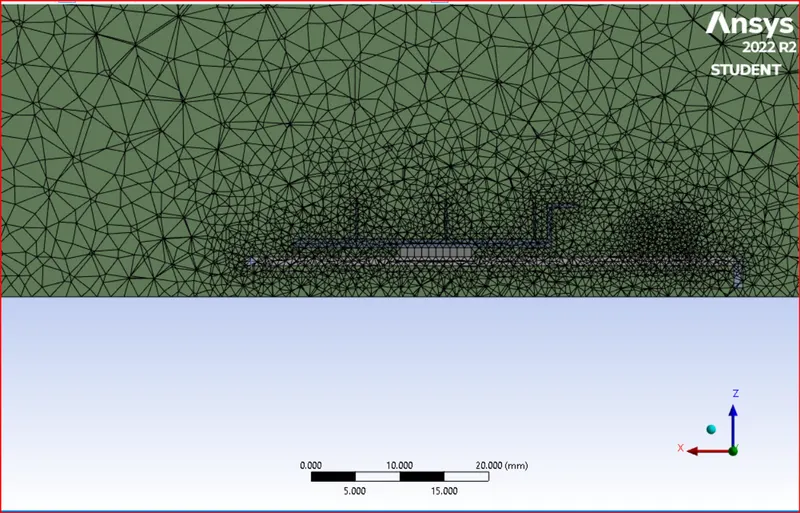
Closer view
Mesh Metrics
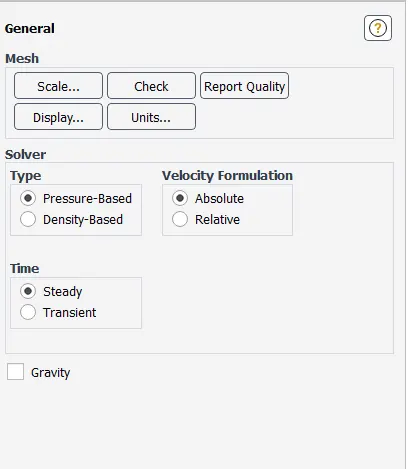
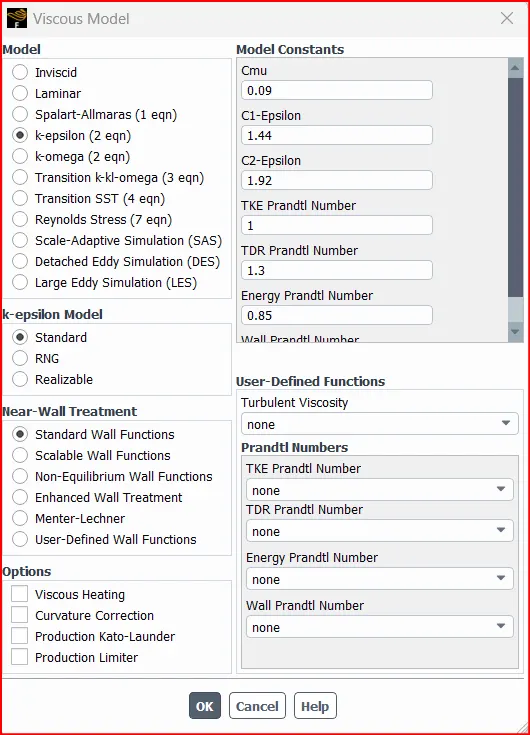
Solver setup:
Materials
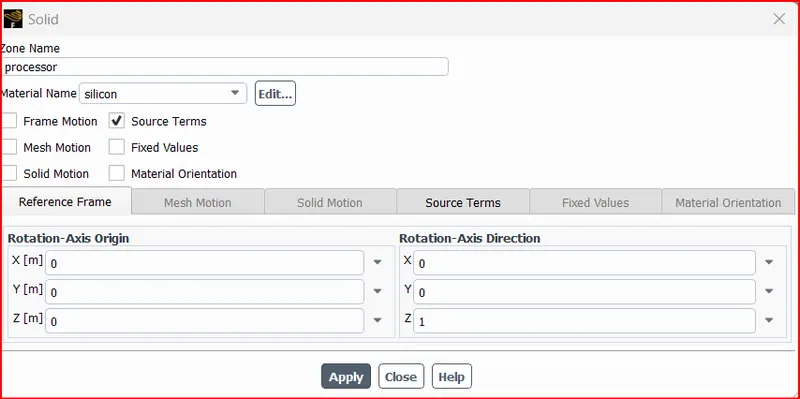
Cell zones:
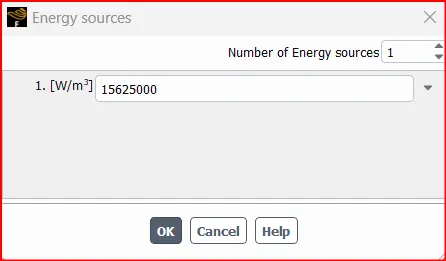
Calculation for heat generated by the processor:
Assume the rated power of the processor is 1W.
We assume here only the processor is a source of heat energy and consider that its power is 1W. We need to calculate the amount of generated heat by the processor, so
Generated heat = Power/Volume
Processor Volume = 8×8×1 = 64 mm^3 = 64×10^(−9)m^3
So, Generated heat =P/V=1/64×10^−9 W/m^3 = 15625000 W/m^3
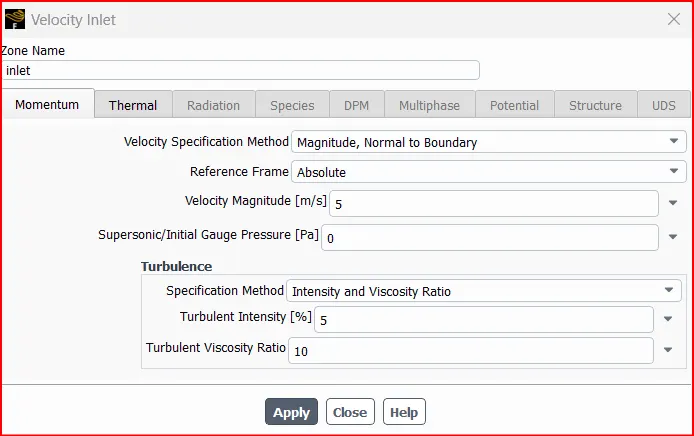
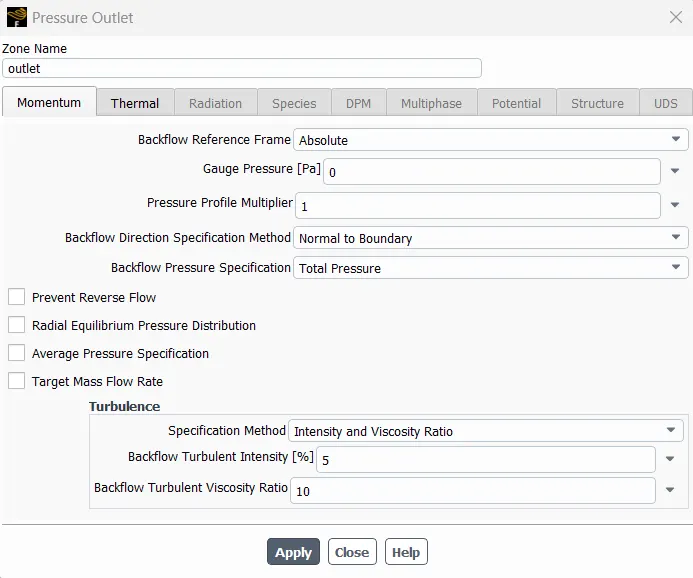
Bondaries:
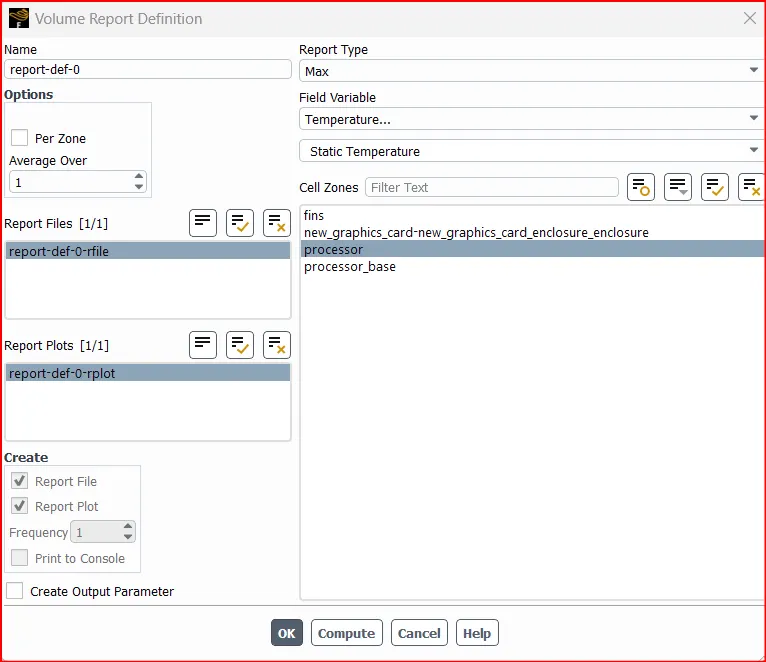
Report definitions:
Run the simulation by varying the velocity from 1m/sec to 5m/sec for at least 3 velocities and discuss the results.
Base Mesh
Velocity =1m/s
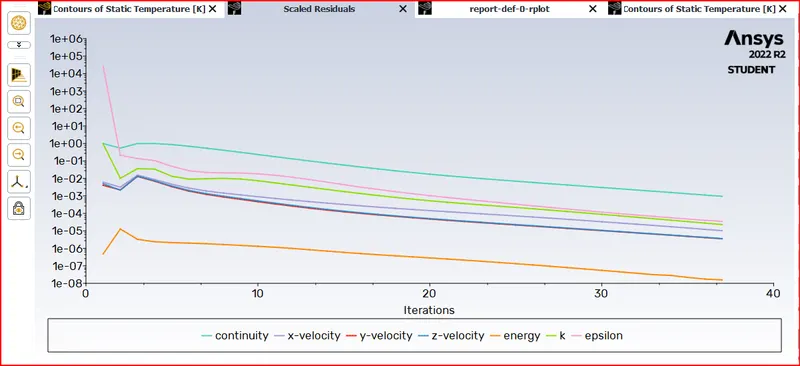
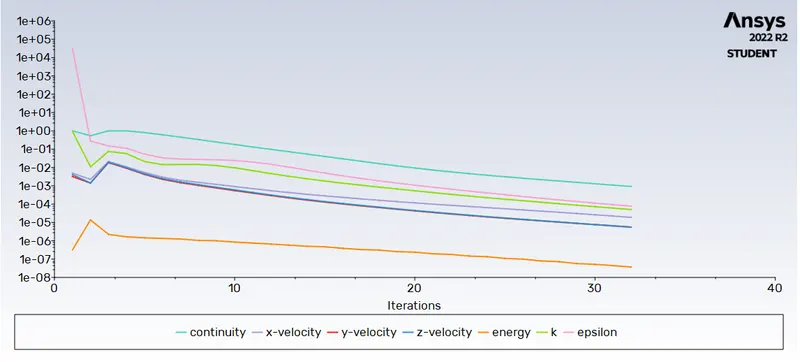
Residuals
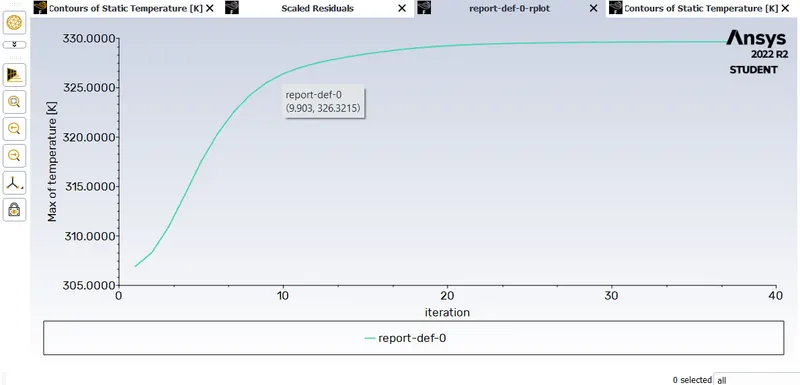
Max temperature Plot.
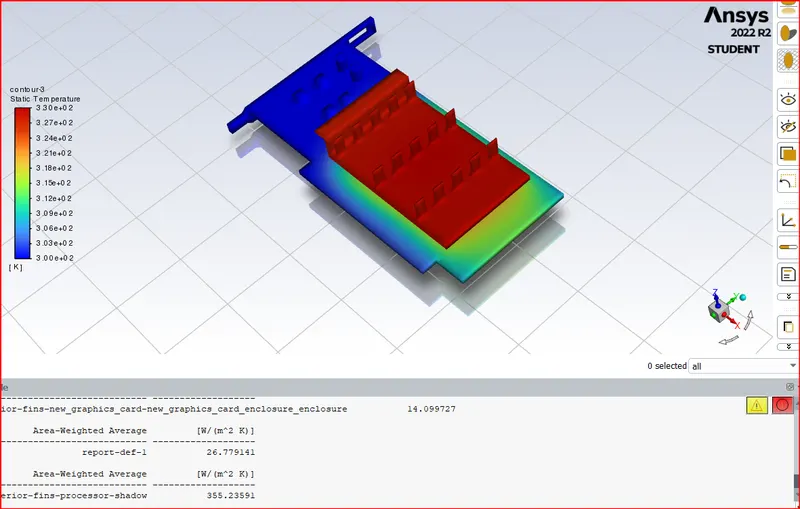
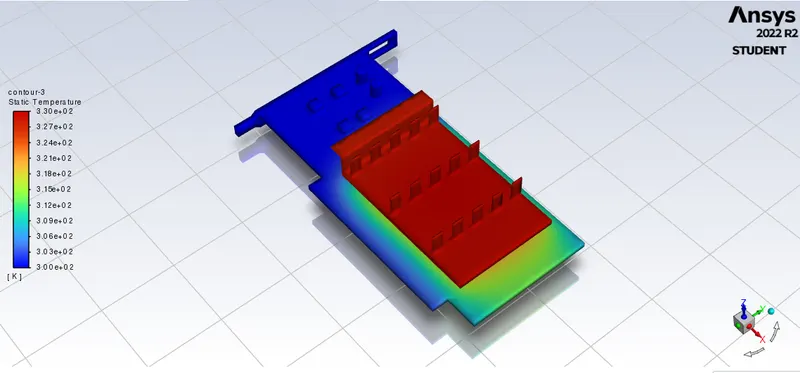
Contours of Static Temperature
CFD Post Processing
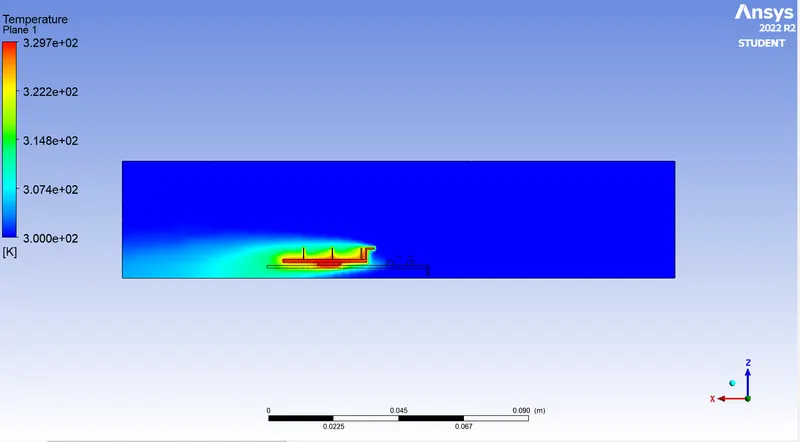
Temperature Plot
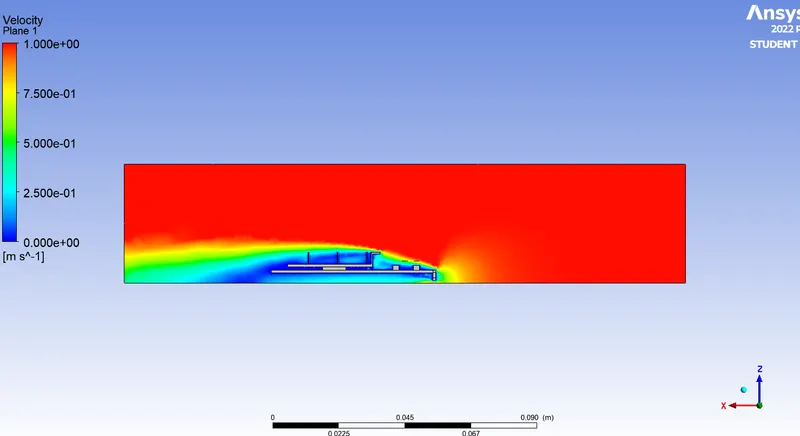
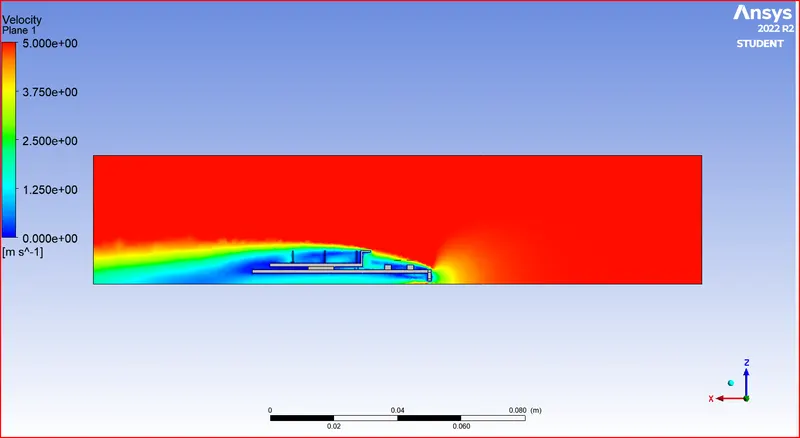
Velocity Distribution
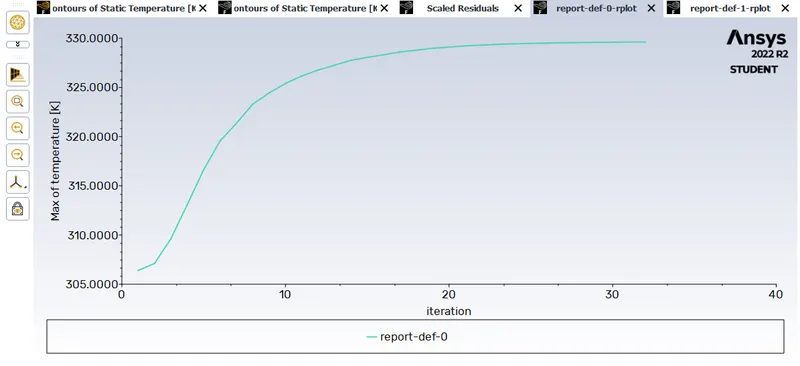
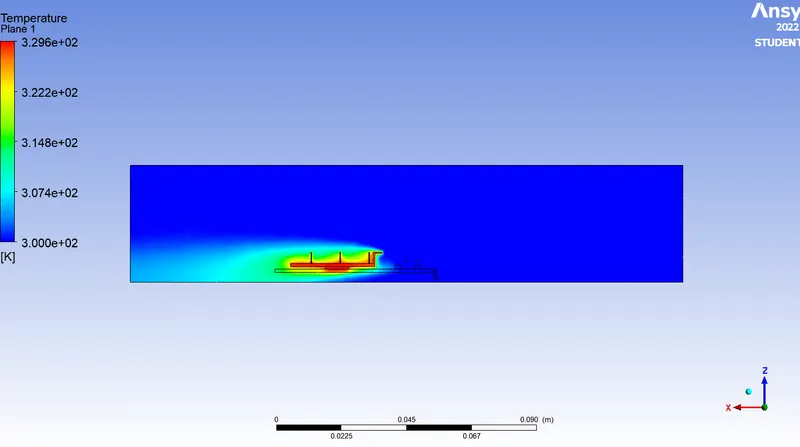
Max temperature Reached by the processor is 329K
Refined Mesh
Velocity =1m/s
Temperatur econtour Plot
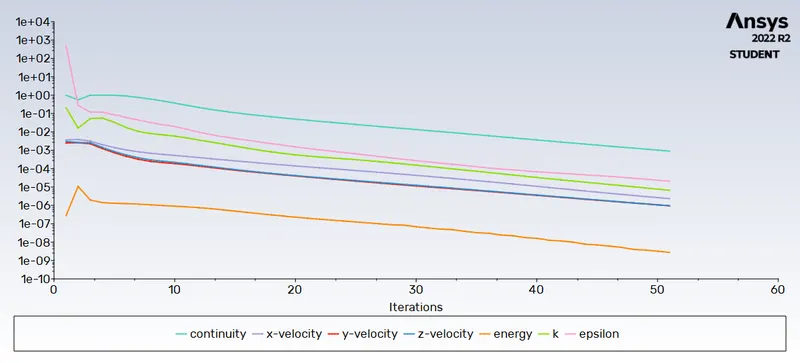
Sacled Residuals
Max temperature plot
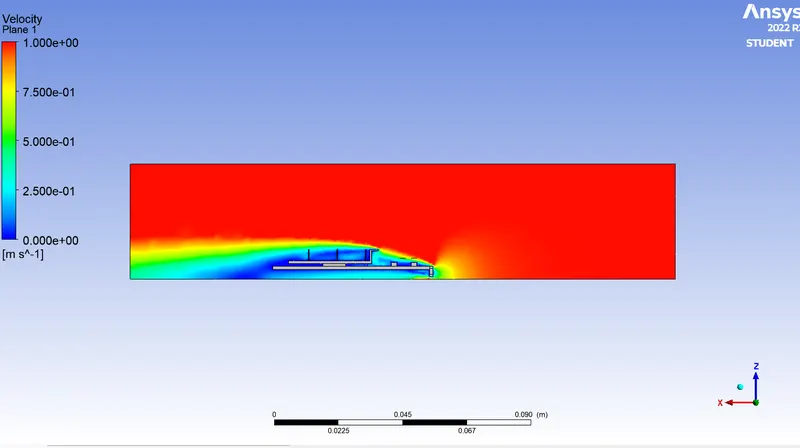
Cfd post Processing
Velocity Distribution
Temperature Distribution
Refined Mesh
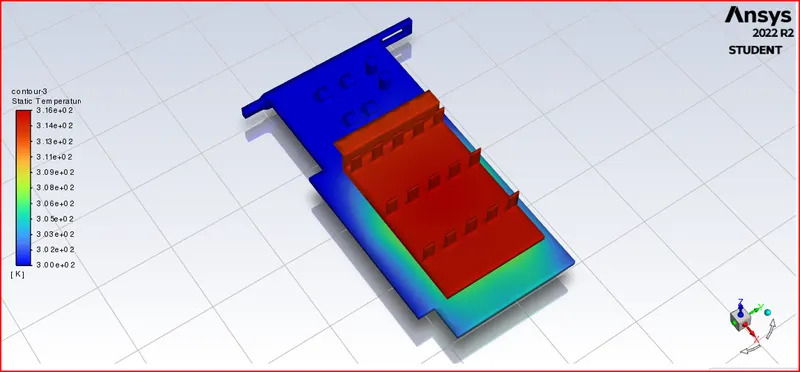
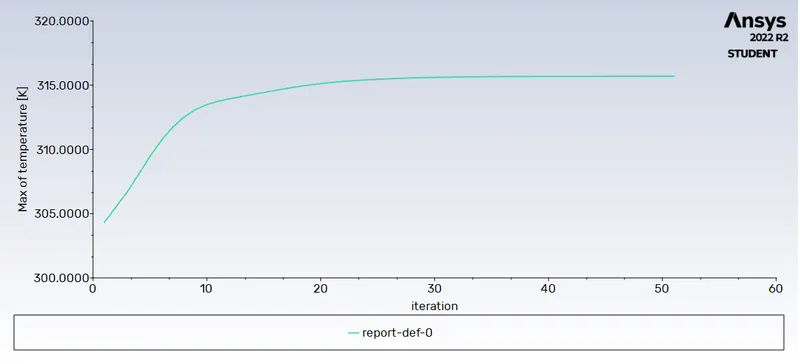
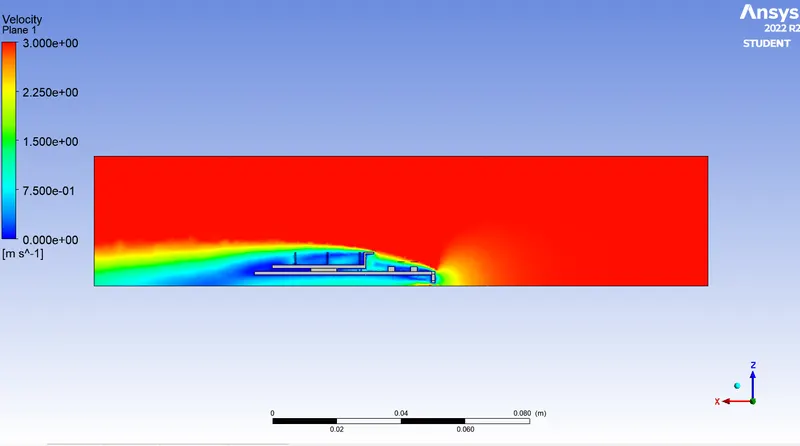
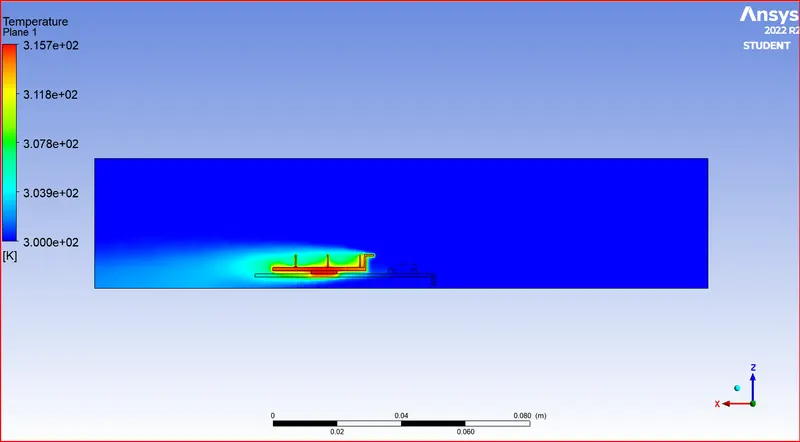
Velocity =3m/s.
Scaled residuals
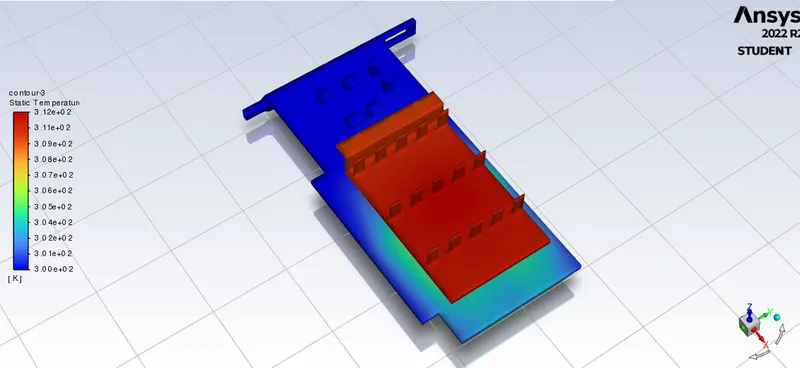
Temperature contour plot
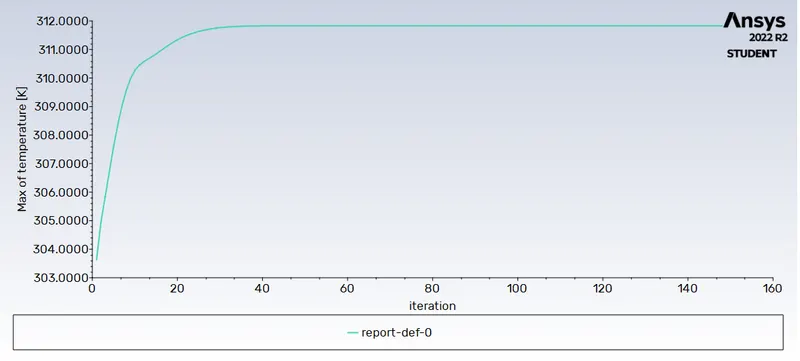
Max temperature of processor
Cfd post Processing
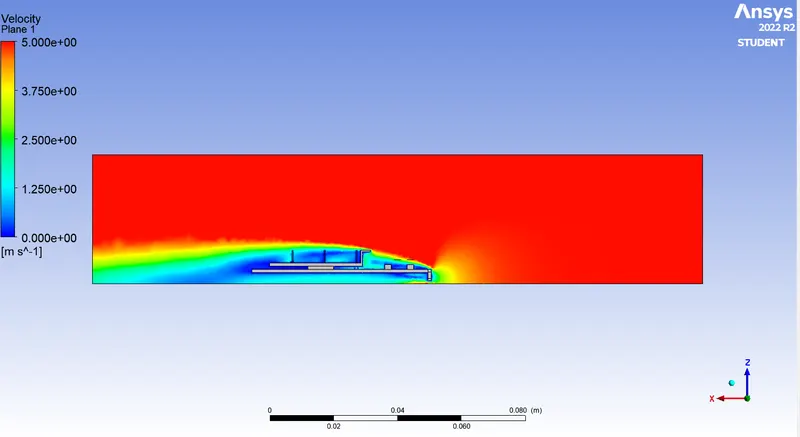
Velocity Distribution
Temperature Distribution
Refined Mesh
Velocity =5m/s
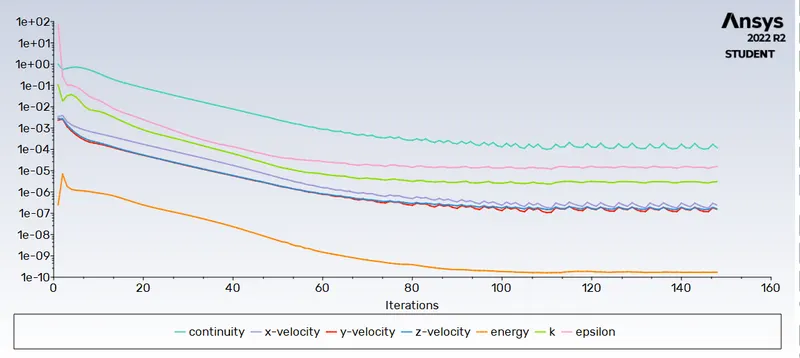
Scaled residuals
Temperature contour plot
Max temperature of processor
Cfd post Processing
Velocity Distribution
Temperature Distribution
Find out the maximum temperature and heat transfer coefficient attained by the processor.
Velocity=1m/s:
Base Mesh
Max temp of processor=329K
Refined Mesh
Max temp of processor=329K
Velocity=3m/s:
Max temp of processor=315.64K
Velocity=5m/s:
Max temp of processor=311.89K
Prove that the simulation has achieved convergence with appropriate images and plots.
Since the residuals are stabilized we can say that the solution has been converged.
And also the max temperature plot is constatnt for the no of iterations shows that the solution has been converged.
Identify potential hotspots on the model.
The area around the processor Like the processor itself, Base around the processor, and fin base are the potential hotspot on the Model.
Conclusions:
As the velocity of air is increased the max temperature of the processor also decreases as the heat transfer coefficient increases due to the increase in fluid velocity.
Cooler operating temperature of the processor can be achieved by increasing the air flow velocity.
Even though we refine the mesh by using body sizing method, for v=1m/s, the max temperature of the base mesh is approximately equal to the max vel for the refined mesh.