Week-6 Challenge: EV Drivetrain
1) Types of Converter used in an EV are:
AC to DC Converter: It converts Alternating current to Direct current.Commonly used as rectifiers.Widely seen in battery charging.
DC to DC Converter: It converts unregulated DC input to regulated DC output. They are 3 types i.e. Isolated,Non Isolated and resonant converters.They are used to deliever power to auxiliary loads operating at different Voltages.Battery to Charger Station compatibility. HV and EV battery link.Two types of power source energy storage solution.
DC to AC converter: It converts Direct current to alternating current.Commonly called as inverters.Widely seen in control of AC motors.
2) Here the solution is:-
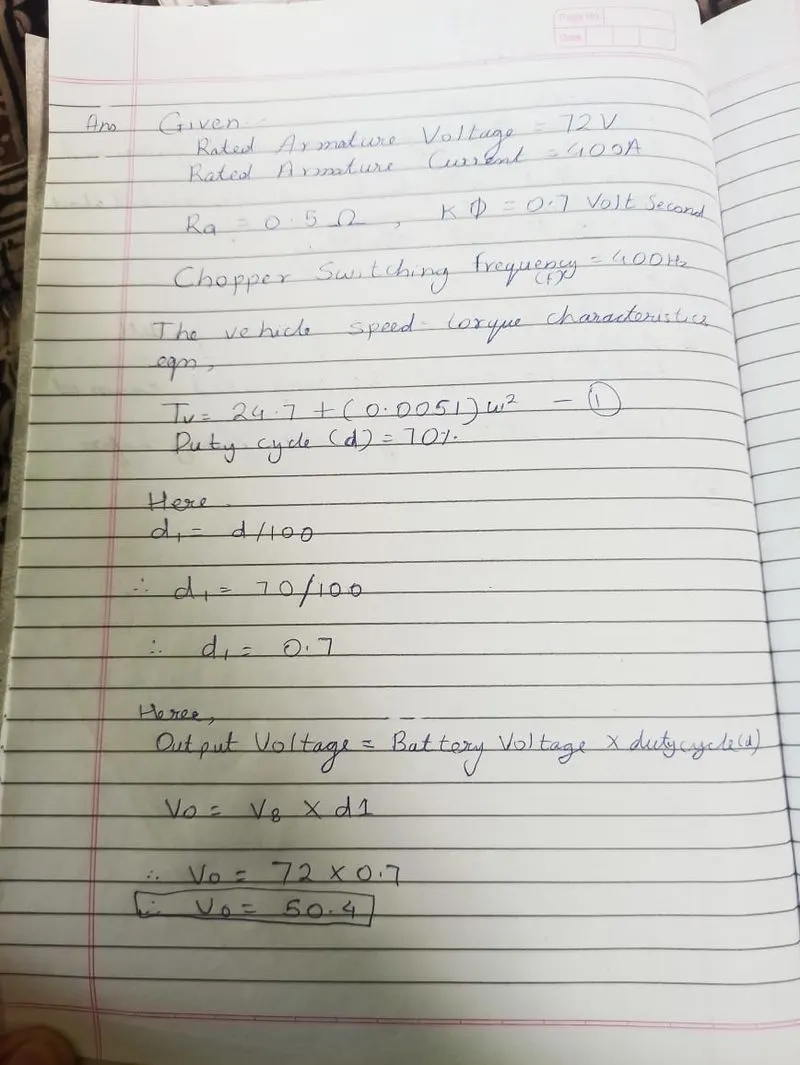
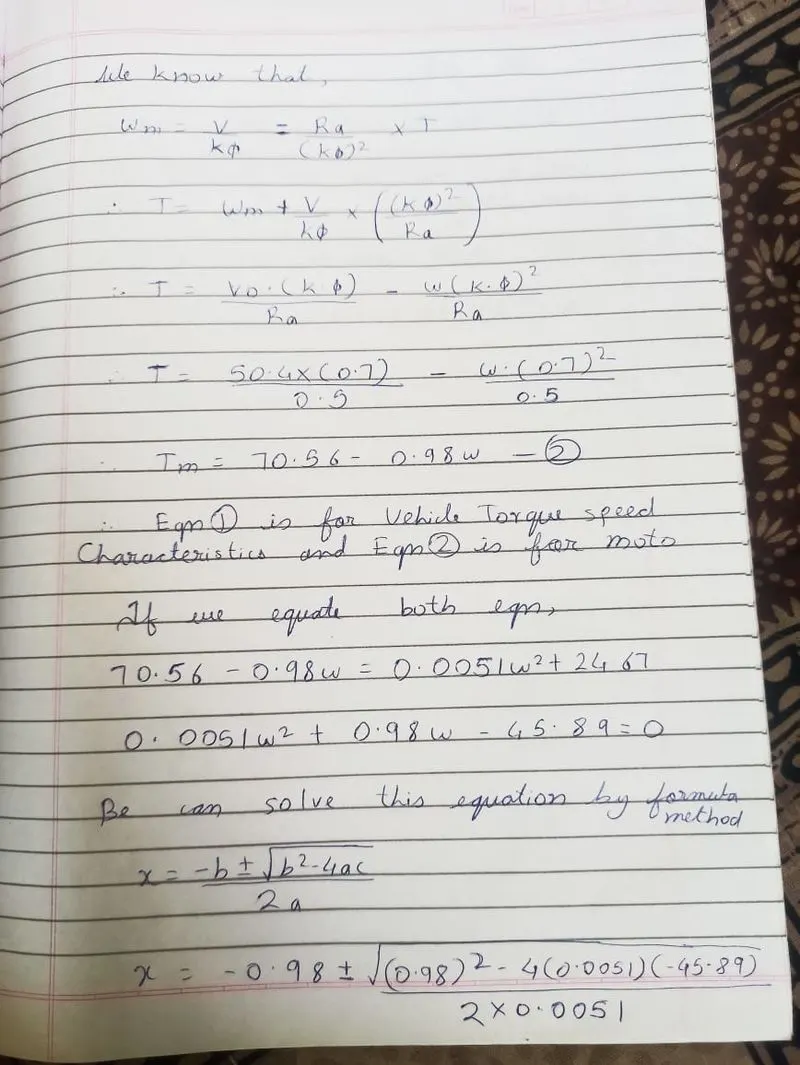
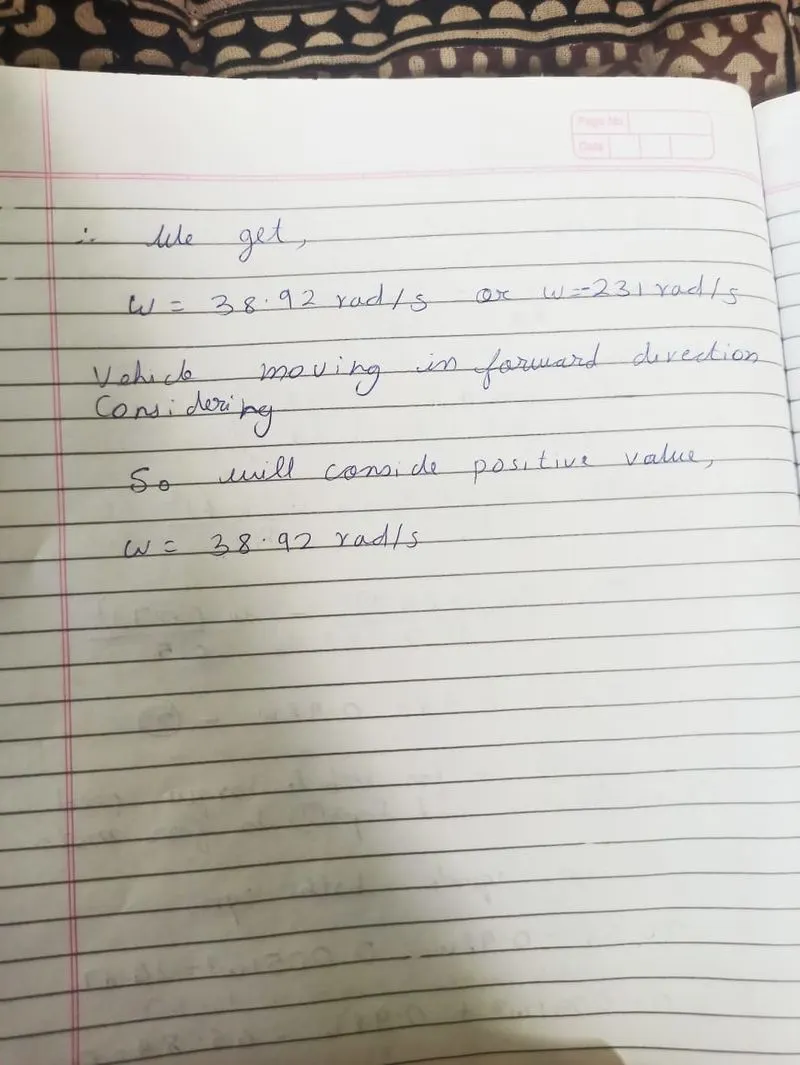
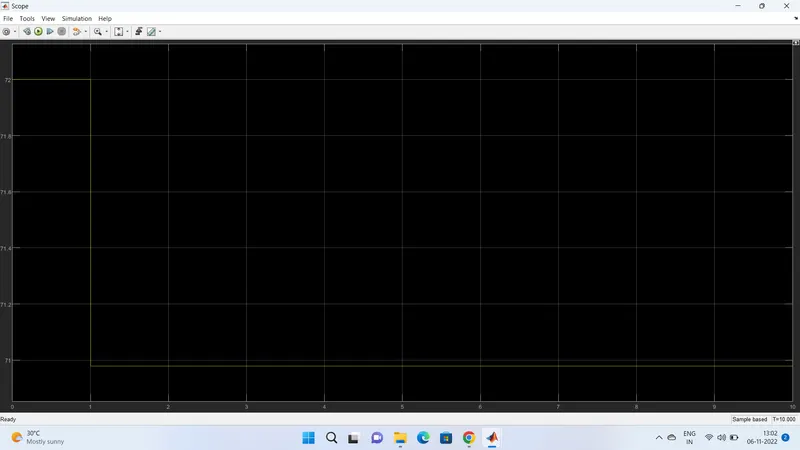
The following is the steady state speed obtained.
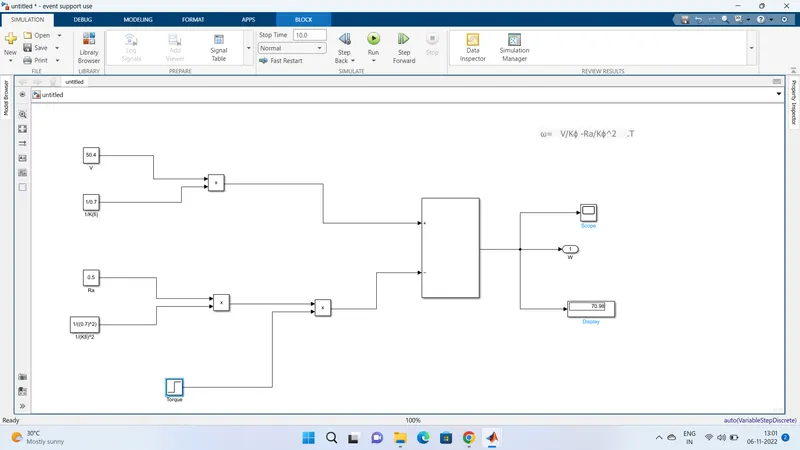
3)The model for the eqn:
4) Induction Versus DC Brushless Motor:-
The author writes about the Induction and DC Brushless motors.He starts with configuration that different vehicle configurations require different systems.He tells about the past that in past DC brush motors,lead acid batteries and contractor controllers exist.Now none of these exist including his hair.
He talks about two technologies.
DC Brushless Motor contains two kr more magnets that generate DC magnetic field.This magnetic field then enter the stator core and interacts with the current flowing within windings of conductor to produce torque between stator and rotor.As the rotor rotates the magnitude and polarity of stator current should be continuously varied so that the torque remains constant and conversion of electrical energy to mechanical energy should be optimally efficient. The device which controls the current is called an inverter. Without it Brushless motors would be useless.
Induction motor was invented by Nikola Tesla before 889 and it does not require any inverter. It is a 3 phase motor as dc brushless, stators are same only rotors are different.Induction motor has no magnets.Just stacked steel laminations with conductors in it.Current flowing in the stator winding produce a rotating magnetic field that enters the rotor. An induced voltage exists across the shorted structure of motor that is proportional to the speed difference between the rotor and electrical frequency. Because of this Voltage,currents are produced withing the rotor conductors that are approximately propotinal to voltage. These currents then interact with original magnetic field to produce forces which give desired rotor torque.
The induction motor has the ability to start with no load.No inverter is needed.It can produce starting torque which DC motor cannot produce.
Induction motor has its limitations. They cannot operate in DC. Shaft speed is proportional to line frequency. They have limited starting torque and limited peak torque capabilities.DC motor has more peak torque as compared to induction motor but the induction motor overall capability is more.When inverted is connected with induction motor it becomes capable and efficient as the DC DC Brushless Motor for vehicle applications.
Most of the electric vehicle have DC Brushless Motor and complexity is less. The only difference between two motors are DC motor require absolute position sensor while induction motor requires only speed sensor. The induction motor does not require magnets so in cost wise it is efficient.DC Brushless Motor have high peak torque capabilities but overall efficiency is good of induction motor.
Conclusion- There are no winners. The DC Brushless motors will be wide used in hybrid and Plug-in hybrid electric vehicle and the induction motor for purely electric purposes.