Week-6 Challenge: EV Drivetrain
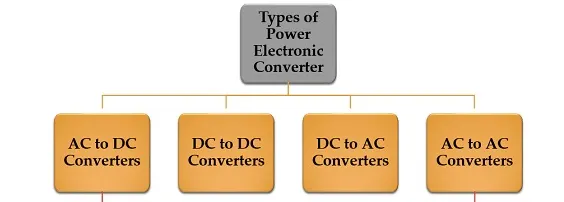
Which types of power converter circuits are employed in electric and hybrid electric vehicle?
Power converter is a process of converting electrical energy from one form to another
There are different types are power coverters are used based on its application.
Hybrid Vehicle:
Most Hybrid vehicle uses DC BLDC motor and Engine in parallel combination with power split device
The power converter which used in AC motor are Inverter which converts DC to AC
(Battery source) DC ------->INVERTER--------> DC-BLDC (Motor)
Auxiliary application like Light, AC,Music system uses DC Choppers
(Battery source) DC ------->CHOPPERS--------> DC (Variable amplitude)
Electric Vehicle:
Pure electric vehicle uses induction motor for propelsion and Battery for the power source
In EV also we need Inverter and choppers and in additinal we also need rectifier.
Rectifier is a converter which convert AC to DC which is mainly used for on board charging function.
(Power grid) AC ------->Rectifier-------->DC (Battery)
---------------------------------------------------------------------------------------------------------------------------------------
An Electric Vehicle's powertrain with 72V battery pack in shown in the diagram below. The duty ratio for acceleration operation is 'd1' and for the braking operation the duty ratio is 'd2'
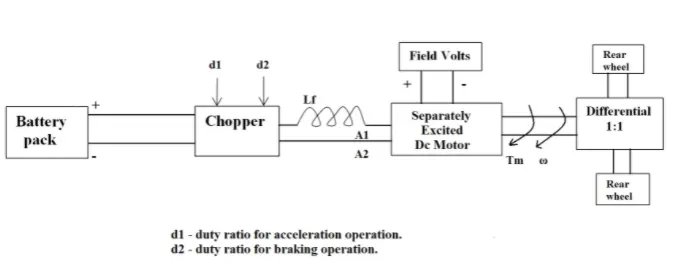
Rated Armature voltage= 72 V
Rated armature current= 400 A
Ra= 0.5Ω, KΦ= 0.7 Volt second
Chopper Switching frequency= 400 Hz

Since the duty cylce given is 70%
the input voltage to the motor Vmo= Vbat*0.7=72*0.7=50.4V
T=(Vbat*KΦ/Ra)-((KΦ)2*w)/Ra
T=50.4 *0.7/0.5 -(0.7)2*w/0.5
Tm=70.56-0.98w ---------------------a
Tv=24.7+(0.0051)w2----------------b
Equating the a and b
70.56-0.98w=24.7+0.0051w2
0.0051w2+0.98w-45.86-----------------c
we can sove the above equaiton with below quadratic fromula
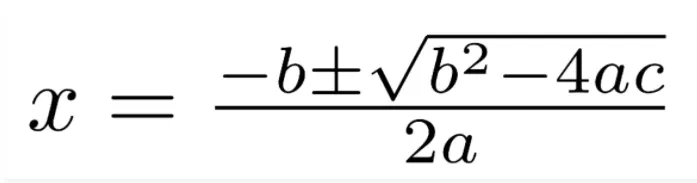
we will get
w=-0.98±1.377/0.0102
we will get two value and will consider the positive value
w=38.92 rad/sec is the steady state speed for 70% duty cycle
--------------------------------------------------------------------------------------------------------------------------------
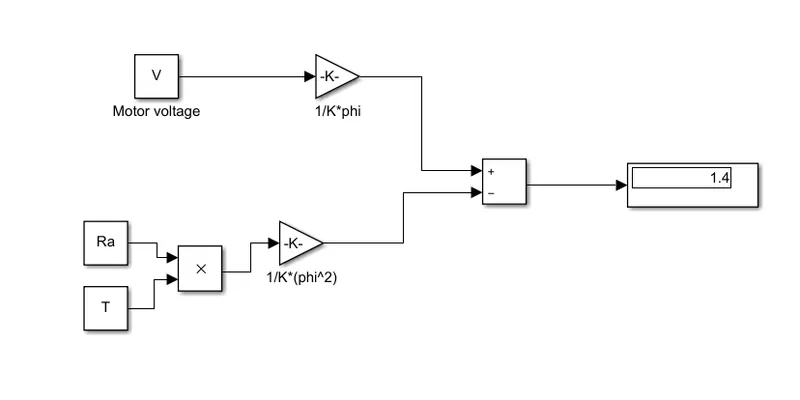
3. Develop a mathematical model of a DC Motor for the below equation using Simulink.
ω= V/Kϕ -Ra/Kϕ^2 .T
----------------------------------------------------------------------------------------------------------------------------------
Induction Versus DC brushless motors by Wally Rippel, Tesla
According to Wally Ripper
Both the induction motor as well as BLDC motor will be used depending on the end use application
Each of the motor has its own merits and demerit.
The main difference b/w these motor are thier rotars, in BLDC permanent magnets are used as rotor
and in induction motor it is steel caged rotor
Advantages of Induction motor:
- Motor can run on 3Φ AC power supply and no need inverters
- Cost of Induction motor is cheaper than BLDC motor
- By Controling the frequecy of input AC current , the motor speed can be varied
- It is a self starting motor and no primer is required
- machine size grows, losses do not necessarily grow.
Advantage of BLDC motor
- Efficiency is more
- Less noise
- Rotor generate less heat compare to Induciton rotar
- As the machine size grows, the magnetic losses increase proportionately and part load efficiency drops
- BLDC motor are costlier as it required permanent magnet, Hall sensor and an inverter if the input power is AC