Week 5:- Rest Unit & Clamp Unit Design Challenge
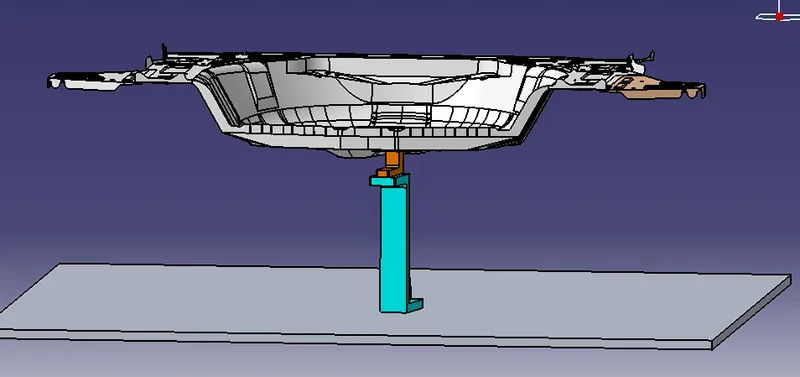
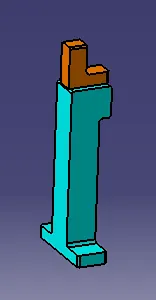
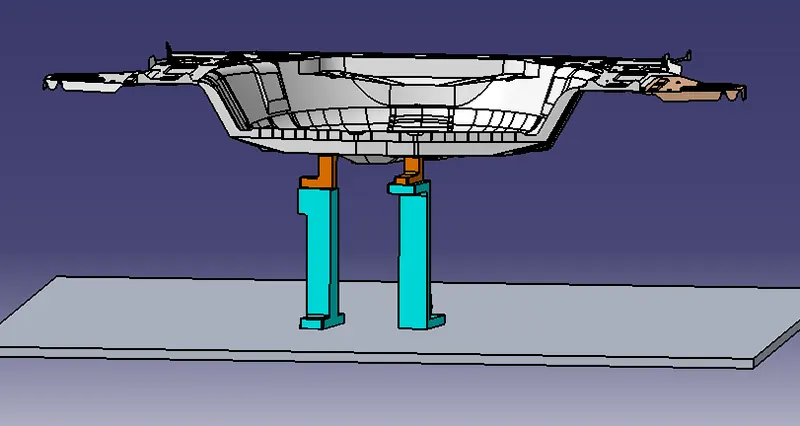
OBJECTIVE: To design two Rest units and three Power Clamp units with different Riser, Blade and Clamp arm.
INPUT
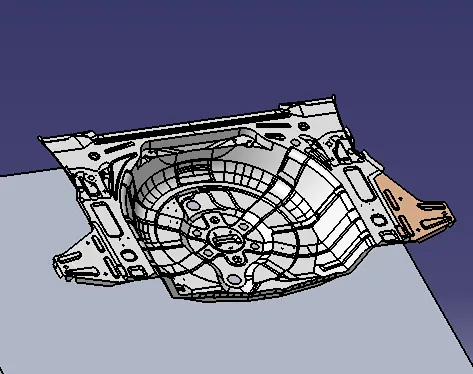
FUNDAMENTALS:
3-2-1 principle: Our ultimate intention for using pin unit is to fix the work piece so that it does not deviate from the position while the operation is being performed on it. For this reason we use 3-2-1 principle.
Every component we know has 6 degrees of freedom. They are listed below:
- Translational motion along x-axis.
- Translational motion along y-axis.
- Translational motion along z-axis.
- Rotational motion along x-axis.
- Rotational motion along y-axis.
- Rotational motion along y-axis.
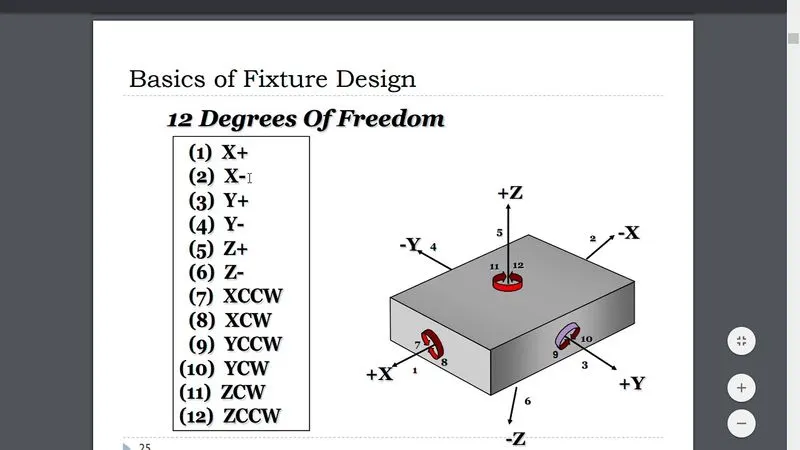
FIG. DEGREE OF FREEDOM
Degrees of freedom can be simply understood as the direction in which any component can move. These 6 degrees becomes 12 if we consider translation along negative and rotation in anti-clockwise direction too. That means, every component can move in all the direction when it is free. But processes like welding, stamping or others and in fact every other cannot be carried out on such free to move body for obvious reasons. Thus the body must be constrained in all the major direction in order for the workman to work upon it. This constrain on motion is achieved by 3-2-1 principle.
In 3-2-1 principle we make use of locating pins in the given order to fix it on a fixture:
- 3 pins are located on the bottom side of the component. These pins constrain the translational motion of the body in z direction and rotational motion along x-axis and y-axis. Thus 3 degrees are restricted. But the body still can rotate along z-axis and translate in x-axis and y-axis.
- 2 pins are located on the back side of the component. These pins constrain the translational motion along x-axis and rotational motion along z-axis. Thus we have constrained 5 degrees in total. But translation along y-axis is still possible.
- 1 pin located on the adjacent side of the 2 pins we can constrain the last degree that is translation along y-axis.
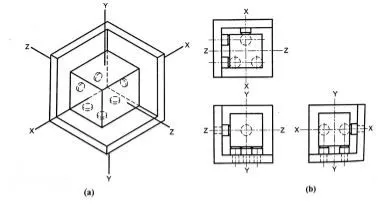
FIG. LOCATING PINS
Thus we can constrain all the degrees of freedom of a body using 3-2-1 principle which used 6 pins for the same.
When we use clamps we restrict following motions:
- Translational motion along z-axis.
- Rotational motion along x-axis.
- Rotational motion along y-axis.
sign two Rest units and three Power Clamp units with different Riser, Blade and Clamp arm.
CLAMPING: The car panel will rest on the rest unit, Also it resists the clamping force of the finger & thus clamp the car panel.
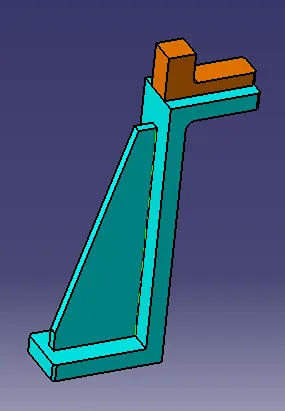
RESTING: The car panel will rest on the rest unit, Also it resists the clamping force of the finger & thus clamp the car panel.
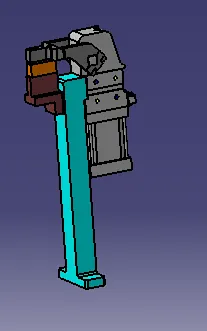
CLAMP UNIT:
- Clamps are versatile tools that serve to temporarily hold work securely in place.
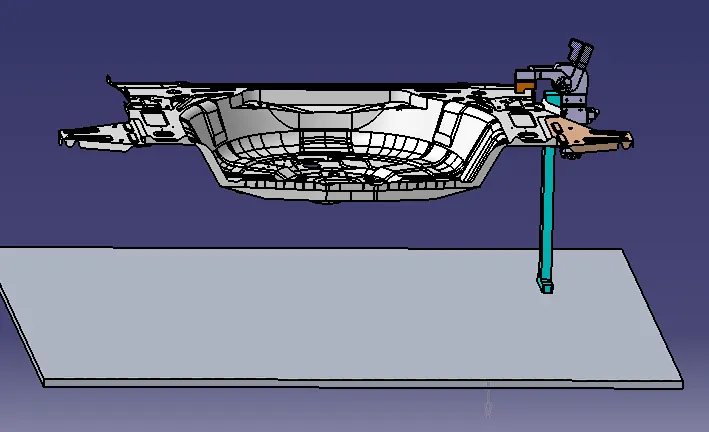
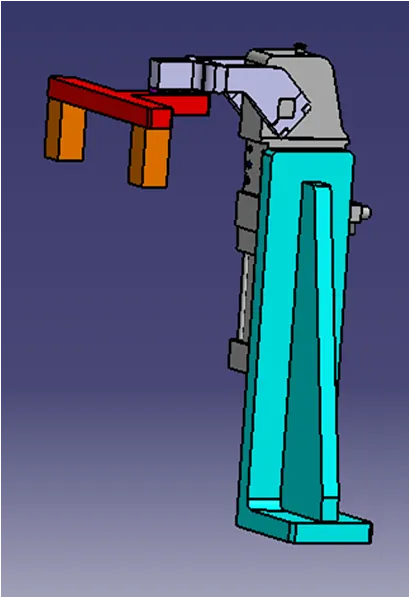
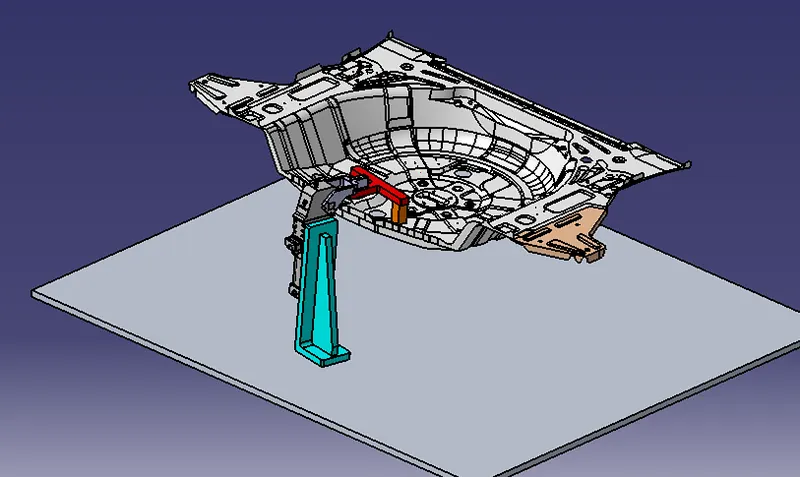
- A Clamp unit is a unit designed to clamp/ hold the car panel at a certain location.
Its purpose is to hold the panel at that place with the application of force

.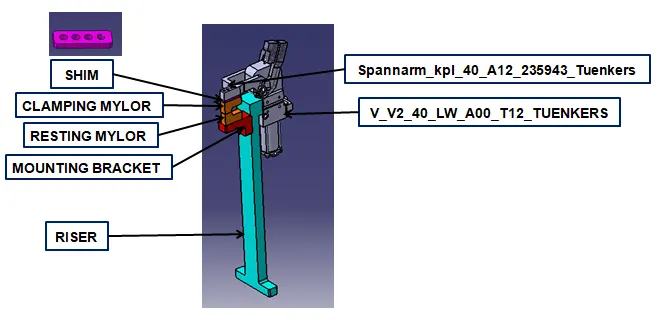




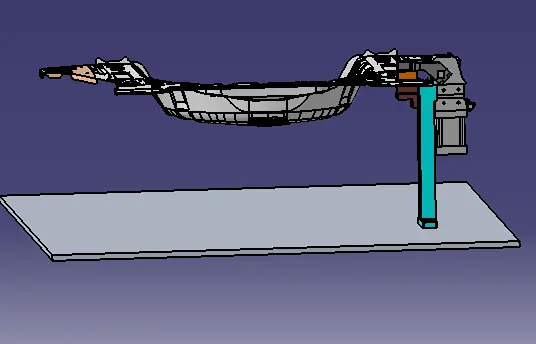

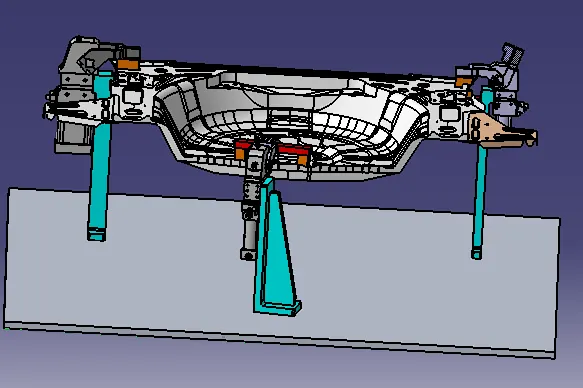

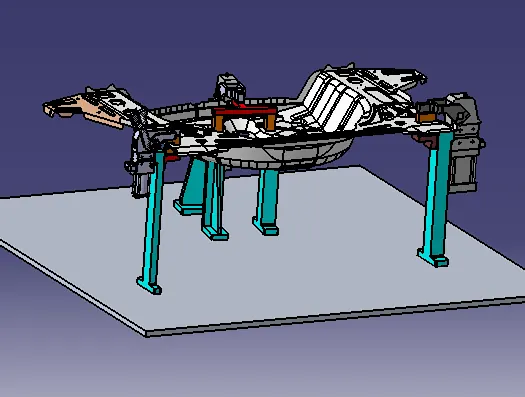
WHOLE ASSEMBLY