Week 5 - Rayleigh Taylor Instability
The Rayleigh–Taylor instability:
It is an instability of an interface between two fluid of different densities which occurs when the lighter fluid is pushing the heavier fluid.
Examples:
Behavior of water suspended above oil in the gravity of earth,Mushroom clouds like those from volconic eruption and atmospheric, nuclear explosions, supernova explosions in which expanding core gas is accelerated into denser shell gas, instabilities in plasma fusion reactors and inertial confinement fusion.
Simulations:
The baseline simulation with the mesh size is 0.5mm
Setup:
Geometry:
Open Ansys Spaceclime to construct geometry with required dimensions
as shown below
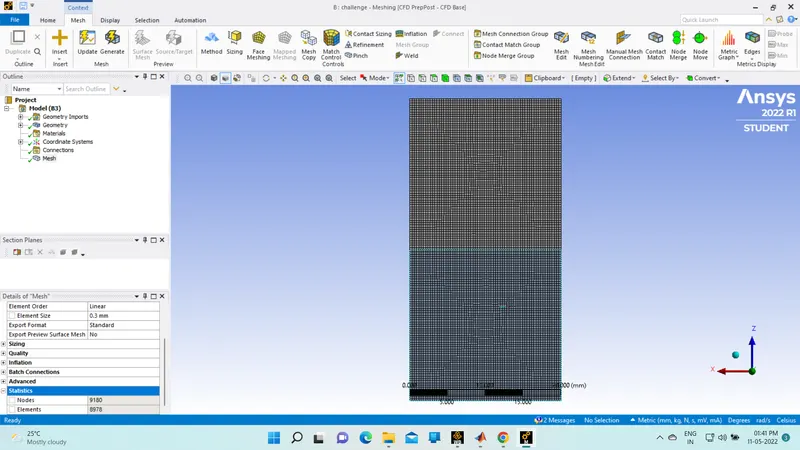
Mesh size is 0.3mm
No.of cells : 8978
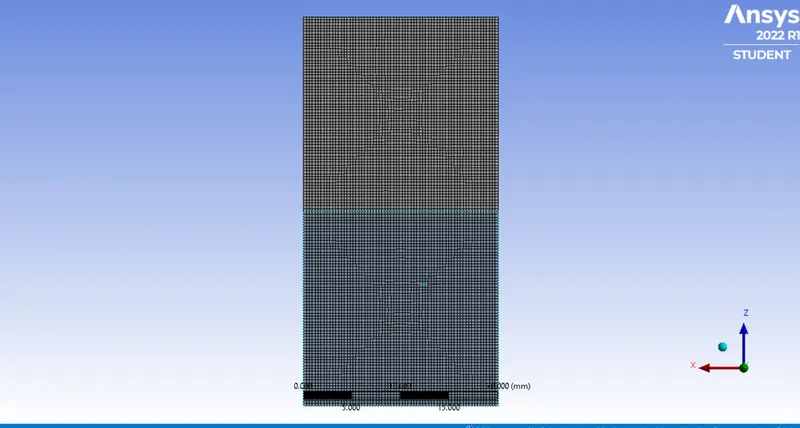
After meshing is done go to the setup in Ansys workbench
and give required parameters and inputs like materials and choose the right physics and make phases and finally run calculations and simulations
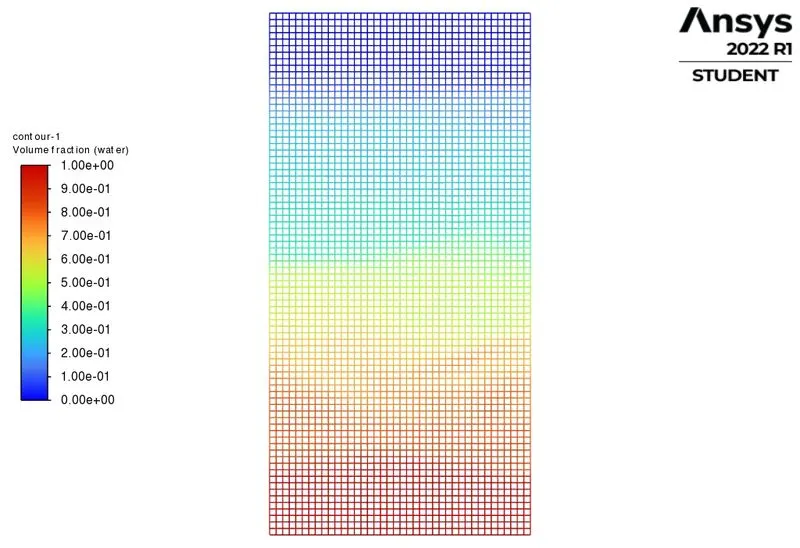
Performing the Rayleigh Taylor instability simulation for 2 different mesh sizes with the base mesh being 0.5 mm.
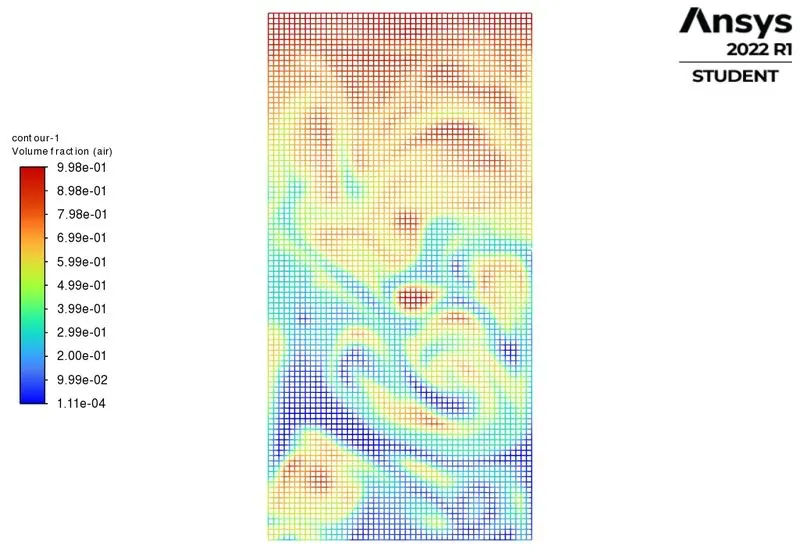
At mesh size 0.4
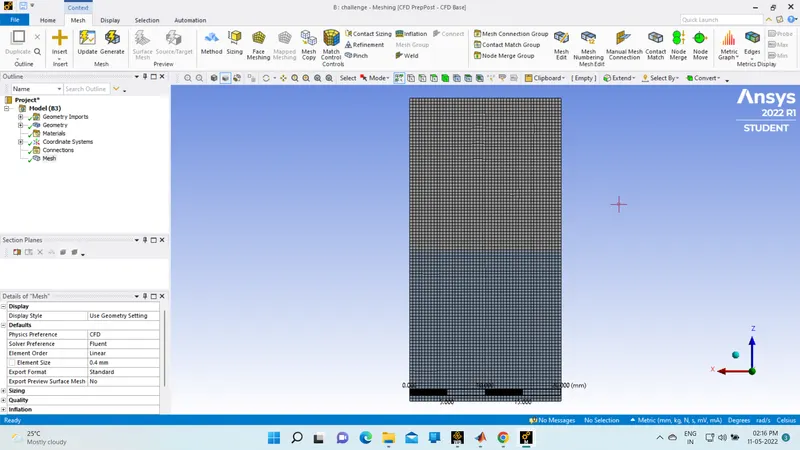
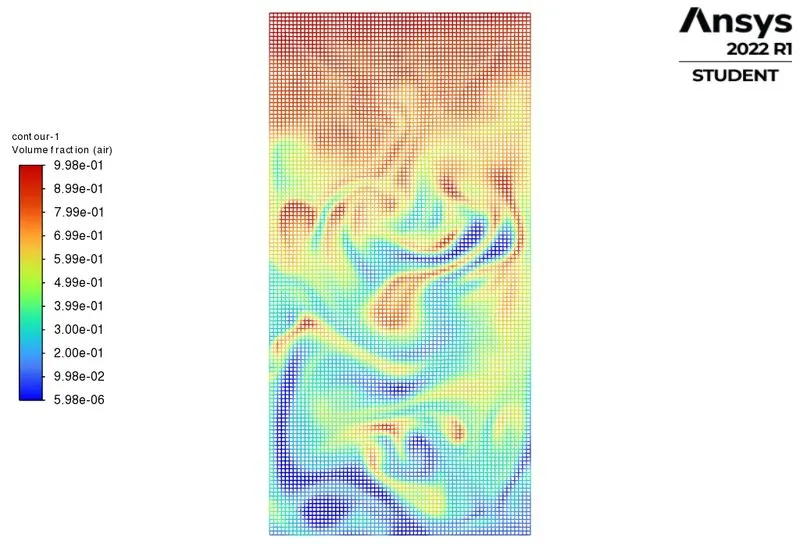
At mesh size 0.3mm
Obsevations:
When applying the grid size finer the contours come smoother and at every node we get the solutions that we required
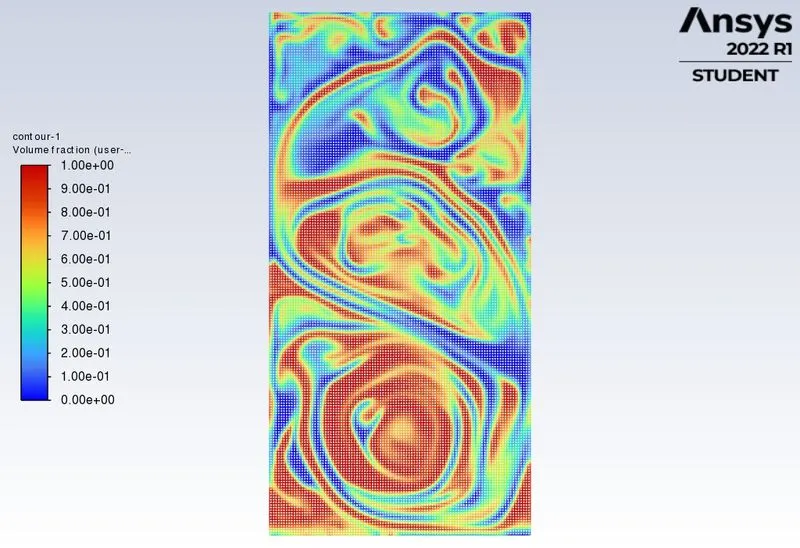
Simulations with user material:
dinsity 400kg/m^3
viscosity 0.001
meshing size 0.2mm
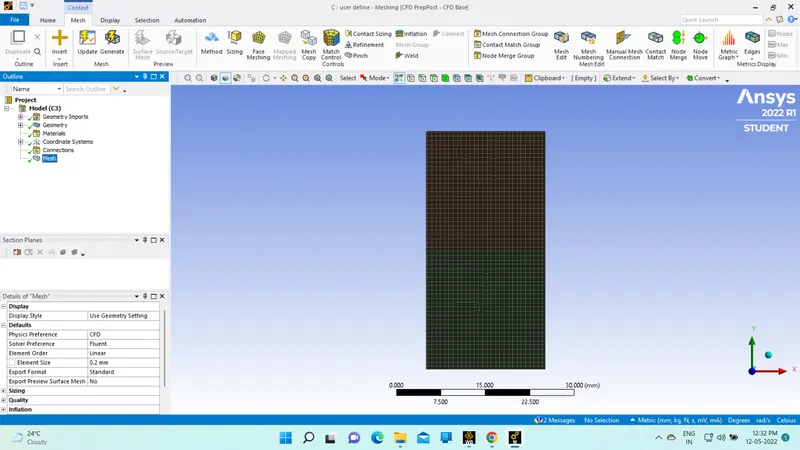
contours
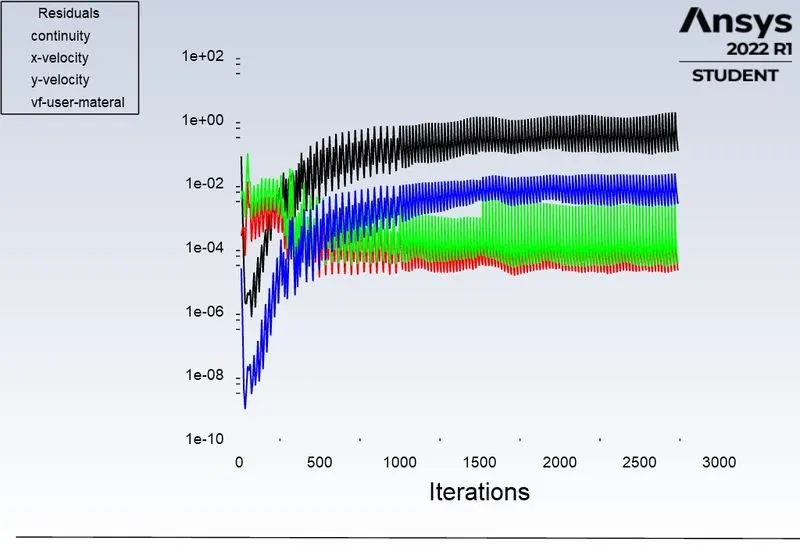
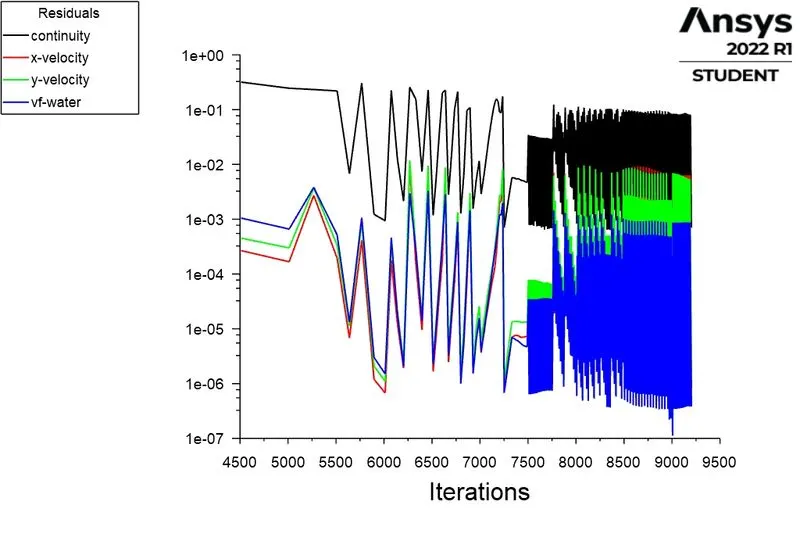
A steady-state approach might not be suitable for these types of simulations.
steady-state simulation is used to investigate the steady-state behavior of a system, where the simulation continues until the system reaches a steady-state. Otherwise, the simulation results can be significantly different from the true results.
The Atwood number is a dimensionless number in fluid dynamics used in the study of hydro dynamics in density stratified flows. It is a dimensionless density ratio defined as

where
 = density of heavier fluid
 = density of lighter fluid