Week 5 - Rayleigh Taylor Instability
Aim
Interaction of two phases by RAYLEIGH TAYLOR instability, how two different phases of material mixed with each other is calculated in such simulation.
Any model of different phases is converted in 2 D model and calculated by applying such type of simulation to get mixing result, how high density material is going down due to gravity and light density material is going up , with proper iteration and time .all calculated in such analyses.
Applications
- In many industries for calculation and checking of two or more phases simulation of different density materials
- Used in chemical industry
- Used in oil , petrol and diesel plant industry for checking and mixing of different phases of cuts
- Used where different phases of material is used of different density of fluids are used
In such simulation we provide transient simulation instead of steady simulation because it is time dependent simulation, it is time dependent, steady flow not depend on time. it is given by action of gravity it is based on time dependent. based on acceleration due to gravity, in steady flow the flow is independent of time
Solving and processing methods
- After opening design model, make the deign of two phases of proper size with proper share prop
- After design, given proper mashing with 0.5 mm size, used two different sizing for to simulation as per requirements , used base mash.
- After starting the ANSYS fluent , solution is done in transient simulations , given gravity on y axis in downward direction 81, material is added water and air for both simulation , and for specified material density and viscosity is added by adding user define material values is given in challenge, after material adding material is assigned in proper phase for primary and secondary phase after applying multiphase , after it in solving section initialized it , and patched with proper part , water section is given at 1 and air section is given at 0 and both part is patched separately .
- After patching, in post processes in couture section water phase is added for result and in solver solution animation for couture is also measured.
- After all setting, run calculation is open by giving max and minimum time setting the time for variable,
Time is set as, run time 0.0009 and no iteration is 2500, and for user defined simulation run time is for 0.005 and 800 iterations.
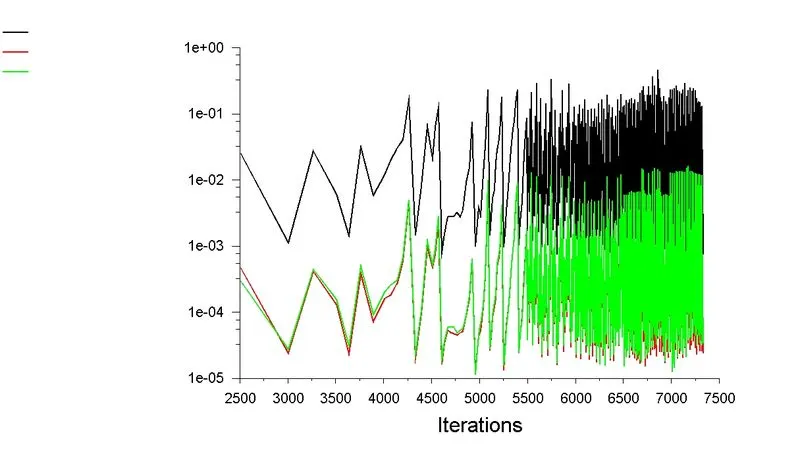
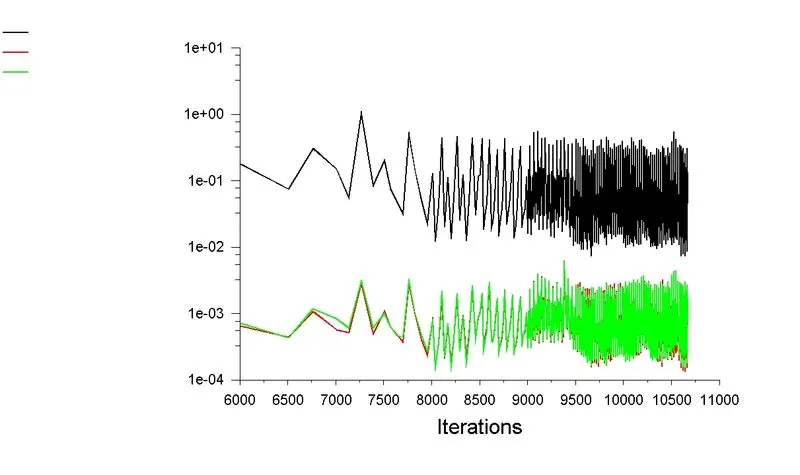
All the simulation for both condition is converged as given in curved
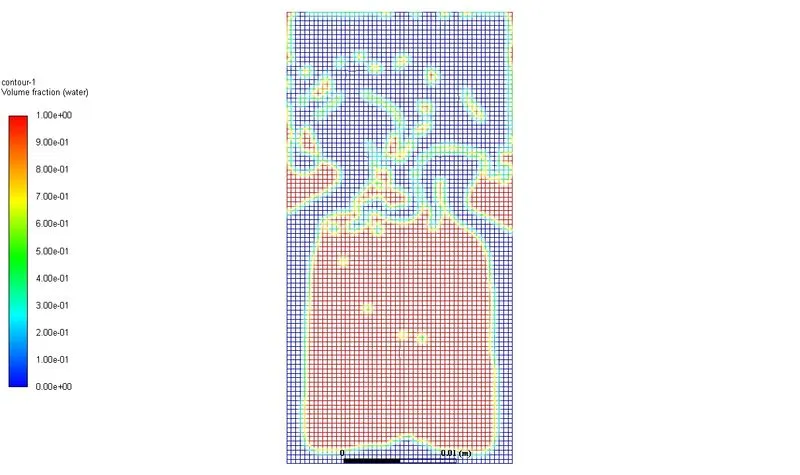
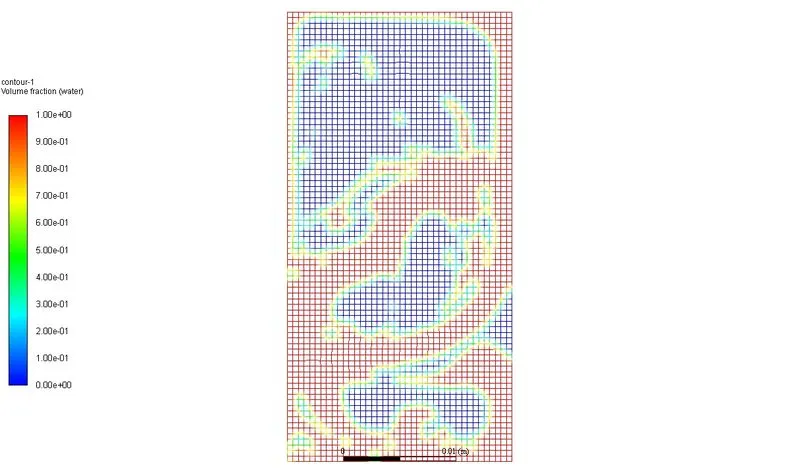
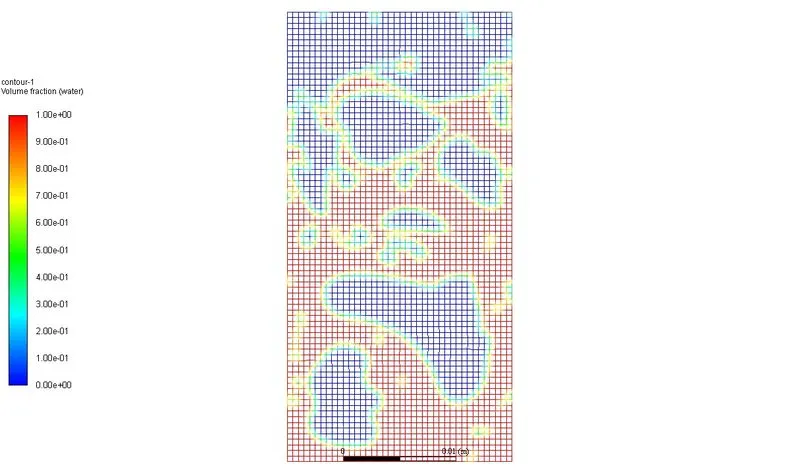
All photos of results is attached is attached.
ATWOOD NUMBER
IT IS THE RATIO OF TWO DENSITIES
ATWOOD NUMBER = (RHO 1 – RHO 2) / (RHO 1 + RHO 2 )
FOR 1 CASE ATWOOD NUMBER =0.997
FOR CASE 2 SPECIFIED MATERIAL ATWOOD NUMBER = 0.4273
Conclusion
Such simulation is suitable for analyses of 2 or more phases mixing measurement of different densities
Mixing of heavy and light fluid analyses.
Not mention why we used explicit and why implicit, need clear description on both
Why some time it is not patched by applying proper patched,
Need more description on RUN calculation details.
VOLUME FRACTION OF WATER PHASE
RESIDUAL CURVE OF REFINE SIZE
VOLUME FRACTION CONTURE FOR REFINE ONE
RESIDUAL CURVE FOR USER DEFINE MATERIAL
VOLUME FRACTION CONTURE FOR USER DEFINE MATERIAL