Week 5: Prandtl Meyer Shock problem
Aim: To simulate the Prandtl Meyer Shock flow problem in Converge CFD
Simulate the Supersonic and subsonic flow through a duct
Study the formation of shock waves in the duct
Observe the effect of SSB temperature value on cell count and the shock location
Software : Converge CFD
Theory:
What is a Shock wave:
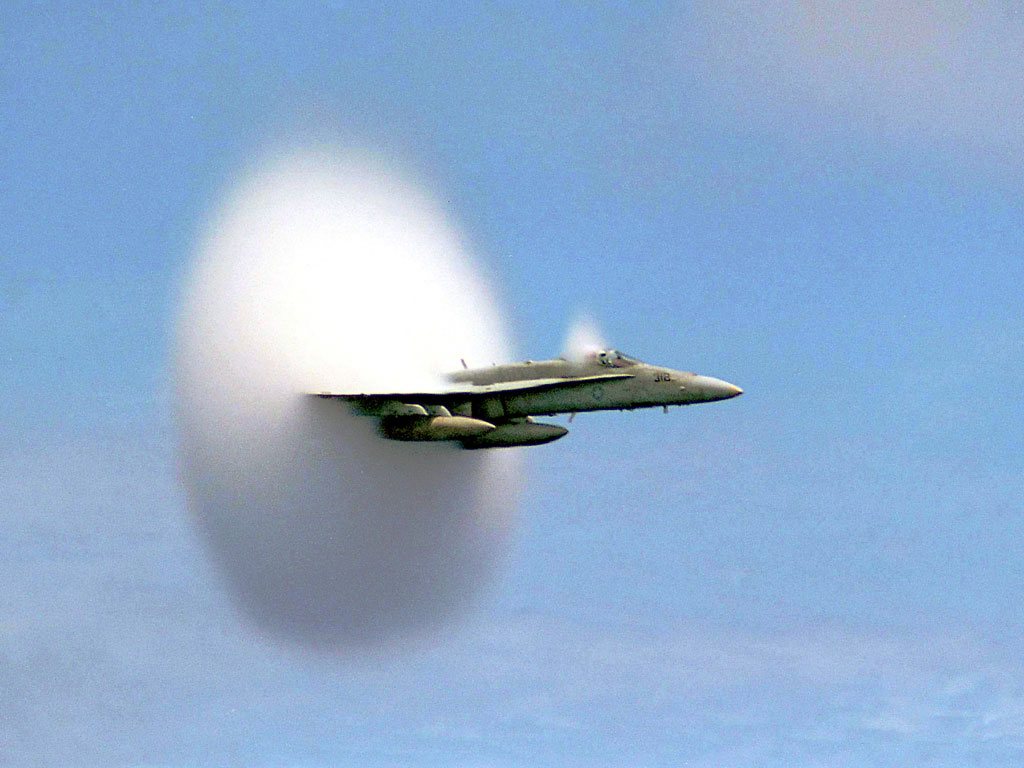
In physics, a shock wave (also spelled shockwave), or shock, is a type of propagating disturbance that moves faster than the local speed of sound in the medium. Like an ordinary wave, a shock wave carries energy and can propagate through a medium but is characterized by an abrupt, nearly discontinuous, change in pressure, temperature, and density of the medium.
When the speed of a source equals the speed of sound (v = c) the wave fronts cannot escape the source. The resulting pile of waves forms a large amplitude "sound barrier" that makes sustained flight at this speed difficult and risky.
The term "sound barrier" or "sonic barrier" first came into use during World War Two. Fighter pilots engaged in high speed dives noticed several irregularities as flying speeds approached the speed of sound: aerodynamic drag increased markedly, much more than normally associated with increased speed, while lift and maneuverability decreased in a similarly unusual manner. Pilots at the time mistakenly thought that these effects meant that supersonic flight was impossible; that somehow airplanes would never travel faster than the speed of sound. They were wrong.
When the speed of a source exceeds the speed of sound (v > c) the wave fronts lag behind the source in a cone-shaped region with the source at the vertex. The edge of the cone forms a supersonic wave front with an unusually large amplitude called a "shock wave". When a shock wave reaches an observer a "sonic boom" is heard.
[insert N-wave discussion]
Unlike ordinary sound waves, the speed of a shock wave varies with its amplitude. The speed of a shock wave is always greater than the speed of sound in the fluid and decreases as the amplitude of the wave decreases. When the shock wave speed equals the normal speed, the shock wave dies and is reduced to an ordinary sound wave.
 |
 |
The ratio of the speed of a moving object (v) to the speed of sound (c) in a fluid is known as the Mach number (Ma) in honor of Ernst Mach (1838–1916), the Moravian physicist, psychologist, and philosopher who studied sound and ballistics.
| Ma = | v |
| c |
The Mach number is a dimensionless measure of speed common in aerodynamics. Mach 0.5 is half the speed of sound, Mach 2 is twice the speed of sound, and so on. Speeds less than the speed of sound have a Mach number between zero and one and are described as subsonic. Those greater than the speed of sound have Mach numbers greater than one are a described as supersonic. Speeds approximately equal to the speed of sound have Mach numbers approximately equal to one and are described as transonic.
The shock wave from a supersonic object is a cone composed of overlapping spherical wavefronts. As any one of these wavefronts forms, it propagates radially outward at speed c and acquires a radius ct. At the same time the source, traveling at speed v moves forward vt. These two displacements form the leg and hypotenuse, respectively, of a right triangle and can be used to determine the Mach angle μ at the vertex of the shock cone.
| sin μ = | c |
| v |
When an object travels slower than sound, the ratio in this equation is greater than one, and the equation does not have a real solution. This makes absolute sense as there is no shock wave to speak of at subsonic speeds. Traveling at the speed of sound makes the ratio equal one and results in a Mach angle of ninety degrees. At transonic speeds the shock wave is a wall of high pressure moving with the object, perpendicular to its velocity. Above the speed of sound, the ratio is less than one and the Mach angle is less than ninety degrees. The faster the object moves, the narrower the cone of high pressure behind it becomes. Measuring the vertex angle is thus a simple way to determine the speed of a supersonic object.
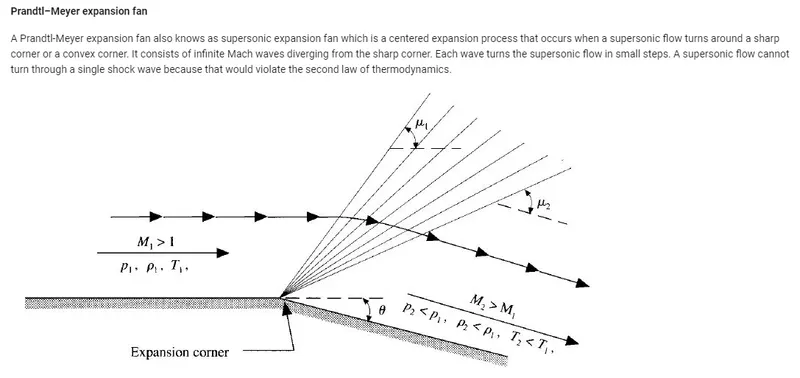

Shock Flow boundary conditions:
Dirichlet boundary condition:
In this boundary condition, the value of function is specified at the boundary

Neumann Boundary condition:
In this boundary condition, the value of normal derivative of a function is specified.

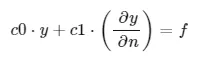
Robin boundary condition:
It is a combination of both the above boundary conditions, specified at both the ends
Mixed boundary conditions:
One end is the dirichlet boundary condition and on the other end there is robin boundary condition.
Why Neumann boundary condition used for supersonic Outlets:
Because the values of the all the variables (pressure, velocity, temperature Mach No) are not available before solving the problem. so nothing is specified at a supersonic outlet and all variables are extrapolated from the domain interior Only the Normal derivative of variables are specified as 0 or Zero gradient.
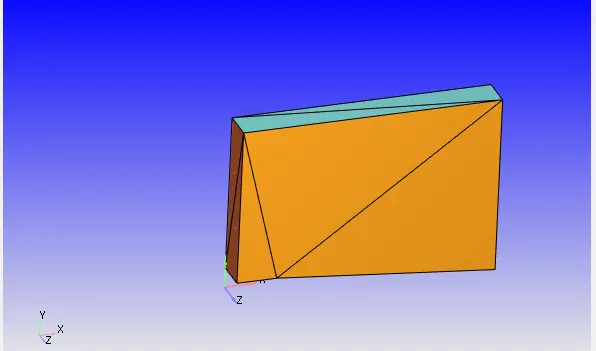
Geometry Creation:
Case Setup:
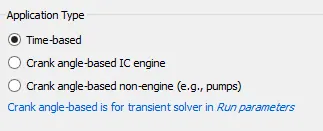
Application Type:
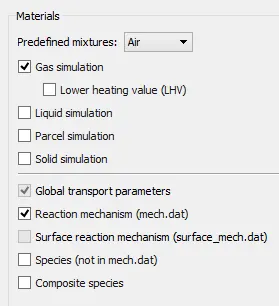
Materials: Air
Run Parameters:
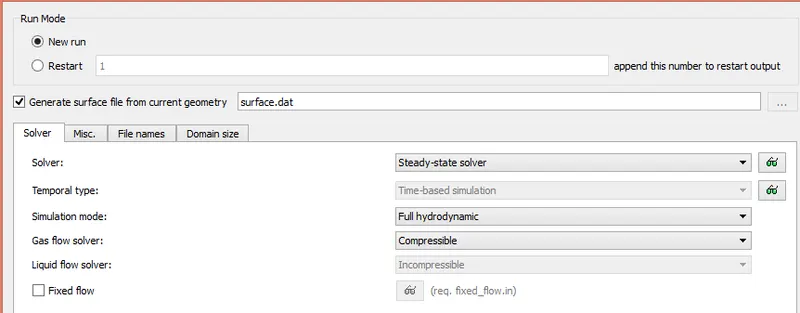
Enable Seady state solver
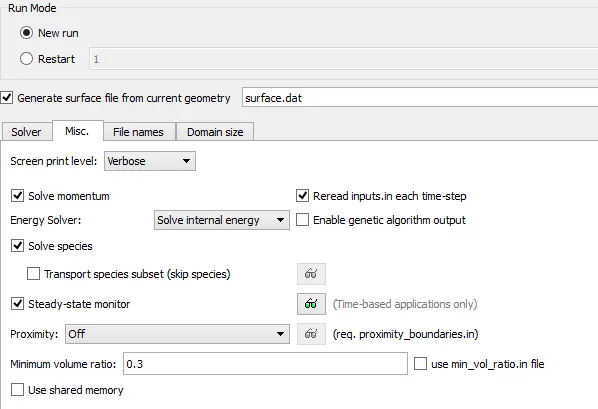
Steady -State Monitor:
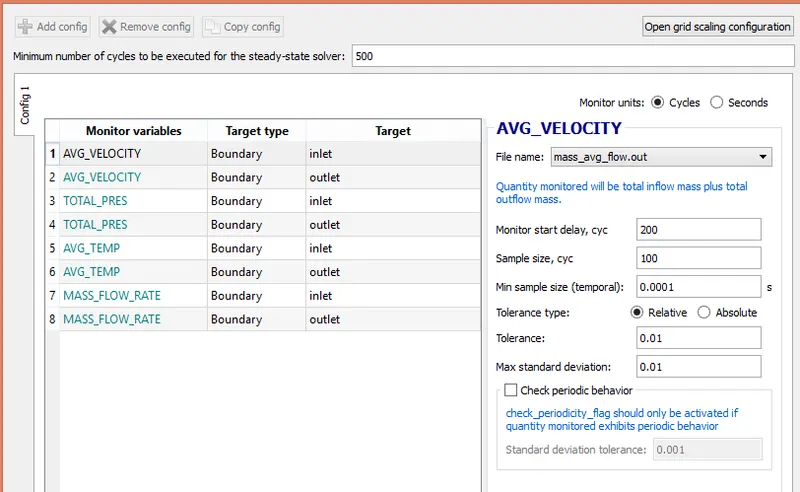
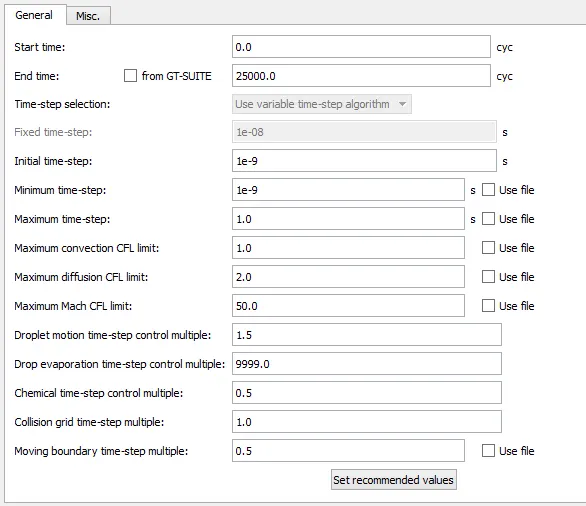
Simulation time parameters:
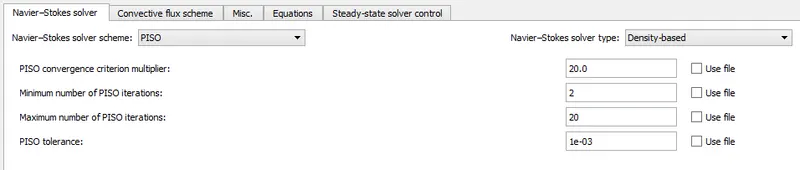
Solver Parameters:
Boundary Conditions:
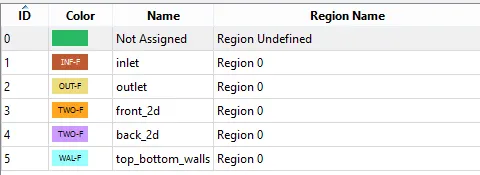
Inlet:
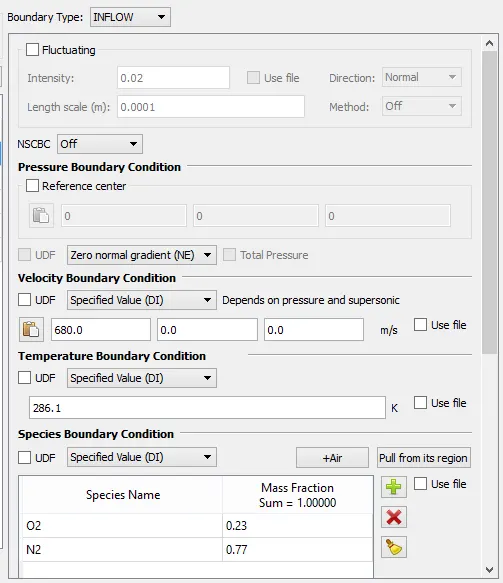
Outlet:
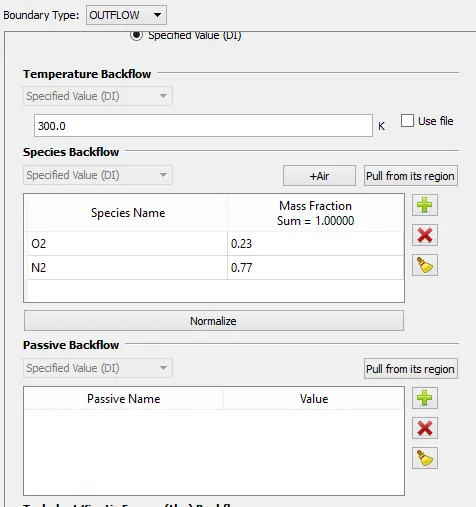
Front and back 2d:

Top and bottom walls:
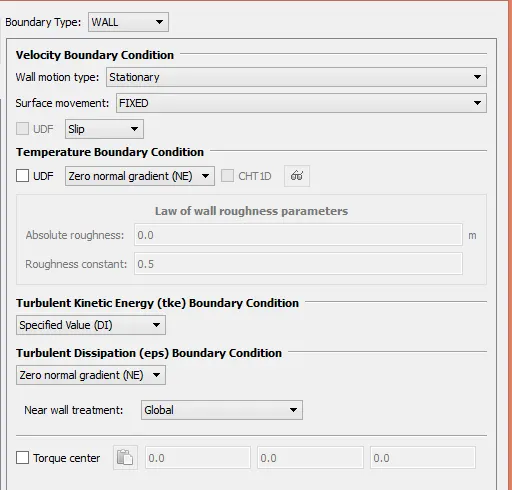
Intial Conditions:
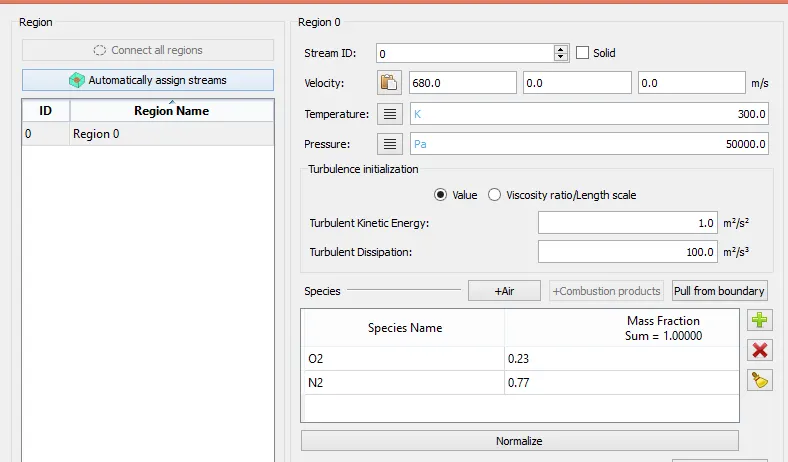
Physical Modelling:
Turbulence model: RANS K-E model
Grid Control:
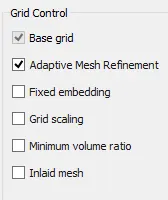
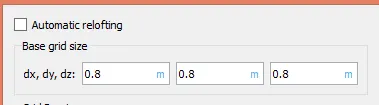
Base Grid:
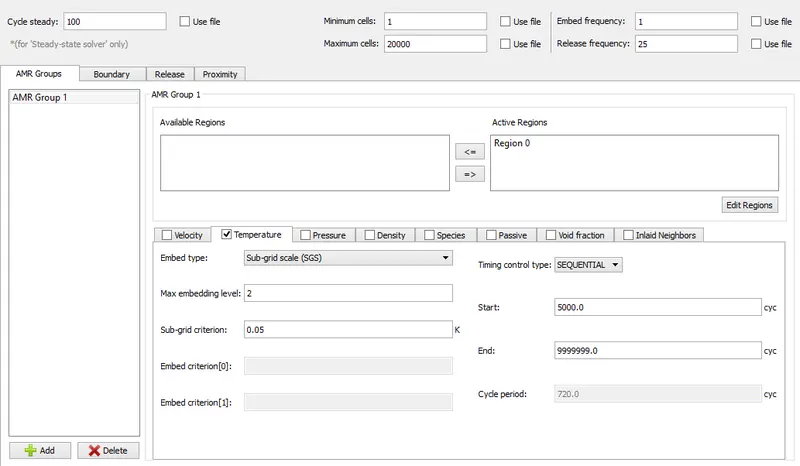
Adaptive Mesh Refinement:
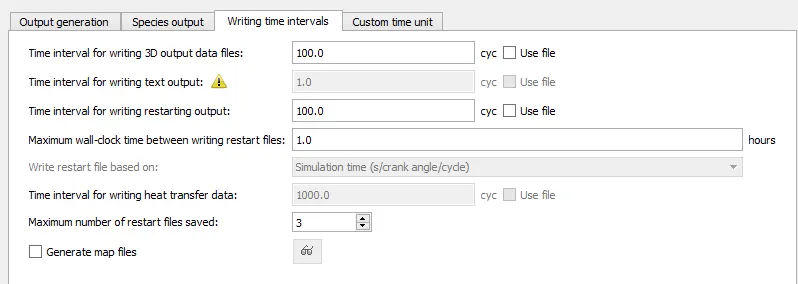
Output Files:
Case setup:
Case 1: Velocity = 680m/s (supersonic Flow) and SGS parameter = 0.05
Case 2: Velocity = 680m/s (supersonic Flow) and SGS parameter = 0.01
Case 3: Velocity = 680m/s (supersonic Flow) and SGS parameter = 0.1
Case 4: Velocity = 100m/s (Subsonic Flow) and SGS parameter = 0.05
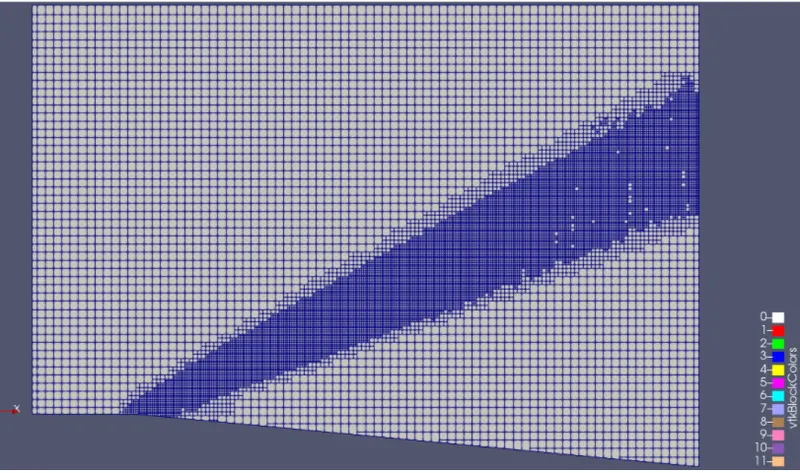
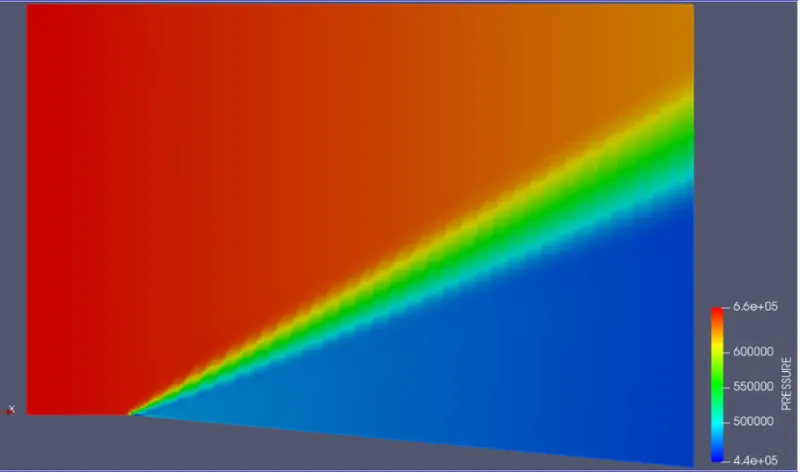
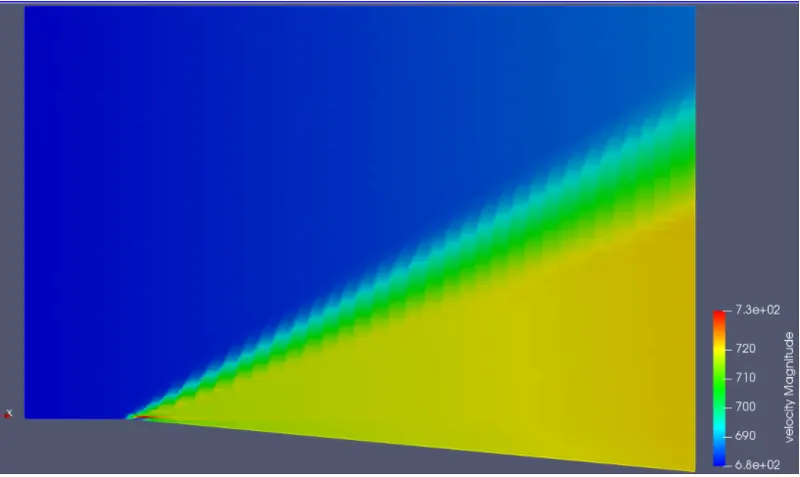
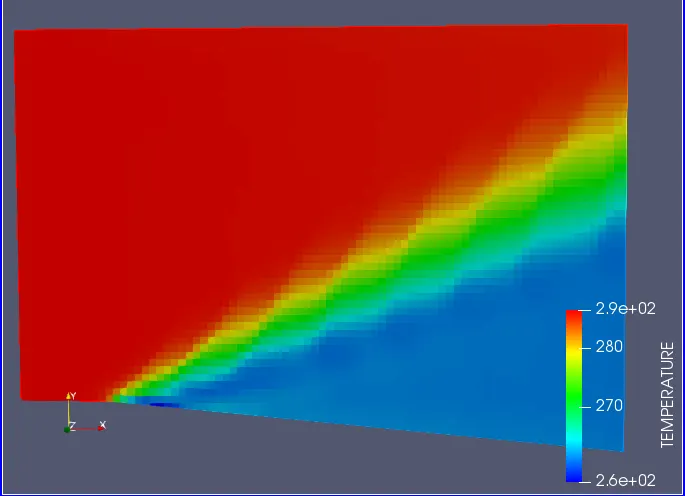
Case 1: Velocity = 680m/s (supersonic Flow) and SGS parameter = 0.05
Mesh:
Contours:
Pressure:
Velocity :
Temperature:
Plots:
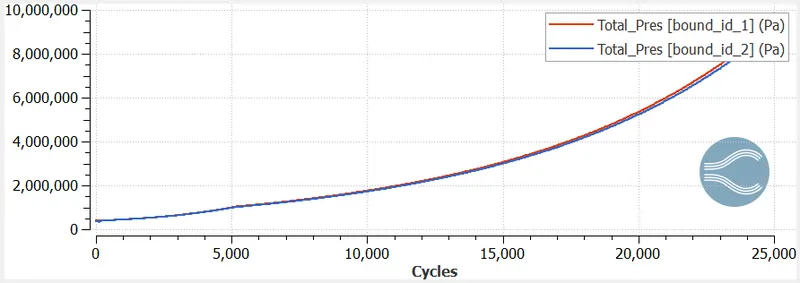
Pressure:
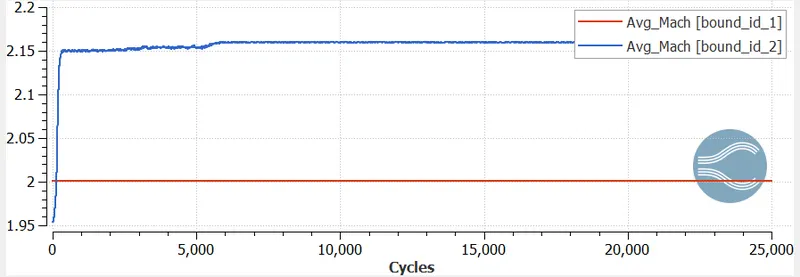
Mach number
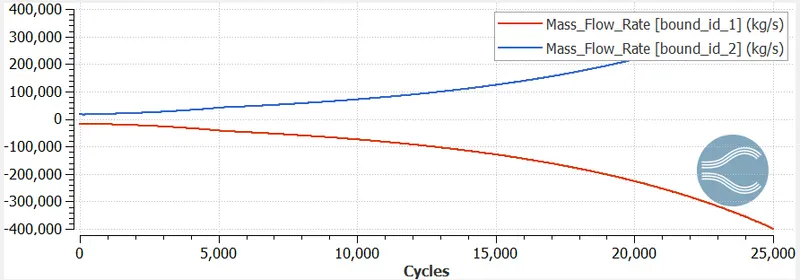
Mass Flow rate:
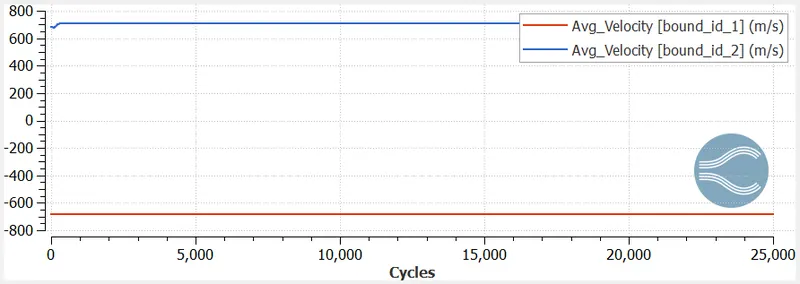
Velocity:
Total cell count:
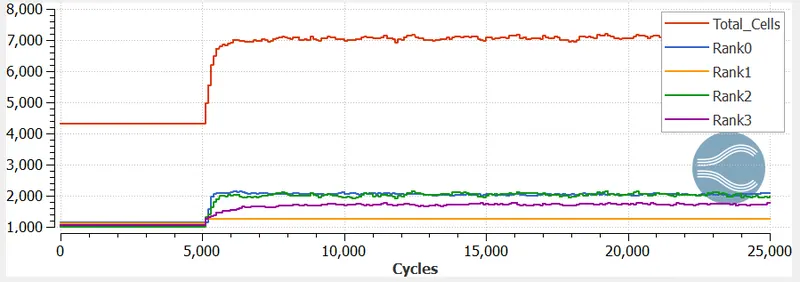
Case 2: Velocity = 680m/s (supersonic Flow) and SGS parameter = 0.01
Mesh:
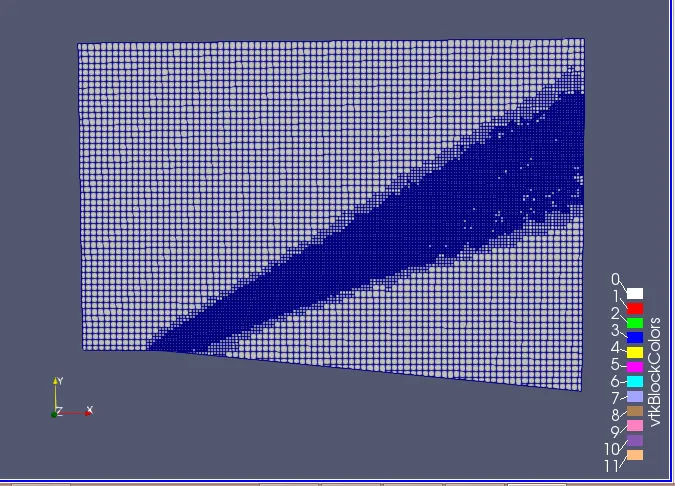
Contour:
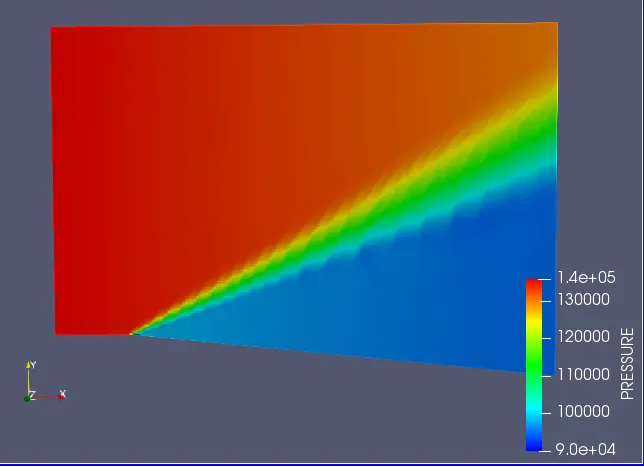
Pressure:
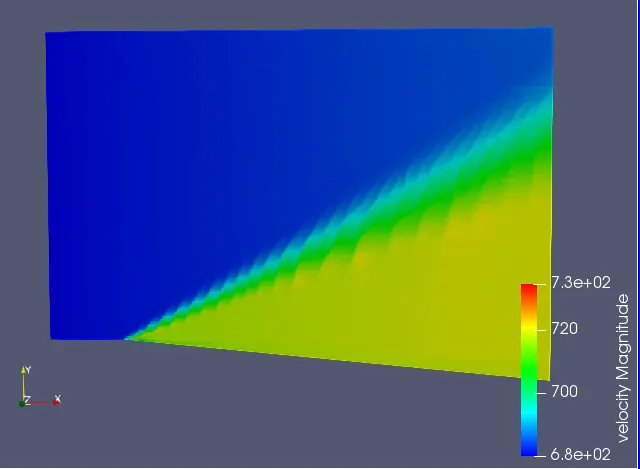
Velocity:
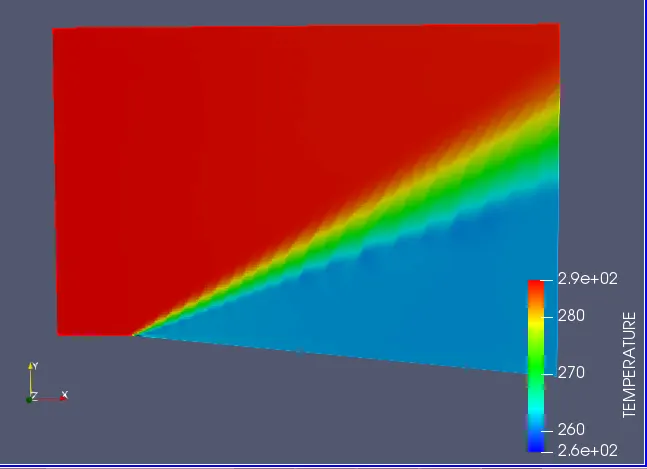
Temperature:
Plots:
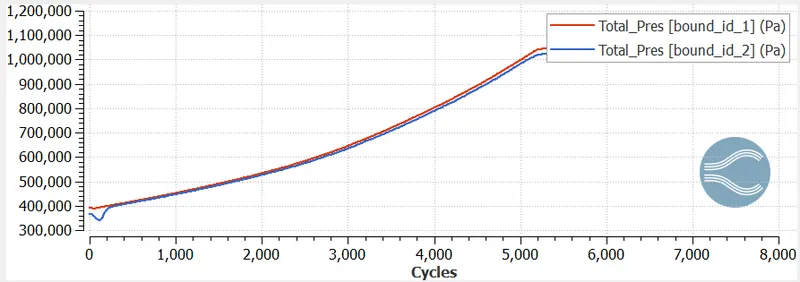
Pressure:
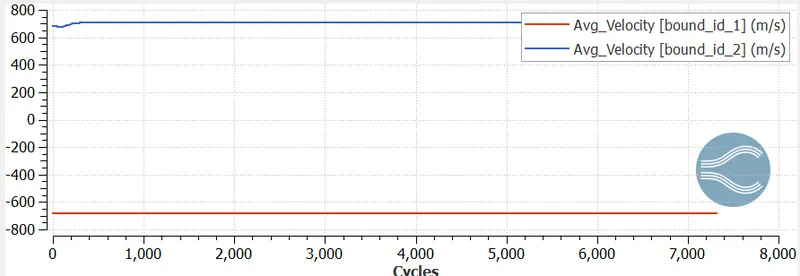
Velocity:
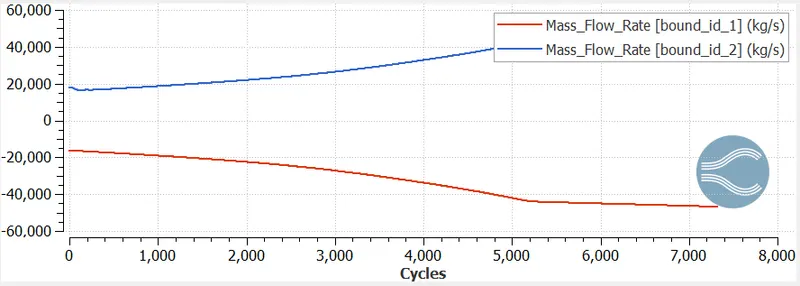
Mass flow rate:
Mach Number:
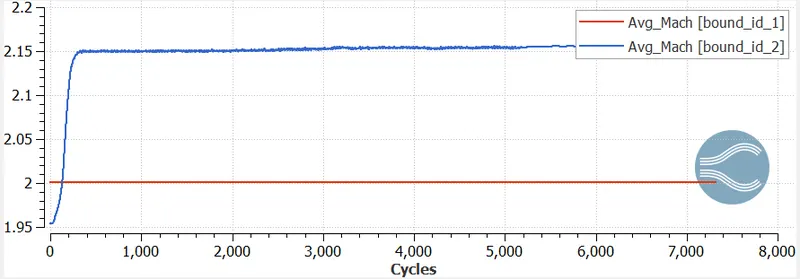
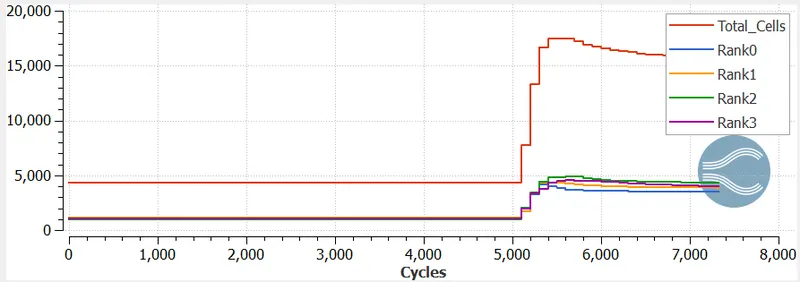
Total cell count:
Case 3: Velocity = 680m/s (supersonic Flow) and SGS parameter = 0.1
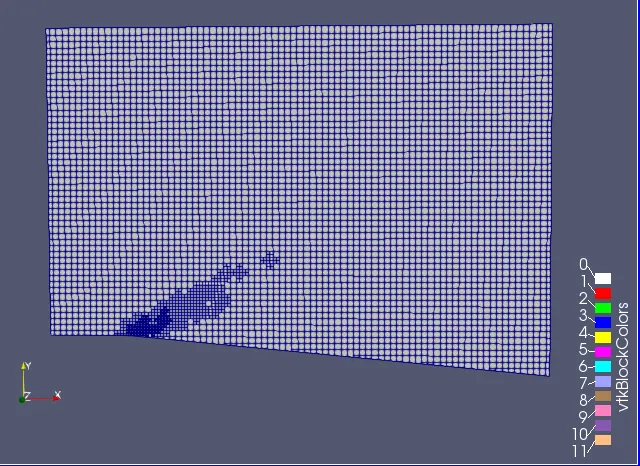
Mesh:
Contours:
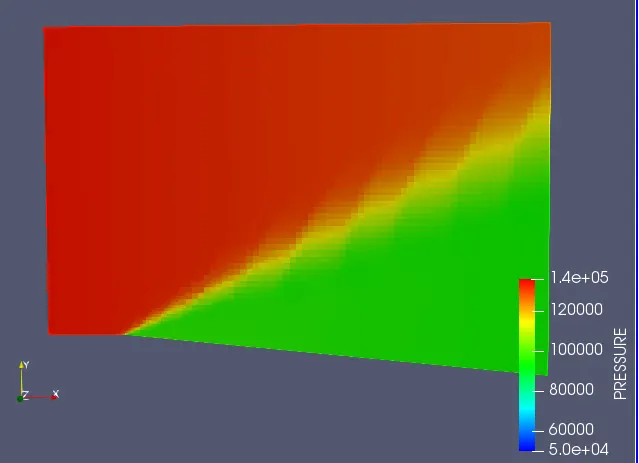
Pressure:
Velocity:
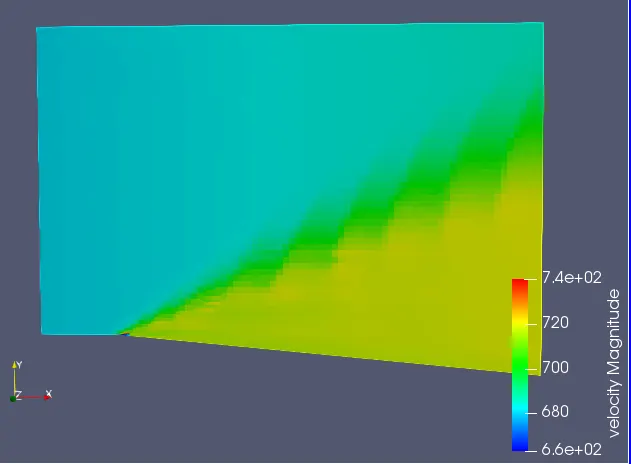
Temperature:
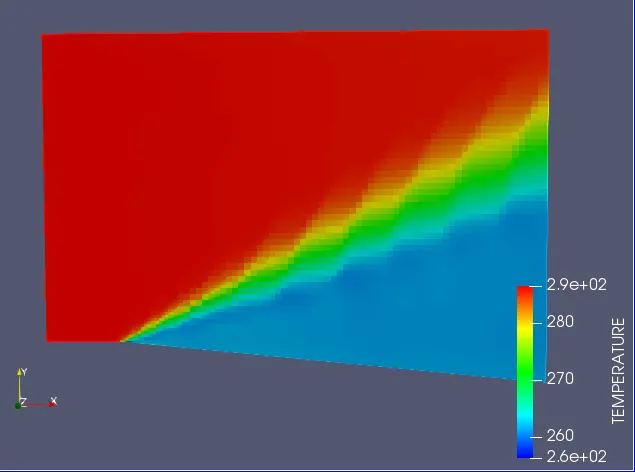
Plots:
Pressure:
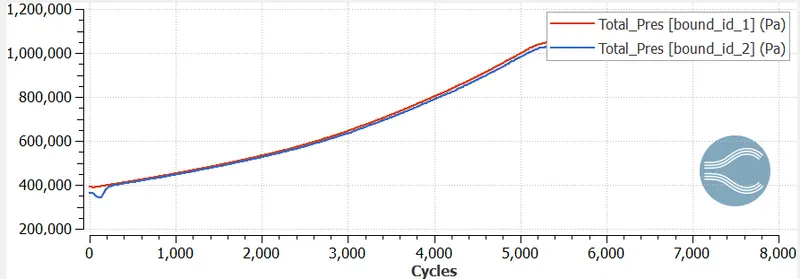
Velocity:
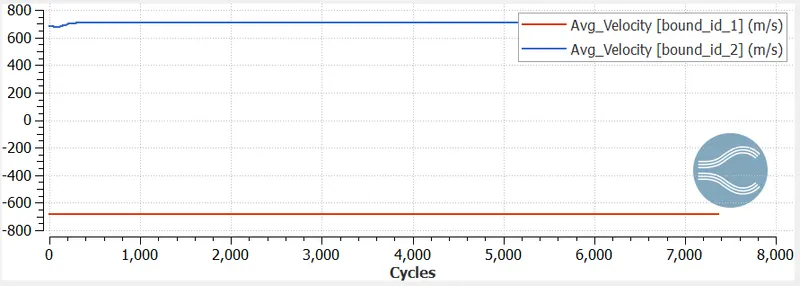
Mass flow rate:
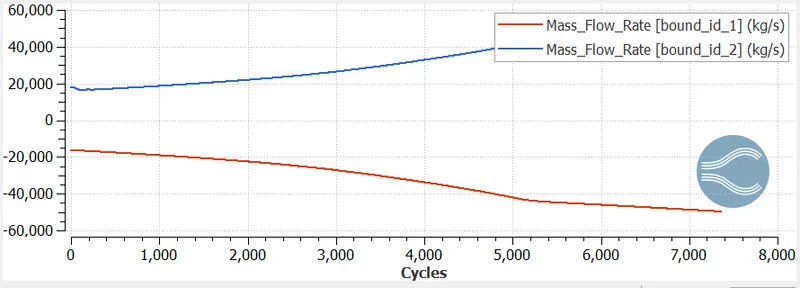
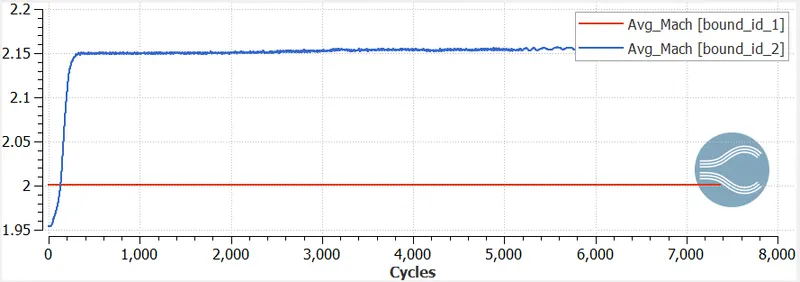
Mach Number:
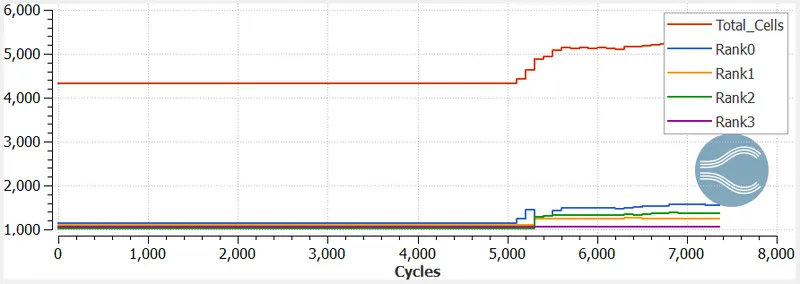
Total cell count:
Case 4: Velocity = 100m/s (Subsonic Flow) and SGS parameter = 0.05
Mesh:
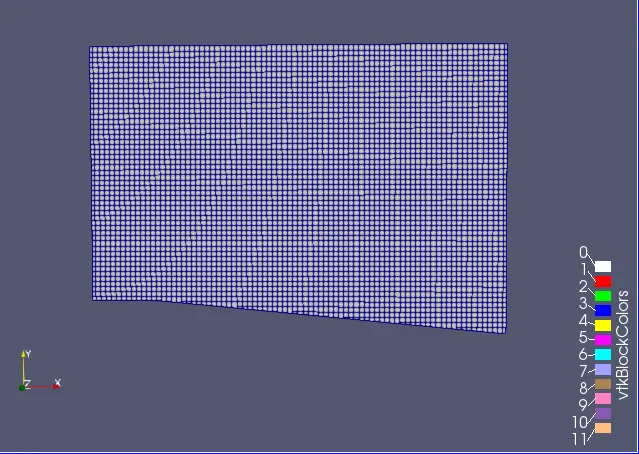
Contors:
Pressure:
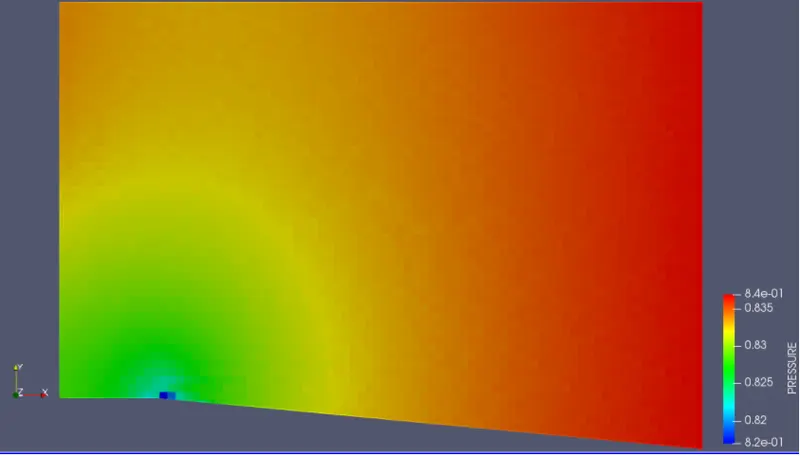
Velocity:
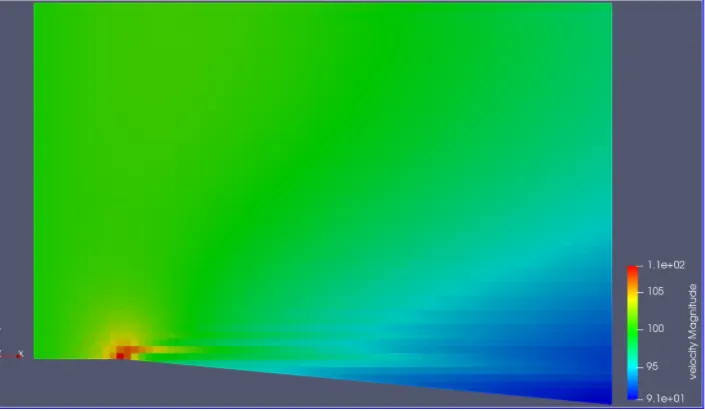
temperature:
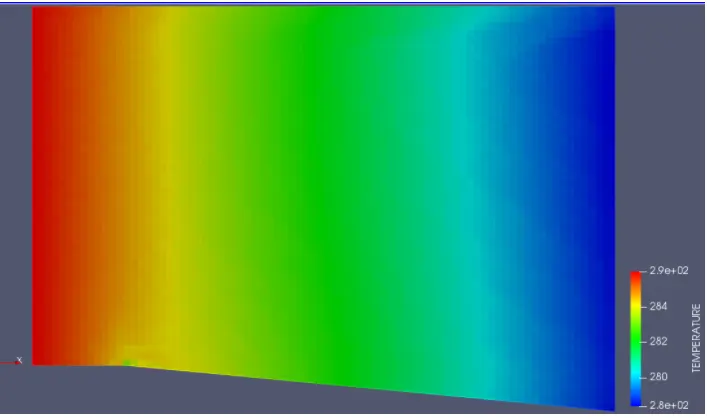
Plots:
Pressure:
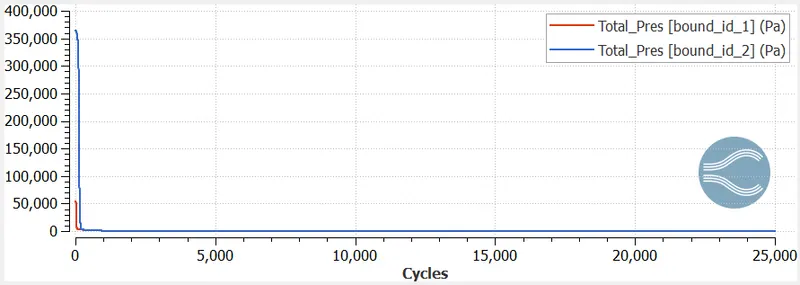
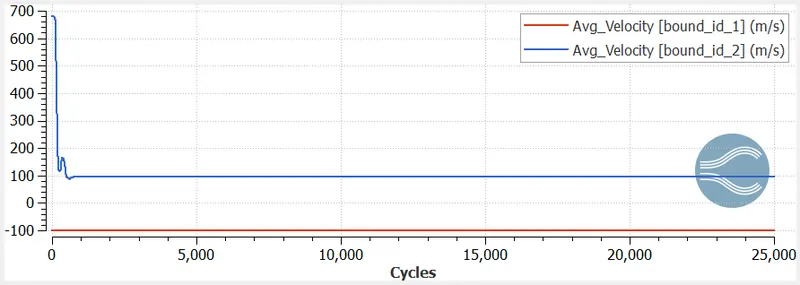
Velocity:
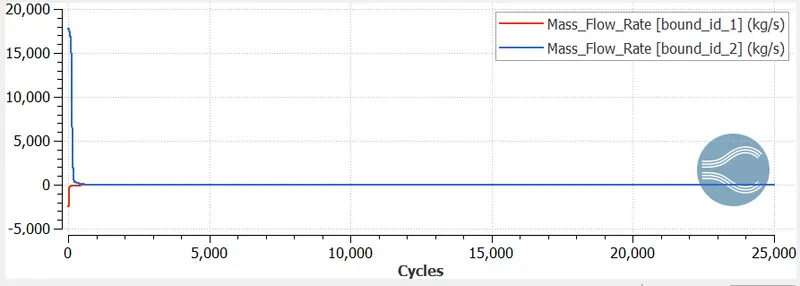
Mass Flow rate:
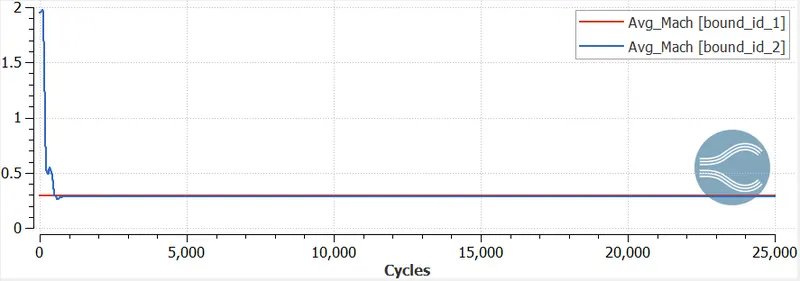
Mach Number:
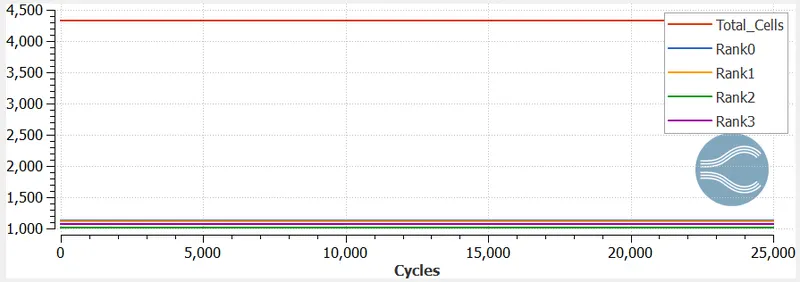
Total cell count:
Observations:
Effect of SGS parameter
Cell Count:
As the SGS parameter decreases, the total cell count increases.
For small SGS parameters, AMR refines the mesh for more number of cells in and around the shock waves.
Shock location:
For a higher SGS parameter, the mesh refinement area is very small like SHS = 0.1 in one of the case.
For a smaller SGS parameter, the mesh refinement area spans from the sharp edge to outlet boundary.
Subsonic vs Supersonic
In supersonic flow, the prandtl-meyer expansion fan is cleary visible and the mesh refinement is also visible in the shock region.
In case of subsonic flow, the prandtl-meyer expansion fan is not visible and even the mesh refinement is not visible.
Average Mach number increases from the inlet to outlet in supersonic flow.
Average Mach number decreases from the inlet to outlet in subsonic flow.
Conclusion:
In this simulation, Supersonic and subsonic flow through the duct having a sharp corner was setup and run in Converge CFD.
Various contour and plots are studied using paraview post processing.
The formation of shock waves and effect of SGS parameteron the shock location studied.