Week 5: Prandtl Meyer Shock problem
#Purpose:1.To setup Prandtl Meyer Shock Problem using Converge Studio and Post process with paraview.
2.Observe the shock wave parameters .
3.Effect of Sub grid scale (SGS) parameter on shock location.
#Introduction:
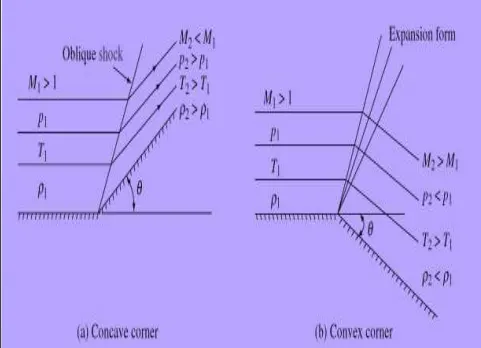
PRANDTL-MEYER EXPANSION WAVES
Expansion waves are in many ways the antithesis of shock waves. They arise when a supersonic flow is turned away from itself. An expansion region is built up of an infinite number of weak Mach waves. Since each Mach wave is isentropic the entire expansion region is isentropic, which means that the isentropic relations may be used over the expansion region.
over an expansion region we will get an increase in flow Mach number, decrease in pressure, decrease in density and decrease in temperature.
Starting from a geometrical analyze of the slight change in flow angle over one single Mach wave and assuming calorically perfect gas, the Prandtl-Meyer function is derived. The Prandtl-Meyer function can be used to obtain the downstream flow Mach number after a expansion region given the upstream Mach number and deflection angle.



By convention, v(1)=0
Thus, given the initial Mach number (M1), one can calculate v(M1) and using the turn angle find v(M2). From the value of v(M2) one can obtain the final Mach number (M2) and the other flow properties.
• When using a Dirichlet boundary condition, one prescribes the
value of a variable at the boundary, e.g.
• When using a Neumann boundary condition, one prescribes the
gradient normal to the boundary of a variable at the boundary,
e.g.
`∂_(n)u(x) = constant.`
• When using a mixed boundary condition a function of the form
• Note that at a given boundary, different types of boundary
conditions can be used for different variables.
Shock wave is a very thin region in a flow where supersonic flow is decelerated to subsonic flow. The process is adiabatic but non-isentropic.Across the shock there is always an extremely rapid rise in pressure, temperature and density of the flow. Shock wave are characterized by an abrupt nearly discontinuous change in the characteristics of the medium.
Shock wave is a very thin region in a flow where supersonic flow is decelerated to subsonic flow. The process is adiabatic but non-isentropic.
Shock wave is not a conventional sound wave. A Shock wave travels through most media at a higher speed than an ordinary wave. ØWhen a shock wave passes through matter the total energy is preserved. Shock wave is a large amplitude compressibility wave . A shock wave takes the form of a very sharp change in the gas properties.
Shock wave form when the speed of a fluid changes by more than the speed of sound. Over larger distances a shock wave can change from a non linear wave into a linear wave. Shock wave is a strong wave, i.e. property changes across it are finite. Shock waves can be stationary or moving. Shock waves are very thin, in the order of 10−7 m. In a shock wave the properties of the fluid (density, pressure, temperature, velocity, Mach number) changes almost instantaneous.
#Formation of shock wave.
Case- 1: Mach Number is less than 1 that means subsonic flow.
Case- 2: Mach Number is equal to 1 that means sonic flow.
Case- 3: Mach Number is greater than 1 that means supersonic flow.
There are three types of shock wave. These are:
1 Normal Shock Wave.
2 Oblique Shock Wave.
3.Curved Shock Wave.
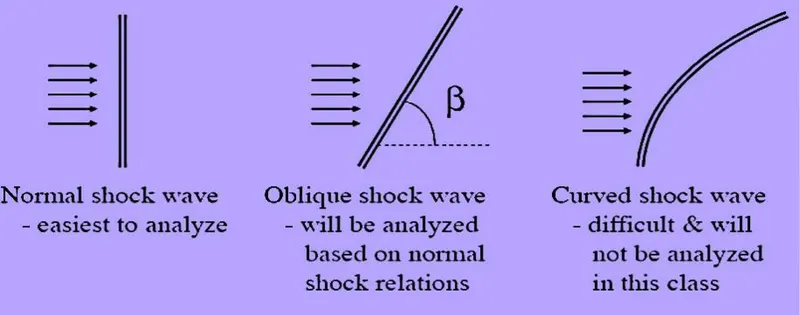
1 Normal Shock Wave:
If the shock wave is perpendicular to the flow direction it is called a normal shock. A normal shock occurs in front of a supersonic object if the flow is turned by a large amount and the shock cannot remain attached to the body.Perpendicular to the flow. Always decelerate flow to subsonic flow.
2 Oblique Shock Wave:
An oblique shock wave is one that is not perpendicular to the direction of fluid flow. Such a shock wave arises when a fluid stream flowing at a supersonic speed moves along a convergent or divergent boundary. Oblique shock wave always decreases Mach number
#Case Setup:
1.Application Type--Time based
2.Materials-Air
Select default setting in:
Gas simulation
Global transport parameter
Species
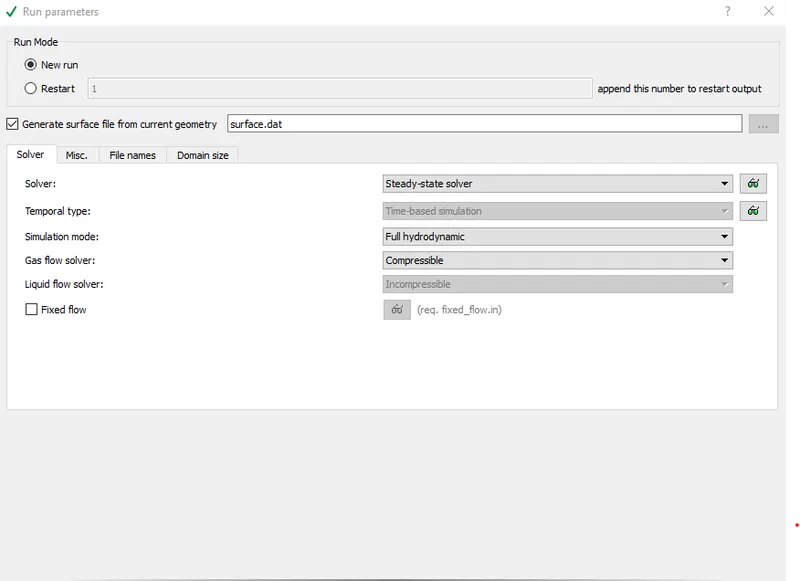
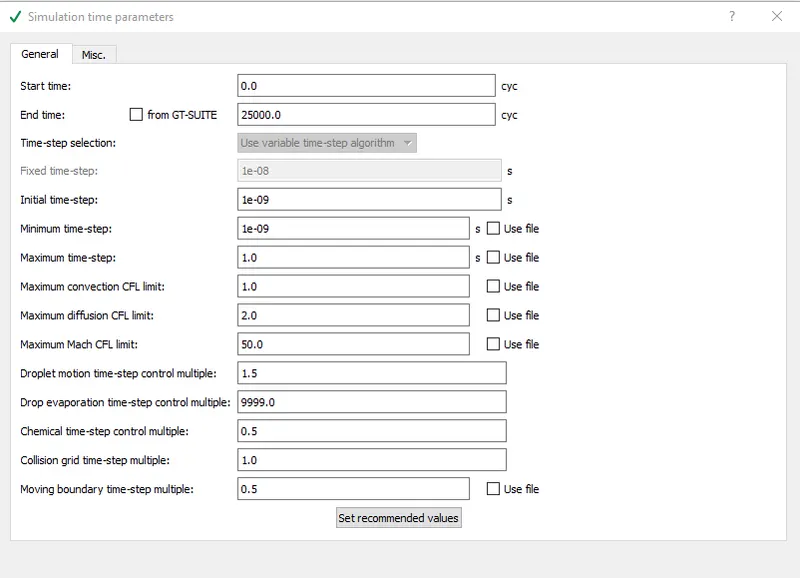
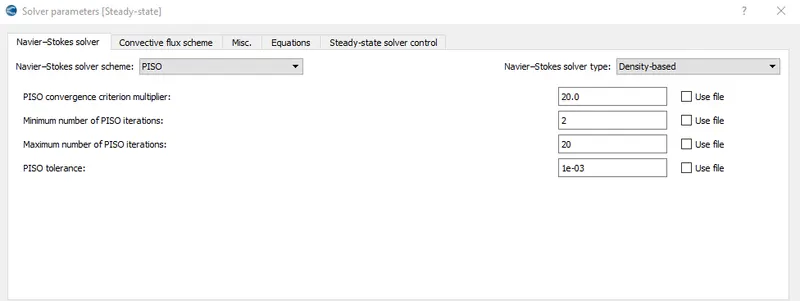
3.Simulation parameters:
4.Boundary conditions:
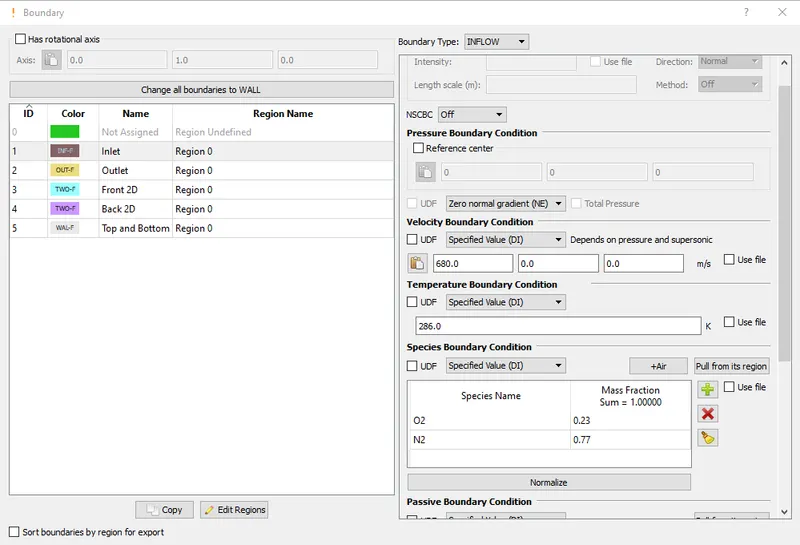
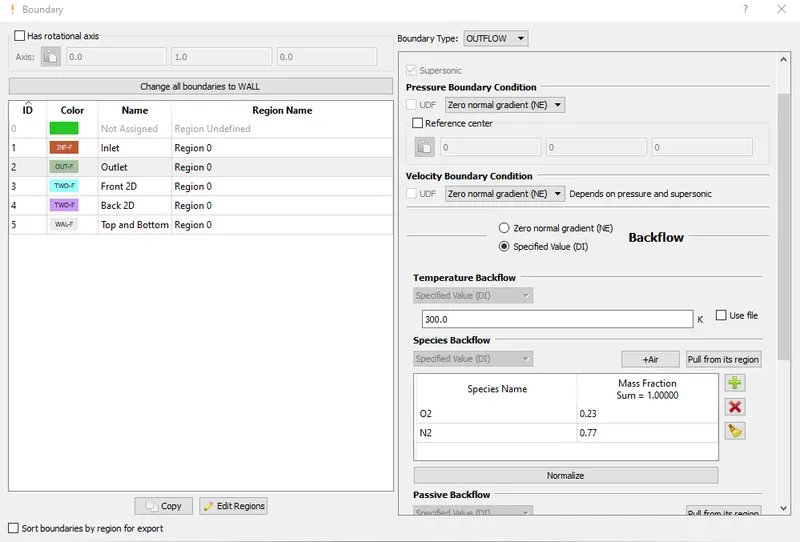
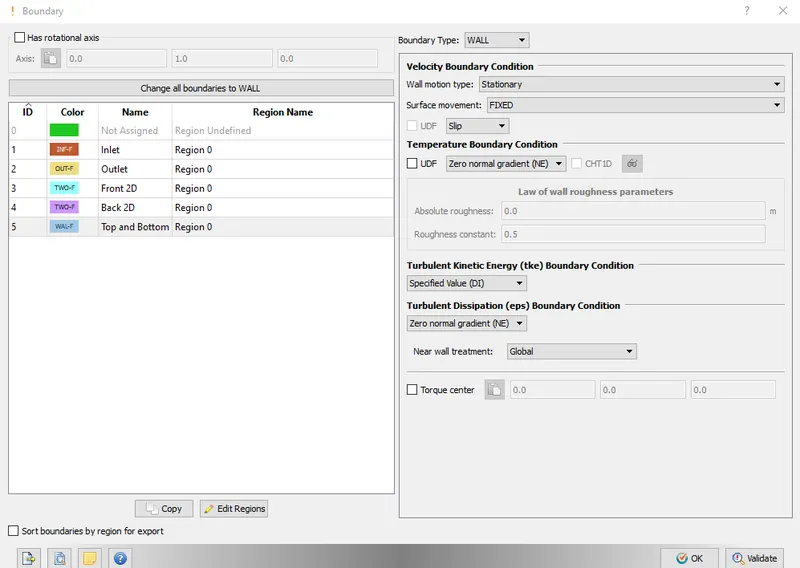
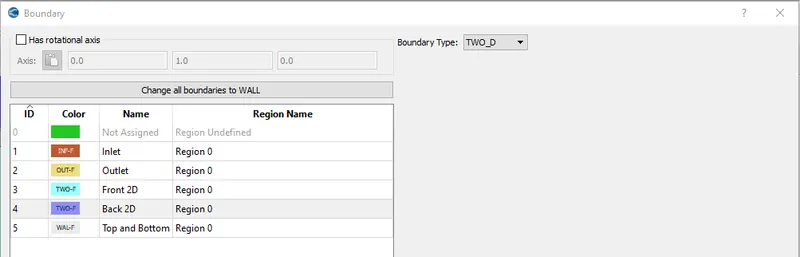
5.Initial conditions:
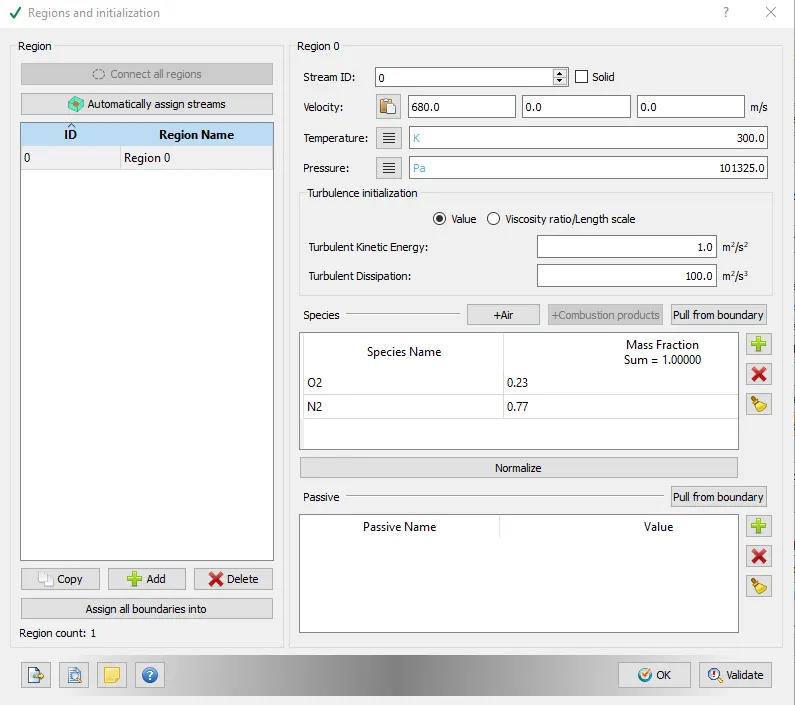
6.Physical model:RNG k-`epsilon`
7.Grid control:
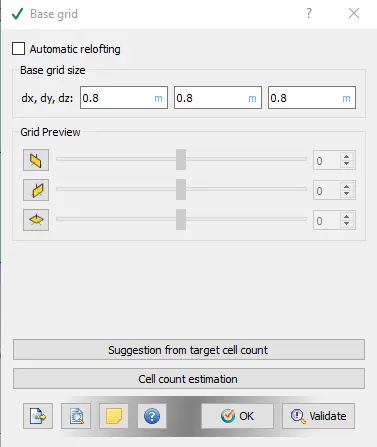
#Base grid:
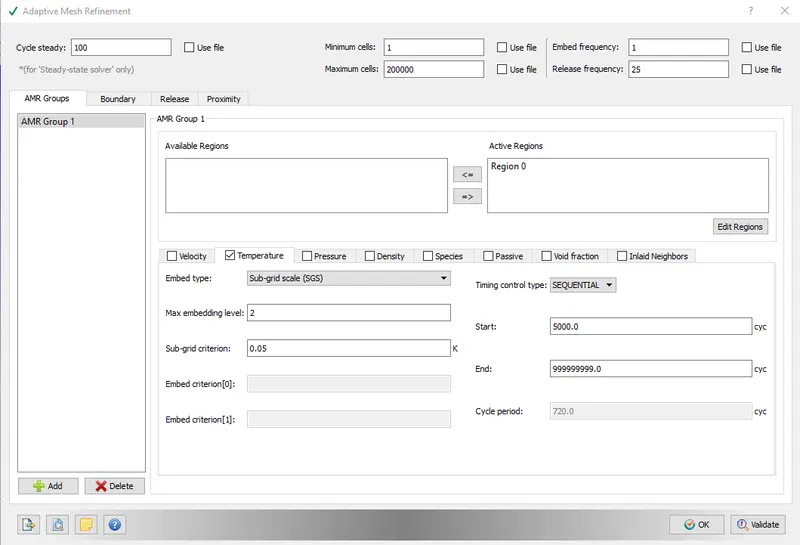
#Adaptive Mesh Refinement:
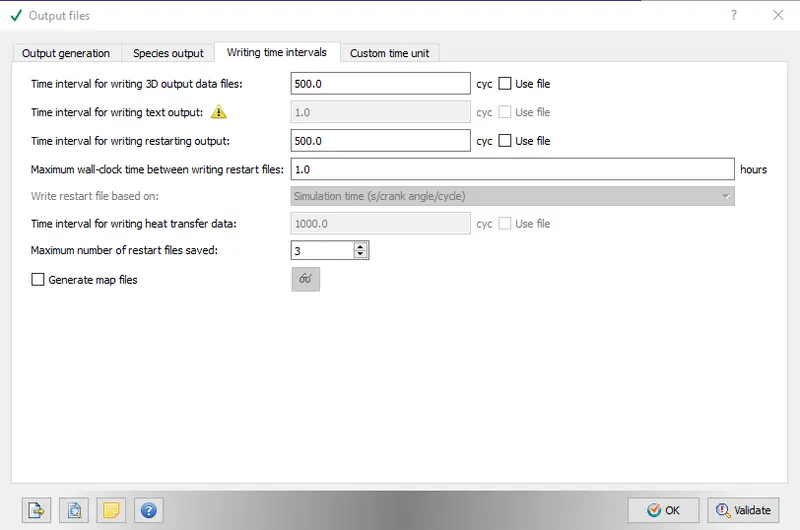
8.Output and post processing:
#Results:
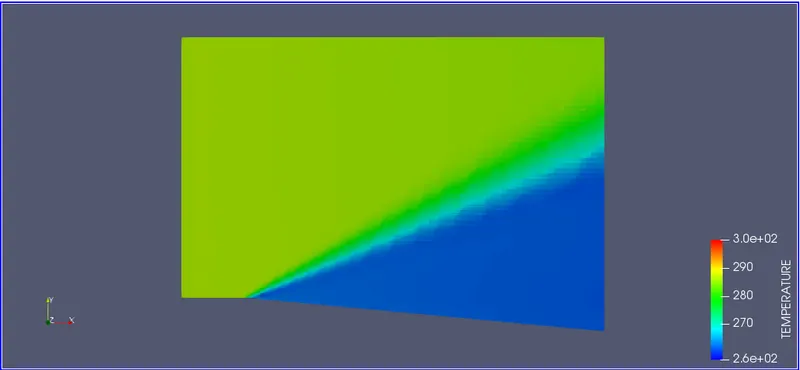
1.Temperature Contour:
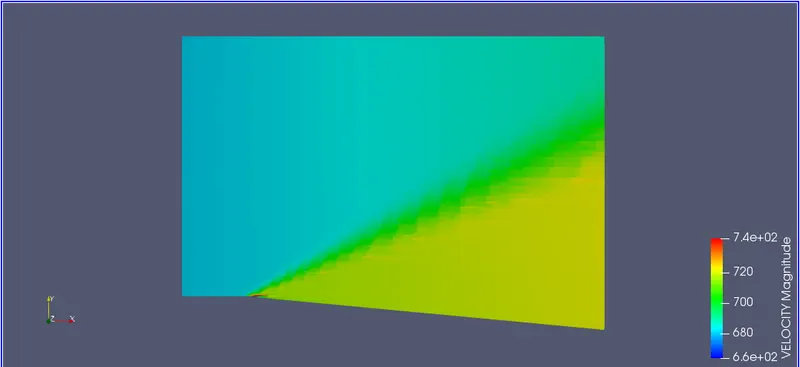
2.Velocity Contour:
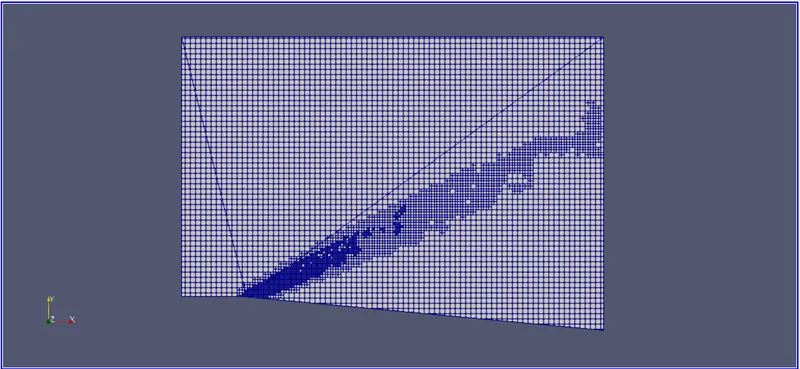
3.Mesh with AMR:
4.Temperature Contour clip:
5.Velocity contour clip:
6.AMR development near Shock Wave:
-------------------------------------------****************************---------------------------------
#Case-2:(For Velocity =100 m/s,Subsonic).
#Case setup same as case-1-Only Initialisation velocity 100 m/s.
#Results:
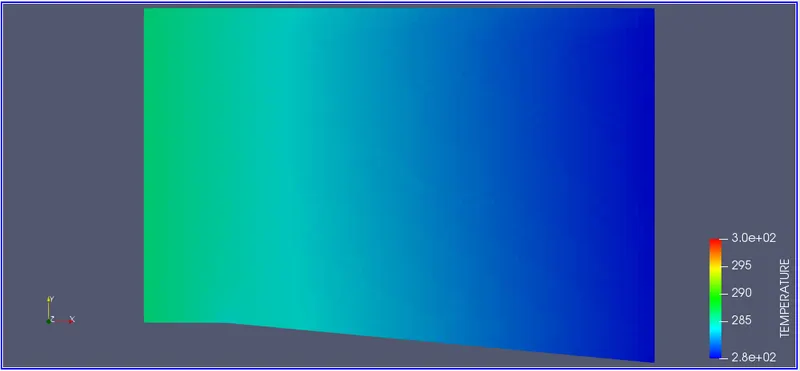
1.Temperature Contour:
2.Velocity contour:
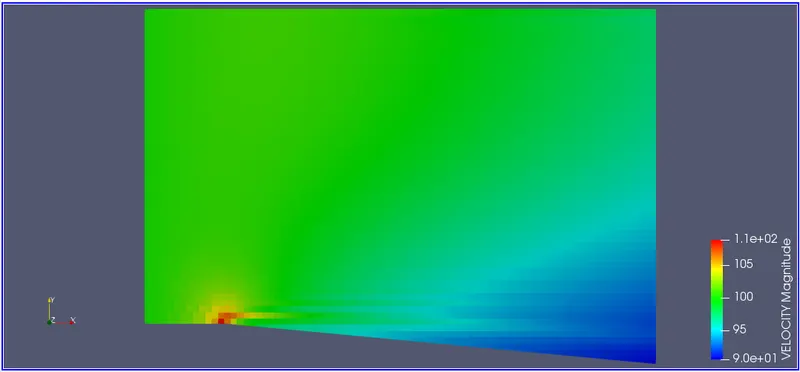
From the above two contour plots we can see that ,as the velocity of Air is subsonic(that is less than speed of sound) no shock waves are produced
----------------------------------------------******************---------------------------------------------
#Effect of SGS parameter on shock location:
Ans. SGS(sub grid scale) is like a value for any parameter we set Pressure,Temperature,Velocity etc .
For this case Temperature SGS value is used.
So wherever inside the domain ,the difference between the Temperature for the grids near to each other is more than this SGS value,cell would be embedded.
Therefore wherever grid is refined ,in that region the curvature of Temperature is more than SGS value.
1.For SGS Temperature value=0.005
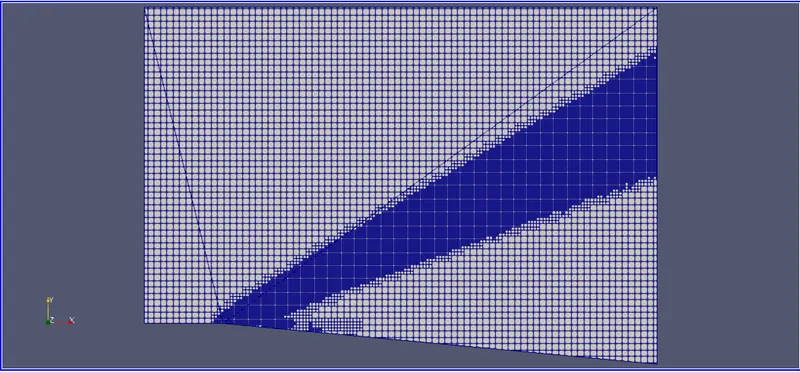
Total cell count=17452 cells
2.For SGS Temperature value=0.05
Total cell count= 7127 cells
3.For SGS Temperature value=0.1
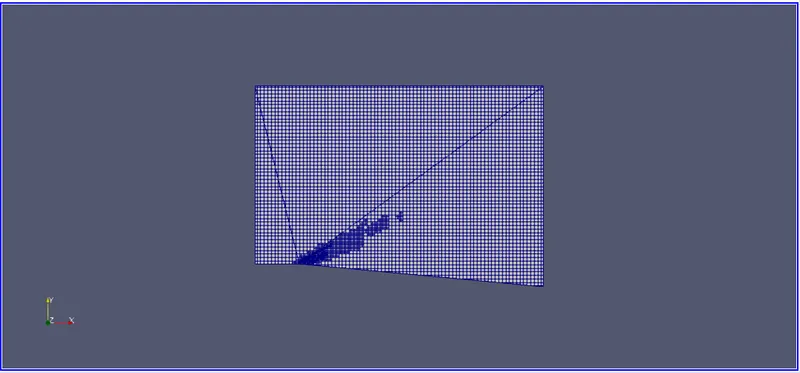
Total cell count=4972 cells
From the above three plots we can see that,as the value of SGS is less ,more accurately shock waves are captured,means region where AMR can be seen is bigger .
When SGS value for temperature is increased,region where AMR can be seen,is also reduced.
----------------------------------------------********************------------------------------------------