Week 5 Challenge
Question 1:
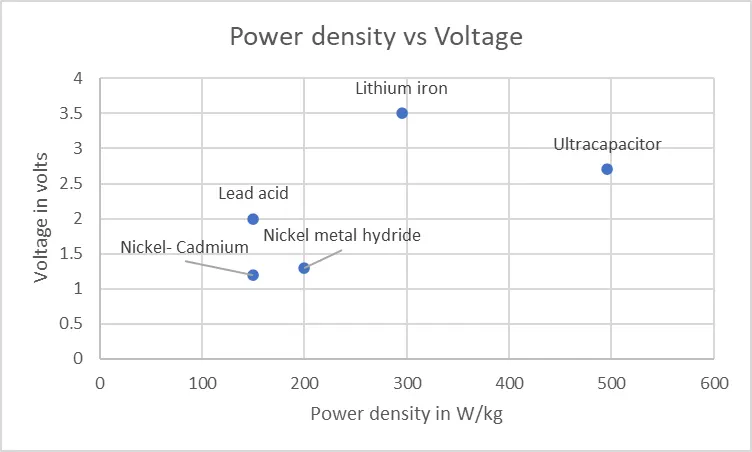
In the scenario described, Ultra capacitor is a better choice. There are issues with batteries in terms of over discharge, fast discharge, and there is also limitation in terms of maximum current that can be drawn out of the bettry at a time. In other words, battries have better energy desnity and poor power density. In the described scenario, a device with better power density and a capacity to quickly discharge power and get charged while breaking can be an ideal choice. Ultracapactors have this characterisitc of high power density, quick discharge and chage capacity. Hence, Ultracapacitors are the best choice.
Question 2:
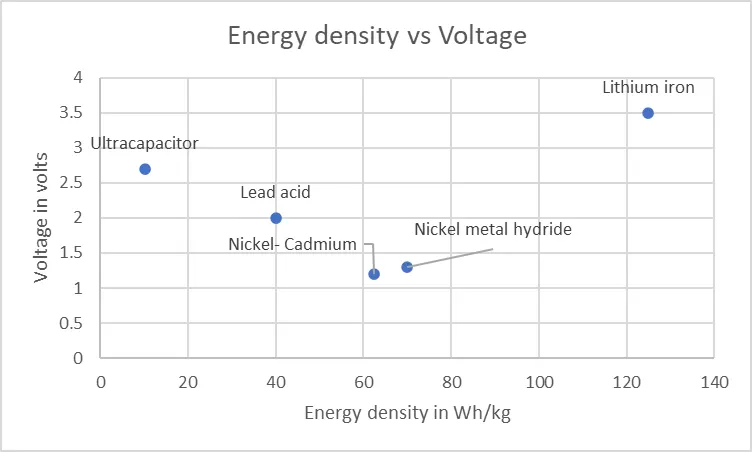
Lead acid batteries: :Lead acid batteries are more suitable for low voltage low power applications. The energy density of these batteries are also limited. They are usually used in appications such as car batteries and home inverter batteries.
Nickel cadmium batteries: The energy density of nickel cadmium battery is bit lower that nickel metal hydrode batteries. Both the batteries offer almost same voltage. However, due to lower energy density use of nickel cadmium battery is limited to flash lights, emergency lights, and portable electronic devices.
Nickel metal hydrode baatteries: As discussed earlier, nickel metal hydride batteries have better energy density as compared to nickel cadmium batteries. Hence, they are used in applications such as hybrid automobile, electric tooth brush and razors, and some of the electric two wheelers as well.
Lithium iron batteries: These batteries offer high voltage and high energy density. Hence, they are most widely used in electric vehicles, toys, wireless headphones, etc.
Super capacitoors: They offer high voltage and low energy density. Hence they are most widely used in frequent charge discharge applications such as storing regenerative power in EVs.
Question 3:
Question 4: Considering the battery is in charging mode: True